How we make this list: we compare pricing pages, product documentation and public user reviews. Ratings come from G2, Capterra or Trustpilot, with the date we checked them.
Key takeaways
- Katana and MRPeasy are the most practical starting points for small makers, with inventory, production orders, and shop floor tracking in one place.
- Fishbowl and Odoo suit businesses that need warehousing, accounting, or a wider business suite alongside production.
- JobBOSS and Global Shop Solutions suit job shops and larger manufacturers with quoting, scheduling, and quality needs.
- Prodsmart and Cin7 help teams that track production on the floor or sell across many channels.
- Check bill of materials handling, lot tracking, QuickBooks or accounting sync, and shop floor usability before choosing.
Quick comparison
| Tool | Best for | Starting price | Free plan |
|---|
 Katana | Small makers and workshops | See website | Free trial |
 MRPeasy | Small manufacturers needing MRP | See website | Free trial |
 Fishbowl | Inventory and warehouse control | See website | No |
 Odoo Manufacturing | Businesses wanting a full suite | See website | Free trial |
 JobBOSS | Job shops and make-to-order work | See website | No |
 Global Shop Solutions | Larger manufacturers | See website | No |
 Prodsmart | Shop floor tracking | See website | No |
 Cin7 | Multi-channel inventory and production | See website | No |
Is your product missing or out of date?
We review this list regularly. Vendors can request a listing, send updated pricing or ask about featured placement.
The best production management software
#1Katana
Best for: Small makers and workshops4.4/5 on
G2 (117 reviews, checked Oct 2026)
Visit katanamrp.com
Starting priceSee website
Free planFree trial
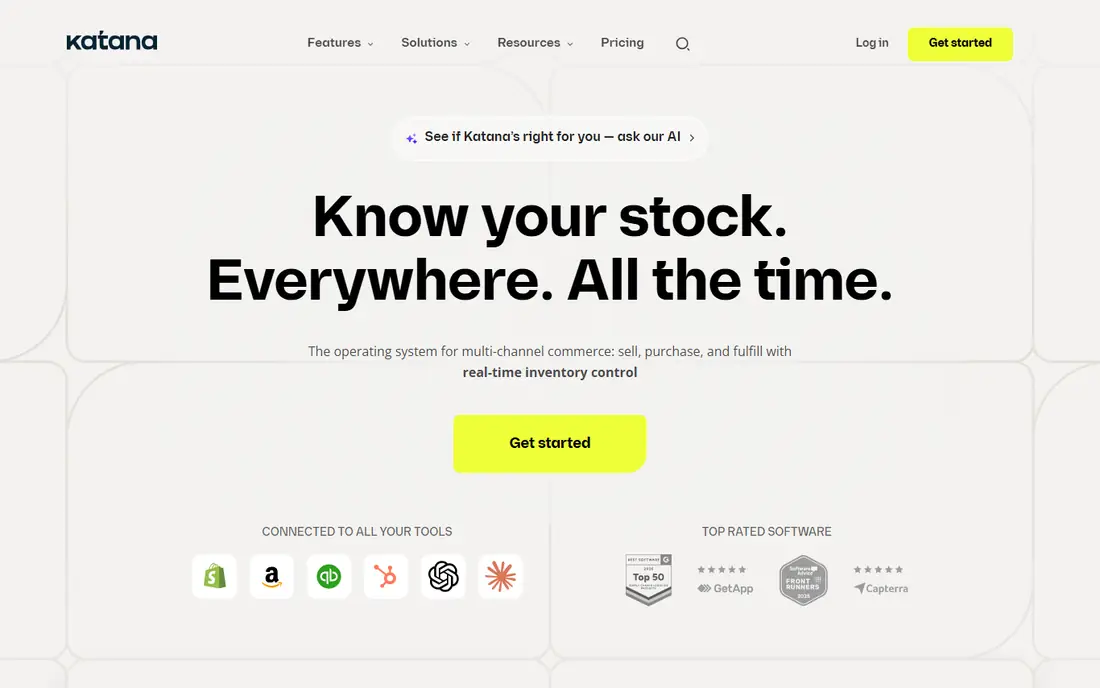
Katana is built for small manufacturers, makers, and workshops that have outgrown spreadsheets. It tracks raw materials, finished goods, production orders, and purchase orders in one view, so you can see what is in stock, what is on order, and what a production run will consume before you start it. Bill of materials support lets you define each product recipe once, then reuse it, while shop floor tracking shows job progress without a separate system. Integrations with Shopify, WooCommerce, and QuickBooks help makers who sell online and need accounting in step with production.
The limits are plan-based. Lower plans cover core inventory and production, while advanced planning, forecasting, and multi-location features sit higher up, and pricing varies by users and plan. Accounting depth also relies on integrations rather than a full built-in ledger. Katana suits small makers who want a clear, visual production system they can learn quickly, provided the plan chosen includes the locations and integrations the business actually uses.
What we like- Clear inventory and production orders
- Bill of materials support
- Integrations with Shopify and QuickBooks
Watch out for- Pricing rises with users and features
- Advanced planning needs higher plans
- Some accounting depth needs integrations
#2MRPeasy
Best for: Small manufacturers needing MRP4.6/5 on
G2 (59 reviews, checked Oct 2026)
Visit mrpeasy.com
Starting priceSee website
Free planFree trial
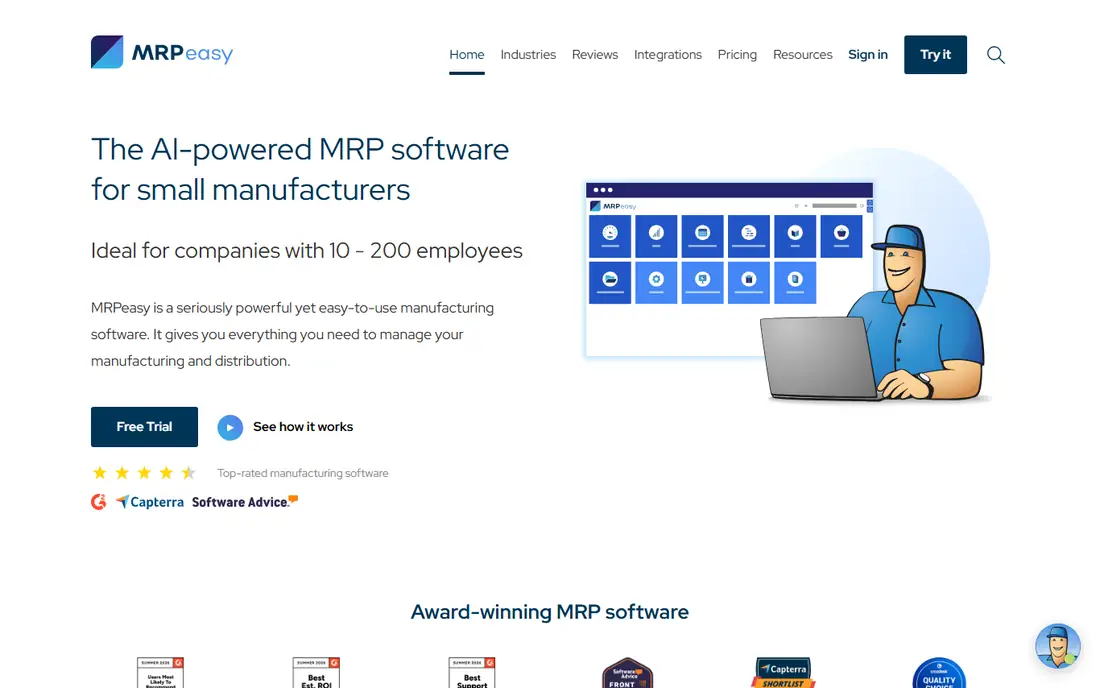
MRPeasy brings manufacturing resource planning to small firms that would otherwise rely on spreadsheets and guesswork. It handles bills of materials, routings, production scheduling, purchase planning, and inventory in a connected system, so a sales order can drive material needs, purchase suggestions, and shop floor jobs. That planning depth helps when lead times, supplier delays, and shared materials make manual planning unreliable. It also supports lot tracking and quality data for businesses that need traceability.
Setup is the main hurdle. MRP only works when bills of materials, lead times, and stock levels are accurate, so the first weeks require careful data entry and cleanup. The interface can also feel dense compared with Katana, especially for makers used to simple inventory apps. MRPeasy is best for small manufacturers who need real planning, not just stock counts, and who are willing to invest in clean product data to get it.
What we like- True MRP planning for small firms
- Bills of materials and routing
- Purchase and production planning
Watch out for- Interface can feel dense
- Pricing varies by users and features
- Setup needs accurate product data
Starting priceSee website
Free planNo
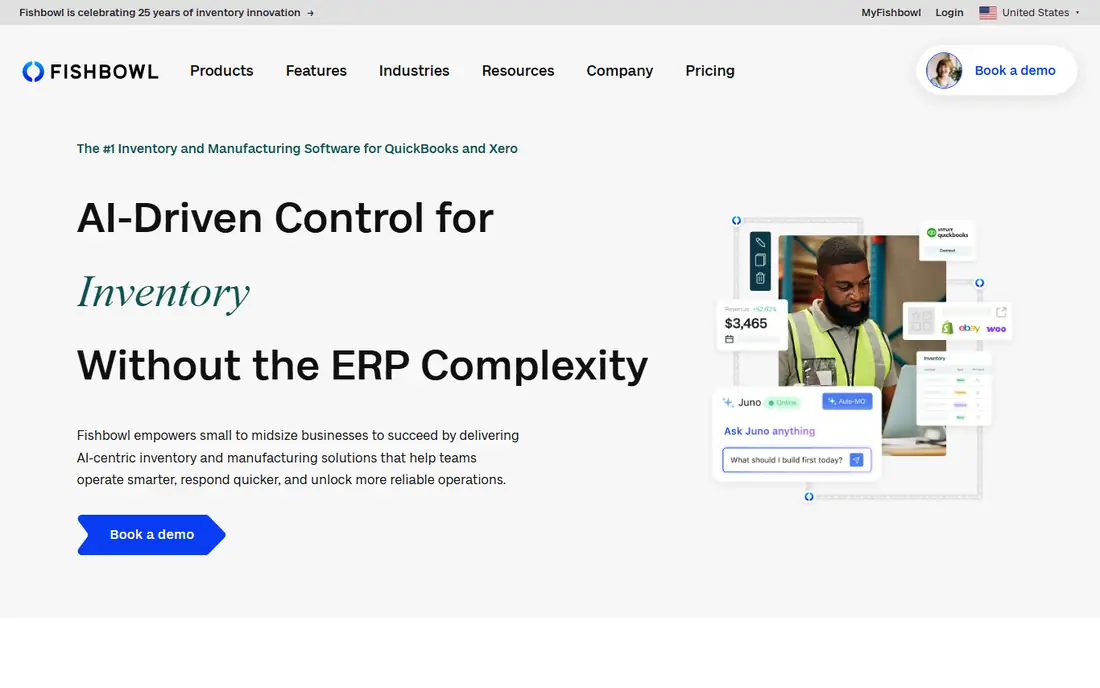
Fishbowl combines inventory management, warehousing, and manufacturing in one system, with a long history of QuickBooks integration. It tracks stock across locations, manages purchase orders, sales orders, and work orders, and supports barcoding, cycle counts, and lot and serial tracking. For businesses with a warehouse and a production area, that combination avoids the gap between stock software and shop software, where quantities drift apart and orders stall.
Pricing is quote-based and varies by users, modules, and implementation needs, so confirm the total before committing. Warehouse workflows also take training, especially barcoding and location control, and some advanced features are add-ons. Fishbowl suits small to mid-size manufacturers and distributors with real warehouse needs, particularly those already running QuickBooks and wanting inventory and production tied to accounting.
What we like- Strong inventory and warehouse features
- Manufacturing orders
- QuickBooks integration
Watch out for- Pricing is quote-based
- Learning curve for warehouse workflows
- Some features need add-ons
#4
Odoo Manufacturing
Best for: Businesses wanting a full suite
Visit odoo.com
Starting priceSee website
Free planFree trial
Odoo Manufacturing sits inside the wider Odoo suite, which covers sales, inventory, purchasing, accounting, CRM, and human resources as separate apps that share data. That breadth helps businesses that want production, stock, orders, and accounting in one system without stitching several vendors together. Manufacturing orders, bills of materials, work centers, and shop floor operations connect directly to sales orders and inventory, so a sale can flow to production and shipping with fewer manual steps.
Breadth is also the risk. A small maker who only needs production may find the full suite heavy, and implementation needs clear decisions about which apps to use and how to configure them. Some apps and features require paid plans or additional modules. Odoo suits growing businesses that already want a suite, or plan to add sales, accounting, and CRM alongside production, rather than a workshop that only needs a single production tool.
What we like- Manufacturing inside a full business suite
- Sales, inventory, and accounting together
- Modular pricing
Watch out for- Suite breadth can overwhelm small teams
- Implementation needs planning
- Some modules need paid apps
#5JobBOSS
Best for: Job shops and make-to-order work3.8/5 on
G2 (56 reviews, checked Oct 2026)
Visit jobboss.com
Starting priceSee website
Free planNo
JobBOSS is designed for job shops and make-to-order manufacturers, where every order differs and job costing matters. It covers quoting, order entry, scheduling, materials, labor, and job cost tracking, with shop floor data collection so managers can see job progress, labor time, and costs as work happens. That job-level view helps shops price accurately, spot losing jobs early, and schedule work across machines and people with competing deadlines.
Pricing is quote-based, and implementation takes planning, especially for shops moving from spreadsheets or an older system. JobBOSS is less suited to simple repetitive makers who need only inventory and production orders, since its job shop depth adds complexity they may not use. For machine shops, fabricators, and custom manufacturers, JobBOSS is a strong, focused choice that matches how job work actually flows.
What we like- Built for job shops
- Quoting, scheduling, and job costing
- Shop floor data collection
Watch out for- Quote-based pricing
- Implementation takes time
- Best for make-to-order, less for repetitive makers
Starting priceSee website
Free planNo
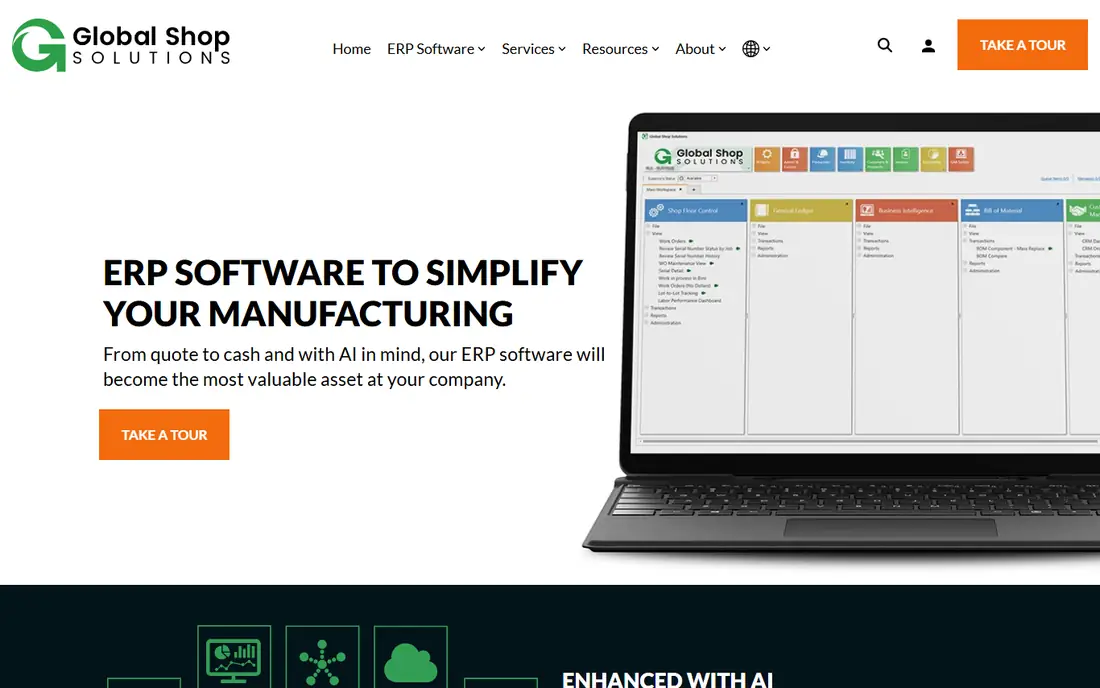
Global Shop Solutions offers a full manufacturing ERP, covering quoting, sales orders, inventory, scheduling, shop floor control, quality, purchasing, and accounting in one system. That depth suits larger manufacturers with many employees, multiple departments, and complex compliance or quality needs, where separate point tools create gaps and double entry. Its long focus on manufacturing means workflows reflect factory realities, not generic business processes retrofitted to production.
Scale is the drawback for small businesses. Implementation is a project, not a quick signup, and pricing reflects enterprise scope. A small workshop will pay for modules and complexity it does not need, and may struggle to maintain the system without dedicated staff. Global Shop Solutions belongs on the list for larger manufacturers planning a full ERP, while small makers should start with Katana or MRPeasy and revisit ERP later.
What we like- Full ERP for manufacturers
- Quoting, scheduling, quality, and accounting
- Long manufacturing focus
Watch out for- Enterprise scale and cost
- Implementation is a project
- Overkill for small workshops
Starting priceSee website
Free planNo
Prodsmart focuses on the shop floor itself, giving managers real-time visibility into jobs, operators, machines, and output. Workers log production, downtime, and scrap as work happens, often from tablets on the floor, and managers see progress, efficiency, and bottlenecks without walking the floor for updates. That visibility helps factories that already plan in another system but lack accurate, timely floor data, or small factories that need to prove output and costs per job.
Prodsmart is not a full MRP system on its own, so businesses that need deep material planning should pair it with inventory or MRP tools, or choose a broader platform instead. Value also depends on consistent floor use: if operators skip logging, reports mislead rather than help. Prodsmart suits manufacturers who want better floor truth, have a team willing to log work daily, and want clear efficiency reporting without replacing their whole business system.
What we like- Real-time shop floor data
- Production tracking by job and operator
- Reporting on efficiency
Watch out for- Focus is tracking rather than full MRP
- Pricing varies
- Needs consistent floor use to pay off
#8
Cin7
Best for: Multi-channel inventory and production
Visit cin7.com
Starting priceSee website
Free planNo
Cin7, formerly Cin7 Core and related to Cin7 Omni, helps businesses that sell across online stores, marketplaces, wholesale, and retail while also assembling or producing goods. It tracks inventory across channels, manages purchase and sales orders, and supports production and assembly workflows, with integrations for ecommerce platforms and accounting systems. That channel view prevents overselling when the same stock serves several storefronts, a common pain point for growing makers and distributors.
Production depth is lighter than dedicated MRP tools such as MRPeasy, so complex planning, routings, and capacity scheduling may need another approach. Pricing varies by plan and business size, so get a quote for your channel count and users. Cin7 suits businesses where multi-channel inventory is the main problem and production is assembly or light manufacturing, rather than factories needing full MRP and shop floor control.
What we like- Inventory across sales channels
- Production and assembly support
- Integrations with ecommerce and accounting
Watch out for- Pricing varies by plan
- Production depth is lighter than dedicated MRP
- Setup needs channel mapping
How we chose
We reviewed official product pages, documentation, and public reviews, and we compared bill of materials handling, production scheduling, inventory and lot tracking, shop floor tools, and accounting integrations. We favored tools that exist today and fit makers, job shops, and factories at different sizes, rather than generic project tools without production features. Prices were marked as See website where pricing varies by users, modules, or quote, to avoid inventing figures that change with business size.
What to test before you commit
Start with one real product, not a demo item. Build its bill of materials, enter current stock, create a production order, and run it through to finished goods and invoicing. That single test reveals whether routings, lot tracking, and stock deductions work the way your floor actually operates. Also test a change mid-order, such as a material substitution or a partial delivery, since real production rarely follows the plan exactly. If the system makes changes painful, daily use will suffer.
Next, check integrations and reporting. Confirm how sales orders, purchase orders, and accounting sync, and whether you can export data if you leave. Test shop floor use with the actual people who will log work, on the devices they will use, in the noise and pace of a real shift. Finally, compare total cost, including users, locations, modules, implementation, and training, not just the headline plan price. A system the floor team trusts and uses every day beats a feature-rich system that only managers open.
Frequently asked questions
What is the best production management software for small makers?
Katana is a strong starting point for small makers, with clear inventory, production orders, and shop floor tracking. MRPeasy suits makers who need deeper MRP planning, while Fishbowl suits those with warehouse needs. Start with one real product test in a trial to see which interface your team actually uses.
Do I need MRP software or just inventory software?
Inventory software tracks what you have, while MRP plans what you need to buy and make based on orders, bills of materials, and lead times. If you assemble products from shared materials and face supplier delays, MRP helps. If you only stock and sell finished goods, inventory software may be enough.
Can production software integrate with QuickBooks?
Many tools here do, including Katana, Fishbowl, and Cin7, though sync depth varies. Check whether invoices, payments, purchase orders, and stock values sync, and test with real orders in a trial. A weak sync creates double entry and stock errors that grow with volume.
How much does production management software cost?
Pricing varies by users, locations, modules, and implementation, so this guide lists prices as See website. Small maker plans cost far less than full manufacturing ERP, which is quote-based and implementation-heavy. Get a written quote for your exact user count, locations, and modules before budgeting.
What is a bill of materials?
A bill of materials is the list of raw materials, parts, and quantities needed to make one finished product, often with routing steps for how it is made. Accurate bills of materials drive purchasing, costing, and production planning in MRP systems. Errors here cause stockouts, wrong costs, and delayed orders, so review them carefully before going live.
Should shop floor workers use tablets or paper?
Tablets or shop floor terminals give real-time job progress, downtime, and scrap data that paper cannot match, provided workers actually log work consistently. Paper is simpler to start but delays reporting and hides bottlenecks. Whichever route you choose, train the floor team, keep logging steps short, and review the data with them so they see its value.
Sources we checked (8)
- https://katanamrp.com
- https://www.mrpeasy.com
- https://www.fishbowlinventory.com
- https://www.odoo.com
- https://www.jobboss.com
- https://www.globalshopsolutions.com
- https://prodsmart.com
- https://www.cin7.com
Is your product missing or out of date?
We review this list regularly. Vendors can request a listing, send updated pricing or ask about featured placement.

Shihab Mia · Founder, Rankite
Shihab has 5+ years in B2B and SaaS SEO. He writes Rankite's software buying guides from pricing pages, documentation and public user reviews. More about Shihab.