How we make this list: we compare pricing pages, product documentation and public user reviews. Ratings come from G2, Capterra or Trustpilot, with the date we checked them.
Key takeaways
- Product Hunt is still the biggest launch day in tech, and it is free. It is also one day long, crowded, and its outbound links carry no SEO value.
- AppSumo is the revenue option: a lifetime deal campaign in front of a large buyer audience, paid for with a negotiated revenue share rather than a listing fee.
- BetaList solves the earlier problem, collecting beta users and waitlist emails before the product exists in public.
- Uneed, Fazier, Peerlist, and DevHunt run smaller daily or weekly launches where a modest product can actually finish near the top.
- No platform creates demand from nothing. Launches reward products that arrive with an audience, a list, and a reason to share.
Quick comparison
| Tool | Best for | Starting price | Free plan |
|---|
 Product Hunt | The biggest one day launch audience | Free | Yes |
 AppSumo | Lifetime deal campaigns that bring revenue | See website | No |
 BetaList | Pre launch waitlists and beta testers | See website | No |
 Uneed | Scheduled daily launches for indie products | Free | Yes |
 Peerlist Launchpad | Weekly launches for developer and design work | Free | Yes |
 Fazier | Daily launches with a guaranteed date | Free | Yes |
 DevHunt | Launching developer tools to developers | Free | Yes |
 AlternativeTo | Long term discovery by switchers | Free | Yes |
Is your product missing or out of date?
We review this list regularly. Vendors can request a listing, send updated pricing or ask about featured placement.
The best product launch software
Starting priceFree
Free planYes
Product Hunt is the launch. Products go live at 12:01 am Pacific, the community votes through the day, and the top finishers get the badges, the newsletter spots, and the press pickup. It costs nothing to launch, and a first place finish can still deliver thousands of visits and a year of social proof.
The structure is the catch. Your day is one day, shared with whatever a major AI lab decides to release, and Product Hunt links pass no search authority, so the lasting value arrives indirectly through coverage. The audience is also heavily other founders, great for feedback and partnerships, weaker for direct sales in most categories. Every serious software launch still includes Product Hunt. It just cannot be the whole plan.
What we like- The largest launch audience in tech, and the badge still means something
- Free to launch, with scheduling up to a year ahead
- Strong newsletter and social pickup for top finishes
- Good feedback from makers and early adopters
Watch out for- The leaderboard resets every 24 hours, so the moment is brief
- Competition is fierce and big companies launch here too
- Links are nofollow, so direct SEO value is nil
- The audience skews to makers rather than your buyers
Starting priceSee website
Free planNo
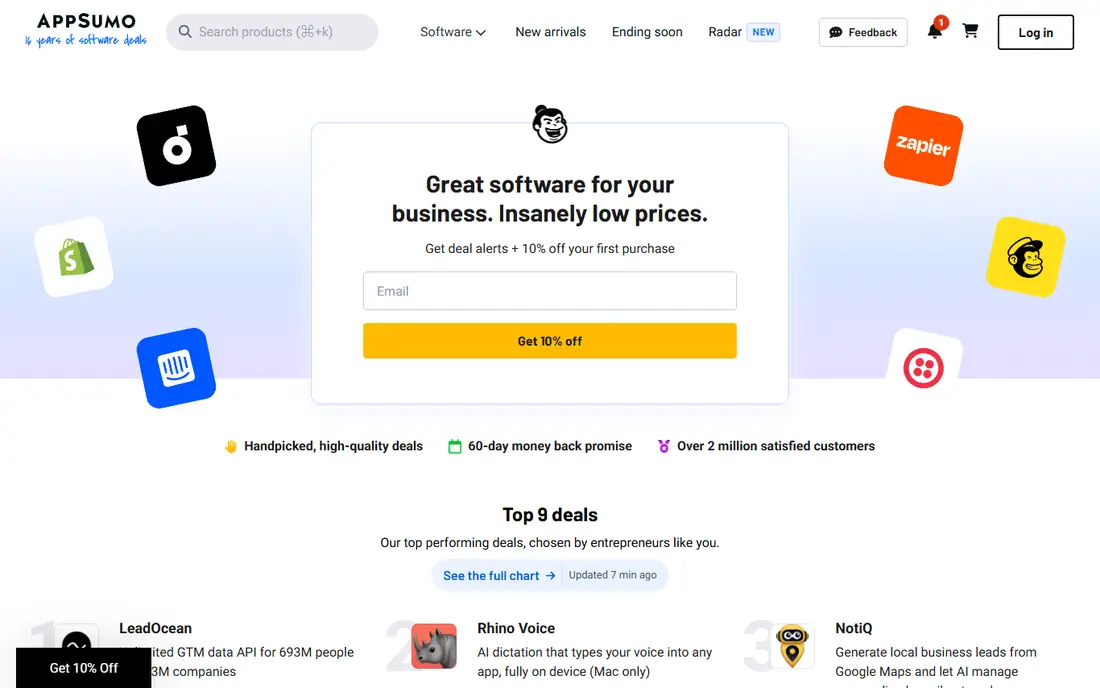
AppSumo is a marketplace, not a leaderboard. It sells your software, usually as a lifetime deal, to its list of deal hunters, and keeps a negotiated share of the revenue. A strong campaign can bring in five or six figures and hundreds of users in weeks, which is why bootstrapped SaaS companies treat it as a funding event as much as a launch.
Price the promise honestly before you sign. A lifetime deal sold today is a hosting and support cost carried for years, and Sumo buyers ask a lot of questions and refund at real rates. Products with low serving costs and a clear upsell path do well. Products that need every user to pay monthly should think twice. Nothing else on this list brings revenue like it, and nothing else creates the same obligations.
What we like- A large audience that arrives ready to buy software deals
- No upfront listing fee, AppSumo takes a negotiated revenue share
- Campaigns produce cash and a wave of real users and reviews
- Strong fit for bootstrapped SaaS needing early revenue
Watch out for- Lifetime deals create lifetime support obligations
- The audience expects deep discounts and behaves accordingly
- Selection is curated, not every product is accepted
- Heavy refund and support load during campaigns
Starting priceSee website
Free planNo
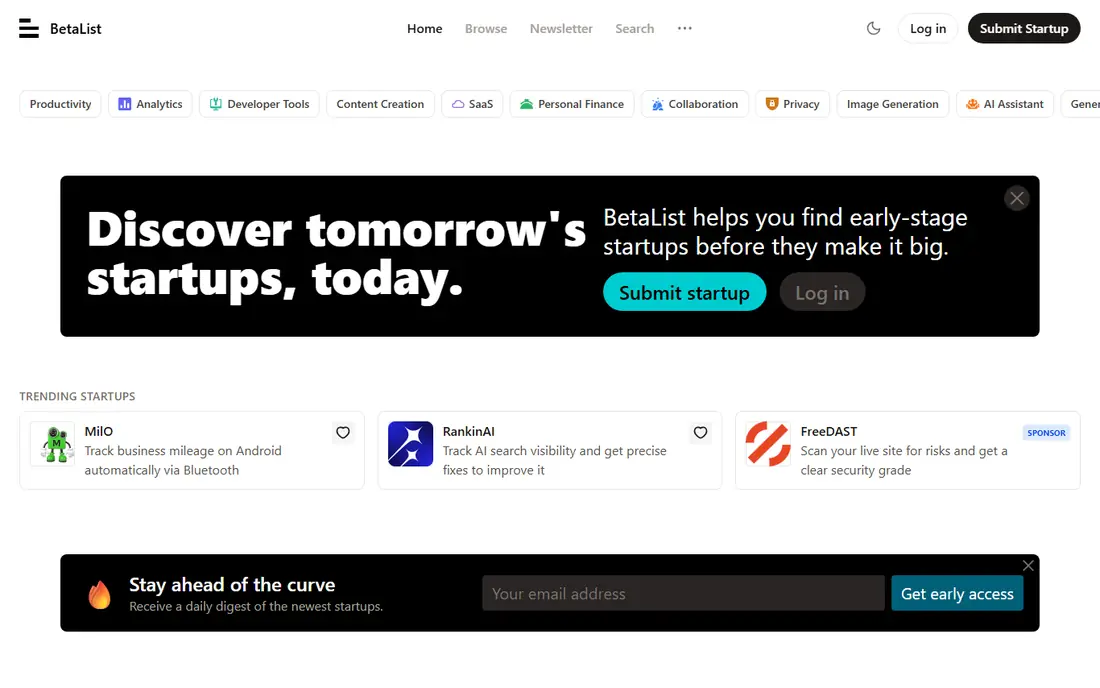
BetaList answers the question the other platforms cannot: where do the first hundred users come from before launch day. It features startups that are unreleased or in private beta, and its readers sign up for early access as a habit. A BetaList feature builds the email list that makes a later Product Hunt day work.
The model has shifted to paid submission, refunded if your startup is not selected, with boost options on top, so treat it as a modest media buy rather than a free listing. Its scale is small and its audience is early adopters, not your eventual market. As the first step of a launch sequence, it remains the specialist.
What we like- Audience comes specifically to try unfinished products
- Builds a waitlist before launch, which every other platform rewards
- Editorial curation keeps the feed relevant
- Long record with early stage startups
Watch out for- Submissions are now paid, with prices shown inside the flow
- A product that has already launched looks out of place
- Volume is modest next to Product Hunt
- The wait can be long without an expedited option
Starting priceFree
Free planYes
Uneed runs a daily launch board in Product Hunt's shape, sized for indie products. You can join the free queue and accept the date it gives you, reported at around five months out in October 2026, or pay a modest fee, cited between about $15 and $40 depending on the option, to fast track or pick your day. Top finishes earn a dofollow backlink, which Product Hunt does not offer.
For a side project or a small SaaS, that trade is attractive: a winnable board, a real launch date to plan around, and a link that counts. The audience will not change your year. It can give a new product its first users, its first feedback, and a badge that is honest about its scale.
What we like- Free launch queue with a daily ranked board
- Paid skip the line options cited from about $15 to $40 to choose your date
- Dofollow link rewards for strong finishes
- Community of indie makers who actually vote and comment
Watch out for- Free queue waits run to months
- Audience is smaller than Product Hunt by a wide margin
- Keeping the publication link needs a minimum upvote score
- Best suited to indie and design led products
#5
Peerlist Launchpad
Best for: Weekly launches for developer and design work
Visit peerlist.io
Starting priceFree
Free planYes
Peerlist built a professional network for developers and designers, and its Launchpad runs weekly product drops every Monday, with voting through the week. Because a launch hangs on your profile, the social proof compounds: the same page that shows your product shows your work history.
The weekly rhythm is the difference from Product Hunt. A good launch gets days of attention instead of hours, and the competition pool is small enough that a solid developer tool can top the week. The requirement is participation: Peerlist serves its members, so build the profile and be part of the community before launch week arrives.
What we like- Weekly Monday launches give a product a full week of visibility
- Launches attach to your professional profile, which adds credibility
- Audience of developers and designers suits dev tools and design products
- Free, with no paid launch tier
Watch out for- Requires a Peerlist profile, so it serves its own community first
- One launch slot per week rhythm limits timing
- Audience is narrower than general platforms
- Link value is reserved for the week's top finishers
Starting priceFree
Free planYes
Fazier is the pragmatic middle of the launch market: a daily board like Product Hunt's, a free route in exchange for embedding its badge, and paid tiers, cited at $29 for Lite and $49 to $99 above that, which add promotion and guarantee the dofollow link rather than leaving it to the day's ranking.
That guarantee is what many makers actually want from a launch, a dated, permanent, credited listing, with the launch day buzz as a bonus. Traffic is a fraction of Product Hunt's, and Fazier does not pretend otherwise. In a launch plan that spreads across five or six platforms over a month, Fazier is usually one of the five.
What we like- Free daily launches with a badge embed, reviewed within about 30 days
- Paid tiers cited at $29 to $99 buy visibility and guaranteed dofollow links
- Less crowded than Product Hunt on any given day
- Product pages stay live as a directory listing after launch day
Watch out for- Audience is modest
- Free listing asks for a badge or backlink
- The day board is smaller, so a top finish means less traffic
- Younger platform with a shorter track record
Starting priceFree
Free planYes
DevHunt does for developer tools what a general board cannot: it puts your launch in front of people who will read the documentation, test the API, and tell you precisely what is broken. It runs weekly launches, lists products free with a nofollow link, and sells a launch package at a cited $19, with a boosted option at $49 that includes the dofollow link.
Developer tools live or die on this audience's respect, and DevHunt's small, sharp crowd is worth more to a dev tool than a bigger general one. If your product is not for developers, skip it entirely. If it is, DevHunt belongs in the launch week next to a Show HN post.
What we like- Audience is developers only, so feedback is technical and direct
- Free listing with weekly launches
- Paid launch at a cited $19 and a boosted tier at $49
- Open source project with transparent rules
Watch out for- Useless for non developer products
- Free listing links are nofollow
- Weekly audience is small
- The bar for technical credibility is high and comments can be blunt
Starting priceFree
Free planYes
AlternativeTo is the slow asset in the list. People arrive there typing the name of a product they want to leave, and if your product is listed as an alternative, with honest descriptions and a few user ratings, it collects those switchers every month for years. It is a directory, not an event, and it should be set up once and maintained, not launched on.
Every product with a known competitor belongs here, because the alternative to search is some of the highest intent traffic on the internet. Do not expect a spike. Expect a tap that never fully turns off, which over two years can out deliver several launch days.
What we like- Captures buyers actively searching for an alternative to a named product
- Listings are permanent, not a one day event
- Community driven rankings and reviews build over years
- Free to submit
Watch out for- No launch moment, traffic arrives slowly
- Your page quality depends on users adding and rating your product
- Works only when buyers search by a competitor's name
- Presentation is plain next to launch platforms
How we chose
We reviewed the launch platforms software teams actually schedule in 2026, using platform pricing and FAQ pages and October 2026 comparisons from OpenHunts, SaaSCity, Uneed, and AltHunt. The tests were audience fit, cost to launch on a chosen date, how long visibility lasts, and whether the platform gives a credit carrying link. We kept one marketplace, AppSumo, because it changes launch economics entirely, and one directory, AlternativeTo, because launches end and discovery should not. We left out communities such as Reddit and Indie Hackers, which reward participation rather than running launch products, and submission services that resell the same listings.
What to look for in product launch software
Sequence beats size. The launches that work run in order: a waitlist builder such as BetaList while the product is unfinished, launch day platforms when it ships, and directories holding the door open afterwards. A single day on the biggest board, with no list of your own, is the pattern behind most launch day disappointments. Each platform here feeds the next: emails collected early become votes on the day, and the day's coverage becomes the directory listing's proof.
Price the paid options with clear eyes. Queue jumps of $15 to $50 on the smaller boards buy a date and a link, which is fair value. What no fee buys is an audience that cares. Finally, prepare the boring parts before any date is set: a landing page that converts the spike, onboarding that survives it, and analytics that can tell a launch visitor from a customer. Platforms deliver a day of attention. The product team decides what it is worth.
Frequently asked questions
Is Product Hunt still worth it in 2026?
Yes, as the centrepiece of a wider launch, not as the whole launch. It remains the largest audience of early adopters, a top finish still drives real traffic and coverage, and it costs nothing. Its limits are structural: one day of visibility, heavy competition, and nofollow links. Products that arrive with their own audience and email list get far more from the day than products hoping the platform supplies both.
How much does it cost to launch a product?
A basic launch across the platforms here can cost nothing: Product Hunt, Peerlist, and the free queues at Uneed and Fazier are free. Realistic budgets add the paid options: roughly $15 to $50 to choose dates or guarantee links on smaller boards, a paid BetaList submission for the waitlist phase, and directory submission services if you want breadth. AppSumo is the exception, charging a negotiated share of campaign revenue instead of fees.
When should a product use AppSumo?
When early revenue and a large user wave matter more than margin per user, and the product's serving costs are low enough to honour lifetime deals. AppSumo suits bootstrapped SaaS with a clear path to upsells. It suits badly any product whose economics need monthly payments from every user, because a lifetime deal removes exactly that.
What is a dofollow link and why do launch platforms sell it?
A dofollow link passes search authority from the platform's site to yours, which can help your site rank; a nofollow link does not. Product Hunt's links are nofollow, so several smaller platforms compete by offering dofollow links to top finishers or as part of paid tiers. One link will not transform your rankings, but a launch month that earns fifteen to twenty from real platforms is a genuine asset.
Sources we checked (0)
Is your product missing or out of date?
We review this list regularly. Vendors can request a listing, send updated pricing or ask about featured placement.

Shihab Mia · Founder, Rankite
Shihab has 5+ years in B2B and SaaS SEO. He writes Rankite's software buying guides from pricing pages, documentation and public user reviews. More about Shihab.