How we make this list: we compare pricing pages, product documentation and public user reviews. Ratings come from G2, Capterra or Trustpilot, with the date we checked them.
Key takeaways
- Expecting and Empowered and The Bloom Method offer the most structured trimester-by-trimester strength programs, with pelvic floor and core work built into every phase.
- MommaStrong and PregActive suit busy schedules, with short daily workouts of 12 to 15 minutes that focus on pain relief and functional strength.
- MUTU System is the strongest choice for core and pelvic floor recovery, including diastasis recti, whether you are pregnant or years postpartum.
- Baby2Body and obe Fitness cover more than workouts, adding nutrition, baby tracking, and general fitness classes beside prenatal content.
- Every pregnancy is different, so clear your exercise plan with your clinician first, especially if you have pain, bleeding, or a high-risk condition.
A short note before the list: this article is for general information only and is not medical advice. Exercise during pregnancy is safe for many people, but it is not right in every situation, so talk with your obstetrician, midwife, or other clinician about your health history and any symptoms before starting a new program. Stop and seek care if you notice bleeding, fluid leakage, chest pain, dizziness, or regular painful contractions during or after exercise.
Choosing a pregnancy workout app is different from picking a general fitness app. The best options adjust by trimester, teach pelvic floor and deep core control, flag movements to modify, and carry you into postpartum recovery rather than ending at birth. Generic apps often scale down regular workouts without explaining why, which leaves new and experienced exercisers guessing. The eight apps below are built around pregnancy and motherhood, and they differ mainly in session length, coaching style, and how much they focus on rehabilitation versus general fitness.
Quick comparison
| Tool | Best for | Starting price | Free plan |
|---|
 Expecting and Empowered | structured strength through pregnancy | See website | No |
 MommaStrong | short daily workouts for busy parents | $10 per month | No |
 The Bloom Method | prenatal and postpartum studio classes | $29 per month | Free trial |
 MUTU System | core and pelvic floor recovery | See website | Free trial |
 Baby2Body | workouts plus nutrition and baby tracking | See website | Yes |
 PregActive | 12-minute pain relief workouts | $13 per month | Free trial |
 Knocked-Up Fitness | Pilates-based prenatal training | See website | No |
 obe Fitness | prenatal classes inside a full fitness app | See website | Free trial |
Is your product missing or out of date?
We review this list regularly. Vendors can request a listing, send updated pricing or ask about featured placement.
The best pregnancy workout apps
Starting priceSee website
Free planNo
Expecting and Empowered, often shortened to E and E, builds its program around progressive strength training that changes week by week through pregnancy and into postpartum recovery. Workouts pair strength moves with pelvic floor and core education, so you learn why a movement is chosen rather than just copying a video. Separate tracks cover postpartum recovery, C-section healing, return to running, Pilates, and mobility, which makes it one of the few apps that plans the full arc from first trimester to a year after birth.
The structure is the appeal and the demand. You follow a plan rather than picking random classes, which suits people who want guidance but can feel rigid for those who prefer variety each day. Pricing is also less upfront than some rivals, so check the program page for the current figure before committing. Expecting and Empowered fits someone who wants a therapist-designed strength plan and is willing to follow it steadily through pregnancy and recovery.
What we like- Week-by-week pregnancy programming
- Physical therapist designed progression
- Postpartum and C-section tracks included
Watch out for- Pricing sits behind program pages rather than a single clear table
- App experience is paired with web content
- Strength focus may feel intense for complete beginners
Starting price$10 per month
Free planNo
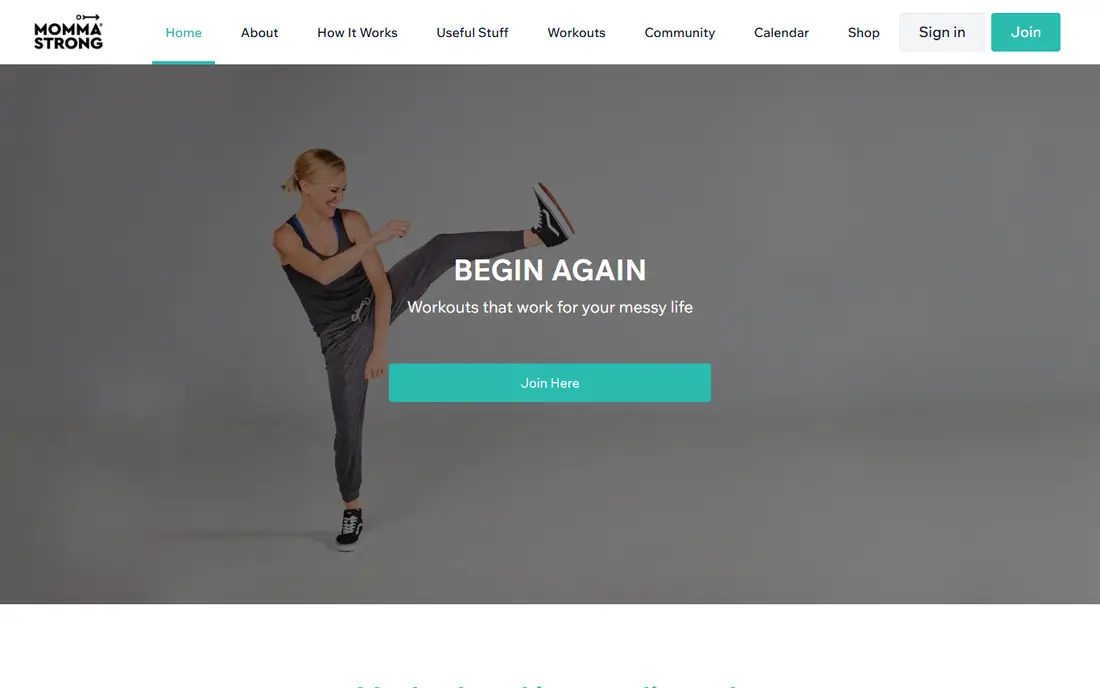
MommaStrong takes a deliberately small-dose approach: a new 15-minute workout each day, ready to press play without choosing from a large library. Content covers every phase of motherhood, from daily pregnancy workouts to early postpartum recovery, including a track for C-section birth, and it addresses common issues such as pelvic floor weakness, diastasis recti, back pain, and incontinence with plain explanations. Membership uses a choose-your-price model, with tiers at 10, 15, or 20 dollars per month for the same full access, which is unusual and welcome.
The simplicity cuts both ways. People who want long classes, heavy lifting progressions, or detailed metrics may find the short format too light, and there is no short free trial to test the style first, though the lowest tier keeps the entry cost modest. MommaStrong fits parents who struggle to find time, want a daily habit that fits between other duties, and value rehabilitation guidance over intensity.
What we like- 15-minute daily workouts
- Pay-what-you-can tiers from 10 dollars
- Content for pregnancy through menopause
Watch out for- No free trial in place of its low tier
- Workout style is functional rather than gym-style lifting
- Community sits off social media, which some users miss
Starting price$29 per month
Free planFree trial
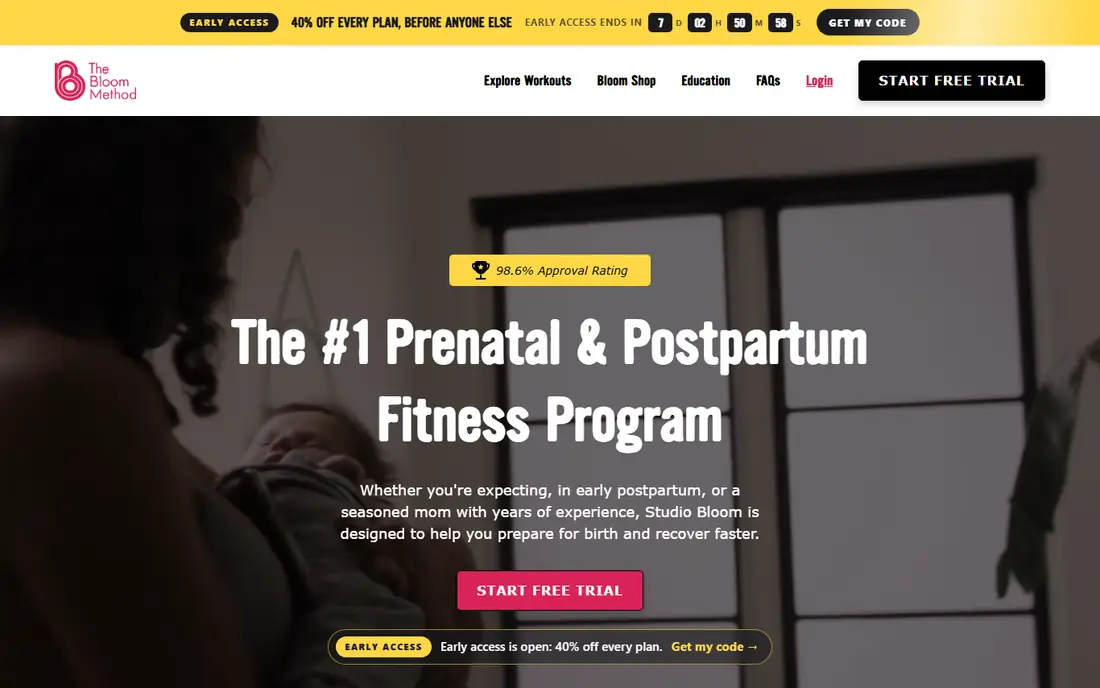
The Bloom Method runs Studio Bloom, an app with a large class library spanning trying to conceive, pregnancy, and postpartum recovery, plus programs for diastasis recti and pelvic floor rebuilding. Classes cover sculpt, strength, barre, cardio, mobility, and birth preparation, with a calendar and progress tracking to keep a routine on track. Members can message coaches by text, audio, or video, which adds a human check on form and modifications that a video library alone cannot give.
The price, listed at 29 dollars per month on its homepage details, sits above the short-format apps, and the sheer number of classes can make starting harder without a guided program. The studio feel, with music and instructor-led classes, will appeal to people who miss group fitness, while those who want a single daily workout handed to them may prefer MommaStrong or PregActive. Bloom fits exercisers who enjoy class variety and want coach access beside a deep prenatal library.
What we like- More than 1,000 workouts and 20 guided programs
- One-to-one coach messaging
- Pelvic floor specialist input
Watch out for- Monthly price is higher than short-format rivals
- Class library can overwhelm newcomers
- Studio style may not suit people who prefer minimal equipment routines
Starting priceSee website
Free planFree trial
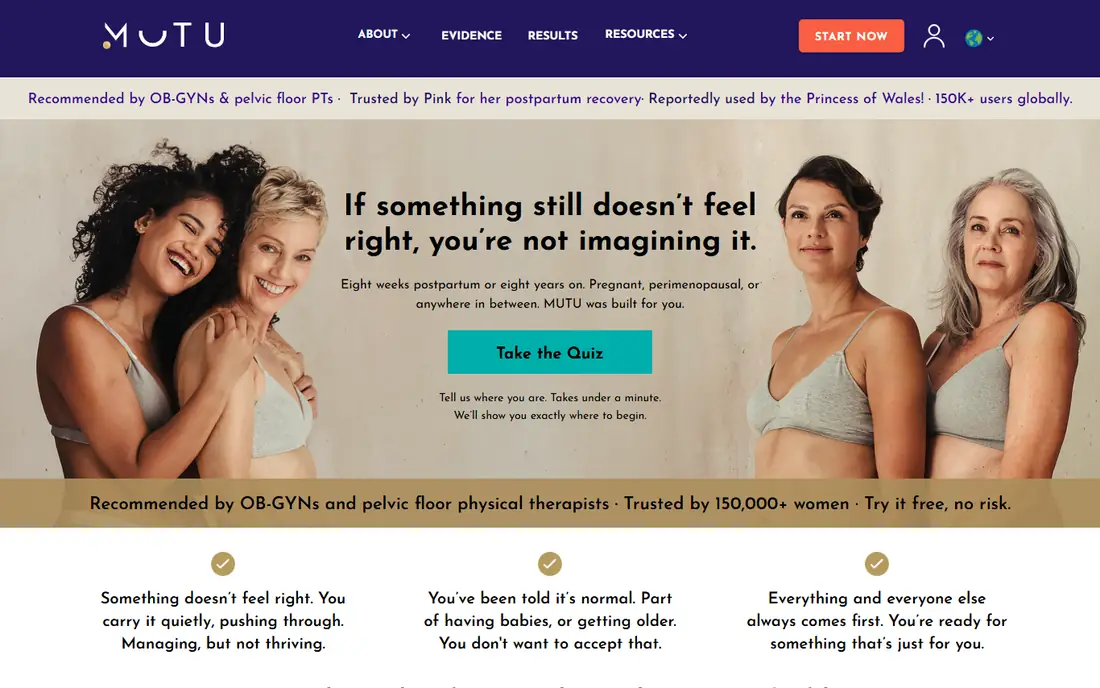
MUTU System is a rehabilitation-first program built with obstetricians and pelvic floor specialists, and it works during pregnancy, in the postpartum months, and years later. The core program asks for about 12 minutes a day, with video guidance that progresses week by week, plus higher intensity workouts once the foundation is solid. A 10-day free trial lets you test the teaching style, and an expert-moderated community gives a place to ask questions without social media noise.
Because MUTU centers on core and pelvic floor recovery, it is not a general fitness app with dozens of class types, and people who want dance cardio or heavy strength sessions will need a second app for those. Pricing is presented as monthly or annual billing, so confirm the current figure on the site. MUTU fits anyone whose main goal is rebuilding core function, closing the gap from diastasis recti, or stopping leaking, whether pregnancy is current or long past.
What we like- 12-minute daily core foundation sessions
- 10-day free trial
- Expert-moderated community support
Watch out for- Rehabilitation focus means less general cardio or strength variety
- Pricing is shown as monthly or annual billing without one headline figure
- Program suits steady daily use more than occasional workouts
Starting priceSee website
Free planYes
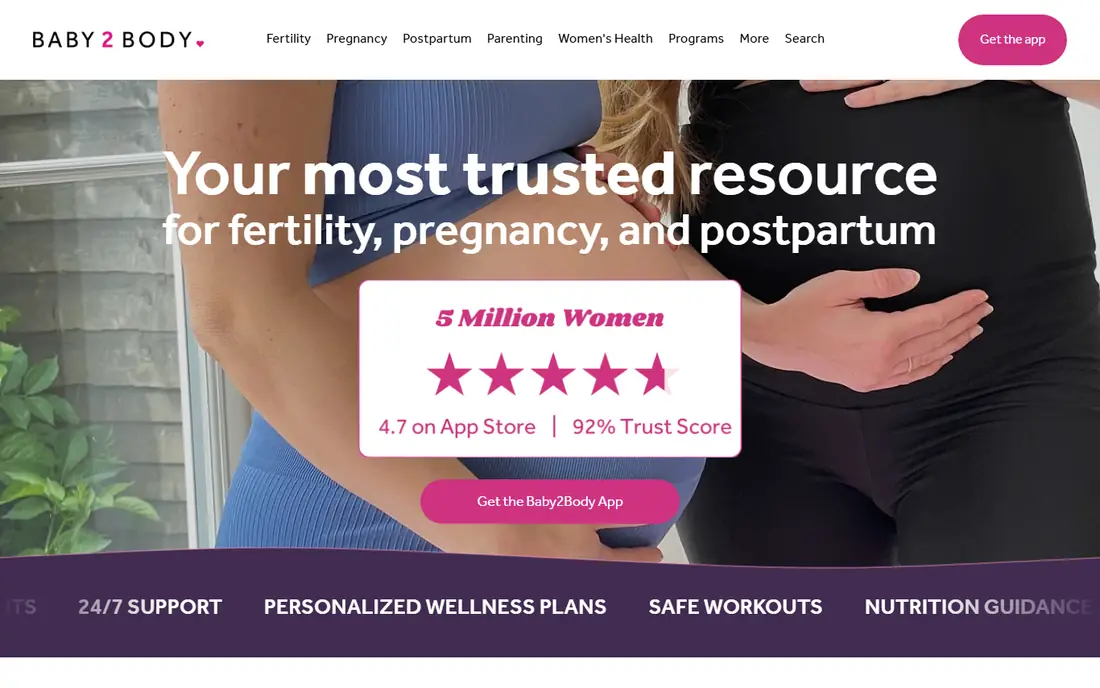
Baby2Body covers fertility, pregnancy, and postpartum in one app, pairing stage-based workouts with nutrition guidance, recipes, and baby development updates. Plans adjust to your week of pregnancy or postpartum stage, and a built-in coach answers questions around the clock, which helps when a worry arrives at night rather than during office hours. The free tier gives a way to try the layout before paying, and on-demand programs such as trimester fitness plans and a labor preparation guide can be added separately.
The breadth means workout programming is less deep than Expecting and Empowered or Bloom, and the extra programs carry separate prices that add up. Medical questions should still go to your clinician rather than an app coach. Baby2Body fits first-time parents who want one companion for movement, food, and baby milestones, and who prefer gentle personalization over a strict training plan.
What we like- Personalized plans by stage
- Nutrition guidance and recipes
- Baby development insights in the same app
Watch out for- Workout depth is lighter than specialist fitness apps
- Some programs are sold separately
- AI coach answers need clinician backup for medical questions
Starting price$13 per month
Free planFree trial
PregActive centers on a 12-minute method that teaches pelvic floor, deep core, and breath to work together, with trimester-specific modifications in every session. The membership includes week-by-week trimester workouts, a birth preparation program, core rehab modules, a diastasis repair series, a pelvic floor reset, and targeted programs for pelvic girdle pain, prolapse, and C-section recovery. Its homepage quotes an annual membership at 13 dollars per month, which makes it one of the lower-cost full programs here.
The experience is closely tied to its founder and teaching method, which some users love for its clarity and others may find repetitive over months. Class variety is narrower than Bloom or obe, since the focus stays on the core method. PregActive fits people dealing with back pain, pelvic pain, or leaking who want short, guided sessions with a clear technique, and who value a low monthly price over a large class catalog.
What we like- 12-minute signature workouts
- Annual membership quoted at 13 dollars per month
- Dedicated pelvic girdle pain and prolapse programs
Watch out for- Founder-led style may not suit everyone
- Smaller class variety than studio apps
- Website is sales-heavy, so pricing needs careful reading
Starting priceSee website
Free planNo
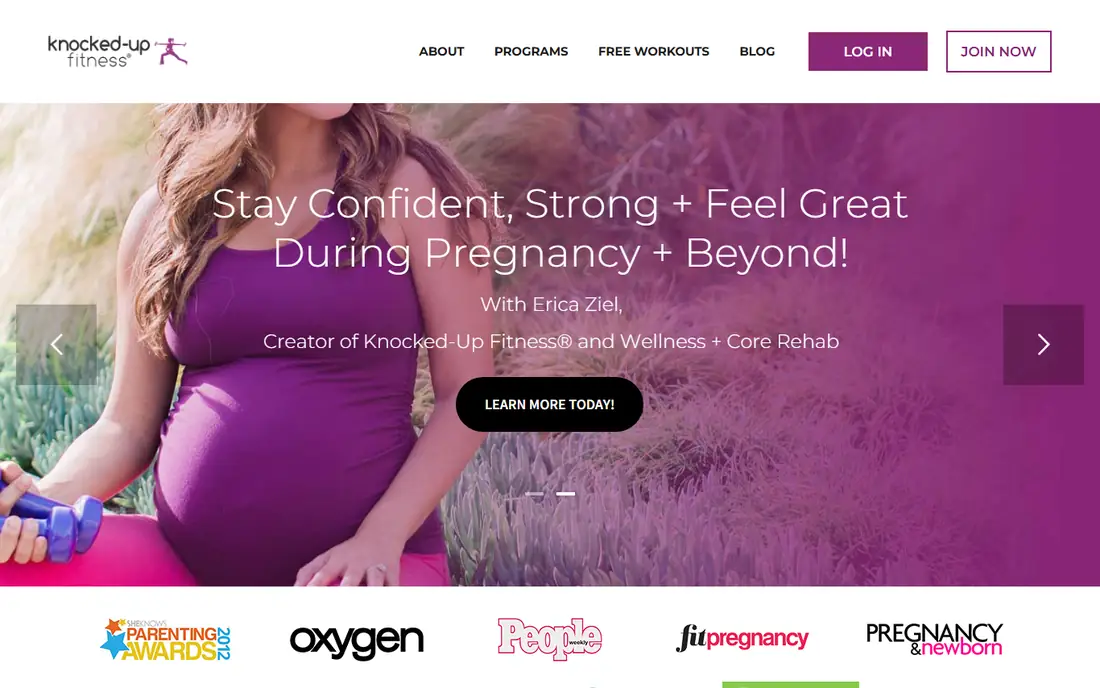
Knocked-Up Fitness, created by prenatal specialist Erica Ziel, blends Pilates, core training, and wellness education for people thinking about pregnancy, currently pregnant, or postpartum. Its signature elements include deep core and pelvic floor work, a push preparation method for labor, and structured workout schedules that remove daily decision fatigue. A network of certified prenatal and postnatal specialists offers one-to-one or small group training for those who want personal guidance beyond videos.
The main drawback is transparency: membership pricing is not laid out plainly on the homepage, so you need to explore program pages or contact the team for current figures. The experience also leans more website than polished app, which matters if you mainly exercise from a phone. Knocked-Up Fitness fits people drawn to Pilates-style training, who want labor preparation built into their program, and who like a specialist-led method over a generic class library.
What we like- Pilates and core-focused prenatal method
- Push preparation training for labor
- Certified specialist network for one-to-one help
Watch out for- Membership pricing is not upfront on the homepage
- Program is more website-based than app-first
- Smaller workout library than larger studio apps
Starting priceSee website
Free planFree trial
obe Fitness is a general fitness platform built around women, with strength, cardio, recovery, and dance classes plus a dedicated pre and postnatal section. That mix suits people who exercised before pregnancy and want to keep a familiar app, switching to prenatal classes during pregnancy and returning to general programs afterward. Progressive training programs guide multi-week goals, and a quiz matches new members to a plan based on their aims.
Prenatal depth is thinner than the specialist apps, since pelvic floor rehabilitation is one thread among many class types rather than the core of the service. Pricing also varies by plan, so check the current offer before signing up. obe fits active people who want prenatal classes inside an app they will keep using after birth, rather than a pregnancy-only tool they will cancel within a year.
What we like- Pre and postnatal classes beside general fitness
- Progressive training programs
- Live and on-demand class options
Watch out for- Prenatal content is one section of a wider app
- Pricing varies by plan and trial route
- Less rehabilitation depth than MUTU or PregActive
How we chose
We checked each vendor homepage, then compared how programs handle the things that matter most in pregnancy: trimester adjustments, pelvic floor and core teaching, session length, coaching access, and postpartum coverage. We weighed public documentation and user feedback on clarity, safety guidance, and whether programs explain modifications rather than simply labeling a workout as safe. Prices shown as See website reflect plans that vary by billing period or sit behind program pages, so the vendor site is the safer source than a single quoted number.
How to pick the right app for your trimester and goals
Start with your main goal, since these apps split cleanly. If pain, leaking, or diastasis recti is your concern, favor rehabilitation-first programs such as MUTU or PregActive, and bring any diagnosis to your clinician before starting. If you want to stay strong and prepare for birth, a structured strength program such as Expecting and Empowered or Bloom gives more progression. If time is the barrier, a short daily format such as MommaStrong or PregActive is more likely to survive real life than a 45-minute class plan.
Next, match the format to your habits. App-first users who exercise from a phone should test navigation and offline options during the free trial, while people who use a laptop or television may prefer a web-friendly service. Check whether workouts need equipment, how long sessions run, and whether modifications are shown on screen for wrist pain, pelvic pain, or limited space. A program that fits your living room and your schedule will beat a more complete program that you never open.
Safety checks that matter more than class count
Read how each app handles warning signs, high-risk conditions, and return-to-exercise guidance after birth, including C-section recovery. A good program tells you plainly when to stop and call your clinician, rather than offering only encouragement. Also check whether coaches are qualified in prenatal and postnatal exercise, and whether the app encourages you to share your plan with your clinician. Class count is a weak measure here: a smaller library with clear progressions and safety teaching serves most pregnant exercisers better than hundreds of generic videos.
Frequently asked questions
Is it safe to exercise during pregnancy?
For many people with uncomplicated pregnancies, moderate exercise is supported by major health guidelines, but safety depends on your individual health, pregnancy risks, and symptoms. Talk with your clinician before starting, and stop and seek care for bleeding, fluid leakage, chest pain, dizziness, or regular painful contractions. This article is for general information only and is not medical advice.
Which pregnancy workout app is best for pelvic floor problems?
MUTU System and PregActive focus most directly on pelvic floor and core recovery, with structured progressions for leaking, prolapse symptoms, and diastasis recti. Expecting and Empowered and Bloom also include pelvic floor work inside broader strength programs. If you have a diagnosed pelvic floor condition, ask your clinician about a referral to a pelvic floor physical therapist beside any app.
How long should pregnancy workouts be?
Most programs here use 12 to 30 minute sessions, which fit daily life and allow steady progress without exhaustion. Short daily movement often beats occasional long sessions during pregnancy, especially in the first trimester when nausea and fatigue are common. Follow the program guidance and your clinician advice rather than chasing a fixed minute target.
Do I need equipment for these apps?
Most workouts use body weight or light equipment such as resistance bands, small dumbbells, or a mat, and many offer no-equipment modifications. Check each program class description before buying equipment, since specialist rehab programs need less gear than strength-focused studio classes. A mat and a little floor space cover most sessions.
Can I use these apps after giving birth?
Yes, most of them include postpartum tracks, though the depth varies. Expecting and Empowered, MUTU, PregActive, and Bloom all offer structured postpartum recovery, while Baby2Body and obe carry you into general postnatal fitness. Start postpartum exercise only when your clinician advises it, and use a C-section track if you had a surgical birth.
What if I have never exercised before pregnancy?
Start with a beginner-friendly, rehabilitation-aware program such as MommaStrong or Baby2Body, and keep sessions short and gentle. Tell your clinician you are new to exercise, and choose programs that explain modifications and progress slowly rather than pushing intensity. Consistency matters more than difficulty, especially in the early weeks.
Sources we checked (8)
- https://expectingandempowered.com
- https://mommastrong.com
- https://thebloommethod.com
- https://mutusystem.com
- https://baby2body.com
- https://pregactive.com
- https://knockedupfitness.com
- https://obefitness.com
Is your product missing or out of date?
We review this list regularly. Vendors can request a listing, send updated pricing or ask about featured placement.

Shihab Mia · Founder, Rankite
Shihab has 5+ years in B2B and SaaS SEO. He writes Rankite's software buying guides from pricing pages, documentation and public user reviews. More about Shihab.