How we make this list: we compare pricing pages, product documentation and public user reviews. Ratings come from G2, Capterra or Trustpilot, with the date we checked them.
Key takeaways
- Portfolio analysis tools answer different questions: some track what you own, some test what would have happened, and some judge risk and fees.
- Morningstar Investor is the best pick for fund and stock research alongside portfolio analysis, with Portfolio X-Ray included.
- Portfolio Visualizer is the best pick for backtesting and Monte Carlo simulations, with a free tier for basic tests.
- Sharesight is the best pick for true performance tracking, including dividends, fees, and tax reporting.
- Kubera is the best pick for complex households with property, crypto, and private assets in one balance sheet.
- This article is general information only, not financial advice, and past performance does not predict future results.
Quick comparison
Is your product missing or out of date?
We review this list regularly. Vendors can request a listing, send updated pricing or ask about featured placement.
Starting price$249 per year
Free planNo
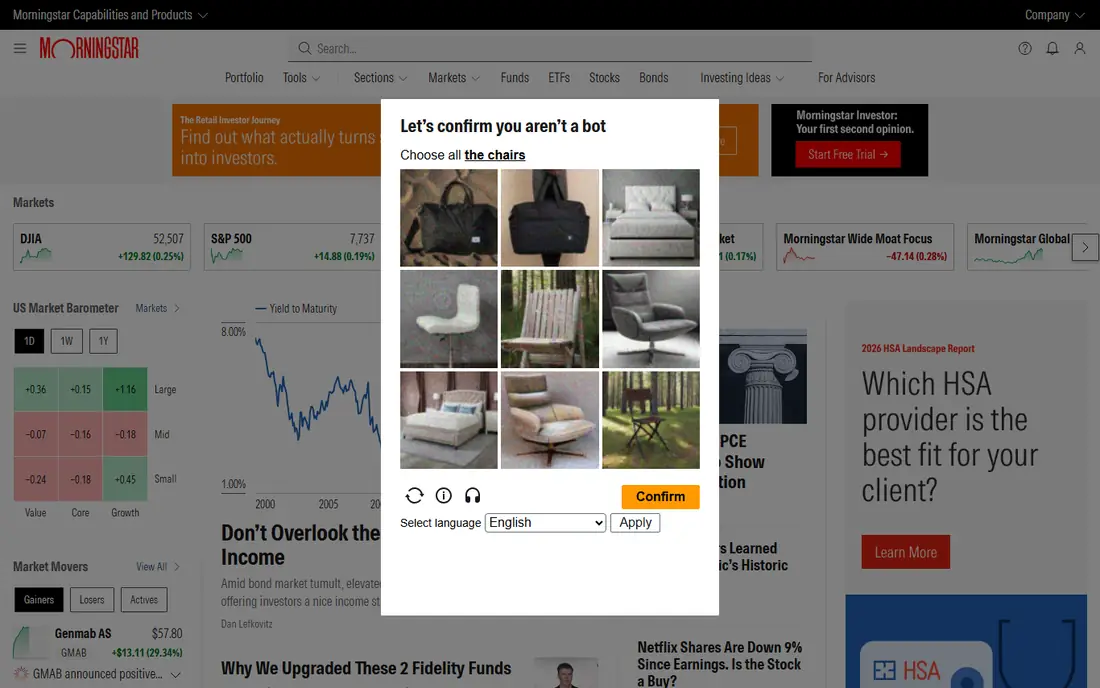
Morningstar Investor is the subscription that now contains Portfolio X-Ray, the classic tool that breaks a portfolio down by asset class, sector, region, and stock overlap across funds. If you own several funds, X-Ray shows whether they actually diversify you or simply hold the same stocks under different names, which is the single most useful insight for fund investors. Alongside X-Ray, the subscription includes Morningstar analyst reports, ratings, and stock and fund research that few other tools match in depth.
The price is $249 per year or $34.95 per month, with a 7-day free trial and occasional first-year discounts, and there is no permanent free tier. Morningstar is also research-first rather than transaction-first, so it tracks holdings well but does not match Sharesight on dividend and tax reporting. For investors who own funds and want to understand what they really own, Morningstar Investor is the best analysis pick, and X-Ray alone justifies the price for many fund holders.
What we like- Portfolio X-Ray included
- Analyst reports and ratings
- Fund and stock research depth
Watch out for- $249 per year or $34.95 per month
- No free tier
- Research focus over transaction tracking
Starting priceFree
Free planYes
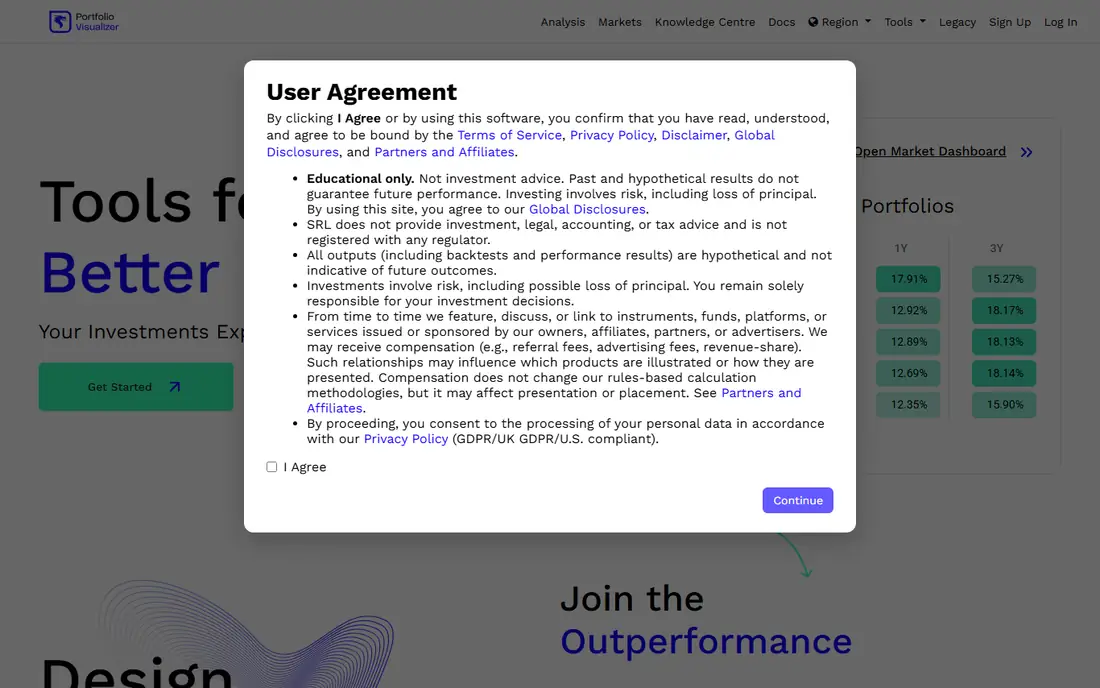
Portfolio Visualizer is the best tool for testing what would have happened. You enter an allocation, and it backtests performance across decades, runs Monte Carlo simulations for retirement outcomes, and analyzes factor exposure, drawdowns, and rolling returns. That historical view answers questions that a live tracker cannot: how would a 60/40 portfolio have handled 2008, what sequence-of-returns risk does your retirement plan face, and how much does a small allocation change alter long-term results.
The trade-off is manual entry and expertise. Portfolio Visualizer does not connect to brokerages for most users, so you enter holdings yourself, and the interface assumes you know terms such as factor exposure and drawdown. The free tier covers basic tests with limits, while Basic costs $360 per year and Pro $660 per year for higher limits and advanced models. For investors who want evidence before changing an allocation, Portfolio Visualizer is unmatched, and its free tier covers the most common backtests.
What we like- Historical backtesting
- Monte Carlo simulations
- Factor analysis
- Free tier for basic tests
Watch out for- Manual portfolio entry
- Paid plans from $360 per year
- Interface assumes investing knowledge
#3Sharesight
Best for: True performance and tax reports3.5/5 on
G2 (1 reviews, checked Oct 2026)
Visit sharesight.com
Starting priceFree
Free planYes
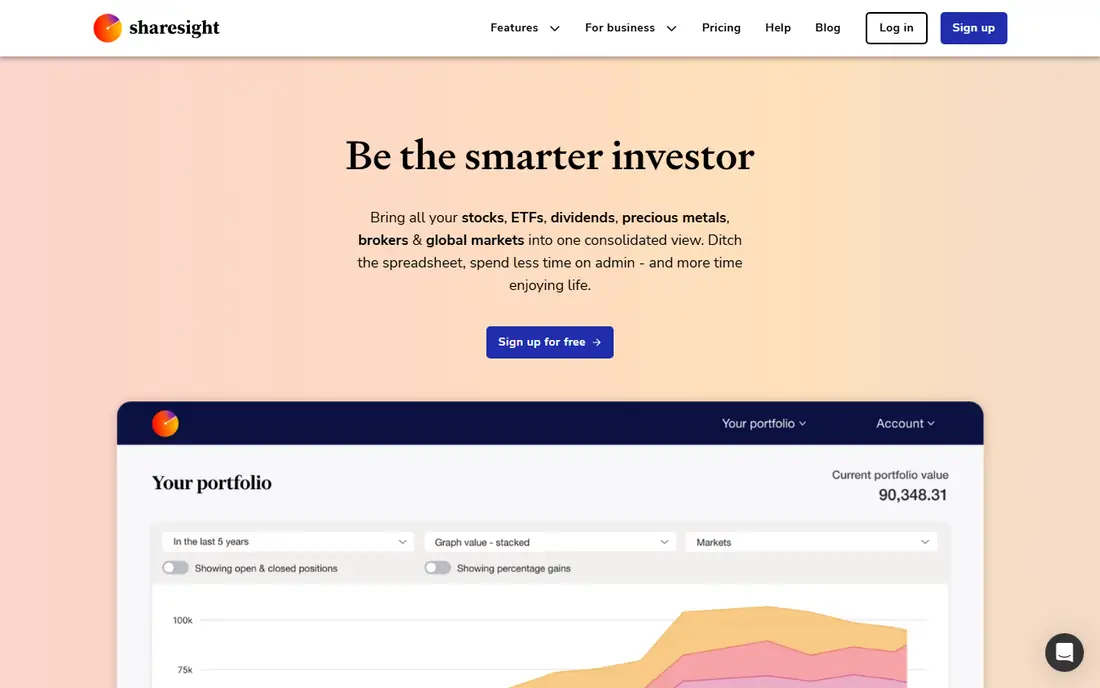
Sharesight is built specifically for investors, and its strength is true performance: returns calculated from actual transactions, including dividends, fees, and currency effects, rather than from price changes alone. That distinction matters, since a dividend-heavy portfolio looks very different once payouts and reinvestment are counted. Broker imports and trade confirmations automate transaction entry for many brokers, and tax reporting covers capital gains and dividend income in several countries, which saves hours at tax time.
The free plan covers up to 10 holdings, which suits small portfolios but not larger ones, and paid annual plans start from $84 per year. Sharesight research depth is thinner than Morningstar, so fund analysis and analyst reports are not its strength. For investors who want to know their real return and simplify tax reporting, Sharesight is the best dedicated tracker, and its transaction-based method is more honest than price-only dashboards.
What we like- True returns including dividends and fees
- Tax reporting
- Broker imports and trade confirmations
Watch out for- Free plan limited to 10 holdings
- Paid plans from $84 per year
- Less research depth than Morningstar
Starting price$250 per year
Free planNo
Kubera holds a whole household balance sheet in one place: stocks, bank accounts, crypto exchanges and wallets, property, vehicles, gold, collectibles, private equity positions, and debts against those assets, all valued together. Multi-currency support works at every layer, so an international household can switch the total currency with one click, and ownership tags cover trusts, LLCs, and family members on higher tiers. Performance tracking covers CAGR and IRR per position with daily history and cost basis, and a beneficiary access feature helps if something happens to the account holder.
The price is $250 per year for Essentials, with Black at $2,500 per year for complex family and trust needs, and there is no free tier beyond a trial. Kubera carries no ads and sells no data, which suits privacy-conscious households, but the premium price only makes sense if you actually hold many asset types. For investors with only brokerage accounts, a cheaper tracker covers the job. For complex households with property, crypto, and private assets, Kubera is the only tool on this list that holds everything together.
What we like- Stocks, property, crypto, and private assets in one sheet
- Multi-currency
- Ownership and beneficiary features
Watch out for- $250 per year with no free tier
- No ads or data sales, but premium price
- Less fund research than Morningstar
Starting priceFree
Free planYes
PortfolioPilot scores your portfolio, models scenarios, and offers model-driven recommendations based on your holdings and goals. The scoring view gives a quick read on diversification, risk, and fee drag, while scenario tools show how changes in allocation or market conditions might affect outcomes. The free tier covers basic scoring, with Gold at $240 per year, Platinum at $588 per year, and Pro at $1,188 per year adding deeper scenarios and recommendations, each with a 10-day free trial.
Model recommendations deserve judgment: they are a starting point for research, not a substitute for advice, and this article is not financial advice. PortfolioPilot is also a newer vendor than Morningstar, so its research library is thinner. For investors who want a quick, scored view of their portfolio with scenario tools, PortfolioPilot is a strong free starting point, and its paid tiers suit investors who model changes often.
What we like- Portfolio scoring
- Scenario modeling
- Model-driven recommendations
- Free tier available
Watch out for- Gold plan from $240 per year
- Recommendations need judgment
- Newer vendor than Morningstar
Starting priceFree
Free planYes
Yahoo Finance pairs portfolio monitoring with market news and research, which suits casual investors who check holdings alongside headlines. You can track watchlists and portfolios, follow stocks and funds, and read news and analysis in the same app, with a free tier covering basic tracking. Bronze portfolio tools cost $95.40 per year and add deeper portfolio features, while higher tiers add more research and data.
Analysis depth is the limit: Yahoo Finance does not match Morningstar research, Portfolio Visualizer simulations, or Sharesight true performance tracking. Ads on the free tier also clutter the experience. For casual investors who want a free tracker with news in one place, Yahoo Finance is good enough, and its familiarity means almost no learning curve. For serious analysis, pair it with a dedicated tool rather than relying on it alone.
What we like- Free portfolio tracking
- Market news and research alongside holdings
- Widely familiar
Watch out for- Analysis depth limited
- Bronze portfolio tools from $95.40 per year
- Ads on free tier
Starting priceFree
Free planYes
Ziggma combines stock research with portfolio checkups and allocation alerts, giving investors a regular health check on their holdings. The checkup view flags concentration, allocation drift, and risk issues, while alerts notify you when allocation moves beyond your targets. The free tier covers basic tracking and checkups, with paid annual plans from $83.88 per year adding deeper research and alert features.
Ziggma is a smaller vendor than Morningstar or Yahoo Finance, so its research library and community are thinner, and its backtesting does not match Portfolio Visualizer. For investors who want a simple, regular portfolio checkup with alerts, Ziggma is a good low-cost pick, and its free tier covers the core checkup job. For deep research or simulations, pair it with Morningstar or Portfolio Visualizer.
What we like- Portfolio checkups
- Allocation alerts
- Stock research alongside tracking
- Free tier available
Watch out for- Paid plans from $83.88 per year
- Smaller vendor than rivals
- Less backtesting than Portfolio Visualizer

#8
Quicken Classic Premier
Best for: Investments plus household books
Visit quicken.com
Starting price$7.99 per month
Free planNo
Quicken Classic Premier covers investments alongside household bookkeeping: budgeting, bills, debt, retirement planning, and investment tracking in one subscription. That breadth suits households that want one place for money management rather than separate tools for investing and budgeting. Investment records track holdings, transactions, and performance alongside bank and credit card accounts, and retirement planning tools project outcomes from current savings and spending.
Pricing is displayed at $7.99 per month billed annually, with renewal prices varying, so check the renewal rate before committing. Quicken is designed for the United States and Canada, so international investors should look elsewhere, and the desktop interface feels dated next to web-first tools. For households that want investments inside a full money system, Quicken Premier is the best pick, and its budgeting depth complements a dedicated tracker such as Sharesight.
What we like- Investment records alongside budgeting, bills, and debt
- Retirement planning included
- Desktop depth
Watch out for- Subscription pricing with renewal variation
- US and Canada focus
- Interface feels dated
How we chose
We compared tools on the analysis they deliver, not on dashboard looks, weighting research depth, backtesting quality, true performance tracking, multi-asset coverage, and tax reporting. We favored tools with a free tier or trial, since analysis quality is hard to judge without your own portfolio loaded, and we flagged where prices vary by billing period. Prices come from vendor pricing pages and current guides, and where guides conflict we list the vendor figure or mark the price as See website. This article is general information only, not financial advice, and past performance does not predict future results. We did not test any tool hands-on.
Buying guide
Start from the question you need answered. If you own funds and want to know what you really own, start with Morningstar Investor and run Portfolio X-Ray on your holdings. If you want to test an allocation change before making it, start with Portfolio Visualizer free tier and backtest the change across past decades. If you want your true return and simpler taxes, start with Sharesight free tier for up to 10 holdings. If your household holds property, crypto, and private assets, Kubera is the only tool that holds them together.
Before you pay, load your real portfolio into the free tier or trial and check three things: whether account connections work for your brokers, whether performance figures include dividends and fees, and whether reports cover your tax needs. A tool that only tracks prices will flatter dividend portfolios and hide fee drag, so verify the return method before trusting it. Finally, treat every recommendation as a starting point for your own research, not as advice, and consider a licensed financial adviser for decisions involving retirement, taxes, or large sums.
Frequently asked questions
What is the best free portfolio analysis tool?
Portfolio Visualizer free tier is best for backtesting, Sharesight free tier is best for true performance on up to 10 holdings, and Yahoo Finance free tier is best for casual tracking with news. No single free tool covers research, backtesting, and tax reporting at once.
What is Portfolio X-Ray?
Portfolio X-Ray is a Morningstar tool that breaks a portfolio down by asset class, sector, region, and stock overlap across funds, showing whether multiple funds actually diversify you or hold the same stocks. It is included in Morningstar Investor.
Do these tools replace a financial adviser?
No. These tools analyze holdings, test scenarios, and report performance, but they do not give personalized advice for your tax, retirement, or estate situation. For large or complex decisions, consult a licensed financial adviser.
How is true return different from price return?
Price return only counts price changes, while true return includes dividends, reinvested payouts, fees, and currency effects. A dividend-heavy portfolio can look very different on a true-return basis, which is why Sharesight transaction-based tracking matters.
Can I backtest a portfolio for free?
Yes. Portfolio Visualizer free tier covers basic backtests and Monte Carlo simulations with limits, which is enough for most allocation questions. Paid plans raise limits and add advanced models for frequent testers.
Is past performance a reliable guide?
No. Backtests show what would have happened in past markets, not what will happen next, and market conditions change. Use backtests to understand risk and behavior, not to predict returns, and diversify rather than chasing the best past performer.
Sources we checked (0)
Is your product missing or out of date?
We review this list regularly. Vendors can request a listing, send updated pricing or ask about featured placement.

Shihab Mia · Founder, Rankite
Shihab has 5+ years in B2B and SaaS SEO. He writes Rankite's software buying guides from pricing pages, documentation and public user reviews. More about Shihab.
 Morningstar Investor
 Portfolio Visualizer
 Kubera
 PortfolioPilot
 Yahoo Finance
 Ziggma