How we make this list: we compare pricing pages, product documentation and public user reviews. Rankite is independent; if a vendor ever pays for a featured spot, that listing is clearly labeled Partner.
Key takeaways
- Upwork is the largest general marketplace with the deepest talent pool across skills.
- Fiverr suits fixed-price gigs and quick turnarounds; Toptal serves premium vetted talent.
- Freelancer.com, Guru and PeoplePerHour offer competitive bidding with different fee structures.
- Contra is the modern commission-free option popular with creatives.
- Lemon.io, Arc and Braintrust specialize in vetted developers and tech talent.
Quick comparison
| Tool | Best for | Starting price | Free plan |
|---|
 Upwork Upwork | Largest general talent pool | Free to post | Yes |
 Fiverr Fiverr | Fixed-price gigs | Free to browse | Yes |
 Toptal Toptal | Top-tier vetted talent | See website | No |
 Freelancer.com Freelancer.com | Competitive project bidding | Free to post | Yes |
 Guru Guru | Flexible agreements and payments | Free to post | Yes |
 PeoplePerHour PeoplePerHour | UK and European freelancers | Free to post | Yes |
 Contra Contra | Commission-free creative hiring | Free | Yes |
 Lemon.io Lemon.io | Vetted developers fast | See website | No |
 Arc Arc | Remote developers | See website | No |
 Braintrust Braintrust | Talent-owned network | See website | No |
Is your product missing or out of date?
We review this list regularly. Vendors can request a listing, send updated pricing or ask about featured placement.
Starting priceFree to post
Free planYes
Upwork is the default freelance marketplace: millions of freelancers across development, design, writing, marketing and more, with job posts attracting proposals within hours. The escrow system protects payments, contracts handle hourly or fixed-price work, and the review history helps screening. For ongoing contractor relationships, it is the most proven platform.
Quality varies enormously, which is both the strength and the work: the best freelancers are excellent, but finding them requires reviewing proposals carefully and often paying for small test projects. Fees apply on both sides. Clients who write specific job posts, screen rigorously and start with trials get great results. Clients who hire the cheapest bidder get what they pay for.
Upwork's talent badges, Expert-Vetted and Top Rated Plus, help cut through proposal noise: filtering for them surfaces freelancers with proven earnings and client satisfaction. The contract system handles hourly tracking or fixed-price milestones with escrow. Dispute resolution exists and generally functions, though prevention through clear contracts works better. Clients who succeed treat it as a hiring channel, interviewing and testing, not a vending machine.
What we like- Enormous talent pool across nearly every skill
- Escrow protection on payments
- Good for ongoing contracts
Watch out for- Service fees add to project costs
- Quality varies widely
- Finding the best requires screening effort
Starting priceFree to browse
Free planYes
Fiverr flipped the model: freelancers list packaged services at set prices, and buyers shop like a store. Logo tweaks, voiceovers, data entry and quick design tasks get done fast and cheaply. The review system and seller levels help identify reliable providers, and Fiverr Pro offers vetted higher-end talent.
The low end is a lottery; the cheapest gigs often disappoint. Complex, ongoing or strategic work fits poorly in the gig format. But for well-defined small tasks with clear deliverables, Fiverr's speed and price transparency are unmatched. Define the deliverable precisely and check recent reviews, not just ratings.
Fiverr's package structure forces clarity: sellers define exactly what each tier includes, which eliminates the scope ambiguity that plagues custom quotes. The review system, weighted toward recent work, is reasonably reliable for established sellers. Fiverr Pro narrows the quality gamble for bigger budgets. Rush delivery options genuinely deliver for deadline crunches. The platform excels when you know exactly what you want and need it fast.
What we like- Fixed-price packages with clear deliverables
- Fast turnaround on small tasks
- Huge category coverage
Watch out for- Quality is inconsistent at low prices
- Upsells inflate gig prices
- Less suited to complex ongoing work
Starting priceSee website
Free planNo
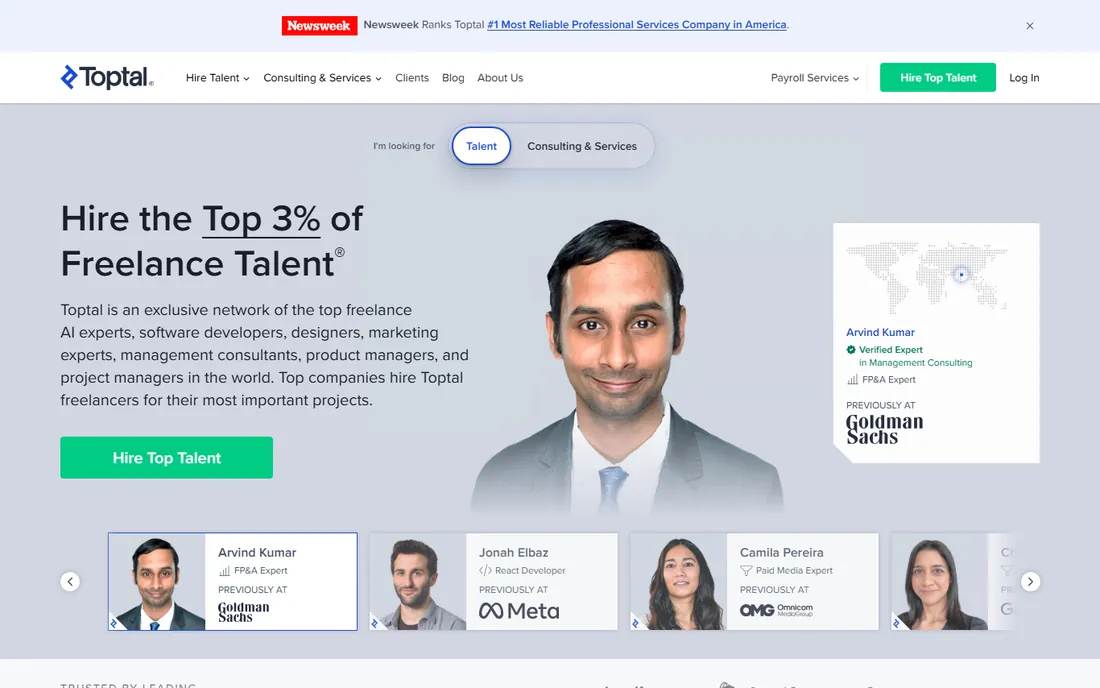
Toptal accepts a small fraction of applicants through interviews, test projects and screening, then matches clients with developers, designers and finance experts from that pool. A trial period lets you evaluate risk-free. For business-critical projects where a bad hire costs months, the vetting is the product.
You pay premium rates for premium talent, and the matching process takes longer than posting on Upwork. Simple tasks do not need this level of screening. When the cost of failure exceeds the premium, when you need an engineer who ships production code in week one, Toptal's model justifies itself.
Toptal's screening, covering interviews, test projects and live exercises, filters to a small fraction of applicants. The trial period, typically one to two weeks, lets you evaluate on real work before committing. Dedicated matching specialists learn your needs rather than leaving you to search. For staff-augmentation engagements where the freelancer joins team rituals, the quality bar shows in week one.
What we like- Rigorously screened top percentile talent
- Trial period reduces risk
- Good for critical projects
Watch out for- Premium pricing
- Slower to start than marketplaces
- Overkill for simple tasks
Starting priceFree to post
Free planYes
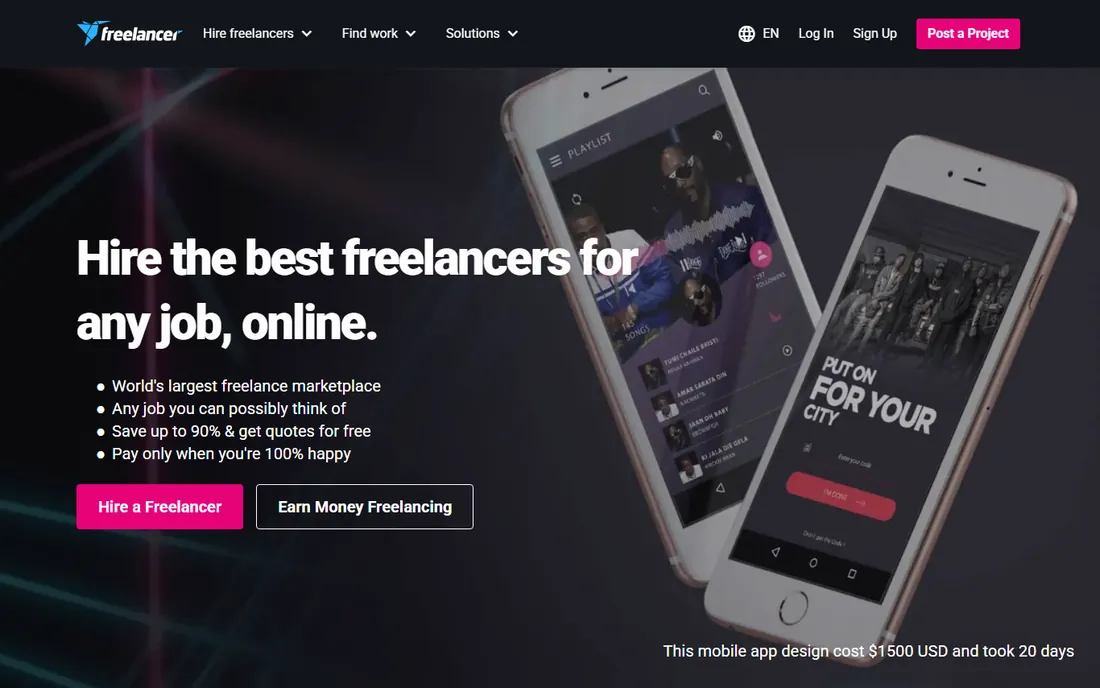
Freelancer.com runs on competitive bidding: post a project, receive dozens of bids, often at aggressive prices. The sheer volume suits budget-conscious buyers, and design contests produce varied creative options. The global talent base covers every timezone.
Bid quality varies wildly, and sifting spam from substance takes effort. The fee structure, with project fees and extras, confuses new users. It rewards buyers who write tight briefs and screen hard. For price-sensitive projects where you can manage the process, the competition works in your favor.
Freelancer.com's contest model works well for creative work: post a brief, receive dozens of concepts, pay only for the winner. Bid volume keeps prices competitive, though sifting takes time. Milestone payments with escrow protect both sides. The platform's size covers obscure skills and timezones. Success comes from detailed briefs and active communication; passive buyers get mediocre results.
What we like- Huge global freelancer base
- Competitive bidding can lower prices
- Contests for design work
Watch out for- Quality control is weaker
- Fee structure confuses
- Spam bids waste time
Starting priceFree to post
Free planYes
Guru's differentiator is payment flexibility: hourly, milestone, task-based and recurring agreements with SafePay escrow. The fee structure undercuts some competitors, and the WorkRooms organize collaboration. Long-term clients and freelancers build real working relationships here.
The talent pool is smaller than Upwork's, which shows in niche skills, and the interface lags modern rivals. Fewer top-tier freelancers market themselves here. But for buyers who value payment flexibility and lower fees over maximum selection, Guru is a solid, underrated option.
Guru's agreement flexibility, hourly, fixed-price, task-based or recurring, accommodates working styles other platforms force into two boxes. SafePay escrow with milestone releases protects larger projects. WorkRooms centralize files, communication and agreements per project. The lower fee structure leaves more money with freelancers, attracting experienced independents tired of platform taxes. It rewards clients who value long-term relationships over transactional gigs.
What we like- Flexible payment agreements including milestones
- Lower fees than some rivals
- Good for ongoing work
Watch out for- Smaller talent pool than Upwork
- Interface feels dated
- Less marketing means fewer top freelancers
Starting priceFree to post
Free planYes
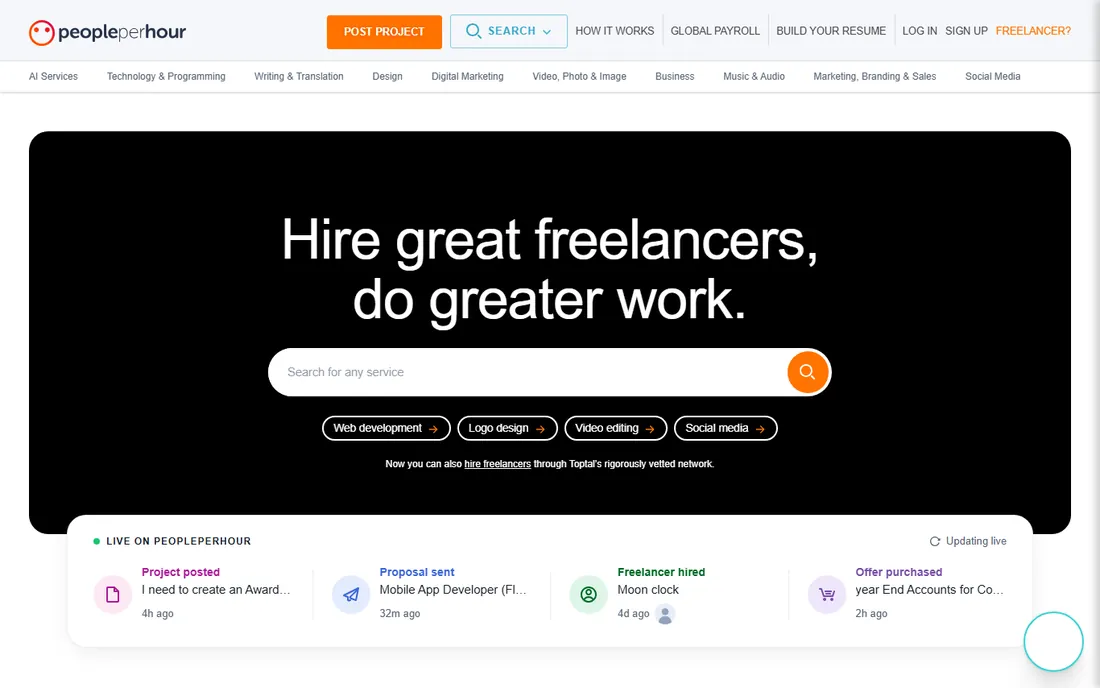
PeoplePerHour built its base in the UK and Europe, and it shows: strong regional talent, timezone alignment for European buyers, and hourlies, fixed-price service packages, that simplify buying. Small businesses get agency-quality work without agency overhead.
US buyers find thinner coverage and timezone friction. The talent pool is smaller than the global giants'. For European companies hiring regional freelancers, the fit, timezone overlap and market understanding make it the natural first stop.
PeoplePerHour's hourlies, fixed-price service packages, let buyers purchase defined outcomes without writing job posts: browse, buy, brief. The UK and European freelancer base means timezone overlap and cultural fit for European buyers. Escrow and dispute systems function reliably. For small businesses needing agency-quality work in defined chunks, the format removes hiring friction.
What we like- Strong UK and European talent base
- Hourlies with clear pricing
- Good for SMB projects
Watch out for- Smaller global pool
- Fees on both sides
- Less suited to US-centric hiring
Starting priceFree
Free planYes
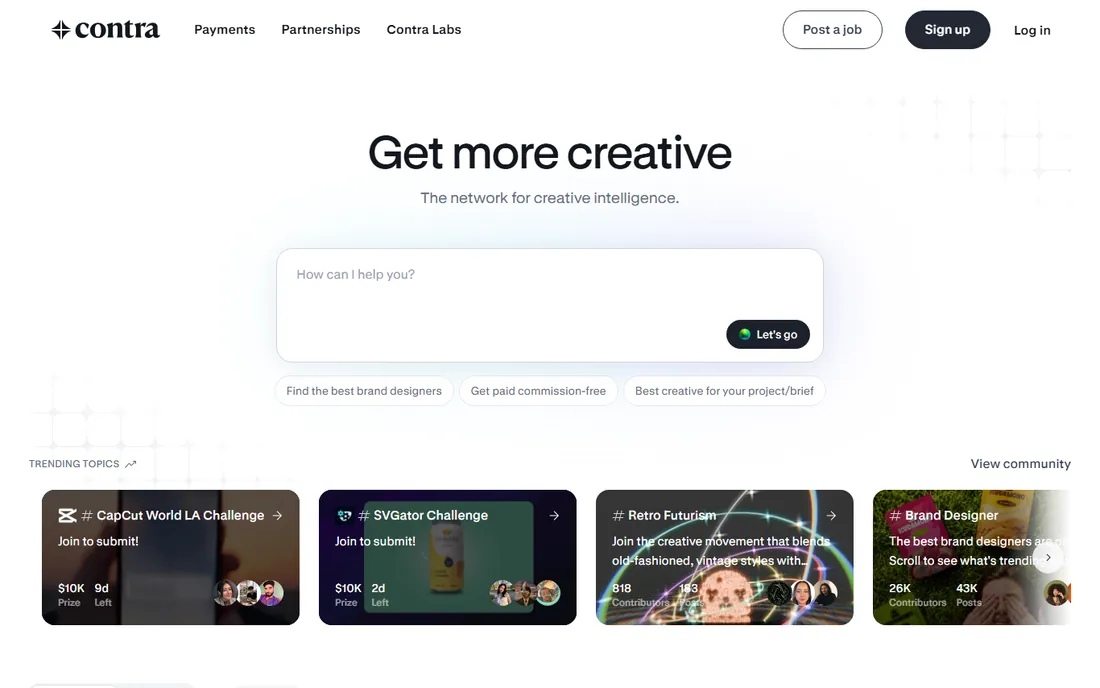
Contra's model is refreshingly freelancer-friendly: zero commission, so independents keep everything, with sleek portfolios, contracts and payments built in. Creatives, designers, video editors and developers showcase work beautifully. Clients browse portfolios and hire directly without platform taxes distorting prices.
As a hiring marketplace it is smaller than Upwork; you find talent rather than posting to crowds. The focus skews creative. But the zero-commission model attracts quality independents tired of platform fees, and clients benefit from undistorted pricing. For creative hiring, it is the modern alternative worth trying.
Contra's zero-commission model means the agreed rate is the rate the freelancer keeps, which changes negotiations: freelancers quote real prices instead of inflating for fees. Portfolio-first profiles showcase work beautifully, making evaluation visual rather than resume-based. Contracts and invoicing are built in and modern. For creative hiring especially, browsing portfolios beats reading proposals, and Contra is built around that truth.
What we like- Zero commission for freelancers
- Beautiful portfolios
- Modern contracts and payments
Watch out for- Smaller hiring-side marketplace
- Creative-focused
- Fewer enterprise features
Starting priceSee website
Free planNo
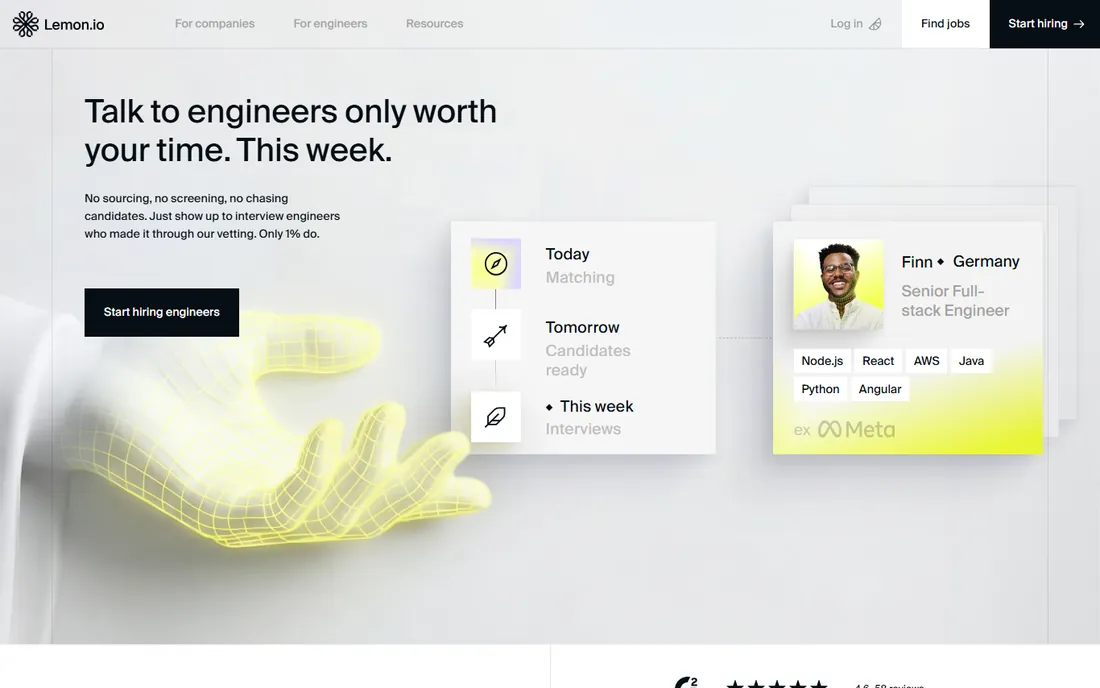
Lemon.io promises startups vetted developers in days, not weeks: candidates pass screening including live coding before matching. The trial period de-risks the hire, and the focus on startups means understanding of speed and pragmatism. For founders who need a developer shipping this month, the velocity matters.
It is developers only, priced above open marketplaces, and the pool is smaller than Toptal's. Non-technical roles need other platforms. But the combination of real vetting and startup-speed matching fills the gap between "post on Upwork and pray" and "pay Toptal premiums."
Lemon.io's matching speed, developers presented within 48 hours, comes from a pre-vetted bench rather than open applications. Vetting includes live coding and communication checks, filtering the most common failure modes. The trial week de-risks the hire. For startups that need to ship and cannot afford a three-month hiring process, the velocity-to-quality ratio is the selling point.
What we like- Developers matched within days
- Vetting includes live coding
- Trial period available
Watch out for- Developer-only focus
- Premium over marketplaces
- Smaller pool than Toptal
Starting priceSee website
Free planNo
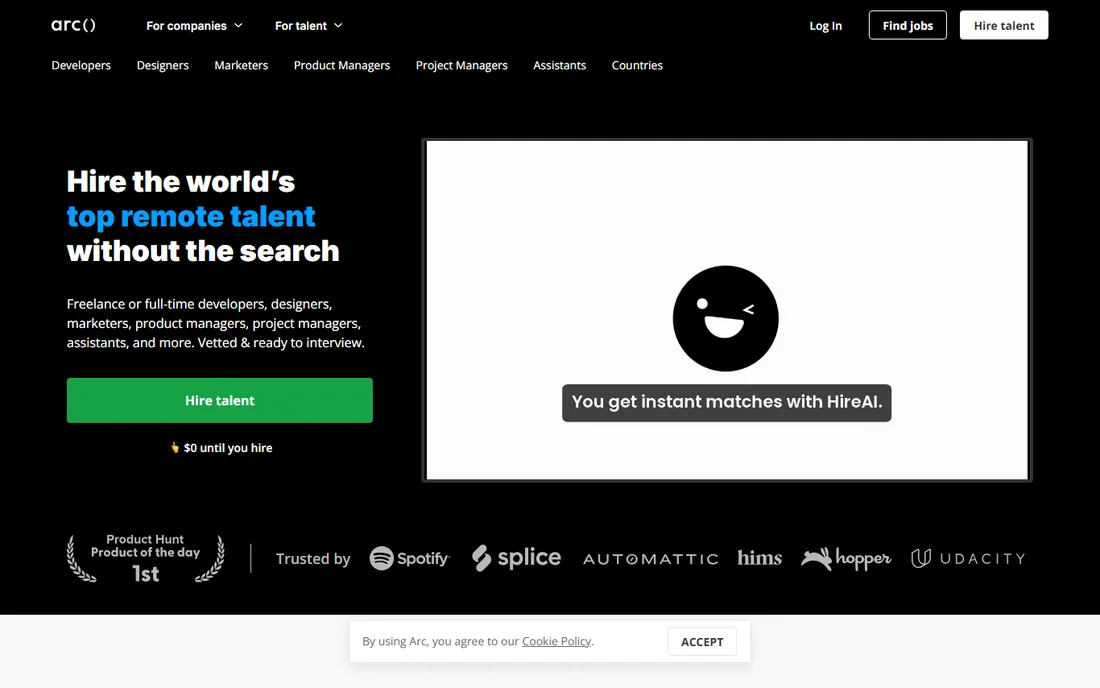
Arc specializes in remote developer hiring: vetted engineers matched to companies building remote teams, with screening that covers technical skill and remote-work readiness. The matching is fast, and the focus on long-term placements suits companies hiring contractors who function as team members.
Short gigs and non-developer roles do not fit. Pricing reflects the vetting premium. For companies building remote engineering capacity with freelancers who stick around, Arc's specialization beats general marketplaces.
Arc focuses on remote-ready developers: screening covers not just code but async communication and self-management, the skills that decide remote success. Fast shortlists compress timelines. The platform suits companies building distributed teams rather than buying gigs. Long-term contractor placements, where the developer attends standups and ships for months, are the sweet spot.
What we like- Vetted remote developers
- Fast matching
- Good for long-term remote hires
Watch out for- Developer-only
- Premium pricing
- Less useful for short gigs
Starting priceSee website
Free planNo
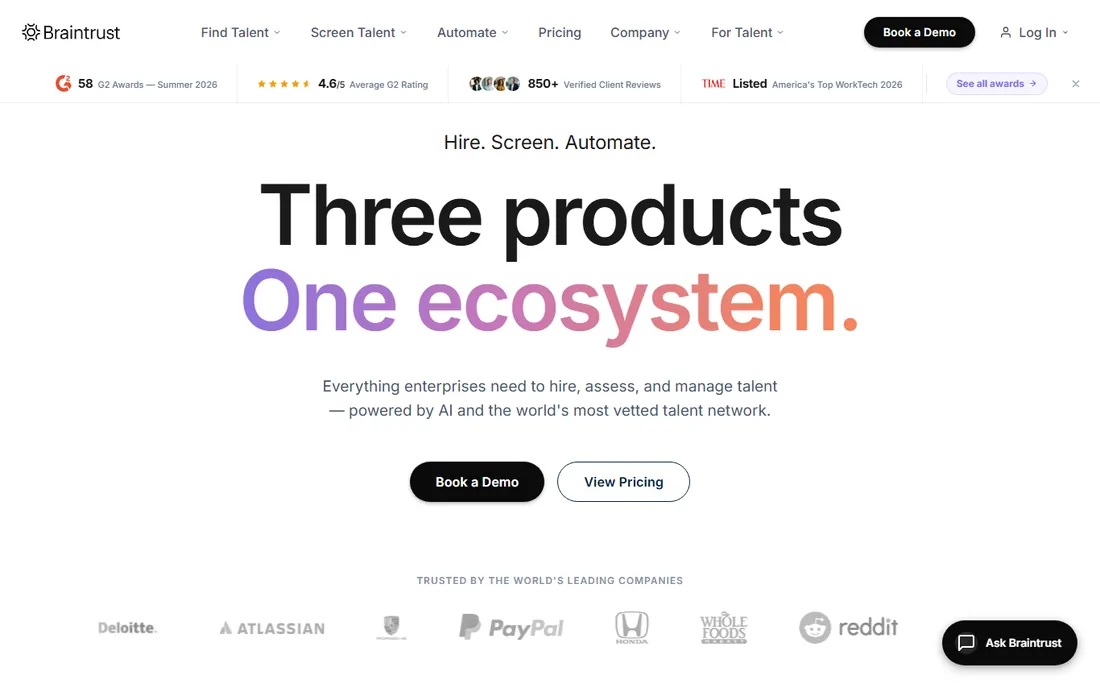
Braintrust's distinctive model is ownership: the network is user-owned, freelancers pay no fees, and clients pay a membership-style fee instead. The talent skews technical and vetted, with enterprise clients hiring designers and developers. The alignment, talent keeps everything, attracts quality.
Access requires application, the pool is smaller than open marketplaces, and the model suits ongoing work more than one-off gigs. For companies that like the ethics and economics of zero freelancer fees, and need vetted technical talent, Braintrust is the principled premium option.
What we like- Talent-owned model with no freelancer fees
- Vetted technical talent
- Enterprise-friendly
Watch out for- Invite and application process
- Smaller pool
- Enterprise focus
How we chose
We selected marketplaces where hiring freelancers is the core business, spanning general, creative and developer-specialized platforms. We reviewed fee structures, vetting claims and user reviews from both clients and freelancers, and verified each platform's current status. We favored platforms with real hiring activity over directories.
The platform is maybe 30 percent of a good hire. Write specific job posts: deliverables, timeline, budget range and must-have skills. Vague posts attract vague proposals. Screen portfolios and past work, not just ratings. Start with a small paid test project before committing to anything large.
Communicate like a manager, not a buyer: clear briefs, responsive feedback, fair pay. The best freelancers choose clients as carefully as you choose them, and they avoid red flags like scope creep and slow payment. The platforms provide the marketplace; the working relationship decides the outcome.
Frequently asked questions
What is the best site to hire freelancers?
Upwork for the largest selection, Fiverr for fixed-price tasks, Toptal for premium vetted talent. Match the platform to the work: simple gigs to Fiverr, ongoing roles to Upwork, critical hires to Toptal or specialists.
How much do freelance platforms charge?
Most charge clients a service fee of around 3 to 5 percent plus freelancer fees of 5 to 20 percent, often baked into rates. Contra charges freelancers nothing. Always factor total cost, not just the hourly rate.
How do I avoid bad hires?
Write specific briefs, review actual past work, check references for large projects, and start with a small paid trial. Never hire on price alone; the cheapest bid usually costs more in revisions.
Upwork vs Fiverr: which is better?
Upwork for custom projects and ongoing work where you post jobs and evaluate proposals. Fiverr for packaged, fixed-price tasks you can buy off the shelf. Many businesses use both for different needs.
Should I hire freelancers or an agency?
Freelancers for well-defined work you can manage; agencies for outcomes you want owned end-to-end. Freelancers cost less but need your management time. Factor your time into the comparison.
How do payments and taxes work?
Platforms typically handle escrow and release; you still handle tax forms (like 1099s in the US) for payments above thresholds. Most platforms provide earnings reports to simplify this.
Sources we checked (10)
- https://upwork.com/
- https://www.fiverr.com/
- https://toptal.com/
- https://www.freelancer.com/
- https://www.guru.com/
- https://www.peopleperhour.com/
- https://contra.com/
- https://lemon.io/
- https://arc.dev/
- https://www.usebraintrust.com/
Is your product missing or out of date?
We review this list regularly. Vendors can request a listing, send updated pricing or ask about featured placement.

Shihab Mia · Founder, Rankite
Shihab has spent more than a decade helping SaaS and e-commerce brands grow through search. He writes Rankite's software buying guides from pricing pages, documentation and public user reviews. More about Shihab.