How we make this list: we compare pricing pages, product documentation and public user reviews. Rankite is independent; if a vendor ever pays for a featured spot, that listing is clearly labeled Partner.
Key takeaways
- Upwork is the largest client pool, with freelancer fees ranging 0-15% per contract, so growing with one client lowers your rate over time.
- Fiverr suits packaged gig work with 20% commission but strong inbound demand.
- Toptal accepts only the top 3% and charges freelancers 0%, with premium rates.
- Contra charges freelancers 0% commission, with clients paying the fee.
- Guru offers among the lowest fees at 5-9%, while PeoplePerHour is UK-first with hand-reviewed talent.
Quick comparison
| Tool | Best for | Starting price | Free plan |
|---|
 Upwork Upwork | Largest client pool | Free to join | Yes |
 Fiverr Fiverr | Packaged gig work | Free to join | Yes |
 Toptal Toptal | Premium vetted work | Free to join | Yes |
 Freelancer.com Freelancer.com | Competitive bidding | Free to join | Yes |
 Guru Guru | Low fees | Free to join | Yes |
 PeoplePerHour PeoplePerHour | UK and EU clients | Free to join | Yes |
 99designs 99designs | Design contests and clients | Free to join | Yes |
 Contra Contra | Zero-commission portfolio work | Free to join | Yes |
Is your product missing or out of date?
We review this list regularly. Vendors can request a listing, send updated pricing or ask about featured placement.
Starting priceFree to join
Free planYes
Upwork is the default freelance marketplace for a reason: the largest active client pool, covering every category from AI services to legal work. Free to join, with escrow-backed payments and tools for hourly or milestone billing. Long-term contracts are the norm, which suits freelancers building recurring income.
Fees are the catch: freelancer service fees run 0-15% per contract, highest on small new engagements. Proposals cost Connects, so bidding is a real expense. Established freelancers with strong Job Success Scores do best here. The platform also keeps adding AI features, including AI-generated job posts on the client side, which changes how proposals get written. Watch for the expert-vetted badge if you qualify: it meaningfully improves proposal visibility.
What we like- Biggest freelance client base
- Escrow payment protection
- Long-term contract culture
Watch out for- Fees up to 15% on early contracts
- High competition
- Paid Connects for proposals
Starting priceFree to join
Free planYes
Fiverr flips the model: you package services as Gigs and clients order directly, so there is no proposal writing. With 700 categories and a huge buyer base, freelancers who productize repeatable services, logos, edits, audits, can build steady order flow.
The 20% commission is the steepest cut in this roundup, and entry-level gigs compete hard on price. Sellers who niche down and stack reviews climb to premium tiers where the math improves. Specific, outcome-focused gigs consistently outperform generic ones: a defined deliverable with a deadline beats a vague service description.
What we like- Clients come to you, no pitching
- 700 categories
- Fast order-based workflow
Watch out for- 20% commission, the highest here
- Price pressure at entry levels
- Limited negotiation
Starting priceFree to join
Free planYes
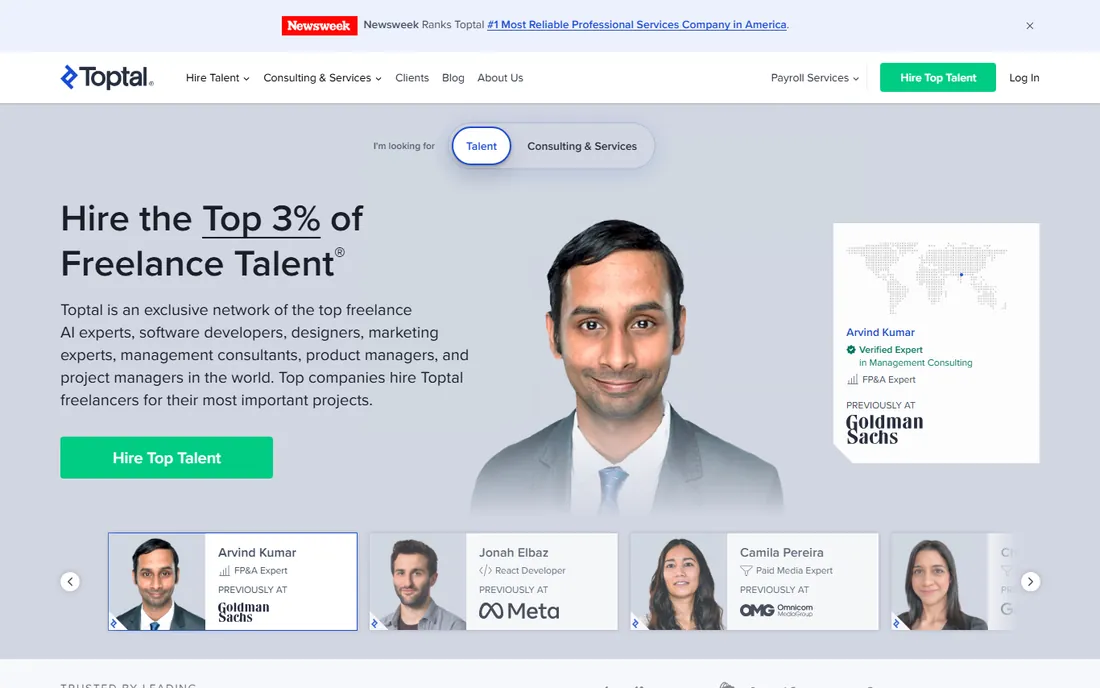
Toptal is the curated network: roughly 3% of applicants pass the screening, and accepted freelancers get premium rates with zero commission deducted, since clients pay Toptal's margin. Engagements run hourly to full-time, with matching in under 48 hours.
It is not for beginners. The screening tests skills, professionalism, and communication. But for senior developers, designers, and consultants, it is the highest-quality work source available. The trial period with each client means both sides commit only when the fit is real, which keeps bad engagements short.
What we like- Top 3% vetting, premium rates
- 0% fee to freelancers
- Trial-to-hire model
Watch out for- Brutal screening process
- Only for experienced specialists
- No casual gigs
Starting priceFree to join
Free planYes
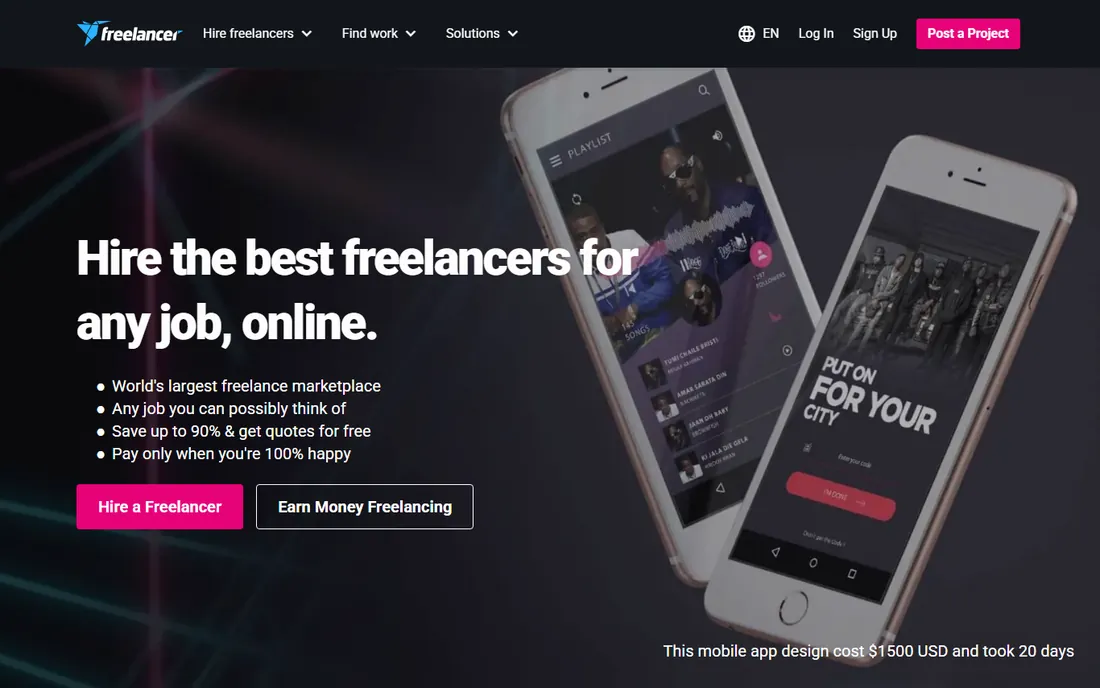
Freelancer.com is the classic bid marketplace: clients post projects, freelancers bid, and the lowest credible bid often wins. Thousands of projects across 4,000 categories keep volume high, and design contests give creatives another way to win work.
Fees run about 10%, and price competition is fierce on commodity work. Freelancers with standout portfolios and reviews rise above the noise; beginners may find the grind steep. The platform also runs an enterprise tier and an API, which tells you where the serious client money sits.
What we like- Huge project volume
- Contests for designers
- Milestone payment protection
Watch out for- 10% fees
- Race-to-the-bottom bidding on many projects
- Membership upsells
Starting priceFree to join
Free planYes
Guru has quietly served freelancers since 1999 with the lowest fees in the traditional marketplace class: 5-9% depending on membership. SafePay escrow, flexible agreement types (hourly, fixed, task-based, recurring), and WorkRooms for collaboration make it a solid working platform.
It lacks Upwork's client volume and modern shine. But fee-sensitive freelancers doing repeat business with known clients keep noticeably more of each invoice here. Long-term client relationships are common on Guru: the recurring-payment agreements are built for exactly that pattern.
What we like- Fees of just 5-9%, lowest among traditional marketplaces
- SafePay protection
- Flexible agreements
Watch out for- Smaller client pool than Upwork
- Older interface
- Less buzz
Starting priceFree to join
Free planYes
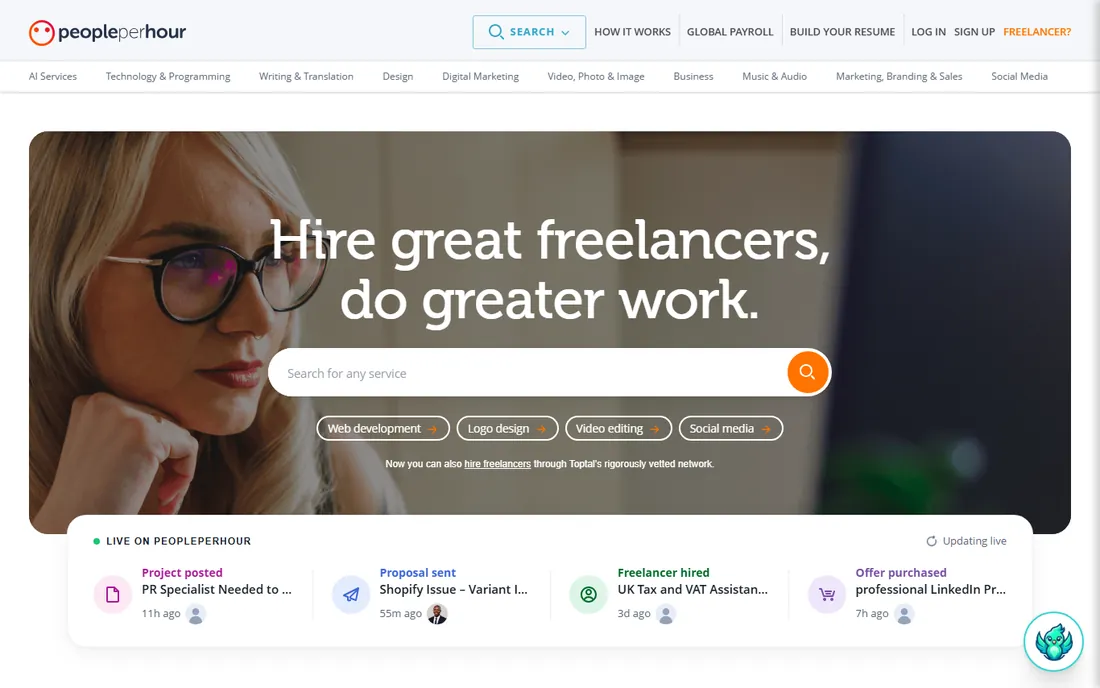
PeoplePerHour is the UK's answer to the freelance marketplace: hand-reviewed freelancers, AI matching, fixed-price offers alongside hourly work, and a client base that is 60% UK-based. Three million rated freelancers and strong project completion stats back it up.
The 20% commission on the first £500 with each client is steep, dropping afterward. Freelancers targeting British clients, especially in creative and marketing work, find a natural home. Every freelancer is hand-reviewed before approval, which keeps the talent quality noticeably higher than open marketplaces.
What we like- UK-first marketplace, 60% UK-based users
- Hand-reviewed freelancers
- Fixed-price offers
Watch out for- 20% commission on first £500 per client
- Smaller global reach
- UK-centric rates
Starting priceFree to join
Free planYes
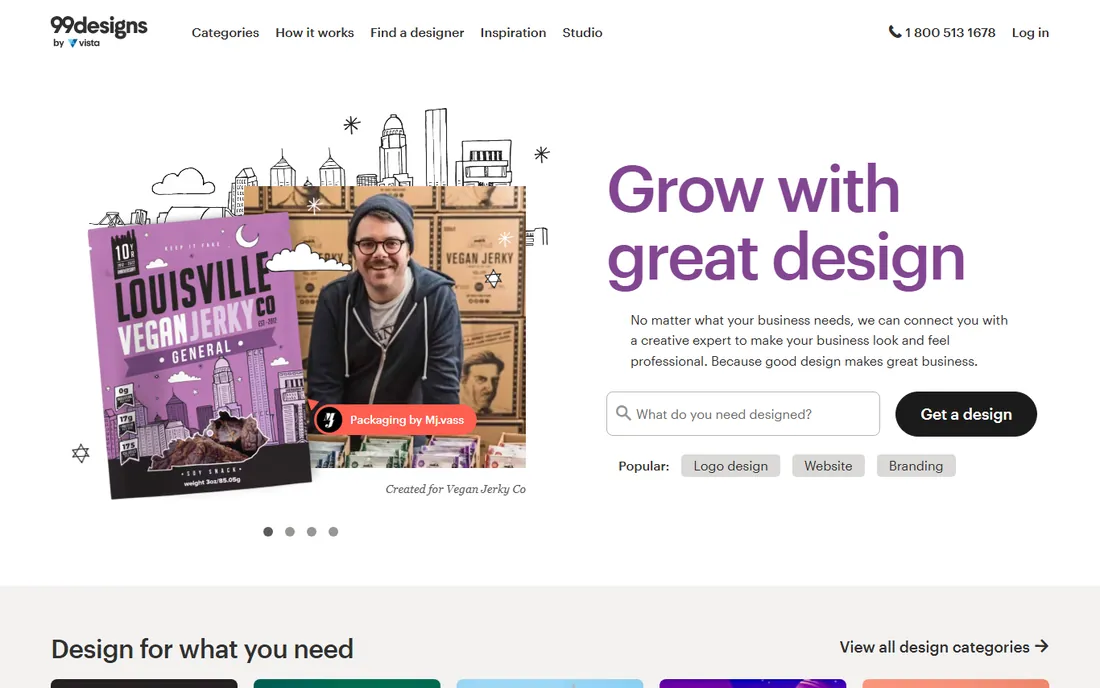
99designs, now part of Vistaprint, is the designer's marketplace: run logo contests where dozens of designers compete, or hire directly from vetted portfolios. Clients arrive with real budgets, logo projects start at $249, and the community is genuinely skilled.
Contests mean unpaid spec work unless you win, which critics fairly note. But designers who win contests build portfolios and client relationships fast. Fees run 5-15% by designer level. The Vistaprint connection also brings small-business clients who need ongoing design work beyond the first logo.
What we like- Design-only focus, serious clients
- Contest model plus direct hire
- Vetted designer community
Watch out for- Only for designers
- Contest work is unpaid unless you win
- 5-15% fees by level
Starting priceFree to join
Free planYes
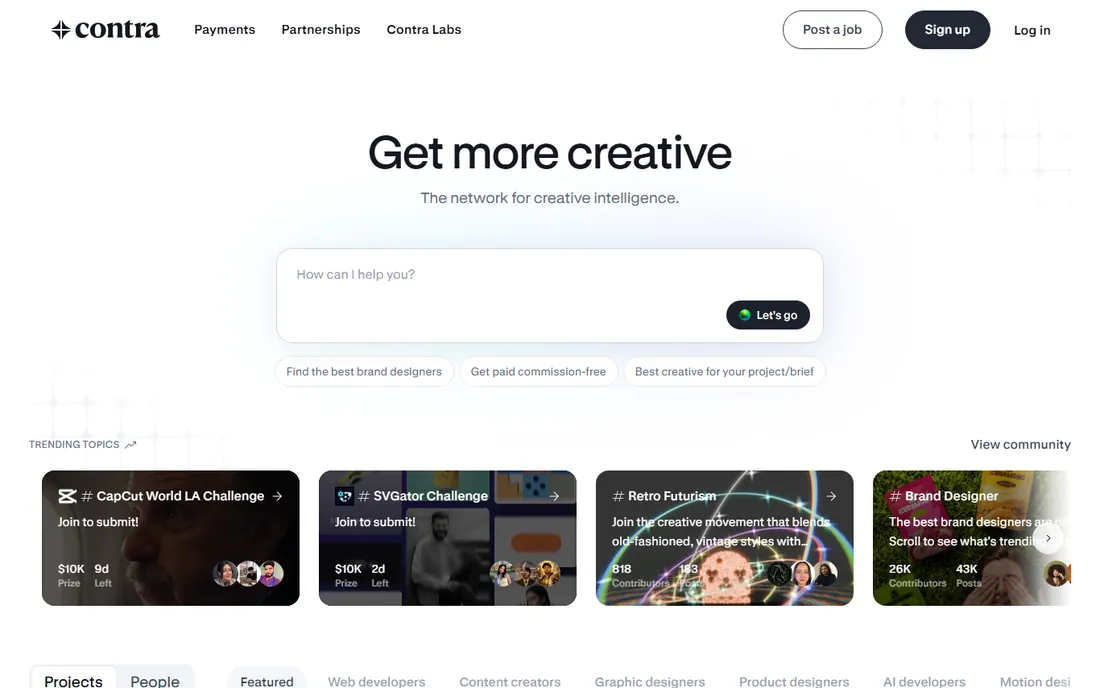
Contra is the freelancer-friendly model done right: 0% commission from freelancers, with the client paying the fee. Portfolio-first profiles replace bid spam, and the community skews toward designers, developers, and creatives who care about presentation.
The client pool is smaller than the giants, so volume is lower. But for portfolio-driven freelancers who hate fees and pitching, keeping 100% of every project is hard to beat. Contra has also been expanding into studio and agency features, which opens the door to team-based work.
What we like- 0% commission from freelancers
- Portfolio-first profiles
- Modern creative community
Watch out for- Smaller client pool
- Creative-skewed categories
- Newer platform
How we chose
We compared vendor product pages, published fee structures, and freelancer-community discussion across industry publications and forums, weighing fees, client quality, vetting, payment protection, and category fit. Every platform had to be currently available with a working website. We did not claim hands-on testing. Fee structures change often, so confirm the current rates on each platform's pricing page before making your decision. A quick check takes five minutes and can save hundreds a year.
Fees versus client quality
The core trade in freelance platforms is fees against client quality. Toptal and Contra charge freelancers nothing and bring premium or fee-free work, but both are gated: Toptal by screening, Contra by portfolio expectations. Upwork and Fiverr bring the biggest client pools but take up to 15% and 20% respectively.
Do the math on your actual earnings. A freelancer billing $5,000 a month keeps $4,000 on Fiverr but $5,000 on Contra, a $12,000 annual difference. Lower fees matter less when a platform delivers far more work, so weigh volume against the cut. Also check who pays the client-side fee: on Contra the client covers it, while on Upwork the freelancer absorbs most of the cost.
Starting out versus scaling up
Beginners do best where clients are plentiful and onboarding is instant: Fiverr's gig model and Upwork's open marketplace. Build reviews, raise rates, and specialize. Once established, the economics favor moving upmarket: Toptal's vetted network, Contra's zero fees, or direct clients found through your own marketing. The freelancers who earn the most treat platforms as lead sources, not employers, and convert good clients into direct relationships over time.
Never depend on one platform. Algorithms, fees, and policies change, as Upwork's 2025 fee restructuring reminded everyone. Keep a presence on two platforms and an email list of past clients. Your own portfolio site and professional profiles are the only assets no platform can take away.
Frequently asked questions
Which freelance platform has the lowest fees?
Contra and Toptal charge freelancers 0%. Guru's 5-9% is the lowest among traditional open marketplaces. Fiverr's 20% and PeoplePerHour's 20% (on the first £500 per client) are the highest. Remember that some platforms also charge clients a separate fee, which can affect how much work comes your way.
Is Upwork or Fiverr better for beginners?
Fiverr is easier to start: package a service as a Gig and wait for orders, no pitching. Upwork requires proposals and Connects but supports higher-value, long-term contracts. Many beginners start on Fiverr and graduate to Upwork. Whichever you choose, specialize early: niche sellers and proposers win disproportionately on both platforms.
How hard is it to get accepted to Toptal?
Very. Only about 3% of applicants pass the multi-stage screening covering skills, professionalism, and communication. It is designed for experienced specialists, not beginners. Most successful applicants have years of client work and a portfolio that proves it before they apply.
Can I really earn a full-time income freelancing?
Yes, but treat it as a business: specialize, collect testimonials, maintain an online presence beyond any single platform, and price on value rather than competing on price alone. The freelancers earning six figures almost always combine platform work with direct clients they found through their own marketing. Reviews and case studies from platform work become the proof that wins those direct deals.
Should I join multiple freelance platforms?
Yes. Most successful freelancers maintain profiles on two or more platforms plus their own website. It diversifies client sources and protects you when any one platform changes fees or algorithms. Start with the one that fits your work style, then expand once the first profile is earning.
Sources we checked (8)
- https://www.upwork.com/
- https://www.fiverr.com/
- https://www.toptal.com/
- https://www.freelancer.com/
- https://guru.com/
- https://www.peopleperhour.com/
- https://99designs.com/
- https://contra.com/
Is your product missing or out of date?
We review this list regularly. Vendors can request a listing, send updated pricing or ask about featured placement.

Shihab Mia · Founder, Rankite
Shihab has spent more than a decade helping SaaS and e-commerce brands grow through search. He writes Rankite's software buying guides from pricing pages, documentation and public user reviews. More about Shihab.