How we make this list: we compare pricing pages, product documentation and public user reviews. Ratings come from G2, Capterra or Trustpilot, with the date we checked them.
Key takeaways
- PictureThis is the best all-round plant identifier for gardeners, with fast photo ID, care guides, disease checks, and toxicity notes.
- PlantNet and iNaturalist are the best free options, with PlantNet focused on plants and iNaturalist covering plants, animals, and fungi for science.
- Seek by iNaturalist is the best family pick, with no registration, badges, and challenges that make nature walks more engaging for children.
- PlantSnap and PlantIn add community and care features, while LeafSnap suits tree identification in the northeastern United States.
- No app identification should be used alone to decide whether a wild plant or mushroom is safe to eat, and an expert should be checked first.
Quick comparison
| Tool | Best for | Starting price | Free plan |
|---|
 PictureThis | All-round garden identification | $39.99 per year | Yes |
 PlantNet | Free scientific identification | Free | Yes |
 PlantSnap | Large database and community | $21.99 per year | Yes |
 iNaturalist | Community science and nature | Free | Yes |
 Seek by iNaturalist | Families and children | Free | Yes |
 LeafSnap | Tree identification | Free | Yes |
 PlantIn | Care plans and botanist help | See website | Yes |
Is your product missing or out of date?
We review this list regularly. Vendors can request a listing, send updated pricing or ask about featured placement.
The best plant identification apps
Starting price$39.99 per year
Free planYes
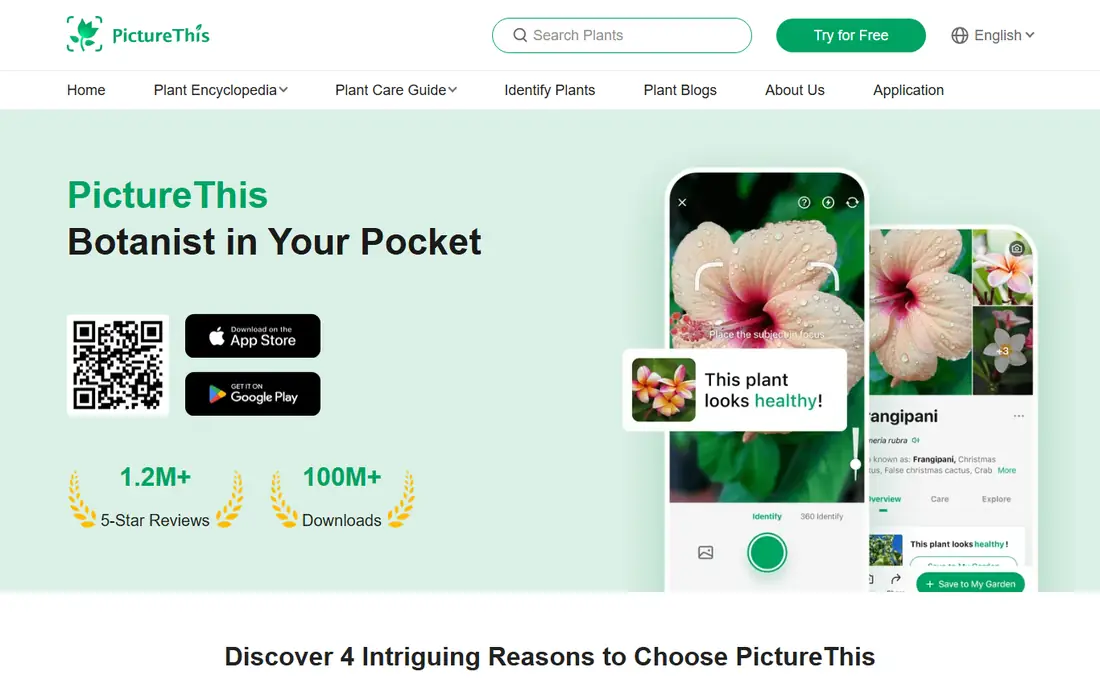
PictureThis is the app most gardeners should try first. Snap a photo of a leaf, flower, or whole plant, and the app returns a likely identification in seconds, along with care notes, watering guidance, light needs, and toxicity information for pets and people. That extra context is what sets PictureThis apart from a simple photo matcher: knowing a plant name is useful, but knowing whether it is toxic to a dog, how much water it needs, and what a disease spot may mean is more useful in daily gardening.
The app also includes disease diagnosis, which lets a user photograph a sick plant and see likely causes and treatment steps, plus a plant encyclopedia on the web for browsing species by type, region, and use. A free download is available, with a paid Pro plan listed at $39.99 per year in recent research, though prices vary by store and plan, so readers should check the current app store listing. For a gardener who wants one app for identification, care, and disease checks, PictureThis is the most complete choice on this list.
What we like- Fast photo identification for many plants
- Care guides, disease diagnosis, and toxicity notes
- Large plant encyclopedia on the web
Watch out for- Full features require a paid plan
- Price varies by store and plan, so check the current listing
Starting priceFree
Free planYes
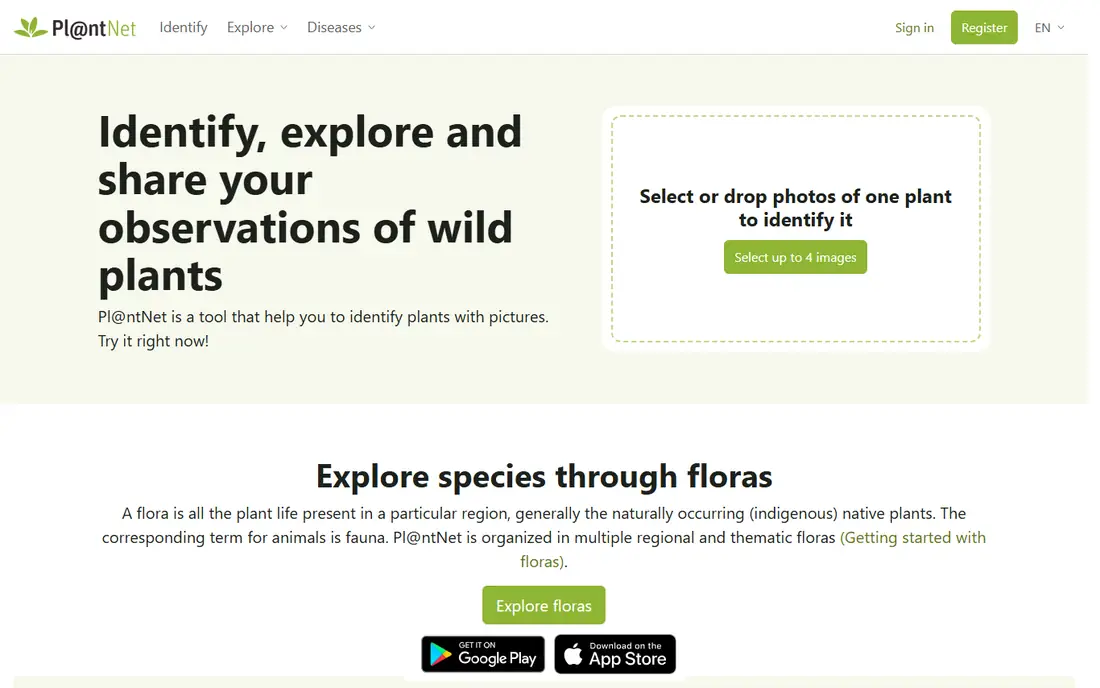
PlantNet is a citizen science project, and that background shapes its strengths. Users photograph a plant, and the app suggests species from a database of more than 70,000 illustrated species, organized by regional floras that reflect the plants actually found in a given area. Species pages include photos, distribution, and phenology notes, which help a user confirm an identification by comparing leaves, flowers, fruit, and bark, rather than trusting a single AI guess.
The app is free, with no subscription required for core identification, which makes it the best free pick for users who only need to name a plant. It also includes a newer service for identifying plant diseases and pests, plus a map-focused companion for exploring species distribution in Europe. PlantNet is less polished as a care app: it does not offer watering reminders or a full care plan in the way PlantIn does. For hikers, students, and curious naturalists who want a free, science-based identifier, PlantNet is an excellent choice.
What we like- Free identification with a large species database
- Regional floras and species pages with photos
- Observations contribute to citizen science
Watch out for- Interface is more scientific than beginner-friendly
- Care features are limited compared with PictureThis or PlantIn
Starting price$21.99 per year
Free planYes
PlantSnap has been a popular plant identifier for many years, with a large database and a community that shares photos, tips, and garden stories. Identification works by photographing a plant, after which the app returns a match with information about the species, its care needs, and related plants. That community layer adds value for beginners, who can see how other growers care for the same plant, ask questions, and learn from photos posted nearby.
A free version covers basic identification, while a Premium plan, listed from $21.99 per year in recent research, adds more identifications, care features, and an ad-free experience, with a lifetime option noted in some listings. Readers should check the current app store listing for the exact price and terms, since PlantSnap pricing has varied over time. For users who want identification plus a social, plant-loving community, PlantSnap is a friendly, well-established option, even though PictureThis offers deeper care and disease tools.
What we like- Fast identification from a photo
- Community for sharing and learning
- Care information for identified plants
Watch out for- Premium features require a paid plan
- Some users report slower identification for rare species
Starting priceFree
Free planYes
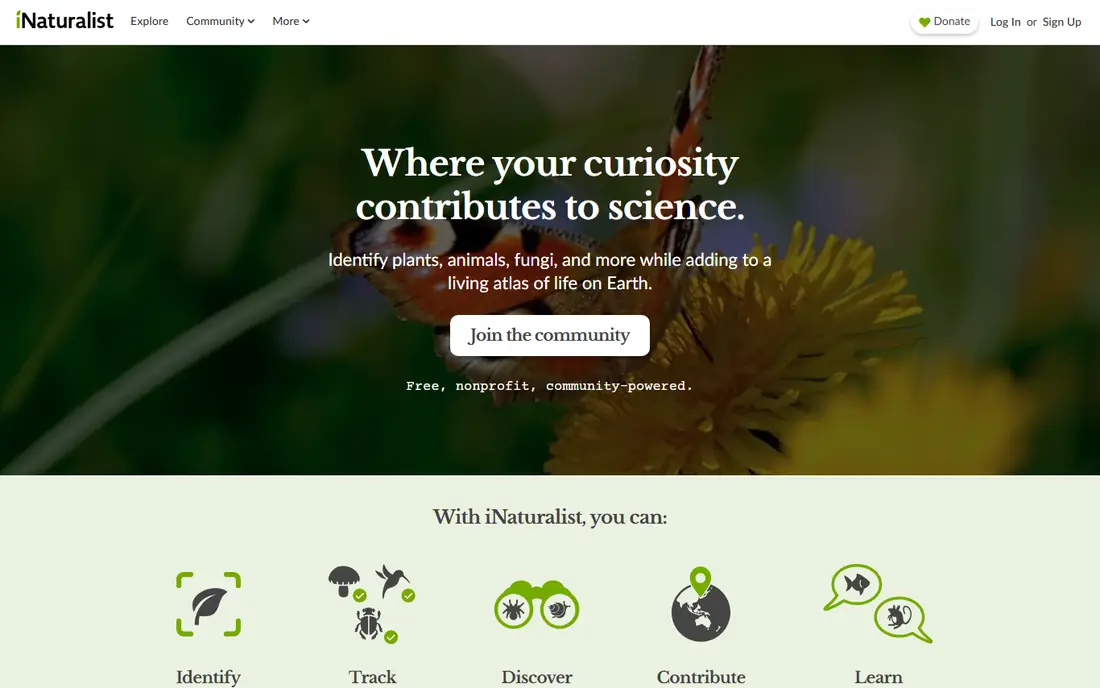
iNaturalist is not only a plant identifier, it is a community for naturalists that covers plants, animals, fungi, and more. A user photographs an organism, the app suggests an identification, and a global community of naturalists confirms or refines it. When enough community members agree, an observation becomes research grade and enters a global scientific record used by researchers, with more than 300 million observations noted on the homepage. That science connection makes iNaturalist uniquely rewarding for hikers and nature lovers who want their walks to contribute to real research.
The app is free, run by a nonprofit, and works on the web as well as on mobile, so observations can be explored from a computer after a walk. It is less useful as a houseplant care app, since it does not offer watering reminders or disease treatment plans in the way PictureThis or PlantIn do. For wild plant identification, learning, and contributing to science, iNaturalist is the best free choice, and it pairs well with a garden app for houseplants.
What we like- Free, nonprofit, and community-powered
- Identifies plants, animals, and fungi
- Observations become research-grade data when confirmed
Watch out for- Identification can take time for community confirmation
- Less focused on houseplant care than garden apps
Starting priceFree
Free planYes
Seek, by iNaturalist, is designed for families and for anyone who wants a simple, safe way to explore nature. Point the Seek camera at a plant, animal, or fungus, and the app identifies it using image recognition based on iNaturalist observations, then awards badges for seeing different species and taking part in monthly challenges. That game-like structure makes a walk more engaging for children, who can collect badges for birds, plants, amphibians, and fungi they find.
Privacy is a clear strength: the Seek page states that no registration is involved, no user data is collected, and location is obscured, so a precise location is never stored or sent to iNaturalist. That makes Seek a good choice for children and for families who are cautious about accounts and data. Seek does not offer plant care plans or disease diagnosis, so gardeners will need another app for houseplants. For outdoor discovery, learning, and family nature walks, Seek is the most fun and privacy-friendly pick on this list.
What we like- Free with no registration
- Badges and monthly challenges for motivation
- Location is obscured for privacy
Watch out for- Identification is less detailed than iNaturalist for rare species
- Focus is on discovery, not plant care
Starting priceFree
Free planYes
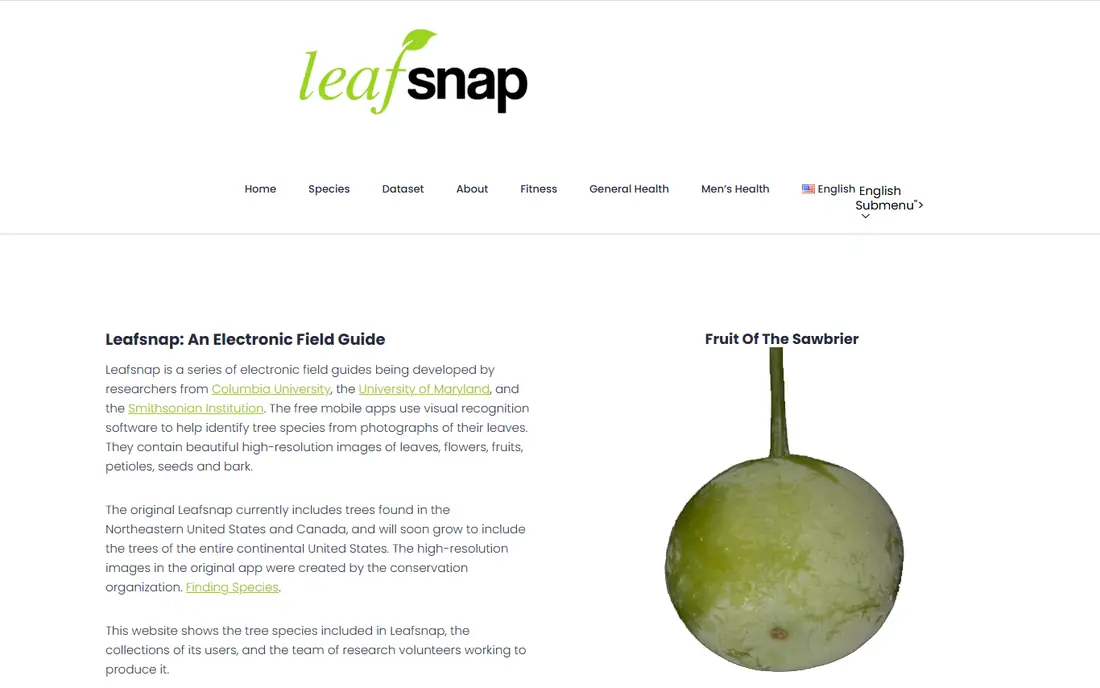
LeafSnap is a series of electronic field guides developed by researchers from Columbia University, the University of Maryland, and the Smithsonian Institution, according to its homepage. The free mobile apps use visual recognition to identify tree species from photographs of leaves, and they include high-resolution images of leaves, flowers, fruit, petioles, seeds, and bark to help confirm a match. That research background gives LeafSnap a clear, educational feel that suits students, hikers, and tree lovers.
The main limit is scope. The original LeafSnap covers trees found in the northeastern United States and Canada, with plans to expand to the continental United States, and a separate UK app covers trees from the United Kingdom. For houseplants, garden flowers, or plants outside those regions, PictureThis, PlantNet, or iNaturalist will be more useful. For identifying a tree on a walk in the northeast, or for learning tree species in a school or nature program, LeafSnap is a free, well-documented choice.
What we like- Free tree identification from leaf photos
- Developed with university and museum researchers
- High-quality leaf, flower, and bark images
Watch out for- Original app focuses on trees in the northeastern US and Canada
- Less useful for houseplants or garden flowers
Starting priceSee website
Free planYes
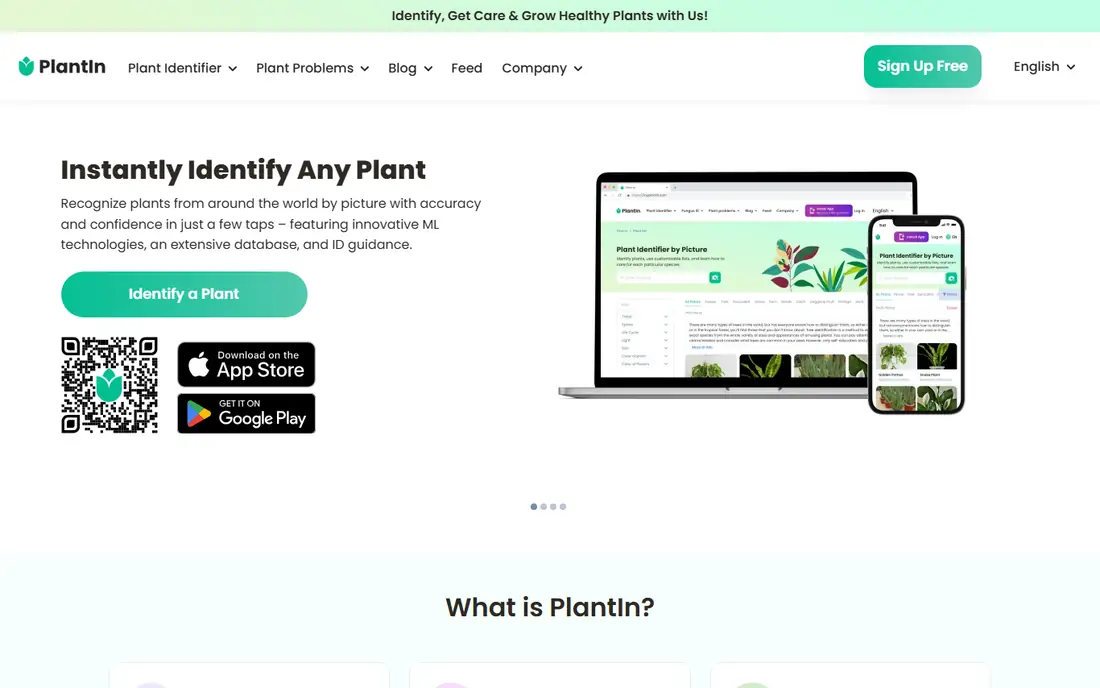
PlantIn combines identification with a full care system, which makes it a strong choice for houseplant owners. After identifying a plant by photo, PlantIn builds a care schedule based on species and location, with reminders for watering, fertilizing, misting, and repotting. Disease diagnosis lets a user photograph spots, yellow leaves, or pests and see a likely cause and treatment plan, and when a photo is not enough, a real botanist can give tailored advice. That expert help is a clear advantage for owners of valuable or struggling plants.
The homepage also notes mushroom identification, with a warning that users should never eat a wild mushroom based on an app identification alone, and an option to ask a mycologist for a second opinion. That safety note applies to all plant apps on this list: an app match is a starting point, not a guarantee, especially for wild plants and fungi. PlantIn offers a free version for basic identification, with a paid plan for full care, diagnosis, and expert help, so readers should check the current app store price. For houseplant care with expert backup, PlantIn is a strong alternative to PictureThis.
What we like- Identification plus care schedules and reminders
- Disease diagnosis with botanist help
- Mushroom identification with expert second opinions
Watch out for- Full care and expert features require a paid plan
- Price should be checked in the app store before subscribing
How we chose
We compared apps that are available in the United States in 2026, identify plants from photos, and are actively maintained on iOS and Android or on the web. We checked each vendor homepage to confirm the product loads and belongs to the named app, and we reviewed pricing pages, app store listings, and public help material for identification, care, disease, community, and free features. We favored a mix of garden apps, free science apps, and family apps, so readers can choose based on whether they need care, science, or outdoor discovery. We did not claim hands-on testing, and readers should confirm current prices in the app store, since subscription prices change often. Never eat a wild plant or mushroom based on an app identification alone.
How to get a reliable plant identification
Photograph the right parts
A single blurry photo of a whole garden rarely gives a good match. Photograph one plant at a time, with a clear, focused shot of leaves, plus flowers, fruit, or bark when present. Showing how leaves are arranged on the stem helps an app, and a human expert, distinguish similar species.
Compare several matches, not just the first result
Apps return a likely match, not a certain one. Check the species page, compare photos of leaves, flowers, and bark, and look at range and habitat notes. If two species look similar, use PlantNet or iNaturalist to see which one is commonly recorded in your area.
Use the right app for the job
Use PictureThis or PlantIn for houseplants and garden care, PlantNet or iNaturalist for wild plants and science, Seek for family walks, and LeafSnap for trees in the northeast. One app rarely covers every need well, and a second app can confirm a tricky identification.
Check toxicity and safety before touching or tasting
Many garden and wild plants are toxic to people or pets, and some look similar to edible species. Check toxicity notes in PictureThis or PlantIn, keep unknown plants away from children and pets, and never eat a wild plant or mushroom based on an app match alone. When in doubt, ask a local expert, extension service, or poison control resource.
Frequently asked questions
What is the best plant identification app overall?
PictureThis is the best all-round pick for gardeners, thanks to fast identification, care guides, and disease checks. PlantNet and iNaturalist are the best free picks, Seek is best for families, and PlantIn is best for houseplant care with expert help.
Are plant identification apps free?
Many offer a free version for basic identification, including PlantNet, iNaturalist, Seek, and LeafSnap. PictureThis, PlantSnap, and PlantIn offer free downloads, but full care, disease, and unlimited identification features usually require a paid plan.
How accurate are plant identification apps?
Accuracy depends on photo quality, species rarity, and region. Common garden and wild plants with clear photos are usually identified well, while rare species, blurry photos, or similar-looking species can be misidentified. Always compare photos and range notes, and confirm important identifications with a second app or an expert.
Can a plant app tell me if a plant is safe to eat?
No, not safely on its own. An app can suggest a species, but it cannot guarantee that a wild plant or mushroom is safe to eat, since similar species can be toxic. Never eat a wild plant or mushroom based on an app identification alone, and check with a local expert before tasting anything wild.
Do plant apps work without internet?
Most identification apps need internet to match a photo, though some offer limited offline features. Check the app store listing for offline support before a hike in an area with poor coverage, and download any needed guides in advance.
Which plant app is best for children?
Seek by iNaturalist is best for children, because it requires no registration, obscures location for privacy, and uses badges and challenges to make nature walks fun. Parents can use it alongside iNaturalist for deeper learning as children grow older.
Sources we checked (7)
- https://www.picturethisai.com
- https://identify.plantnet.org
- https://www.plantsnap.com
- https://www.inaturalist.org
- https://www.inaturalist.org/pages/seek_app
- https://leafsnap.com
- https://myplantin.com
Is your product missing or out of date?
We review this list regularly. Vendors can request a listing, send updated pricing or ask about featured placement.

Shihab Mia · Founder, Rankite
Shihab has 5+ years in B2B and SaaS SEO. He writes Rankite's software buying guides from pricing pages, documentation and public user reviews. More about Shihab.