How we make this list: we compare pricing pages, product documentation and public user reviews. Ratings come from G2, Capterra or Trustpilot, with the date we checked them.
Key takeaways
- T-Mobile is the best major carrier for most people, with wide 5G coverage, strong family pricing, and included perks on higher plans.
- Verizon is the best major carrier for rural coverage and reliability, especially for travelers and people outside large cities.
- AT&T suits long-time customers who value broad coverage, discounts for eligible groups, and strong international options on premium plans.
- Mint Mobile, Visible, and Cricket offer the lowest monthly prices, by using major networks with prepaid, online-first service.
- Google Fi Wireless is the best choice for Pixel users and frequent international travelers who want simple, flexible plans.
Quick comparison
| Tool | Best for | Starting price | Free plan |
|---|
 T-Mobile | Most people on a major carrier | See website | No |
 Verizon | Rural coverage and reliability | $30 per month | No |
 AT&T | Broad coverage and discounts | See website | No |
 Mint Mobile | Low-cost prepaid | $15 per month | No |
 Visible | Simple unlimited on Verizon network | $19 per month | No |
 Google Fi Wireless | Pixel users and travelers | $35 per month | No |
 Cricket Wireless | Low-cost prepaid on AT&T network | $30 per month | No |
Is your product missing or out of date?
We review this list regularly. Vendors can request a listing, send updated pricing or ask about featured placement.
The best phone companies
Starting priceSee website
Free planNo
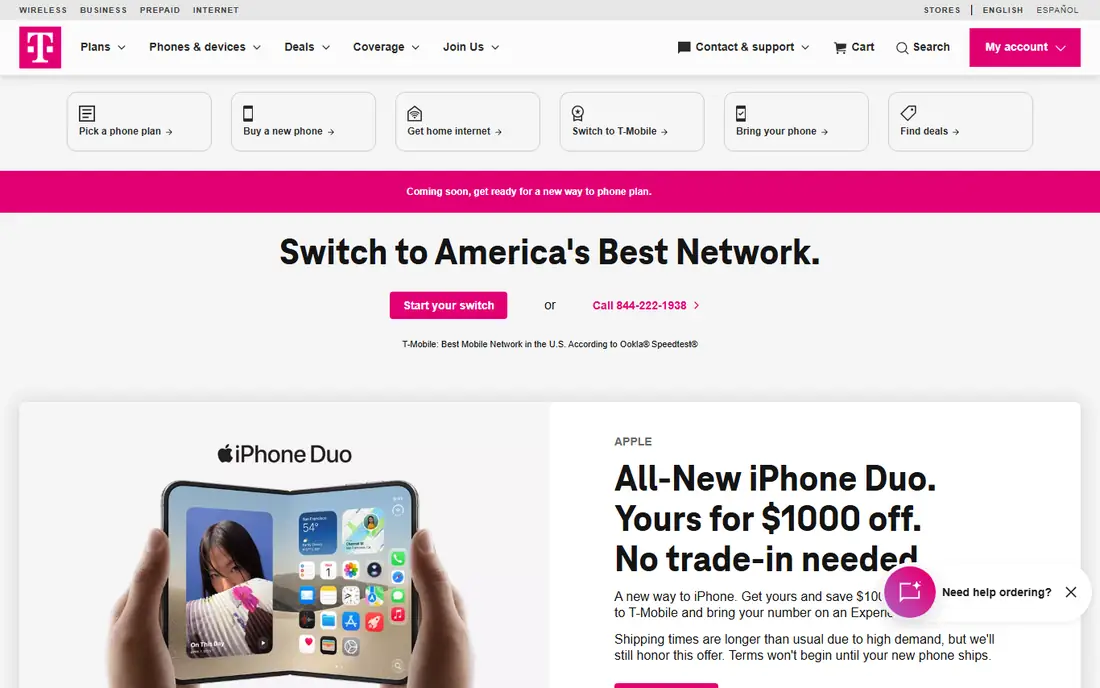
T-Mobile has become the default recommendation for many US phone users, and recent satisfaction research supports that view. Its 5G network covers a large share of the population, and its plans include a mix of unlimited data, hotspot, and international data that suits travelers as well as home users. Family plans are a particular strength, with multi-line pricing that drops per line as lines are added, and higher plans add perks such as streaming benefits and international data in many countries.
The homepage highlights switching in a short time and deals that do not require a trade-in, which can lower the cost of a new phone for switchers. Lower-priced Essentials plans are cheaper, but they may slow during congestion and include less hotspot and fewer perks, so readers should compare the full plan details, not just the headline price. For most urban and suburban users who want a major carrier with good value and strong 5G, T-Mobile is the first carrier to check, with Verizon as the main alternative for rural coverage.
What we like- Large 5G coverage footprint
- Competitive family and single-line plans
- Perks and price guarantees on higher plans
Watch out for- Rural coverage can lag Verizon in some areas
- Lower-priced plans may slow during congestion
Starting price$30 per month
Free planNo
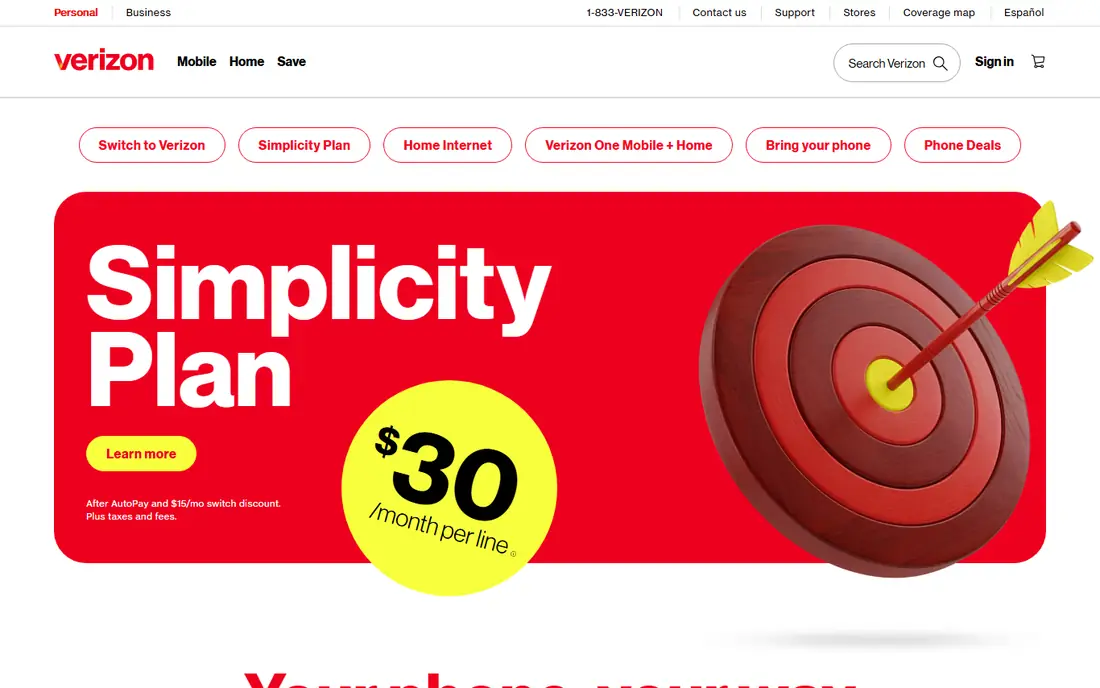
Verizon remains the carrier to choose when coverage in rural areas, small towns, and on long road trips matters most. Its low-band network reaches places where other carriers can be thin, and its premium Unlimited Ultimate plan includes broad international roaming, which helps frequent travelers. The homepage notes a single line for $30 per month on a Simplicity Plan, though the full plan details, taxes, and device costs should be checked on the Verizon site, since headline prices often assume autopay and other conditions.
Verizon also runs a loyalty program that can remove activation and upgrade fees and offer device deals for long-time customers, which can offset higher plan prices over time. The main drawbacks are price and priority: entry-level plans may have lower data priority during congestion and less included hotspot than higher plans. For users who live in or travel through rural areas, or who need the most reliable coverage in a wide range of locations, Verizon is still the safest major carrier choice, even if T-Mobile offers better value in cities.
What we like- Strong low-band coverage for rural and road travel
- Premium plans with broad international roaming
- Loyalty program with device deals
Watch out for- Higher plans can be costly
- Lower-priced plans may have lower data priority and less hotspot
Starting priceSee website
Free planNo
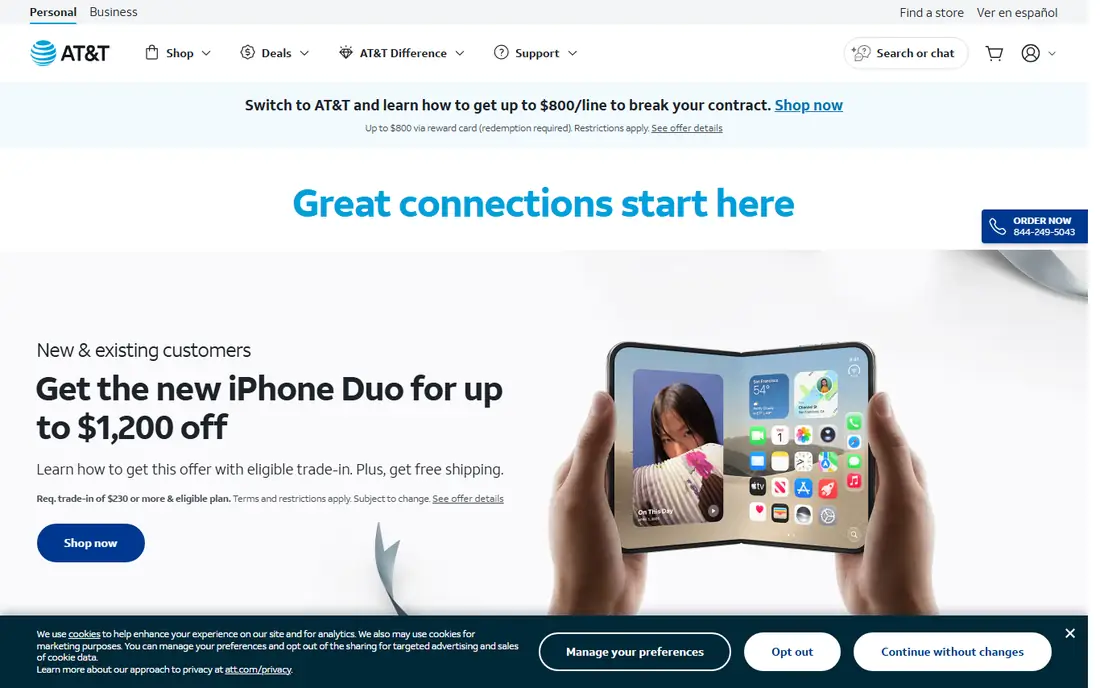
AT&T is the oldest US phone company, and its network covers more than 99 percent of the population, according to recent coverage reporting. That breadth makes it a reliable choice for users who move between cities, suburbs, and rural areas, and who want a major carrier with a long history of network investment. Discount programs for military members, veterans, first responders, teachers, nurses, and other eligible groups can reduce monthly costs, with savings that vary by plan and eligibility, so eligible users should check the AT&T discount page.
Premium plans add unlimited data in many Latin American countries, which is a clear benefit for travelers to that region, while lower plans use international day passes that cost extra per day. That difference matters for anyone who travels abroad often: a premium plan may be cheaper overall than day passes on a long trip. AT&T plan prices and names change often, so readers should confirm the current plan, price, and terms on the AT&T site before switching. For broad coverage plus group discounts, AT&T is a strong major carrier option.
What we like- Coverage for more than 99 percent of the US population
- Discounts for military, first responders, teachers, and other groups
- Premium plans with Latin America data
Watch out for- International day passes on lower plans add up quickly
- Plan names and prices change often, so check current details
Starting price$15 per month
Free planNo
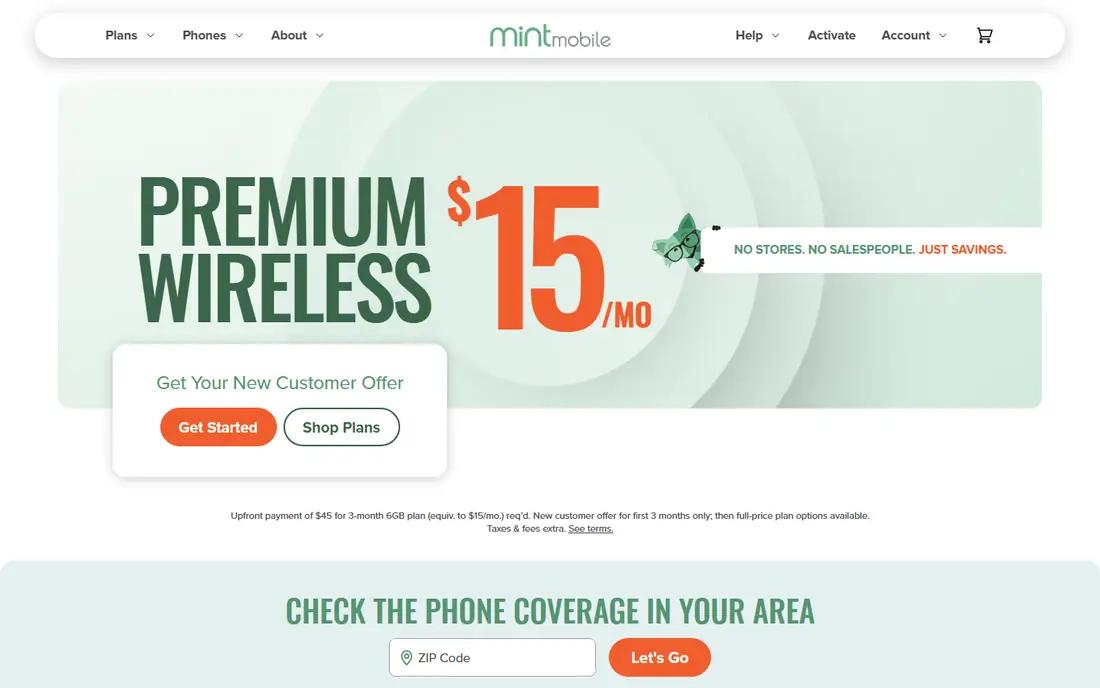
Mint Mobile offers some of the lowest prices in the US for a prepaid phone plan, with a homepage headline of $15 per month for a 3-month plan, paid upfront. That price applies to a 6GB plan for new customers for the first three months, with full-price plan options after that period, and taxes and fees extra, so readers should read the full terms on the Mint site. Mint runs on the T-Mobile network, which means coverage and 5G access are similar to T-Mobile in most areas, though prepaid users may see slower speeds during congestion.
The online-first model keeps costs down: there are no retail stores, and activation, support, and plan changes happen online or by phone. That model suits users who are comfortable managing a plan themselves and who do not need in-store help. Mint also offers a plan for users aged 55 and up, and a home internet bundle in some areas. For a single user who wants a low monthly cost and is willing to pay upfront for three or twelve months, Mint is one of the best values on this list.
What we like- Very low starting price for prepaid plans
- Runs on the T-Mobile network
- No stores or long contracts
Watch out for- Best prices require upfront payment for several months
- Data may slow after 50GB per month on unlimited plans
Starting price$19 per month
Free planNo
Visible, by Verizon, keeps phone service simple: unlimited talk, text, and data, with no annual contract and no hidden fees noted on its homepage. The homepage headline lists unlimited 5G starting at $19 per month for one year, which is a promotional price that readers should confirm on the Visible site, since regular prices and terms change. Visible runs on the Verizon network, so coverage is similar to Verizon in most areas, which is a strong point for a low-cost carrier.
Hotspot is included, with speeds that vary by plan, from 5 Mbps on the base plan to higher speeds on Visible+ and Visible+ Pro, and premium data, which avoids slowdowns during congestion, is included on higher plans. That tiering matters: a user who needs full-speed data during busy times should choose a higher plan, while a user who mainly uses Wi-Fi and light mobile data can save with the base plan. Visible has no physical stores, so support is online, which suits users comfortable with app and chat support. For simple, low-cost unlimited service on a strong network, Visible is a clear pick.
What we like- Simple unlimited plans with no annual contract
- Runs on the Verizon network
- Hotspot included, with speeds by plan
Watch out for- No physical stores
- Premium data and hotspot speeds depend on the plan chosen
Starting price$35 per month
Free planNo
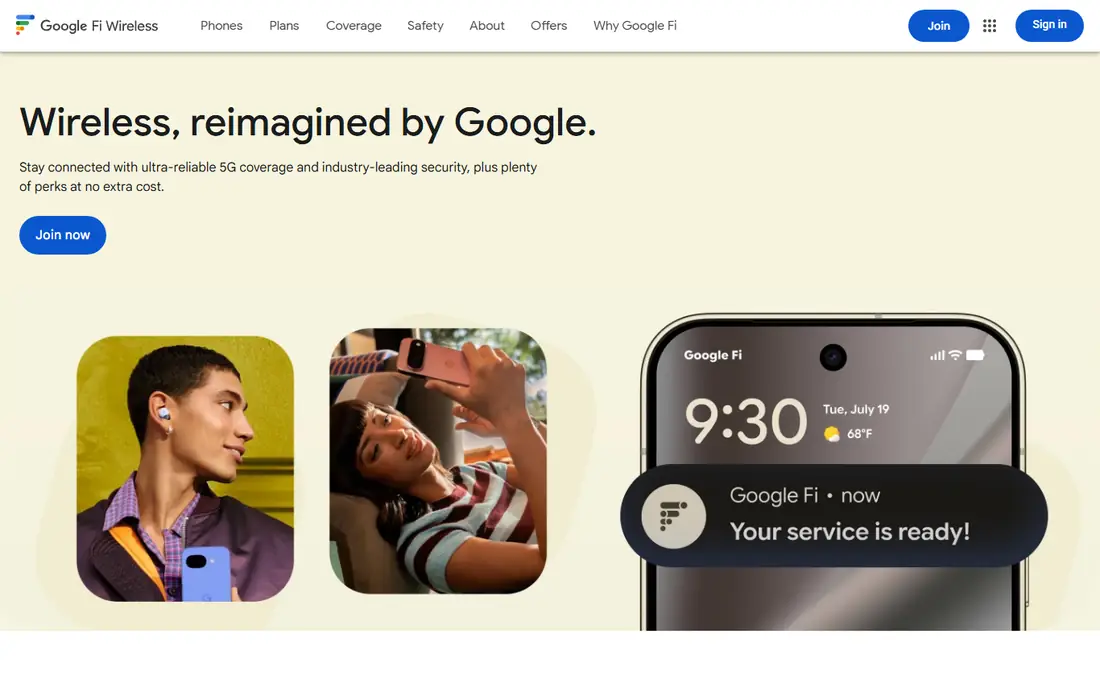
Google Fi Wireless is the most flexible carrier on this list, with a choice between unlimited plans and a Flexible plan that charges for data used. The homepage lists Unlimited Essentials at $35 per month for one line, Unlimited Standard at $50 per month for one line, and Unlimited Premium at $65 per month for one line, with lower per-line prices as lines are added. Flexible starts at $20 per month plus $10 per gigabyte, which can be cheap for light data users and more costly for heavy users, so it suits people who use little mobile data or spend much time on Wi-Fi.
International coverage is a key strength: higher plans include data in 200 plus destinations, and the Flexible plan also includes international data in many destinations, which helps travelers avoid buying local SIM cards for short trips. Google Fi also offers perks such as YouTube Premium and Google One storage on higher plans, and a discount for users who bring a Pixel phone. For Pixel owners, frequent travelers, and families who want flexible, easy-to-manage plans, Google Fi is a strong choice, even though single-line prices are higher than the cheapest prepaid options.
What we like- Simple unlimited and flexible plans
- International data in 200 plus destinations on higher plans
- Good fit for Pixel phones
Watch out for- Best value is for Pixel users and multi-line plans
- Single-line prices are higher than Mint or Visible
Starting price$30 per month
Free planNo
Cricket Wireless, owned by AT&T, offers low-cost prepaid plans with no annual contract, and it has physical stores, which sets it apart from online-only prepaid carriers such as Mint and Visible. The homepage lists a Sensible 10GB plan at $30 per month with Auto Pay, plus unlimited plans at higher prices, including a Smart Unlimited plan and a Supreme Unlimited plan, with multi-month prepaid options that lower the monthly cost further. Those multi-month options require upfront payment, so readers should check the full terms on the Cricket site.
Cricket runs on the AT&T network, so coverage is similar to AT&T in most areas, and it supports Mexico and Canada calling and texting on some plans, which helps users who travel or contact people in those countries. Video on many plans is limited to standard definition, and data may slow during congestion, which are common trade-offs for low-cost prepaid service. For users who want a low price, a major network, and the option of in-store help, Cricket is a practical, no-contract choice.
What we like- Low-cost prepaid plans with no annual contract
- Runs on the AT&T network
- Stores for in-person help
Watch out for- Video may be limited to standard definition on many plans
- Data may slow during congestion
How we chose
We compared carriers that are available in the United States in 2026, including the three major carriers and four prepaid or value carriers that run on major networks. We checked each vendor homepage to confirm the product loads and belongs to the named carrier, and we reviewed plan pages, coverage notes, and public satisfaction research for network coverage, pricing, hotspot, international data, and support options. We favored a mix of major and prepaid carriers, so readers can choose based on budget, coverage needs, and travel habits, rather than only on headline price. Prices change often and depend on lines, autopay, device deals, and promotions, so readers should confirm the current price and terms on the carrier site before switching.
How to pick a phone company
Check coverage where you live, work, and travel
A carrier with strong national coverage may still be weak in your neighborhood or on your commute. Use carrier coverage maps, ask neighbors and coworkers, and check trial or return terms before porting your number. Rural users should weight Verizon and AT&T more heavily, while urban users can often save with T-Mobile or a prepaid carrier.
Compare total cost, not just the headline price
Headline prices often assume autopay, multiple lines, a new customer offer, or upfront payment for several months. Add taxes, fees, device payments, and hotspot or international add-ons to get the true monthly cost for your household. A plan that looks cheap for one line may be costly for four lines, and the reverse is also true.
Decide how much data and hotspot you actually need
Many users overpay for unlimited premium data they rarely use, while others underbuy and face slow speeds after a data cap. Check your current data use for two or three months, then choose a plan with a comfortable margin, plus enough hotspot for tethering if you work away from Wi-Fi.
Test before you commit to a long plan
Prepaid carriers with multi-month upfront payment offer the lowest prices, but they lock in your money. Start with a monthly plan or a short trial where available, test coverage and speeds in your daily locations, and only then switch to a longer prepaid term for savings.
Frequently asked questions
What is the best phone company in the US in 2026?
For most people, T-Mobile is the best major carrier, thanks to wide 5G coverage and family value. Verizon is best for rural coverage, AT&T is best for broad coverage plus group discounts, and Mint, Visible, and Cricket are best for low cost.
Is a prepaid carrier as good as a major carrier?
Coverage is often similar, since prepaid carriers run on major networks, but data priority, hotspot, perks, and support can differ. Prepaid users may see slower speeds during congestion, and they usually get online support rather than in-store help, except for Cricket, which has stores.
Can I keep my phone number when I switch?
Yes, in most cases. You can port your number to a new carrier, usually by providing your current account number and transfer PIN. Do not cancel your old service before the port completes, or you may lose the number.
Do I need an unlimited plan?
Not always. If you use Wi-Fi most of the day and mobile data lightly, a limited plan or Google Fi Flexible may be cheaper. If you stream video, tether a laptop, or travel often, an unlimited plan with enough hotspot is usually worth the extra cost.
What is data deprioritization?
Deprioritization means your data may slow during congestion, when the network is busy, because higher-priority users get faster speeds first. It affects mainly lower-priced and prepaid plans, and it matters most in crowded places such as stadiums, airports, and busy city centers.
Should I buy a phone from the carrier or separately?
Buying from a carrier can lower the upfront cost through trade-in deals and bill credits, but those credits often require staying with the carrier for 24 or 36 months. Buying a phone separately gives more freedom to switch carriers, but the full price is paid upfront or through separate financing.
Sources we checked (7)
- https://www.t-mobile.com
- https://www.verizon.com
- https://www.att.com
- https://www.mintmobile.com
- https://www.visible.com
- https://fi.google.com
- https://www.cricketwireless.com
Is your product missing or out of date?
We review this list regularly. Vendors can request a listing, send updated pricing or ask about featured placement.

Shihab Mia · Founder, Rankite
Shihab has 5+ years in B2B and SaaS SEO. He writes Rankite's software buying guides from pricing pages, documentation and public user reviews. More about Shihab.