How we make this list: we compare pricing pages, product documentation and public user reviews. Ratings come from G2, Capterra or Trustpilot, with the date we checked them.
Key takeaways
- The installer often matters as much as the brand, since sizing, ductwork, and setup decide comfort and running costs.
- Carrier, Trane, and Lennox suit buyers who want premium central systems with wide dealer networks.
- Daikin and Mitsubishi Electric suit ductless and multi-zone homes, especially where adding ducts is costly or impractical.
- Goodman and Rheem offer strong value for standard central systems, while York suits larger and commercial projects.
- Get written quotes with the exact model, efficiency rating, warranty terms, and install scope before you choose.
Quick comparison
| Tool | Best for | Starting price | Free plan |
|---|
 Carrier | Premium central cooling | See website | No |
 Trane | Durable central systems | See website | No |
 Lennox | High-efficiency central systems | See website | No |
 Daikin | Ductless and multi-zone cooling | See website | No |
 Goodman | Value central systems | See website | No |
 Rheem | Value with wide product range | See website | No |
 York | Commercial and large buildings | See website | No |
 Mitsubishi Electric | Ductless mini-split systems | See website | No |
Is your product missing or out of date?
We review this list regularly. Vendors can request a listing, send updated pricing or ask about featured placement.
The best ac company
Starting priceSee website
Free planNo

Carrier is a familiar name in home cooling, with central air conditioners, heat pumps, ductless systems, and smart controls for homes and businesses. That range helps when a house needs a standard split system, a high-efficiency upgrade, or a zoned setup for rooms with different loads. The dealer network is also wide, which matters for service after install, since a brand you cannot get serviced locally loses much of its value. Carrier's residential pages let you compare tiers, so you can see what a higher tier adds before a dealer visit.
Premium pricing is the main drawback. Top Carrier models, plus the install work that goes with them, can cost far more than a basic system, and quotes vary by dealer, region, and duct condition. Ask for the exact model number, efficiency rating, and warranty terms in writing, and compare at least two Carrier dealers if possible. Carrier suits buyers who want a premium central system and a dealer they can call for years, provided the quoted total fits the budget.
What we like- Long history in home cooling
- Wide residential and commercial range
- Large dealer network
Watch out for- Premium models cost more
- Price depends on dealer and install scope
- Model range can confuse buyers
Starting priceSee website
Free planNo
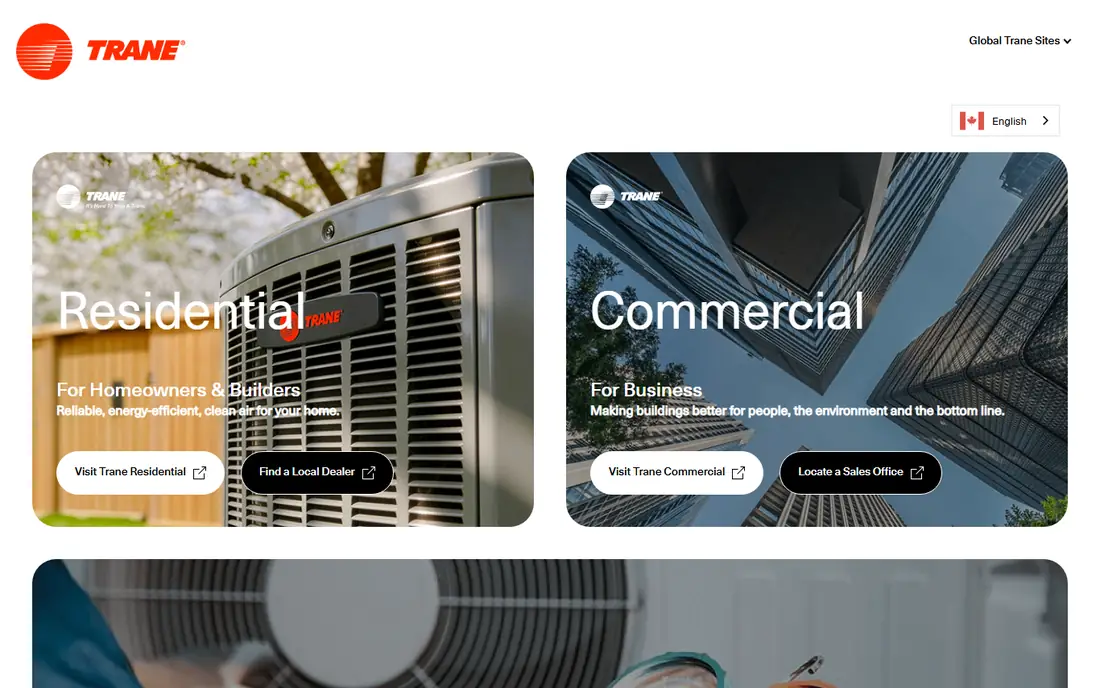
Trane focuses on residential and commercial heating and cooling, with central systems known among contractors for sturdy construction and steady performance. Homeowners often hear Trane recommended by installers who value fewer callbacks and consistent operation in hot climates. The residential range includes standard and high-efficiency central systems, heat pumps, and controls, while the commercial side serves offices, schools, and larger buildings. That dual focus can help if you want a brand with deep engineering support behind it.
Cost is the usual catch. Trane systems often sit at the premium end, and the final price depends heavily on install scope, ductwork, and local labor. A Trane unit installed poorly will still disappoint, so dealer quality matters as much as the name on the box. Get a load calculation, check duct condition, and confirm warranty registration steps. Trane is a strong pick for buyers who prioritize durability and are willing to pay for careful installation.
What we like- Strong reputation for build quality
- Residential and commercial lines
- Dealer support
Watch out for- Often priced at the premium end
- Availability varies by dealer
- Higher tiers need careful sizing
Starting priceSee website
Free planNo

Lennox offers residential systems that span standard efficiency to very high efficiency, plus commercial products and services for multi-site businesses. For homeowners, the appeal is choice: you can pick a straightforward central system, or step up to a variable-speed model designed to run longer at lower output for steadier temperatures and lower energy use. Lennox also promotes indoor air quality features, such as filtration and humidity control, which matter in humid climates and for allergy-sensitive households.
High efficiency only pays off when the home and ducts support it. A leaky duct system or poor insulation can erase much of the saving from a premium unit, so a good dealer should check ducts and airflow before recommending the top tier. Service and parts availability also vary by area, so confirm local support before buying a less common model. Lennox suits buyers who want efficiency choice and are willing to invest in the install work that makes it real.
What we like- Wide efficiency range
- Residential and commercial systems
- Focus on quieter, cleaner indoor air
Watch out for- Premium models are costly
- Parts and service vary by dealer
- Efficiency gains depend on home and ducts
Starting priceSee website
Free planNo

Daikin is a global air conditioning company with a strong focus on ductless mini-splits, multi-zone systems, and central products for homes and businesses. Ductless systems suit older homes without ducts, room additions, garages, and homes where different rooms need different temperatures. A single outdoor unit can serve several indoor units, each with its own control, which avoids the cost and disruption of adding ductwork. Daikin also offers central systems, so it is not limited to mini-splits alone.
Regional variation is the main thing to check. Dealer coverage, model availability, and support can differ, and some Daikin model names vary between global and US markets. Confirm the exact US model, warranty, and local installer before committing. Daikin is an excellent choice for ductless and multi-zone projects, especially when ducts are impractical, and a solid option for central cooling where a local dealer supports it well.
What we like- Global air conditioning specialist
- Strong ductless and multi-zone range
- Central systems also available
Watch out for- Dealer coverage varies by region
- Model names differ by market
- Commercial focus can confuse home buyers
Starting priceSee website
Free planNo
Goodman is the value pick in this guide for standard central air conditioning. Its systems cover common home sizes and efficiency levels without the premium price of top-tier brands, which helps buyers replacing a failed unit on a tight budget. Goodman also offers financing information through dealers and an efficiency tool to estimate savings from higher-efficiency models. For a straightforward replacement in a home with sound ducts, Goodman often delivers the cooling needed at a lower equipment cost.
The catch is that value brands depend even more on installation quality. A poorly sized or poorly installed Goodman system will cost more to run and fail sooner, erasing the upfront saving. Warranty terms also deserve attention, since full coverage often requires registration within a set time after install. Ask your dealer to confirm sizing, duct checks, and registration in writing. Goodman suits budget-conscious buyers who choose a careful installer and do not need premium features.
What we like- Lower equipment cost than premium brands
- Straightforward central systems
- Warranty options with registration
Watch out for- Fewer premium features on base models
- Installer quality matters greatly
- Some models need registration for full warranty
Starting priceSee website
Free planNo
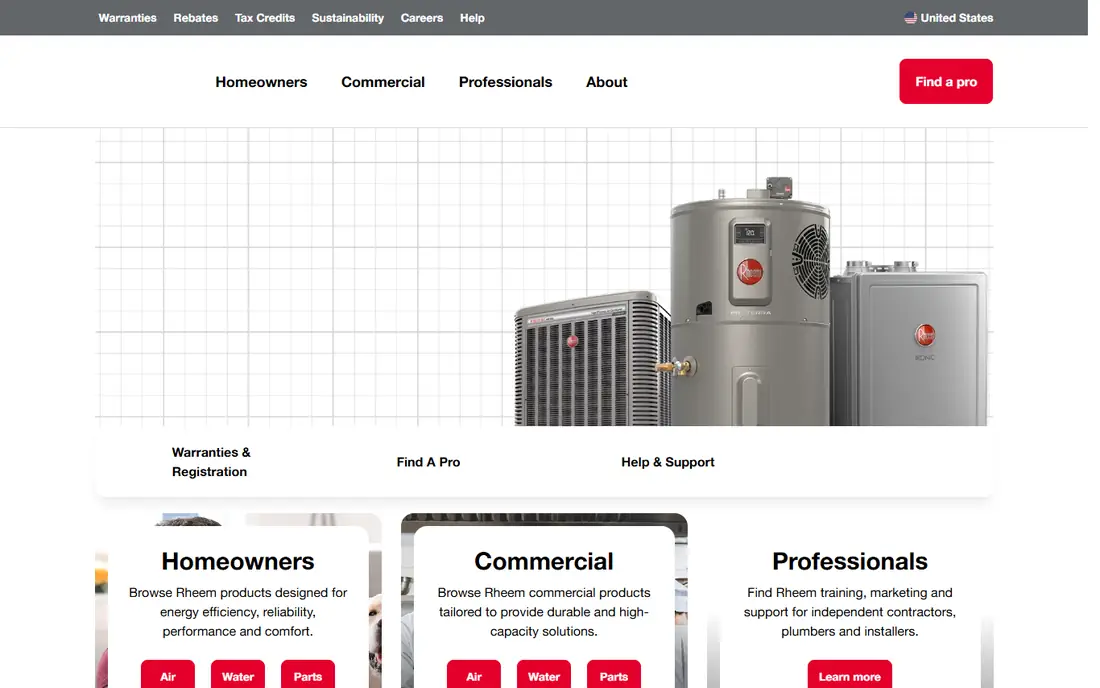
Rheem covers heating, cooling, and water heating for homes and businesses, which is useful when a project involves more than one system. Homeowners can compare central air conditioners, heat pumps, and ductless options, and in some cases coordinate a water heater replacement with the same dealer. That breadth helps in renovations where several systems age out at once, and Rheem's dealer network is wide enough that service is usually available locally.
The wide range can confuse buyers, since similar-looking models differ in efficiency, sound, and controls. Compare the exact model, efficiency rating, and warranty, rather than judging by brand alone. Final price also depends on install scope, including electrical work, duct changes, and condensate handling. Rheem is a strong mid-range choice for buyers who want value, variety, and a dealer network that can handle heating and water heating alongside cooling.
What we like- Heating, cooling, and water heating range
- Central and ductless options
- Wide dealer availability
Watch out for- Product range can be confusing
- Premium features vary by model
- Install scope drives final price
Starting priceSee website
Free planNo
York is best known for commercial HVAC, including chillers, air handling units, heat pumps, and controls for data centers, schools, hospitals, and large buildings. That background gives York deep expertise in large, complex systems where capacity, reliability, and energy management matter at scale. For commercial buyers, facility managers, and builders, York offers an integrated approach from design through service, with products built for demanding applications.
Home buyers should check local availability carefully. York's current homepage centers on commercial solutions, and residential support varies by dealer and region, so a homeowner may find a residential-focused brand easier to buy and service. Commercial quotes are also project-specific, with pricing that depends on building load, controls, and install scope. York suits large building projects and commercial buyers first, and homeowners second, only where a qualified local dealer offers residential York systems.
What we like- Long commercial HVAC history
- Chillers, air handlers, and heat pumps
- Large building expertise
Watch out for- Home focus is less direct than residential brands
- Commercial quotes are project-specific
- Local residential availability varies
Starting priceSee website
Free planNo

Mitsubishi Electric is a leading name in ductless mini-split and multi-zone cooling, with indoor units that run quietly and allow each room to set its own temperature. That zoned control suits homes with additions, converted spaces, or rooms that heat up differently through the day. Ductless systems also avoid duct losses, which helps in older homes where ducts are leaky or absent. Mitsubishi Electric's home cooling range is part of a much larger global company, so home buyers should use the residential HVAC sections and local dealer pages for model details.
Cost per zone is the main limit. A single-zone mini-split can be affordable, but a multi-zone system with several indoor units, refrigerant lines, and electrical work can rival a central system in total price. Dealer skill matters too, since line routing, placement, and sizing decide comfort and appearance. Mitsubishi Electric is the top pick for ductless projects where zoning and quiet operation matter most, provided the dealer quotes the full multi-zone total, not just one indoor unit.
What we like- Strong ductless and multi-zone expertise
- Quiet indoor units
- Zoned control by room
Watch out for- Global site covers many product areas beyond home cooling
- Ductless install cost per zone adds up
- Dealer quality varies
How we chose
We reviewed official manufacturer homepages, product pages, and public reviews, and we opened each homepage to confirm it loads and belongs to the brand named. We favored brands with current US availability, a range of central or ductless systems, and dealer or service networks that homeowners can actually use. We did not invent installed prices, since final cost depends on home size, duct condition, electrical work, region, and dealer labor. Efficiency and warranty details should be checked on the exact model page and in the dealer quote.
What to ask before you buy
Start with a proper load calculation, not a guess based on the old unit size. Homes change over time with insulation, windows, and additions, so the right size today may differ from the unit installed twenty years ago. Ask each dealer for the calculation, the exact model numbers for indoor and outdoor units, the efficiency rating, and the scope of duct, electrical, and condensate work. Compare at least two or three written quotes with the same scope, or price differences will mislead you.
Next, check warranty and service terms in writing. Note what the parts warranty covers, whether labor is included and for how long, and whether registration is required to keep full coverage. Ask about maintenance needs, filter access, and who to call for service after install. Finally, consider total cost, not just equipment price: a higher-efficiency system can lower running costs over time, but only if ducts, insulation, and controls support it. A careful installer who explains these trade-offs is often worth more than a slightly cheaper quote from a rushed one.
Frequently asked questions
Which AC brand is best for most homes?
Carrier, Trane, and Lennox are strong central system choices for most homes with ducts, while Daikin and Mitsubishi Electric lead for ductless homes. The best brand for your home depends on ducts, climate, room layout, and local dealer support. Get quotes from two brands with the same install scope to compare fairly.
How much does a new AC system cost?
Installed cost varies widely by home size, system type, efficiency, ductwork, electrical work, and region, so this guide lists prices as See website. A basic central replacement costs far less than a multi-zone ductless system or a premium variable-speed install. Written dealer quotes with exact models are the only reliable price for your home.
Is a ductless mini-split better than central AC?
Ductless suits homes without ducts, additions, and rooms that need separate control, while central AC suits homes with sound ducts and a need to cool the whole house evenly. Ductless avoids duct losses but costs more per zone as zones add up. A dealer load calculation helps decide which approach fits your layout.
Does a higher efficiency rating always save money?
Higher efficiency can save money, but only when ducts, insulation, airflow, and controls support the system. A premium unit on leaky ducts may save little, while a mid-efficiency unit on sound ducts can perform well. Ask the dealer to estimate running costs for your home, not just quote the rating.
How long does an AC system last?
Lifespan depends on climate, use, install quality, and maintenance, with many systems lasting well over a decade when serviced regularly. Annual maintenance, clean filters, and prompt repairs help more than brand alone. Keep service records and register the warranty on time to protect coverage.
Should I replace the furnace or air handler with the AC?
Often yes, if the indoor unit is old, mismatched, or inefficient, since matched systems perform better and warranty terms may assume a matched set. A dealer can explain whether your existing indoor unit suits the new outdoor unit. Replacing both at once can also reduce labor compared with two separate visits.
Sources we checked (8)
- https://www.carrier.com
- https://trane.com
- https://www.lennox.com
- https://www.daikin.com
- https://goodmanmfg.com
- https://www.rheem.com
- https://www.york.com
- https://www.mitsubishielectric.com
Is your product missing or out of date?
We review this list regularly. Vendors can request a listing, send updated pricing or ask about featured placement.

Shihab Mia · Founder, Rankite
Shihab has 5+ years in B2B and SaaS SEO. He writes Rankite's software buying guides from pricing pages, documentation and public user reviews. More about Shihab.