How we make this list: we compare pricing pages, product documentation and public user reviews. Ratings come from G2, Capterra or Trustpilot, with the date we checked them.
Key takeaways
- Burp Suite Pro is the web application testing standard at $449 a user per year.
- Tenable Nessus remains the go-to vulnerability scanner at about $3,859 a year.
- Metasploit Pro and Cobalt Strike serve exploitation and red-team work, at $15,000 and $3,540 a user per year respectively.
- Invicti and Acunetix (same company) lead automated DAST with proof-based accuracy.
- Intruder and Pentest-Tools.com bring continuous cloud scanning with free trials.
- OWASP ZAP is the best free option: open source and widely adopted.
Quick comparison
| Tool | Best for | Starting price | Free plan |
|---|
 Burp Suite Burp Suite | Web application pentesters who want the industry standard | $449/user/year | Yes |
 Metasploit Pro Metasploit Pro | Teams that need a serious exploitation framework | $15,000/year | Yes |
 Tenable Nessus Tenable Nessus | Network vulnerability assessment at any scale | $3,859.25/year | No |
 Cobalt Strike Cobalt Strike | Red teams running adversary simulations | $3,540/user/year | No |
 Invicti Invicti | Enterprises that want automated DAST with proof | See website | No |
 Acunetix Acunetix | Teams that want fast, accurate automated web scanning | See website | No |
 Intruder Intruder | Lean teams that want continuous cloud scanning | See website | Free trial |
 Pentest-Tools.com Pentest-Tools.com | Testers who want one platform for scanning and validation | From $95/month | Free trial |
 OWASP ZAP OWASP ZAP | Anyone who needs a free, capable web scanner | Free | Yes |
Is your product missing or out of date?
We review this list regularly. Vendors can request a listing, send updated pricing or ask about featured placement.
The best penetration testing software
Starting price$449/user/year
Free planYes
For over 20 years, Burp Suite has set the standard for web security testing, and PortSwigger's proxy remains the tool professional pentesters open first. The intercepting proxy gives fine-grained control over every request and response, while the scanner, intruder and repeater modules handle automated and manual workflows. Over 90,000 practitioners use it worldwide.
Burp Suite Pro costs $449 per user per year, with Burp Suite Enterprise adding scheduled CI/CD scanning for larger teams. The free Community edition covers manual proxy work and is where most testers learn.
The honest catches are scope and skill. Burp is a web application tool, not a network scanner, and it rewards expertise: beginners face a real learning curve. For web pentesting, though, nothing else is as complete.
What we like- Intercepting proxy with unmatched manual testing control
- Extensive extension marketplace (BApps)
- Burp Suite Enterprise for CI/CD automation
Watch out for- Burp Suite Community is feature-limited
- No native network scanning
- Steep learning curve for newcomers
#2
Metasploit Pro
Best for: Teams that need a serious exploitation framework
Visit rapid7.com
Starting price$15,000/year
Free planYes
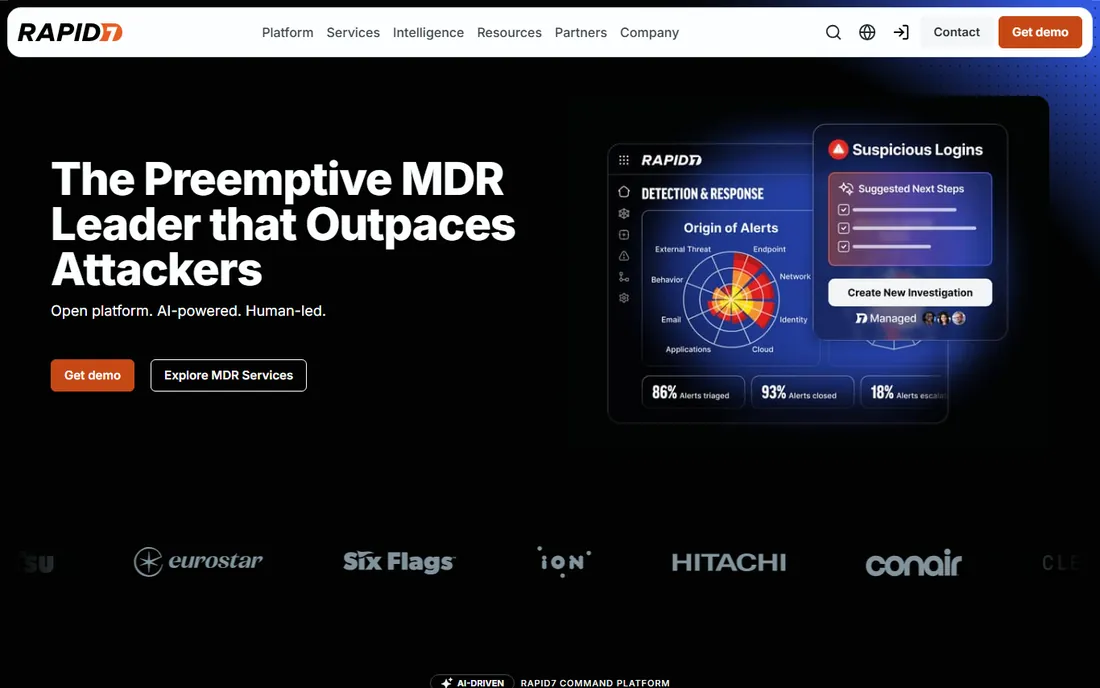
Metasploit is the exploitation framework behind countless pentests: a vast library of exploits, payloads and post-exploitation modules that turn discovered vulnerabilities into demonstrated impact. Rapid7's Pro edition wraps the framework in automated workflows, credential testing, phishing simulation and audit-ready reporting.
The free Metasploit Framework is the real deal and what most practitioners actually use. Pro at $15,000 a year targets teams running many engagements who need collaboration, reporting and API-driven automation.
The catch is skill and governance. Exploitation tools demand operators who understand what they are doing, and licensing is restricted. For professional pentest teams, it remains the backbone.
What we like- Vast exploit and payload library
- Metasploit Framework is free and open source
- Pro adds automation, reporting and team workflows
Watch out for- Pro pricing is enterprise-only
- Exploitation requires skilled operators
- Misuse potential means access is controlled
#3
Tenable Nessus
Best for: Network vulnerability assessment at any scale
Visit tenable.com
Starting price$3,859.25/year
Free planNo
Tenable Nessus is one of the most recognized vulnerability scanners in the industry, identifying vulnerabilities, misconfigurations and malware across operating systems and devices. Its plugin library is the reason: tens of thousands of checks updated constantly, benchmarked against the same targets other scanners cover.
At $3,859.25 for 12 months, Nessus sits in the accessible-professional tier. It scans networks, web apps, cloud assets and containers, with agent-based options for assets that go offline.
The honest limit is that Nessus finds problems; it does not prove them exploitable. Pentesters pair it with Metasploit or Burp for validation. For vulnerability management programs, it is the benchmark.
What we like- Massive plugin library covering endless CVE and misconfiguration checks
- Fast, reliable scanning
- Deep compliance templates
Watch out for- No exploitation capabilities
- Reporting needs work for client delivery
- Annual price climbs for multiple scanners
Starting price$3,540/user/year
Free planNo
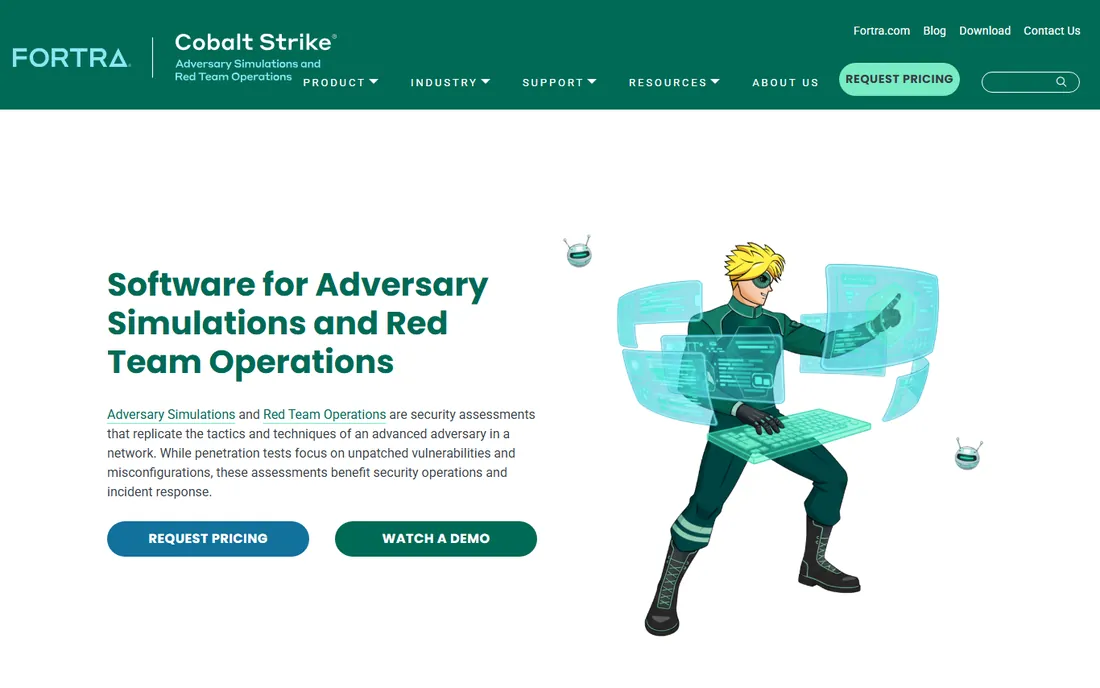
Cobalt Strike is the go-to red team tool for U.S. government, large business and consulting organizations. Its Beacon agent provides post-exploitation access and covert channels that emulate a quiet, long-term embedded actor, while Malleable C2 lets operators change network indicators to mimic different malware.
Fortra positions it alongside Core Impact and Outflank in a coordinated offensive portfolio. The collaboration model lets red team operators work together on long-running engagements, with reporting designed to train blue teams.
The catches are real. Availability is restricted to licensed organizations, the tool's popularity with criminals invites scrutiny, and at $3,540 per user per year it is a serious purchase. For adversary simulation, nothing else has the same pedigree.
What we like- Beacon post-exploitation agent with malleable C2 profiles
- Strong team collaboration features
- Purpose-built for red team operations
Watch out for- Closely monitored and license-restricted
- Also popular with real attackers, so expect scrutiny
- Premium pricing for smaller teams
#5
Invicti
Best for: Enterprises that want automated DAST with proof
Visit invicti.com
Starting priceSee website
Free planNo
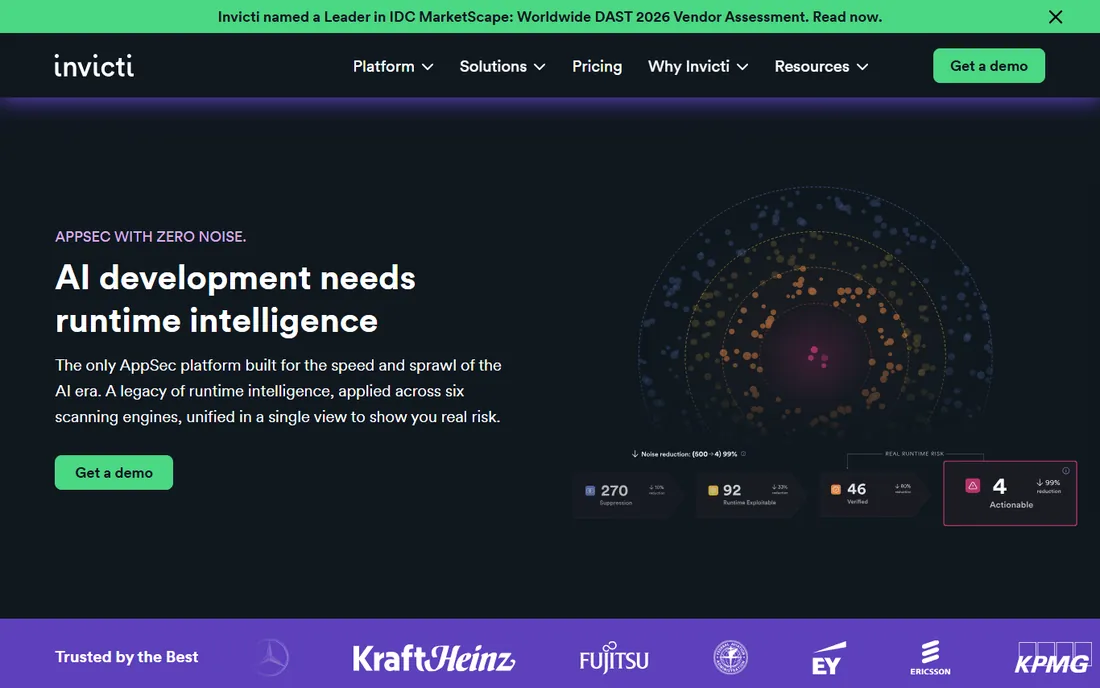
Invicti, confirmed by Miercom as an industry accuracy leader, scans running web applications and APIs and validates findings with proof-based techniques so developers focus on vulnerabilities that pose real business risk. The platform unifies DAST, SAST, SCA, container and IaC scanning into one prioritized view.
Newer capabilities include Octo, an agentic AI pentester that combines scanners with AI for audit-ready reports, and code-to-runtime correlation that traces vulnerabilities to the developers who introduced them. Over 5,000 customers use the platform.
The honest trade-off is enterprise fit. Pricing is quote-based, and the platform's breadth suits organizations with real AppSec programs. Mid-market teams may prefer its sibling Acunetix.
What we like- Proof-based scanning with 99.98% confirmation accuracy
- DAST plus SAST, SCA and API security in one platform
- Agentic AI pentesting available
Watch out for- Quote-based pricing puts it in enterprise territory
- Depth means implementation takes planning
- Overkill for single-app shops
#6
Acunetix
Best for: Teams that want fast, accurate automated web scanning
Visit acunetix.com
Starting priceSee website
Free planNo
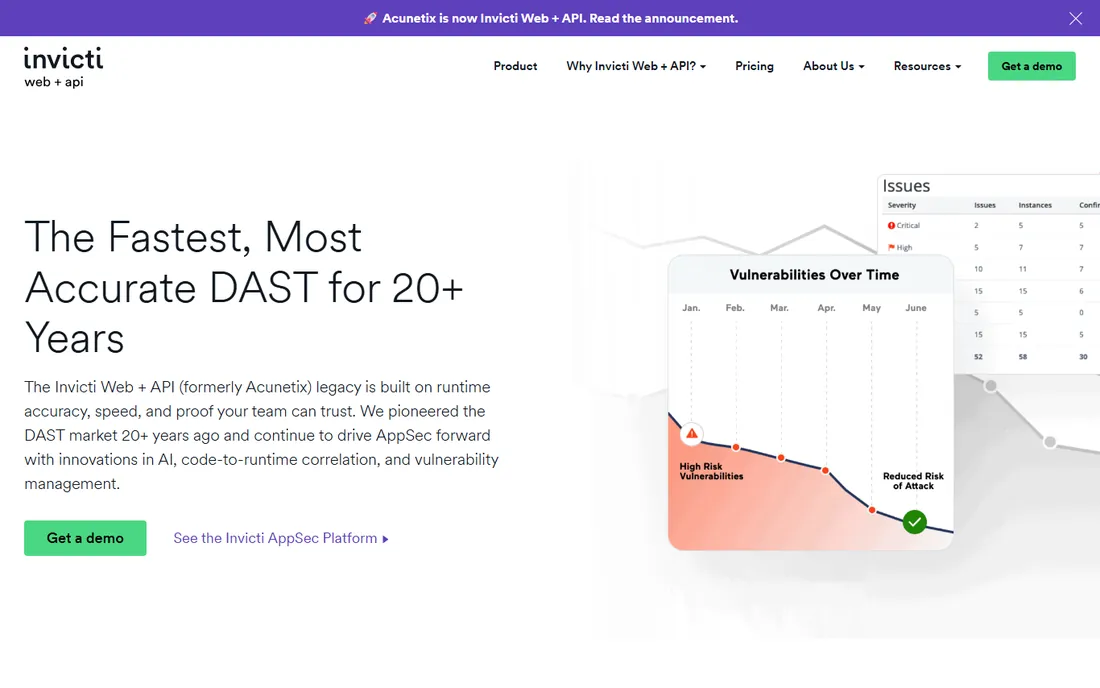
Acunetix, now branded Invicti Web + API, pioneered the DAST market over 20 years ago and remains one of the fastest automated web scanners available. It scans single-page apps, JavaScript-heavy frontends, REST, GraphQL and SOAP APIs, plus authenticated workflows behind login pages.
The differentiator is proof: 99.98% confirmation accuracy on exploitable findings means developers stop chasing false positives. Integrations with GitHub, GitLab, Jenkins, Jira and Azure DevOps slot scanning into existing pipelines.
Pricing is quote-based, which fits its mid-market-to-enterprise positioning. For teams that want automated scanning without the full Invicti platform, Acunetix is the focused choice.
What we like- 8x faster scanning than leading competitors per vendor benchmarks
- 7,000+ vulnerability checks including OWASP Top 10
- Strong CI/CD integrations
Watch out for- Quote-based pricing
- Now positioned as "Invicti Web + API," which complicates the brand
- Manual testing still needs Burp
#7
Intruder
Best for: Lean teams that want continuous cloud scanning
Visit intruder.io
Starting priceSee website
Free planFree trial
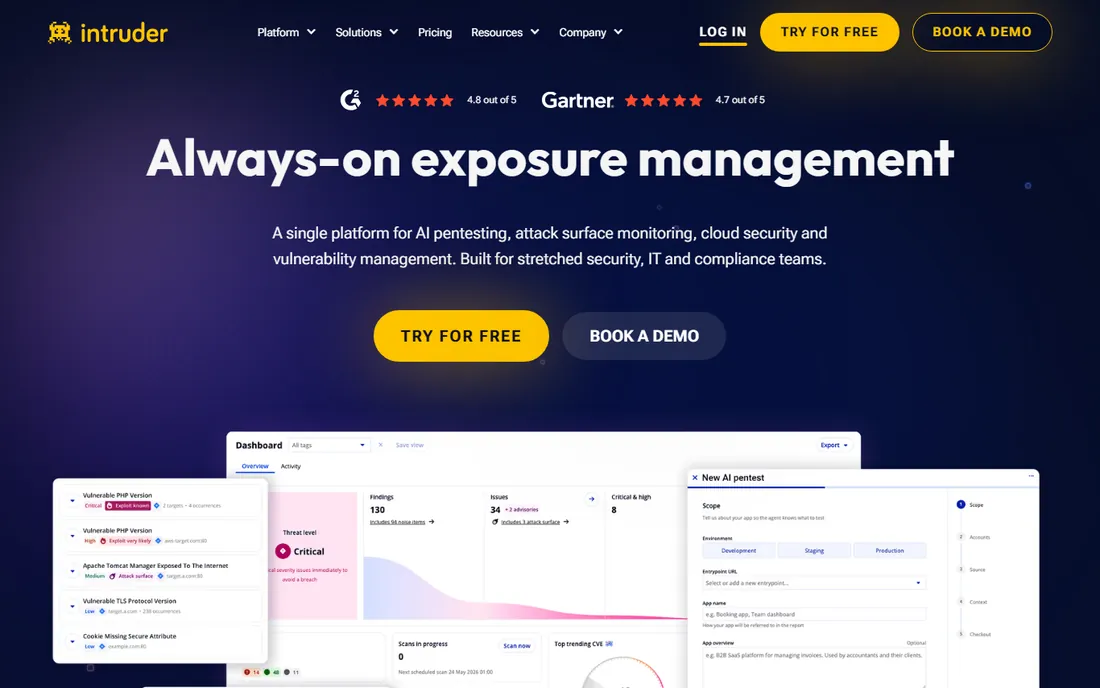
Intruder rethinks the annual pentest: continuous vulnerability scanning across infrastructure, apps and cloud in one platform, with emerging-threat scans running within hours of new critical disclosures. Issues are prioritized by real-world exploit likelihood, and remediation advice helps stretched teams fix what matters.
The standout is same-day AI pentesting: connect code repos, scope and launch in minutes, and get a compliance-ready pentest report in hours. A ZAP-powered DAST engine runs 75-plus application checks with CI/CD integration through GitHub, GitLab, Jira and Azure DevOps.
The catches are pricing opacity and maturity. Quote-based pricing makes comparison hard, and the AI pentesting claims need independent validation. For continuous coverage without a big team, it is compelling.
What we like- Real-time change detection across infrastructure and cloud
- Same-day AI pentesting on demand
- Emerging-threat scans within hours of disclosure
Watch out for- Pricing not published
- Newer AI pentesting features are unproven at scale
- Less depth than Burp for manual testing
Starting priceFrom $95/month
Free planFree trial
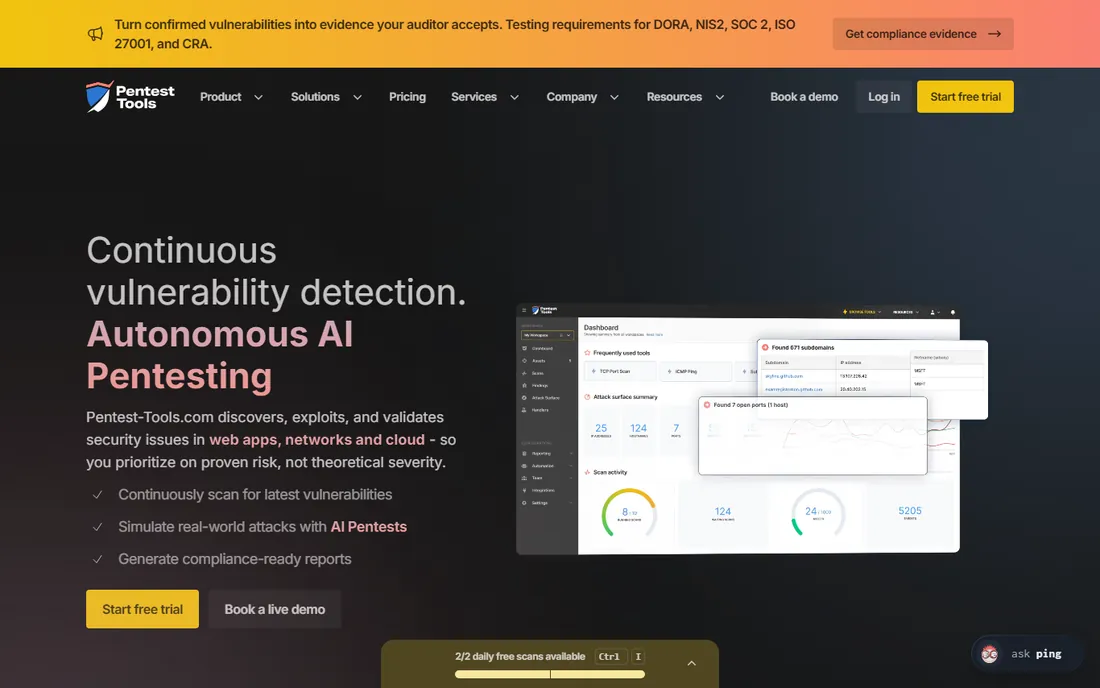
Pentest-Tools.com is the all-in-one offensive platform: vulnerability scanning across web, network and cloud, deterministic validation through safe exploitation, and Specter, an autonomous AI pentesting agent that investigates a web app and returns a validated report in hours. The company claims 17,400-plus detections and proprietary exploit modules.
Pricing is refreshingly transparent: plans start at $95 a month, priced by scanned asset (hostname or IP), with a free 7-day trial. Over 2,100 security teams in 119-plus countries use it, and the FAQ answers cost questions directly.
The honest limits are scale and brand. Asset-based pricing rewards careful scoping, and AI pentests cannot match human creativity on complex business logic. For independent testers and MSPs, it is excellent value.
What we like- Proprietary scanning plus safe exploitation for proof
- AI pentest agent (Specter) for on-demand web app tests
- Transparent pricing by asset
Watch out for- Asset-based pricing needs scoping discipline
- AI pentest quality varies by app complexity
- Smaller brand than Tenable or Rapid7
Starting priceFree
Free planYes
OWASP ZAP (Zed Attack Proxy) is the free standard: an open-source web application scanner maintained by a community project that anyone can contribute to, now stewarded with Checkmarx involvement. It intercepts traffic, spiders apps, runs active scans and supports automation through its API.
ZAP anchors many CI/CD security pipelines because it costs nothing and integrates easily. The add-on marketplace extends it for API scanning, authentication handling and reporting.
The catches are polish and depth. Commercial scanners find more with fewer false positives, and ZAP's interface shows its open-source roots. For learning, automation and budget teams, it is unbeatable.
What we like- Completely free and open source
- The world's most widely used web app scanner
- Active community and extensive add-ons
Watch out for- UI feels dated next to commercial tools
- Automated scan depth trails Acunetix and Invicti
- No vendor support contract
How we chose
We compared vendor pricing pages and documentation against practitioner sources: G2 and Capterra reviews, Reddit pentesting discussions, and 2026 comparison roundups from esecurityplanet, TechRepublic and nohack.net. We favored tools with verifiable current pricing, established practitioner adoption and clear capability documentation, mixing commercial leaders with proven open-source options. We did not test any tool hands-on. Note that some prices come from third-party comparisons rather than vendor pricing pages, which we flagged where relevant.
What to check before you buy
Start with your engagement type. Web application tests need Burp Suite, Acunetix or ZAP. Network assessments need Nessus or Pentest-Tools.com. Adversary simulation needs Cobalt Strike or Metasploit Pro. Buying a network scanner for a web app engagement wastes money.
Check licensing and access controls before committing budget. Cobalt Strike and Metasploit Pro restrict availability, and some vendors vet buyers. Plan procurement lead time.
Confirm reporting meets your needs. Client and compliance reports are the deliverable; a scanner that finds everything but exports poorly costs hours of rework. Ask for sample reports.
Finally, budget for the operator, not just the tool. Pentesting software multiplies a skilled tester's output; it does not replace one. The best ROI pairs automation with practitioners who know how to interpret and validate findings.
Open source versus commercial: the real trade
Free tools like ZAP, Nmap and the Metasploit Framework cover enormous ground at zero license cost. Their price is expertise: they assume operators who configure, interpret and chain findings themselves. Commercial tools charge for convenience: proof-based validation, managed plugin updates, polished reporting and support contracts. Most mature teams run both: commercial scanners for coverage and compliance, open-source tools for depth and flexibility. The budget question is really a staffing question.
Frequently asked questions
What is the best penetration testing software?
For web applications, Burp Suite Pro is the industry standard. For network vulnerability assessment, Tenable Nessus leads. For exploitation and red teaming, Metasploit Pro and Cobalt Strike dominate. Budget teams should start with free OWASP ZAP.
How much does penetration testing software cost?
OWASP ZAP is free. Burp Suite Pro costs $449 a user per year, Nessus about $3,859 a year, Cobalt Strike $3,540 a user per year, and Metasploit Pro around $15,000 a year. Pentest-Tools.com starts at $95 a month, while Invicti and Acunetix are quote-based.
What are the best free pentesting tools?
OWASP ZAP for web scanning, Nmap for network discovery, Wireshark for packet analysis, the Metasploit Framework for exploitation, and Kali Linux as the all-in-one testing distribution. Together they cover most of a professional engagement.
Can automated tools replace a human pentester?
No. Automated scanners find known vulnerabilities fast, but human testers find business-logic flaws, chain vulnerabilities and think like attackers. The best programs pair continuous automated scanning with periodic expert-led testing.
What is the difference between a vulnerability scanner and a pentest tool?
Scanners like Nessus identify and report potential vulnerabilities. Pentest tools like Metasploit and Burp Suite go further: they exploit vulnerabilities to prove impact and simulate real attacker behavior. Many engagements use both.
Do I need permission to run penetration tests?
Yes. Only test systems you own or have written authorization to test. Unauthorized testing is illegal in most jurisdictions. Professional engagements start with a signed rules-of-engagement document defining scope.
Sources we checked (11)
- https://portswigger.net/
- https://www.rapid7.com
- https://tenable.com/
- https://cobaltstrike.com/
- https://invicti.com/
- https://acunetix.com/
- https://intruder.io/
- https://pentest-tools.com
- https://zaproxy.org/
- https://www.esecurityplanet.com/products/best-penetration-testing/
- https://www.techrepublic.com/article/best-penetration-testing-tools/
Is your product missing or out of date?
We review this list regularly. Vendors can request a listing, send updated pricing or ask about featured placement.

Shihab Mia · Founder, Rankite
Shihab has 5+ years in B2B and SaaS SEO. He writes Rankite's software buying guides from pricing pages, documentation and public user reviews. More about Shihab.