How we make this list: we compare pricing pages, product documentation and public user reviews. Ratings come from G2, Capterra or Trustpilot, with the date we checked them.
Key takeaways
- Guardsquare is the best all-around pick for mobile app shielding, with DexGuard for Android and iXGuard for iOS.
- Appdome suits teams that want no-code protection fused into apps inside their CI/CD pipeline.
- Promon fits financial services and other regulated industries needing runtime protection with fraud prevention.
- OneSpan is the natural choice for banks already using its authentication and e-signature products.
- Jscrambler is the specialist for protecting JavaScript and client-side web code.
Quick comparison
| Tool | Best for | Starting price | Free plan |
|---|
 Guardsquare Guardsquare | all-around mobile app shielding | See website | See website |
 Licelus Licelus | Android app protection with DexProtector | See website | See website |
 PreEmptive PreEmptive | code protection across .NET, Java, and JavaScript | See website | See website |
 Promon Promon | runtime protection for regulated industries | See website | See website |
 Appdome Appdome | no-code protection in CI/CD | See website | See website |
 Jscrambler Jscrambler | JavaScript and client-side protection | See website | See website |
 OneSpan OneSpan | banks needing app shielding plus identity | See website | See website |
Is your product missing or out of date?
We review this list regularly. Vendors can request a listing, send updated pricing or ask about featured placement.
The best application shielding software
Starting priceSee website
Free planSee website
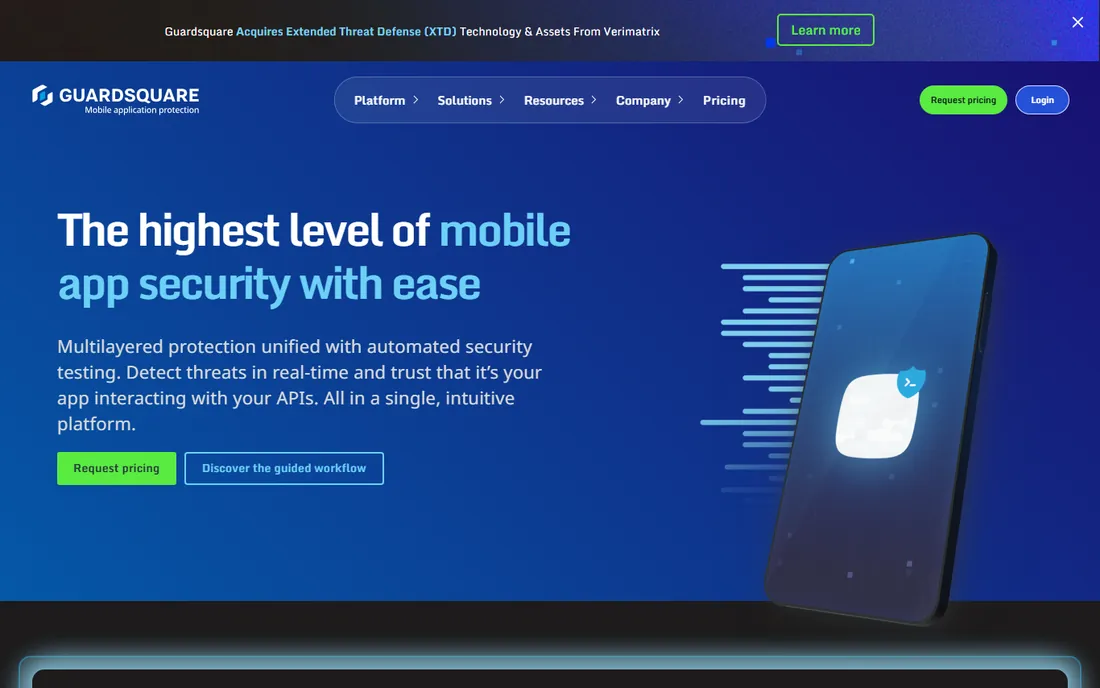
Guardsquare is the market leader in mobile application protection. DexGuard hardens Android apps with obfuscation, encryption, and runtime protection, while iXGuard does the same for iOS apps. The tools integrate into the build process, adding layers of defense against reverse engineering, tampering, and debugging without changing source code. ThreatCast adds runtime threat monitoring.
Pricing and complexity reflect the enterprise positioning. Small teams may find lighter options sufficient. But for apps handling payments, health data, or valuable IP, Guardsquare's depth and track record make it the default enterprise choice. (Guardsquare also acquired Verimatrix's mobile app protection business, consolidating that technology under its own products.)
What we like- DexGuard and iXGuard cover Android and iOS with deep hardening
- Built on ProGuard heritage
- Threat monitoring with ThreatCast
Watch out for- Enterprise pricing
- Configuration depth requires security expertise
Starting priceSee website
Free planSee website
Licelus (formerly Licel) protects Android applications with DexProtector, combining code obfuscation, encryption, and runtime self-protection. Mobile games, fintech apps, and media applications use it to block cheating, reverse engineering, and piracy. The RASP features detect rooted devices, hooking frameworks, and debuggers at runtime.
The Android specialization is both strength and limit; iOS apps need a companion solution. And Licelus lacks Guardsquare's brand weight. But for Android-first teams that want serious protection without enterprise ceremony, DexProtector is a capable alternative.
What we like- DexProtector offers strong Android hardening
- Runtime application self-protection included
- Good for gaming and fintech apps
Watch out for- Android focus means iOS needs another solution
- Smaller vendor than Guardsquare
Starting priceSee website
Free planSee website
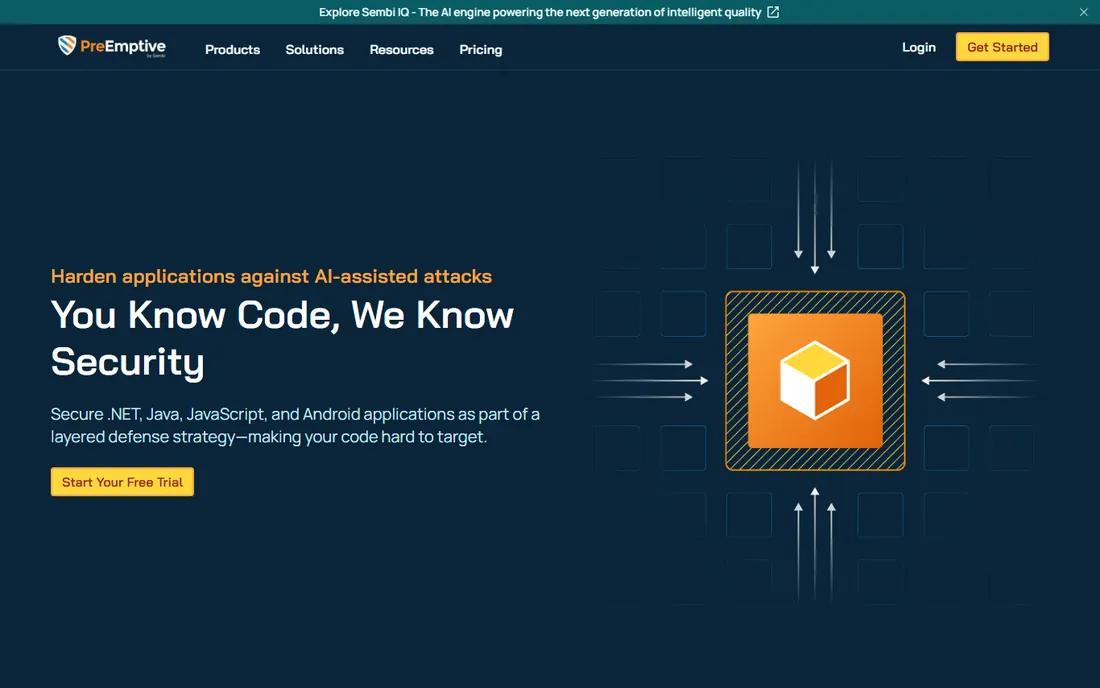
PreEmptive has protected application code since the 1990s, and the product line covers an unusual breadth: .NET, Java, Android, iOS, and JavaScript through Dotfuscator, DashO, DexGuard-era tooling, and JSDefender. Beyond obfuscation, it adds tamper detection, watermarking, and application analytics that report on how protected apps behave in the wild.
The breadth can make product selection confusing, and the interfaces show their age. But organizations with mixed technology stacks appreciate one vendor for all platforms. For .NET shops in particular, Dotfuscator remains a standard choice.
What we like- Covers .NET, Java, Android, iOS, and JavaScript
- Obfuscation plus tamper detection and watermarking
- Long track record
Watch out for- Product lineup spans many platforms which can confuse buyers
- Interface reflects its long history
#4
Promon
Best for: runtime protection for regulated industries
Visit promon.io
Starting priceSee website
Free planSee website
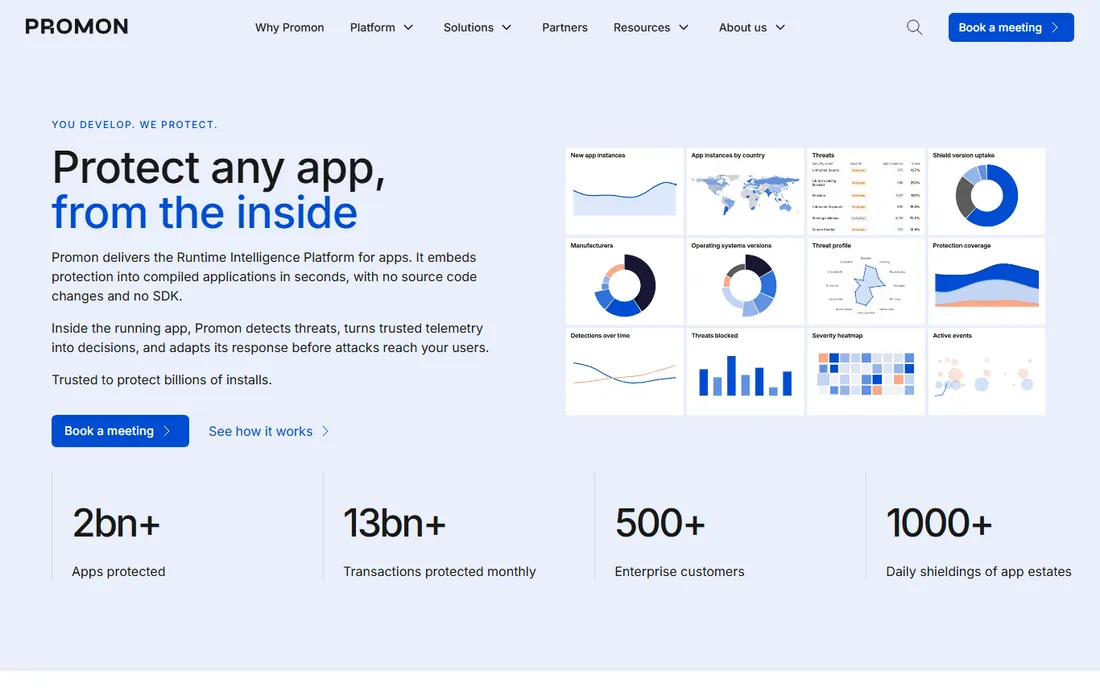
Promon protects mobile apps at runtime, detecting tampering, debugging, hooking, and malware-infected environments while the app runs. Banks, government agencies, and healthcare organizations rely on it for apps where compromise means fraud or data breach. The LexisNexis Risk Solutions partnership shows how its signals feed broader fraud prevention.
This is enterprise security software with enterprise sales cycles and pricing. Smaller developers will find it heavy. But in regulated industries where app integrity is a compliance requirement, Promon's runtime focus and reputation carry real weight.
What we like- Strong runtime protection with app integrity monitoring
- Trusted in banking and government
- Fraud prevention integrations
Watch out for- Enterprise sales process
- Pricing aimed at larger organizations
Starting priceSee website
Free planSee website
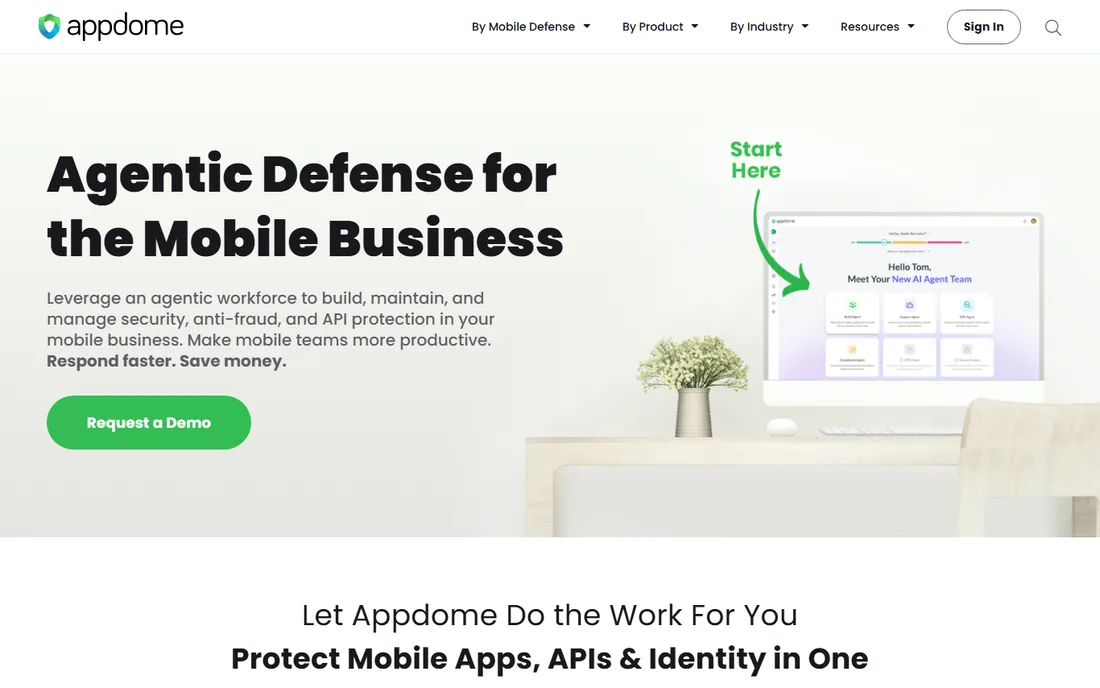
Appdome takes a different approach: instead of SDK integration, protections are fused into the compiled app through CI/CD plugins with no code changes. Teams select from a menu of security features, anti-fraud, anti-malware, anti-cheat, and compliance protections, and the platform builds a protected binary. Deployment speed is the headline advantage.
The menu-of-features model requires teams to know which protections they need, and costs scale with selections. But for DevOps teams that want security integrated into their pipeline without developer effort per feature, Appdome's automation is genuinely different from traditional SDK approaches.
What we like- No-code protection fused into apps via CI/CD plugins
- Wide menu of security features to combine
- Fast to deploy
Watch out for- Feature breadth requires careful selection
- Pricing scales with protection features
Starting priceSee website
Free planSee website
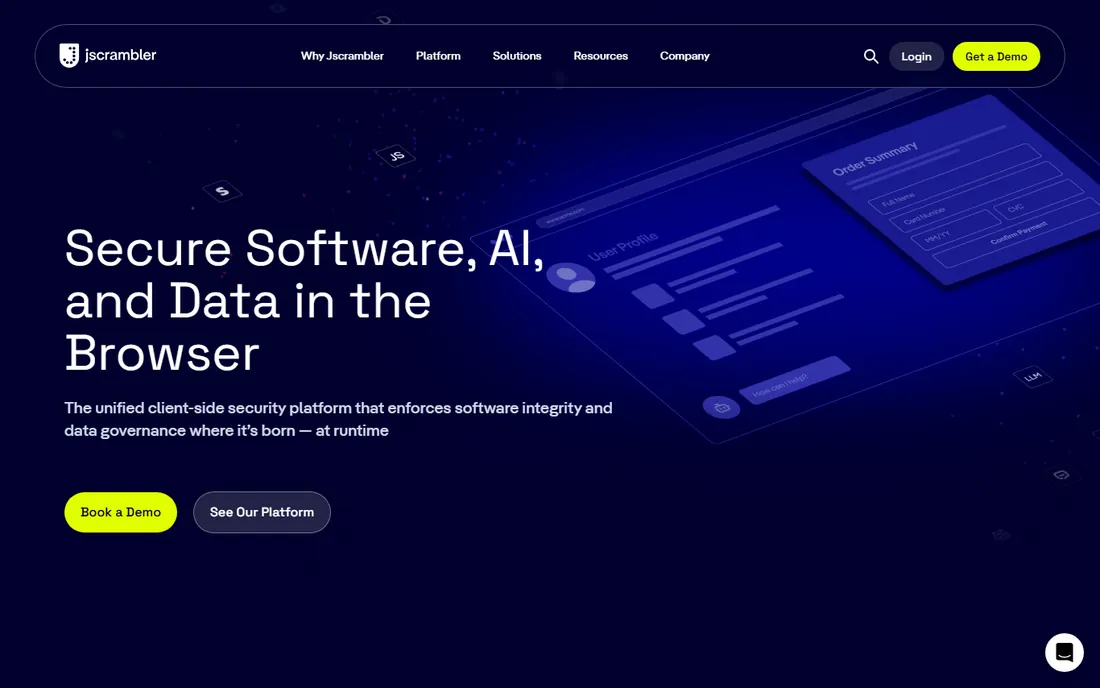
Jscrambler protects what runs in the browser. Its Code Integrity product applies polymorphic obfuscation, self-defending code, and anti-debugging to first-party JavaScript, while Webpage Integrity controls third-party tags and scripts, addressing the Magecart-style supply chain attacks behind many web skimming breaches. PCI DSS 4.0's anti-skimming requirements made this category urgent for e-commerce.
It does not protect mobile binaries; pair it with a mobile solution for native apps. And the pricing suits businesses with real revenue at stake. But for client-side web security, Jscrambler is the specialist leader.
What we like- Advanced JavaScript obfuscation with polymorphic techniques
- Third-party tag protection for PCI DSS compliance
- Real-time monitoring
Watch out for- Client-side focus, not a mobile binary solution
- Pricing can be steep for small sites
Starting priceSee website
Free planSee website
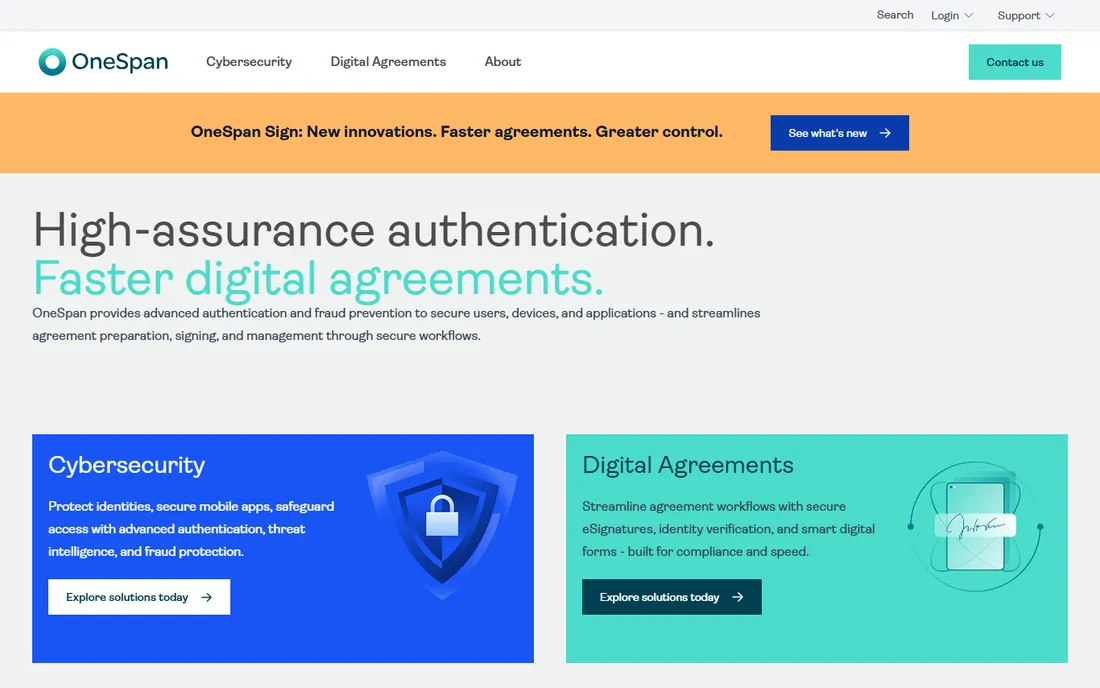
OneSpan's Mobile App Shielding (formerly VASCO) protects banking and financial apps with code obfuscation, white-box cryptography, and runtime defense. The natural buyers are banks already using OneSpan for authentication, mobile security, or e-signatures, who get shielding integrated with their identity infrastructure rather than as a separate silo.
Standalone buyers may find deeper mobile specialization at Guardsquare or Promon. But financial institutions standardizing on OneSpan for digital identity get coherent security across authentication and app protection, which simplifies both compliance and vendor management.
What we like- App shielding integrated with authentication and e-signatures
- Strong banking customer base
- White-box cryptography for key protection
Watch out for- Best value inside the OneSpan ecosystem
- Standalone shielding buyers may prefer specialists
What to check before you buy
Start with your threat model. Piracy and cheating need different protections than banking trojans or IP theft. Map the specific attacks you need to stop: reverse engineering, repackaging, runtime hooking, debugging, or web skimming. Each vendor's strengths align with different threats, and buying the wrong protection is worse than buying none because it creates false confidence while real gaps remain.
Then test the performance impact. Obfuscation and runtime checks add overhead, and on mobile, battery life and startup time matter. Run protected builds through your normal performance tests and compare against unprotected baselines. Also verify compatibility with your frameworks, especially cross-platform tools like Flutter, React Native, and Unity, since protection support varies.
Finally, confirm the operational model. Some tools integrate into the build, others fuse protections post-build, and monitoring solutions need backend dashboards your team will actually watch. Ask who configures the protections, how updates ship, and what happens when a protection breaks a legitimate use case. A proof of concept with your real app, not a vendor demo app, is the only evaluation that counts.
Shielding vs other app security
Application shielding protects the app itself against tampering and reverse engineering. It does not replace secure coding, penetration testing, or backend security. Think of it as armor: it raises the cost of attacking your app, but vulnerabilities in your code or APIs remain exploitable regardless of shielding.
The related categories to budget alongside shielding: mobile app security testing (MAST) tools that find vulnerabilities before release, runtime threat monitoring that reports attacks in the wild, and web application firewalls for your backends. A mature mobile security program includes all of these, with shielding as the protective layer around the distributed app. Skipping the testing layer while buying shielding is a common and expensive mistake.
Frequently asked questions
What is application shielding software?
It is software that protects applications against reverse engineering, tampering, and debugging by transforming the code and adding runtime defenses. For mobile apps, this means obfuscation, encryption, root detection, and anti-tampering. For web apps, it means JavaScript obfuscation and client-side integrity controls.
What happened to Verimatrix's app protection?
Verimatrix sold its extended threat defense (XTD) mobile app protection business to Guardsquare. Buyers evaluating Verimatrix for app shielding should now look at Guardsquare's DexGuard and iXGuard products, or alternatives like Appdome and Promon covered in this guide.
Does obfuscation slow down my app?
Good obfuscation adds minimal overhead, but aggressive settings and runtime checks can affect startup time and battery life on mobile. Always performance-test protected builds against baselines, and tune protection levels to your actual threat model rather than enabling everything.
Can shielding stop all reverse engineering?
No. Shielding raises the cost and difficulty of reverse engineering substantially, but a determined attacker with enough time can defeat any client-side protection. The goal is to make attacks uneconomical, protect IP and keys as long as possible, and detect tampering at runtime.
Do I need shielding for internal enterprise apps?
It depends on the data they handle. Internal apps with sensitive data or privileged API access benefit from basic protections. Customer-facing apps in finance, healthcare, gaming, and e-commerce are the primary use cases, driven by fraud, piracy, and compliance requirements.
How does app shielding relate to PCI DSS?
PCI DSS 4.0 introduced requirements around client-side script integrity for payment pages, driving adoption of tools like Jscrambler. For mobile payment apps, shielding supports the broader requirement to protect cardholder data environments. Shielding is one control among many, not a compliance shortcut.
How we chose
We selected application shielding vendors that appear consistently in mobile security shortlists on G2, analyst reports, and security practitioner discussions, covering mobile binary protection, no-code platforms, and client-side web security. We replaced Verimatrix with Appdome following the sale of Verimatrix's XTD business to Guardsquare. Each vendor's site was checked to confirm the product is current in 2026. Pricing details come from vendor pages where published; enterprise quote-based pricing is noted as such. No hands-on security testing was conducted for this guide.
Sources we checked (12)
- https://www.guardsquare.com
- https://www.licelus.com
- https://www.preemptive.com
- https://www.promon.io
- https://www.appdome.com
- https://www.jscrambler.com
- https://www.onespan.com
- https://Slashdot.org/software/comparison/DexGuard-vs-PreEmptive-Protection-for-iOS/
- https://Slashdot.org/software/comparison/DexProtector-vs-Promon-INSIGHT/
- https://slashdot.org/software/comparison/Appdome-vs-OneSpan-Mobile-Security-Suite/
- https://Slashdot.org/software/comparison/JSDefender-vs-OneSpan-Mobile-App-Shielding/
- https://www.globenewswire.com/news-release/2026/07/02/3321086/0/en/LexisNexis-Risk-Solutions-and-Promon-Align-to-Strengthen-Mobile-Fraud-Prevention.html
Is your product missing or out of date?
We review this list regularly. Vendors can request a listing, send updated pricing or ask about featured placement.

Shihab Mia · Founder, Rankite
Shihab has 5+ years in B2B and SaaS SEO. He writes Rankite's software buying guides from pricing pages, documentation and public user reviews. More about Shihab.