How we make this list: we compare pricing pages, product documentation and public user reviews. Rankite is independent; if a vendor ever pays for a featured spot, that listing is clearly labeled Partner.
Key takeaways
- Channeltivity publishes a Standard plan at $1,199/month with unlimited support included, which is rare pricing transparency in the PRM market.
- Kiflo starts at $399/month with a free trial and targets smaller partner programs that want to launch in days, not quarters.
- PartnerStack Spark charges $0 per month in subscription fees plus a 10% processing fee on commissions you pay out, a performance-based option for first programs.
- ZINFI offers a 30-day free trial with no credit card required, so you can test-drive the platform before talking to sales.
Quick comparison
| Tool | Best for | Starting price | Free plan |
|---|
 Impartner Impartner | Large enterprises with multi-tier partner ecosystems | See website | See website |
 Channelscaler Channelscaler | Enterprises that want modular PRM and channel program automation | See website | No |
 ZINFI ZINFI | Mid-market and manufacturing companies running dealer or reseller networks | See website | Free trial (30 days) |
 Unifyr Unifyr | Companies that want PRM and through-channel marketing from one vendor | See website | See website |
 PartnerStack PartnerStack | B2B SaaS companies scaling affiliate, referral and reseller programs | $0/month (Spark); main tiers by quote | No |
 Channeltivity Channeltivity | High-growth tech companies that want a friendly, modular PRM | $1,199/month (Standard) | No |
 Magentrix Magentrix | Companies that need highly customized portals without developers | See website | No |
 Mindmatrix Mindmatrix | Companies wanting AI-driven partner journeys on one platform | See website | See website |
 Kiflo Kiflo | SMBs and agencies launching their first real partner program | $399/month | Free trial |
 SproutLoud SproutLoud | National brands driving local marketing through dealers and retailers | See website | No |
Is your product missing or out of date?
We review this list regularly. Vendors can request a listing, send updated pricing or ask about featured placement.
The best partner relationship management software
Your partners are asking the same questions every week. Where is the latest pricing sheet. Did my deal registration get approved. How do I get paid. If your channel team answers these by email, the program is already leaking. A partner relationship management platform gives partners one branded place to register deals, find content, complete training and track payouts, while your team gets one view of pipeline. The ten tools below cover the real spread of the market, from enterprise suites to lightweight options built for smaller teams.
Starting priceSee website
Free planSee website
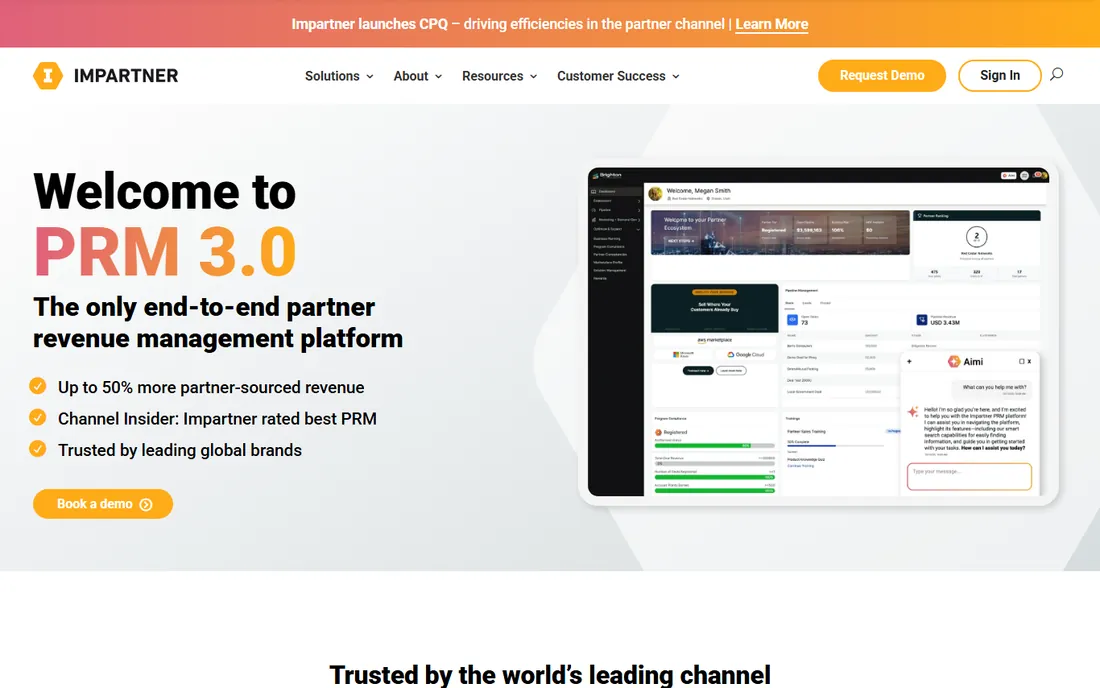
Impartner is the name that comes up first in enterprise channel conversations, and the product has the breadth to match the reputation. The platform covers the full partner lifecycle, from recruitment and onboarding through deal registration, MDF management, training and analytics. Its HyperscalerGTM add-on automates partner-to-marketplace workflows across AWS, Azure and Google Cloud, which matters if your partners co-sell through cloud marketplaces.
The catch is that Impartner sells like an enterprise vendor. Pricing is custom, implementations are guided, and the feature list is long enough that a lean team can spend months deciding what to turn on. Expect an annual contract, CRM integration work with your Salesforce or HubSpot admin, and a real implementation project rather than a self-serve signup. If you run a large program with hundreds of partners, that is the trade you want. If you have twelve referral partners, it is too much tool.
What we like- Turnkey partner portals can deploy in as few as 14 days
- Wide integration library including Salesforce, HubSpot, Crossbeam and Slack
- Recent AI additions like Aimi and Orchestration Studio for partner revenue workflows
Watch out for- Pricing is quote-only, so budget planning takes a sales call
- Depth of features can overwhelm small channel teams
Starting priceSee website
Free planNo
Channelscaler is the company formerly known as Allbound and Channel Mechanics, merged under one brand. The platform combines PRM with channel program automation: onboarding, partner portals, deal registration, MDF and promotions, training, incentives, renewals and performance reporting, with AI woven through for visibility. Customers named on its site include Cisco, HP, Broadcom, SAP and Box, which tells you where it plays.
What stands out is the modular pitch. Instead of an all-or-nothing suite, you pick modules that match your program and add more as you grow, with the company promising no forced bundles. The homepage also publishes benchmark data from its Scaler Index, a useful reference when you are building an internal business case. The honest weakness is brand youth: the 2024 rebrand means third-party reviews are split across two names, and you will still need a sales conversation to get numbers.
What we like- Modular design lets you buy only the functions you need
- Transparent pricing positioning with no forced bundles
- Publishes Scaler Index benchmarks (3.4x registered pipeline growth over three years in its 2026 report)
Watch out for- New brand identity (2024), so some review sites still list it under the old Allbound name
- Enterprise sales motion with quote-based pricing
#3
ZINFI
Best for: Mid-market and manufacturing companies running dealer or reseller networks
Visit zinfi.com
Starting priceSee website
Free planFree trial (30 days)
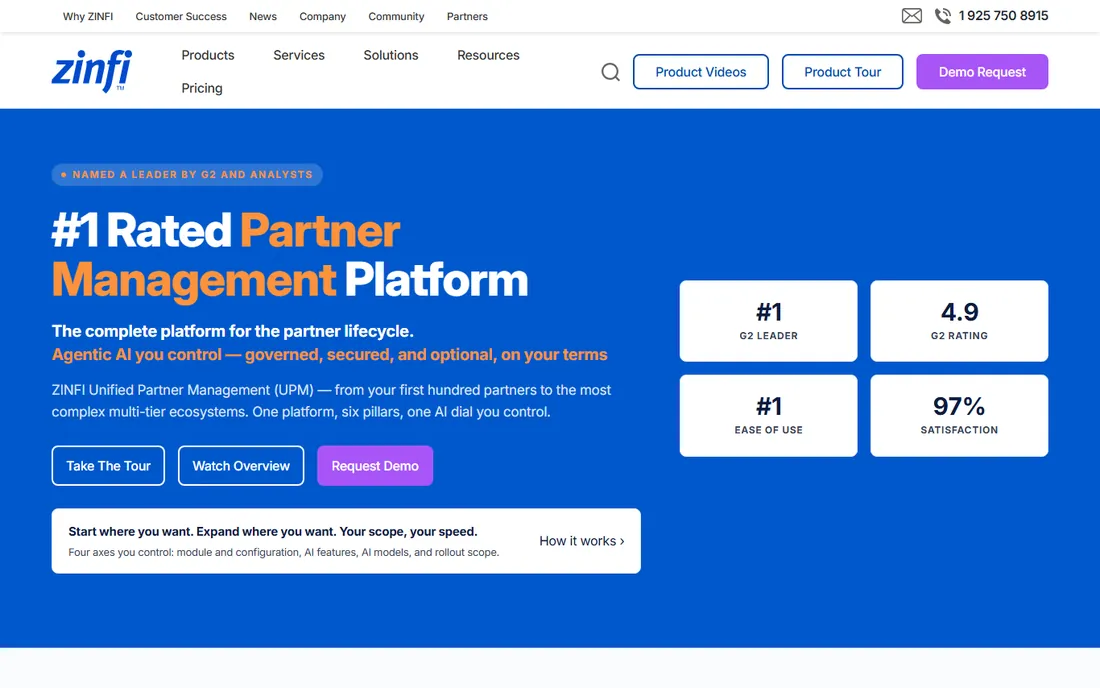
ZINFI calls its approach Unified Partner Management, built around an 8-pillar framework that spans partner strategy, recruitment, onboarding, enablement, marketing, co-selling, incentives and growth. The platform serves two audiences unusually well: manufacturing companies with large dealer networks and technology firms building partner ecosystems. G2's Spring 2026 report named it a PRM Leader with a 94 Net Promoter Score.
The practical advantage is ease of administration. ZINFI's widest gaps over competitors in the G2 data are Ease of Setup (95%) and Ease of Admin (95%), which is exactly where buyers of competing platforms report pain after signing. The 30-day trial without a credit card is rare in this category, so use it. Paid pricing is quote-based and the platform is built for serious programs, which makes it overkill if you have a handful of affiliates. For a mid-market company with a real channel, it is one of the safest evaluations you can run.
What we like- 30-day free trial with no credit card required
- Consistently high G2 satisfaction scores (97% quality of support in the Spring 2026 Grid report)
- Purpose-built, no CRM dependency required
Watch out for- Quote-based pricing for the paid platform
- Enterprise-oriented, so very small programs may not need the depth
#4
Unifyr
Best for: Companies that want PRM and through-channel marketing from one vendor
Visit unifyr.com
Starting priceSee website
Free planSee website

Unifyr is the new name for Zift Solutions and its ZiftONE platform. The core idea has not changed: one platform that connects channel sales, marketing and operations, from partner onboarding and enablement through lead generation, co-marketing and deal management. Partners get content syndication, social media syndication, and even SEM/PPC campaign tools, so the platform doubles as a demand-generation engine for your channel.
That marketing muscle is the reason to pick it. If your partners are small businesses that cannot run their own marketing, Unifyr's through-channel automation does the work for them and gives you shared analytics on what actually generated pipeline. For a company whose channel problem is "partners do not market enough," this is the most marketing-complete option on the list.
What we like- Single platform for PRM, through-channel marketing automation and LMS
- Built-in content syndication, social syndication and digital advertising for partners
- Long track record in the channel (founded 2006)
Watch out for- Recent rebrand from Zift Solutions/ZiftONE creates name confusion in older reviews
- Pricing is quote-only
#5
PartnerStack
Best for: B2B SaaS companies scaling affiliate, referral and reseller programs
Visit partnerstack.com
Starting price$0/month (Spark); main tiers by quote
Free planNo
PartnerStack is the partnership platform built specifically for B2B SaaS, and that focus shows everywhere. It runs affiliate, referral, influencer and co-sell programs side by side, with partner recruitment, onboarding, deal tracking, rewards and payouts in one system. The differentiator is the network: a marketplace of more than 131,000 active partners where vendors like Webflow, monday.com and Asana run programs. If you need partners, not just partner software, that network is a real head start.
Pricing has two faces. The main Launch, Growth and Enterprise tiers are quote-based, which is standard for the category. But PartnerStack Spark is refreshingly simple: $0 per month subscription with a 10% processing fee on the commissions you pay out, so you only pay when partners earn you money. Onboarding for the full platform typically takes 30 to 45 days, and integrations cover Stripe, HubSpot, Salesforce, Chargebee and Recurly. The honest limitation is fit: this is a SaaS-native tool, and a manufacturer or services firm will get more from a general PRM.
What we like- Built-in partner marketplace with 131,000-plus active partners
- Automates tracking, payouts and compliance
- Spark plan starts at $0 subscription plus 10% on commissions paid
Watch out for- Main platform pricing is quote-only
- Typical onboarding runs 30 to 45 days
- Built for SaaS, less relevant outside software
Starting price$1,199/month (Standard)
Free planNo
Channeltivity is the PRM that high-growth tech companies pick when the enterprise suites feel like too much. The platform splits into three areas, partner enablement, channel marketing and channel sales, with modules for deal registration, MDF, lead distribution, training and certification, co-branded collateral and business planning.
Two things make it stand out for buyers who hate sales calls. First, pricing is public: the Standard plan runs $1,199/month with monthly payment, an almost unheard-of level of transparency here. Second, every subscription includes unlimited customer support, with phone, email and ticket options plus an extensive knowledge base. The trade-off is vendor size: it is a focused company rather than a platform giant, and third-party review counts reflect that. For a tech company with 20 to 200 partners, the combination of public pricing and real support is hard to beat.
What we like- Published pricing with a $1,199/month Standard plan
- Modular design lets you enable only the functions you need
- Unlimited customer support included in subscriptions
Watch out for- Smaller vendor, so the partner ecosystem and review volume are thinner than the giants
- Advanced needs may require stacking multiple modules
#7
Magentrix
Best for: Companies that need highly customized portals without developers
Visit magentrix.com
Starting priceSee website
Free planNo
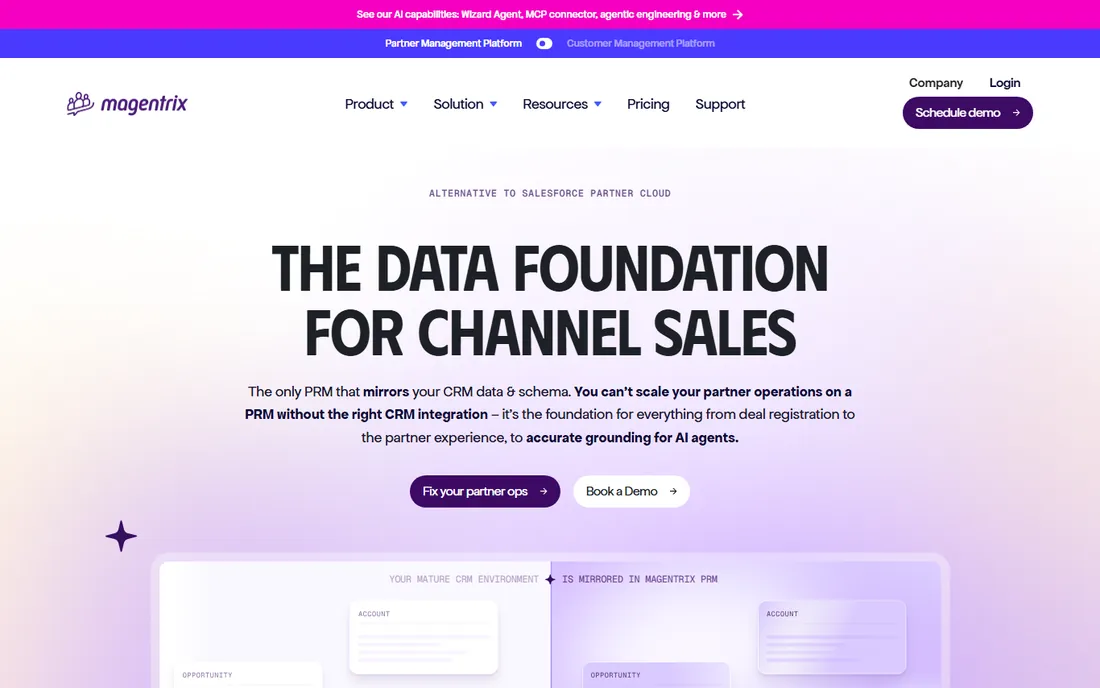
Magentrix specializes in partner portals, and its pitch is configurability without code. Business users can update workflows, build portal pages and manage content without waiting on IT, which changes the economics of running a portal long-term. The technical standout is its CRM integration: for Salesforce and Microsoft Dynamics, Magentrix mirrors the CRM schema and data in real time rather than mapping fields, keeping one source of truth with complete control over security and permissions.
The platform handles enterprise scale, with support for millions of records, complex hierarchies, multi-language and multi-currency, plus SSO, field-level security, ISO 27001 and SOC 2 Type II. The honest catch is that all that flexibility requires decisions: you will spend real time designing the portal structure before launch. For a Salesforce-centric company that wants partners living in accurate CRM data without CRM licenses, it is a strong fit.
What we like- 100% no-code administration, business users can change workflows and pages
- Deep CRM integration that mirrors Salesforce and Dynamics schema in real time
- Supports millions of records for large ecosystems
Watch out for- Pricing is quote-based and sold per portal
- The flexibility can mean longer design decisions up front
#8
Mindmatrix
Best for: Companies wanting AI-driven partner journeys on one platform
Visit mindmatrix.net
Starting priceSee website
Free planSee website
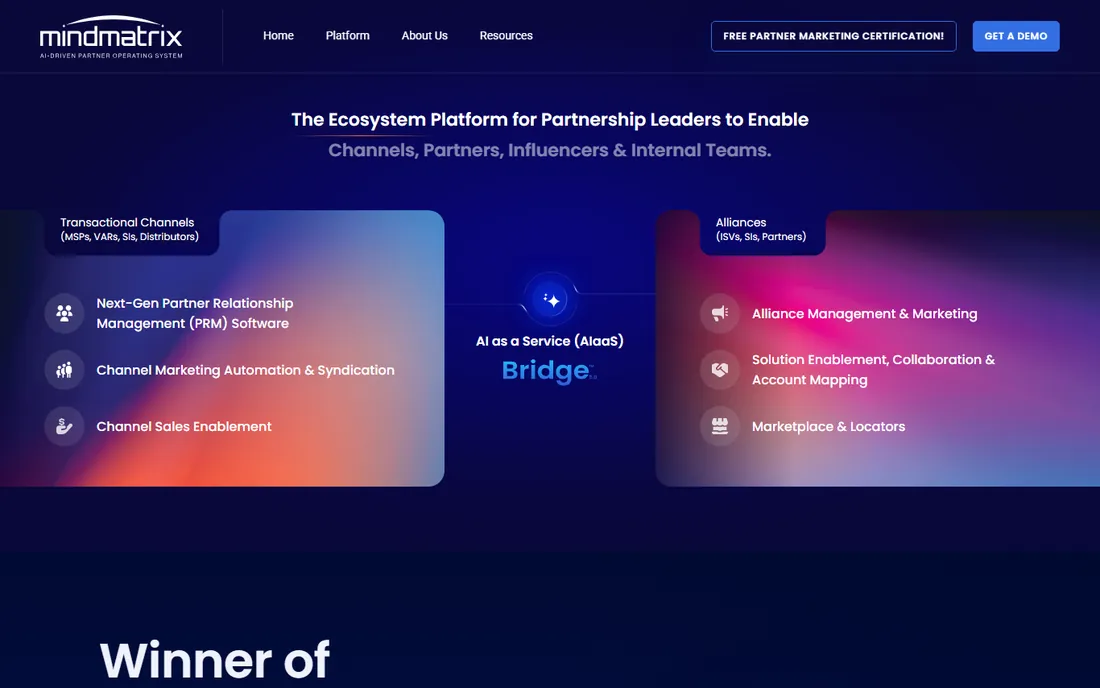
Mindmatrix positions itself as an AI-native Partner Operating System, and the architecture pitch is genuinely different: one code base for PRM, through-channel marketing and channel sales enablement, instead of acquired modules stitched together. That means no manual syncing between your partner portal, your partner marketing and your enablement content. Its BridgeAI layer drives personalized partner journeys, automated profiling and next-best-action recommendations.
The platform covers the full lifecycle, automated onboarding, deal registration, co-selling, MDF management and a self-service marketplace where partners can bundle vendor technology with their own services. Native bi-directional integrations with Salesforce, HubSpot and Microsoft Dynamics keep data continuous, and the model allows unlimited users and partners. The skepticism to bring: AI-driven everything is easy to claim and hard to verify, so ask for the specific workflows BridgeAI automates during your demo.
What we like- Single code base unifies PRM, through-channel marketing and channel sales enablement
- BridgeAI powers personalized partner journeys and next-best-action workflows
- Native bi-directional CRM integrations with Salesforce, HubSpot and Dynamics
Watch out for- Quote-only pricing
- Marketing leans heavily on AI claims that are hard to evaluate in a demo
#9
Kiflo
Best for: SMBs and agencies launching their first real partner program
Visit kiflo.com
Starting price$399/month
Free planFree trial
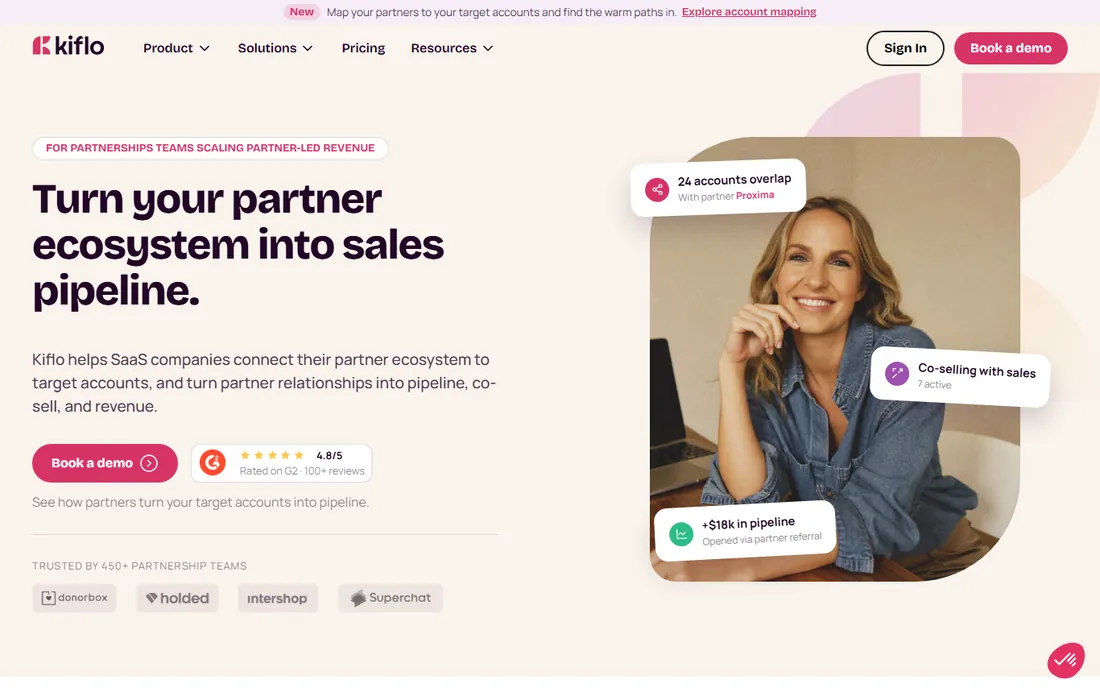
Kiflo is the modern PRM built for teams that find the enterprise suites exhausting. It handles affiliate, referral and sales partner programs in one place: partners get a secure, customizable portal, submit leads through simple forms (even passwordless external forms for events), track their pipeline to closed revenue, and see calculated commissions.
The buying experience is the opposite of the enterprise gauntlet. Pricing is published, starting at $399/month, with a free trial and tiers based on partner counts. Native CRM integrations cover HubSpot and Salesforce, with Zapier, vendor and partner APIs, Stripe and Chargebee for the rest. The honest limits: it is a younger company with a referral-first feature set, so deep MDF workflows and complex multi-tier channel mechanics are thinner than on the enterprise platforms, and a few modules cost extra as add-ons. For a SaaS company or agency standing up its first 5 to 50 partners, it is the fastest path to a real program.
What we like- Published pricing starting at $399/month
- Free trial available
- Deploys in days with referral, affiliate and reseller programs in one tool
Watch out for- Younger vendor with a referral-centric feature set
- Some advanced modules (partner directory builder) are add-ons
- Pricing scales with partner counts
#10
SproutLoud
Best for: National brands driving local marketing through dealers and retailers
Visit sproutloud.com
Starting priceSee website
Free planNo
SproutLoud is the odd one out on this list, and deliberately so. It is a through-channel marketing automation platform for brands that sell through local partners: dealers, retailers, distributors and franchisees. Instead of focusing on deal registration, it gives local partners a marketing portal with brand-compliant templates, hyperlocal digital advertising with microbudgets, and print-on-demand collateral. Funds management covers co-op marketing funds, sales rebates, pre-approvals, claims and reimbursements.
The strength is measurement. The platform tracks tens of millions of touchpoints and reports ROI per tactic, campaign, partner engagement and platform usage. The honest catch is scope: if your need is partner onboarding, tiering and deal pipelines, this is not a PRM replacement. Pricing is quote-based and the sales motion is enterprise. For a brand with hundreds of local partners that underuse co-op funds, it belongs on the list.
What we like- Purpose-built brand-to-local marketing with hyperlocal ad targeting
- Funds management for co-op/MDF, rebates, claims and reimbursements
- Detailed analytics down to individual tactics and partner engagement
Watch out for- Built for brands with distributed networks, not a general partner portal
- Quote-based pricing
- Less about deal registration, more about marketing execution
What actually separates good PRM software from an expensive portal
Start with your partner count and program shape, because that decides the tier. Under 50 partners doing referrals and reselling, a published-price tool like Kiflo at $399/month or Channeltivity at $1,199/month gets you live fast with known costs. Over 200 partners, multi-tier programs or dealer networks, you are in quote-based territory with Impartner, Channelscaler, ZINFI or Unifyr, and you should budget for implementation services and an annual contract. PartnerStack sits in the middle for B2B SaaS, with the Spark option at $0 plus 10% of payouts for testing the waters.
Then check three things every demo should prove. First, CRM integration depth: can partners work without CRM licenses, and does data sync both ways, like Magentrix's schema mirroring or Channeltivity's native Salesforce package. Second, money workflows: deal registration approvals, MDF or co-op fund claims, and commission payouts, because that is where partner trust is won or lost. Third, the partner experience: ask to see the actual portal a partner logs into, not the admin dashboard. If the portal is clunky, adoption dies no matter how good the admin side is.
PRM red flags buyers keep missing
A surprising number of PRM purchases fail on the same avoidable points. One is buying for the demo instead of the rollout: enterprise platforms can take months to configure, while vendors like Impartner advertise 14-day portal deployment and PartnerStack quotes 30 to 45 days for onboarding, so get the timeline in writing. Another is ignoring the partner login experience, since partners who find the portal confusing simply stop using it and go back to emailing your team.
Watch the pricing model too. Some vendors charge per partner, some per portal, some flat platform fees, and the cheapest sticker price can become the most expensive at your partner count. Ask what happens to pricing when you double partners next year. Finally, verify data export and contract terms before signing: who owns the partner and pipeline data if you leave, and how long is the contract. Annual terms are standard, but auto-renewal clauses with 90-day notice windows are common enough that you should read them.
How we chose
We started with the PRM category on G2, Capterra, SourceForge and Slashdot to build a longlist of established and emerging vendors, then checked each vendor's own site to confirm the product is current and fits partner relationship management. We pulled pricing only from vendor pricing pages, treating anything unpublished as quote-based, and used public reviews and analyst reports (G2 Grid reports, IDC MarketScape mentions) to sanity-check strengths and weaknesses. We favored a mix of enterprise suites (Impartner, Channelscaler, ZINFI), SaaS-focused platforms (PartnerStack, Kiflo), and specialists (Magentrix, Mindmatrix, SproutLoud, Unifyr, Channeltivity) so different program sizes and shapes are covered. No vendor paid for placement, and we did not run hands-on trials.
Frequently asked questions
What is partner relationship management software?
PRM software is a platform that helps a company manage its indirect sales channel: recruiting partners, onboarding and training them, sharing marketing content, registering deals, managing market development funds and tracking partner performance. It centers on a branded partner portal where resellers, distributors, affiliates and referral partners do their work, plus admin tools for the channel team.
How much does PRM software cost?
It ranges widely. Published-price options on this list start at $399/month (Kiflo) and $1,199/month (Channeltivity's Standard plan), while enterprise platforms like Impartner, Channelscaler, ZINFI and Unifyr are quote-based and typically run into five figures annually once implementation is included. PartnerStack Spark is $0 per month plus 10% of commissions paid out. Always ask how pricing scales with partner count.
Can I just use my CRM instead of a PRM?
You can, but it usually ends badly. CRMs are built for your direct sales team, and giving partners CRM access means extra licenses, training and data they should not see. A PRM gives partners a purpose-built portal with only their deals, content and payouts, while syncing the data back to your CRM. Vendors like Magentrix and Channeltivity exist largely to solve this exact integration cleanly.
How long does it take to implement a PRM?
It depends on the platform and your program complexity. Impartner advertises a working partner portal in as few as 14 days, PartnerStack's typical onboarding runs 30 to 45 days, and Kiflo positions itself as deploying in days. Enterprise suites with complex MDF workflows and multi-tier programs can take several months. Get the timeline and what is included in writing before you sign.
Do partners actually use these portals?
They do when the portal makes their life easier. Adoption is highest when partners can register deals, find current content and see their commissions without emailing your team. That is why the partner-facing experience matters more than the admin dashboard in a demo. Platforms with unlimited support, like Channeltivity, and guided onboarding help, but the real driver is a portal partners prefer over email.
What is the difference between PRM and through-channel marketing automation?
PRM covers the operational side of partner management: portals, deal registration, onboarding, incentives and performance tracking. Through-channel marketing automation (TCMA) focuses on marketing execution through partners: co-branded campaigns, content syndication and local advertising. Some vendors do both, notably Unifyr and Mindmatrix, while SproutLoud is primarily a TCMA platform for brands with local dealer networks.
Sources we checked (0)
Is your product missing or out of date?
We review this list regularly. Vendors can request a listing, send updated pricing or ask about featured placement.

Shihab Mia · Founder, Rankite
Shihab has spent more than a decade helping SaaS and e-commerce brands grow through search. He writes Rankite's software buying guides from pricing pages, documentation and public user reviews. More about Shihab.