How we make this list: we compare pricing pages, product documentation and public user reviews. Ratings come from G2, Capterra or Trustpilot, with the date we checked them.
What is operating room scheduling software
Operating room scheduling software manages who operates, in which room, at what time, with which staff and equipment. It covers block time assignment, case scheduling, preference cards, staff allocation, and real-time room status through pre-op, surgery, and recovery. For a hospital, the expensive problem is unused block time and late starts. A room that sits empty for an hour costs more than the scheduling software, and a case that starts late pushes the whole day. Epic OpTime is the default for hospitals already running Epic, because scheduling, documentation, and anesthesia share one record. LeanTaaS iQueue for Operating Rooms is the strongest pick when the problem is unused block time rather than the schedule itself. QGenda fits hospitals whose real scheduling pain is provider coverage for the OR.
How much does operating room scheduling software cost
No vendor in this list publishes a price for the scheduling core, so every tool here is quote only. HST Pathways is the partial exception: its vendor pricing page publishes add-on module prices from 380 dollars per operating room per month, but scheduling itself is not separately priced. Expect an enterprise sales process, with pricing based on room count, facility count, and modules. Implementation is a project, and several tools are optimization layers that sit on top of an EHR, which means the hospital pays for two systems. Budget for change management, since block time rules only work when surgeons and schedulers actually follow them.
A small hospital should start with the tools its EHR already includes before buying a standalone platform. Epic OpTime fits a hospital already running Epic, and Oracle Health SurgiNet fits one already on Oracle Health, since both come as modules inside the EHR. HST Pathways and SIS Complete fit ambulatory surgery centers, not hospital inpatient operating rooms, so a hospital should not buy them for inpatient ORs. An optimization layer like LeanTaaS iQueue or Opmed fits a hospital that already has a scheduler and needs to fill unused block time. QGenda fits a hospital whose scheduling pain is really about staffing coverage and call rotations.
Quick comparison
| Tool | Best for | Starting price | Free plan |
|---|
 QGenda | Hospitals whose OR scheduling pain is provider coverage, call rotations, and staffing | quote | No free plan and no free trial found |
 LeanTaaS iQueue for Operating Rooms | Hospitals that want to fill unused block time and cut cancellations | quote | No free plan and no free trial |
 Epic OpTime | Hospitals already running Epic that want OR scheduling inside one patient record | quote, as part of Epic EHR licensing | No free plan and no free trial |
 Oracle Health SurgiNet | Hospitals already on Oracle Health that want perioperative scheduling inside the EHR | quote | No free plan and no free trial |
 Picis OR Manager | Hospitals that want scheduling, documentation, and supply costs in one perioperative suite | quote | No free plan and no free trial |
 Opmed | Hospitals that want AI to predict case durations and optimize OR capacity in real time | quote | No free plan and no free trial found |
 HST Pathways | Ambulatory surgery centers that want scheduling, charting, billing, and inventory in one cloud platform | quote for the core platform and bundles; add-on module prices from $380 per operating room per month on the vendor pricing page | No free plan and no free trial found |
 Surgical Information Systems | Ambulatory surgery centers and multi-site ASC groups that want an end-to-end platform | quote | No free plan and no free trial found |
Is your product missing or out of date?
We review this list regularly. Vendors can request a listing, send updated pricing or ask about featured placement.
The best operating room scheduling software
These eight tools cover the real range, from EHR perioperative modules to AI optimization layers and ASC platforms. We checked every vendor homepage on 22 November 2026. Where a vendor publishes no price, the guide says quote and flags third-party figures as unverified. Casetabs is not listed, because it was absorbed into HST Pathways and rebranded as HST Case Coordination in June 2021, so it is covered under the HST Pathways entry.
#1QGenda
Best for: Hospitals whose OR scheduling pain is provider coverage, call rotations, and staffing4.6/5 on
G2 (164 reviews, checked Oct 2026)
Visit qgenda.com
Starting pricequote
Free planNo free plan and no free trial found
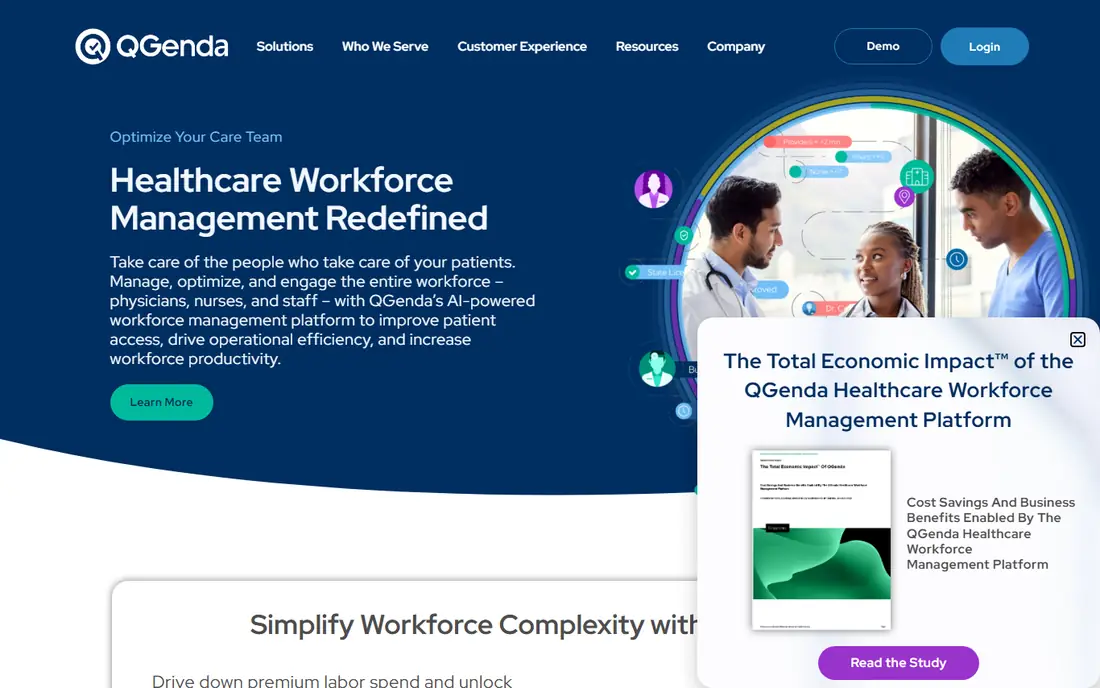
QGenda automates rules-based scheduling for physicians, nurses, and staff across more than 30 specialties, including call rotations, vacations, and shift rules. It covers anesthesia and surgical team coverage tied to OR blocks, plus credentialing, time tracking, and compensation modules sold separately. It is owned by Hearst Health since 2024 and serves more than 4,500 organizations. The homepage returns a 403 to plain curl, a bot block, and returns 200 with a browser user agent, so the site is live. The vendor publishes no price, and third-party estimates of 500 to 1,000 dollars per provider per month are unconfirmed by the vendor, so treat them as unverified. Understand what this is: a workforce scheduler that covers the OR, not a perioperative suite. A hospital that needs preference cards, case documentation, and room tracking should look at the EHR modules below.
What we like- Automates rules-based scheduling for physicians, nurses, and staff across more than 30 specialties
- Covers anesthesia and surgical team coverage tied to OR blocks
- Credentialing, time tracking, and compensation modules available
Watch out for- Built for provider workforce scheduling, not as a dedicated OR suite, so OR block and case scheduling run through provider coverage workflows
- Reviewers note no notification to participants when a schedule changes after publishing, and setup needs significant upfront customization
#2
LeanTaaS iQueue for Operating Rooms
Best for: Hospitals that want to fill unused block time and cut cancellations
Visit leantaas.com
Starting pricequote
Free planNo free plan and no free trial

iQueue for Operating Rooms uses predictive analytics to forecast which block time will go unused, prompt earlier block release, and match open time with surgeons who need it. It coordinates case readiness, nurse and anesthesia staffing, and real-time room progress across the surgical day. LeanTaaS reports validated outcomes of a greater than 40 percent reduction in cancellations. The vendor publishes no pricing, and pricing is custom and quotation based only. A free trial is not available. This is an optimization layer, so a hospital still needs a scheduling system underneath it, and the value depends on surgeons actually releasing block time when the system prompts them. Hospitals that already run a scheduler and lose hours to empty rooms will get the most from it.
What we like- Predictive analytics forecast which block time will go unused and prompt earlier block release
- Matches open time with surgeons who need it
- Coordinates case readiness, nurse and anesthesia staffing, and real-time room progress
Watch out for- An optimization and orchestration layer that sits on top of the EHR rather than a standalone scheduler, so it adds another system to manage, and implementation needs significant change management
#3
Epic OpTime
Best for: Hospitals already running Epic that want OR scheduling inside one patient record
Visit epic.com
Starting pricequote, as part of Epic EHR licensing
Free planNo free plan and no free trial

OpTime is Epic perioperative module, covering block time assignment, case scheduling, preference cards, staff allocation, and intraoperative documentation inside one patient record. It includes a Snapboard for room assignments, real-time status boards, and analytics on utilization, turnover time, and on-time starts. It integrates natively with Epic Anesthesia and other Epic modules, so the schedule, the anesthesia record, and the case record never disagree. OpTime is licensed as part of the Epic EHR, with no standalone published price. For a hospital already on Epic, this is the default OR scheduling choice. For anyone else, it is not a purchase, it is an EHR decision, and the implementation timeline and cost put it out of reach for a small hospital.
What we like- Block time assignment, case scheduling, preference cards, staff allocation, and intraoperative documentation in one record
- Snapboard for room assignments and real-time status boards
- Analytics on utilization, turnover time, and on-time starts
Watch out for- Implementation is exceptionally long and needs significant capital investment and specialized staff, and it only makes sense for organizations already running Epic
#4
Oracle Health SurgiNet
Best for: Hospitals already on Oracle Health that want perioperative scheduling inside the EHR
Visit oracle.com
Starting pricequote
Free planNo free plan and no free trial
SurgiNet is the perioperative solution of Oracle Health, formerly Cerner, which Oracle acquired in June 2022. It covers surgical scheduling with dynamic conflict detection for equipment and staff, electronic preference cards linked to inventory, and real-time tracking through pre-op, intra-op, and PACU. It includes anesthesia documentation and analytics on late starts and room under-utilization. The vendor publishes no pricing. The honest limits are performance, with users reporting lag during peak hours, and scope, since SurgiNet only makes sense inside the Oracle Health platform. A hospital already on Oracle Health should start here. A hospital on another EHR should not switch EHRs to get a scheduler.
What we like- Surgical scheduling with dynamic conflict detection for equipment and staff
- Electronic preference cards linked to inventory
- Real-time tracking through pre-op, intra-op, and PACU
- Anesthesia documentation included
Watch out for- Users report the system can be slow or laggy during peak hours, and it is tied to the Oracle Health EHR platform, so it is not a standalone purchase
#5
Picis OR Manager
Best for: Hospitals that want scheduling, documentation, and supply costs in one perioperative suite
Visit picis.com
Starting pricequote
Free planNo free plan and no free trial
Picis OR Manager automates surgical scheduling, resource management, intraoperative documentation, and supply costs in one system, with adaptive case averaging and block scheduling to maximize block utilization. It supports multi-facility scheduling, physician-office direct reservations, and detailed preference and pick cards. Picis is a division of N. Harris Computer Corporation and also serves VA and government facilities. The vendor publishes no pricing. The trade is breadth against focus: a hospital buys a perioperative suite and gets scheduling inside it, rather than a scheduler alone, and the three-track training program signals a real learning curve. Hospitals that want one vendor for the whole perioperative workflow, from scheduling through documentation and supply costs, will find the bundle compelling.
What we like- Automates surgical scheduling, resource management, intraoperative documentation, and supply costs in one system
- Adaptive case averaging and block scheduling to maximize block utilization
- Multi-facility scheduling and physician-office direct reservations
Watch out for- Scheduling is bundled into a broad perioperative suite rather than sold as a focused scheduler, and training is delivered in three separate expert-led tracks, which points to a real learning curve
#6
Opmed
Best for: Hospitals that want AI to predict case durations and optimize OR capacity in real time
Visit opmed.ai
Starting pricequote
Free planNo free plan and no free trial found
Opmed is an agentic AI operating platform that predicts case durations, identifies operational constraints, and optimizes OR capacity, staffing, and resource use in real time. It works across perioperative services, PACU, and infusion scheduling. A multi-year Mayo Clinic study showed about a 50 percent reduction in cardiovascular procedure scheduling errors, and in August 2026 its agentic operating tool became a qualified solution on Mayo Clinic Platform. The vendor publishes no pricing. The correct domain is opmed.ai, since opmed.com belongs to a different company and redirects elsewhere. Like LeanTaaS, this is an optimization layer, not a scheduler, so a hospital needs a scheduling system underneath it. The Mayo Clinic evidence is the strongest validation in this list, but the vendor is young, so reference calls with hospitals of similar size matter.
What we like- Agentic AI predicts case durations, identifies operational constraints, and optimizes OR capacity, staffing, and resource use in real time
- Works across perioperative services, PACU, and infusion scheduling
Watch out for- An AI optimization layer that integrates with existing EHR and scheduling systems rather than a standalone scheduler, so buyers still need a scheduling system underneath it
- Also a young vendor, with Series A funding in 2024 and a narrower track record than the enterprise suites
#7HST Pathways
Best for: Ambulatory surgery centers that want scheduling, charting, billing, and inventory in one cloud platform4.5/5 on
G2 (9 reviews, checked Oct 2026)
Visit hstpathways.com
Starting pricequote for the core platform and bundles; add-on module prices from $380 per operating room per month on the vendor pricing page
Free planNo free plan and no free trial found
HST Pathways is a cloud platform for ambulatory surgery centers covering scheduling, charting, billing, inventory, patient engagement, and analytics. Its scheduling features include automatic release of unused OR block time and automatic broadcast of open slots to physician offices, plus case scheduling from a connected EMR. Pricing is per operating room with unlimited users at no added cost, and implementation typically takes 30 to 90 days. The homepage returns a 403 to plain curl, a bot block, and is confirmed live through a fetched copy of the homepage. The core platform and bundles, HST Essentials, HST One, HST Oneplus, and HST Platinum, are listed without prices. A vendor pricing page publishes add-on module prices from 380 dollars per operating room per month, per a November 2026 desk review, but scheduling itself is not separately priced, and a third-party figure of 500 dollars a month is unverified. A hospital buying for inpatient ORs should look elsewhere.
What we like- Automatic release of unused OR block time and automatic broadcast of open slots to physician offices
- Case scheduling from a connected EMR
- Per operating room pricing with unlimited users at no added cost
- Implementation typically takes 30 to 90 days
Watch out for- Built for ambulatory surgery centers, not hospital inpatient operating rooms, and pricing is per operating room, so cost rises with room count, while the bundles that include scheduling carry no published price
#8
Surgical Information Systems
Best for: Ambulatory surgery centers and multi-site ASC groups that want an end-to-end platform
Visit sisfirst.com
Starting pricequote
Free planNo free plan and no free trial found
SIS Complete is a cloud-based, end-to-end ASC platform covering surgery scheduling, revenue cycle, clinical documentation, and patient and physician engagement on one database. SIS Office offers color-coded block scheduling with drag and drop and preference cards that drive the clinical workflow, while SIS Link lets surgeon offices view availability and submit electronic case requests. SIS also owns the Amkai and Surgical Notes product lines. The vendor publishes no pricing. The platform spans the full case lifecycle: scheduling, registration, clinical documentation for nursing, anesthesia, and surgeons, materials management, billing, and business intelligence. Centralized reporting across centers is the draw for groups standardizing operations. A two-OR single-specialty center will likely find lighter options faster to value, while a group rolling up centers will appreciate the standardization.
What we like- SIS Office offers color-coded block scheduling with drag and drop and preference cards that drive the clinical workflow
- SIS Link lets surgeon offices view availability and submit electronic case requests
- Scheduling, revenue cycle, clinical documentation, and engagement share one database
Watch out for- Built for ambulatory surgery centers, so inpatient hospital OR complexity is outside its core, and scheduling comes bundled inside a broad all-in-one suite rather than as a focused OR scheduler
Frequently asked questions
What is the best operating room scheduling software
Epic OpTime is the best pick for a hospital already running Epic, since scheduling, documentation, and anesthesia share one record. LeanTaaS iQueue for Operating Rooms is the best pick when the problem is unused block time, since it forecasts and prompts earlier block release. HST Pathways is the best pick for an ambulatory surgery center. The right choice depends on whether the buyer runs a hospital OR or an ASC, and whether the EHR already includes a perioperative module.
How much does operating room scheduling software cost
No vendor in this list publishes a price for the scheduling core, so every tool is quote only. HST Pathways publishes add-on module prices from 380 dollars per operating room per month, but scheduling itself is not separately priced. Pricing is usually based on room count, facility count, and modules. Implementation is a project, and optimization layers add a second system on top of the EHR. Budget only from a written proposal.
What is block time in operating room scheduling
Block time is a recurring reservation of an operating room for a specific surgeon or specialty, for example every Tuesday morning. Block scheduling software assigns those blocks, tracks how much of each block is actually used, and releases unused time to other surgeons before it goes to waste. Tools like LeanTaaS iQueue and HST Pathways automate the release, so an empty Tuesday morning is offered to a surgeon who needs it instead of sitting idle.
Do hospitals need separate OR scheduling software if they have an EHR
Often not. Epic OpTime and Oracle Health SurgiNet come as modules inside those EHRs, and a hospital already on one of them should start there. A standalone scheduler or an optimization layer fits a hospital whose EHR scheduling is weak, or one that loses hours to unused block time. An ASC should look at HST Pathways or SIS Complete, which are built for outpatient surgery rather than hospital ORs.
How long does operating room scheduling software take to implement
It depends on the type. An ASC platform like HST Pathways typically implements in 30 to 90 days. An EHR module like Epic OpTime is part of a much longer EHR implementation, measured in months or years. An optimization layer like LeanTaaS iQueue or Opmed needs data feeds, staff training, and new daily routines around block release, so expect months before the full benefit shows. Ask each vendor for a reference hospital of similar size and room count.
Sources we checked (8)
- https://www.qgenda.com
- https://leantaas.com
- https://www.epic.com/software/optime/
- https://www.oracle.com/health
- https://www.picis.com
- https://www.opmed.ai
- https://www.hstpathways.com
- https://www.sisfirst.com
Is your product missing or out of date?
We review this list regularly. Vendors can request a listing, send updated pricing or ask about featured placement.

Shihab Mia · Founder, Rankite
Shihab has 5+ years in B2B and SaaS SEO. He writes Rankite's software buying guides from pricing pages, documentation and public user reviews. More about Shihab.