How we make this list: we compare pricing pages, product documentation and public user reviews. Rankite is independent; if a vendor ever pays for a featured spot, that listing is clearly labeled Partner.
Key takeaways
- Tithe.ly offers the strongest free tier: online and mobile giving with no monthly fee, which suits smaller churches.
- Pushpay and Subsplash serve larger churches that want giving plus apps, engagement, and management in one platform.
- Givelify is the simplest mobile-first option: no monthly fee, donors give through the Givelify app.
- Givebutter and Donorbox bring modern fundraising tools (campaigns, events, CRM) that churches share with nonprofits.
- Planning Center Giving, Vanco, and Anedot round out the list for churches embedded in specific ecosystems.
Quick comparison
Is your product missing or out of date?
We review this list regularly. Vendors can request a listing, send updated pricing or ask about featured placement.
Starting priceFree
Free planYes
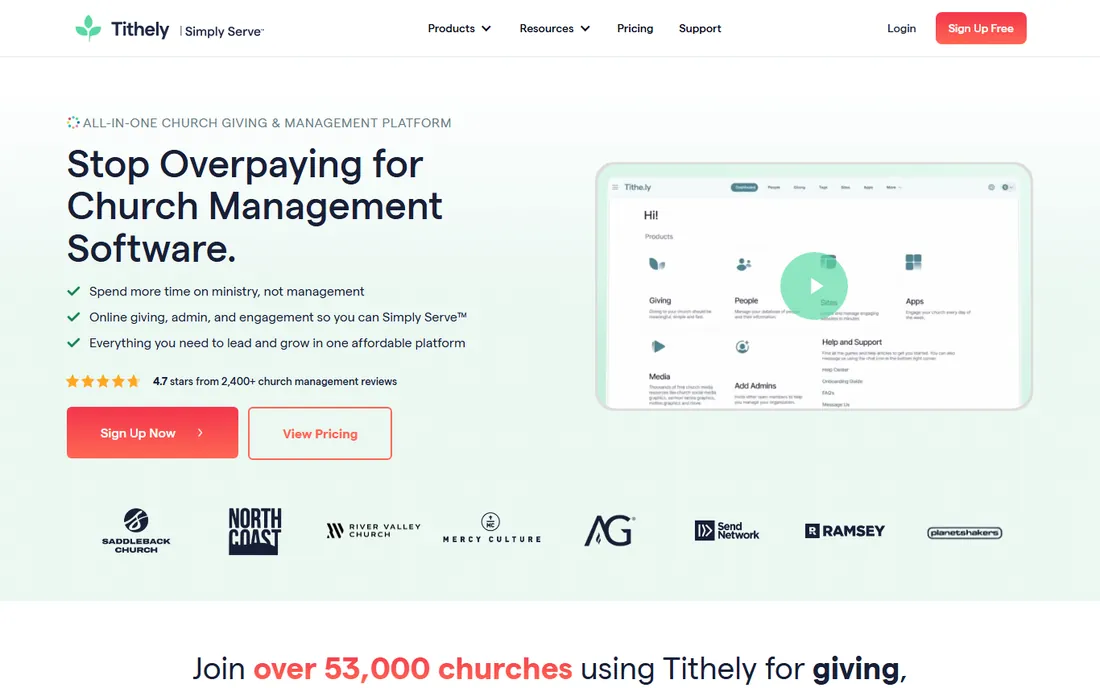
Tithe.ly's free core giving plan is the most generous in church tech: online giving, mobile giving, and recurring donations with no monthly fee, just standard processing rates. A volunteer can have donations working the same afternoon. Year-end statements and donor management come included, which covers what most small churches actually need.
The business model is add-ons. Church management software, custom apps, and text-to-give cost extra, and the full bundle adds up. But churches that only need donations to arrive and receipts to go out get everything necessary for free. For small to mid-size congregations, Tithe.ly's free tier is the rational starting point.
What we like- Strong free tier
- No monthly fee for core giving
- Text-to-give available
Watch out for- Paid add-ons for full ChMS
- Processing fees apply
Starting priceSee website
Free planNo
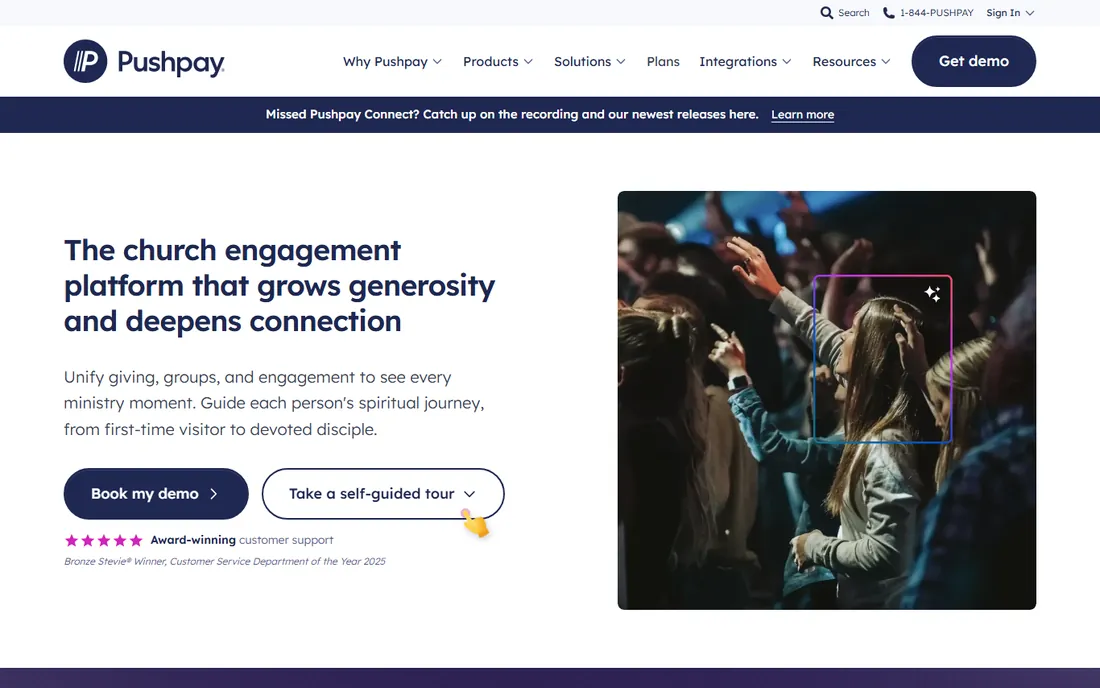
Pushpay pioneered mobile church giving and remains the standard for large, multi-site churches. Beyond donations, the platform covers engagement: custom church apps, communication tools, and donor development features designed for congregations in the thousands. Reliability at scale is the selling point; big Easter and Christmas giving surges just work.
Pricing is enterprise and quote-based, which prices out small churches by design. This is software for churches with staff teams and serious budgets. For a large church that wants one platform for giving, engagement, and communication, Pushpay's depth justifies the investment.
What we like- Built for large multi-site churches
- Strong engagement tools
- Reliable at scale
Watch out for- Enterprise pricing
- Overkill for small churches
Starting priceFree
Free planYes
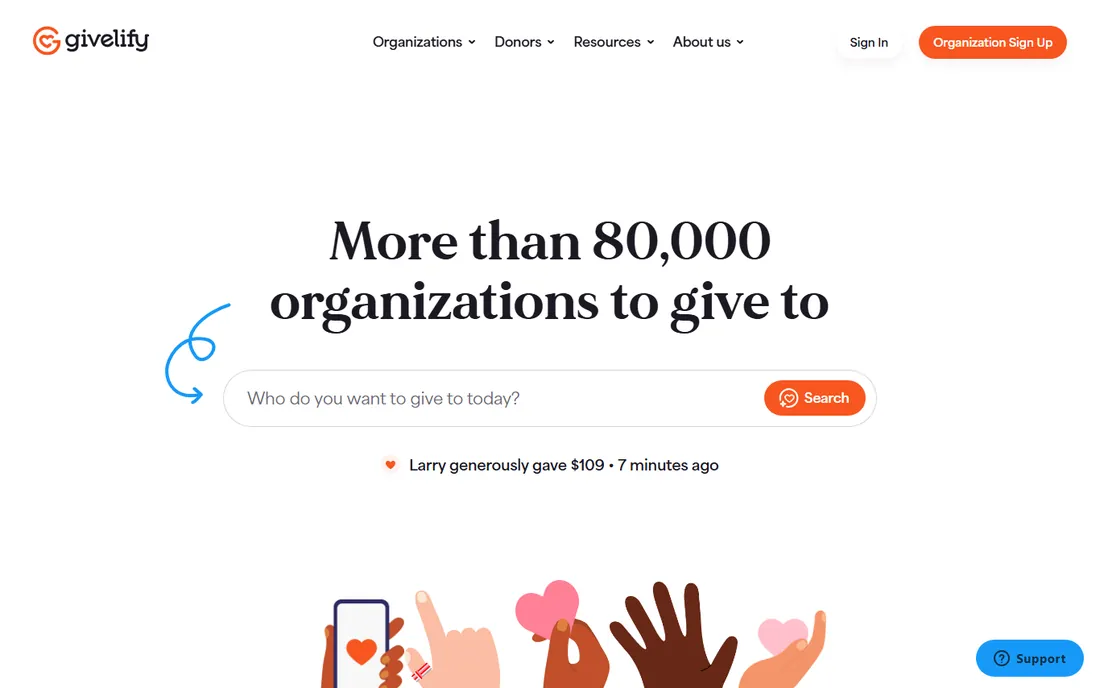
Givelify's model is radical simplicity: no monthly fee, no contract, just standard card processing per donation. Donors download the Givelify app, find your church, and give in about a minute. For churches without a real website, or congregations where everyone has a smartphone, the friction is near zero.
The trade-off is control. The giving experience lives inside Givelify's app rather than your website, and reporting is thinner than purpose-built church software. Card-only processing means no cheaper bank-transfer option for recurring givers. But for small churches that need donations flowing this Sunday, Givelify is the fastest path.
What we like- No monthly fees
- Very simple for donors
- Quick setup
Watch out for- Giving happens in Givelify's app
- Thinner reporting
Starting priceFree
Free planYes
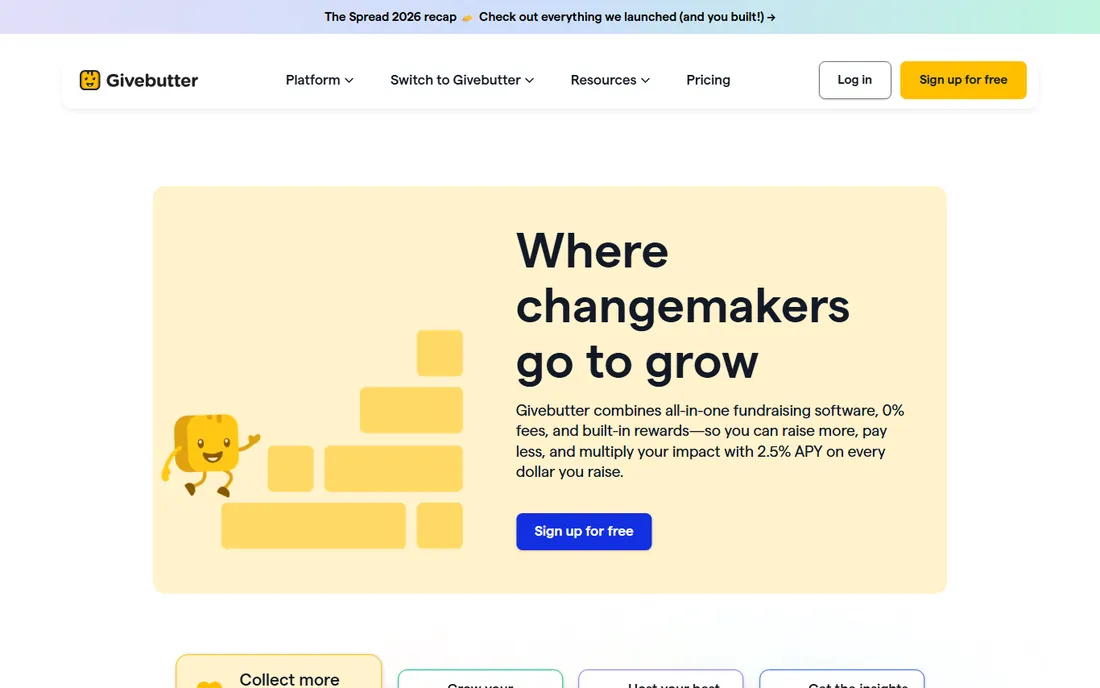
Givebutter brings modern fundraising to churches: donation forms, campaigns, events, ticketing, and auctions in one free platform funded by optional donor tips. The interface feels contemporary, and the feature set goes well beyond a donate button. Churches running fundraisers, galas, or capital campaigns get tools built for exactly that.
The free model depends on donors leaving tips; without them, platform and processing fees apply. It is also less church-specific than Tithe.ly or Pushpay (no sermon tools or ChMS). But for fundraising-heavy churches that want modern campaign tools without a monthly bill, Givebutter is compelling.
What we like- Free with donor tips
- Campaigns, events, and auctions
- Modern interface
Watch out for- Platform fee unless donors tip
- Less church-specific
Starting priceFree
Free planYes
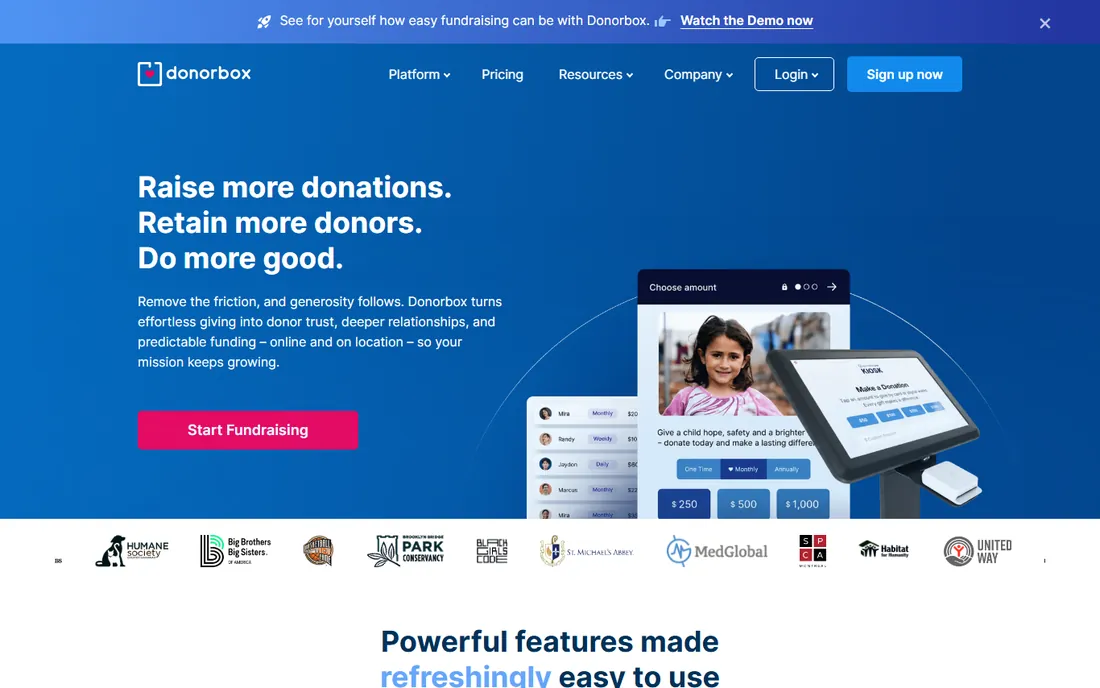
Donorbox's strength is the donation form itself: embeddable, customizable, and quick to deploy on any website. Recurring giving, donor management, and integrations with tools like Mailchimp and Salesforce cover the fundraising basics. Pricing starts free with platform fees, scaling to affordable monthly plans.
It is a general nonprofit tool rather than church software; there is no ChMS, sermon management, or church-specific workflow. Churches that already have management software and just need excellent donation forms will find Donorbox fits neatly. Those wanting an all-in-one church platform should look at Tithe.ly or Subsplash.
What we like- Embeddable forms
- Recurring giving
- Affordable paid tiers
Watch out for- General nonprofit tool
- Less church management
Starting priceSee website
Free planNo
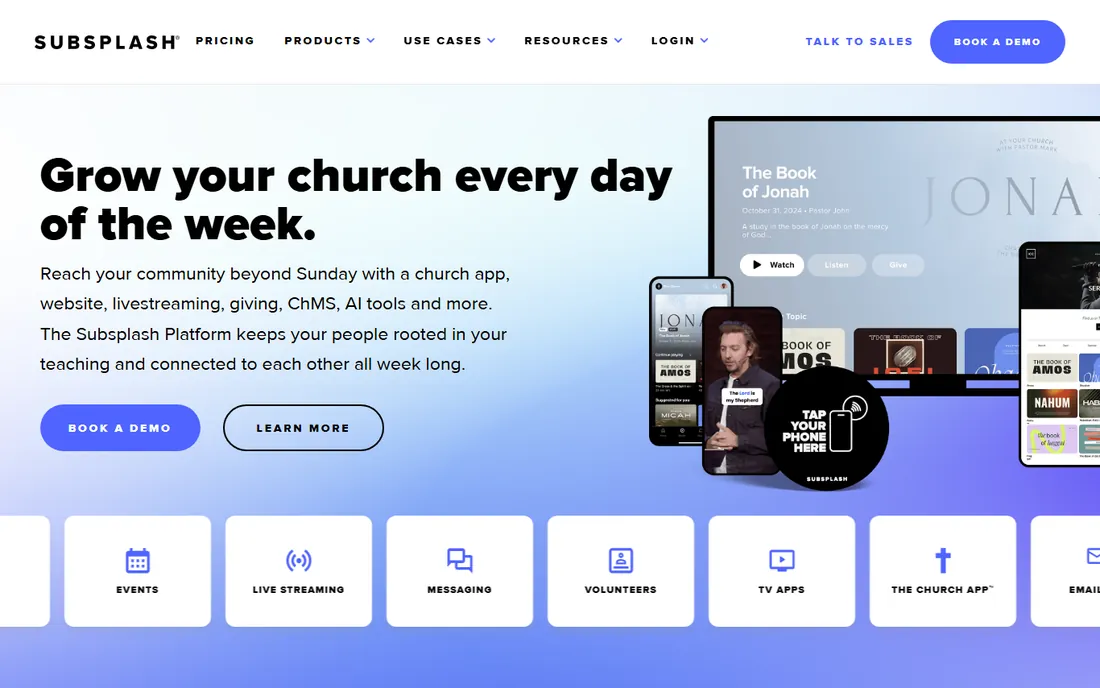
Subsplash builds the digital front door for churches: custom mobile apps with sermons, media, events, and giving woven together. The giving experience benefits from living inside an app people already open for sermons. Design quality is high, which matters for churches that take their digital presence seriously.
Giving comes as part of the platform, not a standalone cheap product; pricing is custom and aimed at churches investing in their app presence. Small churches may find it more than they need. For mid-size and large churches building a real digital ministry, Subsplash's integrated approach is the premium option.
What we like- Beautiful church apps
- Giving integrated with media
- Strong brand experience
Watch out for- Custom pricing
- Giving is part of a bigger purchase
Starting priceSee website
Free planNo
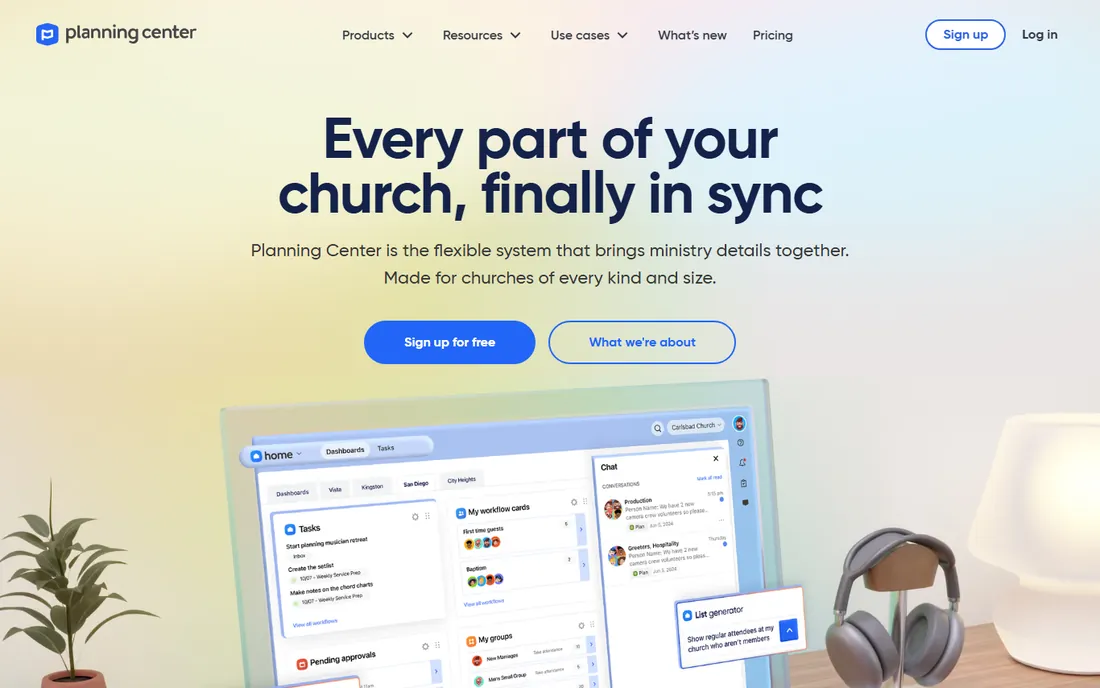
Planning Center Giving makes sense in one situation: your church already runs on Planning Center. Donations flow into the same system as people, check-ins, and groups, with fund tracking, donor statements, and batch management for cash and checks. The integration removes the duplicate data entry that plagues churches running separate systems.
Standalone, it is less compelling than the dedicated giving platforms. But churches do not choose software standalone; they choose ecosystems. If Planning Center is your church's operating system, its giving module is the obvious, well-integrated choice.
What we like- Native to Planning Center
- Donor and fund management
- Batch tools for cash and checks
Watch out for- Best value inside the ecosystem
- Less standalone appeal
Starting priceSee website
Free planNo
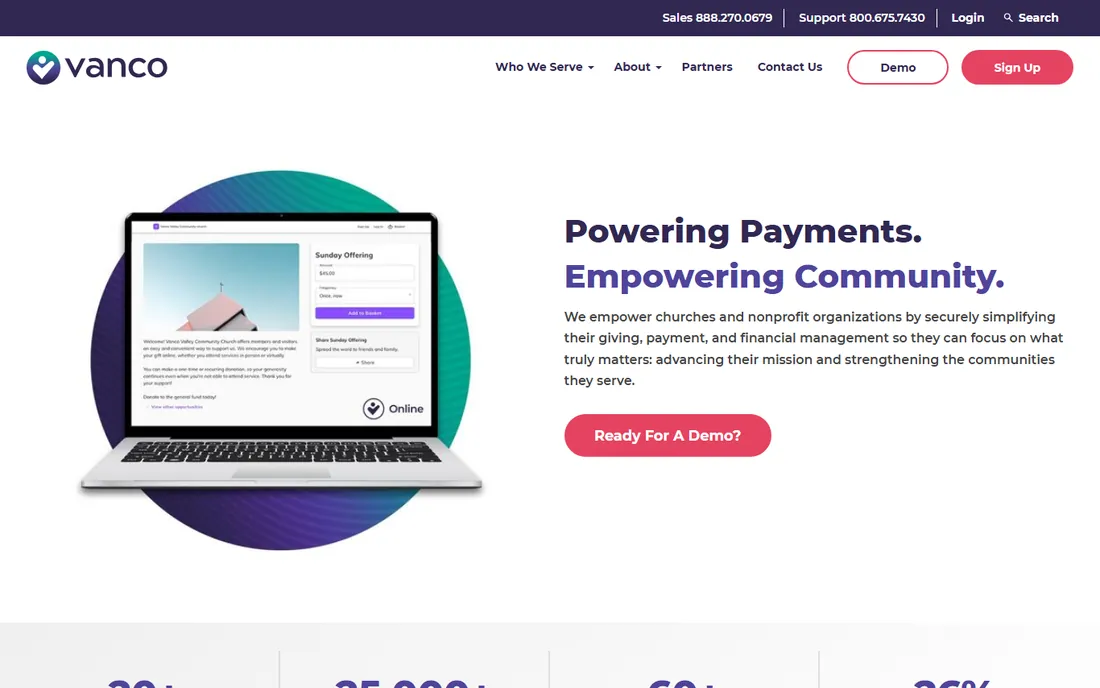
Vanco has served churches longer than most competitors, with particular strength in the physical world: giving kiosks for lobbies, card readers for events, and text giving alongside online forms. Churches with significant in-person attendance appreciate hardware that just works on Sunday morning.
The software interface reflects its longevity rather than modern design trends. Pricing varies by product and needs a conversation. But for churches where the offering plate is becoming a kiosk, Vanco's hardware plus software combination covers the transition practically.
What we like- Kiosk and in-person giving hardware
- Long church track record
- Event tools
Watch out for- Interface feels traditional
- Pricing varies
Starting priceFree
Free planYes
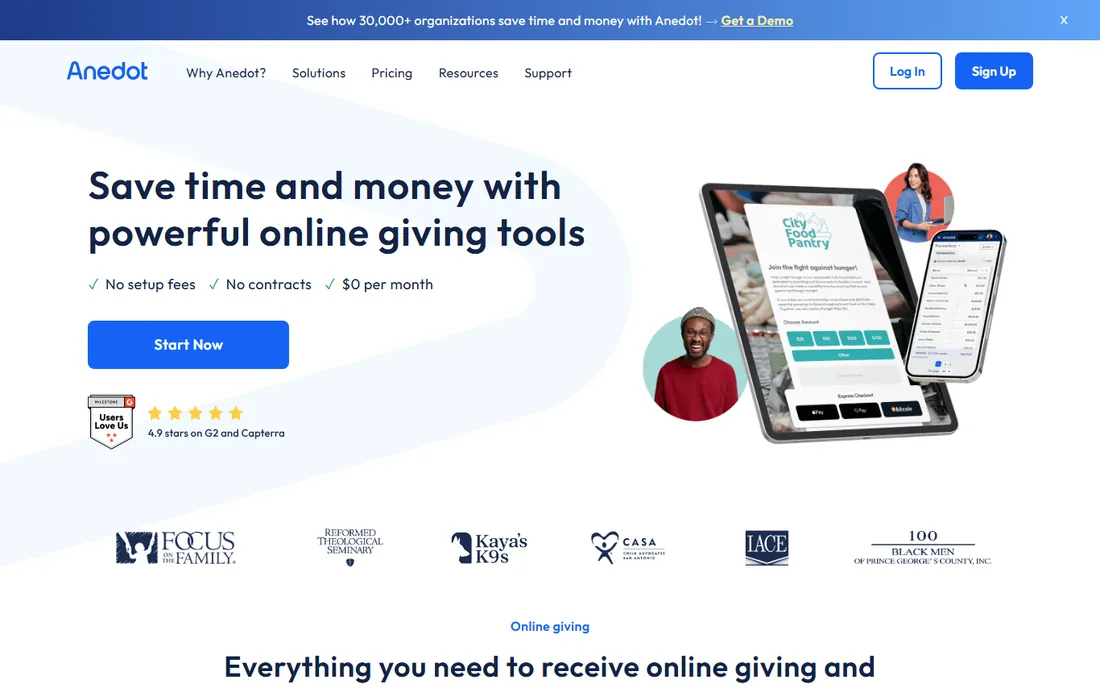
Anedot offers a free starting point with a flexible donation page builder that nonprofits and churches use for campaigns and general giving. The pages look professional, setup is quick, and the platform handles the fundraising basics well. It has roots in political fundraising, which shows in the campaign tooling.
Processing rates run higher than some competitors, which matters at volume. Like Donorbox, it is a general fundraising tool rather than church software. For churches running specific campaigns who want attractive pages fast and free, Anedot is a practical choice.
What we like- Free to start
- Flexible page builder
- Good for campaigns
Watch out for- Higher processing rates
- Less church-specific
The fee question, honestly answered
Every platform here makes money somehow, and understanding the model prevents surprises. The common structures: monthly subscription plus processing fees (Pushpay, Subsplash), free platform with standard processing fees (Tithe.ly core, Givelify), free with optional donor tips covering the platform fee (Givebutter), and free with a platform fee per donation (Donorbox, Anedot). Processing fees (the card networks' cut) apply everywhere and are largely unavoidable; the variable is the platform's own take. For a church receiving $10,000 a month in donations, the difference between platforms can be hundreds of dollars monthly. Model your actual giving volume against each fee structure before choosing. And remember that bank transfers (ACH) cost less to process than cards; platforms that support them save money on recurring gifts.
What to check before you choose
Recurring giving done right
Recurring donations are the lifeblood of church budgets. Check how easily donors start, pause, and modify recurring gifts, and whether the platform encourages the cheaper ACH option for recurring givers. A platform that makes recurring giving frictionless is worth more than one with prettier forms.
Donor experience on mobile
Most giving happens on phones now. Test the full donation flow on a real phone: findability, form length, Apple Pay and Google Pay support, and confirmation. If it takes more than a minute or feels awkward, donors will abandon it. This test eliminates more candidates than any feature comparison.
Reporting and year-end statements
Your treasurer needs clean reports and your donors need accurate year-end statements for taxes. Check the reporting depth, export options, and how the platform handles refunds, failed payments, and fund designations. January is the wrong time to discover reporting gaps.
Integration with your church systems
Giving data should flow to your church management system, accounting software, and email tools without manual re-entry. Check native integrations before assuming they exist. Churches on Planning Center, for example, should weigh the integration value heavily.
How we chose
We focused on online giving platforms used by churches in 2026, covering free and paid options from church specialists to general fundraising tools. We evaluated fee structures, donor experience, recurring giving features, and reputation among church leaders. We excluded pure payment processors and crowdfunding sites that are not built for ongoing church giving. No vendor paid for placement, and we did not process test donations.
Frequently asked questions
What is the cheapest online giving platform for a small church?
Tithe.ly's free core plan and Givelify's no-monthly-fee model are the cheapest serious options: you pay only standard card processing fees. Givebutter is free when donors leave tips. The real cost comparison must include processing fees on your actual donation volume, not just the monthly price.
How much do churches pay in processing fees?
Card donations typically cost just under 3% plus a small per-transaction fee; bank transfers (ACH) cost around 1% plus a small fee. These are set largely by the card networks and processors, so they vary little between platforms. The platform's own fees (monthly or per-donation) are where the real differences lie.
Is online giving safe for donors?
Yes, when using reputable platforms. They use encrypted connections, PCI-compliant processing, and do not store full card numbers on church computers. The bigger risk is actually cash and checks, which can be lost or stolen. Encourage donors to give through the platform's secure forms rather than emailing card details.
Should our church use text-to-give?
Text-to-give works well for events, special offerings, and younger demographics who live on their phones. It is usually an add-on cost, so weigh it against your actual use. Churches with an older congregation may find it underused. Most platforms offer it; the question is whether your people will use it.
Can donors cover the processing fees?
Many platforms offer a "cover the fee" option where donors can add a little extra to offset processing costs. A surprising share of donors choose it when asked. This is an easy way to reduce the church's net costs without changing platforms. Check whether your platform supports it and turn it on.
Sources we checked (11)
- https://get.tithe.ly/
- https://pushpay.com
- https://www.givelify.com
- https://givebutter.com
- https://donorbox.org
- https://www.subsplash.com
- https://www.planningcenter.com
- https://www.vancopayments.com
- https://www.anedot.com
- https://theleadpastor.com/tools/best-church-giving-app/
- https://givebutter.com/blog/online-giving-for-churches
Is your product missing or out of date?
We review this list regularly. Vendors can request a listing, send updated pricing or ask about featured placement.

Shihab Mia · Founder, Rankite
Shihab has spent more than a decade helping SaaS and e-commerce brands grow through search. He writes Rankite's software buying guides from pricing pages, documentation and public user reviews. More about Shihab.
 Tithe.ly
 Pushpay
 Givelify
 Givebutter
 Donorbox
 Subsplash
 Planning Center Giving
 Vanco
Vanco Anedot