How we make this list: we compare pricing pages, product documentation and public user reviews. Rankite is independent; if a vendor ever pays for a featured spot, that listing is clearly labeled Partner.
Key takeaways
- Lovable, Bolt and v0 lead the prompt-to-app wave: describe the app, iterate in chat, deploy the result.
- Visual no-code veterans like Bubble, Glide and Softr still win when you want tested components instead of generated code.
- FlutterFlow is the standout for real native mobile apps, with code export so you are never locked in.
- Nearly every tool offers a free tier, but real usage runs on credits or tokens, so price your build volume, not just the subscription.
- AI builds the shell fast. Data modeling, security and ongoing maintenance still need your judgment.
Quick comparison
| Tool | Best for | Starting price | Free plan |
|---|
 Lovable Lovable | full-stack web apps from plain-language prompts | See website | Yes |
 Bolt Bolt | prompt-to-app with hosting and databases built in | See website | Yes |
 v0 v0 | Vercel-native UI and full-stack app generation | See website | Yes |
 Replit Replit | fastest path from idea to hosted app for beginners | See website | Yes |
 Bubble Bubble | complex no-code web apps with visual workflows | See website | Yes |
 Glide Glide | internal business apps built on spreadsheets | See website | Yes |
 Softr Softr | client portals on Airtable, Sheets or SQL data | $19 per month (billed annually) | Yes |
 FlutterFlow FlutterFlow | native mobile apps with exportable Flutter code | See website | Yes |
Is your product missing or out of date?
We review this list regularly. Vendors can request a listing, send updated pricing or ask about featured placement.
The best best no code ai app builder
#1
Lovable
Best for: full-stack web apps from plain-language prompts
Visit lovable.dev
Starting priceSee website
Free planYes
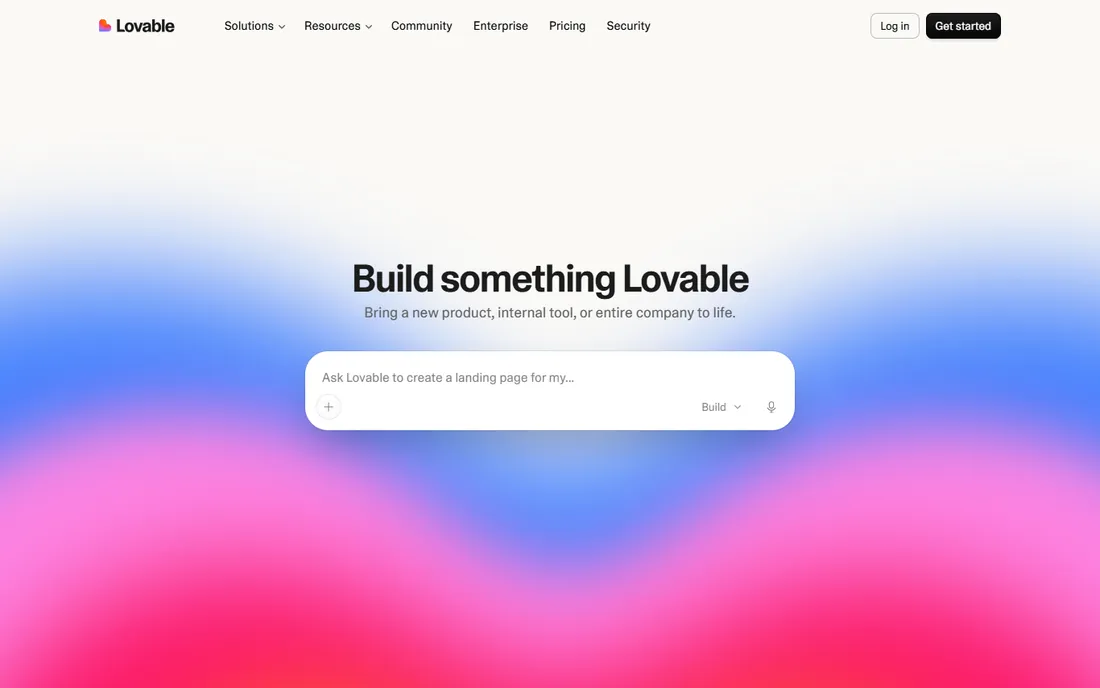
Lovable is the name most founders mention first, and its homepage shows why: describe the product in plain language and watch production-grade software appear in real time. The platform handles hosting, authentication, payments and integrations, so a non-technical founder can go from idea to a working product with real users without assembling infrastructure. Companies like eXp Realty and The Scion Group have built internal tools and products on it.
The billing model is the part to understand before you commit. You build with credits, and iteration is the product, so a perfectionist can burn through a month's credits refining copy and colors. Treat plan mode as mandatory: map the whole app in one planning pass before spending credits on the build. For web apps and internal tools, nothing in this category is faster to first working version.
What we like- Conversational build loop with real-time preview
- Hosting, auth and payments handled end to end
- Plan mode maps the app before spending credits
Watch out for- Credit costs can surprise heavy iterators
- Generated code still needs review before production
- Web-first with no native app store path
#2
Bolt
Best for: prompt-to-app with hosting and databases built in
Visit bolt.new
Starting priceSee website
Free planYes
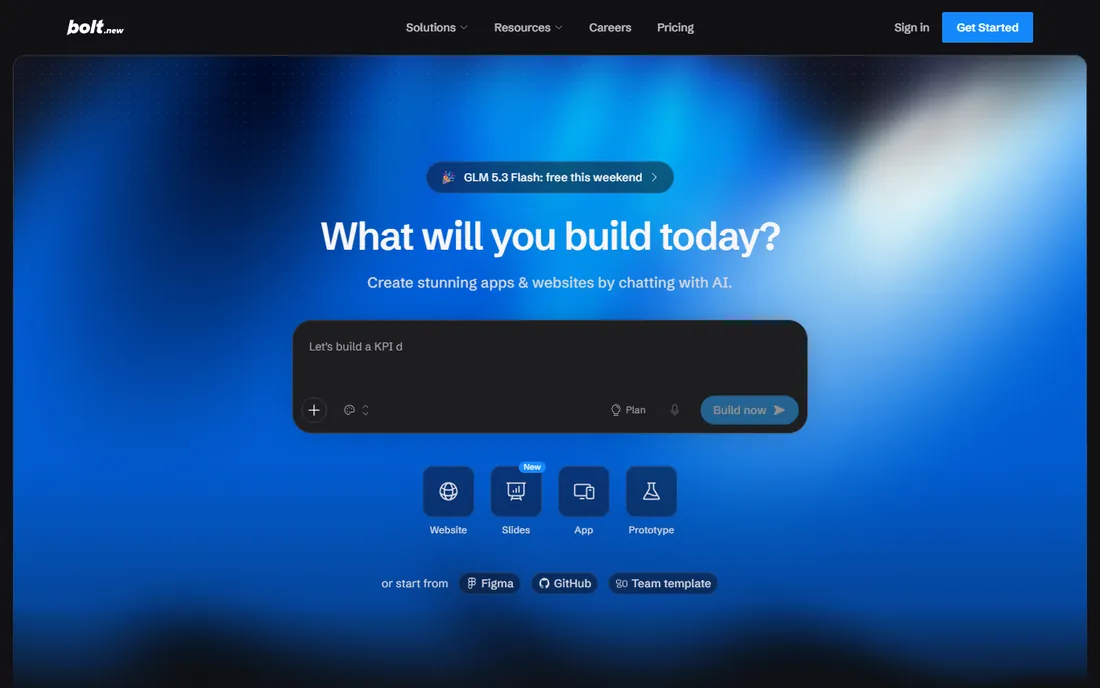
Bolt comes from StackBlitz, and it shows in the engineering. You chat with an AI agent to build websites, apps and prototypes, and the platform tests, refactors and iterates automatically as you go. Bolt Cloud adds enterprise-grade backend infrastructure, hosting, databases and integrations, so you stop stitching together separate platforms. It accepts Figma designs and GitHub repos as starting points, not just blank prompts.
The free tier is genuinely useful for evaluation, with a daily token allowance. The honest catch is the meter: every message costs tokens, and tokens are not shared across team members, so budget per builder. For solo founders and small teams shipping web products, Bolt is Lovable's most serious rival.
What we like- Full-stack apps from chat, Figma files or GitHub repos
- Automatic model routing for quality and cost
- Bolt Cloud backend with hosting and databases
Watch out for- Token-based pricing punishes long exploratory builds
- Team tokens are not shared between members
- Mobile app publishing is less mature than web
#3
v0
Best for: Vercel-native UI and full-stack app generation
Visit v0.app
Starting priceSee website
Free planYes
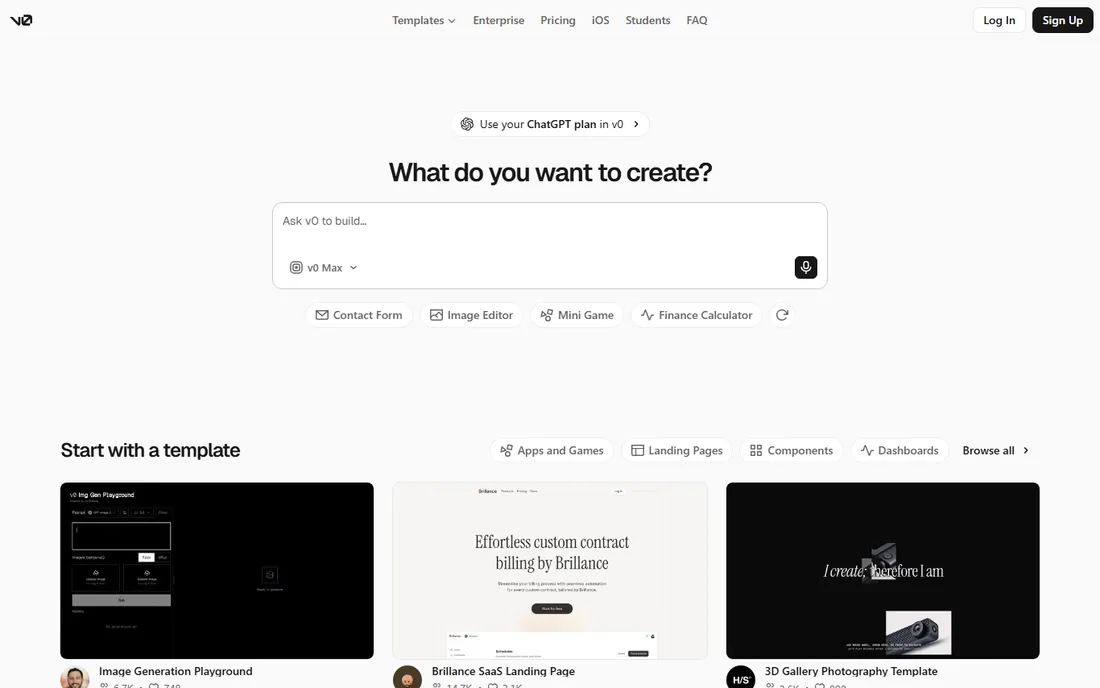
v0 is Vercel's AI builder, and it plays to the company's strengths. Prompt in plain language, get working applications in minutes, then publish as live websites in seconds with one-click deployment to Vercel. GitHub sync pushes code straight to a repository, the visual design mode lets you fine-tune with controls instead of prompts, and an iOS app means you can iterate from your phone.
Where v0 wins is output quality for React and Next.js interfaces. The agentic layer plans, creates tasks and connects databases as it builds. Where it narrows is ecosystem: if your stack is not React-based, the magic dims. Teams already committed to Vercel and Next.js will find this the most production-shaped of the prompt builders.
What we like- Exceptional React and Next.js output quality
- GitHub sync and one-click Vercel deployment
- Visual design mode for fine-tuning
Watch out for- Tied to the React/Next.js ecosystem
- Free monthly credits are modest
- Heavier collaboration features sit on pricier plans
#4
Replit
Best for: fastest path from idea to hosted app for beginners
Visit replit.com
Starting priceSee website
Free planYes
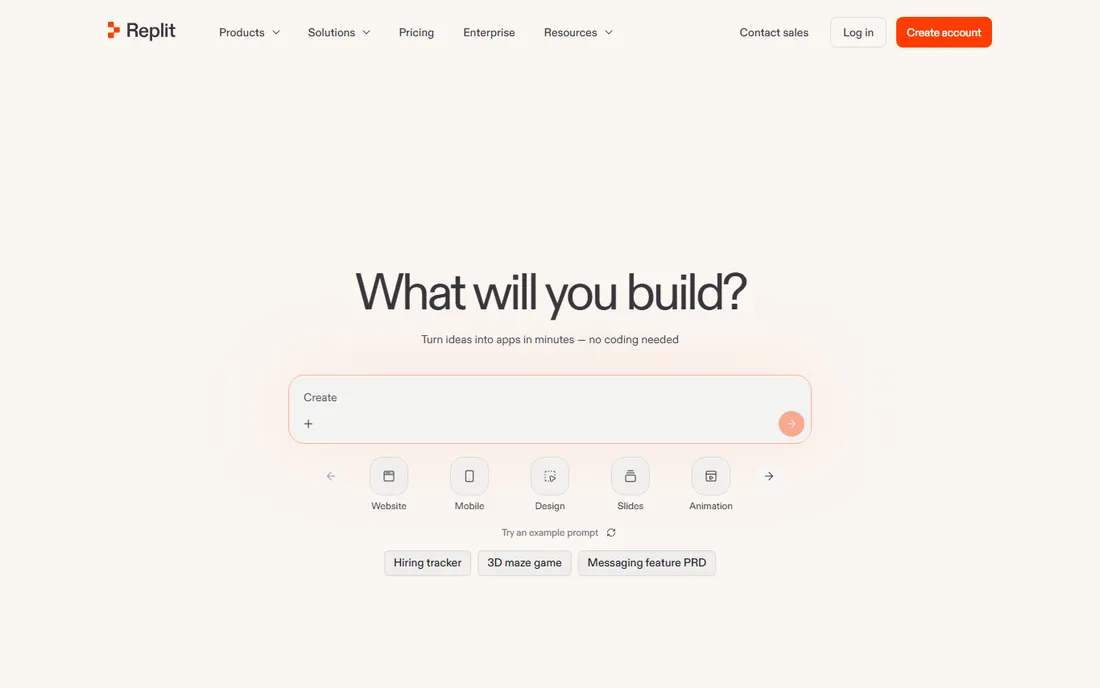
Replit removes the part of app building that stops beginners: setup. Describe your idea and the Agent writes production-ready code, sets up authentication and a database, and deploys the app, all in the browser. Built-in services include hosting and monitoring, plus integrations with OpenAI, Stripe and Google Workspace. You can start for free without a credit card, and a redesigned mobile app lets you build from your phone.
The tradeoff is control. Developers with mature local workflows in tools like Cursor will feel fenced in. But for prototypes, MVPs, education and hackathons, Replit remains the shortest distance between an idea and a live URL. It is the most beginner-proof option on this list.
What we like- Zero-setup hosted environment with auth, database and hosting built in
- Agent writes and evolves production-ready code
- Free start with no credit card
Watch out for- Less control than local-first workflows
- Hosted model can clash with strict enterprise infrastructure rules
- Free agent usage is limited
#5
Bubble
Best for: complex no-code web apps with visual workflows
Visit bubble.io
Starting priceSee website
Free planYes
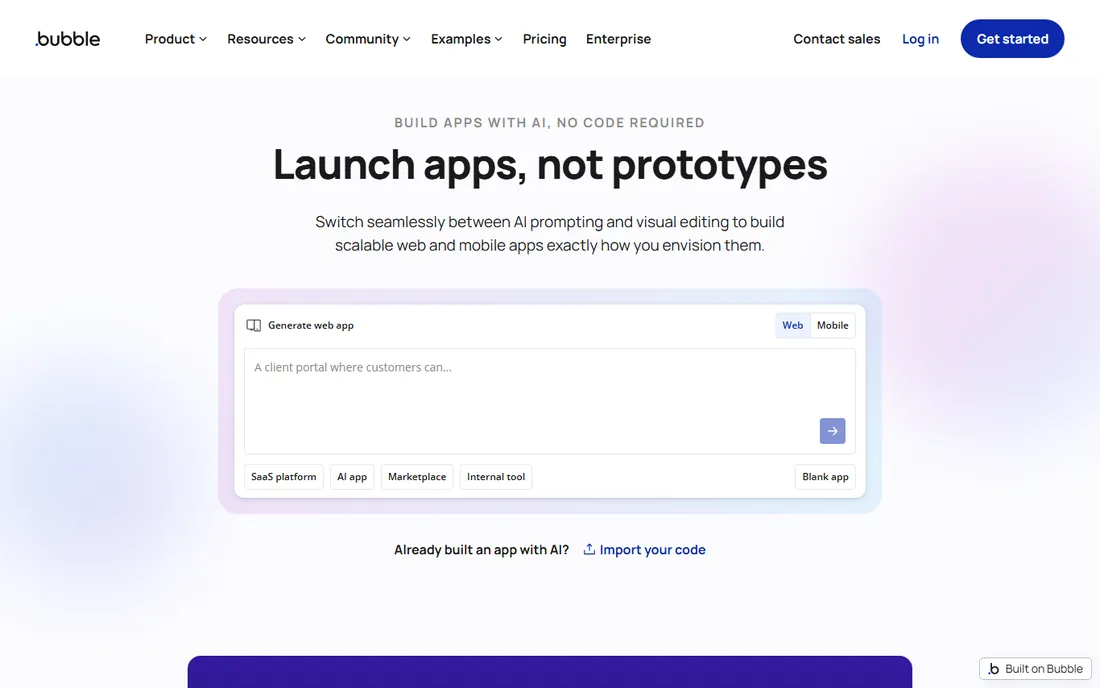
Bubble is the veteran that AI builders are measured against. Its visual editor handles the frontend, backend database, workflow logic, APIs and hosting in one environment, with thousands of community plugins extending it. Fourteen years in, the platform processes enormous transaction volume, offers SOC 2 compliance, and recently added an AI-assisted building layer on top of its visual foundation.
The honest tradeoff is that Bubble's power comes with a learning curve prompt builders deliberately avoid. You will not export the code, and the workload-unit pricing model means costs scale with actual usage, which is fair but demands attention. For complex marketplaces, SaaS products and social apps where logic matters more than speed-to-first-draft, Bubble still has no equal in no-code.
What we like- Deepest visual programming model in no-code
- Built-in database, workflows and thousands of plugins
- Native mobile apps from the same platform
Watch out for- Steep learning curve compared with prompt builders
- No code export
- Workload-unit pricing needs monitoring as apps scale
Starting priceSee website
Free planYes
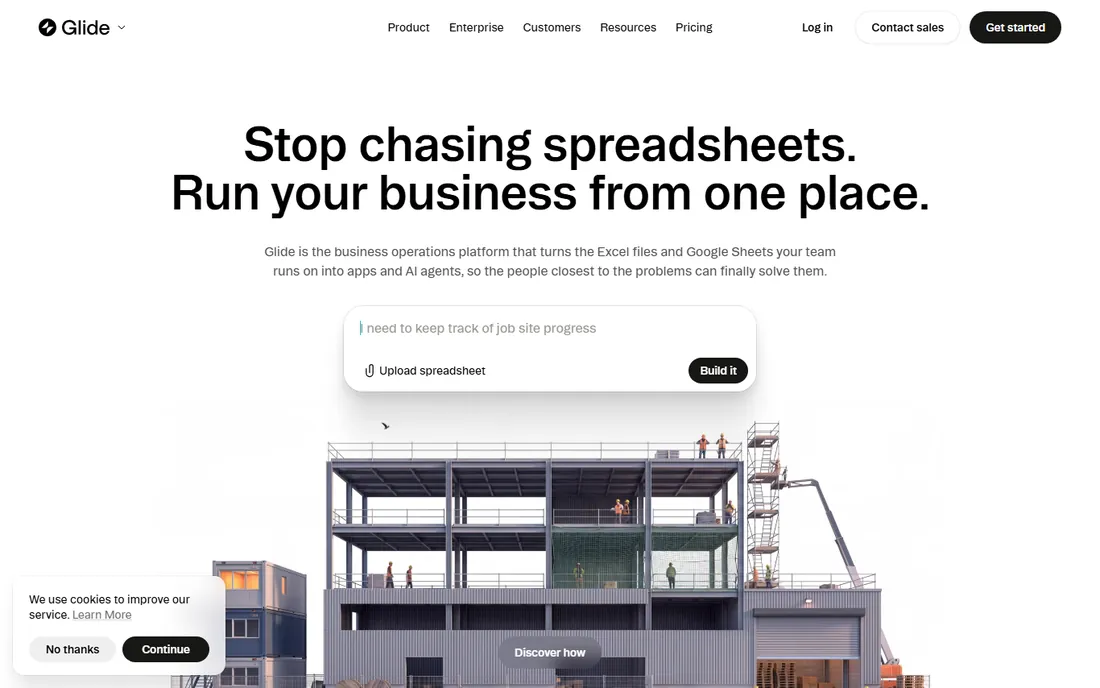
Glide's proposition is the simplest on this list: drop in a spreadsheet, get a working app. It targets internal business software, the dashboards, field tools, portals and trackers that operators need but never get developer time for. The AI layer adds smart forms, instant summaries and auto-generated content on top of your data, and enterprise badges like SOC 2, GDPR and AES-256 encryption make it acceptable to IT.
Glide is not trying to build the next consumer social app, and you should not either. Its ceiling is custom logic and scale, not data apps. But if your company runs on spreadsheets, Glide is the fastest way to turn them into software people actually use, and the free start makes the pilot trivial.
What we like- Turns spreadsheets into polished apps in minutes
- AI features like smart forms and summaries built in
- Enterprise security with SOC 2 and GDPR
Watch out for- Internal-tools focus, not public consumer apps
- Complex custom logic hits limits
- Per-user pricing scales with team size
#7
Softr
Best for: client portals on Airtable, Sheets or SQL data
Visit softr.io
Starting price$19 per month (billed annually)
Free planYes
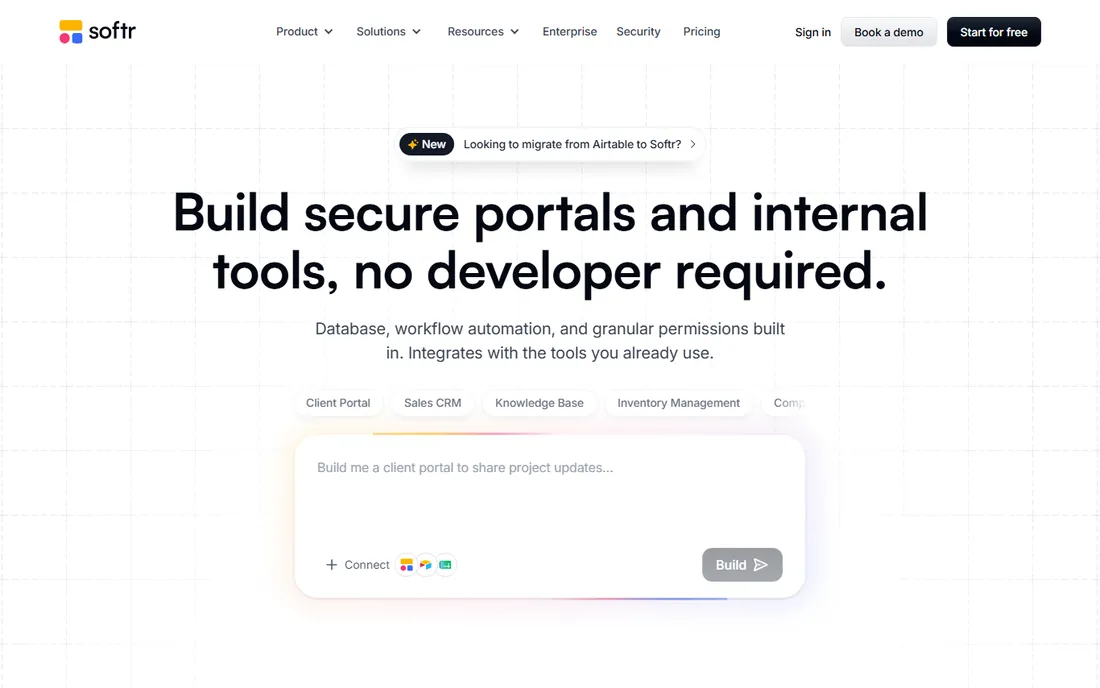
Softr takes a different AI stance than the code generators: its AI Co-Builder composes battle-tested components, database, authentication, permissions, blocks, instead of writing untested code. Describe the app and it arrives connected and secure, ready for real users the same day. Client portals are the flagship use case, and the data story is strong: native Softr databases plus Airtable, Notion, Google Sheets, HubSpot and SQL databases.
The Softr argument is maintainability. There is no generated codebase to debug, host or patch; everything runs on platform components. The limit is the inverse of Bubble's: pre-built blocks keep you fast but cap custom design freedom. Annual billing starts at $19 per month with a free tier, and pricing scales by app users rather than seats, which suits external-facing tools.
What we like- AI Co-Builder assembles tested components, not raw code
- Permissions and user groups built for client portals
- Connects to 21+ data sources
Watch out for- Web apps only, no native app store publishing
- Visual blocks constrain truly custom designs
- Per-app-user pricing grows with audience
Starting priceSee website
Free planYes
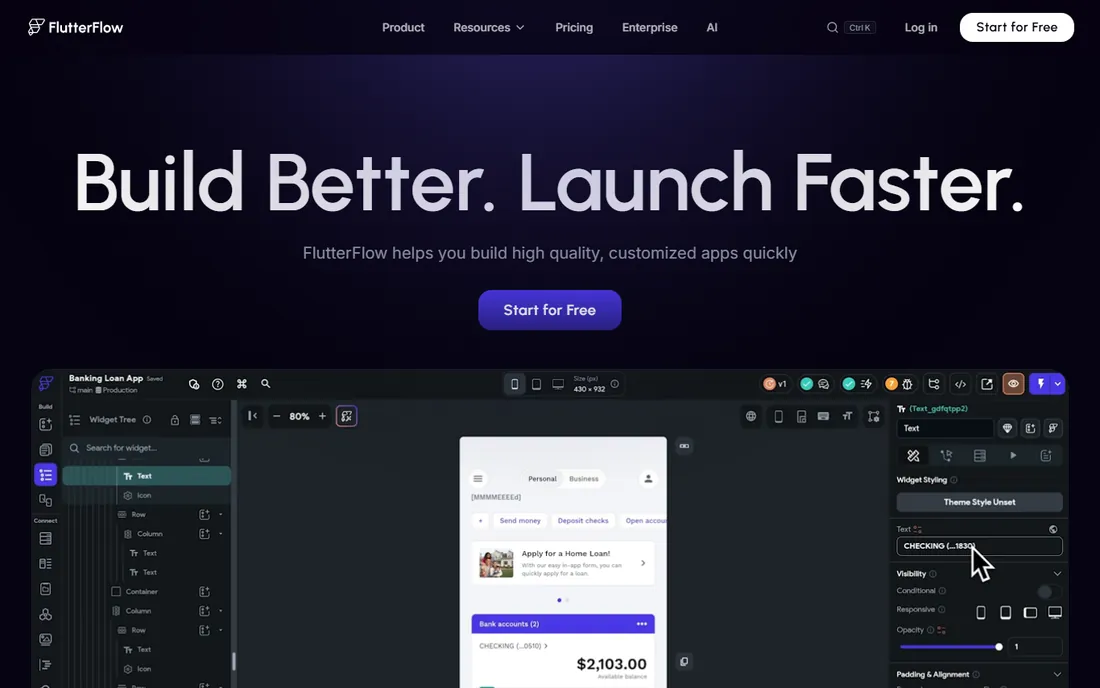
FlutterFlow is the only tool here built for native mobile first. Its visual builder produces real Flutter apps that deploy to the App Store, Play Store and web from a single project, with Firebase integration, animations and API support. The killer feature is code export: download clean Flutter code with one click, so a no-code start never becomes a lock-in trap. AI agents can be added for conversational interactions.
The learning curve is real. FlutterFlow is visual, but Flutter concepts like widgets, state and navigation still matter, and advanced customization rewards basic Flutter knowledge. For teams whose end goal is a genuine app-store product, though, nothing else on this list gets you there without code, and the export option means your developer can take over gracefully.
What we like- Deploys to App Store, Play Store and web from one build
- One-click Flutter code export with no vendor lock-in
- AI agents for conversational features
Watch out for- Visual builder plus Flutter concepts is a real learning curve
- Advanced customization benefits from Flutter knowledge
- Pricing tiers limit features
How we chose
We surveyed the AI builder category as it stands in 2026, combining prompt-to-app tools (Lovable, Bolt, v0, Replit) with visual no-code platforms that now ship AI features (Bubble, Glide, Softr, FlutterFlow). We checked each vendor's homepage and product pages, read independent reviews and roundups, and weighed generation quality, data and backend handling, deployment options, pricing transparency and fit for non-technical builders. We did not claim hands-on testing. Where vendors publish pricing, we used it; otherwise we say see website.
Choosing between AI generation and visual no-code
The category splits in two, and the split matters more than any individual tool.
Pick AI generation when speed to first version wins
If you need an MVP, a prototype for investors, or an internal tool this week, Lovable, Bolt, v0 or Replit will get you there fastest. Describe, iterate, deploy. The output is real code you can host anywhere, which is a genuine advantage over older no-code lock-in.
Pick visual no-code when maintainability wins
If the app will run for years with real users, data and compliance needs, Bubble, Glide and Softr assemble tested components instead of generating code. There is less to break, less to review, and less that a future hire must decode.
Pick FlutterFlow when the app store is the destination
Only FlutterFlow treats native mobile as the primary target. Every other tool here is web-first with mobile as an afterthought. If iOS and Android distribution is the goal, start there.
Budget credits, not just subscriptions
Prompt builders bill by credits or tokens, and iteration is the whole workflow. A $25 subscription means little if your build style consumes $80 of credits. Estimate your iteration volume, then choose.
What AI builders still cannot do for you
The marketing suggests you describe an app and receive a business. The reality is that AI builds the artifact, not the product. It will not validate that anyone wants the app, design a data model that survives contact with real users, or notice that your authentication flow has a hole. Generated code still needs review, security still needs checking, and the app still needs distribution. The builders on this list remove the typing. The thinking remains yours, and the founders who succeed with these tools are the ones who bring product judgment to the prompt box.
Frequently asked questions
Can AI really build an app with no code?
Yes, for defined scopes. Tools like Lovable and Bolt generate working full-stack web apps from text prompts, including databases, authentication and hosting. Complex logic, integrations and production hardening still benefit from technical review.
Which is better, Lovable or Bolt?
They are close rivals. Lovable is known for its conversational build loop and end-to-end infrastructure handling. Bolt, from StackBlitz, emphasizes engineering rigor with automatic testing and refactoring, plus Figma and GitHub as starting points. Both offer free tiers, so test your actual use case on each.
How much does it cost to build an app with AI?
Free tiers exist on all eight tools here, but real builds run on credits or tokens. Lovable and Bolt paid plans start around $25 per month, Softr publishes annual billing from $19 per month, and heavy iteration can exceed the base subscription. Price your expected build volume.
Can I export the code from these tools?
It varies. Bolt and v0 generate real code you can sync to GitHub. FlutterFlow exports clean Flutter code with one click. Bubble does not offer code export. Check the export story before committing to any platform.
Are AI-built apps ready for production?
They can be, with review. AI builders handle the scaffolding fast, but security, data modeling, edge cases and performance still need human attention. Softr sidesteps this by assembling tested components rather than generating code, which is worth weighing if you lack technical review capacity.
Do I need to learn to code to use these tools?
No, but it helps. Prompt builders are designed for non-technical founders, and visual tools like Glide and Softr need no code at all. Basic technical literacy, understanding data models, APIs and security, makes every tool here dramatically more effective.
Sources we checked (12)
- https://lovable.dev/
- https://bolt.new/
- https://v0.app/
- https://replit.com/
- https://bubble.io
- https://www.glideapps.com/
- https://www.softr.io
- https://flutterflow.io/
- https://www.popwebtools.com/blog/best-no-code-app-builders
- https://devtoollab.com/blog/bolt-new-alternatives
- https://ecommerceparadise.com/softr-review-2026/
- https://capacity.so/blog/no-code-ai-app-builder
Is your product missing or out of date?
We review this list regularly. Vendors can request a listing, send updated pricing or ask about featured placement.

Shihab Mia · Founder, Rankite
Shihab has spent more than a decade helping SaaS and e-commerce brands grow through search. He writes Rankite's software buying guides from pricing pages, documentation and public user reviews. More about Shihab.