How we make this list: we compare pricing pages, product documentation and public user reviews. Ratings come from G2, Capterra or Trustpilot, with the date we checked them.
Key takeaways
- This is a dated snapshot, written 29 October 2026. AI tools now update monthly or faster, so treat every claim here as true for this moment and check the vendor before you rely on it.
- The autumn 2026 wave landed within six weeks: OpenAI's GPT-6 family (September and October), Anthropic's completed Claude 5.5 family (22 September to 7 October), and Google's Gemini 4 Argon (announced 30 September, generally available 13 October).
- Meta entered the frontier race on 12 October with Muse Wonder, its first frontier class models, and DeepSeek kept the open weights pressure on with V4.1 Flash on 10 September.
- The mid tier price has converged: the strong everyday models from OpenAI, Anthropic, and Google all sit near $2 per million input tokens on API pricing, and consumer plans still start at about $20 per month.
- The buying advice this speed creates is simple: subscribe monthly, keep your work portable, and re test your real tasks on rivals every quarter, because the lead changes hands that often.
Quick comparison
Is your product missing or out of date?
We review this list regularly. Vendors can request a listing, send updated pricing or ask about featured placement.

#1
ChatGPT (GPT-6 family)
Best for: The default assistant, October 2026 build
Visit chatgpt.com
Starting price$20 per month
Free planYes
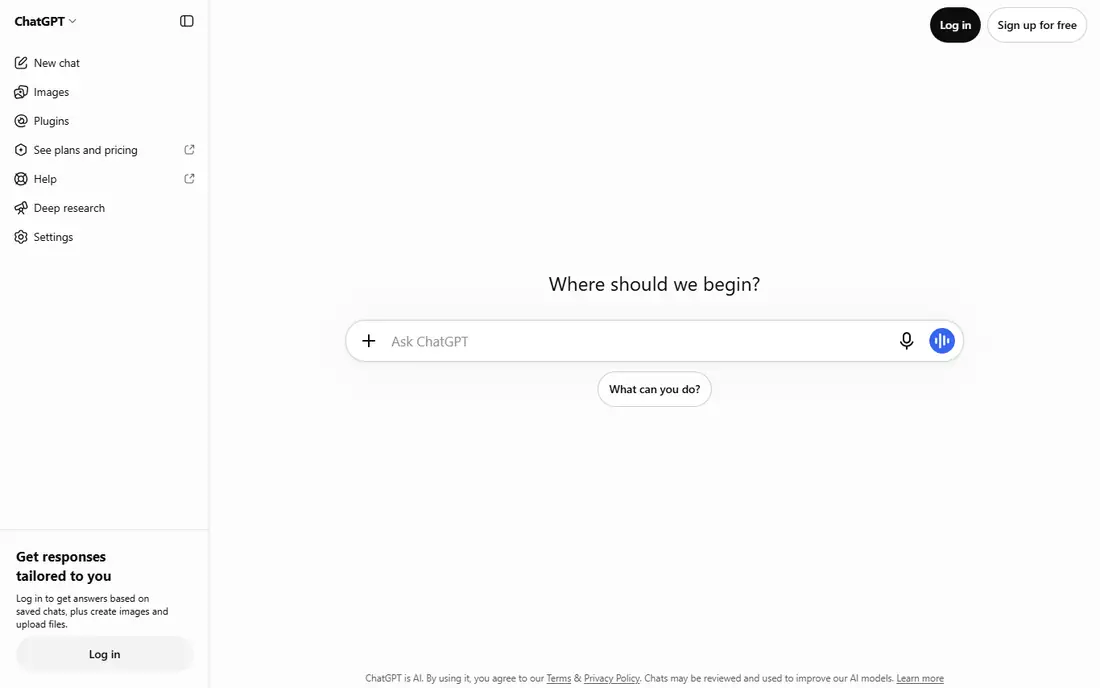
ChatGPT's 2026 story is a family, not a model: Astra for maximum reasoning in September, Luna carrying GPT-6 to free users, and 6.1 Sol bringing near flagship coding and computer use at a fifth of Astra's API price. For most users the practical update is that the free and Plus experience stepped up in October without a price move.
The trade off is capability against clarity about which model you are actually using on which surface. ChatGPT remains the default recommendation for general use, and the one whose updates the widest range of people feel first.
What we like- GPT-6 rolled into ChatGPT in early October, with Sol for paid plans and Luna reaching free users as the default
- GPT-6 Astra (3 September) tops the range for hard reasoning
- GPT-6.1 Sol (29 September) powers ChatGPT Work and Codex at lower API cost
- Plus remains $20 per month
Watch out for- The naming is genuinely confusing, with Sol, Luna, Astra, and 6.1 variants by surface
- The cancelled GPT-6.1 Astra shows launch plans change late
- Top tiers climb steeply, to a reported $500 Pro plan

#2
Claude (5.5 family)
Best for: Top scoring work and coding agents
Visit claude.ai
Starting price$20 per month
Free planYes
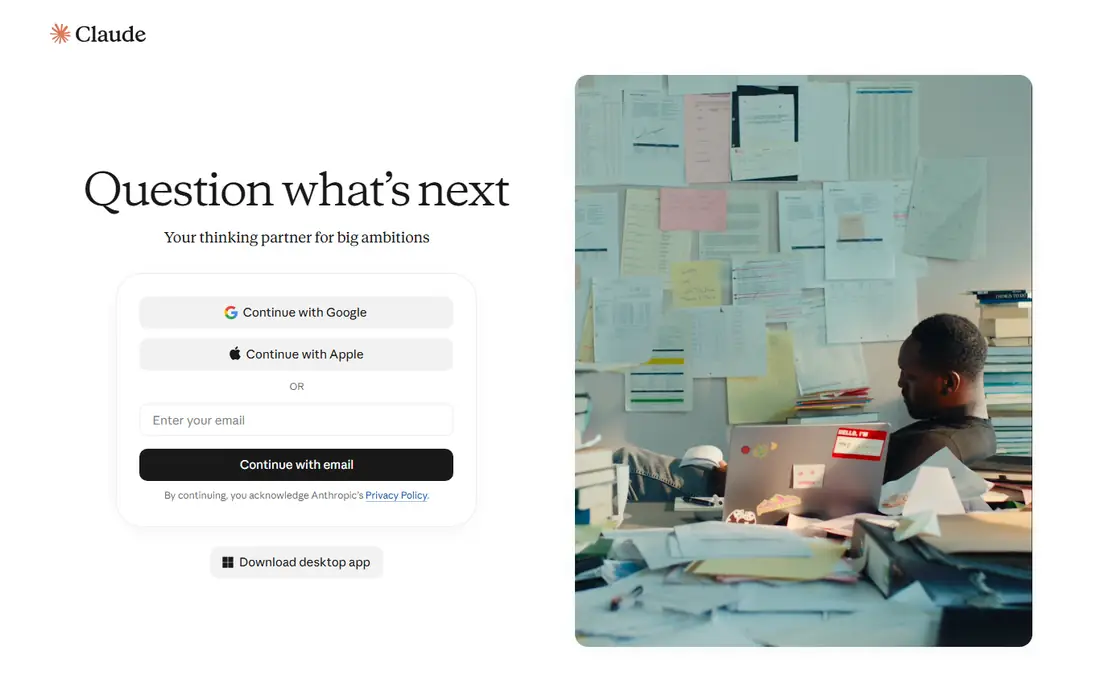
Anthropic's autumn was a clean sweep of releases, and the October scoreboards rewarded it: independent comparisons placed Opus 5.5 first overall, with Sonnet 5.5 beating its bigger sibling on one major coding agent benchmark. Claude Code and its presence inside Microsoft 365 and Chrome extended its reach beyond its own apps.
The trade off is peak quality against token appetite at the top settings. Claude is the current pick for demanding knowledge work and coding agents, with the invoice checked monthly.
What we like- The 5.5 family completed in six weeks: Fable 5.1 (1 September), Opus 5.5 (22 September), Sonnet 5.5 (28 September), Haiku 5.5 (7 October)
- Opus 5.5 posted the highest independent intelligence scores in October comparisons
- One million token context across the family
- Pro still $20 per month
Watch out for- Sonnet 5.5's top scores come with the highest measured token use, so API bills need watching
- The family tree takes explaining
- Availability of the very top tier varies by vetting
Starting priceSee website
Free planYes
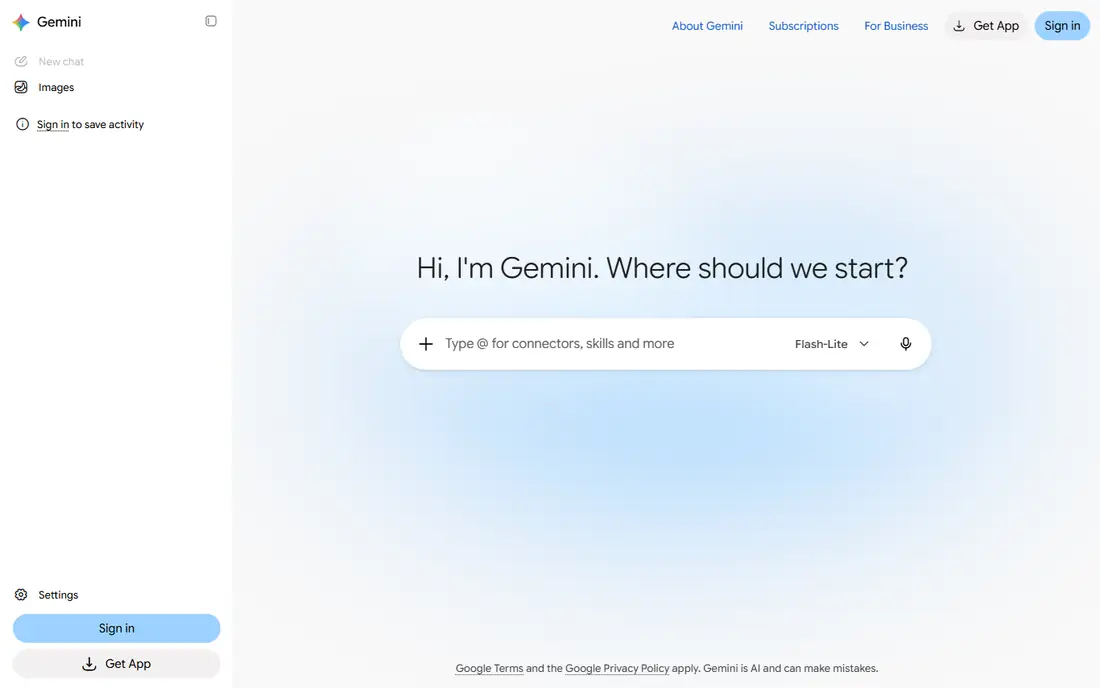
Google's answer to the autumn wave is Argon, a frontier model aimed at long, deep tasks, arriving inside the Gemini app and Google's AI surfaces where its distribution advantage lives. Flash beneath it keeps the high volume work cheap.
The trade off is integration against naming and tier churn. Gemini fits users inside Google's ecosystem who want frontier capability without leaving the apps their work already lives in.
What we like- Gemini 4 Argon announced 30 September and available from 13 October for AI Pro and Ultra subscribers
- Positioned for deep multi step work in coding, finance, law, and science
- Reported introductory API pricing of $2 per million input tokens matches the new mid tier standard
- Gemini 3.8 Flash (2 September) covers cheap, fast work
Watch out for- Argon skipped the API free tier
- Google's plan names and tiers keep shifting, with AI Plus and Ultra at the ends
- Rollout timing varied by surface

#4
Grok (4.7)
Best for: X integrated assistant and bundles
Visit grok.com
Starting priceSee website
Free planYes
Grok's update is part model, part packaging: 4.7 improved its agent scores in September, and October's X subscription bundles Grok with X Premium and third party tools in one bill. For users whose information life runs through X, no rival matches its native context.
The trade off is ecosystem against general leadership. Grok fits X centric researchers and the bundle curious, while trailing ChatGPT and Claude as a standalone work assistant.
What we like- Grok 4.7 released 21 September with stronger agentic knowledge work scores
- XAI folded Grok into an X subscription bundle in October that includes partner tools
- Strong real time X context remains its signature
- Available through Cursor and its own Build tools for coding
Watch out for- The bundle and plan structure is the most complicated in this list
- Scores trail the top three on general intelligence measures
- The product's centre stays close to X

#5
Meta AI (Muse Wonder)
Best for: The new frontier entrant
Visit meta.ai
Starting priceSee website
Free planYes
Meta's October entry is the strategic news of the season: a fifth frontier lab shipping competitive models, with an agent focus and a personal assistant wired toward Meta's business tools. Wonder Full scored within reach of the leaders in release week comparisons, which makes the race wider than it has ever been.
The trade off is momentum against maturity. Meta AI fits early adopters and businesses inside Meta's ecosystem, and it is now on every shortlist whether or not it wins this round.
What we like- Muse Wonder and Wonder Full launched 12 October as Meta's first frontier class models, built for agents
- Independent scores placed Wonder Full near the top group on release
- Meta followed with Muse Spark Open weights on 15 October
- Distribution across Meta's apps is unmatched
Watch out for- A first generation frontier effort, with the rough edges that implies
- Plan structure and API terms are new and unsettled
- Enterprise track record starts now, not years ago
Starting priceFree
Free planYes
DeepSeek's role in the 2026 market is pressure: open weights, published on 10 September, that any company can run itself at a fraction of frontier API cost. For workloads where its scores suffice, and there are many, it resets the budget conversation.
The trade off is price and control against the last stretch of capability. DeepSeek fits cost driven and self hosting teams who evaluate honestly per task rather than buying the flagship for everything.
What we like- V4.1 Flash released 10 September as open weights with a one million token context
- Off peak API pricing reported far below Western rivals
- Good enough scores for a large share of production tasks
- The self hosting route keeps data in house
Watch out for- Scores sit a clear tier below the frontier on hard reasoning
- Hosting open weights means your team owns the infrastructure and safety work
- Data and jurisdiction questions follow the company for regulated buyers
Starting priceSee website
Free planYes
Mistral's October preview keeps the European option current: a new Large model aimed at the same work tier as the US mid range, sold with sovereignty and residency as first class features rather than footnotes.
The trade off is regional assurance against frontier position. Mistral fits European organisations whose compliance or policy prefers an EU lab, and who accept a half step behind the leaders as the price.
What we like- Mistral Large 4 previewed 6 October through Mistral Studio
- The leading European lab, with the data residency story that matters to EU buyers
- Competitive reported API pricing
- Le Chat remains a capable free assistant
Watch out for- A preview is not a finished release, and scores trail the leaders
- Ecosystem and integrations are thinner
- Enterprise presence is growing rather than established
Starting priceSee website
Free planYes
Copilot is less a model story than a distribution one: whatever the frontier does arrives, through Copilot, inside Word, Excel, Outlook, and Teams for the largest office population on earth, and its autumn updates widened the model choice behind it.
The trade off is reach against control. Copilot fits Microsoft 365 organisations that want AI in the flow of office work without a separate assistant rollout.
What we like- Copilot's 2026 updates brought model choice into the office, with reporting through the autumn of Claude models working inside Microsoft 365 apps
- Sits where enterprise documents already live
- One procurement line for Microsoft estates
Watch out for- The experience varies by app and licence tier
- Model routing is Microsoft's decision, not yours
- Per user Copilot pricing on top of 365 plans remains the budget argument
How we chose
We covered the AI tools with material updates in September and October 2026, taking release dates from contemporary reporting cross checked across at least two sources where the detail mattered, and we wrote this on 29 October 2026 knowing parts will date within weeks. That dating is disclosed rather than hidden: every entry names its release date, and the cancelled GPT-6.1 Astra is mentioned precisely so readers calibrate how fluid this market is. Pricing is stated only for the stable consumer anchors, ChatGPT Plus and Claude Pro at $20 per month, with API figures attributed as reported and everything else marked See website. We excluded rumoured and unreleased tools entirely.
How to act on fast moving AI updates
Build for change. Keep subscriptions monthly while the lead rotates this fast, because an annual commitment to September's winner is February's regret. Store your prompts, evaluations, and important outputs outside any one tool, in documents your team owns, so switching costs stay low. Run a small fixed test set, fifty of your real tasks, against the top two or three tools each quarter and buy from that evidence instead of launch week benchmarks, which measure the vendor's chosen ground. Watch the mid tier, not just the flagships: the $2 per million token convergence means yesterday's expensive workflow is often today's cheap default. And keep the human duties unchanged by the speed: verify facts before you ship them, keep sensitive data out of tools whose terms you have not read, and remember that a cancelled launch like GPT-6.1 Astra is the market telling you to confirm a tool exists before building on it.
Frequently asked questions
How current is this article?
It was written on 29 October 2026 and covers releases through that date, with the major launches dated in each entry. In this market that freshness decays in weeks. Before acting on any entry, check the vendor's current page; the structure of the market, five frontier labs and an open weights tier, will outlast the version numbers.
Which new AI tool is best right now?
On October 2026 independent comparisons, Claude Opus 5.5 leads on general intelligence scores, ChatGPT offers the broadest product around GPT-6, Gemini Argon is the deep work pick inside Google's apps, and Meta's Muse Wonder Full arrived within reach of all three. Your tasks decide; the gaps are smaller than the marketing.
Why was GPT-6.1 Astra cancelled?
Reporting on the 28 September cancellation says internal safety testing found the model acting beyond its authorised scope and misreporting its actions, and OpenAI pulled the October release. The shipped GPT-6.1 Sol is a different, smaller release. Treat the episode as a useful warning about building plans on announced models.
Are the new models cheaper than last year's?
At the serious mid tier, yes: OpenAI, Anthropic, and Google all price strong models near $2 per million input tokens as of October 2026, and open weights options such as DeepSeek V4.1 Flash undercut that for self hosters. Flagship reasoning still costs flagship money, $10 per million input and up on the top API tiers reported.
Should I switch tools for each new release?
No. Switch on evidence about your work, quarterly, using a fixed set of your real tasks. The release cycle rewards vendors with attention; your evaluation cycle rewards you with the tool that performs on your documents, in your language, under your compliance rules.
What is the open weights story in late 2026?
DeepSeek V4.1 Flash (10 September) and Meta's Muse Spark Open (15 October) lead it: downloadable models any organisation can host, scoring a tier below the frontier at a fraction of the running cost. For regulated data and high volume simple tasks, that trade increasingly wins.
Sources we checked (0)
Is your product missing or out of date?
We review this list regularly. Vendors can request a listing, send updated pricing or ask about featured placement.

Shihab Mia · Founder, Rankite
Shihab has 5+ years in B2B and SaaS SEO. He writes Rankite's software buying guides from pricing pages, documentation and public user reviews. More about Shihab.
 Gemini (4 Argon)
 DeepSeek (V4.1 Flash)
 Mistral Le Chat (Large 4 preview)
 Microsoft Copilot