How we make this list: we compare pricing pages, product documentation and public user reviews. Ratings come from G2, Capterra or Trustpilot, with the date we checked them.
Key takeaways
- Megaport and PacketFabric are the two pure play NaaS platforms most enterprises evaluate first, with on demand cloud on ramps in hundreds of data centres.
- Equinix Fabric is the natural pick if your infrastructure already sits in Equinix facilities, and Console Connect leads on global carrier reach.
- Lumen and the other large carriers sell NaaS inside a broader network relationship, which suits companies consolidating vendors.
- Alkira and Aviatrix are cloud network platforms rather than connectivity marketplaces; pick them when the problem is routing and policy across AWS, Azure, and Google Cloud.
- Almost nobody in this category publishes prices. Budget through a quote, and compare per port, per hour, and per GB terms carefully because the models differ.
Quick comparison
| Tool | Best for | Starting price | Free plan |
|---|
 Megaport | On demand cloud connectivity at scale | See website | No |
 PacketFabric | Flexible bandwidth and rapid provisioning | See website | No |
 Equinix Fabric | Equinix based infrastructure | See website | No |
 Console Connect | Global reach on a carrier network | See website | No |
 Lumen NaaS | Carrier backed NaaS in North America | See website | No |
 Alkira | Multicloud network policy in one place | See website | No |
 Aviatrix | Cloud network control and visibility | See website | No |
 Aryaka | Managed SD-WAN and SASE | See website | No |
Is your product missing or out of date?
We review this list regularly. Vendors can request a listing, send updated pricing or ask about featured placement.
The best network as a service providers
Starting priceSee website
Free planNo
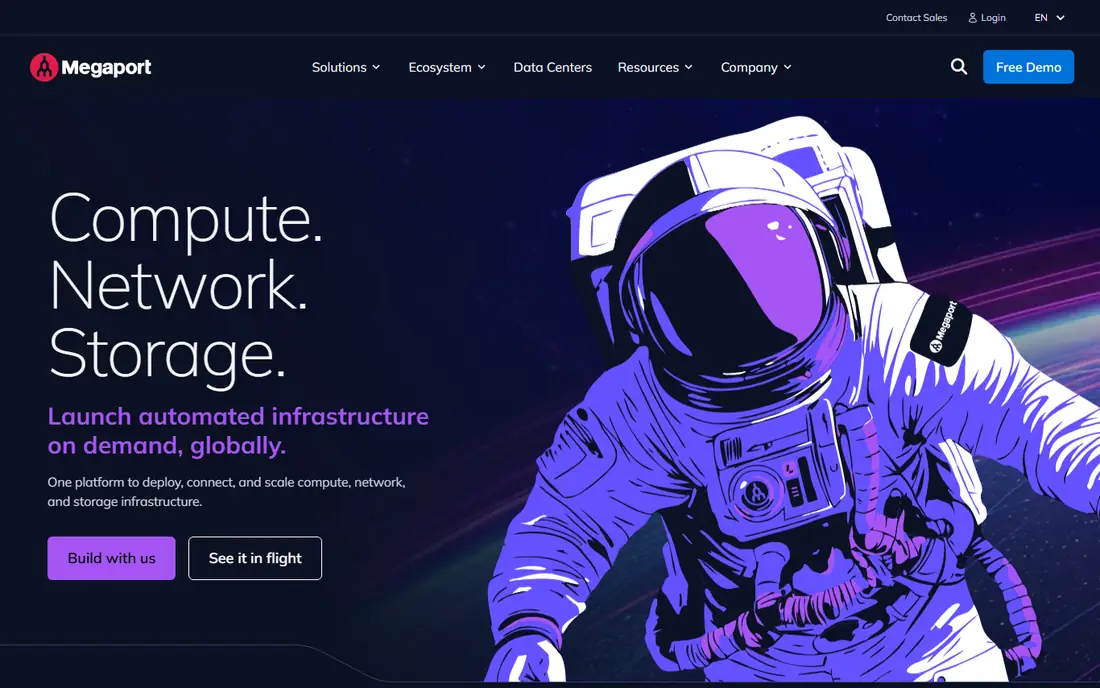
Megaport is the reference NaaS platform: a software defined fabric across hundreds of data centres where you order a port, then build virtual cross connects to clouds, partners, and your own sites in minutes. Billing mixes monthly port fees with bandwidth tiers that can flex by the day on some services, and the whole thing is API driven, so network changes can live in the same pipeline as cloud changes.
The trade off is reach against assembly. Megaport gives you the fabric, not the last mile into an office that sits outside its facilities. Megaport fits enterprises and service providers with data centre presence who want cloud connectivity they can change at software speed.
What we like- Present in hundreds of enabled data centres worldwide
- Direct on ramps to AWS, Azure, Google Cloud, and more
- Spin circuits up and down by API
- Usage based billing options
Watch out for- You still need a presence in an enabled facility or a partner on ramp
- Costs stack with cloud egress fees
- Pricing needs the estimator or a quote
Starting priceSee website
Free planNo
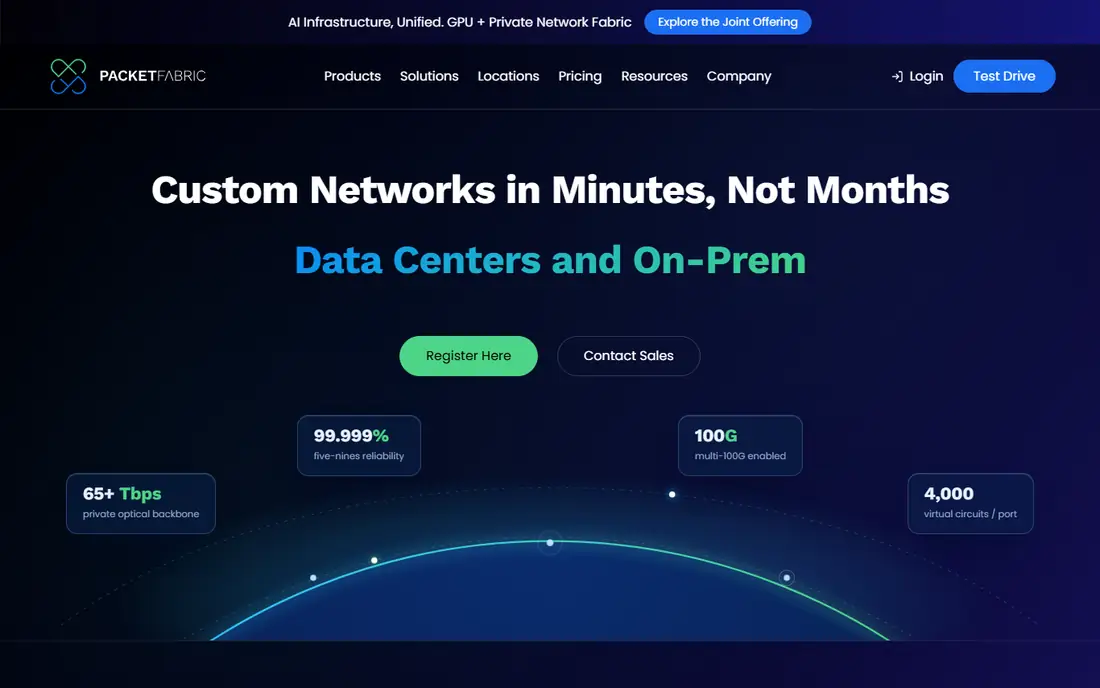
PacketFabric built a carrier grade backbone and sells it through a portal with the same on demand logic: ports in its metros, virtual circuits between them, and cloud on ramps to the major providers. Its pitch leans on flexible bandwidth, including options that bill closer to actual use than a fixed committed rate.
The trade off is flexibility against footprint. Outside its core North American and European metros the fabric thins, so a global estate needs checking location by location. PacketFabric fits US centric enterprises and networks teams that want bandwidth to follow demand rather than a contract signed last year.
What we like- Point to point and cloud connectivity across US and European metros
- Usage and burstable bandwidth options
- Strong automation story
- Transparent product set
Watch out for- Footprint is smaller than Megaport globally
- Fewer Asia Pacific locations
- Enterprise features vary by market
Starting priceSee website
Free planNo
Equinix Fabric is the software layer over the world's biggest colocation footprint. If your racks already sit in Equinix IBX facilities, Fabric lets you add virtual connections to clouds and partners from a portal instead of ordering physical cross connects, and it reaches between metros on Equinix's backbone.
The trade off is ecosystem against independence. The economics shine for existing Equinix customers and dull for everyone else. Equinix Fabric fits enterprises standardised on Equinix who want their interconnection to behave like a cloud service rather than a cabling order.
What we like- Sits inside the largest data centre platform in the market
- Virtual connections between your Equinix sites and clouds
- Pairs with Equinix Metal and other services
- Strong in regulated industries
Watch out for- Value concentrates if you are already an Equinix customer
- Port and connection fees add up
- Less attractive as a standalone for non Equinix sites
Starting priceSee website
Free planNo
Console Connect is PCCW Global's NaaS platform, and its differentiator is ownership: the virtual network rides a global carrier backbone rather than rented capacity, which shows in its reach across Asia, Europe, and the Americas. It connects clouds, data centres, and enterprise sites, and adds services such as cloud routing and IoT connectivity.
The trade off is global reach against mindshare. US buyers often shortlist it later than domestic names, which says more about marketing than the network. Console Connect fits multinational companies, especially those with real Asian footprints, that want one platform across regions.
What we like- Runs on PCCW Global's own backbone across many countries
- Cloud, data centre, and site connectivity in one platform
- IoT and edge services beside core NaaS
Watch out for- Pricing by quote
- Platform awareness is lower in North America
- Feature depth varies by region
#5
Lumen NaaS
Best for: Carrier backed NaaS in North America
Visit lumen.com
Starting priceSee website
Free planNo
Lumen brought NaaS into the carrier mainstream with services such as on demand internet and Ethernet that can be ordered and turned up quickly on its fibre network. For a US enterprise already buying connectivity from Lumen, the appeal is one vendor, one bill, and self serve changes instead of ticket queues.
The trade off is integration against specialisation. A carrier platform rarely moves as fast as a pure play fabric, and the catalogue is narrower. Lumen NaaS fits North American enterprises consolidating network spend with a single carrier and wanting self serve control over the services they already buy.
What we like- Backed by one of the largest fibre networks in the US
- Instant internet and Ethernet services orderable online
- Suits existing Lumen customers consolidating contracts
Watch out for- Focus is North America first
- Platform is newer than the pure plays
- Pricing and terms vary by service
Starting priceSee website
Free planNo
Alkira sells the network inside the cloud rather than the road to it. Its platform stands up points of presence in the clouds themselves and gives you one place to define routing, segmentation, and firewall policy across AWS, Azure, and Google Cloud, delivered as a service with nothing to install.
The trade off is control against layering. Alkira does not replace your Megaport circuits or carrier links; it governs what runs over them. Alkira fits cloud heavy organisations whose real pain is inconsistent policy and routing across accounts, regions, and providers.
What we like- Builds a global multicloud backbone as a service
- Firewall and policy insertion built in
- No agents or hardware to deploy
- Unifies AWS, Azure, and Google Cloud networking
Watch out for- It is an overlay, so you still buy underlying connectivity
- Pricing is enterprise and opaque
- Value appears only with real multicloud sprawl
Starting priceSee website
Free planNo
Aviatrix is the cloud network platform for teams that found native cloud networking too thin. It overlays a managed data plane on AWS, Azure, Google Cloud, and OCI, adding the routing, segmentation, and telemetry that operations teams expect from traditional networks. Unlike Alkira, you deploy its components into your cloud accounts.
The trade off is capability against ownership. Aviatrix gives the deepest control here and also the most machinery to run. Aviatrix fits enterprises with strong cloud engineering teams, especially in finance and healthcare, that need audit grade visibility across clouds.
What we like- Deep visibility and control over cloud native networking
- Strong encryption and segmentation features
- Works across all major clouds
- Valued by regulated industries
Watch out for- You deploy and run its gateways, so it is platform software, not pure service
- Pricing is enterprise
- Needs skilled cloud network staff
Starting priceSee website
Free planNo
Aryaka rounds out the list with the managed end of NaaS: a global private backbone, SD-WAN, and SASE security delivered as one managed service. For a company with sites on several continents and a small network team, buying the outcome rather than the components is the entire point.
The trade off is service against control and price. You hand design decisions to the provider, and managed services carry managed margins. Aryaka fits distributed mid size and enterprise companies that want global site connectivity and security run for them under one contract.
What we like- Fully managed global SD-WAN on its own backbone
- SASE security integrated
- One vendor for network and security operations
- Good for lean IT teams
Watch out for- Managed model costs more than self run
- Less flexibility for unusual designs
- Contract based pricing
How we chose
We compared the providers buyers shortlist most often, checking each one's model: connectivity fabric, carrier platform, cloud network overlay, or managed service. We favoured platforms with genuine on demand provisioning through a portal or API, since that is what separates NaaS from a rebranded circuit contract. Pricing in this category is enterprise and quote based, so we recorded See website throughout and described each model rather than inventing figures. We included one managed service, Aryaka, because many buyers weigh it against self run fabrics.
How to choose a network as a service provider
Name the job first. If the pain is slow circuit delivery into clouds and data centres, a fabric such as Megaport or PacketFabric is the answer. If the pain is inconsistent policy across three clouds, look at Alkira or Aviatrix. If the pain is a thin team running global sites, a carrier platform or Aryaka's managed service fits better. Then map locations honestly: NaaS only works where the platform has presence, so list your data centres, clouds, and major sites and check each against the footprint before pricing. Model the total cost, including ports, virtual circuits, bandwidth tiers, and the cloud egress fees your provider does not control. Finally, test provisioning speed in a trial: order a circuit, change its bandwidth, and delete it. The portal experience in that hour is the product you are actually buying.
Frequently asked questions
What is network as a service?
It is connectivity bought on demand: ports, virtual circuits, and cloud links provisioned through software, billed by time and bandwidth, and changed without a long installation project. It applies the cloud billing and automation model to the network layer.
How is NaaS different from SD-WAN?
SD-WAN steers traffic intelligently across connections you already have, often broadband and 4G. NaaS supplies the underlying connectivity itself, usually high capacity data centre and cloud links. Many companies run SD-WAN for branch sites and NaaS for cloud and data centre interconnect.
What does NaaS cost?
Pricing is enterprise and quote based. Costs combine a port fee, virtual circuit charges by bandwidth, and sometimes per GB transfer, which makes headline comparisons unreliable. Expect a sales process, and compare three year totals on your actual location list.
Can NaaS replace MPLS?
For many estates, yes, in part. NaaS fabrics carry cloud and data centre traffic that once justified MPLS, and SD-WAN over internet covers most branch needs. Regulated or latency critical links sometimes stay on private circuits, so most large networks end up hybrid.
How fast can a NaaS connection be provisioned?
Where both ends sit in enabled facilities, virtual circuits can be live in minutes to hours, against weeks or months for a physical circuit. The limiting step is usually getting your own presence into the facility or arranging a partner on ramp.
Is NaaS secure?
The platforms encrypt or privately carry traffic off the public internet, which removes a class of exposure. Your design still decides security: segmentation, firewall policy, and identity controls sit with you or with an overlay such as Alkira or Aviatrix, not with the pipe alone.
Sources we checked (0)
Is your product missing or out of date?
We review this list regularly. Vendors can request a listing, send updated pricing or ask about featured placement.

Shihab Mia · Founder, Rankite
Shihab has 5+ years in B2B and SaaS SEO. He writes Rankite's software buying guides from pricing pages, documentation and public user reviews. More about Shihab.