How we make this list: we compare pricing pages, product documentation and public user reviews. Rankite is independent; if a vendor ever pays for a featured spot, that listing is clearly labeled Partner.
Key takeaways
- Taboola and Outbrain still control the largest premium publisher inventory; start here if your budget supports major publisher placements.
- MGID and Revcontent are the practical alternatives for mid-size advertisers: self-serve friendly with lower entry budgets than the two giants.
- Dianomi owns one niche completely: financial and business audiences on premium publishers, on a pay-per-engagement basis.
- TripleLift, Sharethrough and Nativo suit brand and content marketers who care about creative formats and attention metrics more than raw click volume.
- Bidtellect, now part of Simpli.fi, fits agencies already buying programmatic that want native folded into an omnichannel plan.
Quick comparison
| Tool | Best for | Starting price | Free plan |
|---|
 Taboola Taboola | Performance advertisers spending at scale on major publishers | See website | No |
 Outbrain Outbrain | Direct-response and affiliate advertisers on the open web | See website | No |
 MGID MGID | Mid-size advertisers wanting native reach without giant-platform minimums | See website | No |
 Revcontent Revcontent | Advertisers who care about page speed and clean ad experiences | See website | No |
 TripleLift TripleLift | Brand marketers wanting creative, high-attention native formats | See website | No |
 Nativo Nativo | Content marketers distributing articles and branded stories | See website | No |
 Dianomi Dianomi | Financial services and B2B brands targeting affluent professionals | See website | No |
 Sharethrough Sharethrough | Programmatic buyers wanting enhanced native, display and CTV in one place | See website | No |
 Bidtellect Bidtellect | Agencies folding native into a wider programmatic media buy | See website | No |
Is your product missing or out of date?
We review this list regularly. Vendors can request a listing, send updated pricing or ask about featured placement.
Most "best native ad platform" lists are pay-to-play. Ours is not. The uncomfortable truth about this category is that two companies control most of the premium inventory, the rest compete on price, niche audiences or creative formats, and every platform will happily take a small budget and return very little for it. These nine platforms all run real native campaigns today, and each one has a specific buyer it serves well and a specific buyer who should walk away.
#1
Taboola
Best for: Performance advertisers spending at scale on major publishers
Visit taboola.com
Starting priceSee website
Free planNo
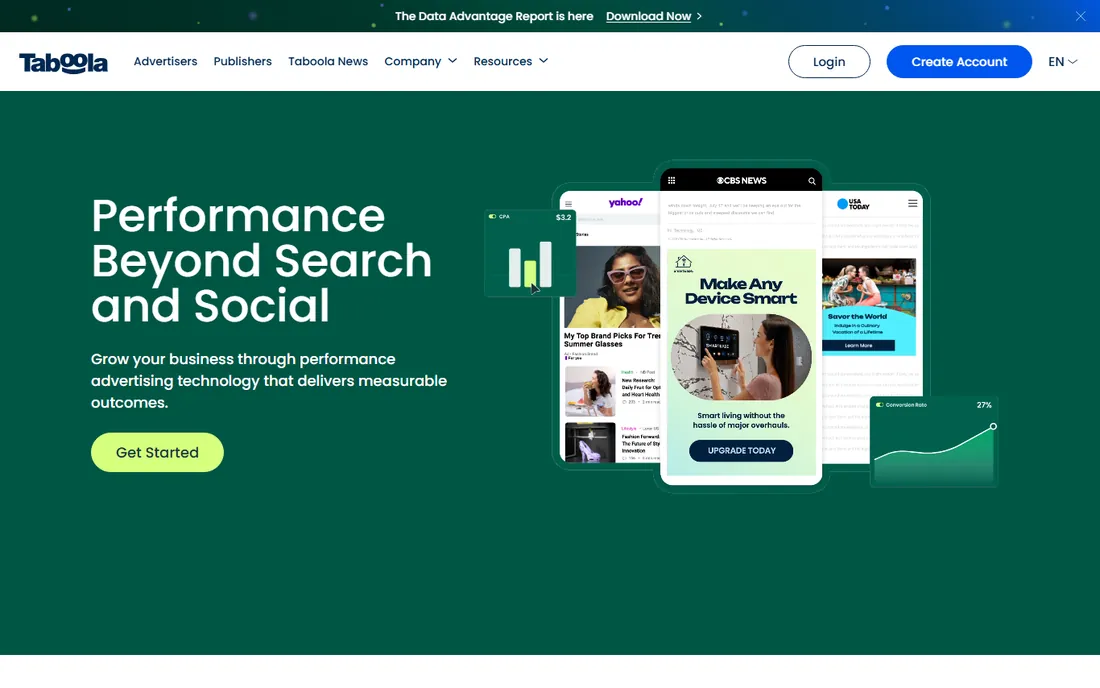
Taboola is the default starting point for native advertising, and its current pitch is "performance beyond search and social." Its inventory runs across thousands of major publishers, and its targeting draws on first-party data from that publisher network. For eCommerce brands and agencies running conversion campaigns, the scale means faster learning: campaigns reach statistical significance in days rather than weeks.
The catch is that scale cuts both ways. Taboola optimizes toward spend, so small daily budgets get thin delivery and noisy data. Creative testing is not optional; winners decay and the platform rewards advertisers who feed it fresh images and headlines constantly. Check current minimums on the site before assuming your budget qualifies.
What we like- The largest premium publisher footprint in native
- Performance AI tuned on years of publisher data
- First-party audience data from its publisher network
- Self-serve signup through its Realize platform
Watch out for- Works best with serious budgets, small tests struggle for delivery
- Creative fatigue is real and demands constant fresh assets
- Reporting depth varies by account tier
#2
Outbrain
Best for: Direct-response and affiliate advertisers on the open web
Visit outbrain.com
Starting priceSee website
Free planNo
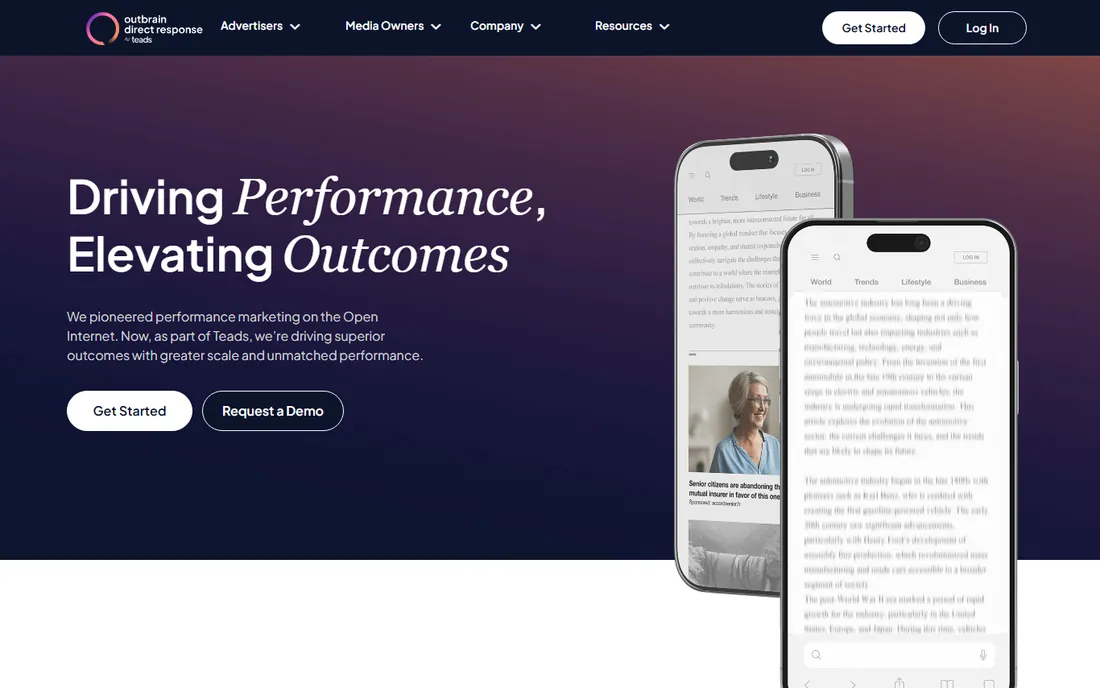
Outbrain now positions itself as Outbrain Direct Response, a telling rebrand: this is the platform for advertisers who need leads and sales, not brand lift. Its pitch centers on performance metrics against social benchmarks, and its team structure supports hands-on campaign management across 17 languages. Affiliate marketers and lead generators have run profitably on Outbrain for years.
The honest weakness is placement control. Native widgets appear across a wide publisher mix, and results differ enormously between top-tier news sites and long-tail inventory. Successful advertisers build whitelists and blacklists aggressively rather than trusting open targeting. If your brand cannot appear next to certain content, plan the exclusion work upfront.
What we like- Deep open-web publisher reach with a performance heritage
- Predictive AI for bid and creative optimization
- Global account teams across eight offices
- Strong fit for lead generation and affiliate offers
Watch out for- Inventory quality varies by publisher, so whitelisting matters
- Brand advertisers may find the formats less premium than they expect
- Minimum budgets still favor serious spenders
#3
MGID
Best for: Mid-size advertisers wanting native reach without giant-platform minimums
Visit mgid.com
Starting priceSee website
Free planNo
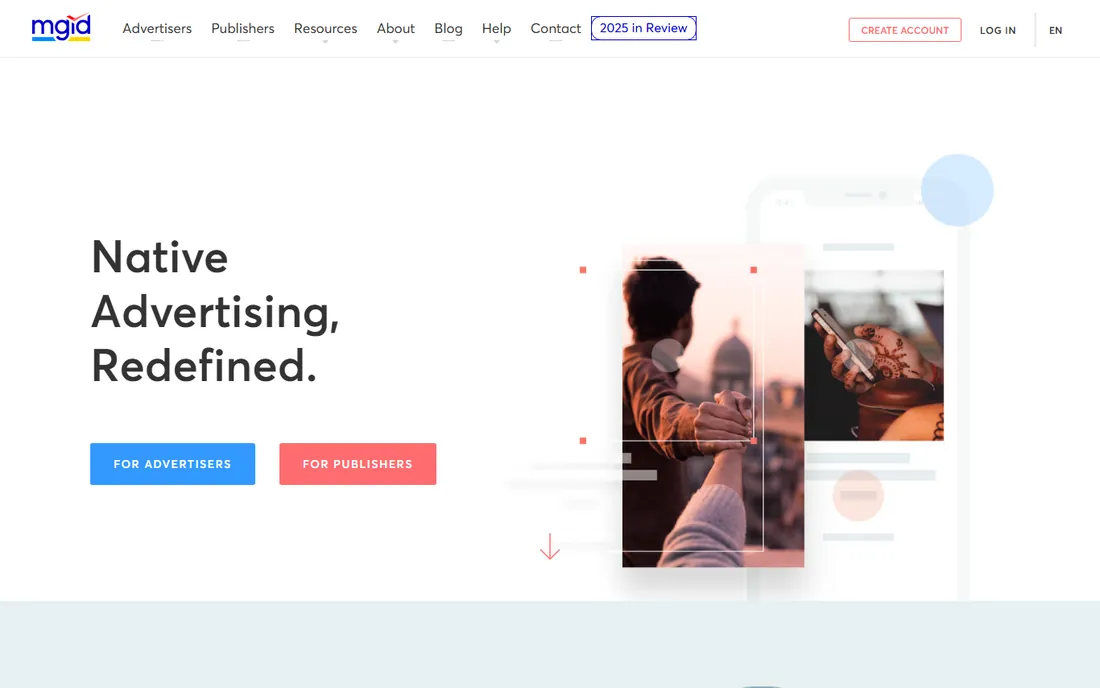
MGID is the value play in native. It offers the classic native widget inventory plus programmatic formats, with an entry point that mid-size advertisers and regional brands can actually afford. Its case studies lean on eCommerce and lead-gen outcomes, and support teams are known for working closely with smaller accounts that the giants would ignore.
The trade-off is inventory prestige. You will not find the same tier of publishers as Taboola or Outbrain, which matters for brand campaigns and less for direct response. MGID suits performance marketers who care about cost per acquisition more than where the logo appears. Confirm current minimum deposits on the site; they move.
What we like- More accessible entry budgets than Taboola or Outbrain
- Native plus programmatic formats in one platform
- Multilingual support and strong presence outside the US
- Detailed case studies on performance outcomes
Watch out for- Publisher mix skews less premium than the top two
- Smaller US footprint
- Creative approval can be slower than self-serve rivals
#4
Revcontent
Best for: Advertisers who care about page speed and clean ad experiences
Visit revcontent.com
Starting priceSee website
Free planNo
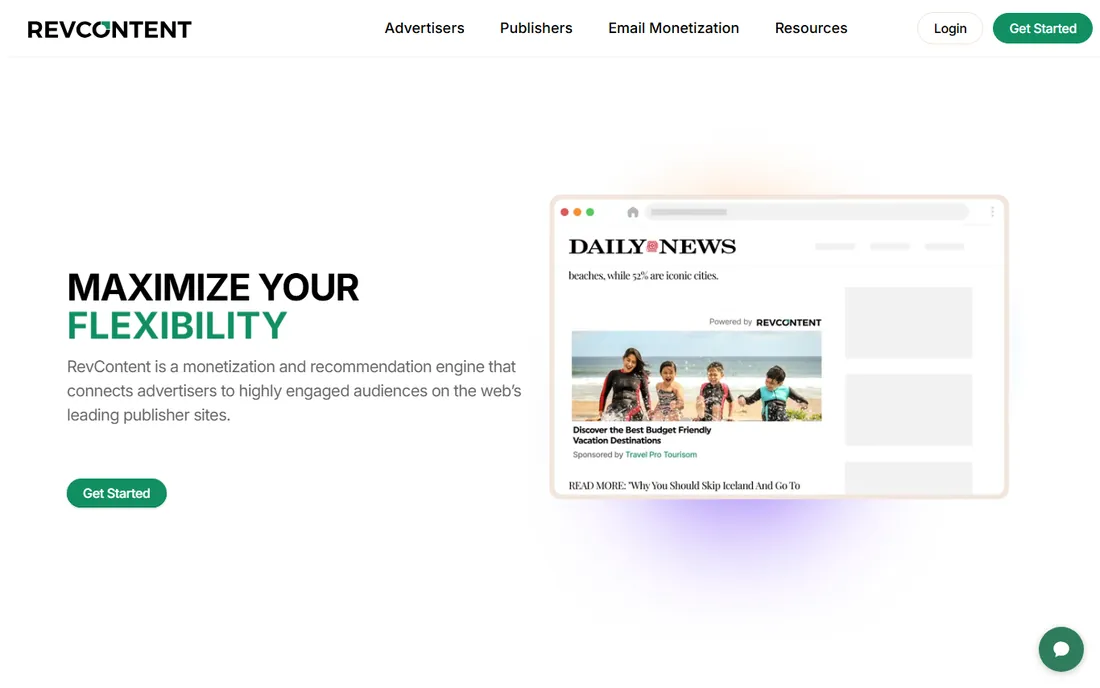
Revcontent's whole identity is the anti-bloat native network. Its widgets are engineered to be the lightest and fastest in the industry, which matters because slow ad units hurt the publisher page and the click-through rate alike. The platform leans on AI-driven algorithms and first-party demand rather than third-party cookies, and every account gets dedicated management instead of a ticket queue.
That focus comes with limits. Scale is smaller, so campaigns that need massive daily volume will hit ceilings faster. Revcontent also vets advertisers more strictly than most, which is good for quality but means edgy offers get rejected. It is the right pick for quality-conscious advertisers who would rather have fewer, better clicks.
What we like- Extremely lightweight widgets that do not slow publisher pages
- Cookieless, AI-driven targeting using first-party advertiser demand
- Dedicated account management as standard
- No forced feed units
Watch out for- Smaller scale than the category leaders
- Advertiser approval standards are strict
- Less self-serve automation than bigger platforms
#5
TripleLift
Best for: Brand marketers wanting creative, high-attention native formats
Visit triplelift.com
Starting priceSee website
Free planNo
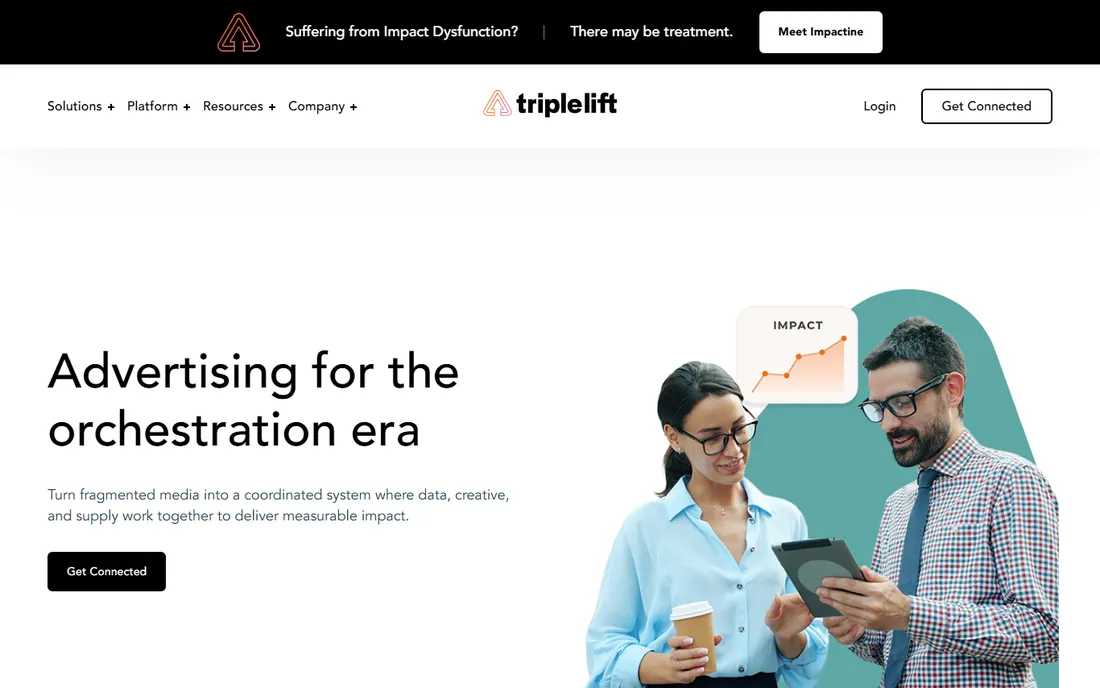
TripleLift is the creative SSP of the group, and it shows in the format menu. Instead of the standard headline-plus-thumbnail widget, advertisers get cinemagraphs, scroll-triggered stories, carousels and branded video that match each publisher's look and feel. The company now frames everything around attention and measurable impact, with CTV formats extending the same creative approach to streaming.
This is a brand platform first. If your KPI is cheap clicks to a landing page, the widget networks will beat it on price. If your KPI is recall, perception and engagement on premium publishers, TripleLift's formats earn their premium. Buyers typically access it through managed deals or programmatically rather than a credit-card self-serve flow.
What we like- Genuinely inventive formats: cinemagraphs, scroll, carousel, window and branded video
- Strong CTV and premium display extensions
- Attention and brand-lift measurement built in
- Works programmatically through major DSPs
Watch out for- Priced and positioned for brand budgets, not scrappy DR tests
- Format production takes more creative effort
- Less of a pure self-serve CPC engine than the widget networks
#6
Nativo
Best for: Content marketers distributing articles and branded stories
Visit nativo.com
Starting priceSee website
Free planNo
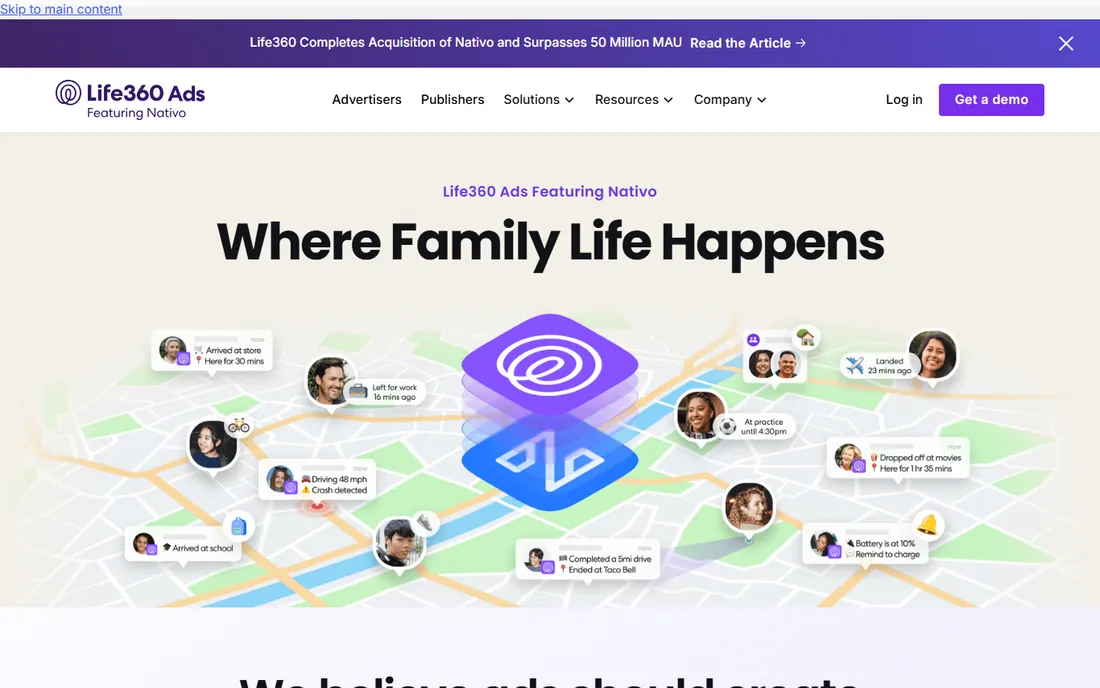
Nativo sits at the content end of native advertising. Where Taboola and Outbrain optimize for the click, Nativo's formats are built to keep readers engaged with the actual article: branded content that lives inside the publisher experience. Its case studies skew toward travel boards, retailers and lifestyle brands measuring engagement and arrival lift rather than raw traffic.
That makes it a specialist tool. Performance marketers chasing cheap conversions will find better CPCs elsewhere. Content marketers with real stories to tell, and the budget to distribute them properly, get formats and measurement designed for their job. Expect a sales conversation rather than a self-serve signup.
What we like- Native formats designed around editorial content, not just clicks
- Publisher and commerce inventory in one place
- Case-study proof in travel, retail and lifestyle verticals
- Clean reporting on engagement, not just CTR
Watch out for- Smaller network than the giants
- Content quality bar is high, thin advertorials underperform
- Pricing is quote-based with no self-serve price list
#7
Dianomi
Best for: Financial services and B2B brands targeting affluent professionals
Visit dianomi.com
Starting priceSee website
Free planNo
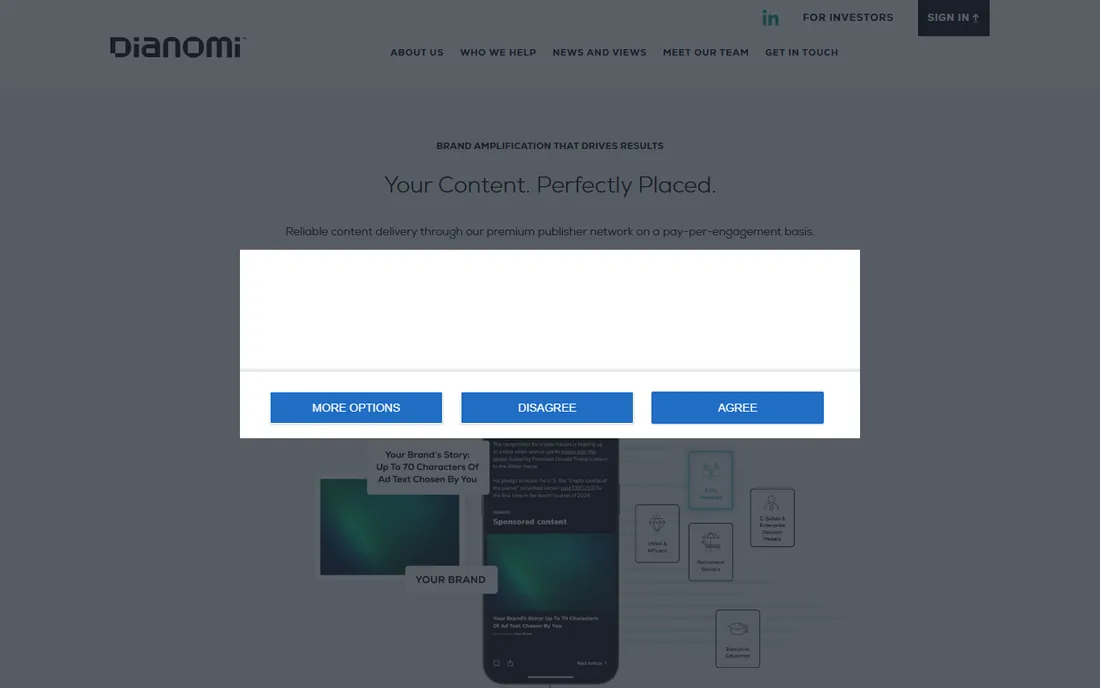
Dianomi is the most specialized platform on this list, and it owns its niche outright. Its marketplace runs native ads across premium financial publishers, reaching audiences like ETF investors, C-suite executives and IT decision makers, on a pay-per-engagement basis. The company claims relationships with most of the world's largest asset managers, and its 8-billion-plus monthly impressions are concentrated exactly where financial brands need them.
There is no point evaluating Dianomi for anything else. If you sell wealth management, trading platforms, executive education or luxury goods, this is likely your highest-quality native inventory. Everyone else should look elsewhere. Pricing is quote-based and reflects the premium audience, so bring a real budget to the conversation.
What we like- Exclusive access to 320-plus premium finance and business publishers
- Pay-per-engagement pricing instead of raw impressions
- Pre-built affluent audiences (ETF investors, C-suite, IT decision makers)
- Deep trust among asset managers and banks
Watch out for- Useless outside finance, business and luxury lifestyle
- Premium inventory means premium prices
- Minimum budgets reflect the affluent audience
#8
Sharethrough
Best for: Programmatic buyers wanting enhanced native, display and CTV in one place
Visit sharethrough.com
Starting priceSee website
Free planNo
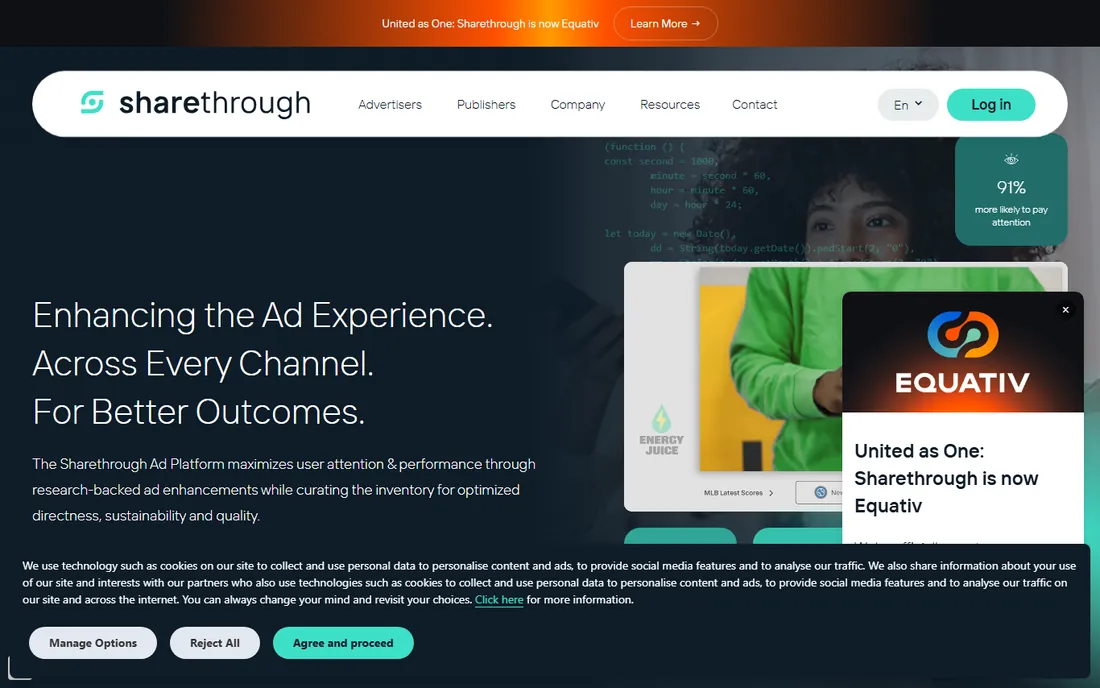
Sharethrough approaches native from the programmatic side. Its pitch is ad enhancements: technology that automatically upgrades standard ad formats with attention-lifting features like captions, countdowns and tickers, backed by research on comprehension and recall. Now operating as part of Equativ Group, it offers curated inventory across channels with a notable sustainability angle.
The buyer here is typically an agency or brand team already buying programmatically. If you want to log in with a credit card and launch a widget campaign this afternoon, the classic native networks are simpler. If you want enhanced creative formats running across premium supply with attention measurement, Sharethrough earns its place in the media plan.
What we like- Research-backed ad enhancements that lift attention on standard formats
- Omnichannel reach across native, display and CTV
- Now part of Equativ Group, adding scale
- Sustainability credentials for ESG-conscious brands
Watch out for- More of an SSP and exchange play than a simple self-serve native tool
- Best results need programmatic expertise
- Brand positioning is broad, which can blur the native story
#9
Bidtellect
Best for: Agencies folding native into a wider programmatic media buy
Visit bidtellect.com
Starting priceSee website
Free planNo
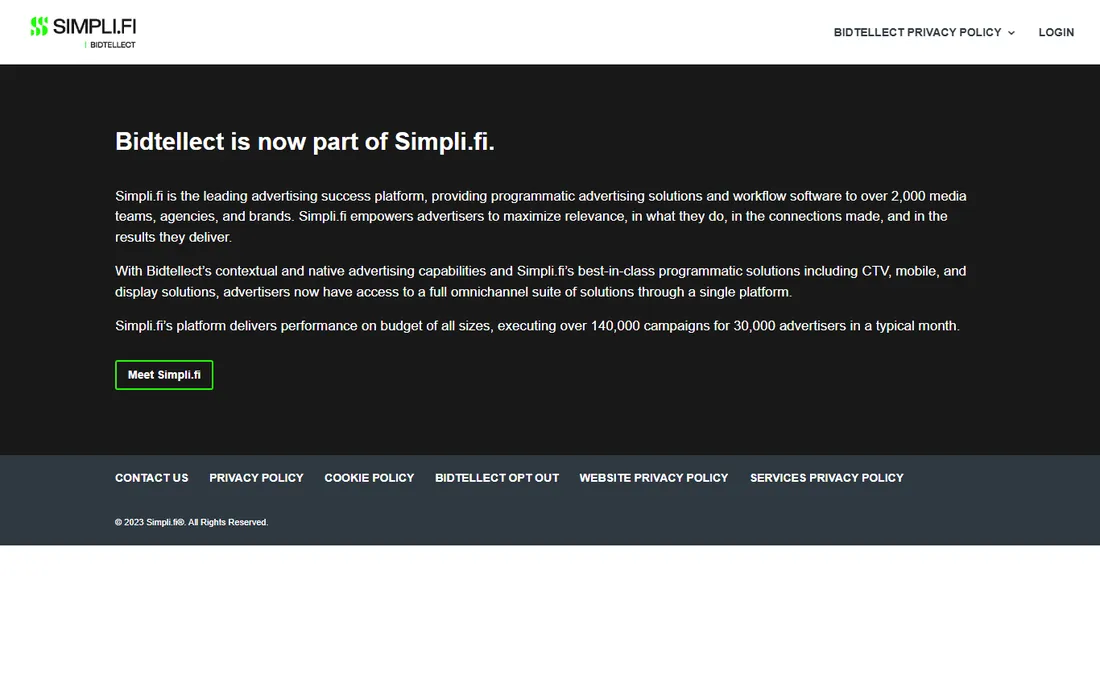
Bidtellect built its name as a native-focused DSP with contextual intelligence, and its acquisition by Simpli.fi folded that capability into a full omnichannel platform. Advertisers now get native and contextual alongside CTV, mobile and display through one system, with the combined company executing campaigns for tens of thousands of advertisers in a typical month.
Evaluate it as part of a stack, not a standalone test. As a pure native play it is harder to distinguish from the specialists above; as the native layer inside an omnichannel programmatic buy, it makes real sense. Agencies already on Simpli.fi get the most value, since the integration is the point.
What we like- Native DSP with strong contextual targeting
- Now combined with Simpli.fi's CTV, mobile and display suite
- Single platform for omnichannel campaigns
- Serves thousands of advertisers monthly
Watch out for- Standalone native offering is less distinct post-acquisition
- Self-serve simplicity lags the widget networks
- Best fit requires buying more than just native
What to check before you spend a dollar
Minimum budgets decide more than features do. Every platform here will quote you a minimum daily spend or initial deposit, and running below it produces thin delivery and inconclusive data. Ask for the minimum in writing, then budget at least two to three times that for a real test: one minimum buys you delivery, the multiple buys you learning.
Then interrogate the inventory. Ask which publishers your ads will actually appear on, how whitelists and blacklists work, and what controls exist for brand safety. The widget networks vary enormously in placement quality, and the cheapest clicks usually come from the placements you would least want. Finally, clarify the pricing model: CPC, pay-per-engagement and CPM all behave differently, and "native" covers all three. A platform that looks cheap per click can be expensive per customer.
Why small test budgets usually fail on native
Native platforms optimize with machine learning, and machine learning needs volume. A $20-a-day test spread across a broad audience gives the algorithm almost nothing to learn from, so delivery stays thin, CPCs stay high and the test concludes that "native does not work." The platform was never the problem; the budget was.
The fix is concentration, not just more money. Narrow the geo, narrow the audience, and run fewer creatives so each one gets enough impressions to be judged. Most experienced native buyers test one platform at a time with a focused setup, kill losers fast, and scale winners by expanding targeting, not by raising bids blindly. If your total test budget is under a few hundred dollars, you are better off improving your landing page and coming back when you can fund a real test.
How we chose
We started with the searches advertisers actually run: native advertising platforms, best native ad networks and Taboola alternatives. For each candidate we opened the vendor's homepage, checked what inventory and pricing models they disclose, and compared positioning against advertiser discussion on Reddit and reviews on G2 where available. We favored platforms running live advertiser campaigns in 2026 across different budget levels and niches. Native platforms rarely publish prices, so where no price could be verified on the vendor's own site we wrote "See website" rather than repeating third-party estimates.
Frequently asked questions
How much does native advertising cost?
It varies widely. Widget networks can deliver clicks for well under a dollar in cheap geos and several dollars in competitive US finance or insurance categories. Premium platforms like Dianomi and TripleLift cost more per engagement but reach better audiences. Always get the minimum daily spend and deposit in writing before comparing.
What is the difference between Taboola and Outbrain?
Both run native widgets on premium publishers, but their current positioning differs: Taboola pushes performance advertising beyond search and social through its Realize platform, while Outbrain has rebranded around direct response. In practice, most serious native advertisers test both, since inventory overlap is incomplete and winners differ by vertical.
Do I need a big budget to start with native ads?
You need enough for the algorithm to learn. Most practitioners suggest budgeting several times the platform minimum for a first test, concentrated on narrow targeting. Tests under a few hundred dollars total rarely produce usable data. MGID and Revcontent tend to be more accessible starting points than Taboola or Outbrain.
Is native advertising good for B2B?
It can be, with the right platform. Dianomi is purpose-built for financial and executive audiences. For broader B2B, LinkedIn and search usually convert better, but native works for content-led plays like whitepapers and reports where the goal is engaged readers rather than immediate demos.
How do I avoid brand-safety problems on native networks?
Use whitelists and blacklists from day one, ask the platform which publishers are included, and turn on whatever brand-safety and contextual controls are offered. Review placement reports weekly at the start. Premium-focused platforms like Dianomi, Nativo and TripleLift carry less risk than open widget networks.
Can small businesses run native ads themselves?
Yes on self-serve platforms, with caveats. The interfaces are usable, but creative testing, placement management and bid optimization take real time. Many small advertisers burn their first budget learning this. Starting with one platform, narrow targeting and a clear conversion goal beats spreading a small budget across three networks.
Sources we checked (10)
- https://taboola.com/
- https://outbrain.com/
- https://mgid.com/
- https://revcontent.com/
- https://triplelift.com/
- https://nativo.com/
- https://dianomi.com/
- https://sharethrough.com/
- https://bidtellect.com/
- https://www.g2.com/categories/native-advertising
Is your product missing or out of date?
We review this list regularly. Vendors can request a listing, send updated pricing or ask about featured placement.

Shihab Mia · Founder, Rankite
Shihab has spent more than a decade helping SaaS and e-commerce brands grow through search. He writes Rankite's software buying guides from pricing pages, documentation and public user reviews. More about Shihab.