How we make this list: we compare pricing pages, product documentation and public user reviews. Ratings come from G2, Capterra or Trustpilot, with the date we checked them.
Key takeaways
- The best mobile internet services in 2026 are wireless home internet plans from T-Mobile, Verizon, and AT&T, plus satellite and fixed wireless options for rural addresses.
- T-Mobile 5G Home Internet is the best overall pick at $50 per month with AutoPay, with typical speeds of 134 to 415 Mbps and no contract.
- Verizon 5G Home Internet starts at $35 per month with a mobile plan and reaches up to 1,000 Mbps on its fastest tier, but its rural footprint is smaller than T-Mobile.
- Starlink suits addresses where no 5G or cable option exists, at $55 per month with speeds of 80 to 320 Mbps, while Viasat suits the most remote homes at $39.99 per month.
- Prices and speeds vary by address, tower distance, and bundle status, so check availability at your exact address before choosing, since a plan that is fast in one town can be slow in the next.
Quick comparison
Is your product missing or out of date?
We review this list regularly. Vendors can request a listing, send updated pricing or ask about featured placement.
The best mobile internet service

#1
T-Mobile 5G Home Internet
Best for: Best overall wireless home internet
Visit t-mobile.com
Starting price$50 per month
Free planNo
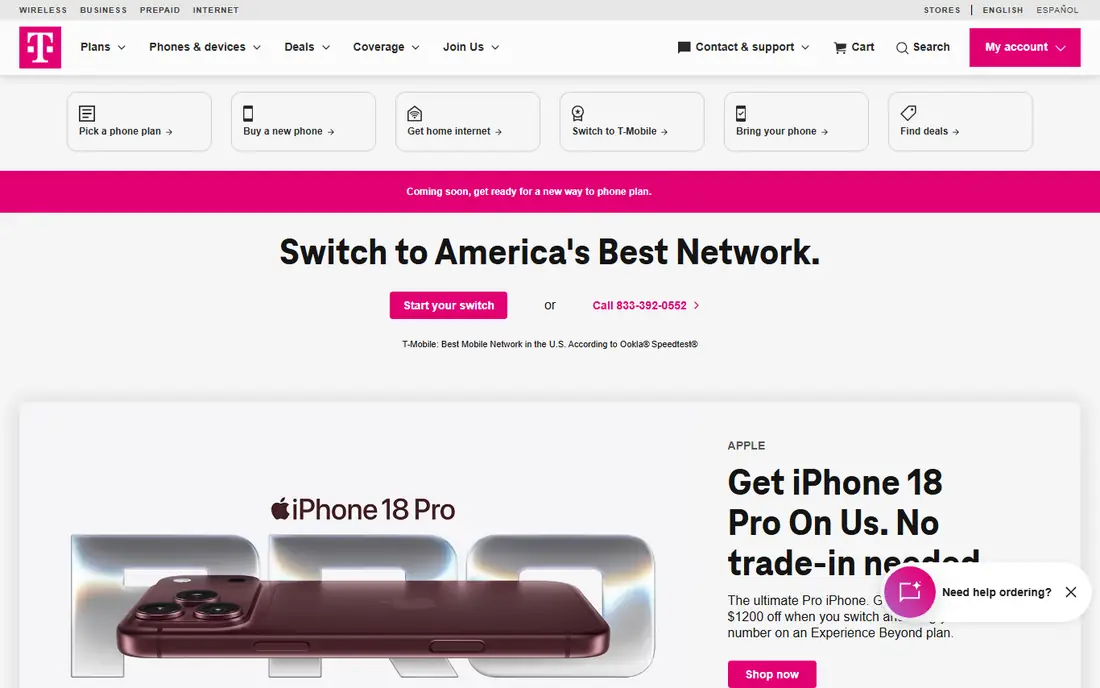
T-Mobile 5G Home Internet uses the T-Mobile 5G network to power residential internet, with a gateway that plugs in and gets you online in minutes. It starts at $50 per month with AutoPay, plus taxes and fees, with typical download speeds of 134 to 415 Mbps and unlimited data, and no annual contract.
The limits are coverage variation and bundle pricing. Speeds go up and down with tower distance and congestion, and the $35 per month figure quoted in some comparisons needs an AutoPay and voice line bundle. For most households, especially rural ones inside T-Mobile coverage, it is the best overall mobile internet service.
What we like- Widest 5G home coverage
- Typical speeds 134 to 415 Mbps
- Unlimited data
- No contract
- Easy self setup
Watch out for- Speeds vary by tower distance and congestion
- $35 bundle price needs a voice line
- Strict address validation for the gateway
Starting price$35 per month
Free planNo
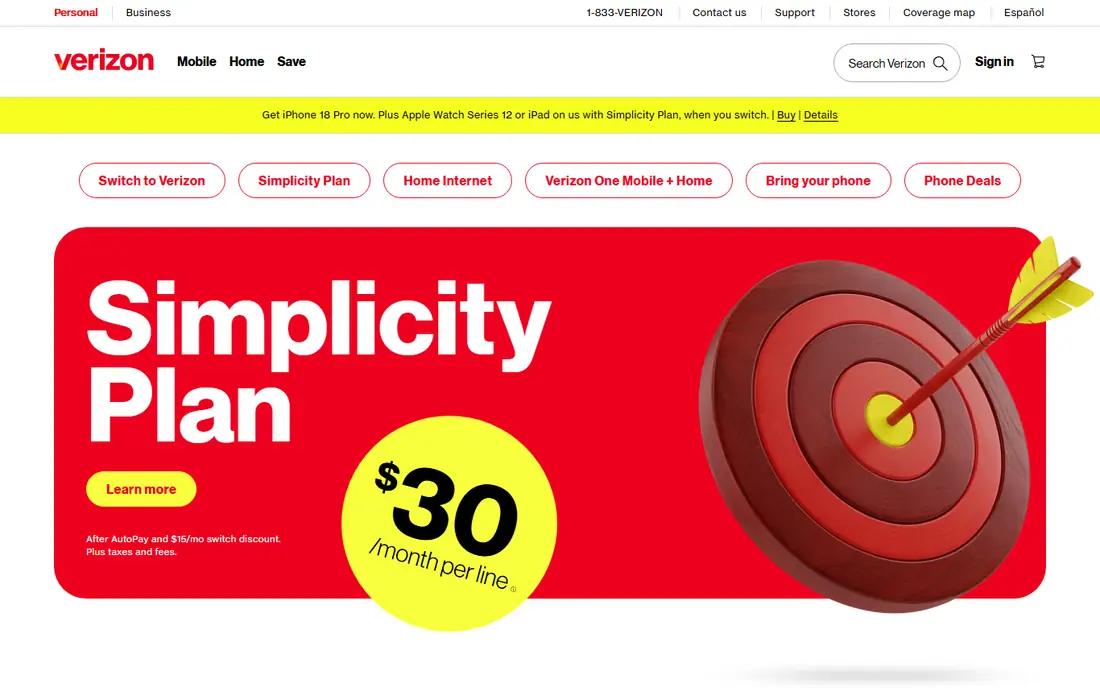
Verizon 5G Home Internet starts at $35 per month with a mobile plan, or $50 per month standalone with AutoPay, with advertised speeds of 85 to 300 Mbps on standard tiers and up to 1,000 Mbps on mmWave Ultimate. The gateway is included, installation is self install at no cost, and there is no annual contract or data cap.
The trade is coverage. Verizon rural footprint is currently smaller than T-Mobile, and home internet traffic can be deprioritized behind mobile users during congestion. For a household inside Verizon Ultra Wideband coverage, especially one already on Verizon mobile, it is the fastest mobile internet option.
What we like- Top speeds up to 1,000 Mbps on mmWave Ultimate
- $35 per month with a mobile plan
- Unlimited data
- No contract
- Gateway included
Watch out for- Rural footprint smaller than T-Mobile
- Home traffic can be deprioritized behind mobile users
- Strict address validation

#3
AT&T Internet Air
Best for: Simple fixed wireless
Visit att.com
Starting price$55 per month
Free planNo
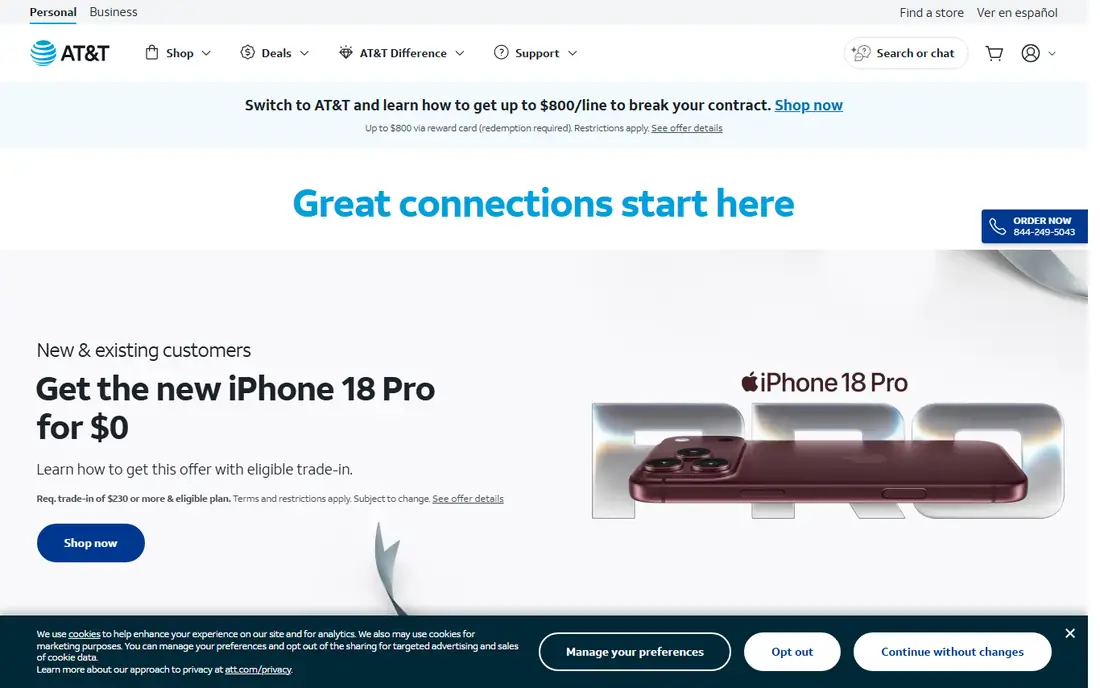
AT&T Internet Air is the newest fixed wireless entrant, delivering 90 to 300 Mbps for $55 per month, plus taxes, with unlimited data and no contract. Its bills are easy to understand with no extra fees, which suits buyers who dislike surprise charges.
The drawback is value. At $55 per month it costs more than T-Mobile $50 service while delivering a lower speed floor, and 90 Mbps can falter when several people stream and work at once. For a light use household that values simple billing over top speed, AT&T Internet Air is a fair pick.
What we like- Simple pricing with no extra fees
- Unlimited data
- No contract
- Easy to understand bills
Watch out for- Costs more than T-Mobile at $55 per month
- Typical speeds 90 to 300 Mbps, lower than rivals
- Speed floor of 90 Mbps struggles under heavy household load
Starting price$55 per month
Free planNo
Starlink is a low Earth orbit satellite service that brings broadband to addresses where no 5G, cable, or fiber option exists. It starts at $55 per month with speeds of 80 to 320 Mbps, latency of 30 to 40 ms, unlimited data with deprioritization on lower tiers, and no contract.
The limits are hardware and sky view. You need a dish with a clear view of the sky, and speeds vary with network load and weather. For a rural or remote home outside every wireless footprint, Starlink is the best mobile internet service available.
What we like- Available where no 5G or cable exists
- Speeds 80 to 320 Mbps
- Low latency of 30 to 40 ms for satellite
- No contract
Watch out for- Needs a clear sky view and dish hardware
- Speeds deprioritized on lower tiers
- Weather can affect performance
Starting price$30 per month
Free planNo
Starry Internet offers fixed wireless at $30 per month starting, with speeds from 100 to 1,000 Mbps, unlimited data, and free installation on some plans. Its low entry price and high top speed make it the best value on paper among city fixed wireless services.
The catch is availability. Starry serves apartments and city buildings in select areas, so most suburban and rural addresses cannot get it. For a city renter in a served building, Starry is the cheapest fast option on this list.
What we like- Lowest starting price among city fixed wireless options
- Speeds 100 to 1,000 Mbps
- Unlimited data
- Free installation on some plans
Watch out for- City and apartment focused, not rural
- Availability limited to served buildings and areas
- Promotional rates may rise
Starting price$29.99 per month
Free planNo
Rise Broadband is a rural focused fixed wireless provider starting at $29.99 per month, with speeds from 150 to 1,000 Mbps and unlimited data. Its low starting price and rural focus make it a strong value pick for country addresses inside its footprint.
The limits are regional variation. Availability and speeds vary by rural market and tower distance, so a quote for your address matters more than the headline price. For a rural household inside Rise coverage, it is the cheapest fixed wireless option here.
What we like- Lowest starting price on this list
- Speeds 150 to 1,000 Mbps
- Unlimited data
- Rural focused coverage
Watch out for- Availability varies by rural market
- Speeds depend on tower distance
- Service quality varies by region
Starting price$39.99 per month
Free planNo
Viasat is a geostationary satellite service that covers nearly every US address, with an Essential plan from $39.99 per month and speeds of 25 to 150 Mbps. For the most remote homes where even Starlink is not an option, Viasat is often the only broadband choice.
The drawback is latency. At 600 to 700 ms, Viasat is poor for gaming and video calls, and data is deprioritized after an allotment. For a remote home that needs basic browsing and email where nothing else reaches, Viasat is the fallback pick.
What we like- Geostationary satellite covers nearly everywhere
- Essential plan from $39.99 per month
- Speeds 25 to 150 Mbps
Watch out for- High latency of 600 to 700 ms, poor for gaming and video calls
- Data deprioritized after allotment
- Contract varies by plan
Starting price$59.95 per month
Free planNo
EarthLink 5G is a fixed wireless option starting at $59.95 per month, with speeds up to 425 Mbps, unlimited data, and no contract. It gives households an alternative where the big three carrier plans are not available or not priced well.
The trade is price. At $59.95 per month it costs more than T-Mobile, Verizon with a bundle, and AT&T Air, so it only wins where those options are absent or slower. For a household in an EarthLink served area without a better carrier option, it is a workable pick.
What we like- Fixed wireless with speeds up to 425 Mbps
- Unlimited data
- No contract
Watch out for- Highest starting price among fixed wireless picks at $59.95 per month
- Speeds vary by market
- Less widely reviewed than the big three carriers
How we chose
We ranked services by starting price, typical speeds, data policy, contract terms, and coverage breadth. We favored no contract plans with unlimited data, since a mobile internet plan that caps data or locks you in defeats the flexibility that makes wireless attractive. We gave extra weight to rural coverage, because the hardest mobile internet problem is a home with no wired option.
We also weighed price honesty. Bundle prices were noted separately from standalone prices, since a $35 figure that needs a mobile plan is not the same as a $35 standalone price. Figures that could not be verified for a service were written as "See website", so readers check the provider page rather than trusting an estimate.
Buying guide
Start by checking availability at your exact address. Wireless speeds depend on tower distance, and a carrier that is fast in one town can be slow a few miles away, so run each provider address check before comparing prices. If fiber or cable reaches your home, it usually beats wireless on consistency, so compare those too.
Next, match speed to household load. A single person browsing and streaming needs far less than a household with three streams, a gamer, and a remote worker on video calls. For heavy households, favor Verizon top tiers or T-Mobile, and avoid high latency satellite unless nothing else reaches you.
Finally, read the data and deprioritization terms. Unlimited on a wireless plan often means deprioritized after heavy use or during congestion, and satellite plans deprioritize after an allotment. Confirm the gateway return policy and any hardware cost before signing, since a dish or gateway fee changes the first year total.
Frequently asked questions
What is the best mobile internet service overall?
T-Mobile 5G Home Internet is the best overall pick at $50 per month with AutoPay, with typical speeds of 134 to 415 Mbps, unlimited data, no contract, and the widest 5G home coverage.
Is 5G home internet fast enough for working from home?
Yes, for most households. T-Mobile typical speeds of 134 to 415 Mbps and Verizon speeds up to 1,000 Mbps handle video calls, streaming, and large downloads, though speeds vary by tower distance and congestion.
Can I take my 5G home gateway to another address?
Usually no. Carriers validate the service address, and moving the gateway to an unapproved location can break service. Check the carrier policy before moving.
Is Starlink better than 5G home internet?
Starlink is better only where 5G home internet is unavailable. Where T-Mobile or Verizon coverage exists, 5G home internet is cheaper, easier to install, and lower latency than satellite.
Does mobile internet have data caps?
Most plans on this list advertise unlimited data, but wireless plans can deprioritize traffic during congestion, and satellite plans deprioritize after an allotment. Read the data policy before signing.
Do I need a contract for mobile internet?
No. Every service on this list offers no contract terms, though some bundle discounts need a mobile plan or AutoPay to hold the quoted price.
Sources we checked (0)
Is your product missing or out of date?
We review this list regularly. Vendors can request a listing, send updated pricing or ask about featured placement.

Shihab Mia · Founder, Rankite
Shihab has 5+ years in B2B and SaaS SEO. He writes Rankite's software buying guides from pricing pages, documentation and public user reviews. More about Shihab.
 Verizon 5G Home Internet
 Starlink
 Starry Internet
 Rise Broadband
 Viasat
 EarthLink 5G