How we make this list: we compare pricing pages, product documentation and public user reviews. Ratings come from G2, Capterra or Trustpilot, with the date we checked them.
Key takeaways
- Fiber beats cable for most households that can get it, with symmetrical speeds, lower latency and no data caps.
- Google Fiber is the top-rated provider overall in 2026 guides, but availability is limited to select cities.
- AT&T Fiber offers the best balance of price, speed and availability, with plans from $50 to $125 per month.
- T-Mobile 5G Home Internet is the best value where fiber and cable do not reach, with flat pricing from $35 to $80 per month.
- Always ask for the price after the promotion ends, since cable promo rates often rise sharply after 12 months.
Quick comparison
| Tool | Best for | Starting price | Free plan |
|---|
 Google Fiber | Best overall where available | $70 per month (1 Gig plan) | No |
 AT&T Fiber | Best balance of price and speed | $50 per month | No |
 Verizon Fios | Best for gaming and reliability | $49.99 per month | No |
 Xfinity | Best cable availability | $45 per month | No |
 Spectrum | Cable with no data caps | $30 per month (for 1 year) | No |
 T-Mobile Home Internet | Best 5G value | $35 per month | No |
 Frontier Fiber | Budget fiber where available | $29.99 per month | No |
 Cox | Cable in western and southern states | $50 per month | No |
Is your product missing or out of date?
We review this list regularly. Vendors can request a listing, send updated pricing or ask about featured placement.
The best home internet service
Starting price$70 per month (1 Gig plan)
Free planNo
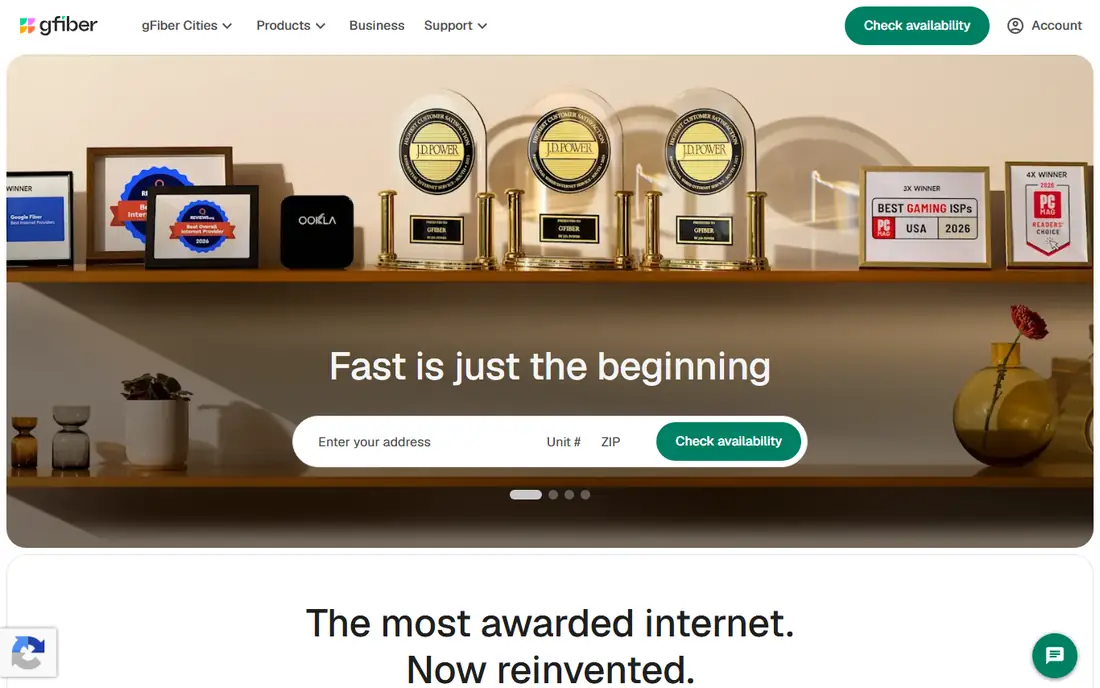
Google Fiber, now branded gFiber, earned best-of-the-best honors in 2026 guides for good reason: 1 Gig plans start at $70 per month with symmetrical upload and download speeds, unlimited data, included equipment and no promotional price that jumps later. Higher tiers reach 8,000 Mbps in some cities for households that need extreme speed.
The catch is availability. Fiber reaches only a fraction of US addresses, and Google Fiber serves select cities rather than the whole country. If it serves your address, take it. If not, AT&T Fiber or Verizon Fios are the next best fiber options.
What we like- Symmetrical gigabit speeds
- No data caps
- Equipment included
- No price games
Watch out for- Limited city availability
- Fewer plan tiers than cable rivals
#2
AT&T Fiber
Best for: Best balance of price and speed
Visit att.com
Starting price$50 per month
Free planNo
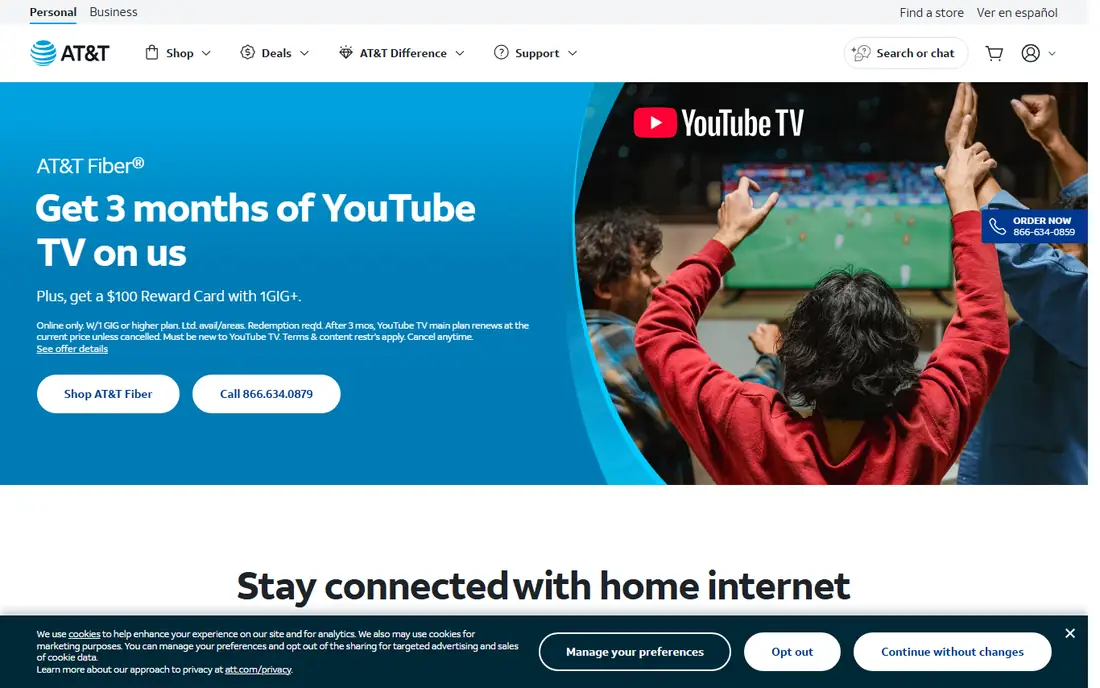
AT&T Fiber plans range from $50 to $125 per month with speeds from 300 Mbps to 5,000 Mbps, unlimited data, included equipment and no promotional increase in published fee comparisons. That combination of price transparency and speed range makes it the editor choice in several 2026 guides.
Availability is the limit: many AT&T addresses still get DSL or fixed wireless rather than fiber, and those services are far slower. Check the exact address, not just the provider name, since two streets in one town can differ. Where fiber is live, AT&T Fiber is hard to beat on value.
What we like- Plans from 300 Mbps to 5,000 Mbps
- No data caps
- Equipment included
- Price lock
Watch out for- Fiber not available everywhere AT&T sells internet
- DSL areas get slower service
Starting price$49.99 per month
Free planNo
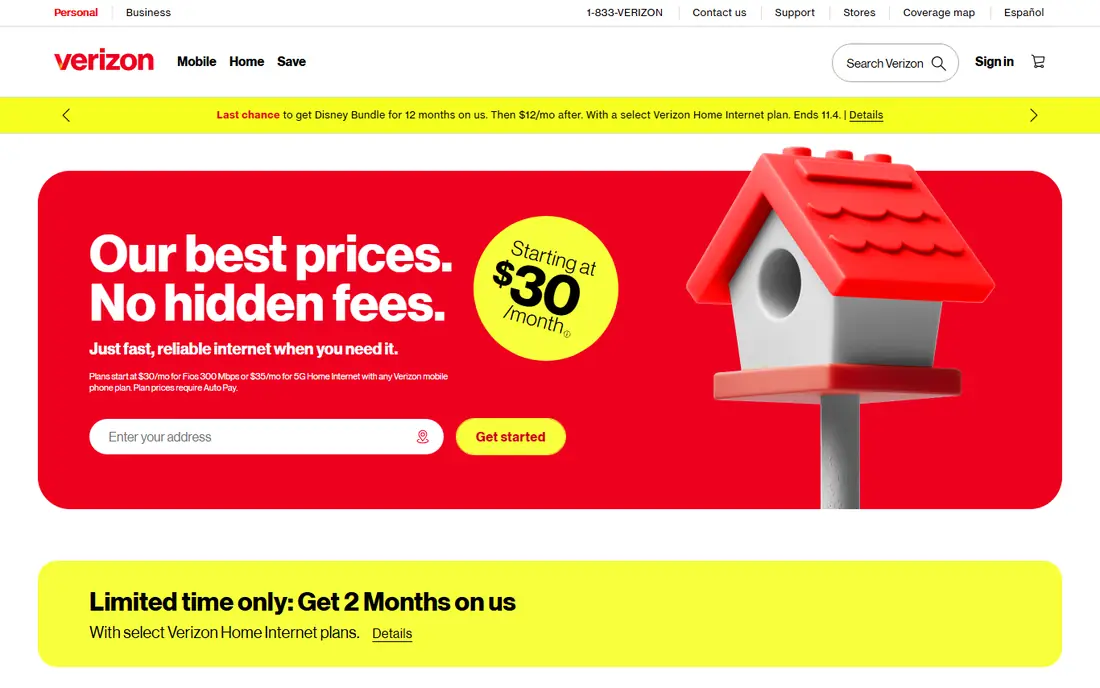
Verizon Fios plans run from $49.99 to $109.99 per month with speeds from 300 Mbps to 2,300 Mbps and unlimited data. Low latency and symmetrical uploads make it a favorite for gaming, video calls and creators uploading large files. Customer satisfaction ratings run high, near the top of fiber providers.
The footprint centers on the Northeast and mid-Atlantic, so most of the country cannot get it. Router rental near $15 per month appears in fee comparisons, though price-lock offers soften the total. Gamers and remote workers inside the Fios footprint should put it first.
What we like- Low latency for gaming
- Symmetrical speeds
- Strong satisfaction ratings
Watch out for- Northeast-focused footprint
- Router rental adds $15 per month in some comparisons
Starting price$45 per month
Free planNo
Xfinity, from Comcast, is the most widely available provider here, with cable plans from $45 to $100 per month and speeds from 300 Mbps to 2,000 Mbps. That reach matters: for many addresses, Xfinity is the only wired option above basic DSL speeds, and its tier range fits single users through large households.
Fee comparisons warn about the true cost: a $49.99 advertised plan can reach near $87.99 per month over 24 months once $15 equipment rental and a $23 post-promo increase are added, plus a 1.2 TB data cap. Buy your own compatible modem where allowed, and confirm the post-promo rate in writing before signing.
What we like- Widest cable availability
- Speeds to 2,000 Mbps
- Many plan tiers
Watch out for- 1.2 TB data cap
- Equipment rental near $15 per month
- Promo price rises after 12 months
Starting price$30 per month (for 1 year)
Free planNo
Spectrum cable plans run from $30 to $140 per month with speeds up to 7,000 Mbps in some areas and no data caps, which removes the overage worry that affects Xfinity users. The modem is included, though Advanced WiFi costs $10 per month extra, and there are no contracts on most plans.
The $30 entry rate lasts one year, after which standard rates apply and can be much higher, so the long-term price deserves more weight than the promo. Households that stream heavily and dislike data caps will still prefer Spectrum over capped cable rivals, provided the renewal rate is acceptable.
What we like- No data caps
- Modem included
- Wide availability
Watch out for- Standard rates after year one are high
- Advanced WiFi costs $10 per month extra
Starting price$35 per month
Free planNo
T-Mobile 5G Home Internet runs from $35 to $80 per month with equipment included, no data caps and no annual contract, earning best-bang-for-your-buck honors in 2026 guides. Typical speeds run up to about 498 Mbps in published comparisons, with average speeds near 245 Mbps, which covers streaming, video calls and remote work for most households.
Speed varies by tower load and location, and traffic can be deprioritized behind mobile users at busy times. Competitive gamers and households needing guaranteed gigabit speeds should prefer fiber. Renters, rural households and anyone outside fiber and cable reach get strong value here.
What we like- Flat pricing with equipment included
- No data caps
- No annual contract
Watch out for- Speed varies by tower load
- Deprioritization possible
- Not ideal for competitive gaming
Starting price$29.99 per month
Free planNo
Frontier Fiber plans run from $29.99 to $124.99 per month with speeds from 200 Mbps to 7,000 Mbps and unlimited data. The $29.99 entry price is the lowest fiber starting point in this list, which makes Frontier attractive for budget households inside its footprint.
The footprint is smaller than AT&T or Xfinity, and router rental near $10 per month appears in fee comparisons. Service quality also varies by region after Frontier network upgrades. Where Frontier Fiber is live at your address, it deserves a quote beside any cable option.
What we like- Lowest fiber entry price
- Speeds to 7,000 Mbps
- Unlimited data
Watch out for- Footprint smaller than AT&T
- Router rental near $10 per month
#8
Cox
Best for: Cable in western and southern states
Visit cox.com
Starting price$50 per month
Free planNo
Cox cable plans run from $50 to $90 per month with speeds from 300 Mbps to 2,000 Mbps, serving western and southern states. Bundles with mobile service can cut the total bill, and the plan range fits small households through heavy users.
A 1.2 TB data cap applies on most plans, and fees and promo terms vary by market, so the advertised price needs checking against the local offer. Households inside Cox territory without a fiber option should compare Cox against T-Mobile 5G Home Internet on total cost and cap needs.
What we like- Speeds to 2,000 Mbps
- Wide plan range
- Cable plus mobile bundles
Watch out for- 1.2 TB data cap
- Fees vary by market
- Promo pricing varies
How we chose
We compared provider pricing pages, 2026 comparison guides and fee analyses, favoring providers with transparent long-term pricing over low promo rates. Prices shown are starting plan rates in US dollars; actual prices vary by address, and fee comparisons show true monthly costs can run $30 or more above advertised rates once equipment and post-promo increases are added. We weighed speed, data caps, equipment costs, contract terms and availability, and we left out satellite providers except where noted, since latency and caps limit them for most households.
What speed do you actually need
For basic use, email, browsing and one video stream, 100 to 300 Mbps is enough. Households with several people streaming 4K, gaming and working from home at once should target 500 Mbps to 1 Gbps. Upload speed matters as much as download for video calls and creators: fiber symmetrical speeds beat cable uploads by a wide margin, which is why fiber wins even at the same download number.
Check availability first at your exact address, since provider maps overstate coverage. Then compare the total 24-month cost, including equipment rental, installation and post-promo rates, not just month one. Finally, ask about data caps, contract length and early termination fees before signing, and keep the written quote for comparison if the bill later changes.
Equipment: rent or buy
Paying $15 per month for a rented modem and router adds $180 per year, which is easy to miss when comparing headline plan prices. Check the provider approved equipment list before buying, since an incompatible modem can cause support headaches that wipe out the savings. A compatible modem and router bought for $150 to $250 pays for itself in about a year and saves money every month after, where the provider allows customer equipment. Fiber providers that include equipment remove this decision entirely, which is another reason their true cost looks better.
Frequently asked questions
Which home internet provider is best overall?
Google Fiber wins most 2026 overall rankings where available, thanks to symmetrical gigabit speeds, no data caps and included equipment. AT&T Fiber is the best widely available fiber alternative.
Is fiber really better than cable?
Yes, for most households. Fiber offers symmetrical upload speeds, lower latency and no data caps, while cable downloads are strong but uploads are slower and data caps are common. Cable remains the right pick where fiber does not reach.
How much should I pay for home internet?
Typical residential plans run $40 to $120 per month depending on speed and technology. Compare the 24-month total cost, including equipment and post-promo rates, rather than the first-month promo price.
Do I need gigabit speed?
Most households do not. A family streaming 4K, gaming and working from home at once is well served by 500 Mbps to 1 Gbps. Gigabit and above matter for large households, creators uploading huge files, and homes with dozens of connected devices.
Is 5G home internet good enough?
For many households, yes. T-Mobile 5G Home Internet covers streaming, calls and remote work at a flat price with no caps. Speed varies by tower load, so competitive gamers and gigabit seekers should prefer fiber.
What about data caps?
Xfinity and Cox cap most plans at 1.2 TB, with overage fees near $10 per 50 GB over the cap in published guides. Fiber providers and Spectrum offer unlimited data, which removes that worry for heavy streamers.
Sources we checked (8)
- https://www.cabletv.com/ranking/best-internet-providers
- https://www.internetproviders.ai/reports/hidden-fees-2026/
- https://supacells.com/internet-providers/best-internet-providers-2026/
- https://fiber.google.com
- https://www.att.com/internet/fiber/
- https://www.verizon.com/home/internet/
- https://www.xfinity.com
- https://www.spectrum.com
Is your product missing or out of date?
We review this list regularly. Vendors can request a listing, send updated pricing or ask about featured placement.

Shihab Mia · Founder, Rankite
Shihab has 5+ years in B2B and SaaS SEO. He writes Rankite's software buying guides from pricing pages, documentation and public user reviews. More about Shihab.