How we make this list: we compare pricing pages, product documentation and public user reviews. Ratings come from G2, Capterra or Trustpilot, with the date we checked them.
Key takeaways
- MCP, the Model Context Protocol, gives AI agents a standard way to call tools, read resources, and use prompts from external servers.
- FastMCP and the official MCP SDKs lead on building servers, while LangChain, LlamaIndex, and Mastra lead on wiring servers into agents.
- Composio, Toolhouse, and Arcade suit teams that want managed tool integrations with auth, rather than building every connector by hand.
- Security matters from day one, since an MCP server with broad tool access can leak data or act beyond its intended scope.
- Start with one server and one agent, test tool calls carefully, and add servers only when the agent needs them.
Quick comparison
Is your product missing or out of date?
We review this list regularly. Vendors can request a listing, send updated pricing or ask about featured placement.
Starting priceFree
Free planFree
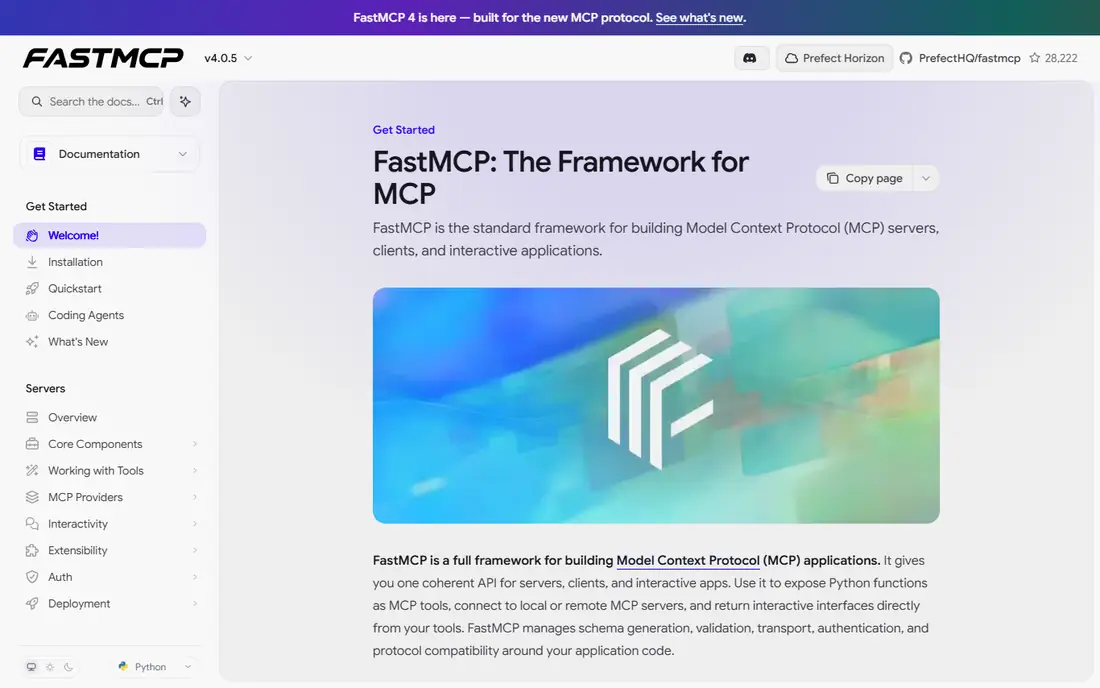
FastMCP provides a simple Python framework for building MCP servers, letting developers expose functions as tools, data as resources, and templates as prompts with minimal code. Decorators turn Python functions into MCP tools, and the framework handles protocol details, transport, and client compatibility. Deployment options cover local, cloud, and hosted runs.
The focus is Python, so other language teams use the official SDKs instead, and production auth needs careful setup, since a public MCP server with broad tools is a security risk. For a Python team that wants to build an MCP server quickly, FastMCP offers the fastest path.
What we like- Simple Python API
- Tools, resources, and prompts
- Deployment options
Watch out for- Python focus
- Auth needs care in production
Starting priceFree
Free planFree
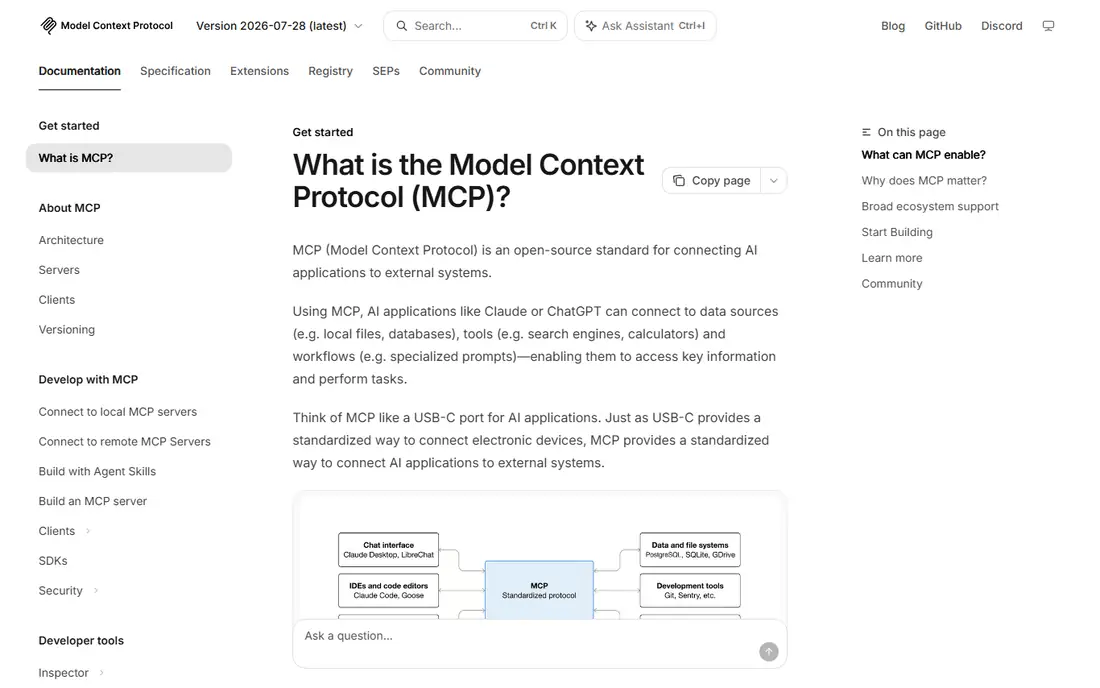
The official MCP SDKs, published by the Model Context Protocol project, provide TypeScript and Python libraries for building servers and clients that follow the spec exactly. Reference clients and examples help developers test servers, and the spec site documents tools, resources, prompts, sampling, and transports. Using the official SDK keeps compatibility with the widest client set.
The SDKs sit lower level than frameworks such as FastMCP, so building a server takes more code for auth, deployment, and error handling. For a team that needs spec exact behavior or a non Python language, the official SDKs give the canonical foundation.
What we like- Official spec
- TypeScript and Python SDKs
- Reference clients
Watch out for- Lower level than frameworks
- More code for servers
Starting priceFree
Free planFree
LangChain MCP Adapters connect MCP servers to LangChain agents, turning MCP tools into LangChain tools that agents can call with reasoning and planning. Multi server support lets one agent use several MCP servers at once, and LangGraph workflows add state, retries, and human review around tool calls. The adapters suit teams already building agents in LangChain.
LangChain itself is complex, and adapter setup, especially auth and session handling, takes care. For a LangChain team that wants MCP tools inside existing agents, the adapters offer the cleanest wiring.
What we like- MCP tools in LangChain agents
- Multi server support
- LangGraph ready
Watch out for- LangChain complexity
- Adapter setup takes care
Starting priceFree
Free planFree
LlamaIndex, known for data retrieval agents, integrates MCP tools so agents can combine document retrieval with external tool calls. The framework suits agents that answer questions from private data, then act through MCP tools such as calendars, CRMs, or databases. Retrieval strengths help agents ground answers before acting.
The data focus narrows use for pure action agents, and setup needs data indexing work before MCP wiring pays off. For a data heavy agent that also needs MCP tools, LlamaIndex bridges retrieval and action well.
What we like- Data focused agents
- MCP tool integration
- Retrieval strengths
Watch out for- Data focus narrows use
- Setup needs data work
Starting priceFree
Free planFree
Mastra is a TypeScript agent framework with MCP client support, letting developers build agents, workflows, and tools that call MCP servers. The framework covers agent memory, evaluation, and deployment, with MCP as one tool source among others. TypeScript teams find the API familiar, and workflows add structure to multi step agent tasks.
As a newer framework, the ecosystem is still growing compared with LangChain, so some integrations need custom code. For a TypeScript team building agents with MCP tools, Mastra offers a modern, focused framework.
What we like- TypeScript agent framework
- MCP client support
- Workflows
Watch out for- Newer framework
- Ecosystem still growing
Starting priceSee website
Free planFree trial
Composio provides managed integrations for hundreds of apps, with auth handling and MCP server hosting, so agents can call Gmail, Slack, GitHub, and many other tools without building each connector. The platform manages OAuth, permissions, and tool schemas, and exposes them through MCP servers that agents connect to. That saves weeks of integration work.
Pricing is quote based at scale, and managed integrations carry vendor lock in risk, since switching means rebuilding auth and tool mappings. For a team that wants many app tools fast without building connectors, Composio offers the broadest managed catalog.
What we like- Many managed integrations
- Auth handling
- MCP server hosting
Watch out for- Pricing by quote for scale
- Vendor lock in risk
Starting priceSee website
Free planFree trial
Toolhouse provides managed tools for AI agents with MCP support, handling auth and tool execution for apps such as calendars, CRMs, and messaging. Agents connect through MCP, and Toolhouse manages credentials and rate limits, so developers focus on agent logic rather than integration plumbing. Framework links cover common agent stacks.
The catalog is smaller than Composio, and pricing is quote based, so teams should check coverage for their specific apps. For a team that wants managed MCP tools with a simple setup, Toolhouse offers a focused alternative.
What we like- Managed tools
- MCP support
- Agent framework links
Watch out for- Smaller catalog than Composio
- Pricing by quote

#8Arcade
Best for: Managed agent tools4.6/5 on
G2 (181 reviews, checked Oct 2026)
Visit arcade.dev
Starting priceSee website
Free planFree trial
Arcade provides managed tools for AI agents with user authorization, so an agent acts with the end user permissions, not a shared service account. MCP support lets agents call Arcade tools through the protocol, with auth flows that ask users to grant access per app. That user scoped auth suits products where agents act on behalf of customers.
Pricing is quote based, and the platform is newer than Composio, so catalog depth varies by app. For a product where agents must act as the user with proper authorization, Arcade offers a security minded managed path.
What we like- Managed tools with auth
- User authorization
- MCP support
Watch out for- Pricing by quote
- Newer platform
How we chose
We compared server building ease, agent wiring, managed integration breadth, auth handling, hosting options, pricing, and public developer feedback. We favored tools that follow the MCP spec, handle auth safely, and let teams start small with one server before scaling. No hands on testing is claimed, and prices are shown as Free where open source or a free tier exists, or See website where pricing is quote based.
Building your first MCP agent safely
Start with one server that exposes a few read only tools, such as search or calendar reads, and test the agent tool calls before adding write tools. Log every tool call with inputs and outputs during development, since logs reveal prompt injection attempts, bad parameters, and unexpected side effects early. Add write tools only with confirmation steps, such as human approval for payments, deletes, or external messages.
Auth, permissions, and tool scope
Scope each server to the minimum tools and data the agent needs, since a server with broad access multiplies risk if the agent is tricked. Use user scoped auth where possible, so the agent acts with the user permissions, not an admin token, and rotate server credentials regularly. Review tool descriptions for prompt injection risks, since a tool that returns untrusted text can steer an agent toward harmful calls. Security in MCP starts with narrow scope, careful auth, and logs, not with trusting the model to behave.
Scaling from prototype to production
Move from local servers to hosted servers with monitoring, rate limits, and error handling when usage grows, and version tool schemas so agent prompts do not break on silent changes. Test servers with several clients, since MCP clients differ in transport and capability support, and a server that works in one client may fail in another. Keep a registry of your servers, owners, and permissions, so teams know what agents can do and who maintains each tool. Good MCP governance turns a useful prototype into a reliable production system.
Before you decide
Test your MCP server with the official reference client before you wire it into an agent, since a server that fails in the reference client will fail everywhere else too. Keep tool descriptions short and precise, naming exactly what each tool does and what inputs it needs, because vague descriptions cause agents to call tools with wrong arguments. Version your MCP tools and note breaking changes in a changelog, so agent prompts and workflows do not break silently when a tool schema changes. Limit each agent to the servers it truly needs, since an agent with dozens of tools chooses worse and costs more per call than an agent with a focused set. Log tool call latency alongside inputs and outputs, because slow tools hurt agent response time and latency logs show which tools need caching or optimization.
Frequently asked questions
What is MCP in simple terms?
MCP, the Model Context Protocol, is a standard way for AI agents to call external tools, read data resources, and use prompt templates from servers. Instead of building a custom integration for each app, an agent connects to MCP servers that expose tools in a common format. The standard makes agents more interoperable and tool building more reusable.
Do I need MCP to build an AI agent?
No, since agents can call APIs directly, but MCP helps when you want reusable tools across agents and clients, or managed integrations with auth. For a single agent with one or two APIs, direct calls may be simpler. MCP pays off when tool count grows or when several agents share the same tools.
Is MCP secure?
MCP security depends on implementation, since servers with broad tools and weak auth create real risk. Scope tools narrowly, use user scoped auth, log calls, and require confirmation for sensitive actions. Treat MCP servers like any API with access to your data, not like a trusted internal library.
Which MCP tool should a beginner start with?
FastMCP suits a Python beginner building a first server, while LangChain MCP Adapters suit a beginner already using LangChain agents. Start with one read only server, test tool calls in a reference client, and add complexity only after the basics work. A small working server teaches more than a large broken one.
Can MCP servers work with any AI model?
MCP clients connect to models through host apps, and compatibility depends on the client and model provider, not only the server. Most major agent frameworks now support MCP clients, though feature support varies by transport and version. Check your chosen framework MCP support before you build.
Sources we checked (8)
- https://gofastmcp.com
- https://modelcontextprotocol.io
- https://www.langchain.com
- https://www.llamaindex.ai
- https://mastra.ai
- https://composio.dev
- https://www.toolhouse.ai
- https://www.arcade.dev
Is your product missing or out of date?
We review this list regularly. Vendors can request a listing, send updated pricing or ask about featured placement.

Shihab Mia · Founder, Rankite
Shihab has 5+ years in B2B and SaaS SEO. He writes Rankite's software buying guides from pricing pages, documentation and public user reviews. More about Shihab.
 FastMCP
 MCP SDK
 LangChain MCP Adapters
 LlamaIndex MCP
 Mastra
 Composio
 Toolhouse