How we make this list: we compare pricing pages, product documentation and public user reviews. Ratings come from G2, Capterra or Trustpilot, with the date we checked them.
Key takeaways
- B2B teams that want marketing and sales on one CRM should start with HubSpot Marketing Hub (free tier; Starter $9/seat/month), but budget for the steep jump to Professional at $800/month.
- SMBs wanting advanced automation without enterprise cost get the best value from ActiveCampaign (Starter $15/month) or Brevo (free tier; Starter $9/month).
- E-commerce brands should default to Klaviyo (free tier; Email from $20/month), where every flow ties to revenue.
- Adobe Marketo Engage is the enterprise B2B standard with quote-only pricing; Customer.io ($100/month) fits SaaS teams doing behavior-triggered messaging.
Quick comparison
| Tool | Best for | Starting price | Free plan |
|---|
 HubSpot Marketing Hub HubSpot Marketing Hub | B2B teams that want marketing and sales on one CRM | Free $0; Starter $9/seat/month (billed annually); Professional $800/month + $3,000 onboarding | Yes (free CRM plus marketing tools) |
 ActiveCampaign ActiveCampaign | SMBs that want advanced automation without enterprise cost | $15/month (Starter, billed annually, 1,000 contacts); Plus $49/month; Pro $79/month | No free plan; 14-day free trial (no credit card) |
 Klaviyo Klaviyo | E-commerce and DTC brands where email drives revenue | Free $0 (250 profiles); Email from $20/month (500 profiles, 5,000 sends) | Yes (250 profiles, 500 emails/month) |
 Brevo Brevo | High-volume senders and budget teams wanting multichannel in one bill | Free $0 (300 emails/day); Starter $9/month (5,000 emails/month) | Yes (300 emails/day, unlimited contacts) |
 Mailchimp Mailchimp | Small businesses sending newsletters and simple automations | Free $0 (250 contacts); Essentials $13/month (500 contacts); Standard $20/month | Yes (250 contacts, 500 emails/month) |
 Customer.io Customer.io | SaaS and app businesses doing behavior-triggered lifecycle messaging | $100/month (Essentials: 5,000 profiles, 100,000 emails/month); Premium $1,000/month | No free plan; 14-day free trial (no credit card) |
 Adobe Marketo Engage Adobe Marketo Engage | Mid-market and enterprise B2B with complex buying journeys | See website (quote-based; Adobe publishes no list pricing) | No (demo through Adobe sales only) |
Is your product missing or out of date?
We review this list regularly. Vendors can request a listing, send updated pricing or ask about featured placement.
Most marketing automation purchases fail the same way. A team buys for the email builder, then discovers the real product is the pricing model: per-contact billing that punishes list growth, per-seat fees that multiply across the team, or an enterprise quote that arrives with a mandatory onboarding invoice. The automation features matter less than the bill.
The seven platforms below cover the real market, from free tiers to enterprise suites. Every price comes from the vendor's own pricing page or official pricing content. Where Adobe keeps its cards hidden, that is noted honestly.
#1
HubSpot Marketing Hub
Best for: B2B teams that want marketing and sales on one CRM
Visit hubspot.com
Starting priceFree $0; Starter $9/seat/month (billed annually); Professional $800/month + $3,000 onboarding
Free planYes (free CRM plus marketing tools)
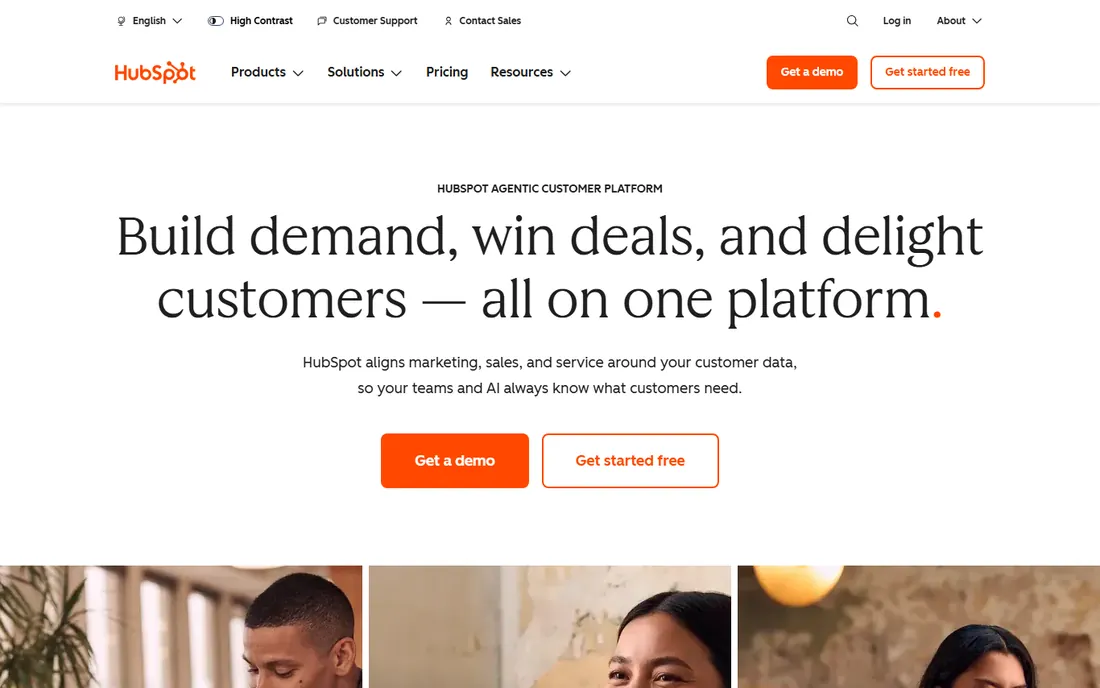
HubSpot is the safe default for B2B, and the reason is the CRM underneath. Automation runs on lead score, lifecycle stage, and deal ownership rather than just email opens, so nurture actually reflects the sales process. The free tier is genuinely useful, and Starter at $9 per seat per month gets small teams running.
The honest catch is the pricing cliff. Starter to Professional is not a step but a leap: $800 per month billed annually plus a $3,000 one-time onboarding fee, and you will outgrow Starter faster than you expect. Marketing contacts (as opposed to total contacts) drive the bill, so large databases get expensive even though non-marketing contacts are stored free. Setup takes weeks, and paid onboarding is strongly recommended. If your database is big and your needs are simple, the per-contact model may cost more than a send-based rival.
What we like- CRM-native automation with lead scoring and lifecycle stages on real sales data
- Generous free tier
- 1,700-plus app ecosystem
Watch out for- Professional at $800/month plus $3,000 onboarding is a huge jump from Starter
- Marketing-contact pricing punishes large databases
Starting price$15/month (Starter, billed annually, 1,000 contacts); Plus $49/month; Pro $79/month
Free planNo free plan; 14-day free trial (no credit card)
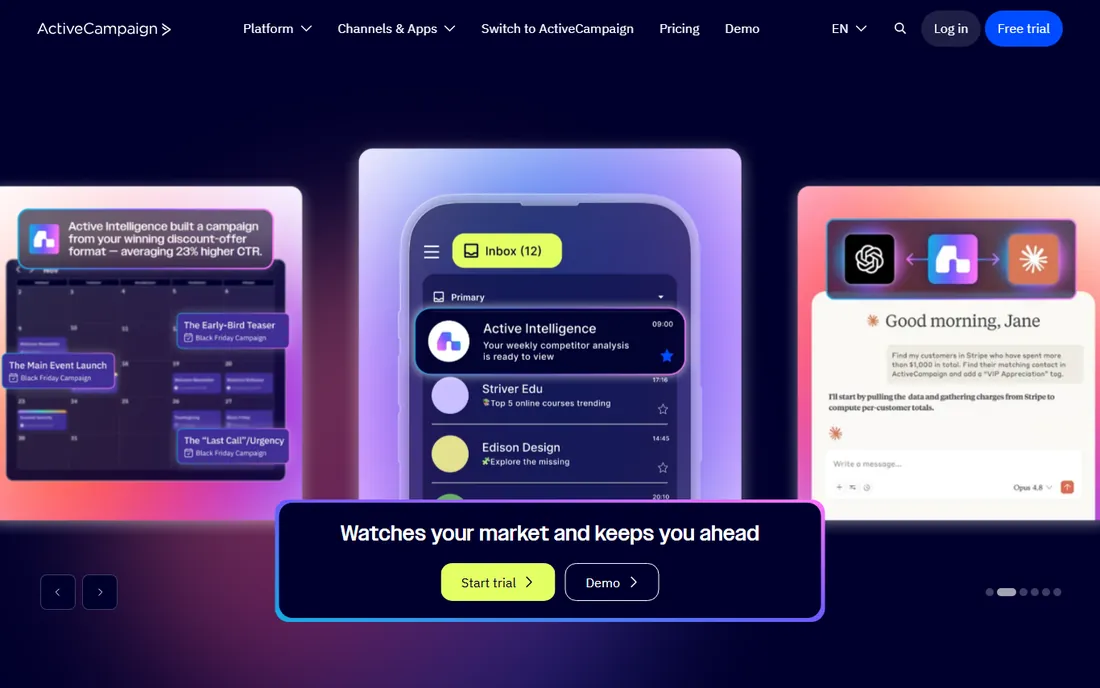
ActiveCampaign is the automation nerd's pick at SMB prices. Its visual builder handles multi-step, conditional, cross-channel automations that rival tools several times the price, and the 900-plus recipe library means you rarely start from a blank canvas. A built-in CRM covers the sales side for small teams.
The pricing logic is contact-based: Starter at $15 per month covers 1,000 contacts billed annually, and the bill grows with your list. Keep lists clean and archive cold contacts. There is no free plan, only a 14-day trial, so this is a paid commitment from day one. Setup takes days, and free migration from another platform softens the switch. For teams that live in automation rather than batch-and-blast, the depth per dollar is unmatched.
What we like- Best-in-class visual automation builder at this price
- 900-plus prebuilt automation recipes
- Built-in CRM included
Watch out for- No free plan
- Contact-based pricing gets expensive as lists grow
- Interface can feel busy
#3
Klaviyo
Best for: E-commerce and DTC brands where email drives revenue
Visit klaviyo.com
Starting priceFree $0 (250 profiles); Email from $20/month (500 profiles, 5,000 sends)
Free planYes (250 profiles, 500 emails/month)
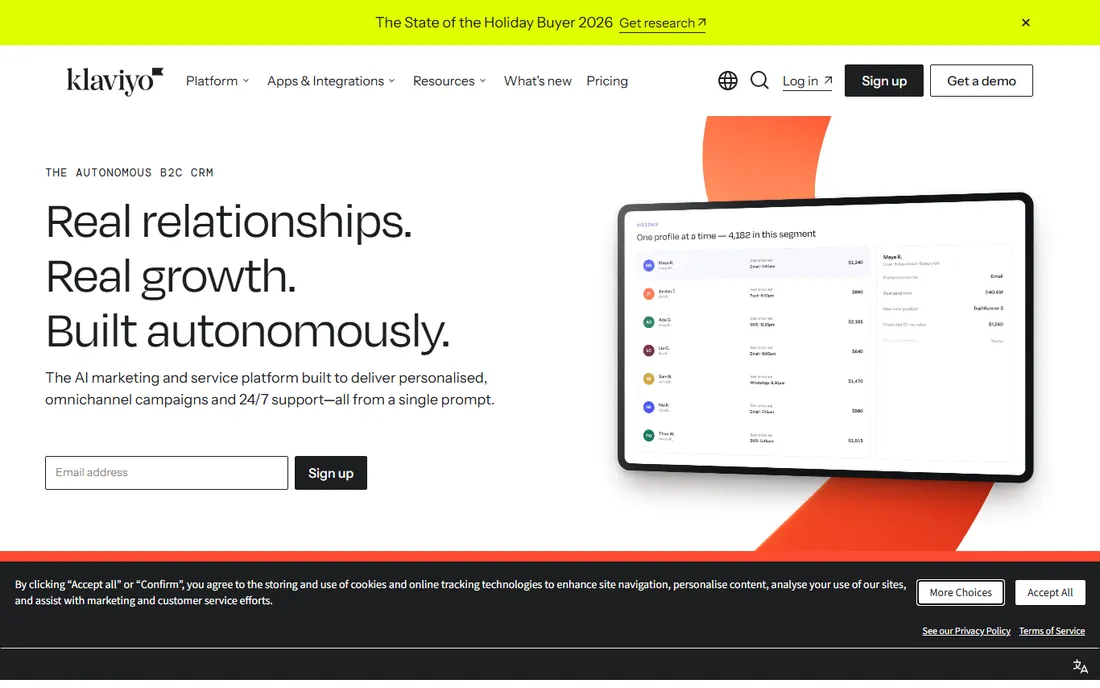
Klaviyo is built for one job: turning e-commerce customer data into revenue. Every flow and campaign ties back to placed orders, and predictive analytics (churn risk, lifetime value, smart send time) come standard rather than as enterprise add-ons. The Shopify integration is the deepest in the category, with 350-plus apps behind it.
The price curve is the thing to watch. Costs rise steeply past a few thousand active profiles, and SMS is billed separately at meaningful rates. Audit your active-profile count regularly; Klaviyo counts profiles, not just subscribers. Outside e-commerce the specialization is wasted money. For DTC brands, though, the revenue attribution alone usually justifies the cost. Monthly billing auto-adjusts with profile count.
What we like- Deepest e-commerce integrations led by Shopify
- Predictive analytics and AI segmentation
- Revenue attribution per flow and campaign
Watch out for- Profile-based pricing escalates fast as lists grow
- SMS is a separate significant cost
- Overkill outside e-commerce
#4
Brevo
Best for: High-volume senders and budget teams wanting multichannel in one bill
Visit brevo.com
Starting priceFree $0 (300 emails/day); Starter $9/month (5,000 emails/month)
Free planYes (300 emails/day, unlimited contacts)
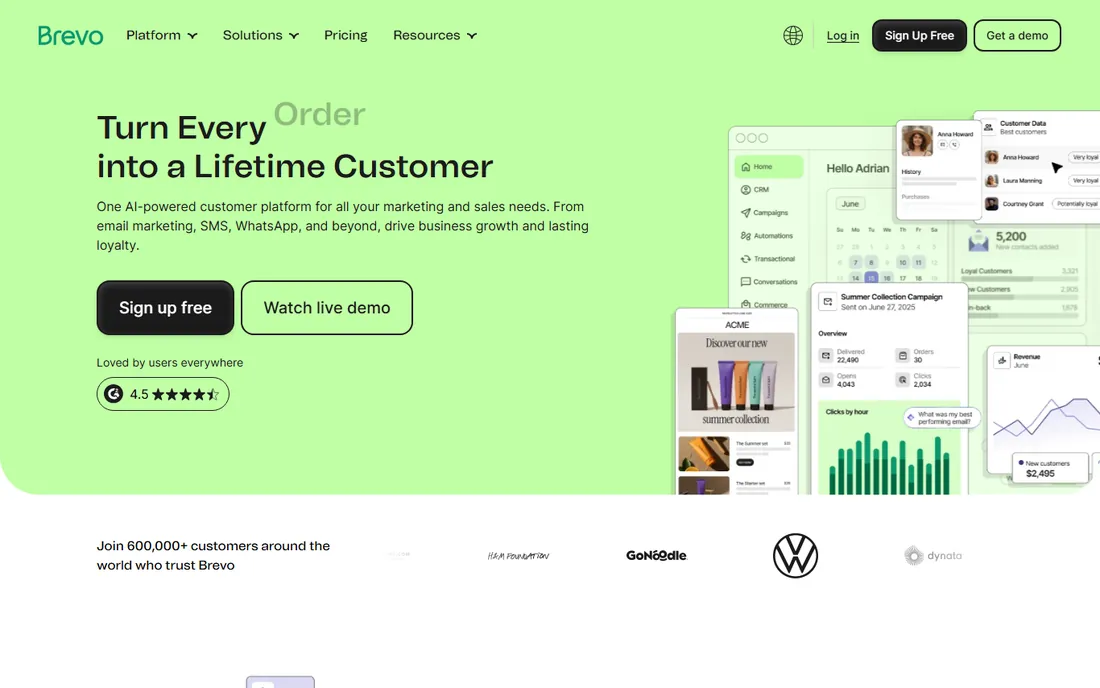
Brevo's pitch is arithmetic. Where rivals charge per contact, Brevo charges per send, with unlimited contacts on every plan including free. For high-volume senders with big lists, that math wins by a lot. Email, SMS, WhatsApp, chat, and a CRM share one bill, which suits teams that want multichannel without stitching tools together.
The tiers gate the good stuff. Serious automation, A/B testing, and landing pages sit above Starter, and Professional at $499 per month ($449 billed annually) is a different universe from the $9 Starter. Model your monthly send volume before choosing a tier; heavy senders can outgrow the cheap plans fast. Setup takes hours with the drag-and-drop editor. For newsletters and straightforward campaigns at scale, the value is hard to beat.
What we like- Send-based pricing with unlimited contacts even on free
- Email, SMS, WhatsApp, chat, and CRM in one platform
- Generous free tier
Watch out for- Automation and A/B testing gated behind higher tiers
- Big jump to Professional at $499/month
- Logo removal on Starter costs extra
#5
Mailchimp
Best for: Small businesses sending newsletters and simple automations
Visit mailchimp.com
Starting priceFree $0 (250 contacts); Essentials $13/month (500 contacts); Standard $20/month
Free planYes (250 contacts, 500 emails/month)
Mailchimp is where most small businesses start, and the onboarding shows it: first campaign in hours, not days. Templates, simple automations, and e-commerce integrations cover the newsletter-and-promo use case well, and the free tier handles 250 contacts.
The billing trap is well documented. Subscribed, unsubscribed, and non-subscribed contacts all count toward your contact limit until you manually archive them, so dirty lists cost real money. Multi-step automation unlocks at Standard ($20 per month), and Premium at $350 per month is a steep top end. Clean your lists regularly and archive ruthlessly. Watch for promos; a 50-percent-off first year has been observed, but verify current offers on the pricing page.
What we like- Easiest learning curve in the category
- Large template library
- Free plan to start
- Solid e-commerce integrations
Watch out for- Contact billing counts unsubscribed contacts until archived
- Automation depth lags specialists
- Costs climb steeply with list size
#6
Customer.io
Best for: SaaS and app businesses doing behavior-triggered lifecycle messaging
Visit customer.io
Starting price$100/month (Essentials: 5,000 profiles, 100,000 emails/month); Premium $1,000/month
Free planNo free plan; 14-day free trial (no credit card)
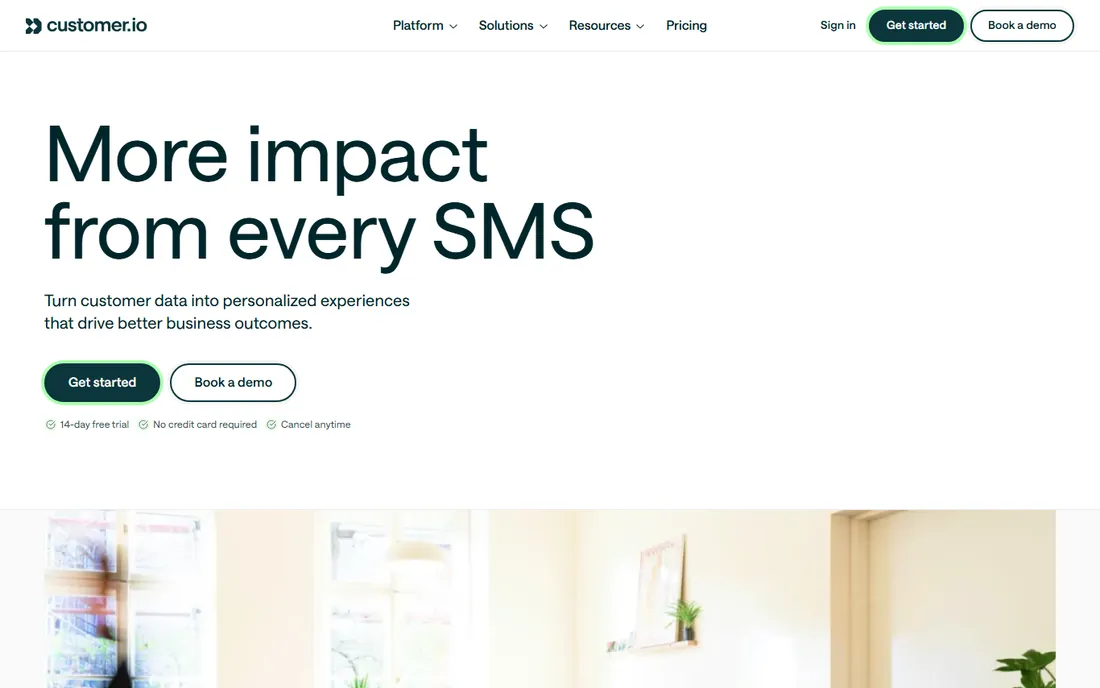
Customer.io is the product-led company's automation platform. Instead of list-based campaigns, everything triggers off real-time event data: onboarding sequences, activation nudges, churn win-backs, all personalized from behavioral signals. Email, SMS, push, and in-app messages share one visual workflow builder, and the API-first design fits engineering-led teams.
The entry price reflects the audience. At $100 per month for Essentials, this is not a newsletter tool; it is infrastructure for companies whose product generates the events. Pricing scales on profiles and message volume, so model your monthly events before committing. Setup takes days with developer support for event instrumentation. Monthly billing, cancel anytime. If your business is not event-driven, the cheaper list-based tools serve you better.
What we like- Event-triggered messaging across email, SMS, push, and in-app from one builder
- Developer-friendly API and data pipelines
- Strong compliance posture
Watch out for- $100/month entry is steep for tiny lists
- Advanced setups need developer help
- Usage-based pricing scales with volume
Starting priceSee website (quote-based; Adobe publishes no list pricing)
Free planNo (demo through Adobe sales only)
Marketo Engage is the enterprise B2B standard, and Adobe prices it like one: no public pricing, no self-serve trial, everything through sales. What you get is unmatched depth in lead lifecycle management, scoring, nurture programs, and account-based marketing, with native sync to Salesforce and Microsoft Dynamics and the Adobe Experience Cloud behind it.
The total cost is license plus implementation, and the implementation is the bigger number: expect a three-to-six-month partner-led deployment and an annual contract. There is no path for small teams here, and that is by design. If you run complex, multi-stakeholder buying journeys at mid-market scale or above, get at least two implementation quotes alongside the license quote. For everyone else, HubSpot Professional delivers most of the value at a published price.
What we like- Gold standard for B2B lead scoring, nurture, and account-based marketing
- Native bi-directional CRM sync
- Deep multi-touch attribution
Watch out for- Enterprise pricing only, via quote
- Implementations typically need specialists and run months
- Interface feels dated in places
Frequently asked questions
How much does marketing automation cost?
From free to thousands per month. Small teams pay $9 to $20 per month on Brevo, Mailchimp, or ActiveCampaign Starter. Growing B2B teams face HubSpot Professional at $800 per month plus $3,000 onboarding. E-commerce costs scale with profiles on Klaviyo from $20 per month up. Enterprise Marketo is quote-only with implementation on top. The pricing model matters more than the starting price.
Should we pay per contact or per send?
Per-contact billing (ActiveCampaign, Mailchimp, Klaviyo) punishes list growth; keep lists clean and archived. Per-send billing (Brevo) favors big lists mailed often. Per-seat billing (HubSpot Starter) favors small teams. Model your actual list size, send volume, and team size against each model before choosing.
Do we need the CRM the vendor sells?
Not necessarily, but CRM-native automation is genuinely better. HubSpot's lead scoring and lifecycle automation work because they run on sales data. If you already have Salesforce, check the native sync quality before assuming a standalone automation tool will integrate cleanly; Marketo's bi-directional Salesforce sync is a real advantage.
How long does implementation take?
Hours for Mailchimp or Brevo's basic setup. Days for ActiveCampaign or Klaviyo with real automations. Weeks for HubSpot with paid onboarding. Months for Marketo with a partner. The complexity of your data and integrations, not the tool's marketing, sets the timeline.
Can we switch platforms later?
Yes, but migration is the hidden cost. Export your lists, automations, templates, and historical engagement data before canceling; some platforms make this harder than others. ActiveCampaign offers free migration in. Time the switch for a quiet period, and run both systems in parallel for at least one full campaign cycle.
Is a free plan enough to start?
For newsletters and simple welcome sequences, yes: HubSpot, Brevo, Mailchimp, and Klaviyo all have genuinely useful free tiers. You will hit limits on automation depth, contact counts, or branding. Treat the free tier as a trial with no expiry, and upgrade when a specific limitation costs you more than the paid plan.
What the pricing models actually charge for
Marketing automation bills four ways, and each punishes a different growth pattern. Per-contact billing charges for the size of your database, including people who never open anything; it rewards list hygiene and punishes growth. Per-send billing charges for volume; it rewards big engaged lists and punishes frequent mailing. Per-seat billing charges for team size; it is predictable until the team grows. Enterprise quote billing charges for your budget, more or less; it rewards negotiation.
Before you compare tools, write down three numbers: total contacts, monthly sends, and marketing team headcount. Run each against the vendor's pricing page. The cheapest starting price often belongs to the most expensive model for your shape. And watch the second-year price: introductory promos expire, contact tiers auto-upgrade, and the bill you approved is rarely the bill you pay in month thirteen.
When to buy up (and when not to)
Buy up when a specific limitation costs you money: deliverability problems on a free tier, automations you cannot build, or reporting your boss demands. Do not buy up for features on a roadmap slide. The jump from SMB to mid-market pricing is the most dangerous in software: HubSpot's $9 Starter to $800 Professional, Brevo's $9 Starter to $499 Professional. Those jumps should follow revenue, not precede it.
The enterprise tier makes sense when you have the team to use it. Marketo without a dedicated marketing ops person is an expensive mistake; with one, it is the best B2B engine available. Similarly, Customer.io without developers to instrument events is wasted. Match the tool's complexity to the team you actually have, not the team you plan to hire.
How we chose
We started with the searches buyers actually run: best marketing automation platform and its B2B variant. For each candidate we opened the vendor's own homepage and pricing page, checked plan names and prices against official pricing content and public reviews on G2 and Capterra, and compared automation depth, pricing model, and company-size fit. Where the vendor publishes no prices we wrote "See website" rather than guessing. The shortlist covers the real buying bands, from free tiers to enterprise suites, because a solo founder and a 500-person marketing team are not buying the same thing.
Sources we checked (9)
- https://hubspot.com/pricing
- https://www.activecampaign.com/pricing
- https://www.brevo.com/pricing/
- https://klaviyo.com/pricing
- https://mailchimp.com/pricing/marketing
- https://customer.io/
- https://business.adobe.com/products/marketo.html
- https://www.g2.com/categories/marketing-automation
- https://www.capterra.com/marketing-automation-software/
Is your product missing or out of date?
We review this list regularly. Vendors can request a listing, send updated pricing or ask about featured placement.

Shihab Mia · Founder, Rankite
Shihab has 5+ years in B2B and SaaS SEO. He writes Rankite's software buying guides from pricing pages, documentation and public user reviews. More about Shihab.