How we make this list: we compare pricing pages, product documentation and public user reviews. Rankite is independent; if a vendor ever pays for a featured spot, that listing is clearly labeled Partner.
Key takeaways
- Degreed remains the reference pick for large enterprises running skills-based talent strategies, but it is quote-only and built for scale, not small teams.
- Docebo is the strongest all-rounder: LMS, LXP, authoring, and a course marketplace in one, with the main tier listed at $9 per user per month on a 250-user minimum.
- 360Learning fits companies whose best training material lives inside employees' heads: its collaborative authoring turns subject-matter experts into course creators.
- Cornerstone (EdCast) and Valamis suit regulated, compliance-heavy organizations; Continu and Disprz lead on customer, partner, and frontline audiences.
Quick comparison
| Tool | Best for | Starting price | Free plan |
|---|
 Degreed Degreed | Large enterprises running skills-based talent and workforce planning | See website (custom quote) | No (demo available) |
 Docebo Docebo | Organizations training multiple audiences: employees, customers, and partners | $9/user/month (250-user minimum on the main tier; complex enterprise deals quoted custom) | No (product tour and demo available) |
 360Learning 360Learning | Mid-size companies that want internal experts to build the training | See website (custom quote) | No (demo available) |
 Cornerstone (EdCast) Cornerstone (EdCast) | Large enterprises already using Cornerstone, or needing full talent-suite depth | See website (custom quote) | No (demo available) |
 Valamis Valamis | Regulated industries that must prove training happened, not just assign it | See website (custom quote) | No (demo available) |
 Continu Continu | Companies whose training audience is mostly customers and partners | See website (custom quote) | No (demo available) |
 Disprz Disprz | Frontline and deskless workforces in retail, banking, insurance, and manufacturing | See website (custom quote) | No (demo available) |
 Instancy Instancy | Training organizations that also sell courses, plus internal L&D teams | See website (custom quote) | No (demo available) |
Is your product missing or out of date?
We review this list regularly. Vendors can request a listing, send updated pricing or ask about featured placement.
An LMS assigns courses and tracks completions. An LXP flips that around: it recommends learning the way streaming services recommend shows, pulls in content from everywhere (your courses, LinkedIn Learning, YouTube, internal wikis), and maps it all to skills. The best LXP platforms do three things well: aggregate content from many sources, personalize it per employee, and show the business what skills the workforce actually has.
The catch with this category is pricing transparency. Almost every serious LXP sells annual enterprise contracts through a sales team, so expect discovery calls instead of checkout pages. These eight cover the real market, from the category-defining giants to specialists for frontline workers and external audiences.
#1
Degreed
Best for: Large enterprises running skills-based talent and workforce planning
Visit degreed.com
Starting priceSee website (custom quote)
Free planNo (demo available)
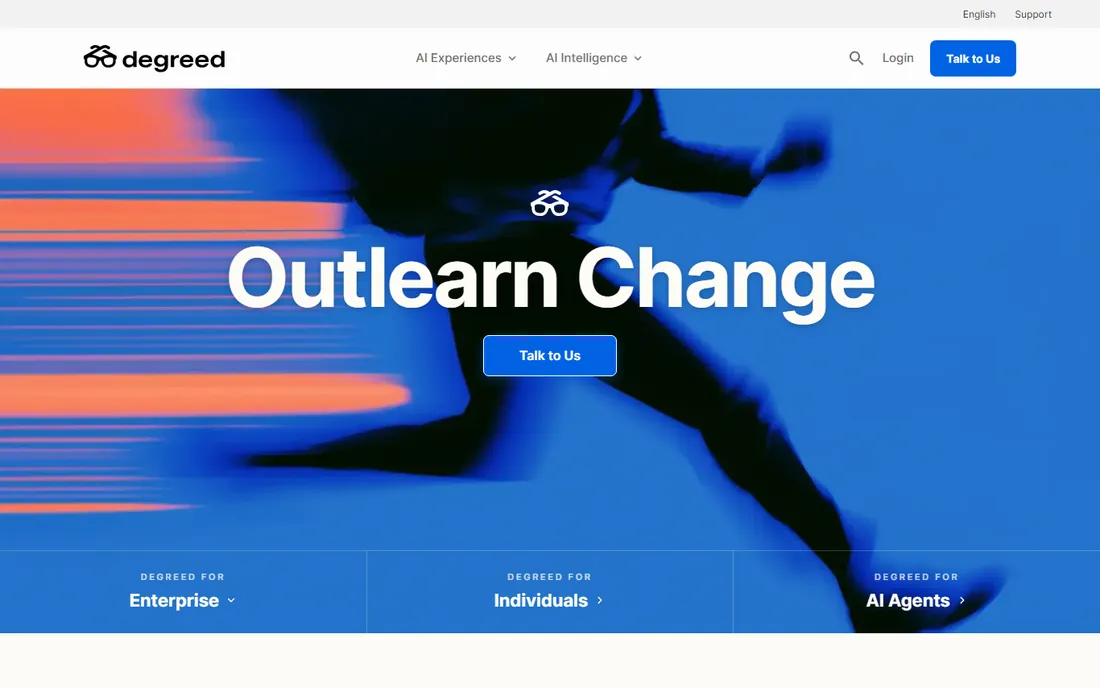
Degreed is the default answer when a large company says it wants to become skills-based. The platform connects everything people learn from, formal courses and informal content alike, then uses that data to show which skills exist in the workforce and which are missing. That skills layer feeds workforce planning, internal mobility, and targeted upskilling programs, which is why big employers with transformation agendas keep choosing it.
The honest catch is the entry ticket. Degreed does not publish prices, every deal is a custom annual quote, and implementations take months with real services work. If your company has under a thousand employees or just needs better course delivery, this is the wrong end of the market. Degreed earns its keep where learning data has to drive talent decisions at scale.
What we like- The platform that defined the LXP category, with the deepest skills intelligence
- Aggregates internal and external content (courses, videos, articles, podcasts) into one learner hub
- Strong integrations with HCM and LMS systems
- AI-driven recommendations, pathways, and skill measurement
Watch out for- Enterprise-only in practice, with quote-based pricing and no published tiers
- Implementation is a real project with change management attached
- Smaller organizations will find it oversized and overpriced
#2
Docebo
Best for: Organizations training multiple audiences: employees, customers, and partners
Visit docebo.com
Starting price$9/user/month (250-user minimum on the main tier; complex enterprise deals quoted custom)
Free planNo (product tour and demo available)
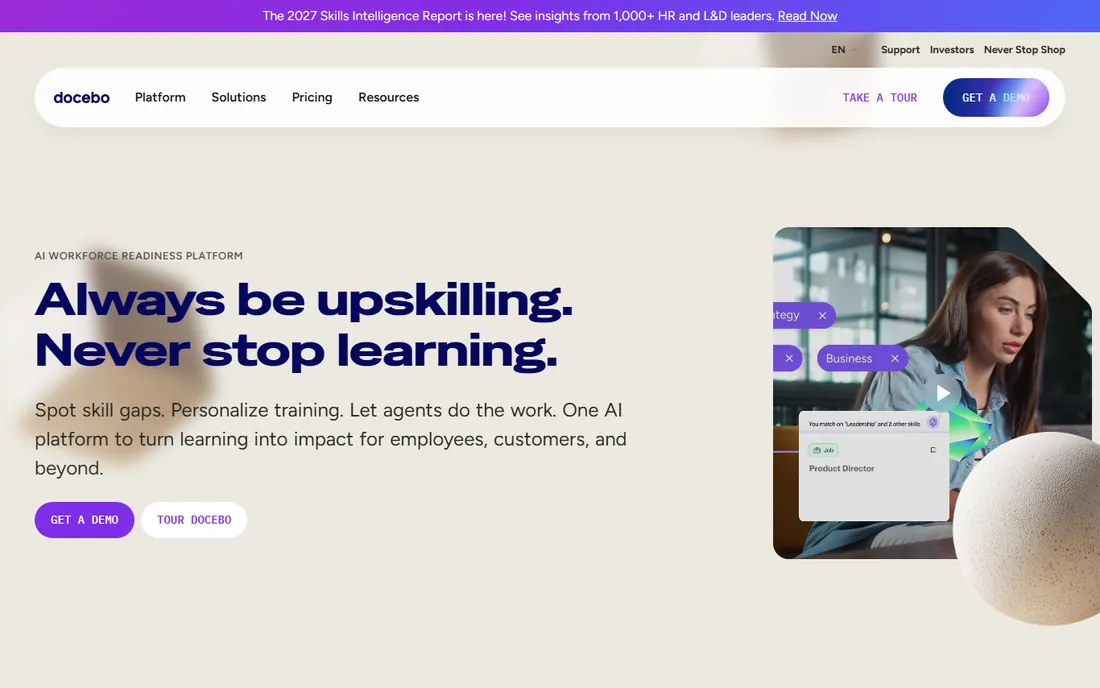
Docebo suits companies that outgrew a simple LMS but do not want five separate tools. One contract can cover employee onboarding, compliance, customer education, and partner training, each with its own branded portal, while the AI authoring tools turn existing documents into courses. The published starting point of $9 per user per month with a 250-user minimum is at least a real number, which is rare in this category.
The honest catch is scope creep in the quote. The base tier covers the core platform, but extended enterprise audiences, extra modules, and implementation services stack on top, so the number you budget and the number you sign can differ. It is still one of the most complete platforms here for companies that train people outside their own payroll.
What we like- Combines LMS, LXP, authoring, content marketplace, and analytics in one platform
- Built for multi-audience training with white-labeled portals
- Marketplace with 30,000-plus ready-made courses
- AI content creation (Docebo Creator) and strong HRIS/CRM integrations
Watch out for- The 250-user minimum on the published tier prices out small teams
- Advanced modules and audiences add cost
- Administration takes real training to master
#3
360Learning
Best for: Mid-size companies that want internal experts to build the training
Visit 360learning.com
Starting priceSee website (custom quote)
Free planNo (demo available)
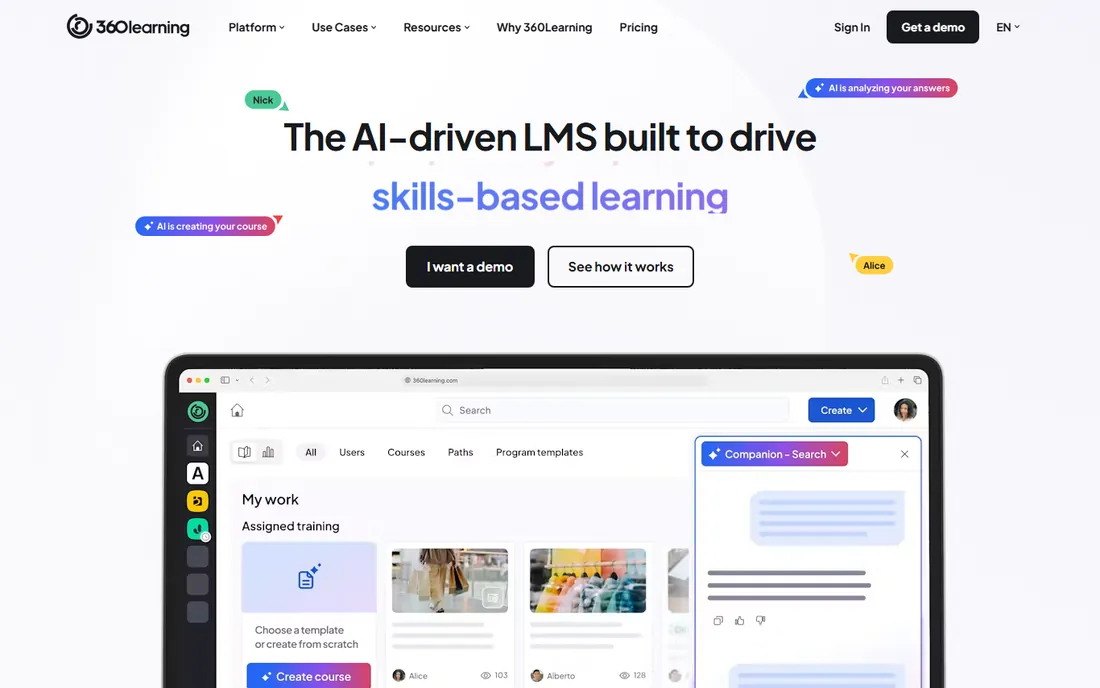
360Learning starts from a different premise than the rest of this list: your best training content already exists inside your employees' heads. The platform makes it fast for an engineer, a salesperson, or a support lead to turn what they know into a course, with colleagues reviewing and improving it. For onboarding, sales enablement, and fast-changing product knowledge, that bottom-up model beats a top-down course catalog.
The honest catch is cultural, not technical. If your subject-matter experts will not write, review, or update courses, you lose the differentiator and you are left with a mid-market LMS at enterprise prices. Buy it when you have willing experts and a backlog of tribal knowledge to capture. Skip it if training will stay a centralized L&D function.
What we like- Collaborative authoring lets any subject-matter expert create a course in days, with peer review built in
- AI turns documents into interactive courses and translates them into 67 languages
- 80-plus HRIS and workplace integrations
- Strong G2 and Capterra ratings from real users
Watch out for- No published pricing, so every deal starts with a sales call
- The collaborative model only works if your experts actually participate
- Less depth on regulated compliance workflows than Cornerstone or Valamis
Starting priceSee website (custom quote)
Free planNo (demo available)
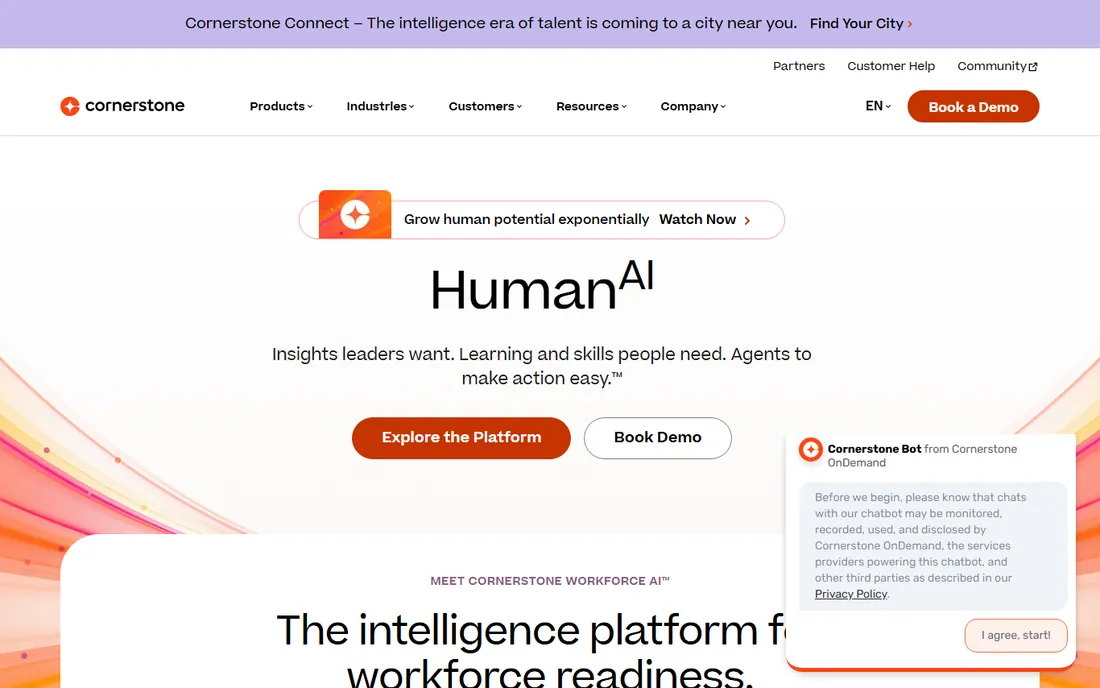
Cornerstone bought EdCast in 2022 and folded its LXP into a broader platform for workforce readiness. For companies already running Cornerstone's LMS or performance products, the LXP layer adds AI-curated content, knowledge sharing, and skills data without a second vendor. It is also one of the safer choices for regulated industries, with the certifications and audit tooling large compliance teams expect.
The honest catch is that Cornerstone sells a platform, not a point tool. If you only want an LXP, you will pay enterprise prices and sit through an enterprise implementation for a slice of the suite. The math works best when learning, performance, and skills planning consolidate onto one contract.
What we like- EdCast's LXP now sits inside Cornerstone's talent suite, pairing learning experience with LMS, performance, and recruiting
- Skills intelligence spans the whole employee lifecycle
- Deep compliance and certification tooling
- One of the largest enterprise customer bases in learning tech
Watch out for- Fully quote-based pricing with no public numbers
- The suite's breadth means longer, heavier implementations
- Buying the LXP alone leaves much of the value on the table
#5
Valamis
Best for: Regulated industries that must prove training happened, not just assign it
Visit valamis.com
Starting priceSee website (custom quote)
Free planNo (demo available)
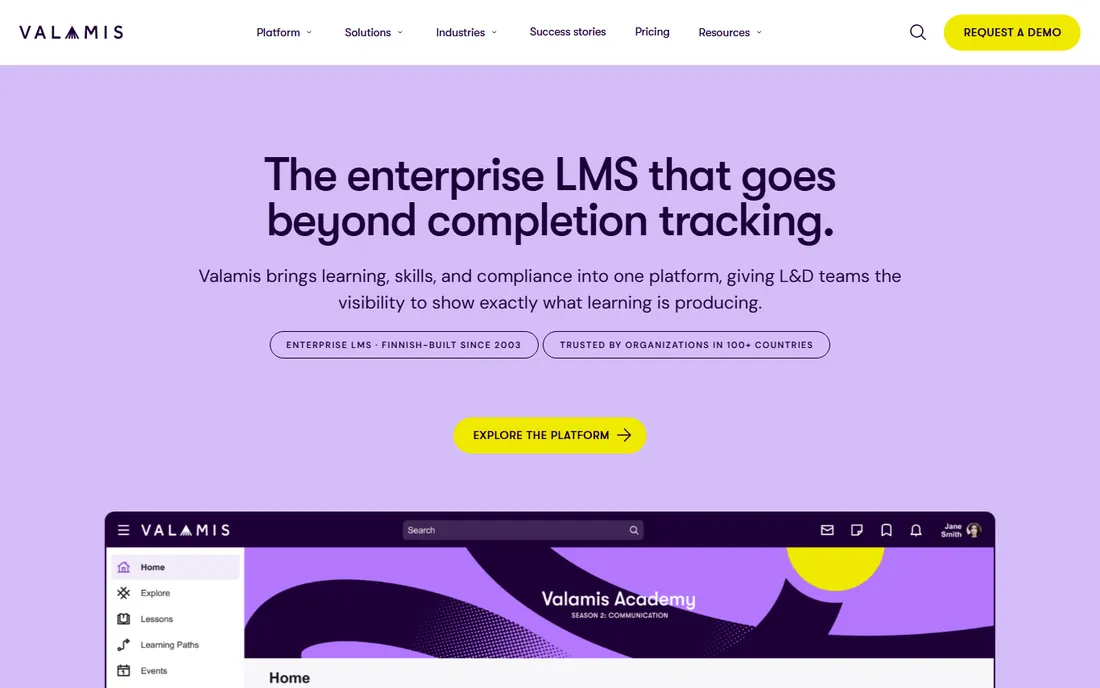
Valamis comes from Finland and thinks like an engineer: learning should be relevant to each role, fully recorded, and visible to leadership. That makes it a natural fit for manufacturing, pharma, energy, and other sectors where an expired certification is a legal problem, not an HR problem. The analytics connect training activity to business KPIs, which helps L&D teams defend budgets with evidence.
The honest catch is that you buy it the enterprise way: discovery calls, custom quotes, and annual contracts. There is no starter tier for a 50-person company. If compliance proof and skills visibility are your requirements, that process is worth it. If you just want engaging course delivery, simpler tools cost less.
What we like- Built for compliance: certifications, audit trails, and reporting that stand up to regulators
- Combines LXP, LMS, learning record store, and authoring
- Skills mapping tied to roles
- Finnish engineering with deployments in 100-plus countries
Watch out for- Quote-only enterprise pricing
- A smaller vendor footprint than Degreed or Cornerstone
- The enterprise sales and onboarding process, not self-serve
#6
Continu
Best for: Companies whose training audience is mostly customers and partners
Visit continu.com
Starting priceSee website (custom quote)
Free planNo (demo available)
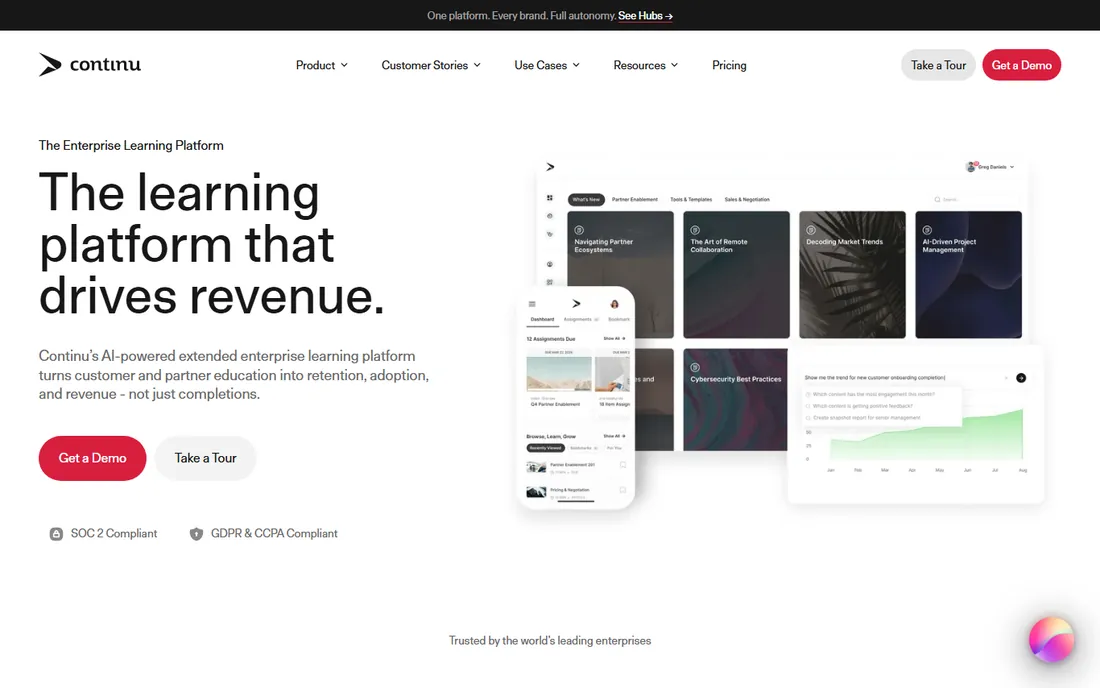
Continu aims at the training most LXPs treat as an afterthought: the people outside your company. If you sell software through partners or need customers to adopt your product, Continu lets you launch a branded academy on your domain, segment audiences, and measure whether training drives retention and revenue, not just completions. The AI agent meeting learners in Slack and Teams is a genuine differentiator for just-in-time help.
The honest catch is positioning. As an internal employee LXP competing head-on with Degreed, it has less track record. As an extended-enterprise platform for customer and partner education, it is one of the strongest options here. Buy it for the second job, and let it cover the first as a bonus.
What we like- Designed for extended enterprise: unlimited white-labeled portals and branded academies on your own domain
- AI learning agent (Eddy) answers questions inside Slack, Teams, and SMS
- Audience segmentation for employees, partners, and customers from one platform
- Strong fit for SaaS customer education
Watch out for- Less proven than Degreed or Docebo for internal employee upskilling programs
- Quote-based pricing with no public tiers
- Younger vendor with a smaller analyst footprint
#7
Disprz
Best for: Frontline and deskless workforces in retail, banking, insurance, and manufacturing
Visit disprz.ai
Starting priceSee website (custom quote)
Free planNo (demo available)
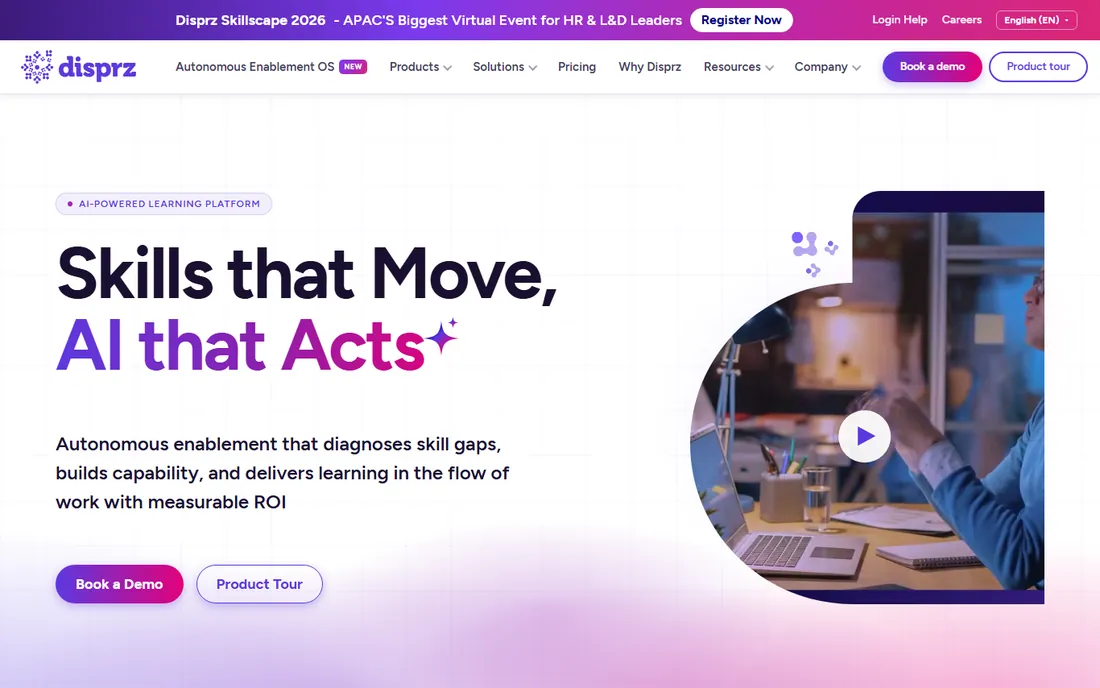
Disprz, founded in Chennai in 2015, built its platform for the workers most learning tools ignore: store staff, field sales, factory teams, and branch bankers. Short mobile lessons, multilingual content, gamified assessments, and an AI sales coach fit the reality of frontline work, where training happens in five-minute gaps between customers. The company reports 3.5 million-plus learners across 25-plus countries.
The honest catch is geography. If your workforce is concentrated in North America or Europe, the partner and services footprint is thinner than Degreed or Cornerstone, so check implementation support carefully. For distributed frontline workforces, especially across Asia and the Middle East, it is purpose-built in a way the US-centric platforms are not.
What we like- Mobile-first microlearning built for people who do not sit at desks
- AI sales coach for role practice
- Combines LMS, LXP, and skills analytics
- Strong traction across Asia-Pacific, the Middle East, and the US with 500-plus enterprise customers
Watch out for- Thinner presence and partner network in the US and Europe than the category leaders
- Enterprise sales process with custom quotes
- Advanced analytics depth trails the biggest platforms
#8
Instancy
Best for: Training organizations that also sell courses, plus internal L&D teams
Visit instancy.com
Starting priceSee website (custom quote)
Free planNo (demo available)
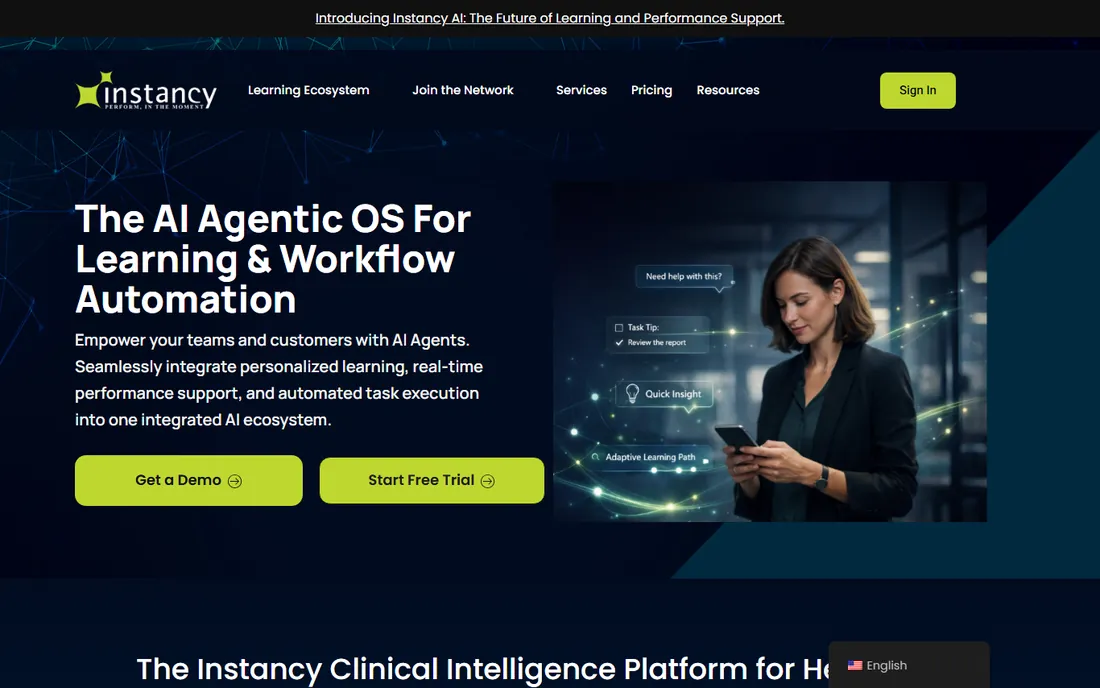
Instancy is the quiet veteran of this list. Where most LXPs focus on internal employees, Instancy also serves training companies that sell courses to the public, with eCommerce, subscriptions, and payment processing built in. The LCMS roots mean serious content authoring, and social learning features have been there for years, not bolted on.
The honest catch is visibility. You will not find it topping analyst reports, and the buying process is a traditional enterprise sales cycle. But for the specific combination of internal training plus a revenue-generating course business, few platforms cover both jobs. Evaluate it on a demo, not on brand recognition.
What we like- Veteran platform (building learning software since 2002) with LCMS, LMS, and LXP in one
- Built-in eCommerce for selling courses and subscriptions
- Social and mobile learning included
- Webinar and blended learning support
Watch out for- Quote-only pricing with no public tiers
- Far less visible than the category leaders, so analyst coverage is thin
- The depth shows more than the design polish
LXP vs. LMS: which one do you actually need?
The industry markets LXPs as LMS replacements, but most companies end up running both or buying a platform that blends them. Here is the practical split. An LMS is a system of record: it assigns required training, tracks completions, manages certifications, and proves compliance to auditors. If your legal team needs proof that every warehouse worker finished safety training, that is LMS work.
An LXP is a system of engagement: it recommends content, pulls from many sources, supports social and informal learning, and maps everything to skills. If your problem is "nobody uses the training we already have" or "we cannot see what skills the workforce has," that is LXP work. Docebo, 360Learning, Valamis, and Instancy deliberately blur the line by offering both. Degreed and the EdCast layer of Cornerstone lean toward the experience and skills side and often sit on top of an existing LMS. Before buying, write down which problem you are solving. Buying an LXP to fix compliance tracking is an expensive mistake, and buying an LMS to fix engagement has failed for a decade.
How LXP pricing actually works
Almost nobody in this category publishes prices, and there is a reason: every deal depends on user count, modules, audiences, and services. The standard model is an annual platform fee plus a per-user or per-active-learner charge, usually with a minimum seat count. Docebo is the exception that proves the rule, publishing $9 per user per month with a 250-user minimum on its main tier.
Expect three cost layers beyond the license. Implementation and onboarding services are typically quoted separately and can run into five figures for enterprise rollouts. Content is the hidden one: an LXP without content is an empty shell, so budget for a content library subscription (LinkedIn Learning, Udemy Business, or similar) or internal authoring time. Integrations with your HRIS and single sign-on sometimes carry their own fees. When comparing quotes, ask for the three-year total including services and content, not the per-user headline. And confirm what "active user" means in the contract: some vendors charge for registered users, others for monthly actives, and the difference can double your bill.
How we chose
We started with the categories buyers search: LXP, learning experience platform, corporate learning platform, and enterprise LMS with LXP features. For each candidate we opened the vendor's own homepage, checked prices against the vendor's own published pages where they exist, and compared features, audience fit, and company-size fit using public reviews on G2 and Capterra and practitioner discussion on Reddit. Where a price could not be verified on the vendor's own page we wrote "See website" rather than guessing. Acquired products folded into a parent suite are noted as such rather than listed separately.
Frequently asked questions
What is an LXP?
A learning experience platform is corporate training software that aggregates learning content from many sources, recommends it to each employee with AI, and tracks skills, not just course completions. Think of it as the Netflix-style front end for workplace learning, often sitting alongside or on top of a traditional LMS.
How much does an LXP cost?
Most LXPs are quote-only annual enterprise contracts. The one published number in this guide is Docebo's main tier at $9 per user per month with a 250-user minimum. Realistic enterprise deals for the platforms here typically run from tens of thousands to hundreds of thousands per year depending on users, modules, and services. Always ask for the three-year total including implementation and content.
Can an LXP replace our LMS?
Sometimes, but often they work together. Platforms like Docebo, Valamis, and Instancy include LMS functions (assignments, compliance tracking, certifications) and can replace a standalone LMS. Pure-play experience layers like Degreed usually sit on top of an existing LMS or HRIS. If compliance proof is your main requirement, keep or buy LMS depth first.
Which LXP is best for small businesses?
Honestly, most of these are built for mid-market and enterprise. A company under 200 employees will struggle with the minimums and implementation overhead. 360Learning and Continu are the most approachable of the eight for smaller teams, but expect a sales process either way. Under 50 employees, a simpler course platform usually beats an LXP.
Do LXPs include course content?
The platform and the content are usually separate purchases. Docebo bundles a marketplace of 30,000-plus courses, and most others integrate with LinkedIn Learning, Udemy Business, or OpenSesame. Budget for content separately unless the vendor explicitly includes a library, and confirm which libraries are pre-integrated before you sign.
How long does LXP implementation take?
For enterprise platforms, expect 4 to 20 weeks depending on scope: user provisioning, HRIS integration, content migration, and branding all take time. Docebo publishes that 4-to-20-week range for its own platform, which is representative. Simpler rollouts for a single audience can go live faster; global multi-audience deployments take longer.
Sources we checked (10)
- https://degreed.com/
- https://www.docebo.com/
- https://360learning.com/
- https://www.cornerstoneondemand.com/
- https://www.valamis.com/
- https://www.continu.com/
- https://disprz.ai/
- https://www.instancy.com/
- https://www.g2.com/categories/learning-experience-platform-lxp
- https://www.capterra.com/learning-experience-platform-software/
Is your product missing or out of date?
We review this list regularly. Vendors can request a listing, send updated pricing or ask about featured placement.

Shihab Mia · Founder, Rankite
Shihab has spent more than a decade helping SaaS and e-commerce brands grow through search. He writes Rankite's software buying guides from pricing pages, documentation and public user reviews. More about Shihab.