How we make this list: we compare pricing pages, product documentation and public user reviews. Ratings come from G2, Capterra or Trustpilot, with the date we checked them.
Key takeaways
- Profound and AthenaHQ offer the deepest enterprise workflows, with agents and content actions that go beyond simple tracking.
- Otterly and ZipTie are the lowest cost entry points, with Otterly from $29 per month and ZipTie priced by prompts and engines checked.
- Peec AI and Rankscale suit mid-market teams that need clean benchmarking, citation tracking, and competitor comparisons.
- All of these tools sample prompts you choose, so results are a representative read on AI visibility, not a complete record of every AI conversation.
Quick comparison
| Tool | Best for | Starting price | Free plan |
|---|
 Profound | Enterprise AI search programs | See website | Free trial |
 Peec AI | Mid-market benchmarking | $95 per month | Free trial |
 Otterly | Small teams on a budget | $29 per month | Free trial |
 AthenaHQ | Teams that want optimization actions | Free | Yes |
 Evertune | Advertisers and large brands | See website | No |
 Rankscale | Broad engine coverage with page audits | $99 per month | Free trial |
 Semrush AI Visibility Toolkit | Teams already using Semrush | $99 per month per domain | Free trial |
 ZipTie | Flexible, prompt-based pricing | See website | Free trial |
Is your product missing or out of date?
We review this list regularly. Vendors can request a listing, send updated pricing or ask about featured placement.
#1Profound
Best for: Enterprise AI search programs4.6/5 on
G2 (640 reviews, checked Oct 2026)
Visit tryprofound.com
Starting priceSee website
Free planFree trial
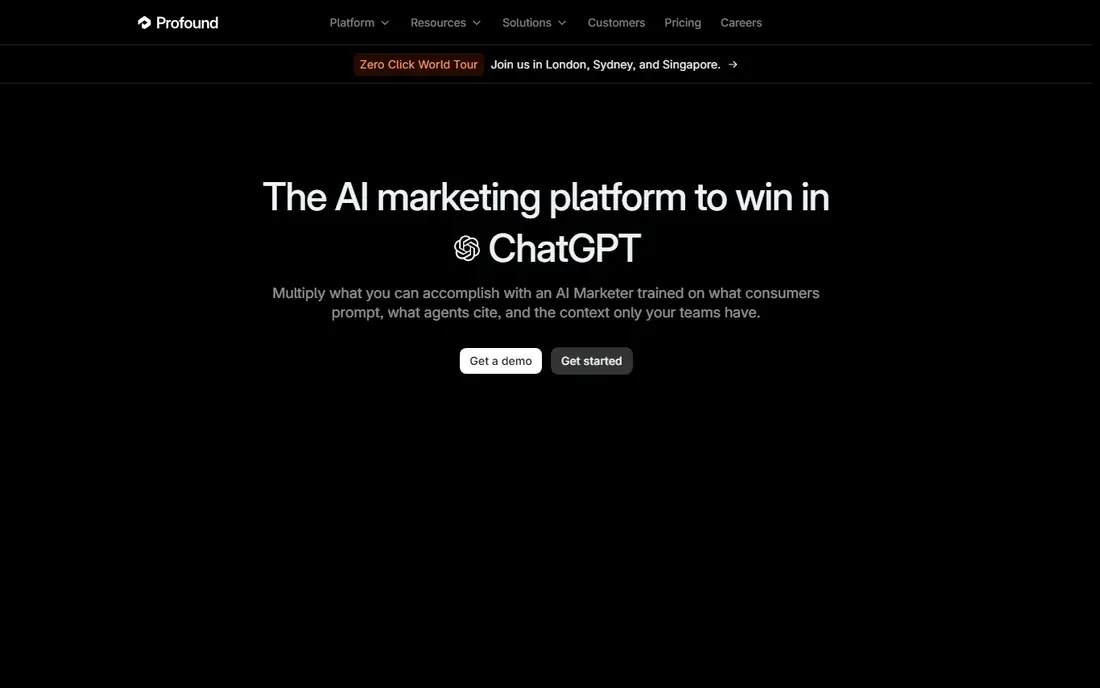
Profound is the most complete platform in this list for a large brand. It tracks how AI engines describe a brand, which sources they cite, and how sentiment shifts over time, then its agents propose content work, from rewriting a page to building a page for a question no existing page answers. That action layer is the difference between a report and a program: a team can move from seeing a gap to fixing it in the same system.
The cost and complexity match that depth. Profound is priced for enterprises, with a free trial to start, and it works best when a marketing team owns AI search as a channel, not as a side project. Smaller teams will find the same tracking in cheaper tools. Large teams that need governance, multi-brand views, and agent workflows will get the most from Profound.
What we like- Tracks many engines
- Agents that draft and stage content changes
- Strong benchmarking and sentiment views
Watch out for- Pricing is custom and enterprise level
- Setup needs a dedicated owner
#2Peec AI
Best for: Mid-market benchmarking4.7/5 on
G2 (21 reviews, checked Oct 2026)
Visit peec.ai
Starting price$95 per month
Free planFree trial
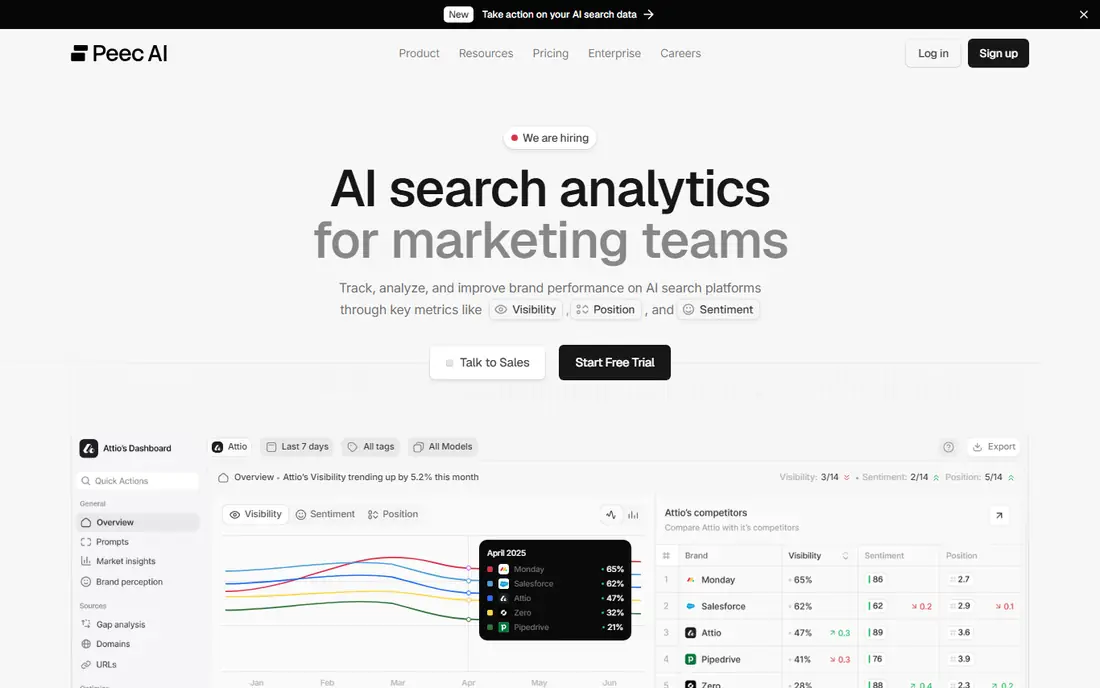
Peec AI is a clean, mid-market answer to AI visibility. It runs a set of prompts across chosen models, such as ChatGPT, Gemini, and Perplexity, and reports visibility, position, and sentiment for a brand against competitors. The interface favors readable reports over dense dashboards, which helps agencies share results with clients without a long explanation.
Entry pricing is about $95 per month, or about $80 per month when billed annually, for 50 prompts and three models. That limit matters: a team tracking many product lines or markets will need a higher plan. Peec suits mid-market brands and agencies that want reliable benchmarking and do not need enterprise agent workflows.
What we like- Clear visibility, position, and sentiment metrics
- Multi-country and multi-language tracking
- Shareable reports
Watch out for- Entry plan covers 50 prompts and a limited set of models
- More models are add-ons
Starting price$29 per month
Free planFree trial
Otterly is the best starting point for a small team that wants to know whether AI engines mention its brand at all. For $29 per month, it tracks a small prompt set across core engines, shows citations and sentiment, and adds content audit tools that flag why a page is not being cited. That combination of tracking plus a fix list is useful at this price.
The prompt limit is the main constraint. Fifteen prompts cover a core product or service, not a full catalog. Teams should pick prompts that mirror real buyer questions, such as comparisons and best-for queries, rather than brand name searches alone. Otterly fits solo marketers, startups, and small agencies that need a first, honest read on AI visibility.
What we like- Lowest entry price in this list
- Tracks ChatGPT, Perplexity, Google AI Overviews, and more
- Content audit and briefs
Watch out for- Entry plan covers only 15 prompts
- Some engines are paid add-ons
Starting priceFree
Free planYes
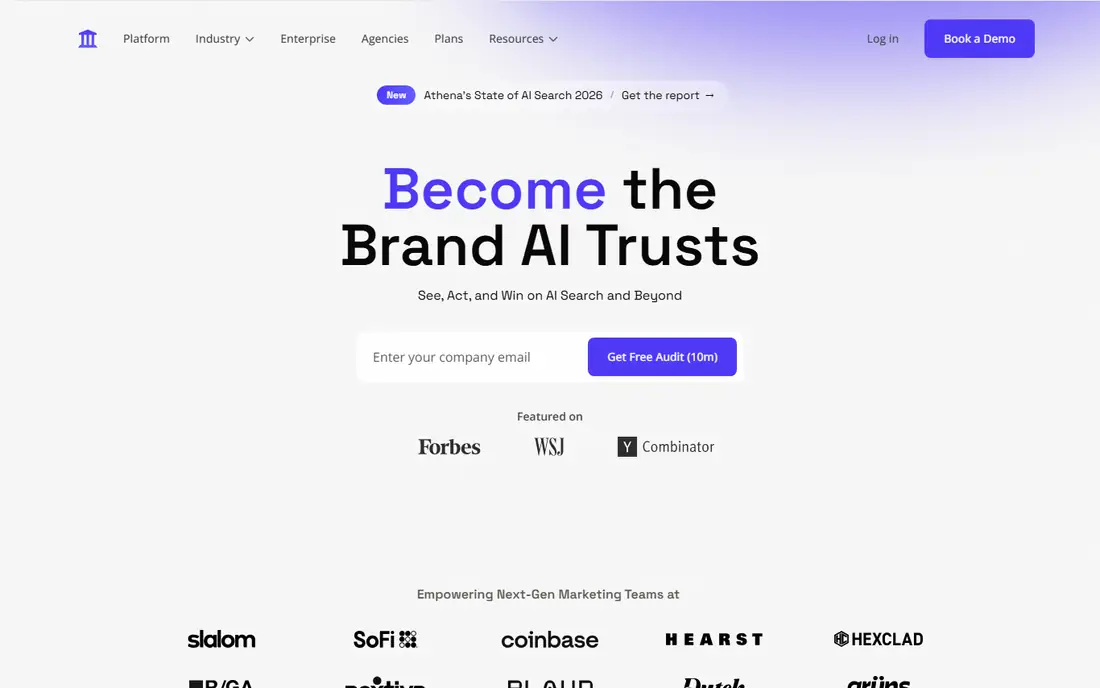
AthenaHQ combines tracking with an action workflow. It monitors brand mentions across many models, finds content gaps where AI has no good answer from your site, and surfaces citation sources to target. Its agents and action center turn those findings into prioritized work, such as a page to optimize or a source to earn coverage from.
The free tier makes it easy to test, but the paid Starter plan at $295 per month is a step up, and it runs on credits, with one credit per answer in some reports. Teams should test the free tier, count how many prompts and checks they truly need, and price credits before committing. Athena suits teams that want to act on visibility data, not just read it.
What we like- Free tier to start
- Tracks 11 or more models on paid plans
- Content gap and citation tools with an action layer
Watch out for- Paid Starter plan is $295 per month, a large jump from free
- Credit limits need care
Starting priceSee website
Free planNo
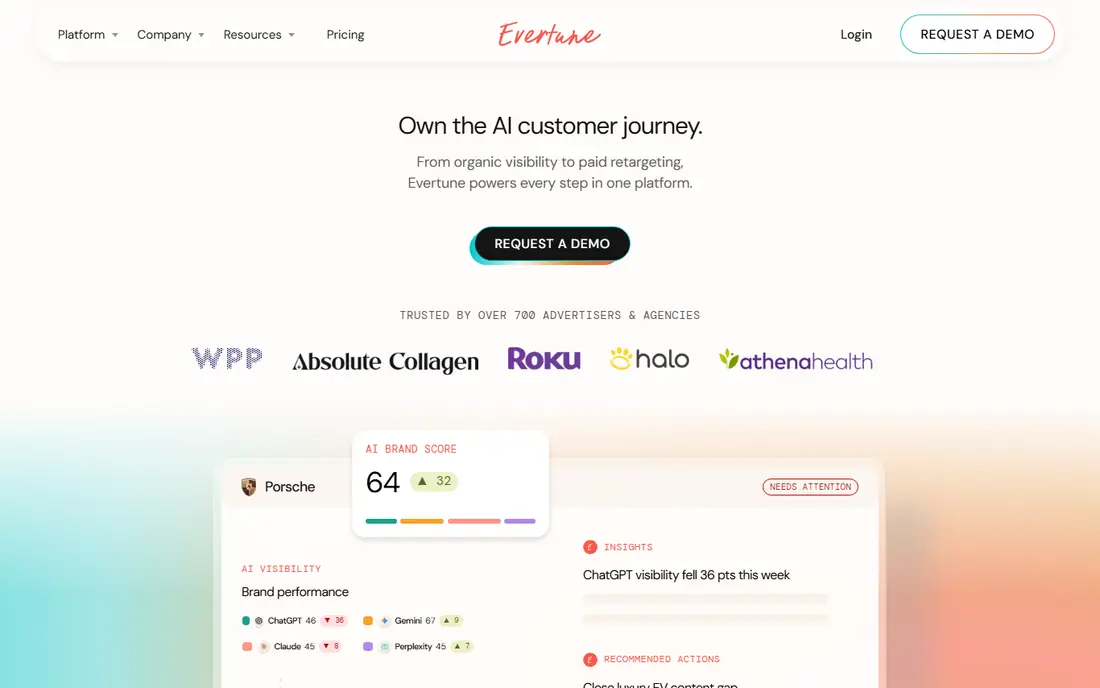
Evertune takes a research-led approach. It samples each prompt many times across models, which gives a more stable read than a single run, because AI answers vary from run to run. It also grounds prompt choice in real user behavior from its consumer panel, rather than guesses about what buyers ask. That matters for large brands, where a small visibility shift can mean real revenue.
Evertune also links visibility to action beyond content, including advertising inside AI conversations and retargeting after them. That breadth suits advertisers and agencies with large budgets. Smaller teams may find the platform more than they need, and pricing requires a demo or sales conversation, so budget it as an enterprise purchase.
What we like- Samples prompts many times for statistical confidence
- Real user prompt data
- Content and advertising actions from visibility data
Watch out for- Pricing is not published in a simple plan list
- Built for larger advertisers
Starting price$99 per month
Free planFree trial
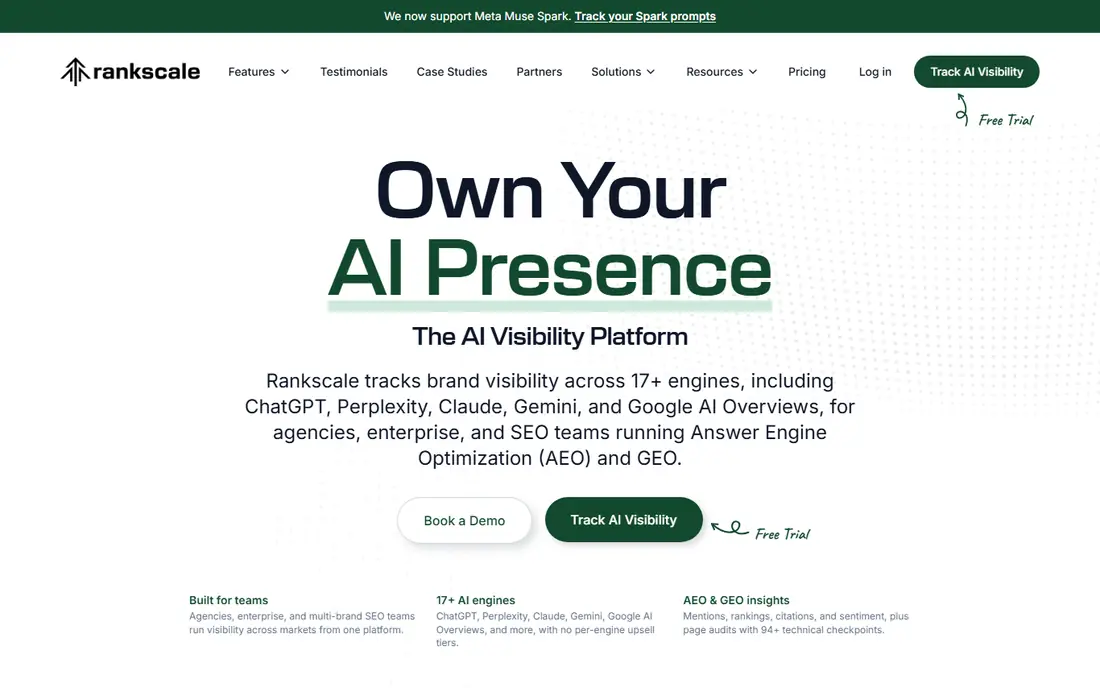
Rankscale is a broad, credit-based suite for AI search optimization. It tracks brand visibility across 17 or more engines, shows which domains and pages AI cites, and runs page audits that score AI readiness across many factors, from crawlability to content structure. That audit layer helps a team fix the technical reasons a page is ignored, not just rewrite copy.
Pricing starts at about $99 per month for the Pro plan, with credits that control how much tracking and auditing you can run. Agencies like the flexibility, because credits can be spread across clients. Teams should watch credit use in the first month and set a cap, so a large prompt set does not burn the budget early. Rankscale fits SEO teams and agencies that want wide engine coverage in one tool.
What we like- Tracks 17 or more engines
- Page audits with 200 or more factors
- Citation, sentiment, and competitor views
Watch out for- Credit-based pricing needs tracking
- Newer platform with fast-changing features
#7
Semrush AI Visibility Toolkit
Best for: Teams already using Semrush
Visit semrush.com
Starting price$99 per month per domain
Free planFree trial
Semrush AI Visibility Toolkit is the practical choice for teams that already live in Semrush. It adds prompt-level AI visibility, competitor comparisons, and sentiment to the SEO data a team already uses, so AI work sits next to keyword rankings, site audits, and content tools. That context helps a team see whether an AI visibility gain also shows up in traffic.
Pricing is about $99 per month per domain, on top of a Semrush plan in many cases, so multi-domain teams should price the total, not just the toolkit. It suits in-house SEO teams and agencies that already pay for Semrush and want AI tracking without a second platform. Teams with no Semrush use may find a dedicated tool cheaper.
What we like- Prompt-level visibility inside a familiar SEO suite
- Competitor share of voice
- Links AI visibility to SEO data
Watch out for- Priced per domain, so multi-brand costs add up
- AI toolkit is an add-on to Semrush plans
Starting priceSee website
Free planFree trial
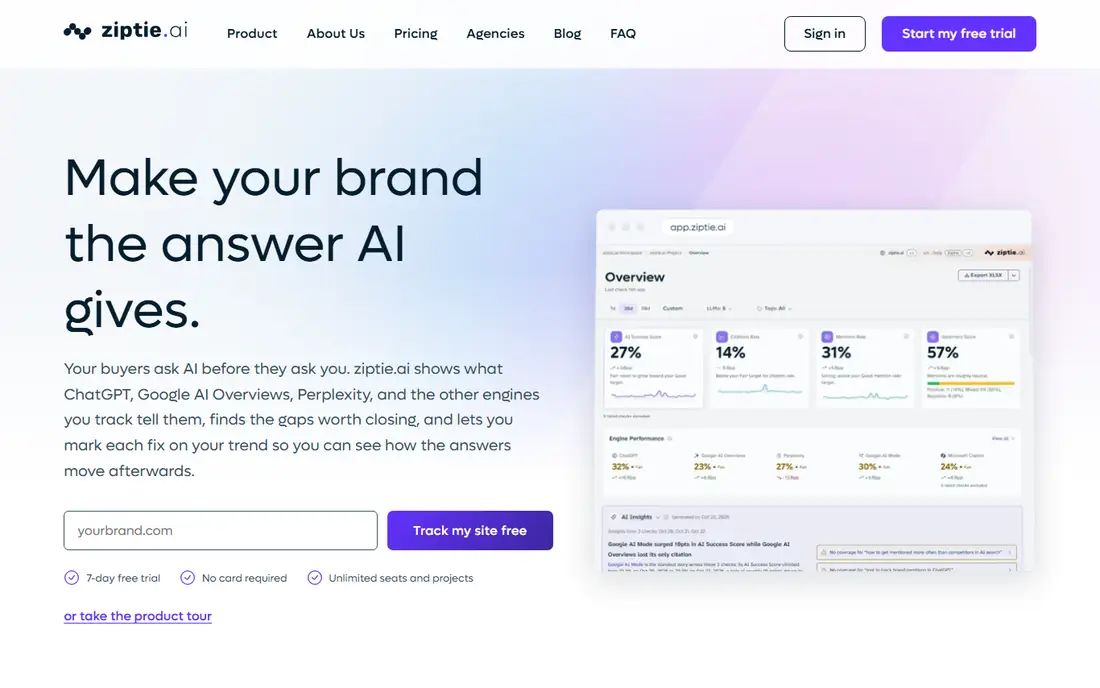
ZipTie prices AI visibility by what you actually track, not by seats or projects. Each prompt checked on each engine costs about a cent, so a small prompt set checked weekly costs far less than a large set checked daily. That model suits agencies with many clients and in-house teams with a portfolio of brands, because seats, projects, and competitors do not add fees.
The platform also turns findings into a ranked action queue, so a team sees which gaps matter most, such as a prompt where no engine names the brand, or a competitor that just passed it. A 7-day free trial lets a team test the workflow. ZipTie fits teams that want flexible volume and clear pricing math, and who are comfortable sizing a plan from prompt count rather than a flat tier.
What we like- Priced by prompts and engines, about a cent per check
- Unlimited seats, projects, and competitors
- Clear action queue
Watch out for- No permanent free plan
- Pricing examples vary by prompt volume and check frequency
How we chose
We compared vendor pricing pages, product documentation, and public reviews, focusing on tools that track brand visibility in AI answers from large language models and AI search engines. A tool earned a place when it ran real prompts across named engines, reported mentions, citations, or sentiment, and offered a clear starting price or trial. Two tools from early research were left out after homepage checks: Scrunch failed to load in the check, and Goodie at goodie.ai resolved to a domain-for-sale page rather than a product site, so both were replaced with Semrush and ZipTie, whose homepages loaded and matched their products. Prices shown are starting prices where a vendor publishes a clear figure, and See website means pricing is custom, credit-based with variable examples, or changes by plan.
Start with prompts, not with the tool. List the questions buyers actually ask AI about your category, including comparisons, best-for questions, and problem questions. Add a few branded prompts, but weight the list toward unbranded questions, because those are where new customers are won or lost. A tool that only tracks your brand name will tell you little about growth.
Treat visibility as a sample, not a census
AI answers vary from run to run, by location, and by model version. A single check is a snapshot, not a fact. Track the same prompts over weeks, look at trends and share of voice against competitors, and open the actual answers behind a number before acting on it. Tools that sample many times, such as Evertune, reduce noise, but even they measure your chosen prompts, not every conversation.
Fix the source, not just your page
AI engines cite third-party sources often, including review sites, forums, news, and comparison pages. If a competitor wins a prompt because a trusted third-party page recommends it, rewriting your own page alone may not move the answer. Check the citation list in your tool, earn coverage or corrections on the sources that matter, and make your own pages easy to cite with clear facts, structured headings, and direct answers.
Prove a change worked
Record the date a change went live, such as a new page, a rewritten section, or a corrected fact, and watch the prompt trend after that date. ZipTie and similar tools let you mark a fix on a trend, which helps separate a real improvement from normal variation. Without that discipline, AI visibility work becomes a set of reports with no link to results.
Frequently asked questions
What is LLM optimization, and how is it different from SEO?
LLM optimization, also called generative engine optimization, aims to make a brand visible and cited in AI-generated answers, not just in search result links. Traditional SEO targets rankings and clicks. LLM optimization targets mentions, citations, sentiment, and recommendations inside AI answers, which often appear before a user clicks anything.
Which LLM optimization tool is best for a small business?
Otterly, from $29 per month, is the lowest cost starting point, and ZipTie can also be low cost for a small prompt set checked weekly. Start with a small, focused prompt list, prove the tool helps you find gaps, and only then expand prompts or move to a larger platform.
How many prompts should I track?
Start with 15 to 50 prompts that cover your core category, comparisons, and buyer problems. That range fits entry plans from Otterly and Peec AI. Expand only when you have acted on the first set, because a large prompt list with no fixes is just a larger report.
Can these tools guarantee that AI will mention my brand?
No. No tool can force an AI engine to mention a brand. These tools measure visibility, find gaps, and suggest content and source fixes. Whether an engine cites you depends on your content, your third-party coverage, and how the engine weighs sources, all of which change over time.
Do I still need traditional SEO if I use an LLM optimization tool?
Yes. AI engines draw heavily on web content, rankings, and trusted sources, so strong SEO, clear content, and good coverage support AI visibility. Treat LLM optimization as an added layer on SEO, not a replacement for it.
How often should AI visibility be checked?
Weekly checks suit most teams, with daily checks for hero prompts during a launch or a crisis. Daily checks on every prompt burn credits fast and add noise, because AI answers vary run to run. Set a cadence that matches how often you can act on the results.
Sources we checked (8)
- https://www.tryprofound.com/pricing
- https://peec.ai/pricing
- https://otterly.ai/pricing
- https://www.athenahq.ai/pricing
- https://www.evertune.ai/pricing
- https://rankscale.ai/pricing
- https://www.semrush.com/pricing
- https://ziptie.ai/pricing
Is your product missing or out of date?
We review this list regularly. Vendors can request a listing, send updated pricing or ask about featured placement.

Shihab Mia · Founder, Rankite
Shihab has 5+ years in B2B and SaaS SEO. He writes Rankite's software buying guides from pricing pages, documentation and public user reviews. More about Shihab.