How we make this list: we compare pricing pages, product documentation and public user reviews. Ratings come from G2, Capterra or Trustpilot, with the date we checked them.
Key takeaways
- The Edge is the industry standard for independent jewelers, with appraisal, repair and memo management built for the trade.
- JewelMate (Logic Mate), Diaspark and JewelPOS offer full jewelry ERP: manufacturing, wholesale and retail in one system.
- DiamondCounter and ArtsMagna serve Canadian and Australian markets with jewelry-specific workflows.
- Generic retail POS cannot handle jewelry needs: appraisals, repairs, consignments, memo goods and metal pricing.
Quick comparison
Is your product missing or out of date?
We review this list regularly. Vendors can request a listing, send updated pricing or ask about featured placement.
The best jewelry store management software
Jewelry retail needs specialized software: appraisals, repairs, consignments, memo goods, metal and diamond pricing, and serialized inventory. Generic POS systems miss most of it. Eight jewelry-specific options.
Starting priceSee website
Free planNo
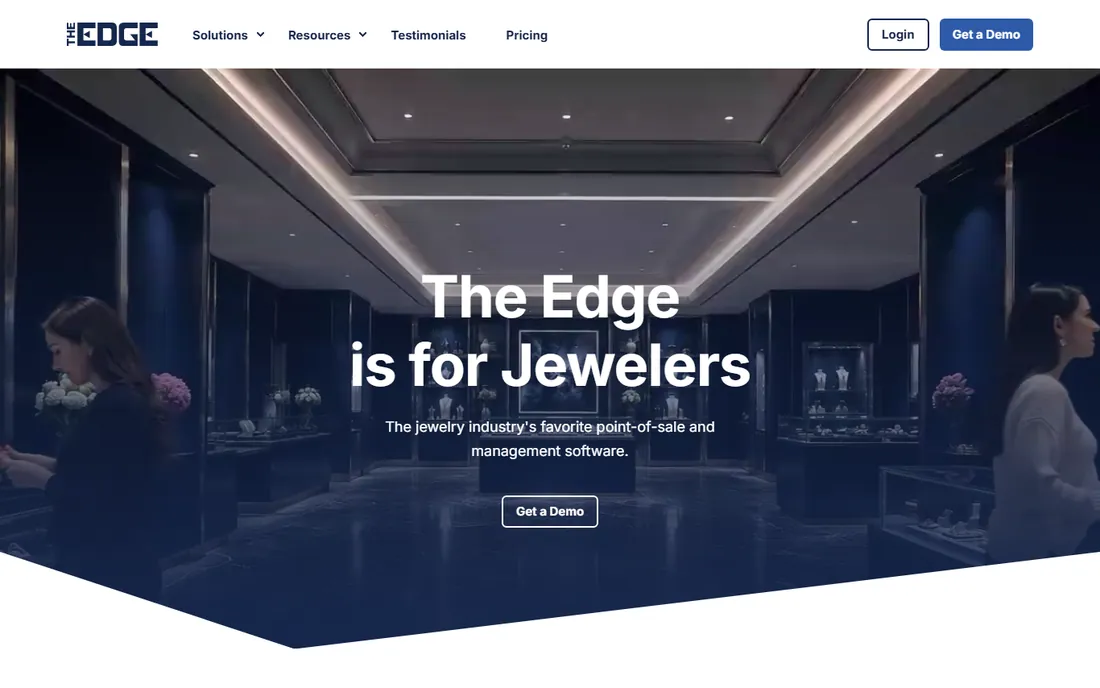
The Edge (Abbott Jewelry Systems) defines jewelry POS: appraisals, repair tracking, customer purchase history, commissions, consignments, supplier and wholesaler management, plus multi-store support and ecommerce integration.
It is a serious system with a learning curve. The Edge fits independent jewelers and small chains wanting the trade's most proven platform.
What we like- The jewelry industry standard since 2002
- Appraisal and repair tracking
- Commissions, consignments and multi-store
- Ecommerce integration
Watch out for- Windows-centric
- Implementation and training take time
- Pricing is quote-based
Starting priceSee website
Free planNo

JewelMate (Logic Mate) spans the jewelry business: retail POS, manufacturing, wholesale and inventory with jewelry-specific pricing and supplier management. The 1989 founding shows in domain depth.
Modern UX seekers may balk. JewelMate fits jewelry businesses needing retail plus manufacturing or wholesale in one system.
What we like- Logic Mate's long jewelry heritage since 1989
- Covers retail, manufacturing and wholesale
- Comprehensive inventory and pricing
Watch out for- Interface reflects its age
- Implementation is a project
Starting priceSee website
Free planNo
Diaspark runs jewelry operations end to end: retail, manufacturing ERP, live Kitco gold prices, Rapaport diamond pricing, RFID inventory control and multi-currency support, hosted on-premise or in the cloud.
Small single stores may find it heavy. Diaspark fits mid-size jewelry companies needing ERP depth with retail front ends.
What we like- Full jewelry ERP since 1995
- Live gold pricing and Rapaport integration
- RFID inventory
- Multi-currency
- On-premise or cloud
Watch out for- ERP complexity for small stores
- Pricing is custom
Starting priceSee website
Free planNo
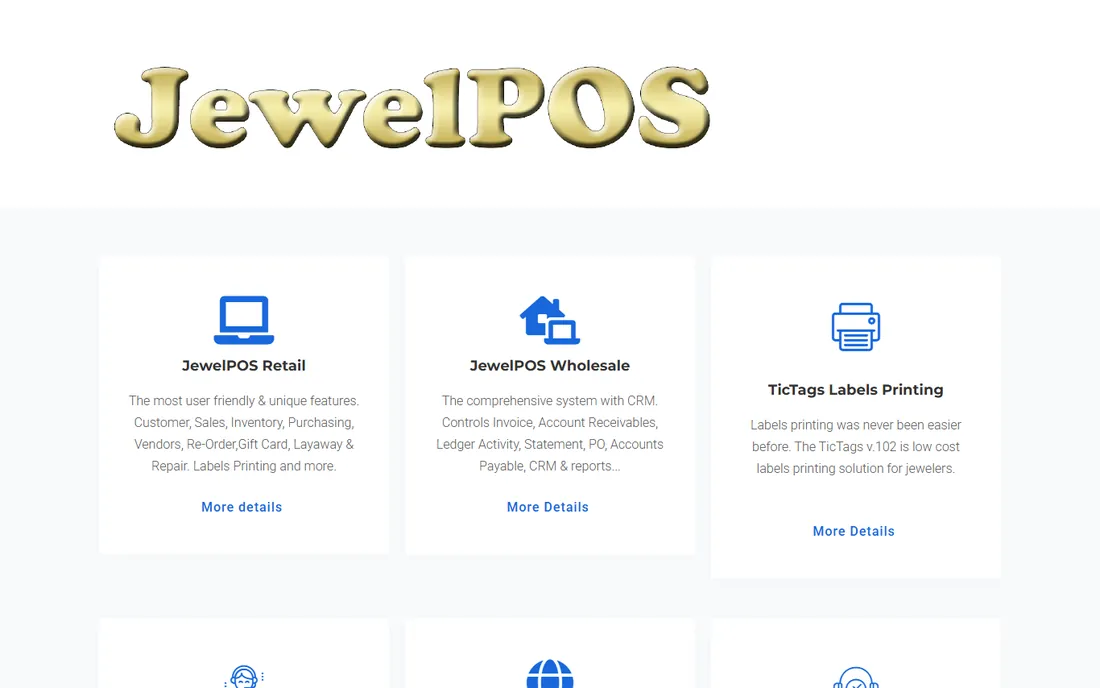
JewelPOS (POSitive Business Solutions) focuses on the jewelry point of sale: the appraisal, commission, consignment and repair workflows jewelers need, with multi-store support.
Reference customers are fewer. JewelPOS fits jewelers wanting a focused POS without full ERP complexity.
What we like- Purpose-built jewelry POS
- Appraisal, commission and repair workflows
- Multi-store management
Watch out for- Smaller vendor with less brand recognition
- Ecosystem is thin
Starting priceSee website
Free planNo
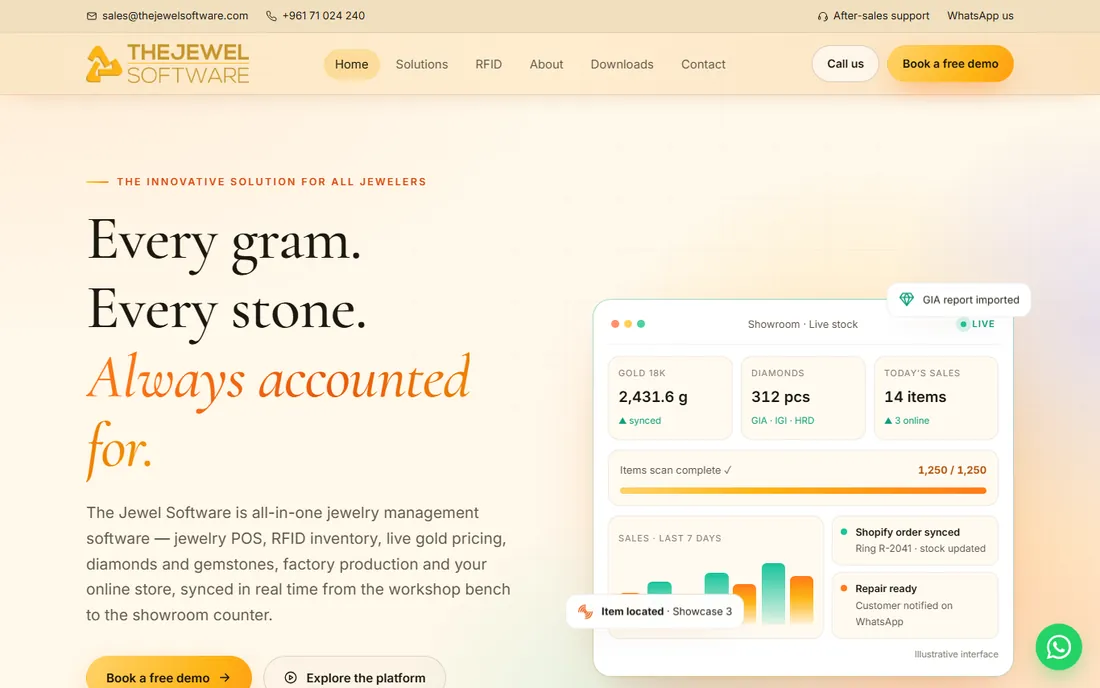
The Jewel Software manages jewelry retail and wholesale: appraisals, commissions, consignments, repairs and purchase history across stores.
US buyers should verify support coverage. It fits jewelry retailers and wholesalers wanting comprehensive trade workflows.
What we like- Covers retail and wholesale jewelry workflows
- Appraisal and repair management
- Multi-store support
Watch out for- Lebanon-based vendor with smaller global presence
- Limited third-party integrations
Starting priceSee website
Free planNo
ArtsMagna serves Australian jewelers with jewelry store management tuned to local business practices, backed by decades of regional presence.
International buyers need other options. ArtsMagna fits Australian jewelry retailers wanting local software and support.
What we like- Australian vendor since 1991
- Jewelry-specific retail workflows
- Local support and compliance
Watch out for- Regional focus limits global suitability
- Smaller feature set than the leaders
Starting priceSee website
Free planNo

DiamondCounter gives Canadian jewelers jewelry-specific POS and inventory with local support from Incom Technical Solutions.
The market reach is regional. It fits Canadian jewelry stores wanting domestic software and service.
What we like- Canadian vendor (Incom) with jewelry focus
- Appraisal, commission and inventory workflows
- Local market knowledge
Watch out for- Smaller vendor
- Regional focus
Starting priceSee website
Free planNo
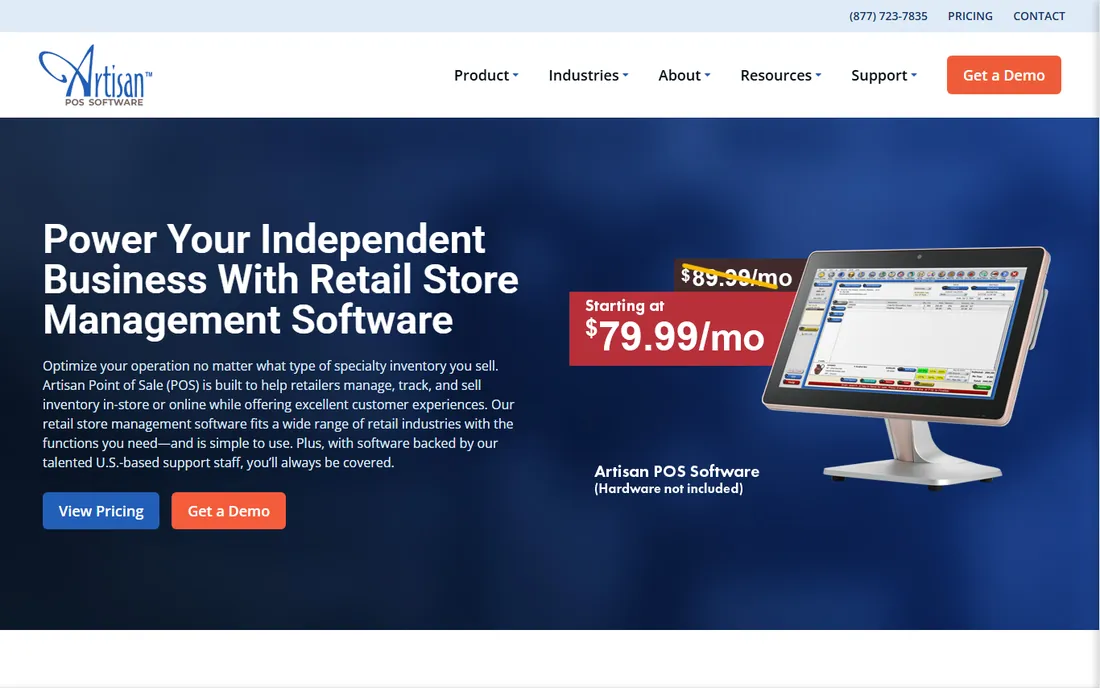
Artisan POS (CerTek Software Designs) offers retail POS with jewelry store management features, competing directly with The Edge on core workflows like commissions and consignments.
Dedicated jewelry depth trails the specialists. Artisan POS fits retailers wanting solid POS with jewelry capabilities.
What we like- CerTek's retail POS with jewelry comparisons
- Barcode, loyalty and multi-location
- Long track record since 1999
Watch out for- Less jewelry-specific than dedicated tools
- Appraisal workflows are thinner
What to check before you buy
Verify the jewelry-specific workflows you actually use: appraisals, repairs, memo goods, consignments and special orders. Generic POS demos gloss over these.
Check metal and diamond pricing integration: live gold feeds and Rapaport pricing save manual updates. Confirm serialized inventory tracking for high-value pieces. Verify repair tracking with customer notifications. Finally, ask about data migration from your current system and the training included.
What jewelers should digitize first
Jewelry stores run on knowledge that lives in the owner's head: which supplier has the best melee diamonds, what that regular customer bought for their anniversary, where the loose stones are. Digitizing everything at once overwhelms a small team. Prioritize in this order.
Inventory first, always. Jewelry inventory is high-value, small and easy to lose. A proper system with serialized tracking, vendor details, cost basis and location turns the annual inventory count from a week of dread into a routine. Start by entering new purchases religiously; backfill existing stock in batches during slow hours. The discipline matters more than the software.
Customer purchase history second. Jewelers live on relationships and repeat business: anniversaries, birthdays, upgrades. A system that records what each customer bought, their preferences and important dates powers the outreach that drives revenue. Train staff to look up the customer before every conversation, not after.
Repairs and special orders third. These are profit centers that leak money when tracked on paper tickets. A job tracking workflow with status updates, promised dates and automatic customer notifications reduces "is my ring ready" calls and catches jobs that would otherwise sit forgotten.
Supplier and memo tracking fourth. Memo goods (inventory on consignment from vendors) are a classic source of confusion and loss. The system should distinguish owned from memo stock clearly and age memo items so nothing sits for a year unnoticed.
Accounting integration last. Once the operational data is clean, connecting to the accounting system becomes straightforward. Doing it first, on top of messy inventory data, just produces reconciliations nobody trusts.
The common thread: each phase should pay for itself in time saved or losses prevented before the next begins. Jewelers who try to go live on everything in one weekend usually revert to paper by Friday.
How we chose
We selected jewelry management platforms with live products and real jeweler customers, spanning US industry standards and regional specialists, using vendor sites, documentation and public reviews. Pricing is quote-based across the category, so all prices are See website. We did not run a jewelry store.
Handling repairs, custom work and appraisals in software
Repairs, custom pieces and appraisals are where jewelers make their margins and where generic retail software falls apart. The workflows have quirks that deserve specific attention.
Repair intake needs to capture condition honestly. Photograph the item with the customer present, note every existing scratch and loose stone, and record the customer's description of the problem in their words. Disputes about "that scratch was already there" are the most common source of repair conflict, and good documentation ends them before they start.
Status tracking should be customer-visible. "We will call you when it is ready" generates anxious follow-up calls that eat staff time. A system that texts or emails status updates (received, in progress, quality check, ready for pickup) cuts those calls dramatically. Set expectations at intake with a realistic date range, then beat it.
Custom work needs milestone billing. A custom engagement ring might take six weeks and three customer approvals. Structure deposits around milestones: design approval, wax or CAD approval, completion. The software should track which milestone each job sits at and what has been paid. Custom pieces with no deposit structure are where jewelers lose money on abandoned projects.
Appraisals are a separate workflow with legal weight. Insurance appraisals need standardized formats, photographs, gemologist credentials and update cycles. Keep appraisal records linked to the original sale so updates take minutes instead of hours. Some stores treat appraisals as a loss leader for foot traffic; even then, the workflow should be efficient enough not to consume the bench jeweler's day.
Across all three, the principle is the same: the item's story (who owns it, what was wrong, what was done, what it is worth) should live in one searchable place. That record is what turns a transaction business into a relationship business.
Frequently asked questions
What is jewelry store management software?
Software combining point of sale with jewelry-specific workflows: appraisals, repairs, consignments, memo goods, serialized inventory, metal and diamond pricing, and commissions.
Why not use a generic retail POS?
Generic POS lacks appraisals, repair tracking, memo and consignment handling, serialized high-value inventory and live metal pricing. Jewelers end up with spreadsheets filling the gaps.
What is The Edge software?
The Edge by Abbott Jewelry Systems is the most widely used jewelry POS in the independent jeweler market, covering sales, appraisals, repairs, inventory and multi-store management since 2002.
What are memo goods?
Inventory a supplier places with a retailer on consignment-like terms: the jeweler displays and sells it, paying the supplier only when sold. Jewelry software tracks memo separately from owned stock.
How does live metal pricing work?
Platforms like Diaspark pull live gold prices (e.g. Kitco) and Rapaport diamond prices into the system, updating inventory valuations and price calculations automatically.
How much does jewelry software cost?
Pricing is quote-based and varies with stores, users and modules. Expect thousands annually for serious platforms; implementation and training add to first-year cost.
How long does it take to get a jewelry store system running?
A focused setup takes two to four weeks: inventory import, staff training and payment processing configuration. The long pole is usually data entry for existing inventory, which many stores do in batches during slow hours. Start with new purchases on day one so the system is correct going forward, then backfill historical stock without deadline pressure.
Do jewelry POS systems handle layaway and special orders?
The jewelry-specific ones do, and this is a key reason to prefer them over generic retail POS. Look for layaway tracking with payment schedules, special-order workflows tied to vendors, and memo goods handling that keeps consignment inventory clearly separated from owned stock. If a system treats everything as a simple sale, it was not built for jewelers.
Should a jewelry store keep its old system running in parallel?
Briefly, yes. Run the new system alongside the old one for two to four weeks while staff build confidence, then commit fully. Extended parallel runs double the data entry work and guarantee the two systems disagree, which destroys trust in the new one. Pick a cutover date, prepare thoroughly, and switch.
Sources we checked (8)
- https://www.theedgeforjewelers.com
- https://www.logicmate.com
- https://www.diaspark.com
- https://www.jewelpos.com
- https://www.thejewelsoftware.com
- https://www.artsmagna.com
- https://www.incom.ca
- https://certek.com
Is your product missing or out of date?
We review this list regularly. Vendors can request a listing, send updated pricing or ask about featured placement.

Shihab Mia · Founder, Rankite
Shihab has 5+ years in B2B and SaaS SEO. He writes Rankite's software buying guides from pricing pages, documentation and public user reviews. More about Shihab.
 The Edge
 JewelMate
 Diaspark
 JewelPOS
 The Jewel Software
 ArtsMagna
 DiamondCounter
 Artisan POS