How we make this list: we compare pricing pages, product documentation and public user reviews. Ratings come from G2, Capterra or Trustpilot, with the date we checked them.
Key takeaways
- Insurance analytics splits into pricing and underwriting, claims and fraud, and general business reporting, and few tools cover all three equally well.
- Core-system analytics from Guidewire and Duck Creek suit carriers already running those platforms, while SAS and Tableau suit teams with their own data stack.
- Fraud and claims specialists such as Shift Technology and FRISS fit carriers that need targeted models without replacing a core system.
- Most enterprise tools in this list are sold on quote, so implementation, data cleanup, and integration often cost as much as the license.
- Analytics should support human underwriting and claims decisions, not replace them, especially where regulation and fairness checks apply.
Quick comparison
Is your product missing or out of date?
We review this list regularly. Vendors can request a listing, send updated pricing or ask about featured placement.
The best insurance analytics software
Starting priceSee website
Free planNo
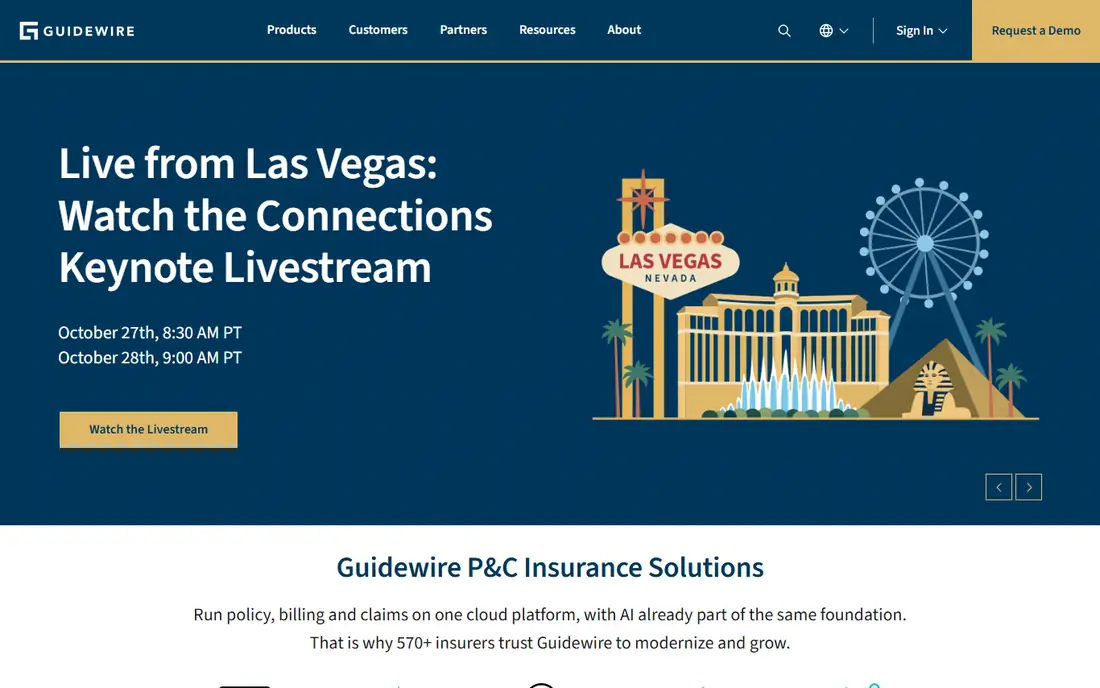
Guidewire Analytics suits carriers that already run PolicyCenter, BillingCenter, or ClaimCenter and want analytics close to that operational data. Predictions and benchmarks can sit inside claims workflows, so adjusters and underwriters see risk signals where they already work, rather than opening a separate reporting tool. That closeness reduces the data plumbing that usually slows insurance analytics projects.
The limit is scope. A carrier that does not run Guidewire gains little from a tool built around its data model, and a carrier with a mixed core stack still needs integration work to bring other lines into one view. Pricing is quoted, and implementation timelines often run into months when historical data needs cleaning. Guidewire Analytics is a strong shortlist pick for Guidewire shops, and a poor first pick for everyone else.
What we like- Built for Guidewire policy, billing, and claims data
- Benchmark and prediction features for existing users
- Shared data model across modules
Watch out for- Quote-only pricing
- Weakest value outside Guidewire
- Implementation depends on data quality in core systems
Starting priceSee website
Free planNo
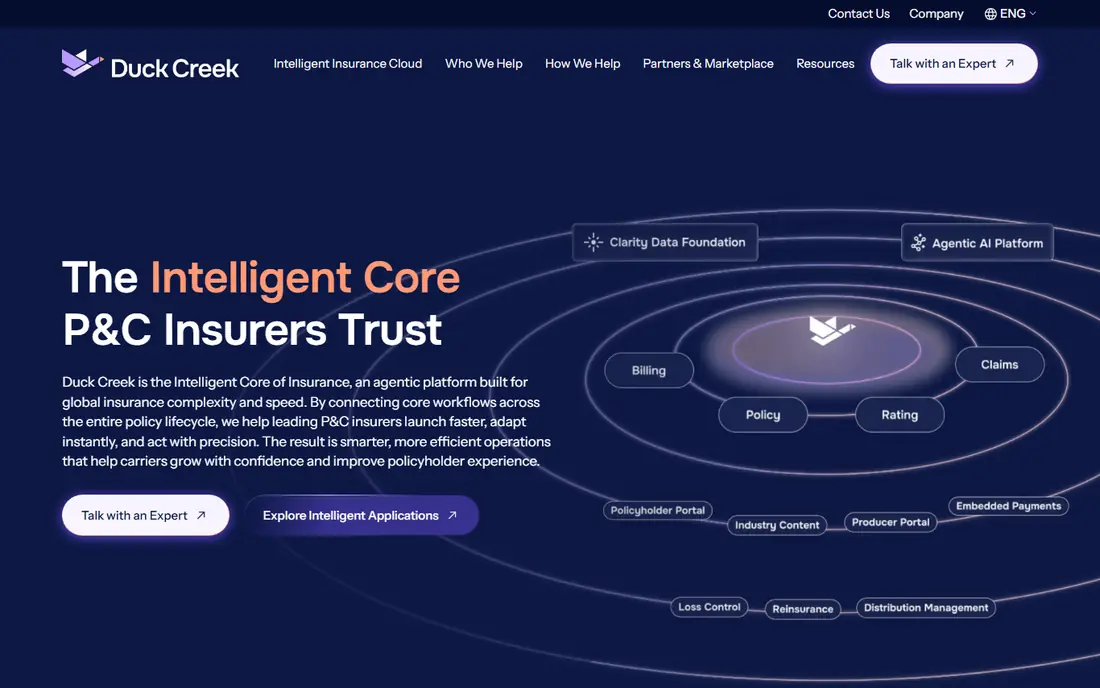
Duck Creek Insights, built on the Clarity data foundation, gives Duck Creek carriers a unified view of policy, claims, and billing data for reporting and analysis. Teams can track loss trends, claims handling, and portfolio mix without building a warehouse from scratch, and dashboards can be shared across underwriting, claims, and finance. For a carrier standardizing on Duck Creek, that shared foundation is the main advantage.
The honest catch is that a data foundation still needs clean, consistent source data. Carriers with custom fields, legacy migrations, or partial Duck Creek adoption should expect a longer setup and more data work than a demo suggests. Pricing is quoted by scope, so a small carrier should ask early what is included in the base price and what counts as a separate implementation or data service.
What we like- Data foundation for Duck Creek core data
- Dashboards for underwriting and claims
- Cloud-based delivery
Watch out for- Quote-only pricing
- Standalone setup can take months
- Value depends on Duck Creek adoption

#3SAS Viya
Best for: Enterprise modeling teams4.3/5 on
G2 (821 reviews, checked Oct 2026)
Visit sas.com
Starting priceSee website
Free planNo

SAS Viya is the modeling platform in this list, not just a dashboard tool. Actuaries and data scientists can build, test, and govern pricing, reserving, and risk models on large portfolios, with controls for versioning, validation, and audit that regulators and internal reviewers expect. That governance matters when a model affects premiums or reserves across many lines and states.
The cost is skill and time. SAS Viya assumes a team that can build and maintain models, and a carrier without that team will need consultants or a long hiring plan. It also takes longer to deliver a first business dashboard than Tableau or a core-system analytics module. SAS Viya fits large carriers and groups with a mature analytics function, and it is more platform than most mid-size carriers need for basic reporting.
What we like- Deep statistical and machine learning modeling
- Strong governance and audit trails
- Handles large, complex portfolios
Watch out for- Quote-only enterprise pricing
- Needs skilled data staff
- Longer implementation than dashboard tools

#4Tableau
Best for: Visual reporting and dashboards4.4/5 on
G2 (3,787 reviews, checked Oct 2026)
Visit tableau.com
Starting price$15 per user/month (billed annually)
Free planFree trial
Tableau is the general analytics tool that insurance teams use when they need flexible dashboards across claims, underwriting, sales, and finance. Analysts can connect to warehouses, core extracts, and spreadsheets, then build loss ratio views, claims cycle views, and agency performance views that managers can filter themselves. Viewer pricing at $15 per user per month billed annually makes broad sharing affordable, while Creator at $75 covers full authoring.
Tableau does not solve insurance data problems by itself. It visualizes whatever data it is given, so a carrier with messy claims coding or split policy systems still needs data work before dashboards become trustworthy. It also lacks insurance-specific models for pricing or fraud, so teams usually pair Tableau with a specialist tool or with models built elsewhere. Tableau is the right pick for reporting breadth, and the wrong pick as a standalone underwriting engine.
What we like- Flexible dashboards and visual analysis
- Wide connector library
- Role-based Viewer pricing for broad sharing
Watch out for- Needs a clean data source to shine
- Creator price is much higher than Viewer
- Governance needs Enterprise controls
Starting priceSee website
Free planNo

Sapiens DataSuite gives insurers a data and analytics layer built around insurance lines, with pre-built reports and customizable dashboards for underwriting, claims, and operations. The pitch is a unified view of detailed data across lines, so a carrier can compare performance without stitching together separate extracts for each product. Machine learning features support scoring and pattern detection in both back-office and customer-facing work.
The fit depends on the existing stack. DataSuite works most cleanly for carriers already using Sapiens core or data products, while carriers on other cores should check connector coverage and data mapping effort before committing. Pricing is quoted, and the number of reports and dashboards a carrier actually uses should shape the scope, since a broad rollout can grow into a long project. For Sapiens shops, DataSuite is a natural analytics layer.
What we like- Insurance-specific reports and dashboards
- Consolidates data across lines
- Machine learning features for back and front office
Watch out for- Quote-only pricing
- Strongest inside the Sapiens ecosystem
- Customization can extend timelines
Starting priceSee website
Free planNo
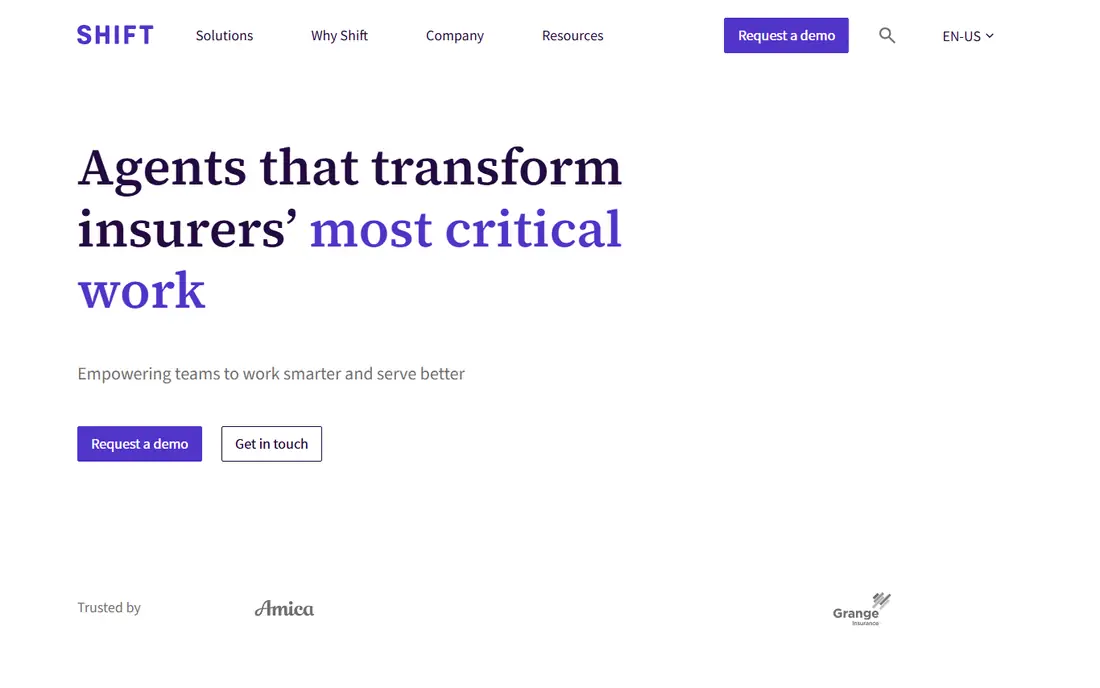
Shift Technology focuses on the claims side of insurance analytics, with models that flag suspicious claims, support automation, and help teams prioritize investigations. That narrow focus is an advantage for carriers whose main loss problem is fraud or slow claims triage, because the tool does not require a core replacement to deliver value. It can sit alongside existing claims systems and feed decisions back into the workflow adjusters already use.
The limit is tuning. Fraud patterns differ by line, region, and product, so a model that works for auto claims may need real adjustment for property or health lines. Carriers should also plan for document quality, since incomplete medical or repair records weaken any claims model. Shift Technology suits carriers that want a targeted fraud and claims improvement without a full platform change.
What we like- Focused fraud and claims automation models
- Works across many claim types
- Can sit alongside existing core systems
Watch out for- Quote-only pricing
- Fraud models need tuning for each portfolio
- Results depend on claim document quality
Starting priceSee website
Free planNo
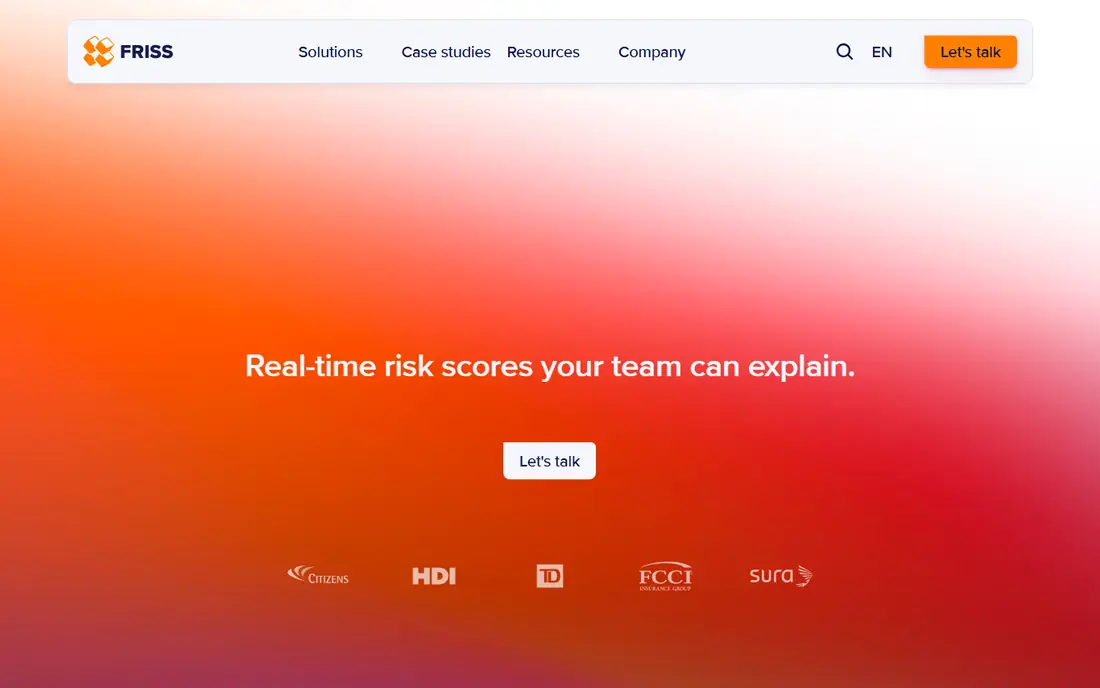
FRISS gives underwriters and claims teams a fraud and risk score at the moment of decision, rather than a report reviewed weeks later. That timing matters, because a score delivered after a policy is bound or a claim is paid has far less value. The platform is modular, so a carrier can start with one line or one decision point, such as claims fraud, and expand to underwriting as the team gains confidence in the scores.
The work after purchase is calibration and integration. Scores must be tuned to the carrier's portfolio, appetite, and local fraud patterns, and the platform must connect cleanly to policy and claims workflows to avoid extra manual steps. FRISS is not a general reporting tool, so carriers that also need pricing models or executive dashboards will pair it with another tool in this list. For fraud-led buying, FRISS is a focused and credible option.
What we like- Real-time fraud and risk scores at underwriting and claims
- Modular deployment by line
- Strong insurance focus
Watch out for- Quote-only pricing
- Scoring needs local calibration
- Integration work with core systems still required
Starting priceSee website
Free planNo
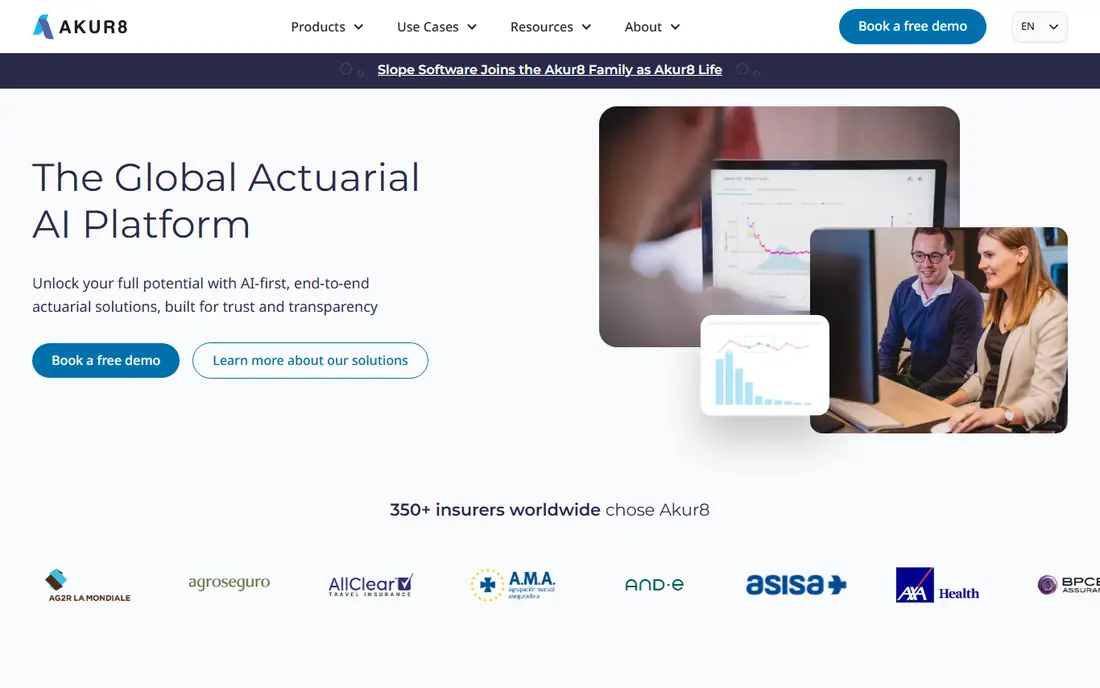
Akur8 targets the pricing desk directly. Actuaries can build, test, and refine rating models with a structure that reviewers can follow, which helps when a model must be explained to management or to a regulator. Faster iteration matters in competitive lines, where a pricing change delayed by months can cost premium volume or worsen loss ratios. The platform is built for insurance pricing, not as a generic modeling tool adapted to insurance.
The scope limit is clear. Akur8 does not replace claims analytics, fraud scoring, or general dashboards, so a carrier buying only Akur8 still needs reporting elsewhere. Regulatory filing and final actuarial judgment also remain human responsibilities, and no pricing platform removes that review. Akur8 suits carriers that want pricing speed with explainable models, and it pairs well with a reporting tool such as Tableau.
What we like- Pricing models built for actuarial review
- Transparent model structure
- Faster iteration than traditional builds
Watch out for- Quote-only pricing
- Pricing focus means claims and fraud need other tools
- Regulatory filing still needs actuarial sign-off
How we chose
We compared vendor product pages, documentation, and public reviews on G2, Capterra, and specialist insurance sources, and we weighed insurance fit, data requirements, model governance, and deployment scope. We favored tools with a clear insurance use, whether in core analytics, pricing, fraud, or reporting, and we left out generic tools with no insurance depth except Tableau, which many insurance teams use for dashboards. Most enterprise prices in this category are quoted, so we list See website where a vendor does not publish a price rather than guessing.
A note on decisions, compliance, and fairness
Analytics can improve insurance decisions, but it does not remove the need for human review. Underwriting, pricing, and fraud decisions affect people's coverage and claims, and they fall under state rules, filing requirements, and fairness expectations that vary by line and market. Keep a human in the loop for adverse decisions, keep records of model inputs and reasons, and test models for bias across protected groups before wide use. This guide is general information, not legal or actuarial advice, and a carrier should confirm regulatory requirements with its own compliance and actuarial teams.
Questions to ask every vendor
Ask how long a first production use case takes, what data cleanup the vendor expects from the carrier, and which integrations are included in the quoted price. Ask how models are validated, how often they are retrained, and what happens when a score is challenged. Ask for a reference carrier in the same line and size, and speak to that reference about total cost, not just license cost.
Frequently asked questions
What is insurance analytics software?
It is software that turns policy, claims, billing, and external data into analysis for underwriting, pricing, fraud detection, and operations. Some tools are built into core insurance platforms, while others are specialist models or general dashboards applied to insurance data.
Should a carrier buy core analytics or a specialist tool first?
Start with the biggest loss or delay. A carrier with fraud losses should shortlist Shift Technology or FRISS first, while a carrier with pricing delays should shortlist Akur8 or SAS Viya. Core analytics from Guidewire or Duck Creek makes sense when the carrier already runs that core and wants one data foundation.
Why do most tools in this list show See website for pricing?
Enterprise insurance software is usually quoted by carrier size, lines, data volume, and implementation scope, so vendors do not publish a single price. Ask for a quote that separates license, implementation, data work, and support, and compare total first-year cost across vendors.
How long does implementation take?
It varies widely. A dashboard on clean data can take weeks, while a core analytics foundation or a tuned fraud model can take months. The main driver is usually data quality and integration, not the analytics tool itself, so ask vendors to scope data work early.
Can small agencies use these tools?
Most tools here suit carriers and larger MGAs, not small retail agencies. Small agencies usually get analytics through their agency management system, a carrier portal, or a general dashboard tool such as Tableau, rather than buying an enterprise insurance platform directly.
Do these tools replace actuaries and adjusters?
No. They speed up analysis, surface patterns, and prioritize work, but pricing, reserving, coverage, and fraud decisions still need trained staff and, where required, regulatory review. The best results come when analytics supports experienced staff instead of replacing their judgment.
Sources we checked (8)
- https://www.guidewire.com/products/analytics/
- https://www.duckcreek.com/products/insights/
- https://www.sas.com/en_us/software/viya.html
- https://www.tableau.com/pricing/
- https://www.sapiens.com/products/datasuite/
- https://www.shift-technology.com/
- https://www.friss.com/
- https://www.akur8.com/
Is your product missing or out of date?
We review this list regularly. Vendors can request a listing, send updated pricing or ask about featured placement.

Shihab Mia · Founder, Rankite
Shihab has 5+ years in B2B and SaaS SEO. He writes Rankite's software buying guides from pricing pages, documentation and public user reviews. More about Shihab.
 Guidewire Analytics
 Duck Creek Insights
 Sapiens DataSuite
 Shift Technology
 FRISS
 Akur8