How we make this list: we compare pricing pages, product documentation and public user reviews. Ratings come from G2, Capterra or Trustpilot, with the date we checked them.
Key takeaways
- EarnIn and MoneyLion suit people who want to avoid a mandatory monthly fee.
- Brigit and Tilt charge a monthly subscription, but bundle budgeting and credit tools with advances.
- Instant delivery almost always costs extra, while standard delivery is slower and often free.
- Starting limits are usually small and grow with steady direct deposits and repayment history.
- These apps cover a short gap before payday, not a recurring income shortfall.
Quick comparison
| Tool | Best for | Starting price | Free plan |
|---|
 EarnIn | Avoiding mandatory fees | See website | No |
 Brigit | Financial wellness tools | $8.99 to $15.99 per month | No |
 Dave | Budgeting and small advances | $1 to $5 per month | No |
 MoneyLion | No fee basic advances | See website | No |
 Tilt | Fast delivery with no tipping | $8 per month | No |
 Albert | Higher limits over time | See website | No |
 Klover | Low requirement access | See website | No |
 Chime MyPay | Existing Chime customers | See website | No |
Is your product missing or out of date?
We review this list regularly. Vendors can request a listing, send updated pricing or ask about featured placement.
The best instant money apps
This is not financial advice. Advance limits, fees, and eligibility change by state and by app, and small fees on a short advance can add up if you use an app every pay period. Check the current fee schedule in the app before you borrow, and consider a nonprofit credit counselor if a cash gap repeats each month.
Starting priceSee website
Free planNo
EarnIn lets workers access pay they have already earned before payday, rather than borrowing against future income in the traditional loan sense. There is no mandatory monthly fee, which makes it one of the lowest cost options for occasional use. Tips are optional, and standard delivery is slower than instant delivery, so the cheapest path is to plan a few days ahead when possible.
Eligibility depends on regular direct deposits and verifiable earnings, so gig workers with irregular pay may qualify for less or not at all. Instant transfer fees also vary, so check the fee shown before confirming. EarnIn fits hourly and salaried workers with steady paychecks who need an occasional bridge and want to avoid a subscription they pay even in months they do not borrow.
What we like- No mandatory monthly fee
- Advances based on earnings
- Optional tips rather than required fees
Watch out for- Instant delivery costs extra
- Limits start small and depend on pay history
Starting price$8.99 to $15.99 per month
Free planNo
Brigit bundles a cash advance with a wider financial toolkit. Paid plans include budgeting help, credit building features, and automatic checks for upcoming bills, alongside advances that in recent listings reach 500 dollars. There is no tipping model, which some users prefer because the cost is stated upfront as a monthly fee rather than a per advance tip or fee.
The subscription is the catch. You pay every month whether you take an advance or not, so Brigit costs more than a no fee app for rare use. Instant delivery may also carry a small extra fee depending on plan and bank. Brigit fits people who will actually use the budgeting and credit tools each month, and who want a predictable cost instead of variable tips and express fees.
What we like- Advances up to $500 in recent listings
- No tipping
- Credit building and budgeting tools included
Watch out for- Advance access requires a paid plan
- Monthly cost applies even when you do not borrow
Starting price$1 to $5 per month
Free planNo
Dave combines a small advance with budgeting tools, spending alerts, and a banking account option. The monthly subscription is low compared with Brigit or Tilt, which makes Dave attractive for people who want some structure without a larger fee. Advances grow with account history, direct deposits, and repayment behavior, so patient users can reach higher limits over time.
Instant delivery to an external debit card costs extra, and Dave's own checking account gives faster access in some cases. That structure rewards users who adopt Dave as a primary account, which may not suit everyone. Dave fits budget focused users who want a modest advance, regular alerts, and a low monthly cost, rather than the largest possible limit.
What we like- Advances up to $500 in recent listings
- Budgeting tools and alerts
- ExtraCash with clear repayment timing
Watch out for- Monthly subscription plus instant transfer fees
- Newer users start with lower limits
Starting priceSee website
Free planNo
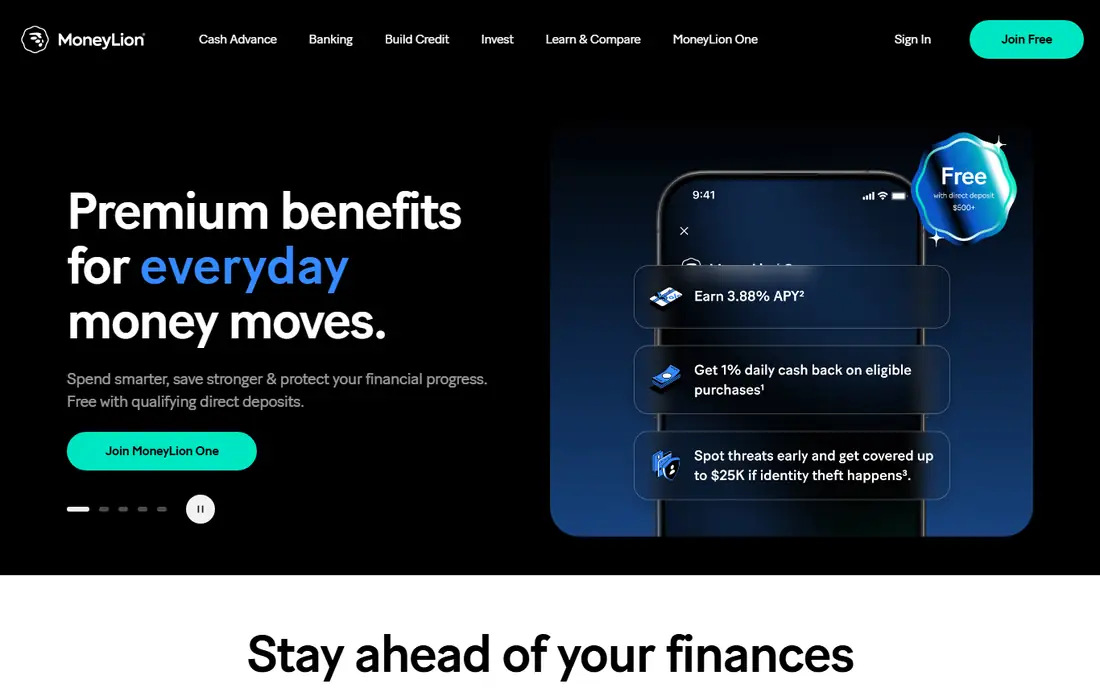
MoneyLion Instacash is one of the simplest no mandatory fee options. Basic advances do not require a subscription, and standard delivery can be free, though it takes longer. That makes MoneyLion useful for planned gaps where a few business days of waiting is acceptable. The wider MoneyLion app also offers banking, investing, and credit building tools for users who want more than an advance.
Turbo delivery for instant access costs extra, and the fee depends on amount and destination. Limits also start modestly and rise with direct deposit history and account use. MoneyLion fits people who want a free basic advance option without committing to a monthly plan, and who can wait for standard delivery or accept a clearly stated instant fee.
What we like- Instacash advances up to $500 in recent listings
- No mandatory fee for basic advances
- Standard delivery can be free
Watch out for- Instant delivery fees vary
- Higher limits may require a MoneyLion account
#5Tilt
Best for: Fast delivery with no tipping3.0/5 on
G2 (4 reviews, checked Oct 2026)
Visit tilt.com
Starting price$8 per month
Free planNo
Tilt positions itself as a straightforward subscription advance app without tipping pressure. For 8 dollars per month in recent listings, users get advances, spending tracking, and bill negotiation tools. Delivery can be fast once eligibility is set, which helps when a bill date is close. The absence of tipping makes the total cost easier to predict than tip based apps.
The subscription applies even in months without an advance, so occasional users may pay more here than with EarnIn or MoneyLion. Starting limits are also modest and grow with use. Tilt fits people who value clear pricing, use the budgeting tools, and expect to need advances more than once in a while, rather than once in a year.
What we like- No tipping model
- Advances with fast delivery options
- Bill negotiation and spending tools
Watch out for- Monthly subscription required
- Limits start modestly for new users
Starting priceSee website
Free planNo
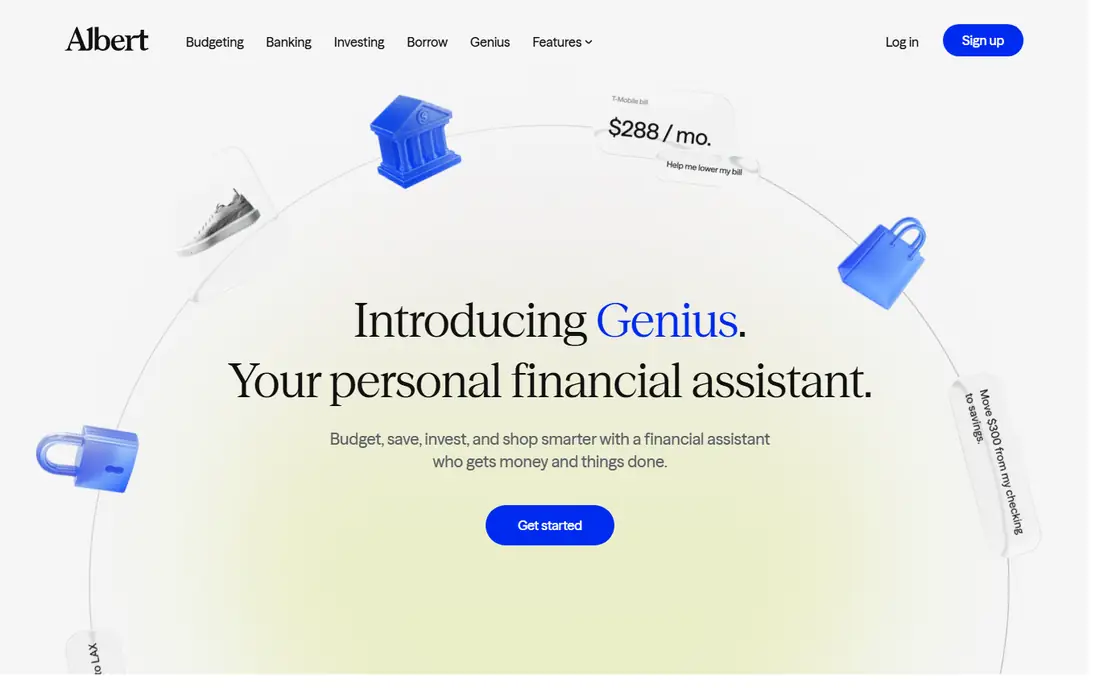
Albert Instant stands out for its ceiling. While new users often start with 25 to 50 dollars, established users can reach up to 1,000 dollars over time in recent listings. That growth path suits people who build history with the app and later face a larger one off gap. Albert also offers budgeting, saving, and investing tools, though those are separate from the advance feature.
Expedited delivery fees are the main cost to watch, and they can reach double digits for larger advances. Standard delivery is slower but cheaper, so timing matters. Albert fits users who want a single finance app, are willing to build a limit gradually, and will check the exact delivery fee before taking an advance.
What we like- Instant advances up to $1,000 over time in recent listings
- Budgeting and saving tools
- No subscription required for Instant alone
Watch out for- Expedited delivery fees can be high
- Starting limits for new users are small
Starting priceSee website
Free planNo
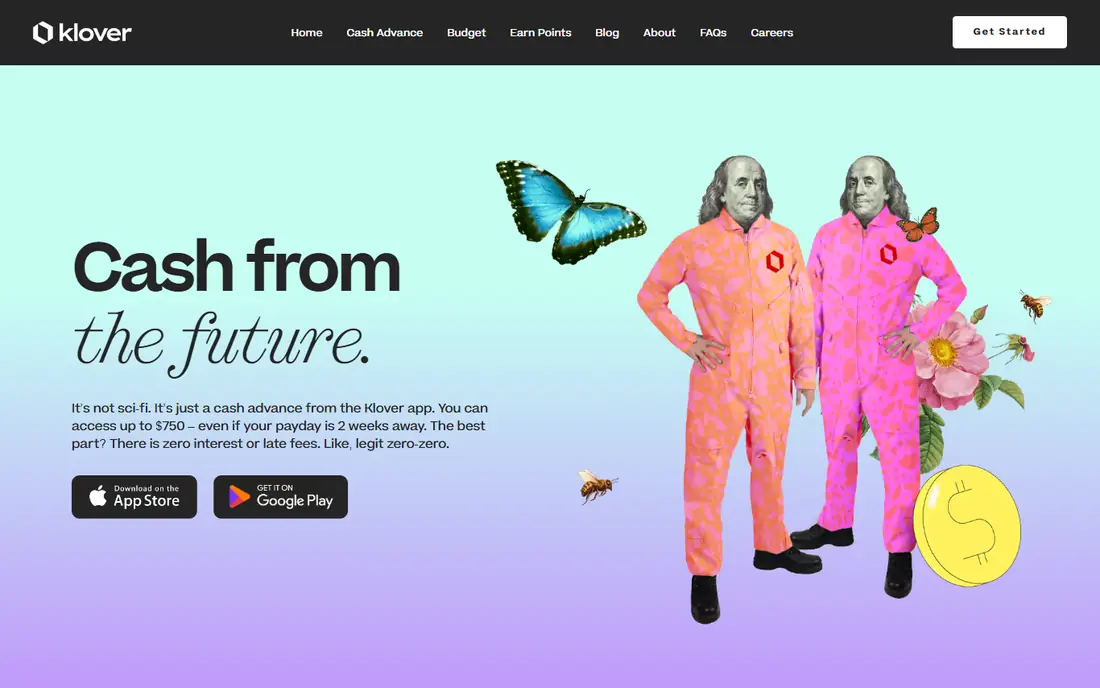
Klover takes a different route to eligibility. Instead of relying only on pay history, it uses a points system where users complete tasks, surveys, and offers to raise their advance limit. That model helps people who do not qualify for income based advances or who have irregular deposits. There is no subscription and no interest, which keeps the basic cost low.
The points system also takes effort, and starting limits are modest. Instant delivery fees vary by amount and method, so a small advance taken instantly can carry a disproportionate fee. Klover fits users who are shut out of pay based apps, have time to build points, and will use standard delivery when possible to keep costs down.
What we like- No subscription for basic access
- Points based model can raise limits
- No interest on advances
Watch out for- Limits can be low at first
- Instant delivery fees vary and can be costly
Starting priceSee website
Free planNo
Chime MyPay is not a standalone advance app. It is a feature for Chime checking customers with qualifying direct deposits, which is both its strength and its limit. For existing Chime users, MyPay offers a simple way to access pay early, with recent listings showing advances up to 500 dollars and a low capped instant fee. Standard delivery can be free or low cost depending on timing.
If you do not bank with Chime, MyPay is not an option without switching accounts and building deposit history. That switching cost matters, so do not open a new bank account only for a small advance unless you also want Chime as a primary account. For current Chime customers, MyPay is one of the lowest friction and lowest cost advance options available.
What we like- Advances up to $500 in recent listings
- Low instant fee structure in recent listings
- No mandatory monthly fee for MyPay alone
Watch out for- Requires a Chime checking account and direct deposit history
- Not available as a standalone app
How we chose
We compared advance limits, monthly fees, instant delivery fees, eligibility rules, and delivery speed across the most widely used US cash advance apps. We used recent comparison coverage and vendor pages for limits and fees, and we noted where those figures vary by state, bank, or account history. We excluded apps with unclear fee structures or very limited US availability, and we treated maximum limits as ceilings for established users, not starting amounts.
Keeping the cost down
The headline limit is the least important number for most users. Fees, delivery speed, and how often you borrow decide the real cost. A 5 dollar fee on a 100 dollar advance repaid in a week is expensive in annual terms, even though it sounds small. Use these apps for a genuine one off gap, and build a small buffer when you can so the next gap does not need an advance.
Choose standard delivery when you can
Instant delivery is convenient, but it is where most of the cost sits. If a bill can wait two or three business days, standard delivery is often free or much cheaper. Set a reminder for the repayment date, because a failed repayment can affect future limits and account standing.
Compare total monthly cost, not just the advance
Add the subscription, instant fees, and tips for a typical month of use. A no fee app with a high instant fee can cost more than a subscription app used twice. A subscription app used rarely costs more than both. Match the fee model to how often you actually borrow.
Watch for repeat borrowing
If you take an advance every pay period, the underlying gap is larger than a few days. Review spending, bill timing, and income timing, and consider free nonprofit credit counseling or a local assistance program. An advance that repeats is a signal to fix the budget, not to raise the limit.
Frequently asked questions
What is the best instant money app with no monthly fee?
EarnIn and MoneyLion are strong no mandatory fee options, with Chime MyPay also low cost for existing Chime customers. EarnIn suits steady paycheck workers, while MoneyLion suits users who can wait for standard delivery. Instant fees still apply on most no fee apps, so check the delivery fee before confirming.
How fast can I get money from these apps?
Instant delivery can arrive within minutes to an hour for a fee, depending on app and bank. Standard delivery usually takes one to three business days, and sometimes up to five. First time users may face longer checks, so do not rely on instant delivery for a same hour emergency until you have used the app.
Do cash advance apps check credit?
Most cash advance apps do not use a traditional credit check for eligibility. They review bank history, direct deposits, spending patterns, and repayment behavior instead. That helps people with thin or poor credit, but it also means irregular income or low balances can limit approval.
How much can I borrow on my first advance?
First advances are usually small, often 25 to 100 dollars, even when the app advertises a 500 or 1,000 dollar maximum. Limits rise with steady direct deposits, consistent repayment, and account history. Expect a gradual build rather than the headline limit on day one.
Are instant money apps safe?
Reputable apps use bank level security and clear fee disclosures, but safety also depends on cost and repeat use. Read the fee schedule, confirm repayment timing, and avoid apps that hide fees or push large tips. If an app asks for unusual permissions or charges before any advance, stop and check independent reviews.
Sources we checked (8)
- https://www.earnin.com
- https://www.hellobrigit.com
- https://www.dave.com
- https://www.moneylion.com
- https://www.tilt.com
- https://www.albert.com
- https://www.klover.app
- https://www.chime.com
Is your product missing or out of date?
We review this list regularly. Vendors can request a listing, send updated pricing or ask about featured placement.

Shihab Mia · Founder, Rankite
Shihab has 5+ years in B2B and SaaS SEO. He writes Rankite's software buying guides from pricing pages, documentation and public user reviews. More about Shihab.