How we make this list: we compare pricing pages, product documentation and public user reviews. Ratings come from G2, Capterra or Trustpilot, with the date we checked them.
Key takeaways
- You cannot freely choose an inmate text service: each facility contracts with one provider, and you must use that provider.
- Securus, GTL ConnectNetwork, and GettingOut cover most state prisons and jails, while CorrLinks covers the federal system.
- Messages are screened and monitored, delivery is not instant, and content rules can cause rejection.
- Costs vary by facility and provider, with stamps, per-message fees, or inmate-paid messaging in the federal system.
- Beware of third-party services that charge to forward messages: use only the official provider for the facility, and never pay a middleman.
Quick comparison
Is your product missing or out of date?
We review this list regularly. Vendors can request a listing, send updated pricing or ask about featured placement.
The best inmate text services
Starting priceSee website
Free planNo
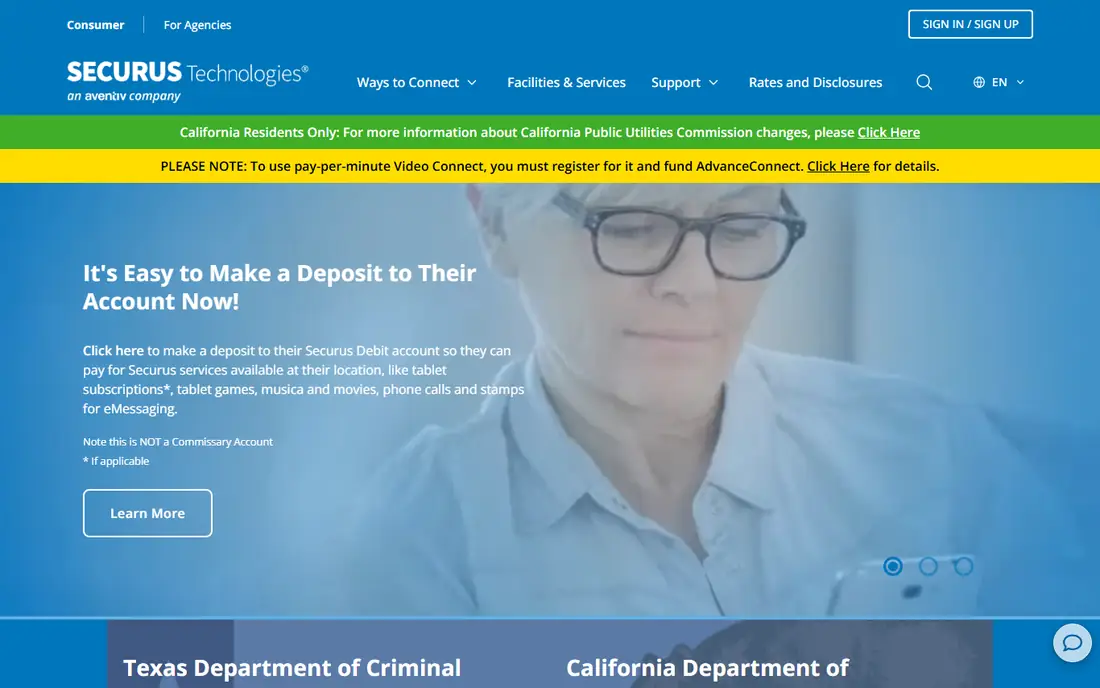
Securus Technologies, part of Aventiv, is one of the largest inmate communication providers in the United States, serving many state prison systems including Texas, where it is the primary way families communicate with incarcerated loved ones. Securus eMessaging works like email: you create a free account, add the inmate by name and ID number, buy stamps, and send messages with optional photos and eCards. Securus Text Connect adds real-time two-way chat where available, a step closer to normal texting than email-style messaging.
Costs vary by facility and by state contract, so there is no single national price to quote, which is why this article lists prices as See website. Messages are reviewed before delivery, so delivery is not instant, and content rules can cause rejection. Account setup takes about ten minutes if you have the inmate ID number ready. Securus also acquired JPay, and most JPay accounts have migrated to Securus, so former JPay users will usually message through Securus now.
What we like- Widest state prison coverage
- EMessaging plus real-time Text Connect
- Photos and eCards
Watch out for- Costs vary by facility
- Messages screened and delayed
- Account setup needs inmate ID
Starting priceSee website
Free planNo
GTL, now operating as ViaPath, runs ConnectNetwork, the platform many jails and state facilities use for messaging, phone calls, and commissary deposits. One account can cover messaging, call funding, and money deposits depending on the facility, which simplifies life for families supporting someone in a GTL facility. The mobile app lets you manage accounts, send messages, and monitor communication options from your phone.
As with Securus, costs depend on the facility contract, so families should check the price for their specific facility rather than expecting a national rate. The interface feels dated compared with consumer messaging apps, and service quality varies by facility, since each contract sets its own terms. If your loved one facility uses GTL, ConnectNetwork is the only official route for electronic messages, and learning its account and funding system early saves frustration later.
What we like- Wide jail and state coverage
- Messaging, calls, and deposits in one account
- Mobile app
Watch out for- Costs vary by facility
- Interface feels dated
- Service quality varies by facility contract
Starting priceSee website
Free planNo
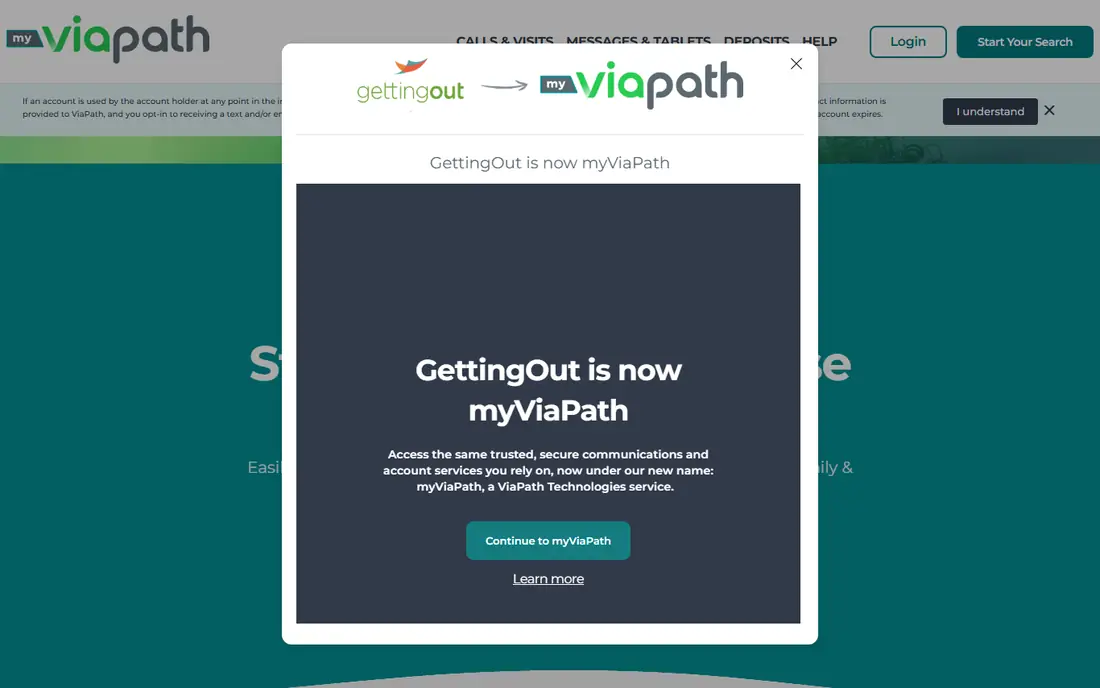
GettingOut, by Telmate, serves facilities that contract with Telmate, offering messaging, video visits, and deposit services through one platform. Inmates typically access messages on tablets or kiosks, and families can send messages, photos, and funds from the website or app. Video visits run as a separate service with its own scheduling, so families should not confuse a messaging account with a visit booking.
GettingOut only works where Telmate holds the facility contract, so it is irrelevant for Securus or GTL facilities, and costs vary by facility. For families in a Telmate facility, the combined messaging and video visit platform is convenient, and tablet access gives inmates a more normal messaging experience than printed messages. Check your facility listing on the GettingOut site first: if the facility is not listed, it uses a different provider.
What we like- Messaging plus video visits in one platform
- Tablet-based inmate access
- Deposit options
Watch out for- Limited to Telmate facilities
- Costs vary by facility
- Video visit scheduling separate from messaging
Starting priceSee website
Free planNo
JPay was one of the best-known inmate messaging brands, offering messages, photos, money transfers, and educational content to inmates in many facilities. Securus acquired JPay, and most JPay accounts have been migrated to Securus, so the JPay brand now functions largely as a legacy route into the Securus system. Long-term users who started with JPay will usually find their accounts and contacts inside Securus now.
For new users, the practical advice is simple: start with Securus rather than JPay, since that is where accounts now live. JPay remains on this list because many families still search for it by name, and understanding the migration prevents confusion when a JPay login redirects to Securus. Costs and rules follow the Securus facility contract, so check pricing inside the Securus account for your facility.
What we like- Familiar to long-term users
- Messaging, money transfers, and education content
- Merged into Securus
Watch out for- Accounts migrating to Securus
- New users should start with Securus
- Costs vary by facility
Starting priceSee website
Free planNo
CorrLinks is the public-facing side of the federal prison email system, known inside prisons as TRULINCS, and it is the official route for messaging people in federal prisons. Families create an account, add the inmate, and exchange email-style messages through the system, with all messages screened under federal rules. The interface is basic and slow by consumer standards, but it is the only approved electronic messaging route for federal facilities.
The cost model differs from state systems: in the federal system, the inmate pays for messaging from their commissary account, rather than the outside contact buying stamps. That affects budgeting, since families may need to send commissary funds to cover replies. CorrLinks does not work for state prisons or jails, so state families should use their facility provider instead. For federal families, CorrLinks is not a choice among options: it is the system.
What we like- Official federal system
- Used across federal prisons
- Email-style messaging
Watch out for- Inmate pays from commissary account
- Slow and basic interface
- Federal only
Starting priceSee website
Free planNo
TextBehind is a smaller inmate messaging provider used by a growing set of facilities, offering text-based messages with photo and greeting card options through a simple web and app flow. Families create an account, find the inmate and facility, fund the account, and send messages that pass through facility screening like other providers. Its simplicity is an advantage for families who find larger platforms confusing.
Coverage is the limit: TextBehind serves fewer facilities than Securus or GTL, so it only matters if your loved one facility contracts with it. Costs vary by facility, and extra services such as video visits or deposits may not be available through TextBehind. Check the facility listing before creating an account, and use the official TextBehind site rather than any third-party service that claims to forward messages to TextBehind facilities.
What we like- Simple message flow
- Photo and greeting card options
- Used by a growing set of facilities
Watch out for- Smaller coverage than Securus or GTL
- Costs vary by facility
- Fewer extra services
Starting priceSee website
Free planNo
Smart Communications provides messaging services including message-to-print systems, where family messages are printed and delivered to inmates in facilities that do not offer tablet messaging. That model suits jails and prisons with limited technology, and it gives families an electronic way to send letters without postal delays. The family flow is simple: create an account, select the facility and inmate, and send the message for printing and delivery.
Delivery is slower than tablet messaging, since printing and physical distribution add steps, and features are fewer than tablet platforms that support photos, video, and real-time chat. Smart Communications only works where it holds the facility contract. For families in those facilities, it is still far faster than postal mail, and it avoids the risk of a mailed letter being rejected for envelope or paper rules.
What we like- Message-to-print delivery
- Used where tablets are limited
- Simple family flow
Watch out for- Slower delivery than tablet messaging
- Fewer features
- Limited to contracted facilities
Starting priceFree
Free planYes
Ameelio is a nonprofit that offers free messaging to incarcerated people in participating facilities, removing the cost barrier that commercial providers impose on families. Its mission is to keep families connected regardless of income, and it charges families nothing for messages where it operates. That makes it the only genuinely free option on this list, and an important one for families struggling with stamp and per-message costs.
Coverage is the limit: Ameelio operates only in participating facilities, which are far fewer than Securus or GTL facilities, so most families cannot use it yet. Features are also fewer than commercial platforms, with messaging as the core service. If Ameelio serves your loved one facility, use it: it costs nothing and does the core job. If it does not, you must use the facility commercial provider, and Ameelio availability is worth checking first since it can save significant money.
What we like- Free for families
- Nonprofit mission
- Available in participating facilities
Watch out for- Limited facility coverage
- Fewer features than commercial providers
- Availability varies by state
How we chose
We compared the providers families are most likely to encounter, weighting facility coverage, messaging features, and cost transparency. We did not rank by user preference, since families cannot choose among providers for a given facility, and we flagged where costs vary by facility rather than quoting a national price that would mislead. Prices are listed as See website where they depend on facility contracts, and Ameelio is the only free option. We did not test any service hands-on, and we did not list third-party forwarding services, since those are not official providers and carry scam risks.
Buying guide
Start by identifying the official provider for the facility. Search the facility name on the provider sites or call the facility non-emergency line and ask which messaging provider it uses: Securus, GTL, GettingOut, CorrLinks, TextBehind, Smart Communications, or Ameelio. Create an account only on the official provider site, using the inmate full legal name and ID number, and fund the account through the provider payment system. Never pay a third-party website that claims to text an inmate for you: these services often charge high fees for messages the facility may reject, or simply take your money without delivering anything.
Once you know the provider, learn its rules before you send. Messages are screened, so avoid content that could be flagged, including discussions of criminal activity, escape plans, or coded language, since flagged messages can be rejected and can create problems for the inmate. Keep messages supportive and simple, expect delivery delays, and budget for ongoing costs: stamps or per-message fees add up for daily messaging, so set a weekly messaging budget. If cost is a barrier, ask the facility whether Ameelio or any free option is available, and check whether the inmate can reply from commissary funds in the federal system.
Frequently asked questions
Can I choose which inmate text service to use?
No. Each facility contracts with one provider, and you must use that provider to reach someone in that facility. Your choice is limited to learning the official provider system well and budgeting for its costs.
How do I find which provider my facility uses?
Search the facility name on the major provider sites, or call the facility non-emergency line and ask. The provider list on this page covers the most common options, and the facility can confirm which one applies to your loved one.
Are inmate messages private?
No. Messages are screened and monitored by the facility, and they can be reviewed by staff. Assume anything you write may be read, and avoid sensitive personal details, financial information, or content that could be misused.
How much does inmate texting cost?
Costs vary by facility and provider, with stamps, per-message fees, or inmate-paid messaging in the federal system. Check pricing inside the official provider account for your facility, and beware of third-party sites that charge extra to forward messages.
Can inmates reply to my messages?
Yes, where the provider and facility allow replies, though reply costs depend on the system. In the federal system, inmates pay from commissary funds, while state systems usually let the outside contact prepay for replies through stamps or account funds.
Are third-party inmate texting services safe?
No, they carry serious risks. Third-party services are not official providers, they charge extra fees, messages may be rejected by the facility, and some are outright scams. Use only the official provider for the facility, and never share payment details with an unverified middleman.
Sources we checked (0)
Is your product missing or out of date?
We review this list regularly. Vendors can request a listing, send updated pricing or ask about featured placement.

Shihab Mia · Founder, Rankite
Shihab has 5+ years in B2B and SaaS SEO. He writes Rankite's software buying guides from pricing pages, documentation and public user reviews. More about Shihab.
 Securus
 GTL ConnectNetwork
 GettingOut
 JPay
 CorrLinks
 TextBehind
 Smart Communications
 Ameelio