How we make this list: we compare pricing pages, product documentation and public user reviews. Rankite is independent; if a vendor ever pays for a featured spot, that listing is clearly labeled Partner.
Key takeaways
- CloudTalk, JustCall, and Aircall-style ease now defines the inbound mid-market.
- Nextiva and Vonage suit teams bundling inbound with wider communications.
- Freshcaller brings inbound calling into the Freshworks ecosystem.
- Ooma and Grasshopper cover small businesses with simple inbound needs.
- CallRail adds call tracking and analytics for marketing-driven inbound.
Inbound call centers have specific needs
Inbound call centers live or die on how they handle incoming calls: smart routing to the right agent, IVR menus that do not infuriate callers, queue management with honest wait times, and screen pops that show who is calling before the agent says hello.
Unlike outbound dialers or full omnichannel suites, inbound-focused tools optimize for the caller experience and agent efficiency on incoming volume. Features like skills-based routing, callback offers, and real-time queue dashboards matter more here than campaign management.
Pricing is typically per agent per month. The comparisons below focus on tools where inbound calling is the core strength rather than an afterthought.
Quick comparison
| Tool | Best for | Starting price | Free plan |
|---|
 CloudTalk CloudTalk | SMBs running inbound support and sales | See website | Trial available |
 JustCall JustCall | Teams that need inbound calling live fast | See website | Trial available |
 Nextiva Nextiva | Businesses bundling inbound with full communications | See website | Trial available |
 Freshcaller (Freshworks) Freshcaller (Freshworks) | Teams already using Freshworks products | See website | Trial available |
 Vonage Vonage | Teams wanting programmable inbound plus out-of-box tools | See website | Trial available |
 Ooma Ooma | Small businesses wanting simple inbound handling | See website | Trial available |
 Grasshopper Grasshopper | Solopreneurs and micro businesses | See website | Trial available |
 CallRail CallRail | Marketing teams tracking inbound call sources | See website | Trial available |
Is your product missing or out of date?
We review this list regularly. Vendors can request a listing, send updated pricing or ask about featured placement.
How we chose
We selected platforms where inbound calling is a core strength, with intelligent routing, IVR, and queue management. We favored cloud tools with quick setup alongside established providers, since inbound buyers range from solo founders to mid-market support teams.
We weighed call quality and reliability, CRM integrations for screen pops, and analytics on queue performance. We checked for trial availability and transparent pricing. Vendor claims were checked against product documentation and pricing pages.
Starting priceSee website
Free planTrial available
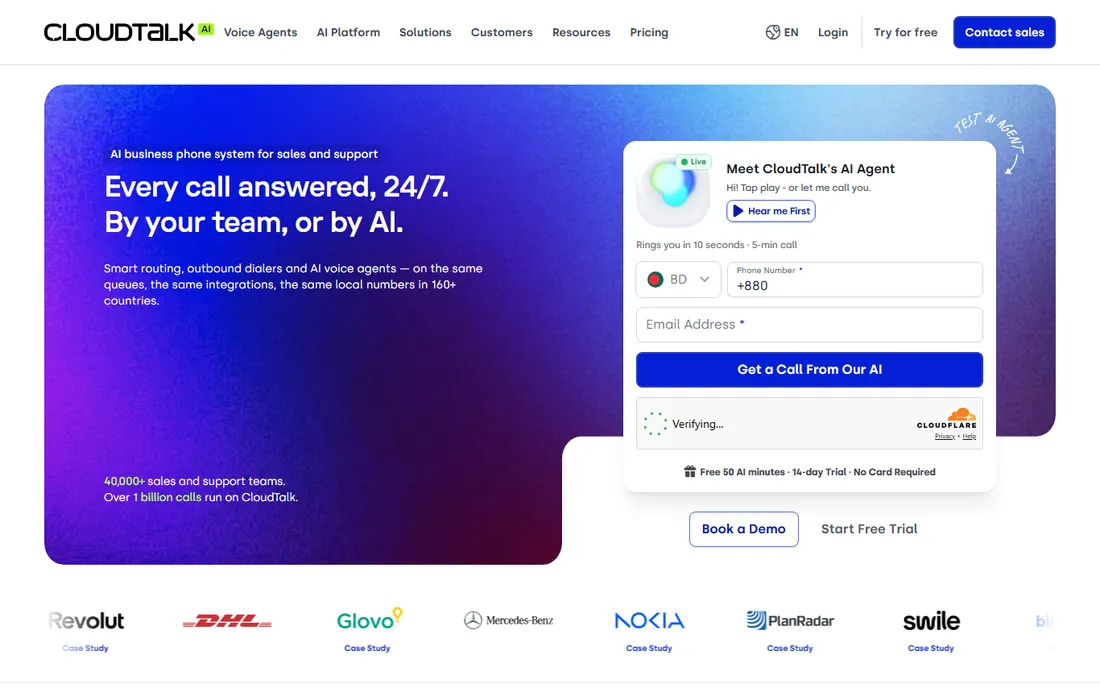
CloudTalk gives small and mid-sized teams a proper inbound call center without telecom complexity: local and toll-free numbers in many countries, skills-based routing, IVR menus, and queue callbacks. Agents work from a clean browser-based dialer.
CRM integrations with HubSpot, Salesforce, Pipedesk, and others pop customer records on incoming calls and log outcomes automatically. Call recording, tagging, and sentiment analysis help managers coach.
Enterprise buyers will want deeper workforce management. For SMB inbound teams that need to sound professional from day one, CloudTalk is a leading choice.
What we like- Easy setup with good call quality
- Smart routing and IVR
- Strong CRM integrations
- Competitive pricing
Watch out for- Advanced enterprise features limited
- Analytics depth trails leaders
- Smaller ecosystem
Starting priceSee website
Free planTrial available
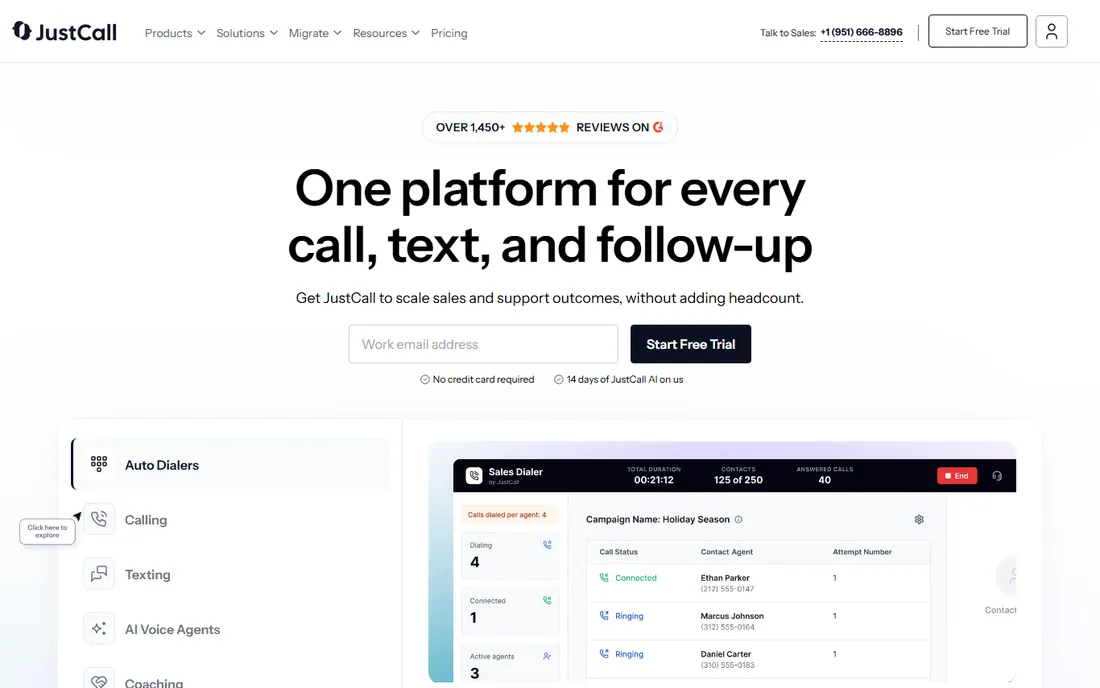
JustCall gets teams taking calls within minutes: pick numbers, set up routing, invite agents, and the inbound operation is running. The simplicity extends to automation, with workflows for missed-call texts and follow-ups.
Built-in SMS complements voice for confirmations and callbacks, which suits sales and support teams that mix channels lightly. Integrations cover the major CRMs and helpdesks.
It is not the deepest routing engine on this list, but for teams that value speed over sophistication, JustCall delivers.
What we like- Very fast setup
- Good automation workflows
- SMS built in
- Solid integrations
Watch out for- Interface less refined than some rivals
- Advanced routing basic
- Analytics could be deeper
#3
Nextiva
Best for: Businesses bundling inbound with full communications
Visit nextiva.com
Starting priceSee website
Free planTrial available
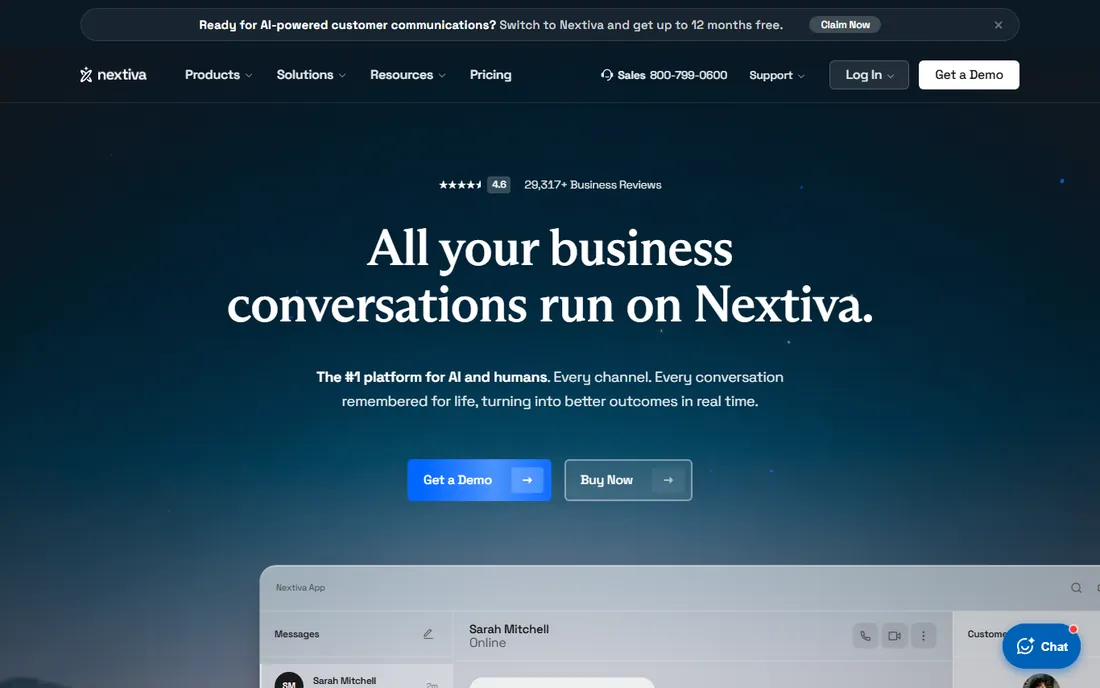
Nextiva bundles business phone, video meetings, and contact center features in one platform with its own reliable network. Inbound teams get IVR, queues, routing, and analytics alongside the company phone system.
The value is consolidation: one vendor, one bill, one support line for all business communications. Customer service has a strong reputation, which matters when phones are the business.
Pure inbound specialists go deeper on routing sophistication. But for businesses that want everything from one provider, Nextiva's bundle is compelling.
What we like- Unified phone, video, and messaging
- Reliable network
- Good customer service reputation
- Competitive bundles
Watch out for- Interface less modern
- Advanced contact center features cost more
- Contract terms vary
Starting priceSee website
Free planTrial available
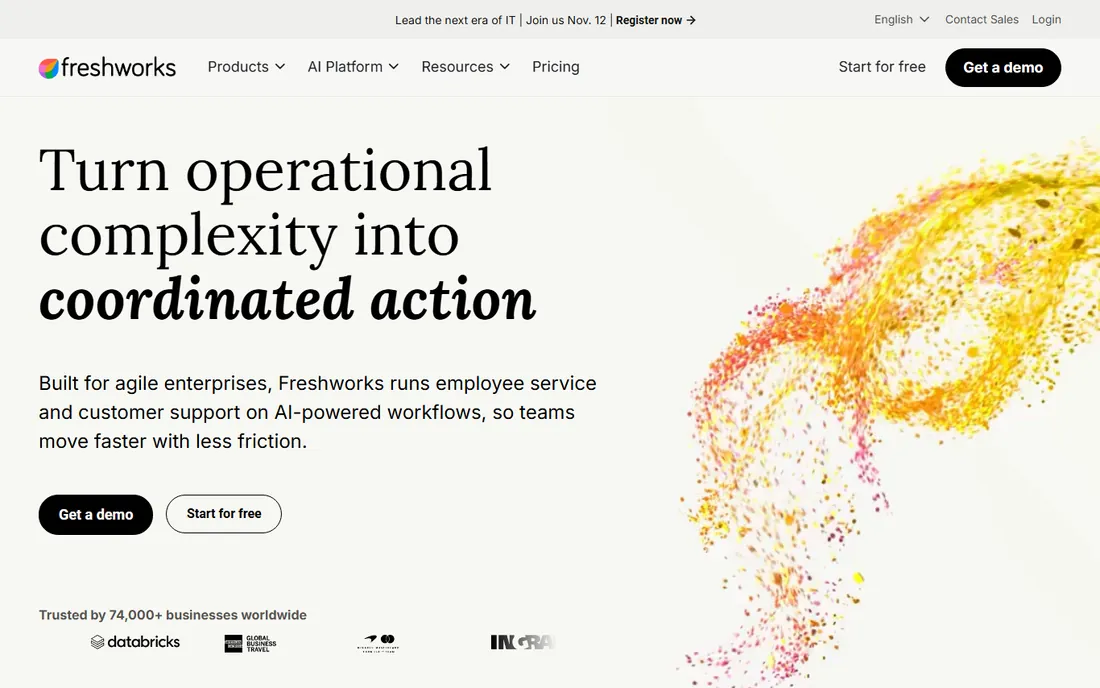
Freshcaller, part of the Freshworks family, brings cloud inbound calling to teams already on Freshdesk or Freshsales. Calls, tickets, and customer records share one interface, so agents never swivel between systems.
Pricing is affordable and setup is quick, with local numbers, IVR, and call routing covering the essentials. For support teams, the ticket-call integration is genuinely useful.
As a standalone choice it is less compelling than the specialists. Inside a Freshworks shop, the native integration makes it the obvious pick.
What we like- Native Freshdesk integration
- Affordable pricing
- Quick setup
- Good for support teams
Watch out for- Thinner outside Freshworks
- Advanced features limited
- Smaller standalone community
#5
Vonage
Best for: Teams wanting programmable inbound plus out-of-box tools
Visit vonage.com
Starting priceSee website
Free planTrial available
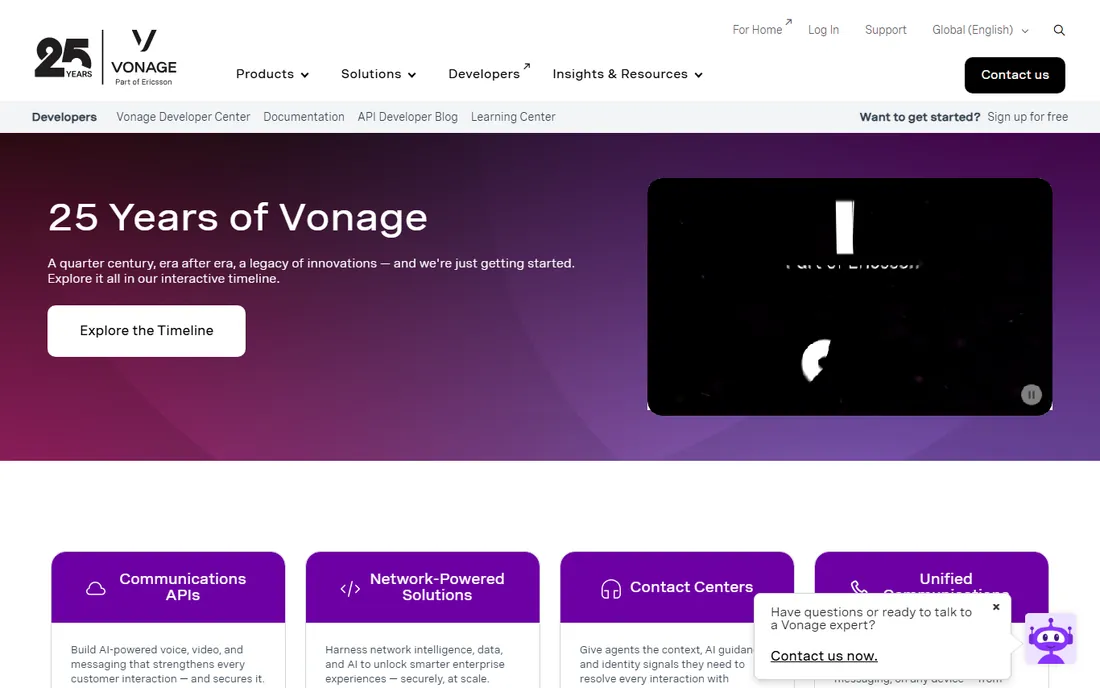
Vonage offers both programmable communications APIs and a ready-made contact center, which suits teams that want standard inbound features today with the option to customize deeply later. Global number coverage is strong.
The contact center includes intelligent routing, IVR, and omnichannel options, while the APIs let developers build custom call flows when needed. Reliability is enterprise-grade.
Navigating the product lineup takes effort, and pricing differs across products. For teams that may outgrow off-the-shelf tools, Vonage keeps the customization door open.
What we like- Flexible APIs plus ready-made contact center
- Good global numbers
- Strong reliability
- Ericsson backing
Watch out for- Product range can confuse
- Pricing varies by product
- Admin learning curve
#6
Ooma
Best for: Small businesses wanting simple inbound handling
Visit ooma.com
Starting priceSee website
Free planTrial available
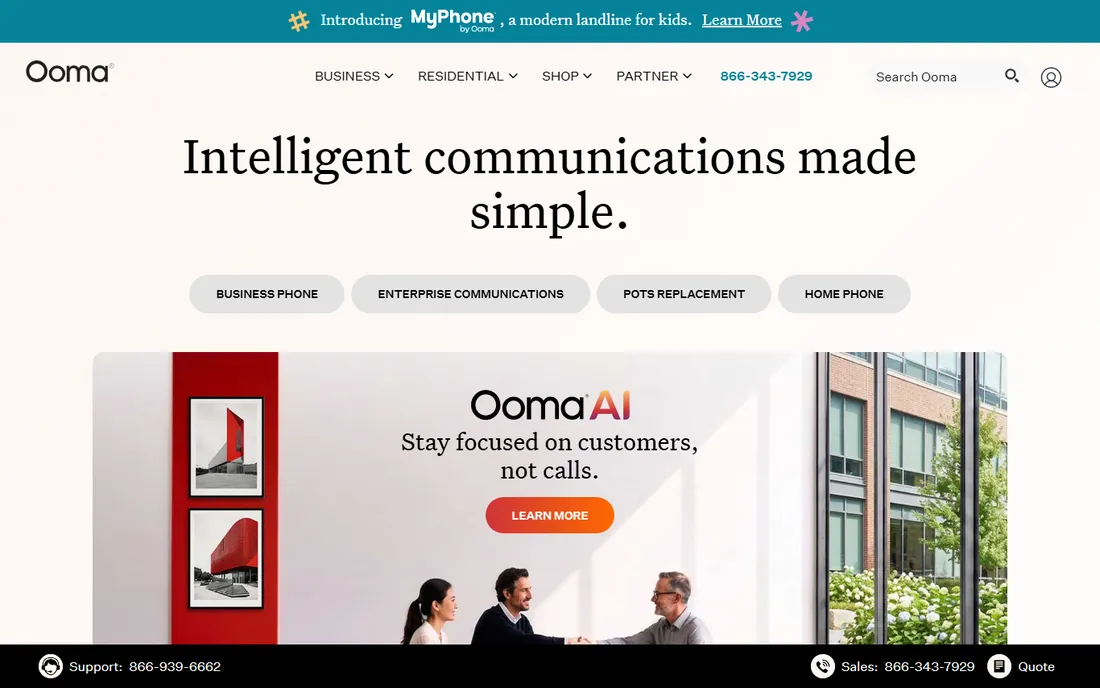
Ooma gives small businesses professional inbound handling without complexity: virtual receptionist, call routing, and voicemail in a system anyone can administer. Setup is genuinely simple.
Call quality is reliable, and the pricing stays small-business friendly. For offices that need to route calls to the right person and never miss a customer, it covers the essentials.
Larger or more sophisticated operations will hit limits quickly. As small-business inbound, Ooma is dependable and unpretentious.
What we like- Very easy to use
- Affordable
- Good call quality
- Virtual receptionist included
Watch out for- Limited advanced routing
- Not for large teams
- Features trail specialists
Starting priceSee website
Free planTrial available
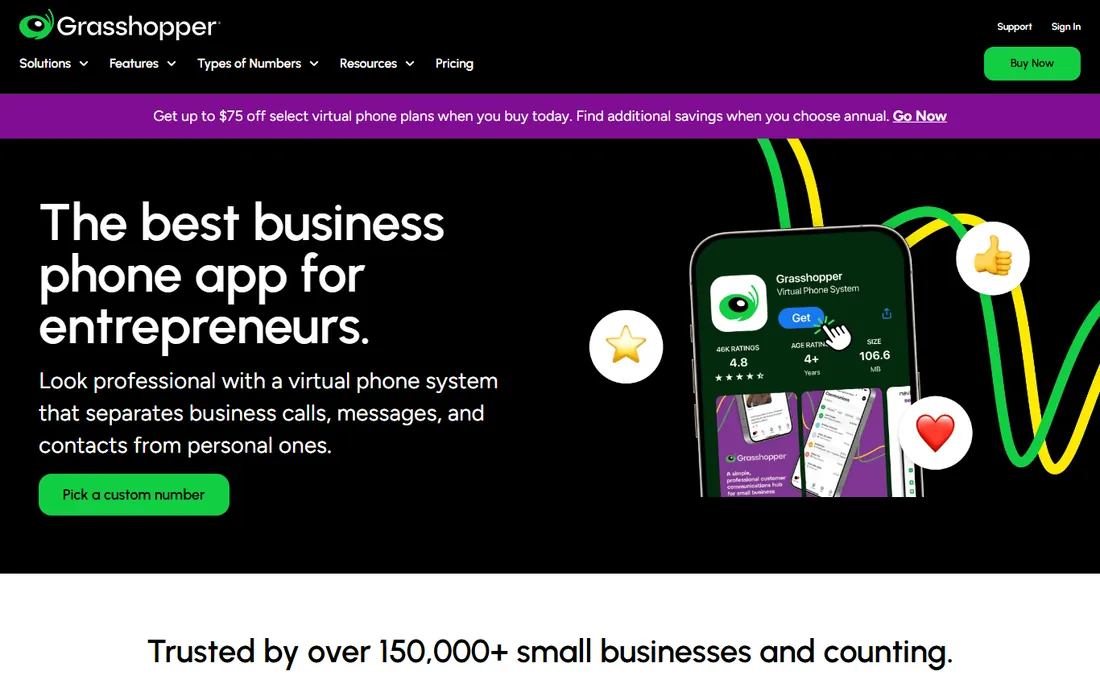
Grasshopper is the virtual phone system for the smallest businesses: a business number that routes to your mobile, with greetings, extensions, and voicemail transcription. It makes a one-person company sound like ten.
There is no real call center functionality, no queues, no skills routing, but most buyers do not need those. The value is a professional front door for very little money.
Anyone with real inbound volume should look higher on this list. For solo founders, Grasshopper is the classic starting point.
What we like- Extremely simple
- Professional image for tiny teams
- Affordable
- Quick setup
Watch out for- Very limited features
- Not a real call center
- Per-minute constraints on some plans
Starting priceSee website
Free planTrial available
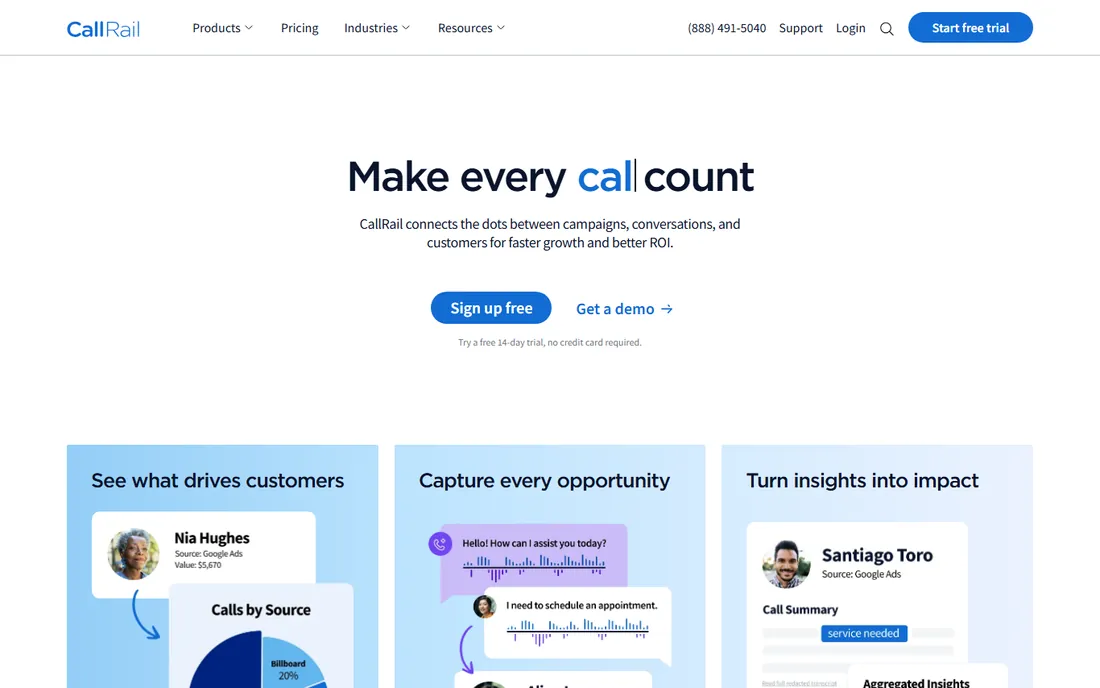
CallRail approaches inbound from the marketing side: which campaigns, keywords, and pages drive phone calls, and what happens on those calls. Dynamic number insertion ties each caller to their source automatically.
Call recording, transcription, and AI scoring help teams understand lead quality, while integrations push data to CRMs and ad platforms. For businesses where the phone is the conversion, this attribution is gold.
It is not an agent desktop or routing engine. Pair it with a call center tool when you need both attribution and operations.
What we like- Excellent call attribution
- Keyword-level tracking
- Call recording and scoring
- Good marketing integrations
Watch out for- Analytics-first, not a full call center
- Per-minute costs add up
- Agent features basic
Buying guide for inbound call center software
Start with volume and complexity. Under ten agents with straightforward routing, CloudTalk or JustCall get you live fast. Larger or more complex operations should evaluate Nextiva, Vonage, and Freshcaller on routing depth and integrations.
Test with real call volume during the trial, including your peak hours, because audio quality and routing behavior only show under load. Check number porting timelines early if you are bringing existing numbers, since porting delays are the most common go-live surprise.
Inbound setup mistakes
The most frequent mistake is designing the IVR for the company instead of the caller. Menus that mirror internal departments force customers to guess where they belong, and long option lists test patience. Design around caller intent: the three reasons people actually call, stated plainly, with a human reachable within two steps. Test it with real customers, not staff.
Second, understaffing the launch. New systems always have a learning curve, and callers do not care about your transition. Overstaff the first weeks, keep the old system as backup, and cut over fully only when metrics stabilize. The reputational cost of a bad launch week exceeds the staffing cost.
Third, neglecting the knowledge base. Agents with great tools but no answers still fail callers. Build the knowledge articles for your top call drivers before go-live, keep them current, and measure which articles agents actually use. The software routes calls; knowledge resolves them.
Fourth, setting queue targets without callback options. Callers would rather get a callback in twenty minutes than wait on hold for ten. Offer callbacks proactively, honor the promised time, and watch satisfaction rise while abandon rates fall. It is the cheapest improvement in inbound telephony.
Finally, ignoring the data after launch. Queue reports, call recordings, and disposition codes contain the truth about what customers want. Review them weekly, fix the top failure patterns, and keep tuning routing and staffing. The best inbound operations treat launch as the starting line.
Frequently asked questions
What features matter most for inbound call centers?
Intelligent routing, IVR, queue management with callbacks, screen pops with caller context, call recording, and real-time dashboards. Everything else is secondary until these work well.
How much does inbound call center software cost?
Expect roughly $20 to $60 per agent per month for SMB tools, more for enterprise platforms, plus per-minute charges for toll-free and international calls.
Can we keep our existing phone numbers?
Yes. Number porting is standard across these platforms, though it takes days to weeks depending on the carrier. Start the port early and run old and new systems in parallel.
Do we need a full contact center or just inbound calling?
If over 80 percent of interactions are incoming calls, an inbound-focused tool is simpler and cheaper. Add omnichannel platforms when chat, email, and social volumes justify the complexity.
What is skills-based routing?
It routes each caller to agents with the right skills, language, or product knowledge instead of the next available agent. It improves first-call resolution significantly when configured well.
How do we reduce hold times without hiring more agents?
Start with callbacks: offering a callback instead of a hold queue cuts perceived wait to zero for many callers. Next, fix the IVR so callers reach the right skill group on the first try; misrouted calls inflate handle time. Then attack repeat calls by identifying the top reasons people call back and resolving them properly the first time. Finally, use queue analytics to staff accurately to actual patterns rather than averages. Most operations cut average wait significantly before adding a single head.
Sources we checked (0)
Is your product missing or out of date?
We review this list regularly. Vendors can request a listing, send updated pricing or ask about featured placement.

Shihab Mia · Founder, Rankite
Shihab has spent more than a decade helping SaaS and e-commerce brands grow through search. He writes Rankite's software buying guides from pricing pages, documentation and public user reviews. More about Shihab.