How we make this list: we compare pricing pages, product documentation and public user reviews. Rankite is independent; if a vendor ever pays for a featured spot, that listing is clearly labeled Partner.
Key takeaways
- Aura bundles identity protection with antivirus, VPN and parental controls in one subscription.
- LifeLock (Norton) is the best-known brand with deep monitoring and a large restoration team.
- IdentityForce and Identity Guard suit people who want thorough monitoring without a security suite.
- IDShield adds licensed private investigators for restoration, which matters when theft actually happens.
- Experian, Zander and PrivacyGuard offer focused or budget alternatives to the big suites.
Quick comparison
| Tool | Best for | Starting price | Free plan |
|---|
 Aura Aura | All-in-one digital safety | See website | No |
 LifeLock LifeLock | Brand-name identity protection | See website | No |
 IdentityForce IdentityForce | Thorough monitoring | See website | No |
 Identity Guard Identity Guard | AI-powered monitoring | See website | No |
 IDShield IDShield | Restoration with investigators | See website | No |
 Experian IdentityWorks Experian IdentityWorks | Credit-focused protection | See website | No |
 Zander Zander | Budget identity protection | See website | No |
 PrivacyGuard PrivacyGuard | Credit monitoring plus identity | See website | No |
 Bitdefender Bitdefender | Identity protection with antivirus | See website | No |
Is your product missing or out of date?
We review this list regularly. Vendors can request a listing, send updated pricing or ask about featured placement.
The best identity theft protection software
Starting priceSee website
Free planNo
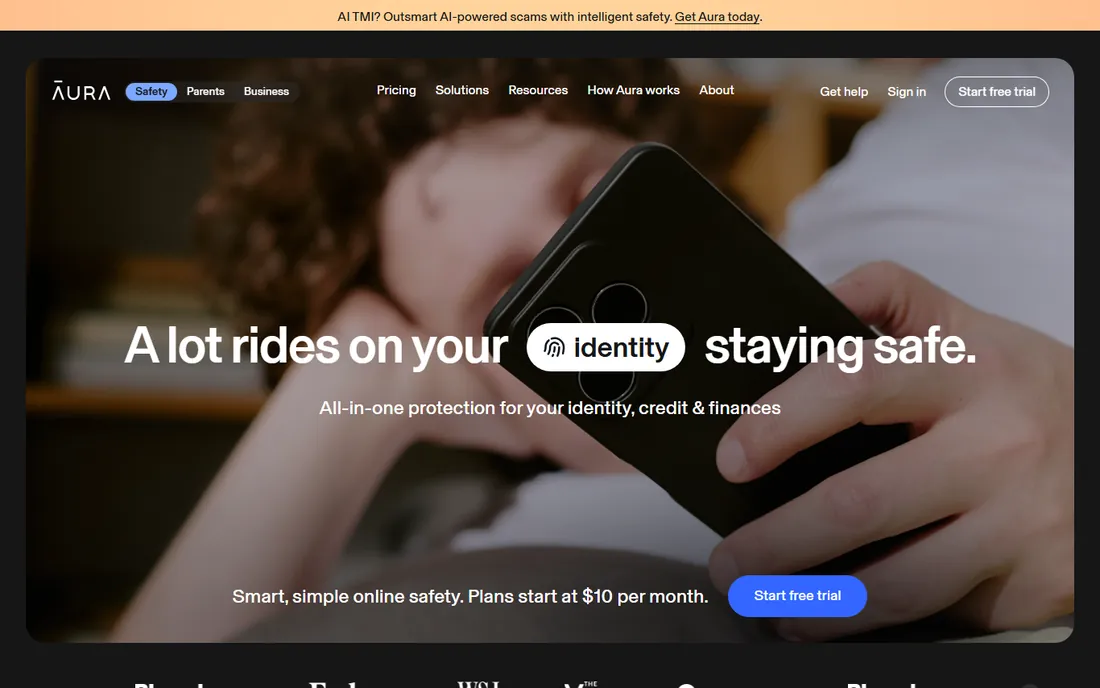
Aura merged identity protection into a broader digital safety suite. One subscription covers identity theft monitoring, antivirus, VPN, password management and parental controls, with everything visible in a single dashboard. Families get the most value, since one plan covers kids' devices and identities too.
If you only want identity monitoring, the bundle includes things you will never open. Pricing details require digging on the site. For households wanting one subscription for digital safety, Aura is the most complete package.
What we like- Combines identity monitoring with antivirus, VPN and parental controls
- Clean single dashboard
- Family plans
Watch out for- Pricing not published on the main page
- Suite approach means paying for features you may not need
Starting priceSee website
Free planNo
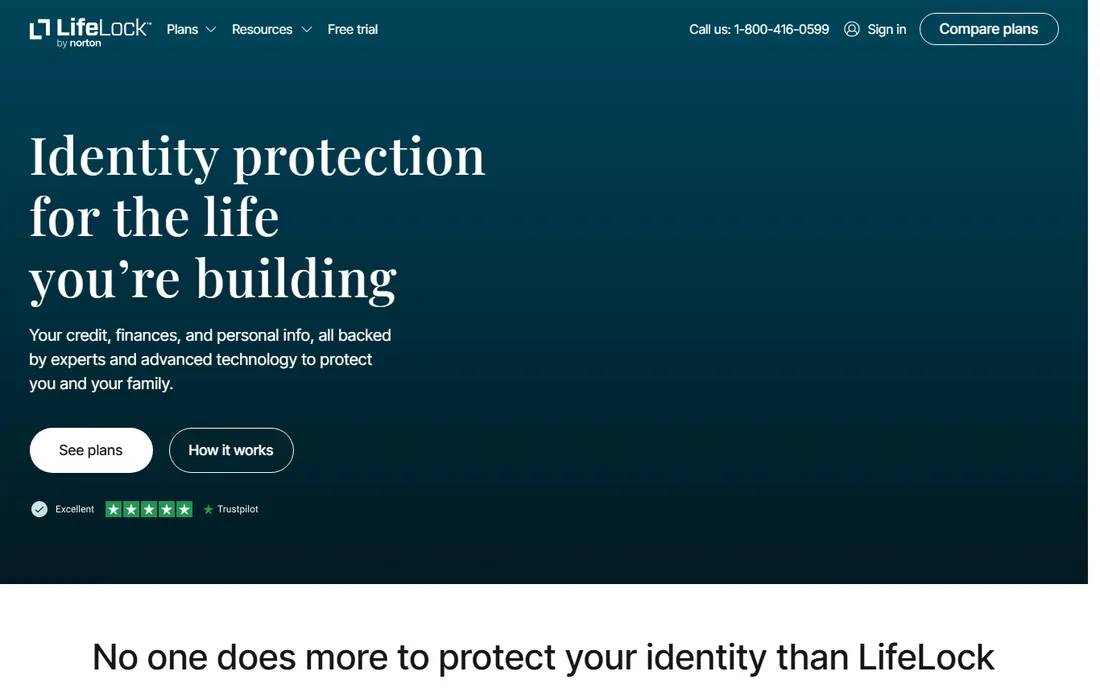
LifeLock is the name most Americans associate with identity protection. The service monitors credit, dark web, public records and more for signs of misuse, and the restoration team handles the painful paperwork if theft occurs. The Norton ownership adds antivirus bundling options.
Pricing is not published on the main page, and the marketing pushes bundle upgrades. Some consumers prefer specialists without the antivirus cross-sell. For buyers who want the biggest brand and the deepest restoration resources, LifeLock remains the default.
What we like- Most recognized brand
- Extensive monitoring network
- Large identity restoration team
Watch out for- Pricing not published
- Upsell pressure toward Norton 360 bundles
Starting priceSee website
Free planNo
IdentityForce, now part of TransUnion, monitors an unusually wide net: credit, dark web, public records, court records and even payday loan applications opened in your name. The TransUnion backing strengthens the credit data underneath. Alerts are prompt and the mobile app is solid.
The interface feels functional rather than delightful next to Aura. Pricing is not published. Consumers who want the deepest monitoring coverage without a security suite attached should shortlist IdentityForce.
What we like- Deep monitoring including court records and payday loans
- TransUnion backing
- Solid mobile app
Watch out for- Pricing not published
- Interface less polished than Aura
Starting priceSee website
Free planNo
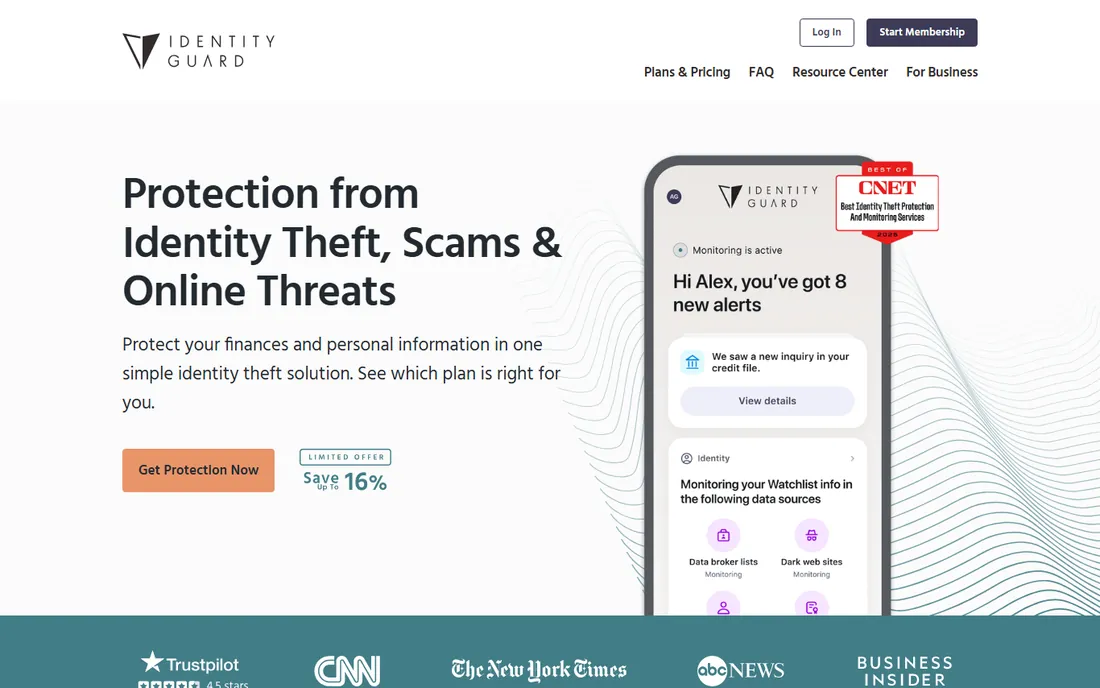
Identity Guard uses IBM Watson artificial intelligence to score identity risks and prioritize alerts, which reduces the noise of false positives. The risk management dashboard explains what to do about each threat in plain language. Family plans cover kids, whose identities are increasingly targeted.
Casual users may not notice the AI difference versus simpler monitoring. Pricing is not published. For buyers who want smarter alerts rather than more alerts, Identity Guard's approach stands out.
What we like- IBM Watson AI for risk scoring
- Clear risk management dashboard
- Good family options
Watch out for- Pricing not published
- AI features matter less to casual users
Starting priceSee website
Free planNo
IDShield's differentiator activates when theft happens: licensed private investigators take on your case and do the restoration work. Most services offer "restoration assistance"; IDShield assigns professionals. The LegalShield bundling adds legal plan access for identity-related issues.
That white-glove restoration costs more than basic monitoring. Pricing is not published. Consumers who worry most about the aftermath, the months of paperwork after theft, get the strongest restoration promise here.
What we like- Licensed private investigators handle restoration
- Legal plan bundling
- Thorough monitoring
Watch out for- Pricing not published
- Investigator model is premium-priced
Starting priceSee website
Free planNo
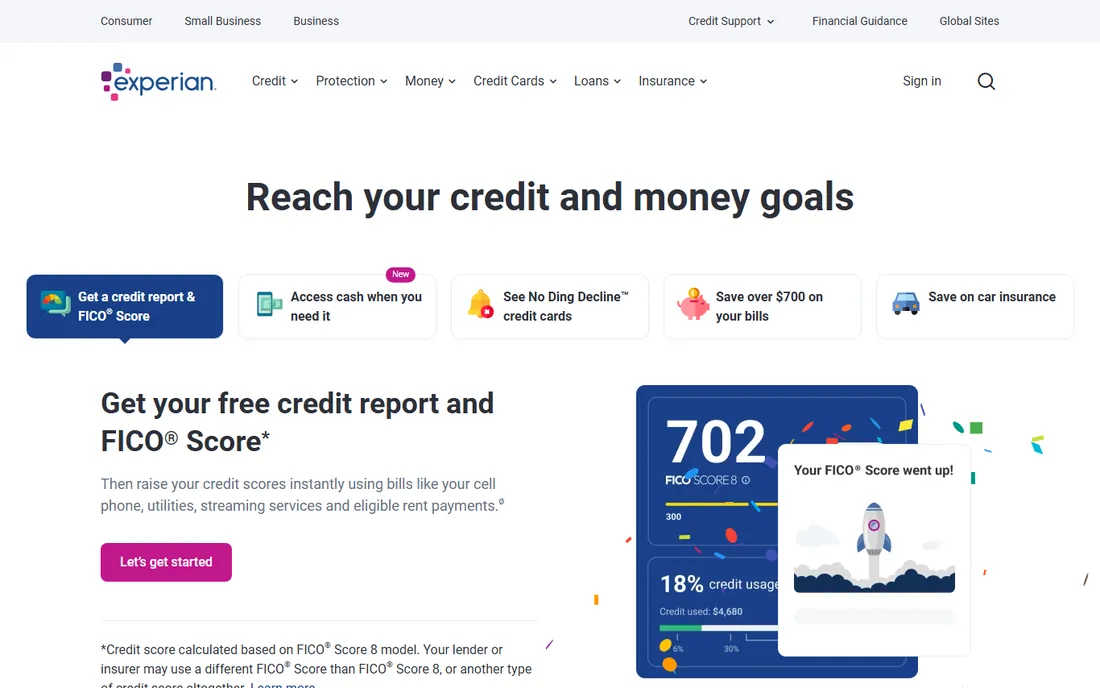
Experian IdentityWorks comes straight from one of the three credit bureaus, which shows in the credit monitoring depth. Credit reports, scores, freezes and fraud alerts are first-class, with dark web monitoring added. Freezing and unfreezing credit is quick inside the ecosystem.
Non-credit monitoring (social media, payday loans, public records) is thinner than the specialists. Pricing is not published. Consumers whose main worry is credit fraud get the most authoritative source here.
What we like- Direct from a credit bureau
- Excellent credit monitoring and freezes
- Dark web surveillance
Watch out for- Pricing not published
- Credit-centric, less broad lifestyle monitoring
Starting priceSee website
Free planNo
Zander Insurance offers identity theft protection at a notably lower price than the big brands, with monitoring and restoration assistance included. The no-nonsense approach appeals to buyers tired of upsells and bundle pressure. Dave Ramsey's endorsement brought it a loyal following.
Premium features like VPN, antivirus and AI risk scoring are absent. Pricing details are on the site but the positioning is budget. For straightforward protection at a low price, Zander is the value pick.
What we like- Very affordable positioning
- Straightforward monitoring and restoration
- No upsell circus
Watch out for- Fewer premium features
- Smaller brand
Starting priceSee website
Free planNo
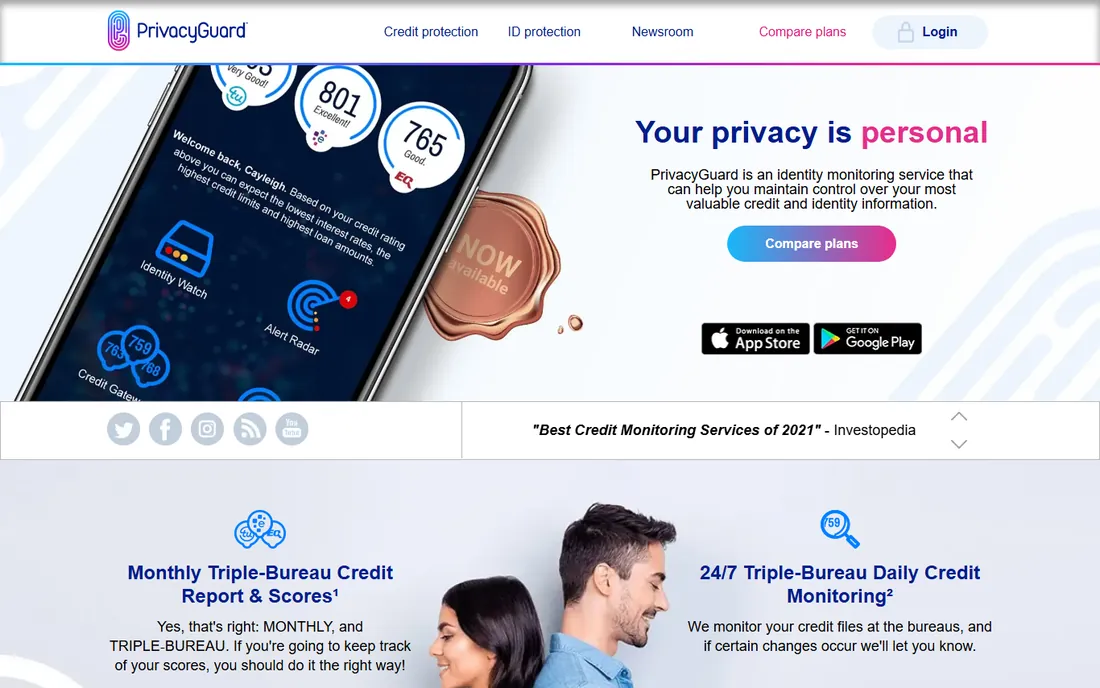
PrivacyGuard combines daily three-bureau credit monitoring with identity theft protection and insurance coverage. The daily refresh cadence catches changes faster than monthly services. Plans are straightforward without heavy bundling.
Brand recognition lags LifeLock and Aura, which matters to some buyers. Pricing is not published. Consumers wanting serious credit monitoring with identity protection attached get solid value here.
What we like- Daily credit monitoring from all three bureaus
- Identity theft insurance
- Straightforward plans
Watch out for- Less brand recognition
- Pricing not published
Starting priceSee website
Free planNo
Bitdefender's Digital Identity Protection monitors the dark web and public sources for your exposed personal data, sitting alongside its top-rated antivirus. Users already running Bitdefender get identity monitoring without a second vendor. The security reputation is excellent.
Identity protection is a feature, not the product; dedicated services monitor more broadly. Pricing is bundled into Bitdefender suites. For buyers who want security software first with identity monitoring included, Bitdefender is the natural choice.
What we like- Excellent antivirus plus digital identity protection
- Continuous dark web monitoring
- Strong security reputation
Watch out for- Identity features are an add-on to security suites
- Less identity-focused than specialists
How we chose
We evaluated identity theft protection services available to US consumers in 2026. Research covered vendor sites and pricing pages, consumer reviews, and security publication coverage. We weighted monitoring breadth (credit, dark web, public records), alert quality, restoration services, identity theft insurance, pricing transparency and fit for individuals versus families. We also flagged renewal pricing behavior, since several vendors renew well above the introductory rate quoted at signup. Prices come from vendor pages where published.
Monitoring versus restoration: what you are actually buying
These services sell two things. Monitoring watches for signs your identity is misused: new accounts, dark web exposure, public record changes. Restoration fixes the mess after theft: disputing fraudulent accounts, working with creditors, handling paperwork.
Monitoring is table stakes; restoration quality separates the good from the mediocre. When comparing, ask who does the restoration work: a call center reading scripts, or dedicated specialists like IDShield's investigators? Also check the identity theft insurance amount and what it actually covers (lost wages, legal fees). The service earns its price in the worst week of your financial life, not in the quiet months.
Frequently asked questions
What is the best identity theft protection software?
Aura is the best all-in-one for families wanting digital safety beyond identity. LifeLock is the biggest brand with deep restoration resources. IdentityForce and Identity Guard suit monitoring-focused buyers, while IDShield offers the strongest restoration with licensed investigators.
How much does identity theft protection cost?
Most vendors do not publish prices prominently. Individual plans typically run from around $7 to $30 per month depending on features, with family plans higher. Zander positions at the budget end. Always check the renewal price, which often exceeds the introductory rate.
Is identity theft protection worth it?
It depends on your risk and patience. Monitoring services catch fraud faster than you would manually, and restoration services save enormous hassle after theft. If you already freeze your credit, monitor statements and use strong passwords, the marginal value shrinks. Breach victims and busy families benefit most.
What should I do if my identity is stolen?
File a report with the FTC at IdentityTheft.gov, place fraud alerts or freezes with the credit bureaus, file a police report, and dispute fraudulent accounts in writing. A restoration service handles much of this paperwork for you, which is the core value of IDShield and LifeLock's restoration teams.
Does identity theft protection prevent theft?
No service can prevent identity theft entirely. They detect misuse early and help restore your identity afterward. Prevention still depends on you: freeze your credit, use unique passwords, enable two-factor authentication and be skeptical of phishing. Think of these services as smoke detectors, not fireproofing.
What is the difference between a credit freeze and a fraud alert?
A credit freeze blocks all new credit inquiries until you lift it; it is free and the strongest protection. A fraud alert tells lenders to verify your identity before extending credit but does not block inquiries. Freezes are better for most people; alerts suit those actively applying for credit who cannot freeze.
Free steps that beat paid monitoring
Before paying anyone, do the free things that matter most. Freeze your credit at all three bureaus; it is free and stops most new-account fraud cold. Enable two-factor authentication everywhere important. Check your credit reports free annually. Use a password manager with unique passwords.
Paid monitoring adds dark web surveillance, public record watching and restoration help. Those have value, especially restoration. But a frozen credit file plus good password hygiene prevents more fraud than any monitoring service detects. Do the free steps first, then decide if the subscription adds enough.
Family plans: protecting kids and parents
Children's identities are prime targets because theft can go undetected for years until they apply for credit. Family plans from Aura, Identity Guard and LifeLock extend monitoring to kids, which individual plans do not. Elderly parents are the other vulnerable group; account takeover and scams target them disproportionately.
When comparing family plans, check the per-person coverage: how many children, what monitoring each child gets, and whether restoration covers them fully. A family plan that monitors adults deeply but children shallowly misses the point. Price the family tier against individual plans for each member; the bundle usually wins at three or more people. Set up the kids' coverage immediately rather than postponing it. Child identity theft often starts with a breached school or medical record, and early monitoring catches it before real damage accumulates over the years.
Sources we checked (9)
- https://www.aura.com
- https://lifelock.norton.com
- https://www.identityforce.com
- https://www.identityguard.com
- https://www.idshield.com
- https://www.experian.com
- https://www.zanderins.com
- https://www.privacyguard.com
- https://www.bitdefender.com
Is your product missing or out of date?
We review this list regularly. Vendors can request a listing, send updated pricing or ask about featured placement.

Shihab Mia · Founder, Rankite
Shihab has spent more than a decade helping SaaS and e-commerce brands grow through search. He writes Rankite's software buying guides from pricing pages, documentation and public user reviews. More about Shihab.