How we make this list: we compare pricing pages, product documentation and public user reviews. Rankite is independent; if a vendor ever pays for a featured spot, that listing is clearly labeled Partner.
Key takeaways
- Every tool here carries SOC 2 and GDPR positioning, but the depth varies. Ask for the actual audit report, not the marketing badge.
- Personio is the natural pick for European companies because it stores data in Europe and builds GDPR into the product. Deel is the pick for hiring across borders.
- Rippling, Workday, and UKG cover the enterprise end, where compliance is part of a bigger HR, IT, and finance stack.
- Small US teams that mostly need payroll compliance should start with Gusto or BambooHR rather than buying enterprise governance they will never use.
Quick comparison
| Tool | Best for | Starting price | Free plan |
|---|
 Rippling Rippling | Mid-size companies running HR, IT, and finance together | See website | No |
 Deel Deel | Companies hiring employees and contractors in many countries | $599 per employee/month (EOR) | No |
 BambooHR BambooHR | Small and mid-size US companies that want simple HR | See website | Free trial |
 HiBob HiBob | Mid-size and multinational companies that want modern HR | See website | No |
 Personio Personio | European companies where GDPR is the top concern | From €7.60 per employee/month | No |
 Workday Workday | Large enterprises with complex regulatory needs | See website | No |
 UKG UKG | Enterprises with large hourly and frontline workforces | See website | No |
 Namely Namely | Mid-size US companies that want HCM plus expert help | See website | No |
 Gusto Gusto | Small US businesses getting payroll and compliance right | See website | Free trial |
Is your product missing or out of date?
We review this list regularly. Vendors can request a listing, send updated pricing or ask about featured placement.
The best hris compliance software for gdpr and soc 2
#1
Rippling
Best for: Mid-size companies running HR, IT, and finance together
Visit rippling.com
Starting priceSee website
Free planNo
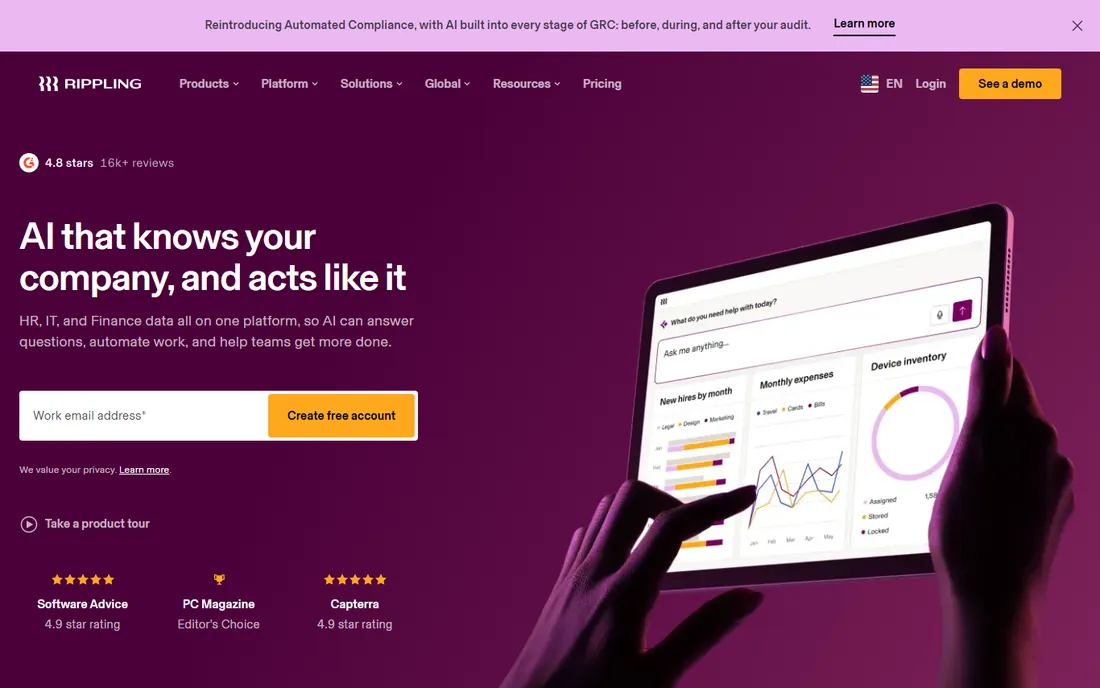
Most compliance failures in HR come from scattered data: the HR system says one thing, IT access says another, and payroll says a third. Rippling's whole pitch is that one employee record drives HR, IT provisioning, and finance, so access changes propagate automatically when someone joins, moves, or leaves. That single data model is genuinely useful when an auditor asks who had access to what and when.
Rippling holds the security certifications enterprise buyers expect and supports GDPR workflows including data subject requests. The weakness is transparency: pricing is quote-based, and the modular catalog means the final number depends on which products you bundle. It is built for companies with real IT and finance operations, not for a ten-person startup.
What we like- One data model across HR, IT, and payroll simplifies audits
- Role-based permissions are granular
- Strong compliance automation for onboarding and offboarding
Watch out for- Quote-based pricing with no public numbers
- Modular pricing can add up
- Some advanced compliance reports need higher tiers
#2
Deel
Best for: Companies hiring employees and contractors in many countries
Visit deel.com
Starting price$599 per employee/month (EOR)
Free planNo
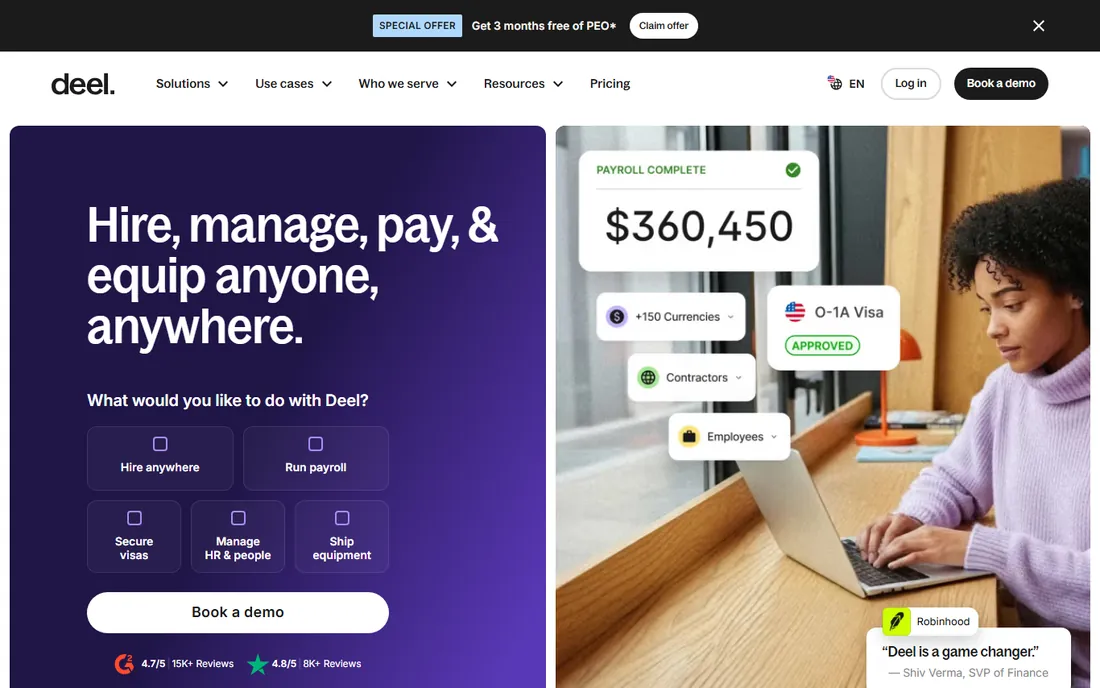
Deel exists because hiring across borders is a compliance minefield: every country has its own contracts, tax rules, benefits requirements, and data laws. Deel handles that with employer-of-record services, contractor management, and global payroll in one platform, and it publishes clear pricing for the headline products, $599 per EOR employee per month and $125 per US PEO employee per month.
For a US company that only hires domestically, Deel is overkill and overpriced. For a team with people in six countries, it replaces a stack of local providers and the legal risk that comes with them. GDPR compliance and data handling are part of the pitch, backed by the certifications a global platform needs.
What we like- Built for cross-border compliance with entities in 150+ countries
- EOR and contractor models covered in one platform
- Publishes clear per-employee pricing for core products
Watch out for- EOR pricing at $599 per employee/month is steep
- HRIS features are thinner than pure-play HR platforms
- Best value is for international hiring, not domestic teams
#3
BambooHR
Best for: Small and mid-size US companies that want simple HR
Visit bamboohr.com
Starting priceSee website
Free planFree trial
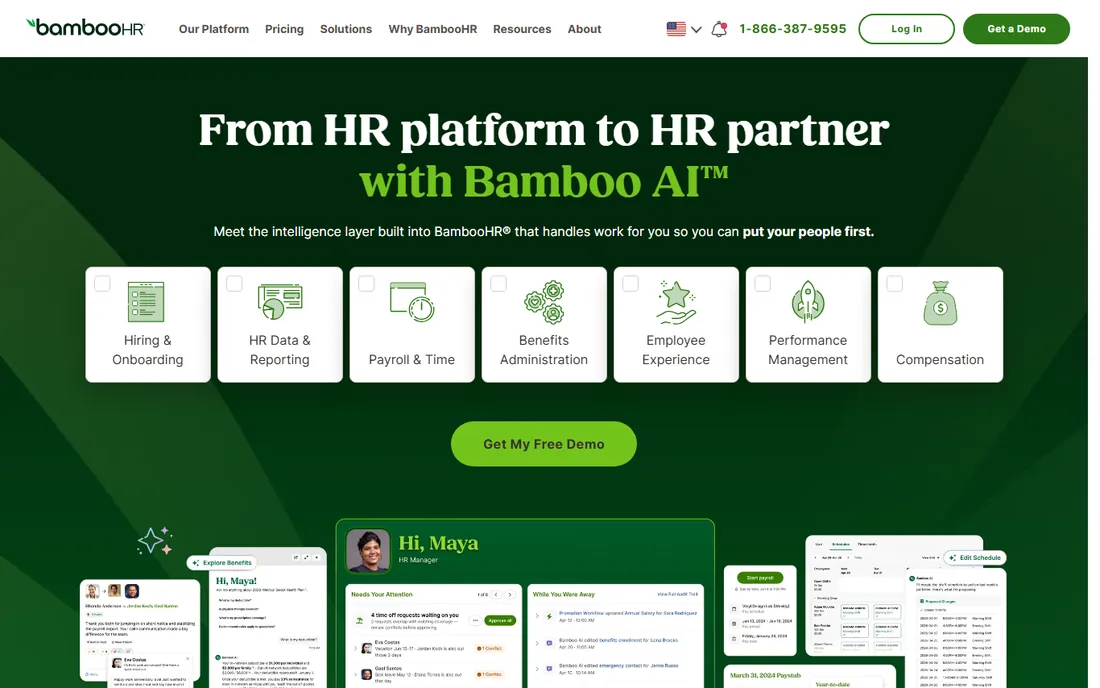
BambooHR is the HR platform for companies that do not have an HR department yet. It covers employee records, onboarding, time off, performance, and payroll in a clean interface that managers actually use. On the compliance side, the vendor runs an annual third-party SOC 2 audit, encrypts data in transit and at rest, and can host customer data in the US, Canada, or Ireland, with the Ireland region serving EU data requirements.
Pricing is quote-based on headcount, which is standard in this category but annoying for quick comparisons. The compliance toolkit is solid for a company under a few hundred employees but lacks the governance depth of Workday or UKG. If your compliance needs are "pass our customers' security questionnaires and handle employee data properly," BambooHR is enough.
What we like- Easy to implement without consultants
- Data hosting options include an EU region for GDPR
- Annual third-party SOC 2 audit
Watch out for- Quote-based pricing
- Compliance features are lighter than enterprise platforms
- Global payroll depth is limited
#4
HiBob
Best for: Mid-size and multinational companies that want modern HR
Visit hibob.com
Starting priceSee website
Free planNo
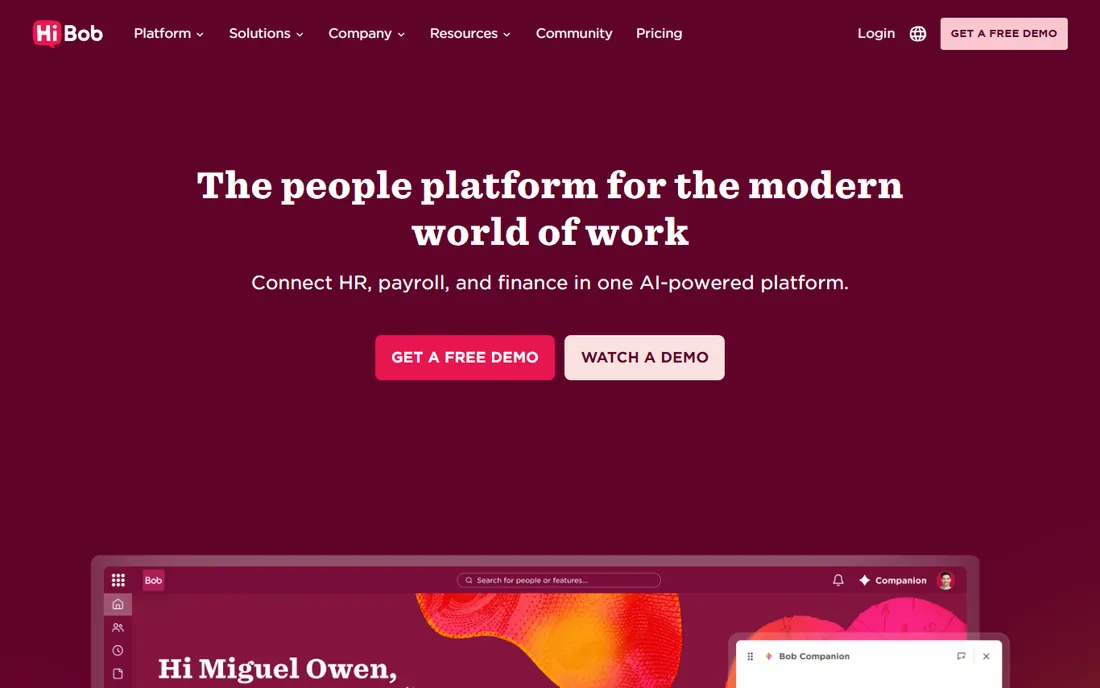
HiBob, sold as Bob, targets the mid-market companies that have outgrown lightweight HR tools but do not want enterprise software. It handles core HR, time off, performance, and compensation across countries, with local compliance rules baked into the workflows. The interface is genuinely modern, which matters because compliance features only work if employees and managers actually use the system.
Pricing is quote-based and the sales process is consultative. Payroll runs through partners in many markets, so confirm coverage for your specific countries before committing. For a 200-person company with offices in three countries, HiBob hits a sweet spot between BambooHR's simplicity and Workday's weight.
What we like- Strong multi-country support with local compliance built in
- Clean interface drives real employee adoption
- Granular permissions and audit trails
Watch out for- Quote-only pricing
- Payroll is partner-dependent in many countries
- Implementation needs more planning than the marketing suggests
Starting priceFrom €7.60 per employee/month
Free planNo
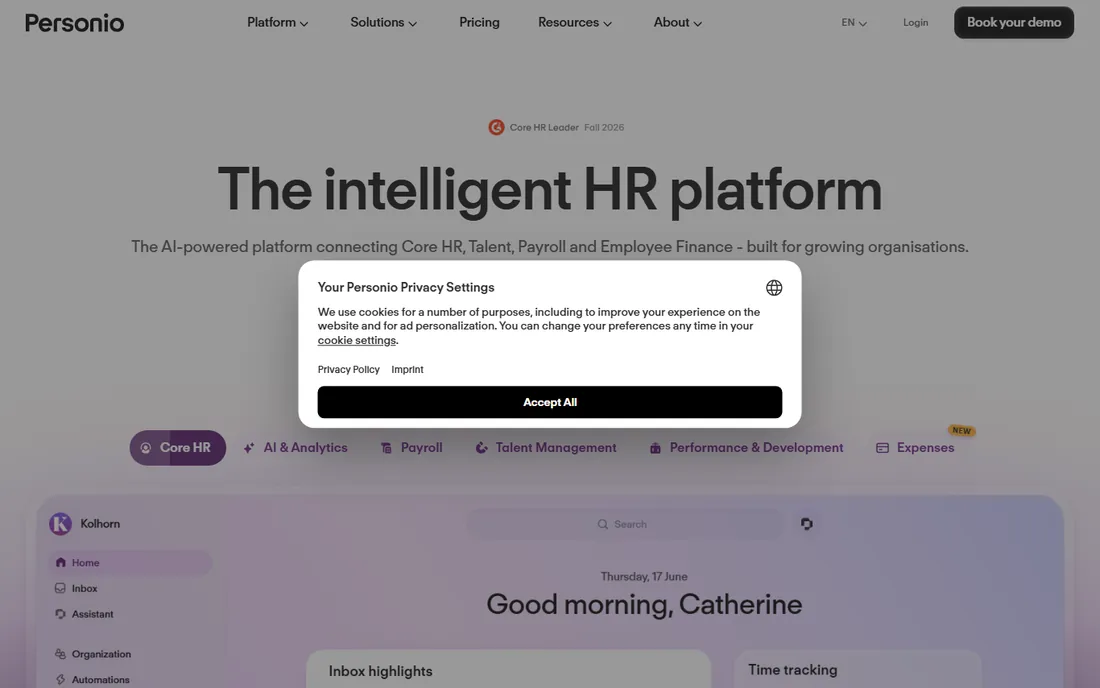
Personio is the rare HR platform that treats GDPR as a design principle rather than a compliance checkbox. Data is stored in Europe, the product carries ISO 27001 certification, and access controls, audit logs, and privacy settings are built into the core rather than bolted on. For a European company answering GDPR questions from customers and regulators, that positioning is a real advantage.
Pricing starts from €7.60 per employee per month, which is unusually transparent for this category, though the actual quote depends on plan and modules. The trade-off is geographic focus: Personio is strongest in Europe, and US companies with no EU presence get less of the benefit. If GDPR keeps you up at night, start here.
What we like- GDPR-first design with data stored in Europe
- Publishes a real starting price of €7.60 per employee/month
- Strong access controls and audit logs
Watch out for- Enterprise features need higher tiers
- Payroll partnerships vary by country
- US-centric buyers may find the EU focus limiting
#6
Workday
Best for: Large enterprises with complex regulatory needs
Visit workday.com
Starting priceSee website
Free planNo
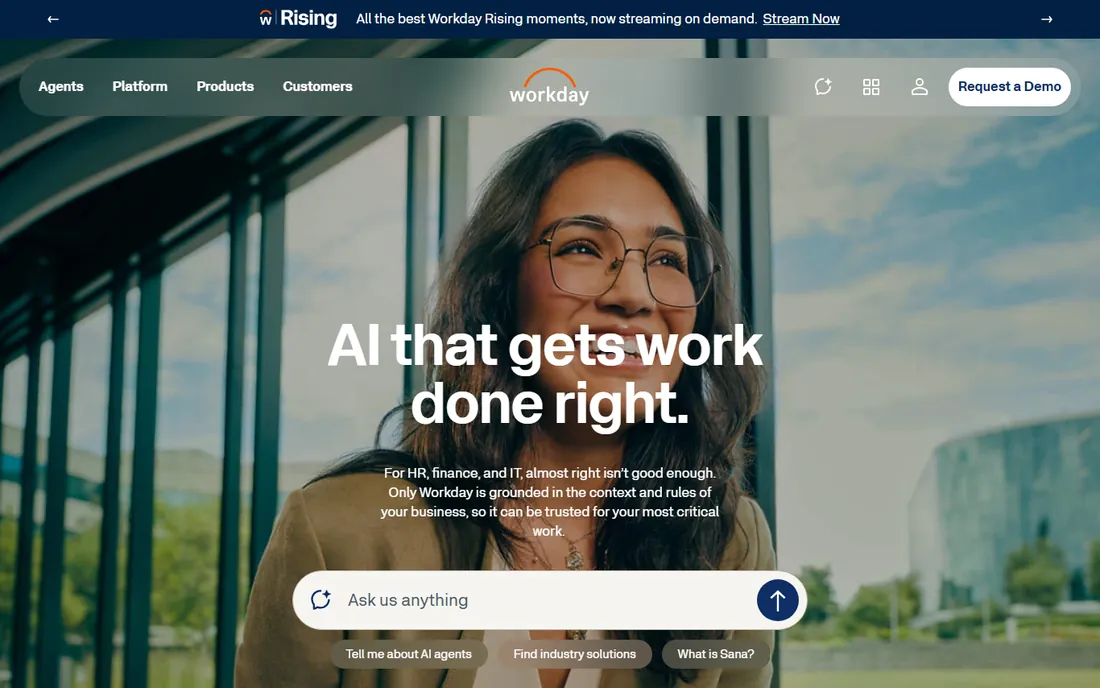
Workday is the compliance heavyweight. When a bank, healthcare system, or government contractor needs HR software that survives the toughest audits, Workday is usually on the shortlist. The HCM suite includes granular security, configurable business processes with full audit trails, and data controls that satisfy regulators across industries and regions. SOC 2, ISO 27001, and GDPR compliance are table stakes at this level.
Everything about Workday is enterprise-scale, including the price, the implementation timeline, and the partner ecosystem needed to configure it. Companies under a thousand employees should not be looking here. For large organizations where compliance is a board-level concern, the depth justifies the cost.
What we like- Deepest compliance and audit tooling in the category
- Unified HCM and financials
- Trusted by the largest regulated companies
Watch out for- Enterprise pricing and long implementations
- Overkill below several thousand employees
- Customization needs specialist partners
#7
UKG
Best for: Enterprises with large hourly and frontline workforces
Visit ukg.com
Starting priceSee website
Free planNo
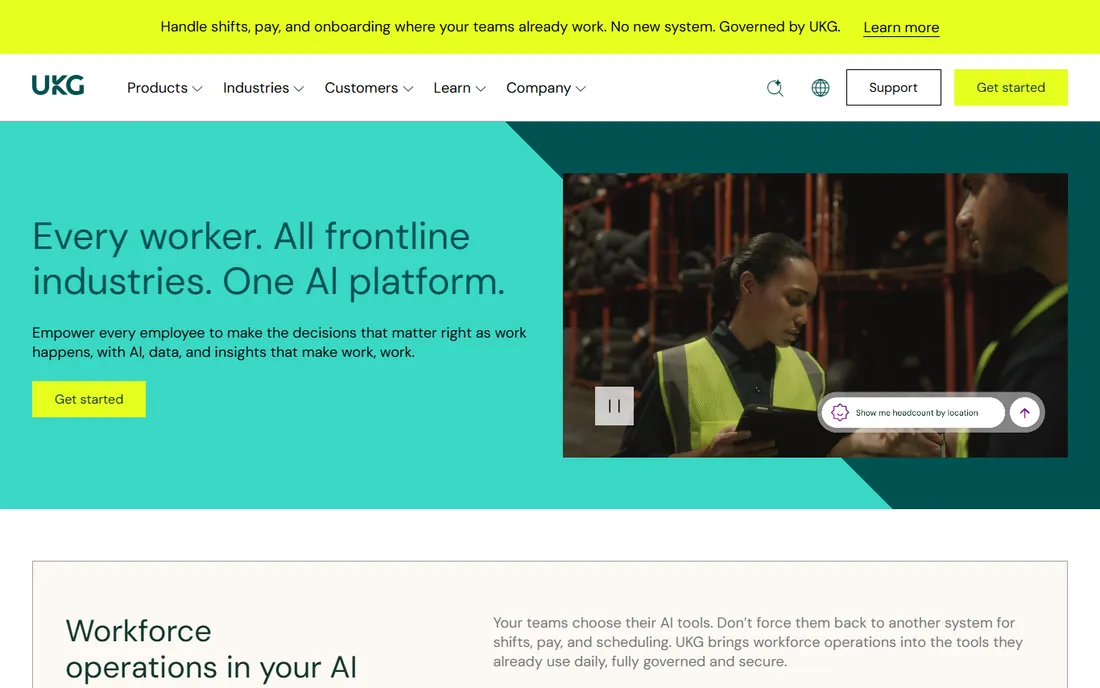
UKG serves the compliance problems that office-focused HR tools ignore: wage and hour laws, overtime rules, shift differentials, and union agreements across thousands of frontline workers. The workforce management heritage means time tracking, scheduling, and labor compliance are first-class, not add-ons. Large retailers, hospitals, manufacturers, and public sector organizations run on UKG for exactly this reason.
Like Workday, this is enterprise software with enterprise pricing and implementation timelines. The product portfolio is broad enough to confuse buyers, so work with the sales team to scope precisely. If your compliance risk lives in hourly workforce rules rather than data privacy, UKG deserves priority over the generalist platforms.
What we like- Excellent for shift-based compliance like wage and hour rules
- Broad HCM with workforce management built in
- Strong in regulated industries
Watch out for- Quote-only pricing
- Implementation is a major project
- The product suite is complex to navigate
#8
Namely
Best for: Mid-size US companies that want HCM plus expert help
Visit namely.com
Starting priceSee website
Free planNo
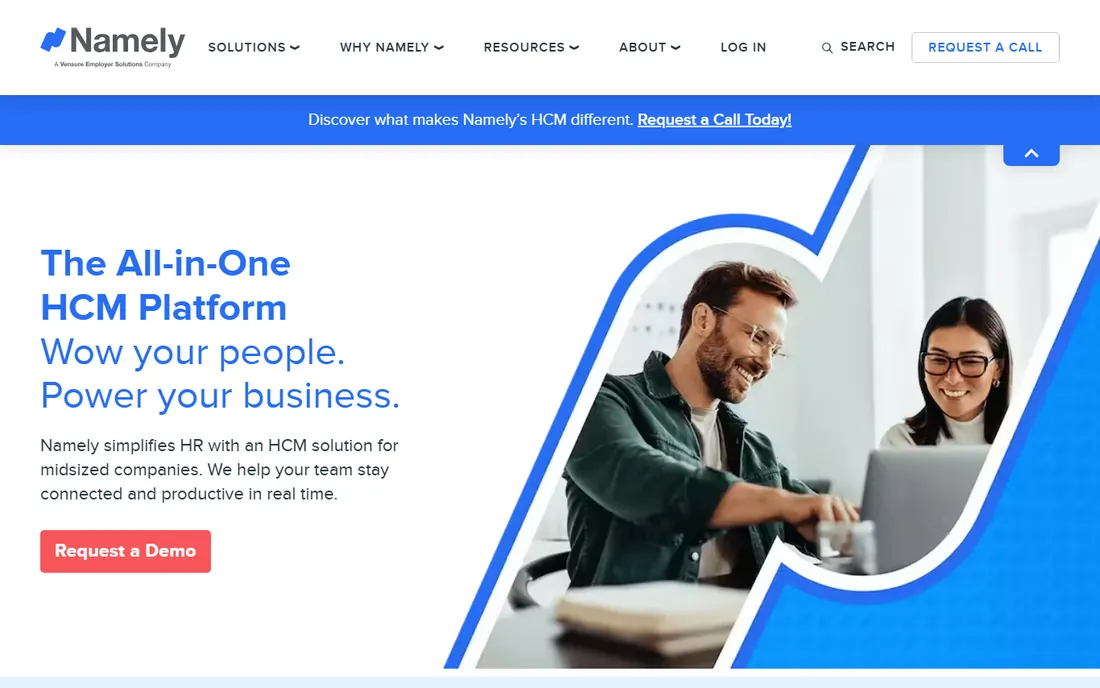
Namely's differentiator is that it sells expertise alongside software. The HCM platform covers payroll, benefits, time, and compliance, and the managed services layer gives you HR professionals who handle the work you do not have staff for. For a 100-person US company navigating multi-state tax, benefits, and employment law, that combination is practical.
Pricing is quote-based and reflects the services component. International capabilities are thinner than Deel or HiBob, so global teams should look elsewhere. If your compliance strategy is "hire experts and give them good tools," Namely packages both.
What we like- Bundles software with managed HR and compliance services
- Solid for multi-state US compliance
- Dedicated support is genuinely useful
Watch out for- Quote-based pricing
- International support is limited
- The service model adds cost beyond the software
#9
Gusto
Best for: Small US businesses getting payroll and compliance right
Visit gusto.com
Starting priceSee website
Free planFree trial
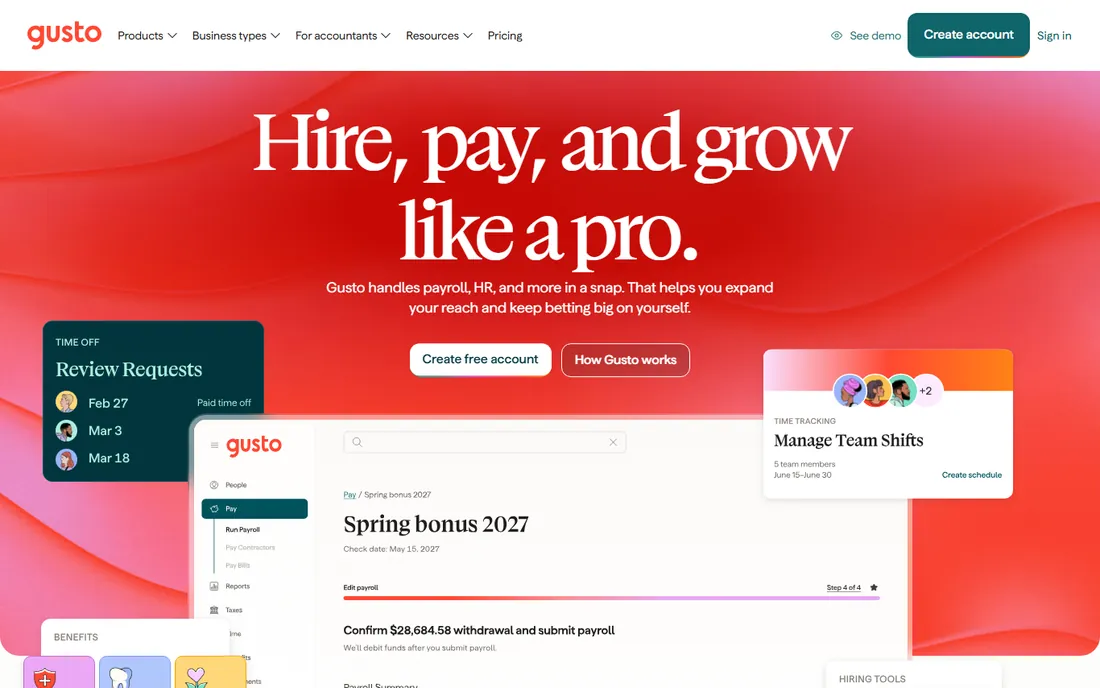
Gusto is where most small US businesses should start. It runs payroll, files federal, state, and local taxes, handles benefits, and covers the HR compliance basics like offer letters, onboarding documents, and required trainings. Setup is free and you pay nothing until you run your first payroll, which removes the usual buying risk.
The limits are geographic and functional. Gusto is built for US teams; international hiring stops at contractor payments. Companies that outgrow it usually move to Rippling or BambooHR. But for a team under 50 people that needs payroll compliance handled correctly without an HR hire, Gusto is the simplest correct answer.
What we like- Handles payroll tax filing and compliance automatically
- Free to set up with no charge until first payroll
- Simple plans for small teams
Watch out for- US-only for employees
- HR depth is lighter than the platforms above
- International support is limited to contractors
How we chose
We evaluated HR platforms against the compliance needs of small and mid-size US companies: GDPR readiness, SOC 2 certification, data residency options, access controls, and audit trails. We checked each vendor's security and trust pages, pricing pages, and compliance documentation, and cross-checked claims against public reviews. Prices come from vendor pricing pages only; where vendors keep pricing behind quotes, we say so. We did not claim hands-on testing.
What to look for before you sign
Ask for the SOC 2 Type II report, not the badge. Every vendor on this list advertises SOC 2, but the report itself shows the audit period, the scope, and any exceptions. Your security questionnaire process should request it during evaluation, and a vendor that hesitates is telling you something.
Pin down data residency in the contract. GDPR compliance depends partly on where employee data is stored and processed. Some vendors offer EU hosting as standard, others as an add-on, and a few only host in the US. Get the region in writing, along with the data processing agreement, before you sign.
Check who can see what. Role-based permissions, audit logs, and data retention controls are the features auditors actually test. During a trial, create a manager role, restrict it to one department, and check what the audit log records. This thirty-minute test reveals more than a sales demo.
GDPR and SOC 2: the compliance checklist
GDPR and SOC 2 ask different questions. GDPR asks how you protect the personal data of EU individuals: lawful basis, data minimization, subject rights, breach notification, and cross-border transfer rules. SOC 2 asks whether your vendor's controls around security, availability, and confidentiality actually work, as verified by an independent auditor.
Your HRIS sits at the center of both. It holds the most sensitive employee data in the company, so your data processing agreement with the vendor matters as much as the software features. Confirm the vendor offers a signed DPA, supports data subject access and deletion requests in the product, and documents its sub-processors.
Match the tool to your risk. A 30-person US agency needs BambooHR or Gusto with a signed DPA. A 500-person company with EU employees needs Personio, HiBob, or Rippling with EU data residency. A global enterprise needs Workday or UKG with a full governance program. Buying more compliance than your risk requires wastes money; buying less invites the audit finding you were trying to avoid.
Frequently asked questions
What is HRIS compliance software?
It is HR software with the security certifications, data controls, and audit features needed to handle employee data under regulations like GDPR and frameworks like SOC 2. The software is only part of the picture; your contracts, processes, and the vendor's audit reports complete it.
Is SOC 2 certification the same as GDPR compliance?
No. SOC 2 is an independent audit of a vendor's security controls, common in the US. GDPR is a European privacy law that governs how personal data is collected, stored, and used. A vendor can be SOC 2 certified without being GDPR compliant, and vice versa, so check both separately.
Which HRIS is best for GDPR?
Personio is built around GDPR with EU data storage, and Deel handles GDPR across many countries for global teams. Rippling, HiBob, and BambooHR also support GDPR workflows with the right configuration. Confirm data residency and get a signed data processing agreement regardless of the vendor.
Do small companies need SOC 2 compliant HR software?
If your customers ask for it in security questionnaires, yes. Many B2B contracts now require vendors to use SOC 2 audited sub-processors, and your HRIS holds your most sensitive data. For companies under 50 people, Gusto or BambooHR with proper configuration usually satisfies the requirement.
How much does compliant HRIS software cost?
Small team options start with Gusto's free setup and BambooHR's per-employee quotes. Mid-market platforms like Personio start from €7.60 per employee per month, while Rippling, HiBob, and Namely run on custom quotes. Enterprise platforms like Workday and UKG are six-figure annual commitments. Deel's EOR service costs $599 per employee per month.
What should we ask vendors about data residency?
Ask where employee data is stored, whether you can choose an EU region, what the data processing agreement covers, who the sub-processors are, and how data deletion works when an employee leaves. Get the answers in the contract, not just the sales deck.
Sources we checked (9)
- https://www.rippling.com/pricing
- https://www.deel.com/pricing/
- https://www.bamboohr.com
- https://hibob.com/
- https://www.personio.com/
- https://workday.com/
- https://ukg.com/
- https://namely.com/
- https://gusto.com/product/pricing
Is your product missing or out of date?
We review this list regularly. Vendors can request a listing, send updated pricing or ask about featured placement.

Shihab Mia · Founder, Rankite
Shihab has spent more than a decade helping SaaS and e-commerce brands grow through search. He writes Rankite's software buying guides from pricing pages, documentation and public user reviews. More about Shihab.