How we make this list: we compare pricing pages, product documentation and public user reviews. Ratings come from G2, Capterra or Trustpilot, with the date we checked them.
GHX is the best overall pick for most hospitals and health systems because it connects providers and suppliers on one network, automates purchase orders and invoices, and adds inventory and value analysis through Syft, which GHX acquired in 2022. TECSYS is the stronger alternative when warehouse and point of use control inside the hospital matter most.
Key takeaways
- GHX suits large hospitals and health systems that need provider to supplier connectivity and clean item data.
- TECSYS suits health systems with central warehouses, distribution centres and busy procedural areas.
- Jump Technologies suits hospitals that want dock to patient inventory tracking and charge capture.
- Hybrent suits smaller hospitals, surgery centres and non acute sites that need simple multi vendor purchasing.
- Most tools in this guide are priced by quote, so ask for a written quote covering software, implementation, hardware and support.
What does healthcare supply chain software do
Healthcare supply chain software manages the flow of medical supplies, devices and drugs from ordering to use at the bedside. It covers purchasing, supplier catalogues, inventory counts, par levels, replenishment, charge capture, recalls and expiry tracking. The best tools link a scan at the point of use to the patient record, the item master and the finance system, so one scan updates stock, cost and billing at the same time.
A hospital supply chain is not the same as a retail supply chain. Clinical staff pull items during a procedure, often under time pressure, and the item may be a high cost implant with a serial number, a lot number and an expiry date. The software must record who used it, for which patient, and at what cost, without slowing the clinical team. It must also flag recalled or expired stock before it is used. Fortune Business Insights valued this market at 3.93 billion dollars in 2025.
Start with the problem that costs the most money or creates the most risk. If purchase orders, invoices and supplier data are the main pain, a network platform such as GHX will help first. If stockouts, expired implants and missed charges in procedural areas are the main pain, a point of use system such as TECSYS, Syft, LogiTag, Cardinal Health Inventory Manager or QSight will help first. Many health systems end up with both.
Check integration before you check features. Ask each vendor to show a live link to your enterprise resource planning system, your electronic health record and your materials management information system. Ask how item data is cleaned and kept current, how recalls are matched to stock on hand, and how charge capture works when a product is scanned.
Check the hardware as well. A locking RFID cabinet suits high value implants, while a simple barcode scan suits low cost consumables. Ask for a pilot in one department, with clear measures for stock accuracy and missed charges, before you sign a system wide deal.
How much does healthcare supply chain software cost for a 200-bed hospital
Most vendors in this guide do not publish a price, so buyers must request a quote. The worked example below uses stated assumptions and the few third party figures available, and it is an illustration only, not a quote. It assumes a 200-bed hospital with annual medical supply spend of 18 million dollars, 12 procedural and nursing locations, and 40 supply chain and clinical users.
| Cost item |
Low estimate |
Mid estimate |
High estimate |
| Annual software subscription |
60,000 dollars |
120,000 dollars |
200,000 dollars |
| One time implementation and data cleansing |
40,000 dollars |
90,000 dollars |
180,000 dollars |
| Hardware, RFID cabinets and scanners |
25,000 dollars |
75,000 dollars |
200,000 dollars |
| Training and change support, year one |
10,000 dollars |
25,000 dollars |
50,000 dollars |
| Total year one cost |
135,000 dollars |
310,000 dollars |
630,000 dollars |
The subscription range reflects the third party figures in this guide. Hybrent is third party reported from 475 dollars per month, which is about 5,700 dollars per year, at the low end for small sites. JumpStock is third party reported from 100,000 dollars per year, which sits near the middle of the range. TECSYS is third party reported from 50,000 dollars as a one time figure by SelectHub, while Software Advice lists 250,000 dollars one time, so treat both figures with care and ask TECSYS for a written quote. GHX, Syft, LogiTag, Cardinal Health and QSight are quote only.
A buyer can test the business case with simple maths. If the software helps cut expired stock and overstocks by 2 percent of an 18 million dollar supply spend, that is 360,000 dollars a year. Compare the year one total cost in the table with that gain, and ask the vendor to put its savings claim in writing.
What should I check for recalls, expiry dates and compliance
Recall and expiry handling is a safety feature, not a nice extra. The tool should match a recall notice to lot and serial numbers on hand, alert staff before a recalled item is used, and show where every affected item sits across all sites. It should also track expiry dates and flag items close to expiry. Ask the vendor to show this in a live demo with your own item data.
Traceability also matters for implants and high cost devices. The tool should record the unique device identifier, lot, serial number and patient link for each item used. Data quality is the hidden cost here, because item masters drift as suppliers change descriptions and codes.
Healthcare supply chain software compared
| Tool |
Best for |
Starting price |
Free plan |
| GHX |
Large hospitals and health systems, supplier network |
quote |
No free plan stated |
| TECSYS |
Warehouse, distribution and point of use control |
quote, third-party reported from 50,000 dollars one time |
No free plan stated |
| Jump Technologies |
Dock to patient inventory and charge capture |
quote, third-party reported from 100,000 dollars per year |
No free plan stated |
| Hybrent |
Small hospitals, surgery centres and non acute sites |
quote, third-party reported from 475 dollars per month |
No free plan stated |
| LogiTag |
RFID tracking of high value implants |
quote |
No free plan stated |
| Syft |
AI assisted inventory and cost analytics, GHX owned |
quote |
No free plan stated |
| Cardinal Health Inventory Manager |
RFID and barcode point of care inventory |
quote |
No free plan stated |
| Owens and Minor QSight |
Procedural inventory, recalls and charge capture |
quote |
No free plan stated |
Quick comparison
| Tool | Best for | Starting price | Free plan |
|---|
 GHX | Large hospitals and health systems needing a supplier network and clean item data | quote, checked 12 Nov 2026, no published price | No free plan stated |
 TECSYS | Health systems with central warehouses and busy procedural areas | quote, checked 12 Nov 2026, third-party reported from 50,000 dollars one time by SelectHub, while Software Advice lists 250,000 dollars one time | No free plan stated |
 Jump Technologies | Hospitals with 200 or more beds wanting dock to patient inventory tracking | quote, checked 12 Nov 2026, third-party reported from 100,000 dollars per year | No free plan stated |
 Hybrent | Surgery centres, physician offices, critical access hospitals and non acute sites | quote, checked 12 Nov 2026, third-party reported from 475 dollars per month | No free plan stated |
 LogiTag | Hospitals needing RFID tracking of high value implants in procedural areas | quote, checked 12 Nov 2026, no published price | No free plan stated |
 Syft | Health systems wanting inventory control, cost analytics and preference card optimisation | quote, checked 12 Nov 2026, no published price found | No free plan stated |
 Cardinal Health Inventory Manager | Hospitals wanting RFID and barcode inventory linked to the patient record | quote, checked 12 Nov 2026, no published price found | No free plan stated |
 Owens and Minor QSight | Procedural areas needing perpetual inventory, recall alerts and charge capture | quote, checked 12 Nov 2026, no published price | No free plan stated |
Is your product missing or out of date?
We review this list regularly. Vendors can request a listing, send updated pricing or ask about featured placement.
Best healthcare supply chain software
#1
GHX
Best for: Large hospitals and health systems needing a supplier network and clean item data
Visit ghx.com
Starting pricequote, checked 12 Nov 2026, no published price
Free planNo free plan stated
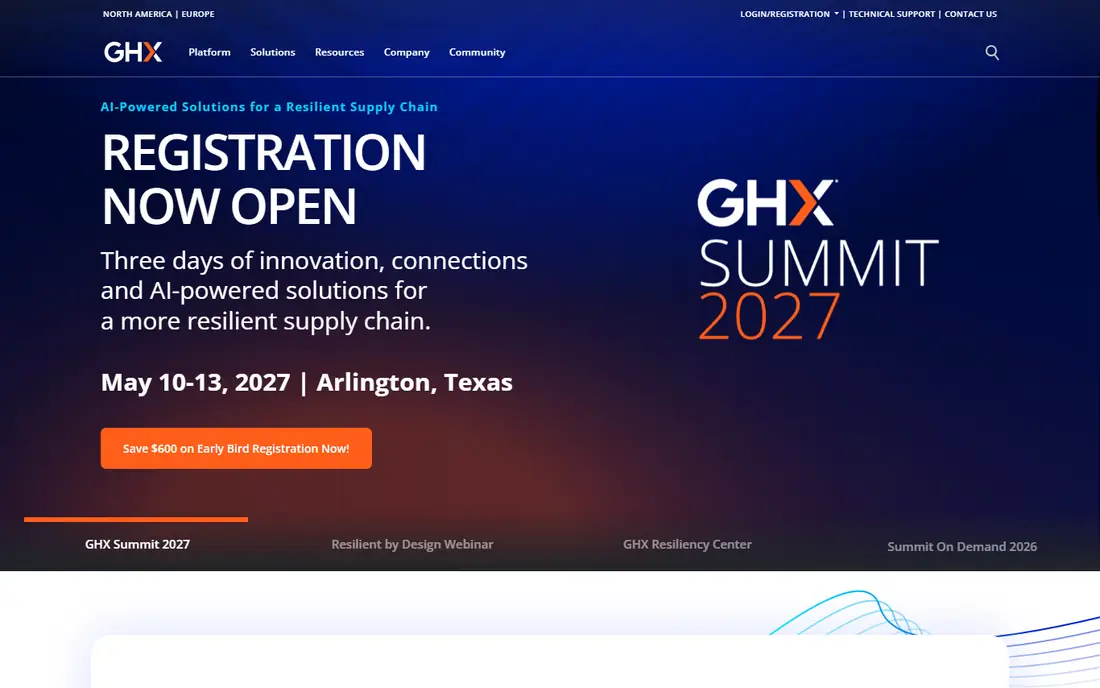
GHX, or Global Healthcare Exchange, runs a cloud platform that connects hospitals with suppliers and automates orders, invoices and item data. We opened the GHX homepage during research on 12 November 2026. GHX was founded in 2000, and its scale is its main strength, because a hospital can trade with many suppliers through one set of standards. The risk is scope, because a full rollout touches procurement, finance, IT and clinical teams,
What we like- Largest healthcare trading network, strong item data, broad procure to pay automation
Watch out for- Pricing is not published, and smaller hospitals may find it broad and complex
#2
TECSYS
Best for: Health systems with central warehouses and busy procedural areas
Visit tecsys.com
Starting pricequote, checked 12 Nov 2026, third-party reported from 50,000 dollars one time by SelectHub, while Software Advice lists 250,000 dollars one time
Free planNo free plan stated
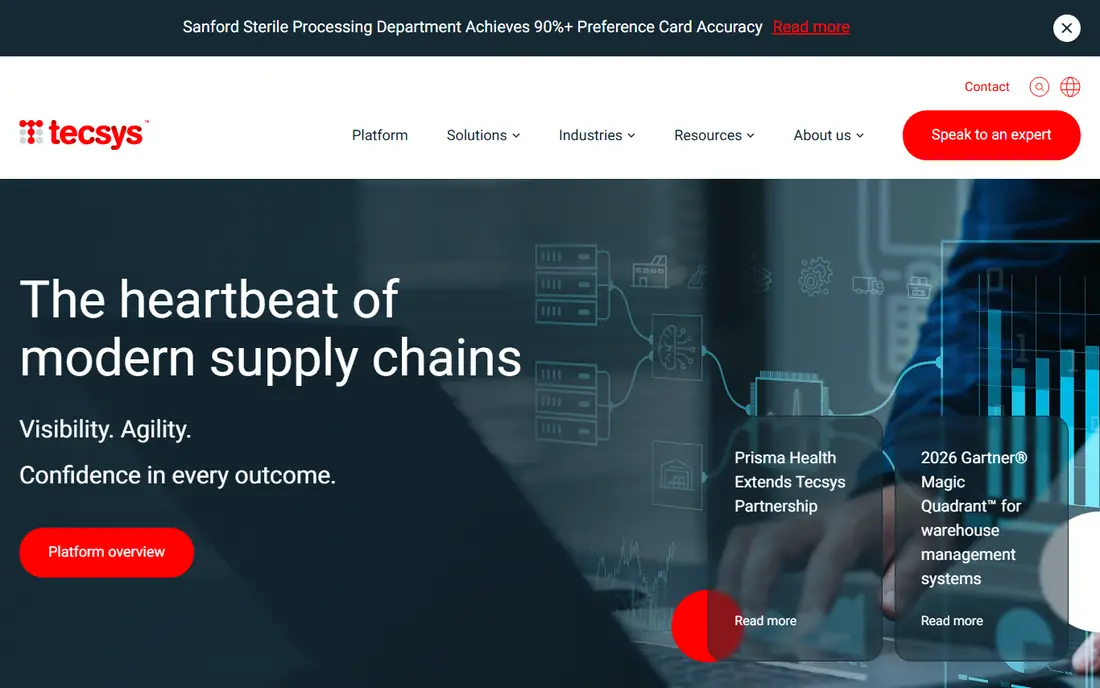
TECSYS Elite Healthcare is a supply chain platform built for hospitals, health systems, pharmacies and healthcare distributors. It covers warehouse management, point of use supply management, distribution, transport and analytics, and it bridges the gap between the enterprise resource planning system and clinical systems. Its point of use module tracks items in operating rooms and cath labs with RFID, barcode and mobile tools, and it supports serialized traceability for regulated goods and recalls.
What we like- Deep warehouse management, RFID and barcode point of use tracking, serialized traceability
Watch out for- Pricing is quote based and high in third party listings, and it needs skilled staff
#3
Jump Technologies
Best for: Hospitals with 200 or more beds wanting dock to patient inventory tracking
Visit jumptech.com
Starting pricequote, checked 12 Nov 2026, third-party reported from 100,000 dollars per year
Free planNo free plan stated
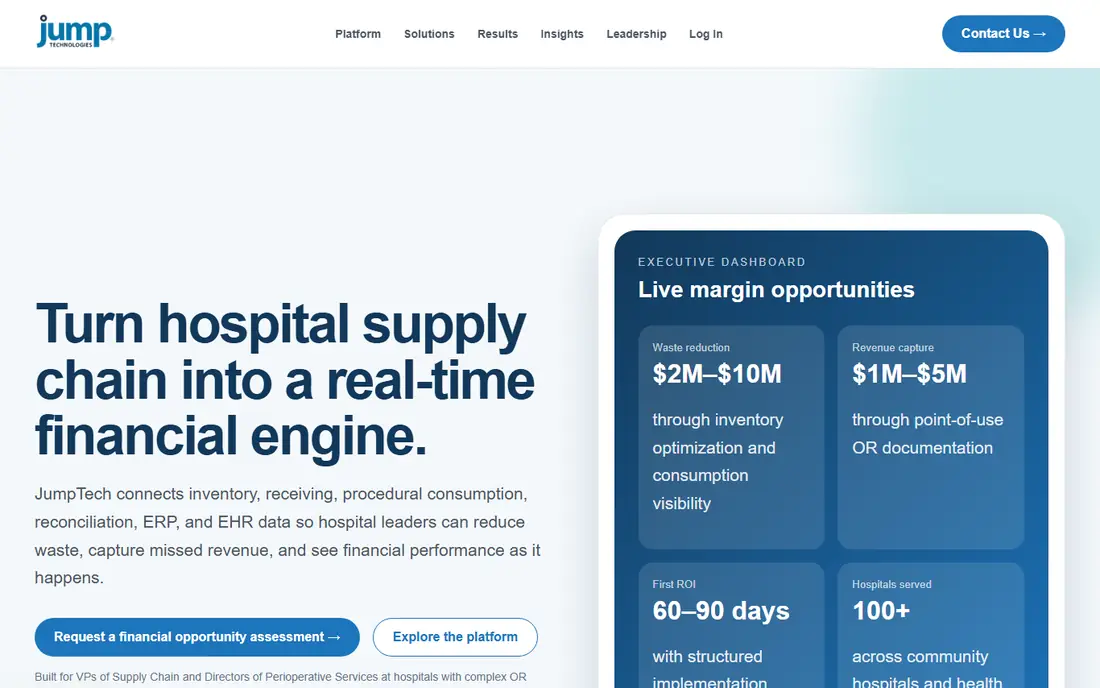
Jump Technologies sells JumpStock, a dock to patient hospital inventory system that complements an existing enterprise resource planning system rather than replacing it. Staff scan items as they are used, and the system tracks stock from the dock to the patient, sets par levels based on actual use, and supports Kanban replenishment. Jump Technologies says it works with hospitals and health systems with 200 licensed beds or more, so ask it to confirm the current price in writing before you compare it with lower cost tools.
What we like- Point of use scanning, par level and Kanban support, charge capture
Watch out for- Third party starting price of 100,000 dollars per year is high for smaller hospitals
#4
Hybrent
Best for: Surgery centres, physician offices, critical access hospitals and non acute sites
Visit hybrent.com
Starting pricequote, checked 12 Nov 2026, third-party reported from 475 dollars per month
Free planNo free plan stated
Hybrent is a cloud based supply chain suite for healthcare, now part of a Procurement Partners platform, that helps organisations lower costs and save time with purchasing, inventory management and invoicing software. We opened the Hybrent homepage during research on 12 November 2026. Staff can shop all vendors on one site, compare prices, use templates and formularies, set min, max and par levels, and automate approvals and three way invoice matching. Barcode technology helps with ordering, receiving and cycle counts.
What we like- Simple purchasing, inventory and invoicing in one place, multi vendor shopping
Watch out for- Built mainly for non acute and smaller sites, so a large hospital may outgrow it
#5
LogiTag
Best for: Hospitals needing RFID tracking of high value implants in procedural areas
Visit logi-tag.com
Starting pricequote, checked 12 Nov 2026, no published price
Free planNo free plan stated
LogiTag Systems builds RFID solutions for tracking, monitoring and managing inventory, assets and people, with a clear focus on healthcare. Its SmartCabinet is a locked cabinet with built in RFID readers that records items as they enter and leave, with no manual counting, and its StockBox and Scan and Restock tools cover lower cost consumables with the same cloud platform, LogiPlatform. LogiTag suits a buyer whose main loss is high value implants that expire or go unbilled, so ask for a full hardware list and pilot it in one lab first.
What we like- RFID SmartCabinet tracks items in real time, supports consignment stock
Watch out for- Pricing is quote only and hardware costs add up across cabinets, tags and readers
#6
Syft
Best for: Health systems wanting inventory control, cost analytics and preference card optimisation
Visit syftco.com
Starting pricequote, checked 12 Nov 2026, no published price found
Free planNo free plan stated
Syft is a supply chain platform that GHX acquired in February 2022, and it now operates as a wholly owned subsidiary of GHX, joining the GHX value based care portfolio. Its Syft Synergy platform gives supply chain and clinical staff visibility into products used across the health system, including perioperative, procedural and nursing units, and it covers item data management, inventory management, preference card optimisation, cost variance analytics, recall tracking and demand forecasting. Ask whether the quote covers Syft alone or a combined GHX and Syft deal.
What we like- Dock to doc visibility, large item reference database, cost variance analytics
Watch out for- Syft is now a GHX company, so check how it is sold and priced with GHX
#7
Cardinal Health Inventory Manager
Best for: Hospitals wanting RFID and barcode inventory linked to the patient record
Visit cardinalhealth.com
Starting pricequote, checked 12 Nov 2026, no published price found
Free planNo free plan stated
Cardinal Health Inventory Manager, also known as WaveMark Solutions, is a digitally automated clinical supply chain platform for hospitals. It uses barcode and RFID technology, through mobile readers or RFID enabled cabinets, to track supplies across operating rooms, procedural labs, clinical labs and nursing units. Its Moment of Care system links the use of a medical supply to the patient electronic medical record at the moment of care, which automates inventory deduction and charge capture. Treat vendor figures as vendor reported.
What we like- WaveMark links supply use to the patient record, RFID cabinets, predictive analytics
Watch out for- Pricing is quote only and it works best inside a Cardinal Health supply relationship
#8
Owens and Minor QSight
Best for: Procedural areas needing perpetual inventory, recall alerts and charge capture
Visit owens-minor.com
Starting pricequote, checked 12 Nov 2026, no published price
Free planNo free plan stated
QSight is Owens and Minor end to end perpetual inventory management system for procedural supply chains. We opened the QSight page during research on 12 November 2026, and it describes a cloud based system that integrates with a health system IT infrastructure, captures inventory use through barcode scanning, and links that use to the electronic health record for charge capture. QSight matches each scanned product to a database of more than 600,000 products, which cuts manual entry and errors, and it alerts staff to recalled, expired and soon to expire products. Owens and Minor says the average implementation is 90 days.
What we like- Perpetual inventory, 600,000 plus product database, recall alerts, 90 day implementation
Watch out for- Pricing is quote only, and it is tied to Owens and Minor services
How we picked
We picked tools built for hospital and health system supply chains, not general retail or manufacturing tools. We checked vendor sites and third party listings on 11 and 12 November 2026, and we opened the GHX, Hybrent and QSight pages during research. Other vendor pricing pages did not publish a price, so those prices are shown as quote, with third party figures labelled as such. We did not include Oracle SCM, SAP, Blue Yonder, Manhattan Associates, Kinaxis, Infor, E2open, Coupa or o9 Solutions, because they sit on the live general supply chain page. Prices were checked on 12 November 2026, so ask each vendor for a written quote before you buy.
Last verified: 12 November 2026
Frequently asked questions
Which healthcare supply chain software is best for a small hospital
Hybrent is the best fit for many small hospitals and surgery centres, because it covers purchasing, inventory and invoicing in one simple cloud tool, with multi vendor shopping and barcode ordering. GHX and TECSYS offer more depth, but they cost more. A small hospital should pilot Hybrent in one site before it signs.
How long does it take to implement healthcare supply chain software
Implementation time varies by tool and scope, so ask for a written timeline. Owens and Minor says the average QSight implementation is 90 days, which is fast for this category. GHX, TECSYS and Syft rollouts often take longer, because they touch procurement, finance, IT and clinical teams, and they need item data cleansing. A pilot in one department can start in weeks.
Does healthcare supply chain software integrate with my EHR and ERP
Most tools in this guide are built to integrate with enterprise resource planning and electronic health record systems, but the depth varies. GHX, TECSYS, Syft, QSight and Cardinal Health all describe ERP and EHR links, and JumpStock lists MEDITECH Expanse and Oracle PeopleSoft. Ask each vendor to show a live integration with your exact systems before you sign.
How does supply chain software handle recalls and expired products
The tool should match a recall notice to lot and serial numbers on hand, show where each affected item sits, and alert staff before a recalled item is used. QSight, Cardinal Health and LogiTag all offer recall and expiry alerts, and TECSYS and Syft offer lot and serial tracking. Ask the vendor to demo this with your own item data.
What is the difference between GHX and Syft
GHX is the wider provider to supplier network and procure to pay platform, while Syft is the inventory and analytics platform inside the GHX group. GHX acquired Syft in February 2022, and Syft now operates as a wholly owned subsidiary of GHX. A hospital can use GHX for supplier connectivity and Syft Synergy for dock to doc inventory work, often as a combined deal, so ask for a clear quote for each part.
Sources we checked (15)
- https://www.ghx.com
- https://www.tecsys.com/solutions/healthcare-supply-chain-management
- https://www.jumptech.com
- https://hybrent.com
- https://logi-tag.com
- https://www.ghx.com/media/cr3j1if0/syft-synergy-platform-brochure.pdf
- https://hitconsultant.net/2022/02/28/ghx-acquires-syft/
- https://www.cardinalhealth.com/en/solutions/wavemark-supply-management.html
- https://newsroom.cardinalhealth.com/2025-07-07-Connecting-clinical-and-supply-chain-teams-to-advance-delivery-of-care
- https://www.owens-minor.com/services/qsight/
- https://www.owens-minor.com/insights/7-key-achievements-sharp-memorial-hospital-realized-by-using-qsight/
- https://www.giiresearch.com/report/fbs1930133-healthcare-supply-chain-management-market-size.html
- https://www.capterra.co.uk/software/170735/jumpstock
- https://www.selecthub.com/supply-chain-management-software/cargowise-vs-tecsys/
- https://www.selecthub.com/supply-chain-management-software/hybrent-vs-goramp/
Is your product missing or out of date?
We review this list regularly. Vendors can request a listing, send updated pricing or ask about featured placement.

Shihab Mia · Founder, Rankite
Shihab has 5+ years in B2B and SaaS SEO. He writes Rankite's software buying guides from pricing pages, documentation and public user reviews. More about Shihab.