How we make this list: we compare pricing pages, product documentation and public user reviews. Rankite is independent; if a vendor ever pays for a featured spot, that listing is clearly labeled Partner.
Key takeaways
- Nonprofits seeking grants should start with Instrumentl or Grantable, which focus on finding opportunities and drafting stronger applications.
- Foundations and corporate funders managing applications fit Foundant, Fluxx, Blackbaud Grantmaking or GivingData, which run the full grantmaking lifecycle.
- Submittable absorbed WizeHive and now covers grants alongside scholarships and CSR programs on one platform.
- Public sector grantmakers have purpose-built options in Euna Grants (formerly AmpliFund) and ZoomGrants.
- Most grant management platforms price by volume or modules, so expect a sales conversation rather than public pricing.
Grant writing software splits into two jobs that buyers often confuse. Grant seekers need help finding opportunities, tracking deadlines and writing stronger proposals. Grantmakers, foundations, government agencies and corporate giving programs, need to collect applications, manage reviews and track awards. The tools below cover both sides.
Quick comparison
| Tool | Best for | Starting price | Free plan |
|---|
 Instrumentl Instrumentl | Nonprofits finding and managing grants | See website | Free trial |
 Grantable Grantable | AI-assisted grant proposal writing | See website | Free trial |
 Foundant Foundant | Community foundations | See website | No |
 Fluxx Fluxx | Enterprise grantmaking lifecycle | See website | No |
 Submittable Submittable | Grants, scholarships and CSR in one | See website | No |
 Blackbaud Grantmaking Blackbaud Grantmaking | Blackbaud nonprofit ecosystem | See website | No |
 ZoomGrants ZoomGrants | Government and public grant programs | See website | No |
 Euna Grants Euna Grants | Public sector grants management | See website | No |
 GivingData GivingData | Data-driven foundation grantmaking | See website | No |
Is your product missing or out of date?
We review this list regularly. Vendors can request a listing, send updated pricing or ask about featured placement.
The best grant writing software
Starting priceSee website
Free planFree trial
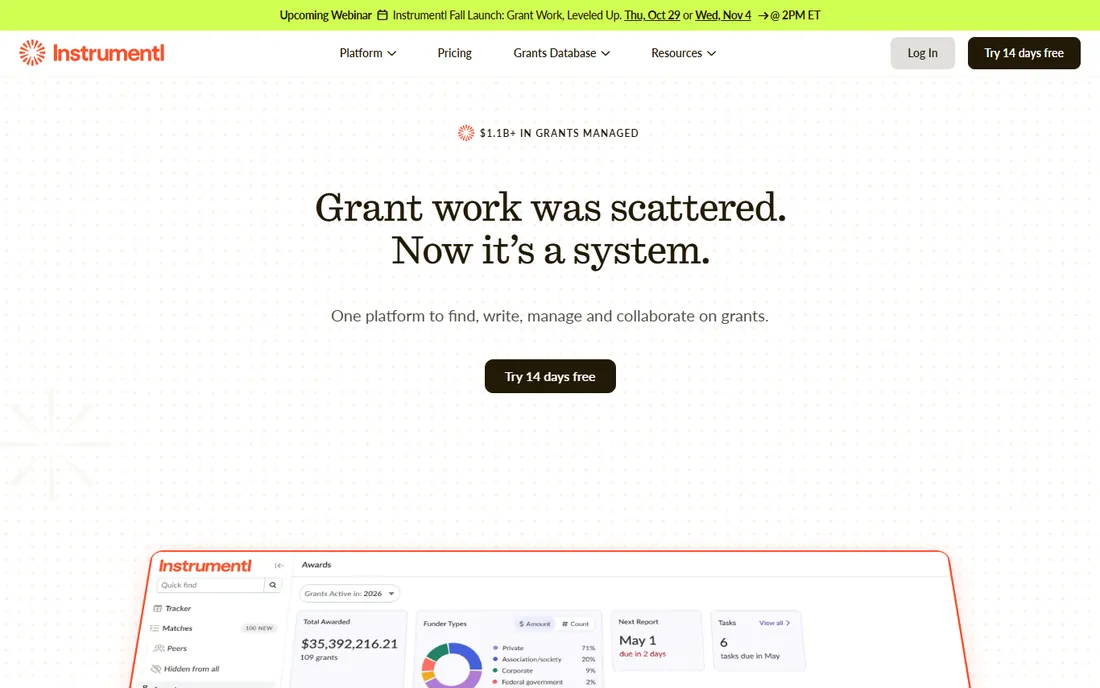
Instrumentl combines a grant opportunity database with a workspace for managing the whole pursuit: deadlines, tasks, document libraries and submissions. Matches are tailored to your mission and budget size, which beats generic grant lists.
It is an investment, not a casual subscription, so it suits nonprofits already winning or seriously pursuing grants. If grants are a side effort, the cost is harder to justify.
Instrumentl works best for nonprofits with at least one person dedicated to grants. Import past applications and build the document library early, since the system gets smarter as it learns your programs. Teams that log every deadline stop losing opportunities to missed dates.
What we like- Grant database matched to your nonprofit
- Deadline and task tracking
- Funder profiles with 990 data
Watch out for- Priced for organizations with real grant revenue
- Database coverage skews US
Starting priceSee website
Free planFree trial
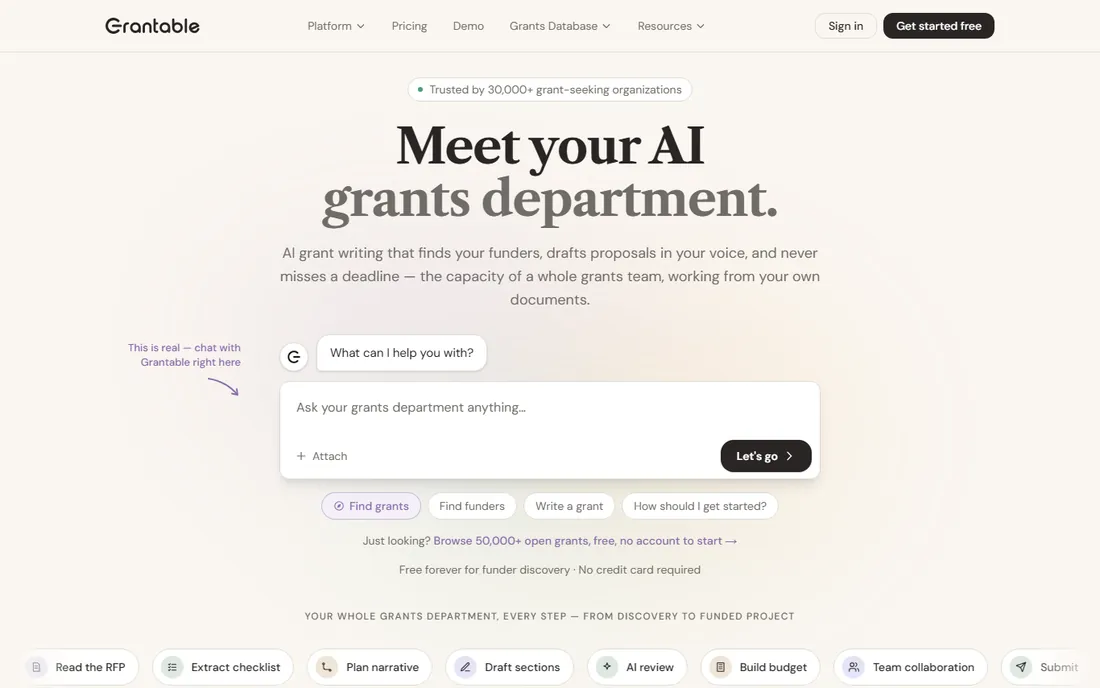
Grantable applies AI to the most painful part of grant seeking: writing. It learns from your organization's past proposals and stored content, then drafts answers to new application questions that your team edits and finalizes.
Treat it as a drafting accelerator, not an autopilot. Funders can spot generic prose, and the best results come from teams that curate their content library carefully.
Grantable helps most when you feed it strong source material: past winning proposals, program descriptions and outcome data. Treat its drafts as starting points and rewrite with specific detail funders can verify. The content library becomes a genuine asset over time.
What we like- AI drafting trained on your past proposals
- Content library of reusable answers
- Built for grant writers
Watch out for- Newer category with less track record
- AI drafts still need human review
Starting priceSee website
Free planNo
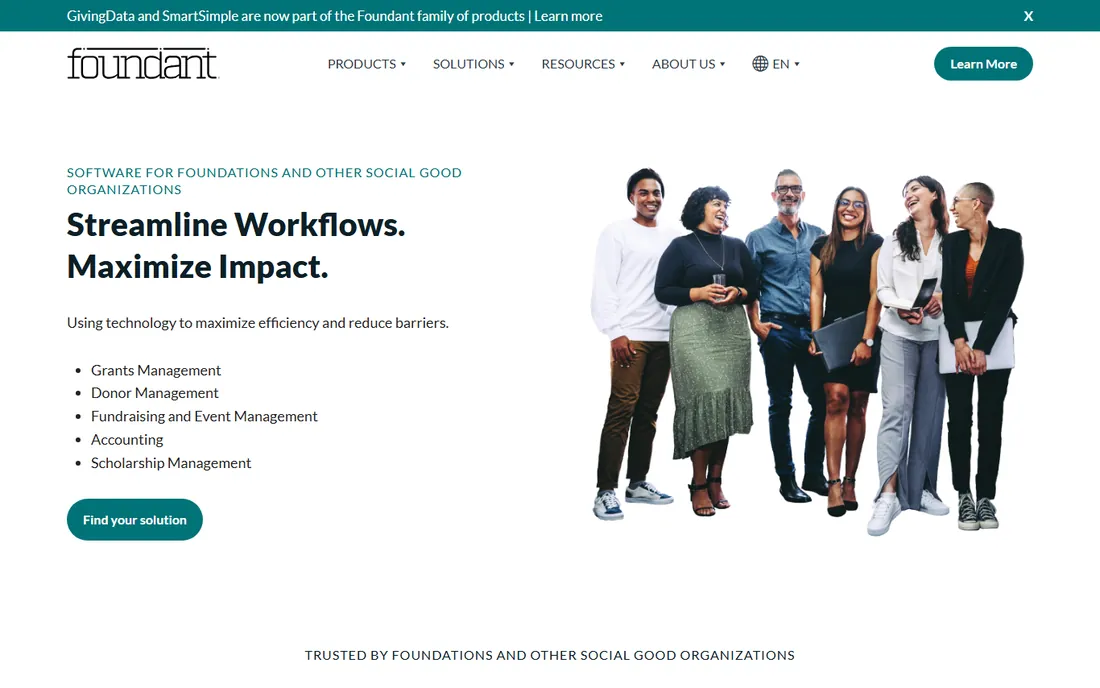
Foundant serves community foundations and other place-based funders with grantmaking software plus fund accounting designed for the model. Application intake, review workflows, awards and reporting live in one system.
It is not a general nonprofit tool. Community foundations evaluating software should put Foundant on the shortlist; other funders may fit Fluxx or Blackbaud better.
Foundant fits community foundations ready to move grantmaking off spreadsheets. Involve program staff in the workflow design, because adoption decides the return. The fund accounting integration matters most at audit time, so test those reports during implementation.
What we like- Purpose-built for community foundations
- Grantmaking plus fund accounting
- Strong sector reputation
Watch out for- Niche focus
- Pricing requires a sales conversation
Starting priceSee website
Free planNo
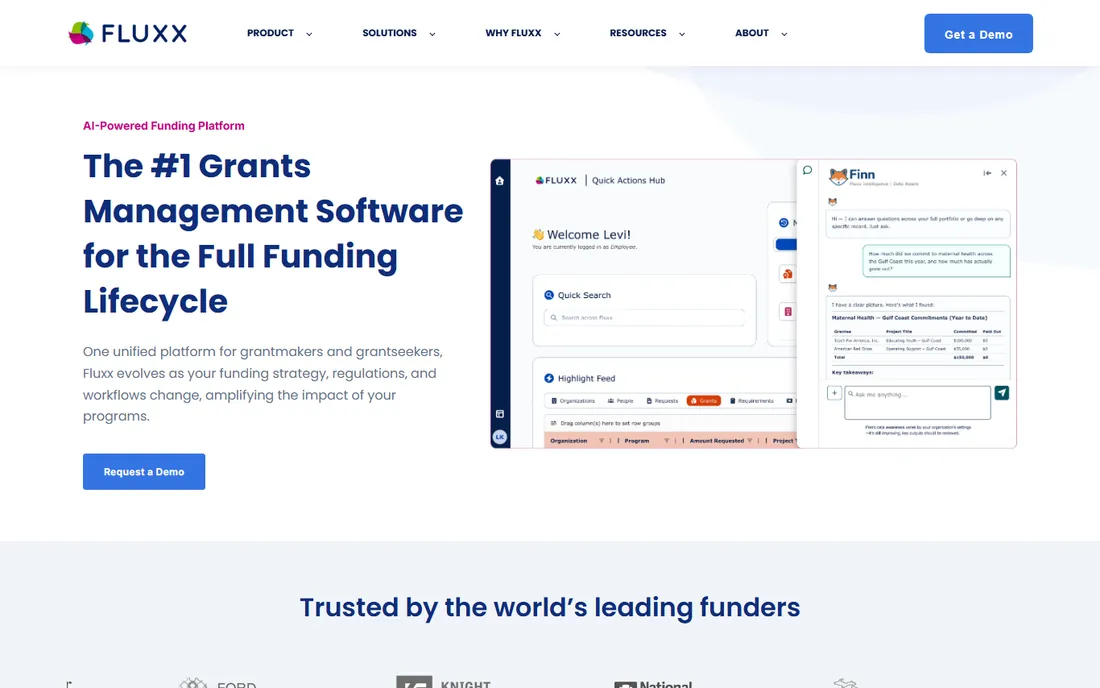
Fluxx manages the entire grantmaking lifecycle for foundations and corporate givers: online applications, review workflows, approvals, payments and outcomes reporting. Large foundations with complex programs are its core users.
Expect an enterprise sales cycle and implementation. For major foundations standardizing grantmaking operations, it is one of the two or three serious options.
Fluxx suits larger foundations with complex, multi-stage grant programs. Map your review and approval workflow before configuration begins; the platform molds to your process, not the reverse. Budget for change management alongside licenses.
What we like- Full funding lifecycle from application to impact reporting
- Strong among large foundations
- Configurable
Watch out for- Enterprise implementation and pricing
- Smaller funders may find it heavy
Starting priceSee website
Free planNo
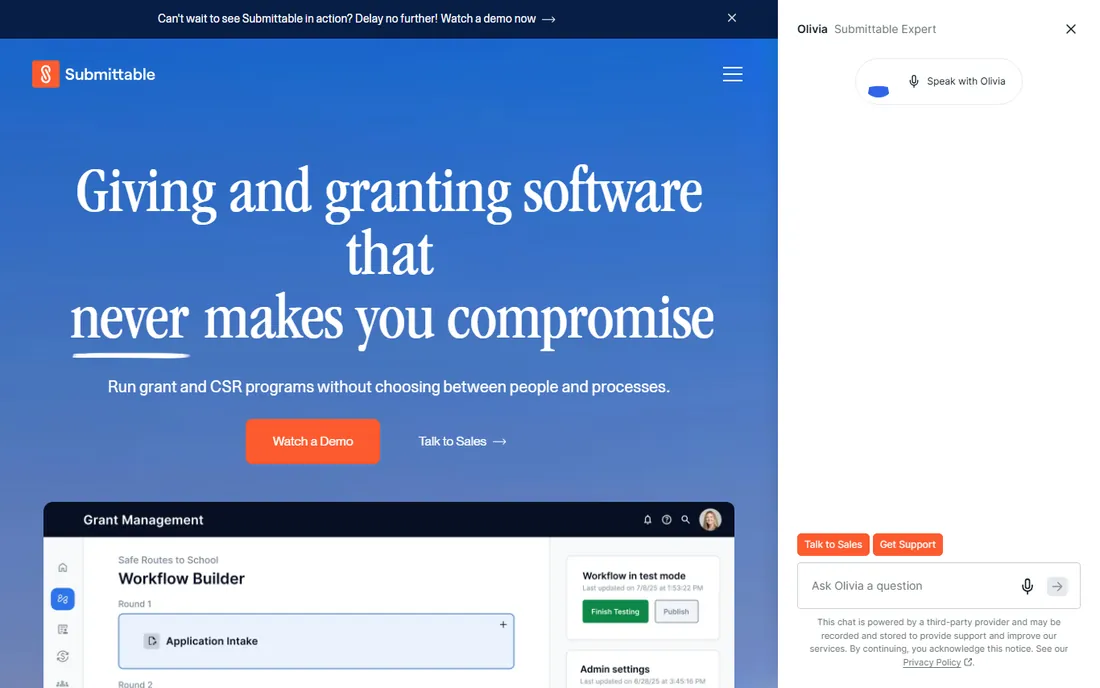
Submittable's acquisition of WizeHive consolidated two mid-market players into one platform covering grants, scholarships, awards and corporate social responsibility programs. Organizations running several application-based programs get one system and one review workflow.
Pure grantmaking foundations may prefer the depth of Fluxx or Foundant. For teams juggling multiple program types, the consolidation is the point.
Submittable makes sense for organizations running grants alongside scholarships or awards. Consolidate programs onto shared review workflows to get the real efficiency gain. Train reviewers well, since the applicant experience depends on their consistency.
What we like- One platform for grants, awards, scholarships and CSR
- Absorbed WizeHive's customer base
- Modern applicant experience
Watch out for- Breadth means less grantmaking depth than specialists
- Pricing by volume
Starting priceSee website
Free planNo
Blackbaud's grantmaking software fits organizations already running Blackbaud for fundraising or accounting: grantee data, payments and reporting connect without integration projects. The vendor's scale brings stability and support infrastructure.
Standalone buyers get less of the integration value and still pay enterprise prices. Blackbaud shops should evaluate it first; others should compare specialists.
Blackbaud Grantmaking fits organizations already on Blackbaud for fundraising or accounting. Use the integration to connect grantee data with donor records for fuller reporting. Standalone buyers should weigh whether the ecosystem premium is worth it.
What we like- Integrates with Blackbaud's fundraising and financial products
- Established vendor
- Broad nonprofit footprint
Watch out for- Best value inside the Blackbaud stack
- Enterprise pricing
Starting priceSee website
Free planNo

ZoomGrants serves government agencies and public programs running grant competitions: application intake, committee review, scoring and award management with the compliance posture public money requires.
Private foundations have stronger options elsewhere. For city, county and state programs, the public-sector fit matters more than brand size.
ZoomGrants serves public agencies running competitive grant programs. Configure scoring rubrics carefully before launch, since committee review quality decides outcomes. The compliance reporting saves real staff time at closeout.
What we like- Built for government grant programs
- Online applications and review workflows
- Public-sector focus
Watch out for- Public-sector specialization limits private funder fit
- Modest brand profile
Starting priceSee website
Free planNo
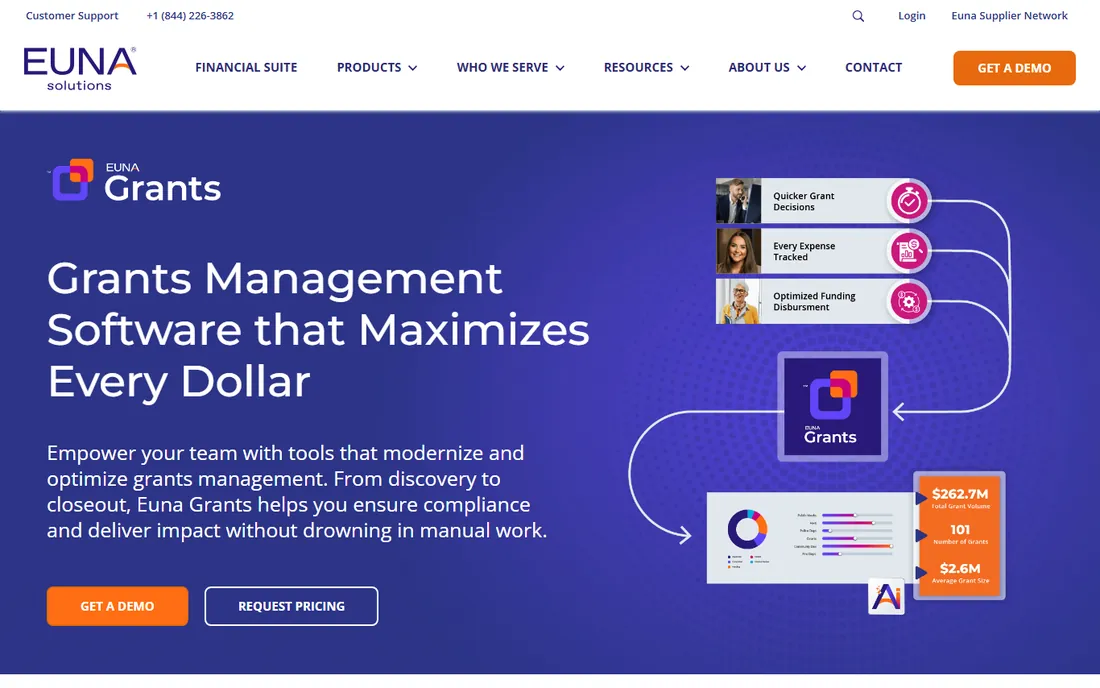
Euna Grants, formerly AmpliFund before its acquisition by Euna Solutions, manages the public-sector grant lifecycle: applications, review, award, financial tracking and closeout reporting. Government grantmakers get compliance and audit trails designed for public funds.
The AmpliFund name is being folded into Euna, so expect branding changes. Public agencies managing grant programs should evaluate it alongside ZoomGrants.
Euna Grants fits government grantmakers managing the full lifecycle to closeout. Treat implementation as a compliance project with finance involved from day one. Agencies replacing AmpliFund should confirm data migration covers historical awards.
What we like- Purpose-built for public sector grantmaking
- Full lifecycle from application to closeout
- Compliance reporting
Watch out for- Public-sector focus only
- Product line consolidated under Euna branding
Starting priceSee website
Free planNo
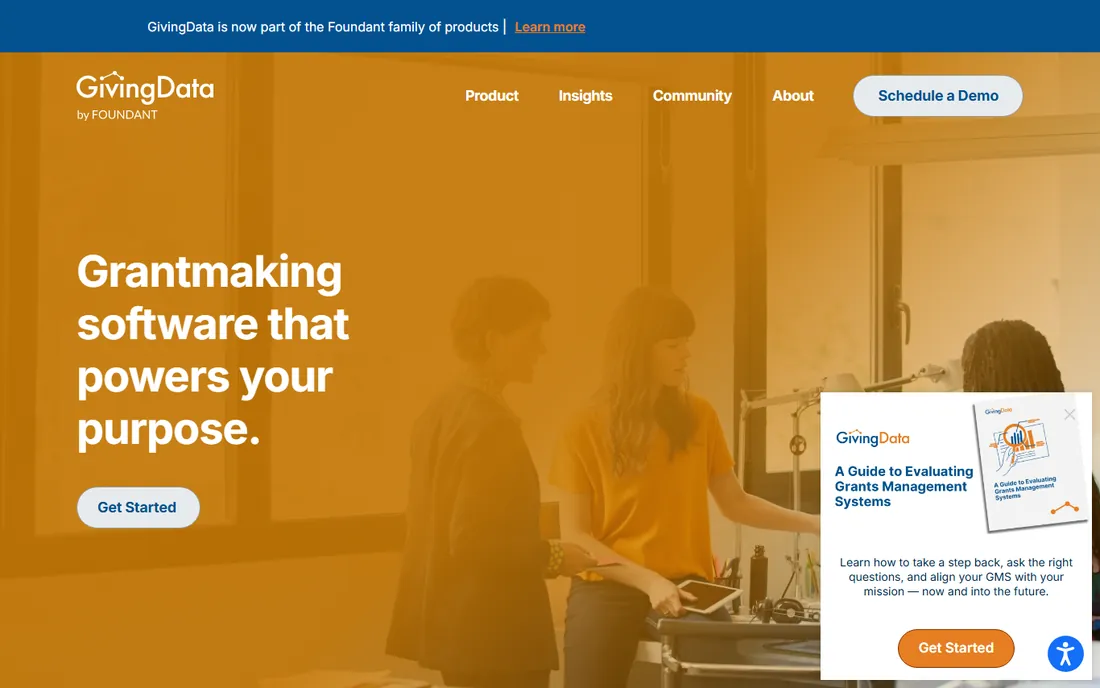
GivingData positions grants management around data: who you fund, what changes, and how the portfolio performs. Foundations that want analytics rather than just workflow find its orientation refreshing.
It is younger than Fluxx or Blackbaud, so reference customers and integrations are thinner. Data-minded foundations willing to bet on a newer platform should take a look.
GivingData appeals to foundations that think in portfolios and outcomes. Start with one grant cycle to learn the analytics before expanding. Data-minded program officers will find the reporting refreshingly direct.
What we like- Analytics-forward grantmaking
- Grantee data and outcomes focus
- Modern interface
Watch out for- Newer and smaller than incumbents
- Fewer reference customers
How we chose
We verified each vendor's current homepage and product status, accounting for consolidation: WizeHive now redirects into Submittable, and AmpliFund into Euna Solutions. We kept tools serving either grant seekers or grantmakers and excluded generic proposal software without grant-specific workflows. Pricing in this category is almost never public, so entries show "See website".
What to get right before you buy
Know which side of the table you are on. Seeker tools (Instrumentl, Grantable) and maker tools (Fluxx, Foundant) solve different problems; buying a maker platform to write better proposals wastes money.
Map your review workflow first. The value of grantmaking software is in review stages, scoring rubrics and approval chains. If your process lives in email, the software forces you to define it, which is good, but budget the time.
Ask about 990 and outcomes data. For seekers, funder intelligence wins grants. For makers, impact reporting justifies the program. The database and reporting depth separates the leaders here.
Frequently asked questions
What is grant writing software?
Software that helps nonprofits find grant opportunities, track deadlines and draft proposals, or helps funders collect applications, manage reviews and track awards. Some tools serve seekers, others serve makers.
How much does grant management software cost?
Most platforms price by application volume, users or modules through sales quotes. Seeker tools like Instrumentl publish tiered plans; enterprise maker platforms are custom-priced.
Can AI write my grant proposal?
AI tools like Grantable can draft proposal sections from your past content, but funders expect authentic, specific answers. Use AI for first drafts and outlines, then rewrite with real program detail.
What happened to WizeHive?
WizeHive was acquired by Submittable, and its website now redirects to Submittable. Existing functionality continues under the Submittable platform.
Do I need grants management software as a small nonprofit?
Probably not at first. A spreadsheet and calendar handle a handful of applications. When you are juggling ten or more deadlines with multiple writers, a tool like Instrumentl pays for itself.
What is the difference between grants management and grants accounting?
Grants management covers applications, reviews and awards. Grants accounting tracks the money: budgets, drawdowns and compliance reporting. Some platforms do both; many integrate with accounting systems.
Grant software buying mistakes
Buyers make the same mistakes with grant software. The first is confusing seeker and maker tools: a nonprofit that needs to write better proposals buys a grantmaking platform, or a foundation buys a prospecting database. Write down which side of the table you sit on before every demo.
The second mistake is underestimating the content work. Seeker tools need your programs, budgets and outcomes documented; maker tools need review criteria defined. The software does not create this content, and implementations stall waiting for it. Assign content owners before signing.
The third mistake is ignoring the reviewer experience. Maker platforms live or die on whether committee members actually use them. If reviewers find the system painful, they revert to email and your investment evaporates. Include two real reviewers in the trial, not just administrators.
The fourth is buying for the demo rather than the workflow. Vendors demo the happy path; your value is in edge cases like reopened applications, partial awards and multi-year grants. Script three messy real scenarios and watch each vendor handle them live.
Finally, check the data you will report a year from now. Boards and government overseers ask for outcomes, demographics and geographic distribution. Confirm the reporting exports match those future questions before committing, because rebuilding reports mid-cycle is painful.
Sources we checked (9)
- https://www.instrumentl.com/
- https://grantable.co/
- https://www.foundant.com/
- https://www.fluxx.io/
- https://www.submittable.com/
- https://www.blackbaud.com/
- https://www.zoomgrants.com/
- https://eunasolutions.com/solutions/grants/
- https://www.givingdata.com/
Is your product missing or out of date?
We review this list regularly. Vendors can request a listing, send updated pricing or ask about featured placement.

Shihab Mia · Founder, Rankite
Shihab has spent more than a decade helping SaaS and e-commerce brands grow through search. He writes Rankite's software buying guides from pricing pages, documentation and public user reviews. More about Shihab.