How we make this list: we compare pricing pages, product documentation and public user reviews. Rankite is independent; if a vendor ever pays for a featured spot, that listing is clearly labeled Partner.
Key takeaways
- Lattice is the best all-in-one for goals plus performance management.
- 15Five combines OKRs with employee engagement and check-ins.
- Betterworks suits enterprises running serious OKR programs.
- Profit.co and Weekdone offer focused OKR tracking at lower cost.
Quick comparison
| Tool | Best for | Starting price | Free plan |
|---|
 Lattice Lattice | goals plus performance management | See website | No |
 15Five 15Five | OKRs with engagement | See website | No |
 Betterworks Betterworks | enterprise OKR programs | See website | No |
 Leapsome Leapsome | people platform with goals | See website | No |
 Profit.co Profit.co | focused OKR tracking | See website | Yes |
 WorkBoard WorkBoard | enterprise results management | See website | No |
 Weekdone Weekdone | simple team OKRs | See website | Yes |
 Perdoo Perdoo | OKR and KPI management | See website | Yes |
Is your product missing or out of date?
We review this list regularly. Vendors can request a listing, send updated pricing or ask about featured placement.
What goal management software does
Goal management software helps organizations set, track and align objectives, usually OKRs (Objectives and Key Results) or SMART goals. It cascades company goals to teams and individuals, tracks progress with check-ins, and connects goals to performance reviews. The category overlaps HR performance platforms; the best tools treat goals as part of how people work, not a separate reporting chore.
Starting priceSee website
Free planNo
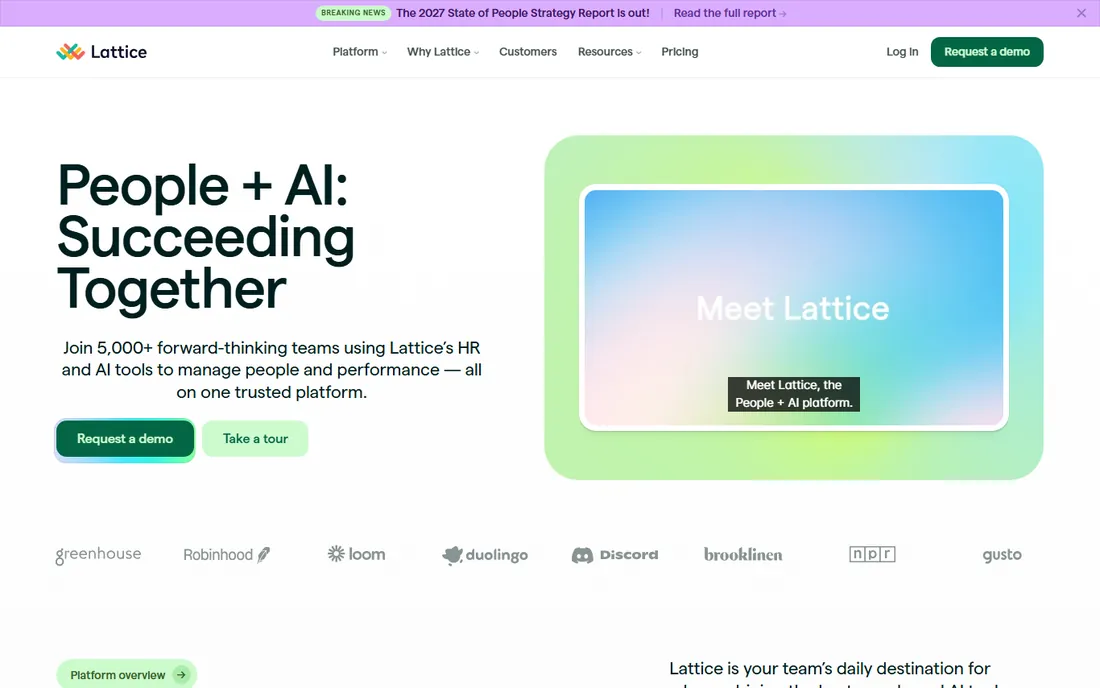
Lattice weaves goal tracking into a full people platform: set OKRs, run check-ins, gather feedback and conduct performance reviews in one system. Goals stay visible because they live where managers already work.
The integration is the value: goals connected to reviews make both more meaningful. Pricing is per employee per module, so costs grow with the suite. Companies serious about performance culture get the most from it.
What we like- Goals integrated with reviews and feedback
- Excellent UX
- Strong adoption
Watch out for- Pricing adds up with modules
- Best for companies with HR processes
- Smaller teams may underuse
Starting priceSee website
Free planNo
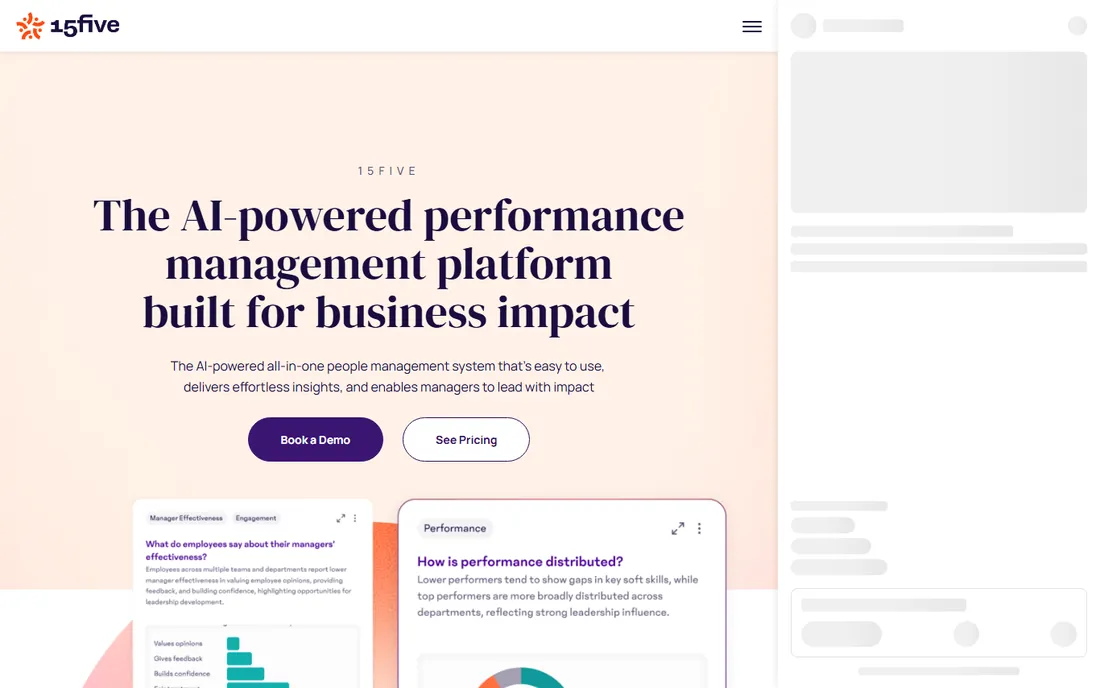
15Five built its name on the weekly check-in and expanded into OKRs, engagement surveys and manager coaching. Goals live alongside the rhythms that keep teams aligned, which improves the odds they get updated.
The platform asks managers to engage actively; without that, it becomes expensive survey software. Organizations investing in management quality find the combination powerful. Pricing is per user per month.
What we like- Combines goals, check-ins and engagement
- Manager effectiveness focus
- Good reporting
Watch out for- Can feel like many tools in one
- Pricing per user
- Needs manager buy-in
Starting priceSee website
Free planNo
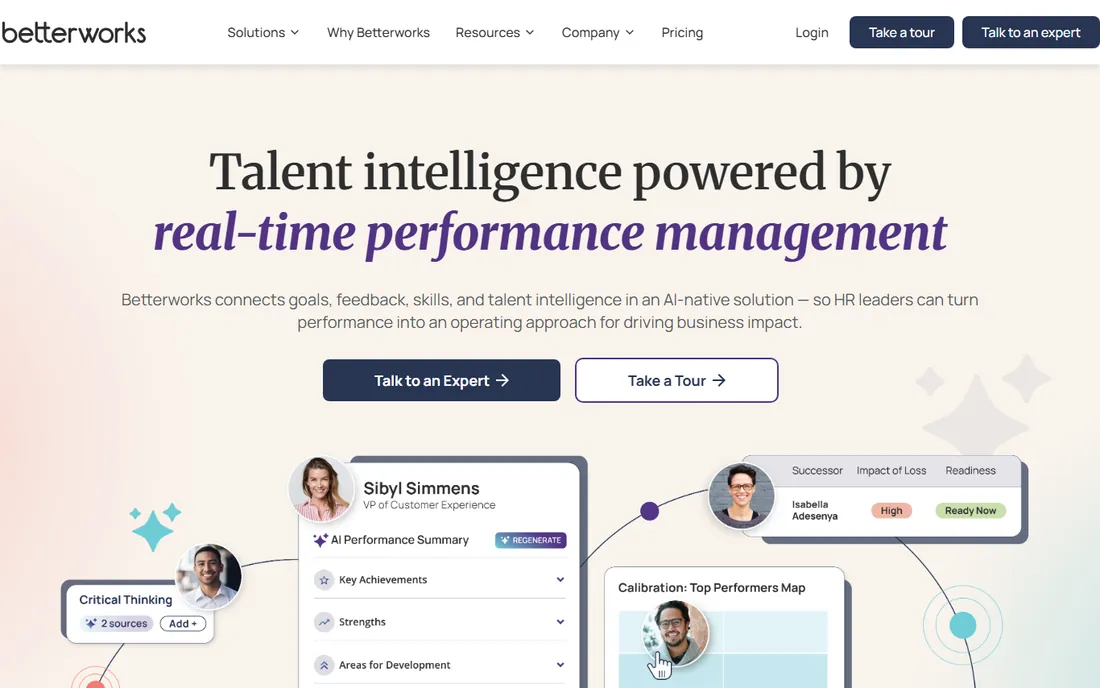
Betterworks is the enterprise OKR specialist: goal setting with methodology baked in, calibration, integrations with HRIS and business systems, and services to run the program. Large companies standardize on it for consistent goal practice across divisions.
It is overkill below a few hundred employees. Expect a sales-led process and implementation support. Enterprises running formal OKR cycles with HR partnership get the structure they need.
What we like- Deep OKR methodology
- Enterprise integrations
- Strong program support
Watch out for- Enterprise pricing and sales cycle
- Complex for small teams
- Implementation effort
Starting priceSee website
Free planNo
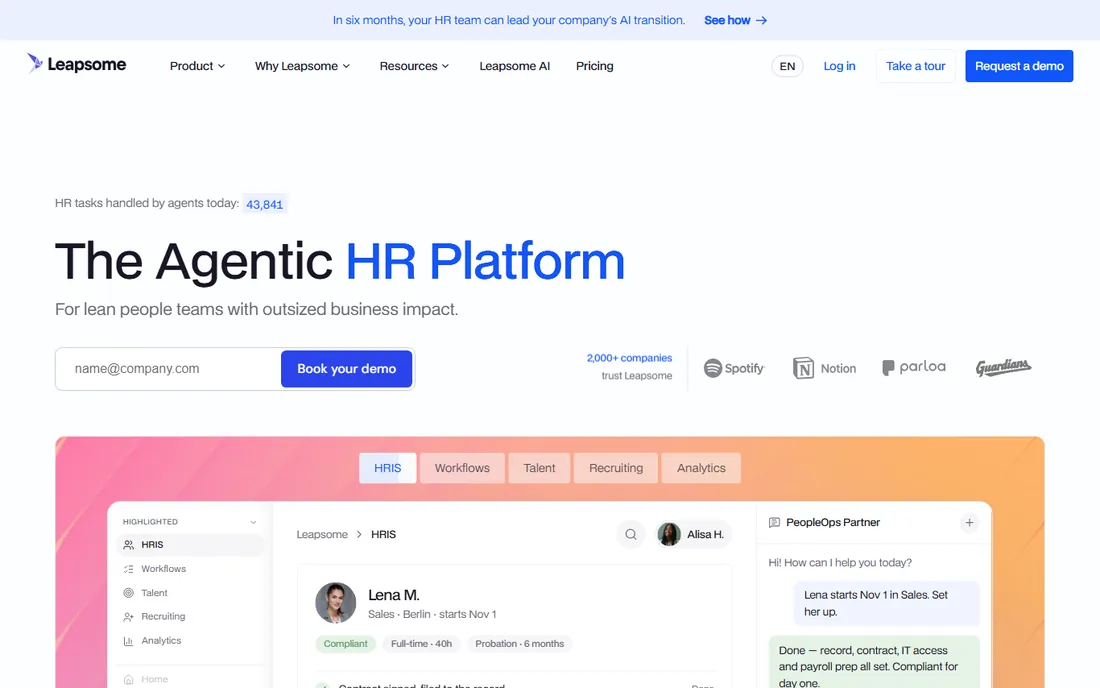
Leapsome combines OKRs and goal tracking with performance reviews, engagement surveys and learning, in modular packages. European companies appreciate EU data hosting and GDPR posture.
The all-in-one approach suits HR teams wanting one vendor. Pure goal-tracking buyers may find simpler tools cheaper. Mid-size companies building people operations like the consolidation.
What we like- Goals plus reviews, engagement and learning
- Modular pricing
- European data hosting
Watch out for- Breadth can dilute focus
- Newer in the US market
- Per-module costs
Starting priceSee website
Free planYes
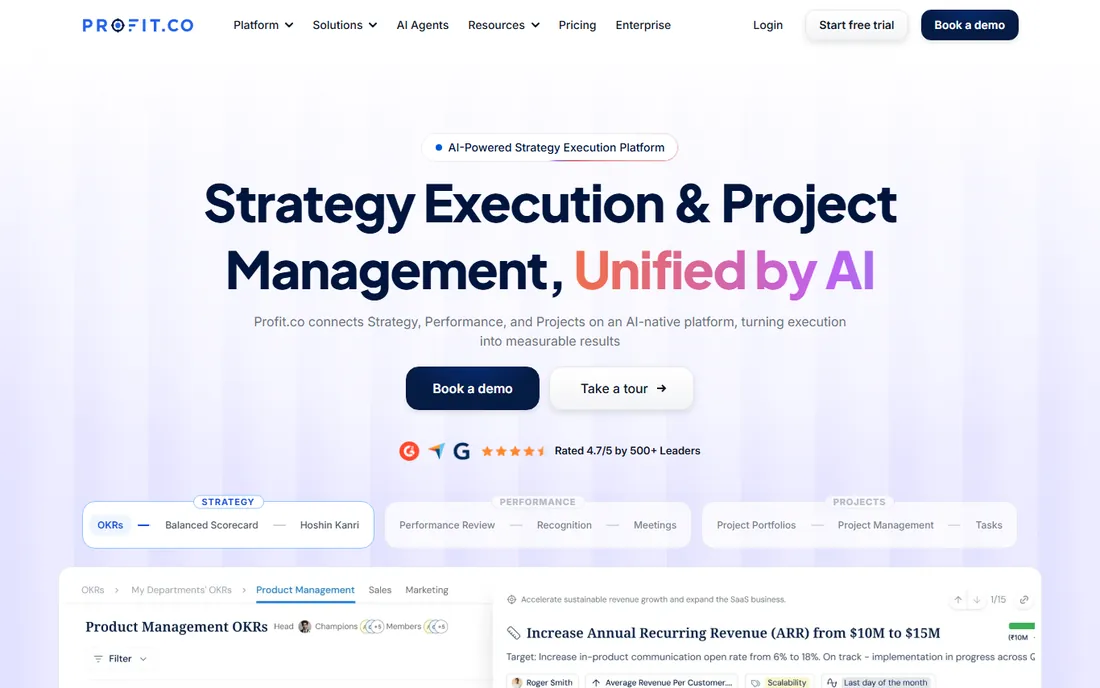
Profit.co focuses on OKRs done thoroughly: objective alignment, key result tracking, check-ins, and integrations with task tools. A free tier makes it accessible to small teams.
The interface prioritizes function over polish, and the brand is smaller than Lattice or 15Five. Teams wanting serious OKR mechanics without enterprise cost find it a strong value.
What we like- Deep OKR features
- Free tier available
- Task management integration
Watch out for- Interface is dense
- Smaller brand
- Support varies
Starting priceSee website
Free planNo
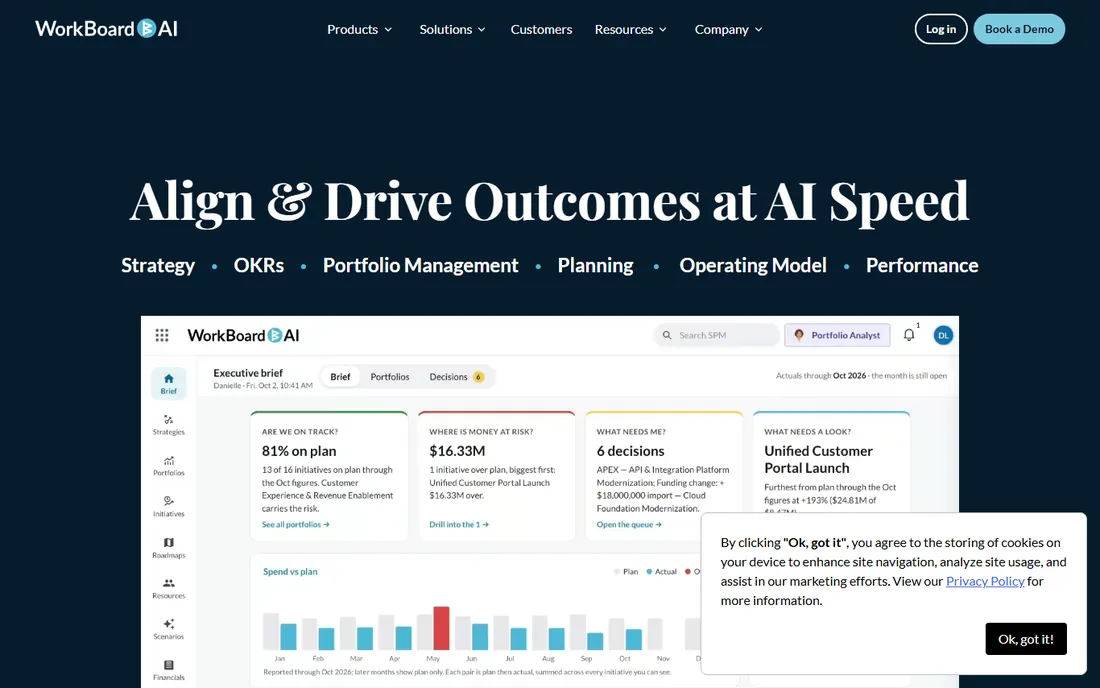
WorkBoard drives enterprise OKRs with an emphasis on business results and operating reviews, integrating with Microsoft Teams and business systems. Large enterprises use it to run strategy execution.
Pricing and complexity target the enterprise. Smaller organizations will find it heavy. For strategy offices running company-wide OKRs, the rigor fits.
What we like- Results-focused methodology
- Strong enterprise customers
- Meeting integration
Watch out for- Enterprise pricing
- Complex
- Microsoft-centric
Starting priceSee website
Free planYes
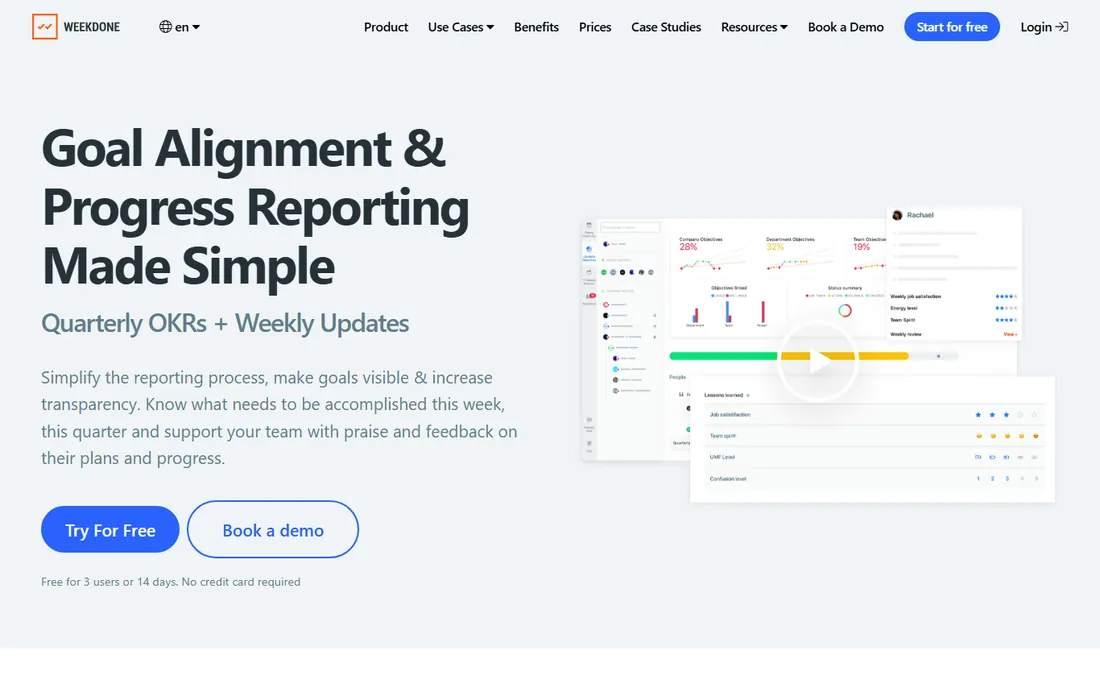
Weekdone keeps OKRs simple: set quarterly objectives, update progress weekly, and keep teams aligned without enterprise machinery. The free tier covers small teams.
It lacks the performance management depth of Lattice or 15Five, which is the point: teams that just need OKR tracking without HR suite overhead get exactly that. Growing companies may outgrow it.
What we like- Simple and focused
- Free for small teams
- Quick to start
Watch out for- Limited depth
- Small vendor
- Fewer integrations
Starting priceSee website
Free planYes
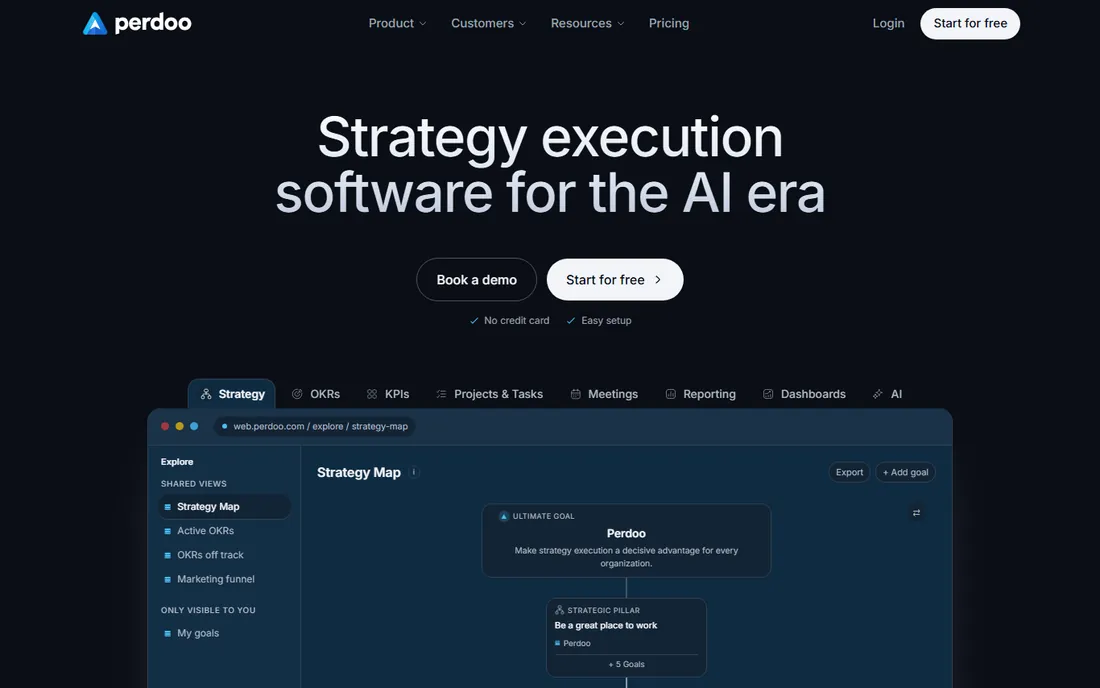
Perdoo maps strategy visually: OKRs for change initiatives alongside KPIs for ongoing health, giving leadership one view of progress. The free tier suits small teams starting with OKRs.
It is narrower than people platforms, focusing on the strategy layer. Organizations wanting goals tied to company strategy rather than HR processes find the framing refreshing.
What we like- OKRs plus KPIs in one view
- Free tier
- Strategy-focused
Watch out for- Smaller ecosystem
- Interface is basic
- Limited HR features
How we chose
We reviewed vendor product pages, documentation and HR practitioner communities. We compared goal frameworks supported, check-in workflows, alignment visualization, review integration, reporting, and pricing models. We excluded pure project management tools without goal frameworks. We did not claim hands-on testing.
Buying guide: choosing goal management software
Decide whether goals live in HR or in strategy. HR-owned goals pair with Lattice, 15Five or Leapsome, connecting to reviews and engagement. Strategy-owned OKRs pair with Betterworks, Profit.co, WorkBoard or Perdoo.
Start with methodology, not software. OKRs fail from poor practice more than poor tools: unclear objectives, too many goals, no check-in rhythm. Pick the framework, train managers, then choose software that supports it.
Pilot with one department. Goal software succeeds on adoption; a pilot reveals whether managers will actually run check-ins before you commit company-wide. Measure goal update rates, not just logins.
Making OKRs actually work
Keep objectives few and memorable, make key results measurable, review weekly, and separate OKRs from compensation where possible. Software tracks the system; leadership discipline makes it work. The best tool cannot fix goals nobody believes in.
Running your first OKR cycle
A successful first quarter follows a pattern. Leadership sets 3 to 5 company objectives with measurable key results, teams draft aligned objectives in a workshop, and everyone publishes goals in the software for transparency. Weekly check-ins, even 15 minutes, keep goals alive; without them, OKRs die quietly by week six. Score key results honestly at quarter end, celebrate progress, and carry learnings into the next cycle. Expect the first cycle to be messy; the discipline compounds. Software supports this rhythm, but the calendar invites matter more than the tool.
Goal software for remote and hybrid teams
Distributed teams need goal software more than co-located ones, because alignment does not happen in hallways. Choose tools with strong asynchronous check-ins so updates flow without meetings across time zones. Visibility matters doubly: remote workers should see how their goals connect upward without asking. Integrate goal updates with the chat and project tools remote teams already live in, reducing context switching. Watch for timezone fairness in goal deadlines and review cycles. The best remote goal cultures write things down by default, and the software should make that the path of least resistance.
Connecting goals to daily work
Goals die when they live in a separate system nobody opens. Integrate goal updates into existing rituals: start weekly team meetings with key result check-ins, link project tasks to the goals they serve, and surface goal progress in dashboards people already view. Make updating goals frictionless; if it takes more than a minute, it will not happen. Celebrate key result completions visibly to reinforce the habit. When priorities shift, update the goals explicitly rather than letting them go stale; outdated goals teach everyone that goals do not matter. The software's integrations with chat, project and HR tools exist precisely to close the gap between goals and work.
Frequently asked questions
What is the best goal management software?
Lattice for goals plus performance management, 15Five for OKRs with engagement, Betterworks for enterprise OKR programs, Profit.co for focused affordable OKRs.
What is the difference between OKRs and SMART goals?
OKRs set ambitious objectives with measurable key results, reviewed frequently. SMART goals emphasize specific achievable targets. Software here mostly supports OKRs, some support both.
How much does goal management software cost?
Per-employee per-month pricing is standard, typically in the single digits to teens depending on modules. Enterprise platforms are quote-based. Free tiers exist for small teams.
Do I need OKR software or will spreadsheets work?
Spreadsheets work for tiny teams but break down with alignment, check-ins and reporting. Software pays off when goals span multiple teams.
Which tool is best for small teams?
Weekdone, Profit.co and Perdoo offer free tiers and simple OKR tracking suited to small teams without enterprise overhead.
Can goal software replace performance reviews?
It complements them. Lattice and 15Five integrate goals with reviews deliberately; pure OKR tools do not. Decide whether you want one system or two.
How long does implementation take?
Simple tools deploy in days. Enterprise platforms with HRIS integration and training take weeks to months. Budget change management time regardless.
How many OKRs should a team have?
Three to five objectives per team per quarter, each with two to four key results. More than that diffuses focus; the constraint is the point.
Should OKRs be tied to bonuses?
Most practitioners recommend against it. Tying pay to OKRs encourages sandbagging and gaming. Use OKRs for alignment and learning, and handle compensation separately.
What is the difference between OKRs and KPIs?
OKRs drive change toward ambitious goals; KPIs monitor ongoing health. Perdoo explicitly tracks both. Healthy organizations need each: KPIs tell you the engine runs, OKRs decide where to drive.
How do OKRs work with agile teams?
They complement each other: OKRs set quarterly direction while sprints handle execution. Connect sprint goals to key results so daily work visibly serves strategy. Review both cadences together in planning.
Can goal software track personal development goals?
Yes, most platforms support individual growth goals alongside business OKRs. Lattice and 15Five explicitly combine performance development with goal tracking.
How often should teams update OKRs?
Weekly check-ins keep goals alive; monthly is the minimum. The cadence matters more than the tool.
What makes a good key result?
Measurable, with a clear target and deadline. If you cannot tell whether it was achieved, rewrite it.
Who should own the OKR process?
A dedicated program owner, often in HR or strategy, with executive sponsorship. Without ownership, OKRs fade within two quarters.
How long until OKRs show results?
Expect one messy learning quarter, then visible improvement by the second or third cycle as the discipline compounds.
What is a good OKR completion rate?
Around 70 percent is healthy for ambitious OKRs; consistently hitting 100 percent means goals are too easy. Judge the stretch, not just the score.
Sources we checked (8)
- https://www.lattice.com
- https://www.15five.com
- https://www.betterworks.com
- https://www.leapsome.com
- https://www.profit.co
- https://www.workboard.com
- https://www.weekdone.com
- https://www.perdoo.com
Is your product missing or out of date?
We review this list regularly. Vendors can request a listing, send updated pricing or ask about featured placement.

Shihab Mia · Founder, Rankite
Shihab has spent more than a decade helping SaaS and e-commerce brands grow through search. He writes Rankite's software buying guides from pricing pages, documentation and public user reviews. More about Shihab.