How we make this list: we compare pricing pages, product documentation and public user reviews. Ratings come from G2, Capterra or Trustpilot, with the date we checked them.
Key takeaways
- Found and Ro offer the broadest medication options, including compounded and brand-name GLP-1 choices, with pricing that changes sharply by insurance and plan length.
- Calibrate and Form Health lean hardest on clinician-led care, with coaching and metabolic health support built around the prescription rather than added as an extra.
- Noom and WeightWatchers suit people who want behavior change and food tracking beside medication, rather than a prescription-only service.
- Sesame works best for one-off visits and price transparency, while LifeMD fits people who want weight care inside a wider telehealth membership.
- Medication eligibility, side effects, and long-term cost vary by person, so a clinician conversation should come before any signup decision.
A short note before the list: this article is for general information only and is not medical advice. GLP-1 medications can carry serious side effects and are not right for everyone, so talk with your own clinician about your health history, other medications, and whether this kind of treatment fits your needs. Prices below come from vendor homepages and pricing pages, and they change with insurance coverage, dose, and plan length, so confirm the current figure on the vendor site before paying.
GLP-1 apps sit in two broad camps. Some are full medical programs that pair a prescription with clinician visits, coaching, and lab or scale tracking. Others started as weight loss or habit apps and later added a medication pathway beside their core program. The distinction matters, because the monthly fee may cover only the app and coaching, only the clinical visits, or the medication as well, and those three models produce very different totals. This guide compares eight options across that range, with a focus on what you actually get for the fee.
Quick comparison
| Tool | Best for | Starting price | Free plan |
|---|
 Noom | behavior change beside medication | See website | No |
 Calibrate | clinician-led metabolic program | See website | No |
 Found | wide medication options | $99 per month | No |
 Ro | brand-name and compounded GLP-1 access | $149 per month | No |
 WeightWatchers | Points tracking plus medication support | See website | No |
 Form Health | one-to-one obesity medicine care | See website | No |
 LifeMD | weight care inside general telehealth | See website | No |
 Sesame | transparent one-off visits | $34 per visit | No |
Is your product missing or out of date?
We review this list regularly. Vendors can request a listing, send updated pricing or ask about featured placement.
The best GLP-1 apps
#1Noom
Best for: behavior change beside medication3.3/5 on
G2 (4 reviews, checked Oct 2026)
Visit noom.com
Starting priceSee website
Free planNo
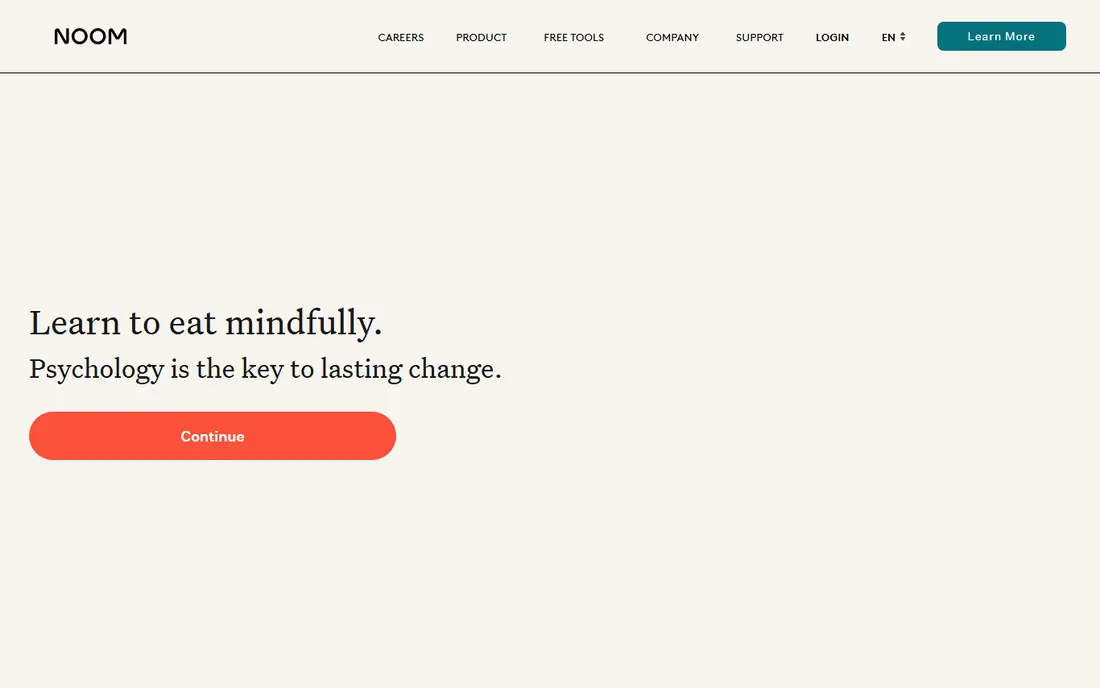
Noom built its name on behavior change, and that remains its clearest strength in the GLP-1 space. Daily lessons cover eating patterns, stress, sleep, and movement, while food logging and coach messaging give structure between lessons. For someone already prescribed a GLP-1 or considering one, that coaching layer addresses the part medication alone does not: the habits that decide whether weight stays off when doses change or treatment pauses.
The trade-off is that Noom is not primarily a pharmacy or prescribing clinic, so medication access runs through a clinical pathway that varies by location and eligibility, and the total cost can be harder to pin down than a single monthly figure. People who want a simple prescription refill service may find the lesson flow more than they need. Noom fits best when you want medication plus a structured behavior program, and you are willing to spend ten minutes a day on lessons rather than just logging meals.
What we like- Psychology-based lessons
- Food logging with color guidance
- Coach messaging included in plans
Watch out for- Medication access depends on a separate clinical pathway
- Pricing is shown after a quiz rather than upfront
- App can feel lesson-heavy for people who only want tracking
Starting priceSee website
Free planNo
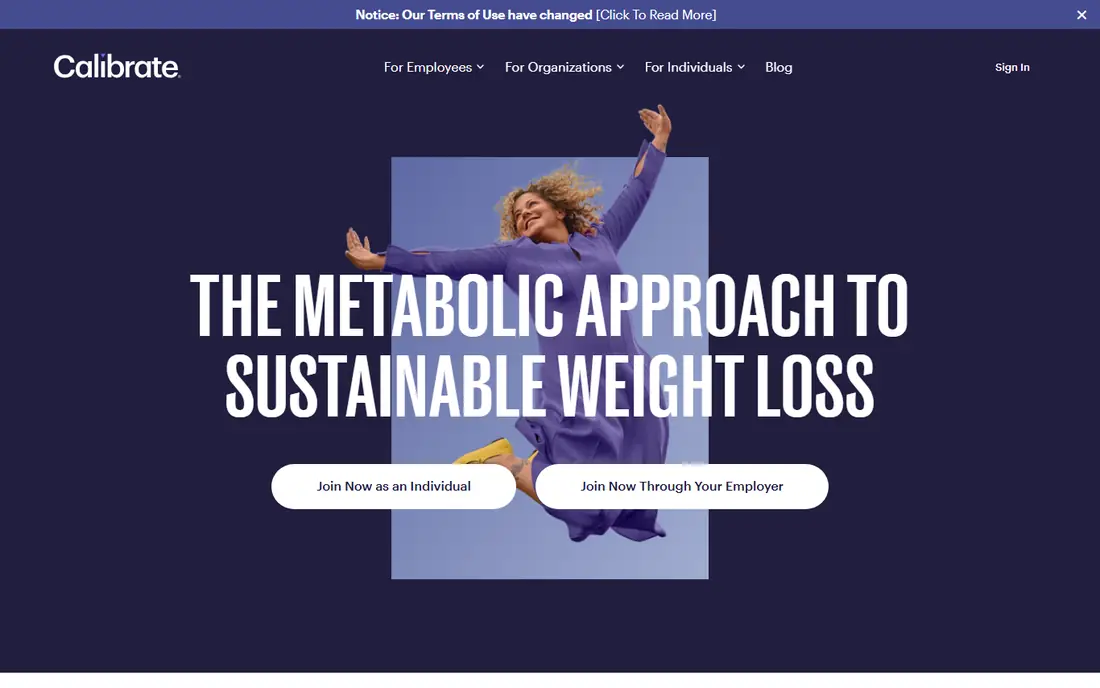
Calibrate frames weight loss as metabolic health work, pairing clinician-prescribed GLP-1 medication with one-to-one video coaching and lessons on biology, food, sleep, and movement. The program runs over a longer arc than a monthly refill service, with regular check-ins that track progress beyond weight alone. That structure appeals to people who have tried diets repeatedly and want a clinical team watching the whole picture.
Cost is the main question to settle before signing up. Some employers cover Calibrate for staff and dependents, which changes the math entirely, while direct signup pricing sits behind an application step. The longer program also asks for patience, since coaching and lessons are part of the deal rather than optional extras. Calibrate suits someone who wants a doctor-led program with a coach in their corner, not just a prescription delivered to the door.
What we like- One-to-one video coaching
- Metabolic health focus beyond the scale
- Employer coverage in some cases
Watch out for- Program pricing is not simple to compare at a glance
- Availability depends on employer or direct signup route
- Long program structure may feel slow for people who want quick access
Starting price$99 per month
Free planNo
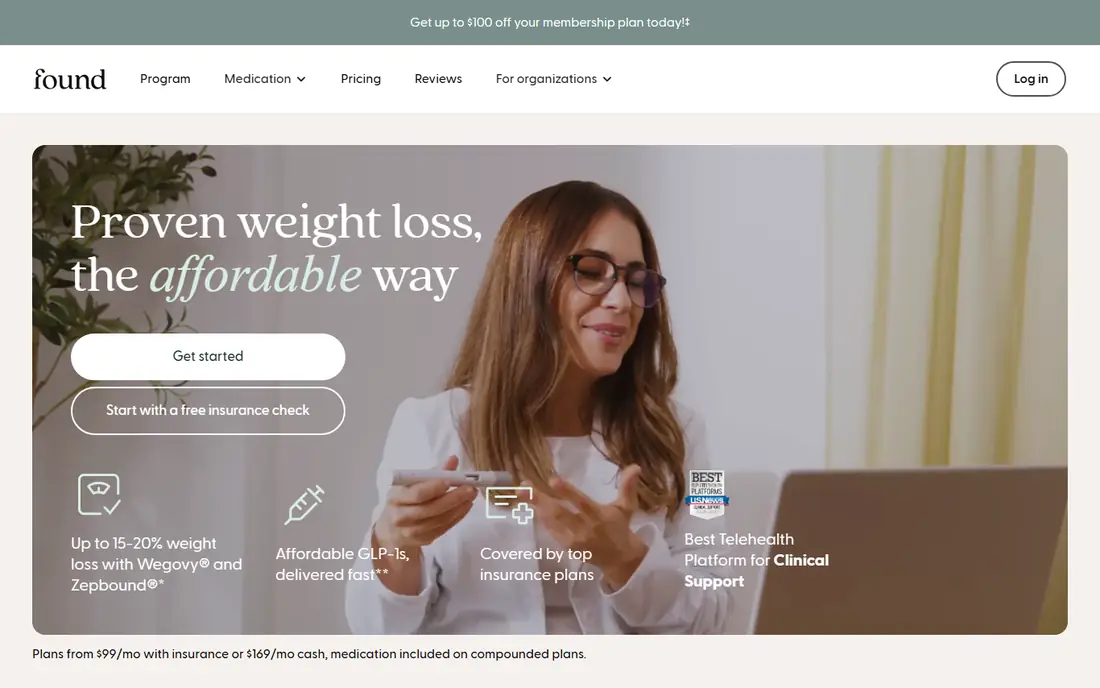
Found offers one of the widest medication menus in this group, covering compounded GLP-1 plans and brand-name options such as Wegovy and Zepbound, with its homepage quoting plans from 99 dollars per month with insurance or 169 dollars per month cash where medication is included on compounded plans. Clinicians review your assessment, monthly check-ins track progress and side effects, and the service helps with insurance paperwork for brand-name prescriptions. That breadth matters when a first-choice medication is out of stock, unaffordable, or poorly tolerated.
The flip side is complexity. The headline figure is only a starting point, since brand-name medication, insurance status, and prepaid plan length all move the total, and compounded medications deserve a direct conversation with the prescribing clinician about benefits and risks. Found fits people who want choice and are willing to compare plan types carefully, rather than accepting the first option offered. Read the plan terms closely, and confirm what the monthly fee covers before checkout.
What we like- Compounded and brand-name options
- Insurance navigation support
- Monthly clinician check-ins
Watch out for- Total cost rises with medication choice and plan length
- Compounded options carry their own risk discussion
- Some states have limited plan availability
#4
Ro
Best for: brand-name and compounded GLP-1 access
Visit ro.co
Starting price$149 per month
Free planNo
Ro runs a large telehealth platform where weight loss sits beside other services, and its homepage lists GLP-1 options starting at 149 dollars per month for some products, with other options at 199 or 299 dollars per month depending on the medication. You complete an online assessment, message providers around the clock, and receive medication by delivery when prescribed. The site also shows list-price comparisons, which help to see how much a given option costs relative to its usual price.
Because Ro covers many conditions, the weight loss experience can feel less specialized than a program built only for obesity medicine, and the final monthly total depends on which medication, dose, and insurance route you take. Ro suits people who already use telehealth and want a familiar platform with several GLP-1 choices and steady provider messaging. Compare the per-product price on the weight loss page, not just the homepage headline, before deciding.
What we like- Clear starting prices for several GLP-1 options
- 24/7 provider messaging
- Medication delivered to your door
Watch out for- Headline prices exclude some fees and vary by product
- Program is broad telehealth, so weight care is one service among many
- Insurance handling differs by medication
Starting priceSee website
Free planNo

WeightWatchers, now often shortened to WW, brings decades of behavior program experience to GLP-1 care through its clinic pathway. Members get the Points system, food tracking, recipe tools, and coach support, while those prescribed medication through the clinic program also receive a care team of clinicians, coaches, and dietitians. Workshops, held in studios and online, add group accountability that purely app-based services lack.
Medication pricing is less transparent upfront than Found or Ro, since it depends on insurance checks and the specific plan, so budget-minded shoppers should complete the eligibility steps before judging cost. The app can also feel busy, with tracking, workshops, and coaching competing for attention. WeightWatchers fits people who like a food system with human support and want medication handled inside a familiar weight loss program, rather than a standalone clinic.
What we like- Long-running Points system
- Coach and dietitian access
- Workshops in person and online
Watch out for- Medication program pricing sits behind signup steps
- App-first design may not suit people who want frequent clinician visits
- Legacy diet brand feel may not appeal to everyone
Starting priceSee website
Free planNo
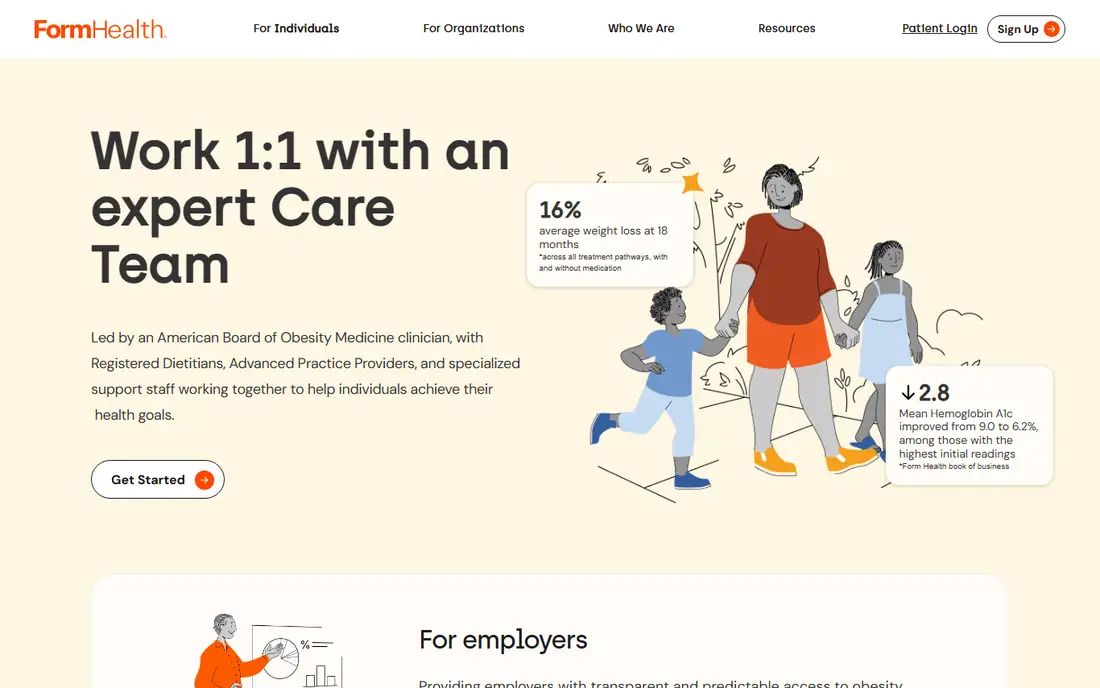
Form Health positions itself as a medical weight loss clinic delivered online, with a care team led by a clinician certified in obesity medicine, supported by dietitians and advanced practice providers. Visits happen by video, messaging keeps the team reachable between appointments, and the app holds tracking and learning resources in one place. Insurance coverage, including Medicare, is a central part of its model, which can make specialist care far more affordable for covered patients.
The enrollment path takes more effort than downloading a consumer app, since it involves insurance checks and clinical intake, and people without coverage will face a different price picture. The app itself is more clinical than playful, with less emphasis on streaks and social features. Form Health suits someone who wants a real medical team, values insurance-based care, and prefers steady clinical contact over a lightweight tracking app.
What we like- Physician-led care team
- Dietitian support included
- Insurance coverage including Medicare in many cases
Watch out for- Pricing depends heavily on insurance
- Enrollment process is more involved than app-only services
- Less self-serve tracking than consumer apps
Starting priceSee website
Free planNo
LifeMD is a general telehealth service with a dedicated weight management program that includes GLP-1 options such as Wegovy alongside its other care lines. Members book video visits with board-certified providers, message them between appointments, and can add lab testing and primary or urgent care through the same account. That bundling is convenient for households that want one telehealth home rather than a separate account for every need.
The breadth is also the limitation. Weight care competes for attention with many other services, and the total price depends on membership tier, medication, and insurance, so it takes a few steps to see the full figure. LifeMD fits people who already want telehealth for several needs and would rather add weight management to that account than join a weight-only program. If you want deep obesity-medicine specialization, Form Health or Calibrate may feel more focused.
What we like- Weight loss beside primary, urgent, and mental health care
- Board-certified providers
- Lab testing and ongoing messaging
Watch out for- Weight program is one of several services
- Pricing varies by membership and medication
- Breadth can dilute specialist focus
Starting price$34 per visit
Free planNo
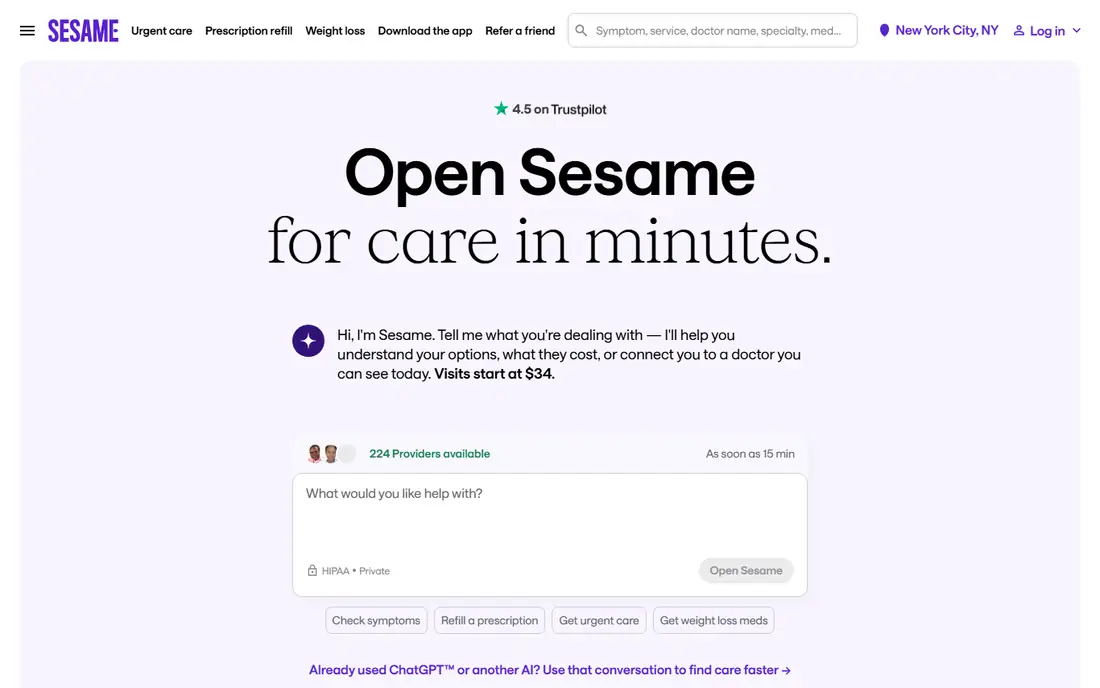
Sesame takes a marketplace approach to telehealth, listing doctors and upfront prices so you can see what a visit costs before booking. Its homepage quotes visits starting at 34 dollars and GLP-1 pill options starting at 149 dollars per month, with self-pay and insurance routes available. That transparency is refreshing in a category where many prices hide behind quizzes, and it suits people who want a single consultation or a second opinion without joining a program.
Ongoing support is thinner than a full membership program, since you book visits as needed rather than receiving a structured coaching plan with regular check-ins. Medication costs sit apart from visit fees, so the total still needs careful addition. Sesame fits shoppers who value price clarity, want to try a visit before committing, or need a straightforward route to a GLP-1 discussion with a licensed provider.
What we like- Upfront visit prices
- No membership required for many visits
- GLP-1 pill options listed from 149 dollars per month
Watch out for- Ongoing program support is lighter than full membership services
- Medication and visit costs are separate
- Provider availability varies by state
How we chose
We reviewed each vendor homepage and pricing page, then compared the shape of each program: whether it prescribes directly, how coaching and clinician contact work, which medications it offers, and what the monthly fee actually covers. We weighed public documentation and user feedback on wait times, messaging responsiveness, and billing clarity, and we favored programs with a clear clinical pathway and honest pricing over services that buried costs behind a quiz. Where a price depended on insurance or dose, we used See website rather than quoting a figure that would mislead most readers.
How to compare GLP-1 programs without getting tripped up
Start by separating three costs that vendors often blend together: the program or membership fee, the clinician visit fee, and the medication itself. A low monthly headline can look attractive until you learn that medication costs extra, or that the quoted figure assumes insurance approval you may not receive. Ask each vendor, in writing if possible, what the total is for your situation, what happens if insurance denies coverage, and what you pay if you pause or stop treatment.
Next, check the clinical setup. Ask who prescribes, how often you speak with a clinician, how side effects are handled, and what happens if you need a dose change or a switch to a different medication. A good program explains its monitoring plan before you pay, including lab work when relevant and a path for urgent questions. Programs that rush you to checkout without a real clinical review should raise a flag, even when their marketing is polished.
Questions to ask before you pay
Confirm medication supply and switching rules, since shortages and dose changes are common in this category. Ask whether compounded options are offered, what the prescriber tells you about them, and whether you can move to a brand-name option later without restarting intake. Check cancellation terms too, including whether prepaid months are refundable and what happens to refills if you leave. These details matter more than a small monthly discount, because GLP-1 treatment is usually measured in months, not weeks.
Also weigh the non-medication support honestly. Some people stay on track with an app and occasional messages, while others need regular coaching, dietitian input, or group support to change eating and movement patterns. Pick the level of support you will actually use, not the most complete package on paper, since an unused coaching plan is just an extra fee. If you already work with a dietitian or therapist, a lighter program such as Sesame may be enough, while a first-time patient may value the structure of Calibrate or Form Health.
Frequently asked questions
Do I need a prescription for a GLP-1 medication?
Yes. GLP-1 medications are prescription drugs in the United States, and a licensed clinician must review your health history and decide whether one fits your needs. The apps in this guide connect you with clinicians rather than selling medication directly, and eligibility depends on factors such as body mass index, related health conditions, and other medications. Be cautious of any service that promises a prescription without a real clinical review.
How much does a GLP-1 program cost per month?
It varies widely. Some programs quote from 99 or 149 dollars per month for certain plans, while brand-name medication without insurance can cost far more, and insurance coverage can reduce the total sharply. Always add the program fee, visit fees, and medication cost together, and ask what changes if insurance denies the claim or the dose increases. The vendor pricing page, checked on the day you sign up, is the only reliable figure.
Are compounded GLP-1 medications the same as brand-name ones?
No, they are not identical. Compounded medications are prepared by compounding pharmacies and are not the same FDA-approved products as brand-name drugs, even when they contain a similar active ingredient. Ask the prescribing clinician about the differences, quality controls, and risks, and read the program safety information before choosing a compounded plan. This article is not medical advice, so a clinician conversation is essential here.
Can I stop a GLP-1 program at any time?
Most programs allow cancellation, but prepaid plans may not refund unused months, and stopping medication can lead to weight regain for many people. Ask about cancellation terms, refill rules after leaving, and whether your clinician will discuss a maintenance plan before you stop. Do not stop a prescribed medication without talking to the clinician who prescribed it.
Is an app enough, or do I need coaching too?
That depends on your habits and history. Medication reduces appetite for many people, but lasting change still rests on food, movement, sleep, and stress patterns, which is where coaching helps. If you already have strong routines and support, a lighter service may be enough, while people who have struggled with yo-yo dieting often benefit from regular coaching or dietitian contact.
What side effects should I ask about?
Common side effects include nausea, vomiting, diarrhea, constipation, and reduced appetite, while serious risks can include pancreatitis, gallbladder problems, and thyroid tumor warnings listed on the medication safety information. Ask the prescribing clinician about your personal risk factors, warning signs to watch for, and how to reach care quickly if symptoms appear. This guide cannot replace that conversation.
Sources we checked (8)
- https://www.noom.com
- https://www.joincalibrate.com
- https://www.joinfound.com
- https://ro.co
- https://www.weightwatchers.com
- https://www.formhealth.co
- https://www.lifemd.com
- https://sesamecare.com
Is your product missing or out of date?
We review this list regularly. Vendors can request a listing, send updated pricing or ask about featured placement.

Shihab Mia · Founder, Rankite
Shihab has 5+ years in B2B and SaaS SEO. He writes Rankite's software buying guides from pricing pages, documentation and public user reviews. More about Shihab.