How we make this list: we compare pricing pages, product documentation and public user reviews. Ratings come from G2, Capterra or Trustpilot, with the date we checked them.
Key takeaways
- Surfer SEO is the best all-around AI content optimization platform for ranking content.
- Clearscope suits enterprise teams wanting premium content grading and optimization.
- Frase excels at SERP research and brief creation before writing begins.
- MarketMuse is the pick for content strategy: topic authority and gap analysis.
- Semrush Content Toolkit (formerly ContentShake AI) uses Semrush data for AI content creation.
Quick comparison
| Tool | Best for | Starting price | Free plan |
|---|
 Surfer SEO Surfer SEO | all-around content optimization | See website | See website |
 Frase Frase | SERP research and briefs | See website | See website |
 Clearscope Clearscope | enterprise content grading | See website | See website |
 MarketMuse MarketMuse | content strategy and authority | See website | See website |
 Scalenut Scalenut | guided AI article writing | See website | See website |
 Writesonic Writesonic | AI writing plus SEO tools | See website | See website |
 Semrush Content Toolkit Semrush Content Toolkit | Semrush-data-driven content | See website | See website |
 NeuronWriter NeuronWriter | affordable NLP optimization | See website | See website |
Is your product missing or out of date?
We review this list regularly. Vendors can request a listing, send updated pricing or ask about featured placement.
The best generative AI SEO software
Starting priceSee website
Free planSee website

Surfer SEO analyzes top-ranking pages for your keyword and scores your draft in real time on semantic coverage, structure, and length. The Content Editor is the category's cleanest writing environment, with Google Docs and WordPress integrations. AI writing features generate drafts that you then optimize. Content teams producing SEO articles regularly find it indispensable for maintaining consistent quality.
The content score can become gamification: chasing the number instead of serving the reader. Costs scale with usage. But for consistent, repeatable content optimization, Surfer remains the reference tool. Its SERP analyzer and audit features extend value beyond the editor into site-wide optimization.
What we like- Real-time content scoring
- Clean editor
- Strong integrations
Watch out for- Score-chasing temptation
- Costs scale with team size
Starting priceSee website
Free planSee website
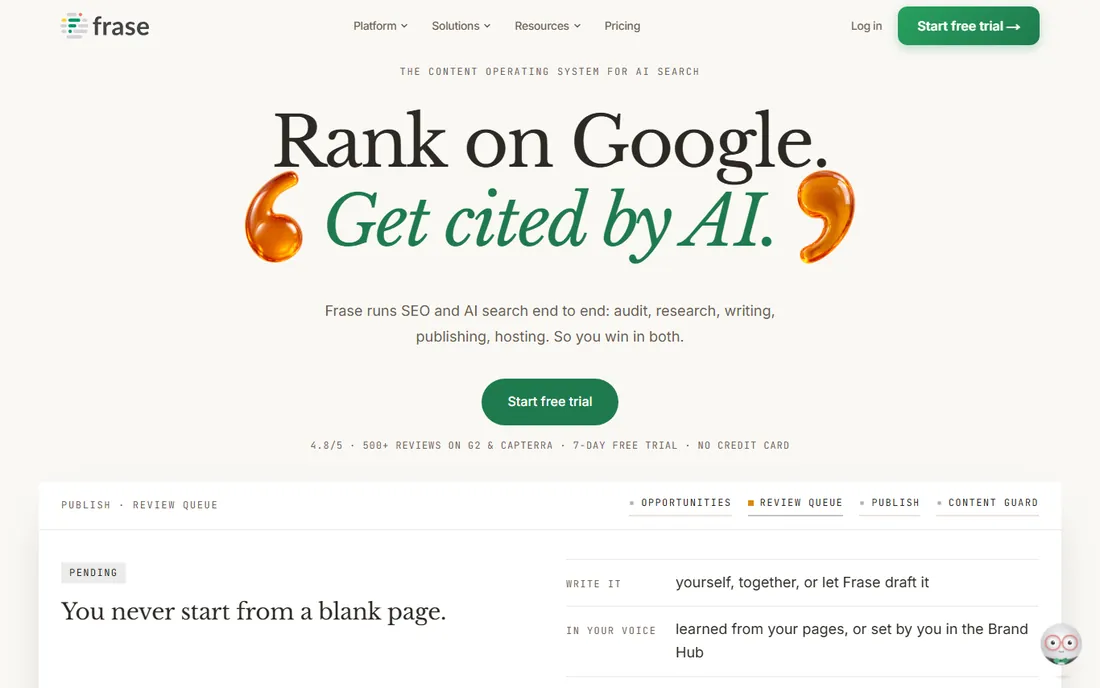
Frase starts where content should start: research. It analyzes the SERP for your keyword, extracts questions, headings, and statistics competitors use, then builds data-driven briefs automatically. Writers get everything needed before drafting. The AI writer and optimizer complete the workflow from brief to published article.
Content optimization depth trails Surfer's scoring. The interface packs a lot in. But for research-led content operations where briefs drive quality, Frase's front-loaded approach produces better first drafts. Teams that brief freelance writers find Frase briefs dramatically improve submitted quality.
What we like- Excellent SERP analysis
- Automated briefs
- Affordable entry
Watch out for- Optimization depth trails Surfer
- Interface busy
Starting priceSee website
Free planSee website
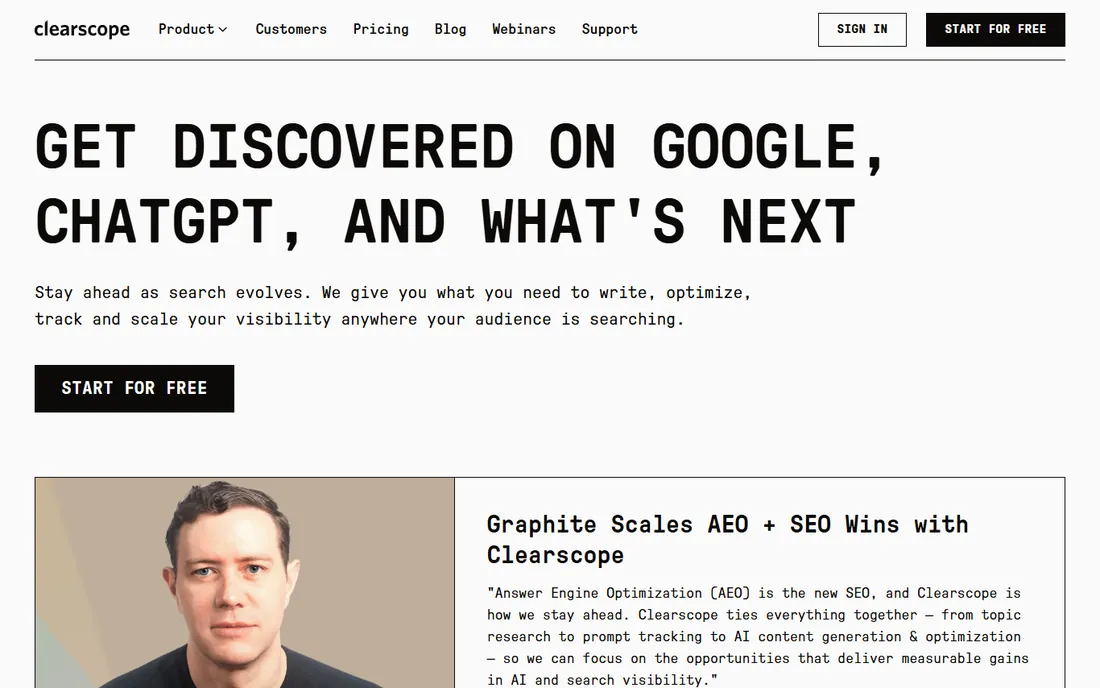
Clearscope grades content against top-ranking pages with letter grades and term recommendations, in a workflow simple enough for any writer. Enterprise content teams trust its methodology. The focus stays on optimization quality rather than feature breadth, which keeps the product focused and reliable.
Pricing is premium. AI generation features are lighter than competitors'. But for organizations that want the most respected content grading in the industry, Clearscope's reputation is earned. Its simplicity means writers actually use it, which is half the battle with SEO tooling.
What we like- Premium content grading
- Trusted by enterprises
- Simple workflow
Watch out for- Premium pricing
- Fewer AI writing features
Starting priceSee website
Free planSee website
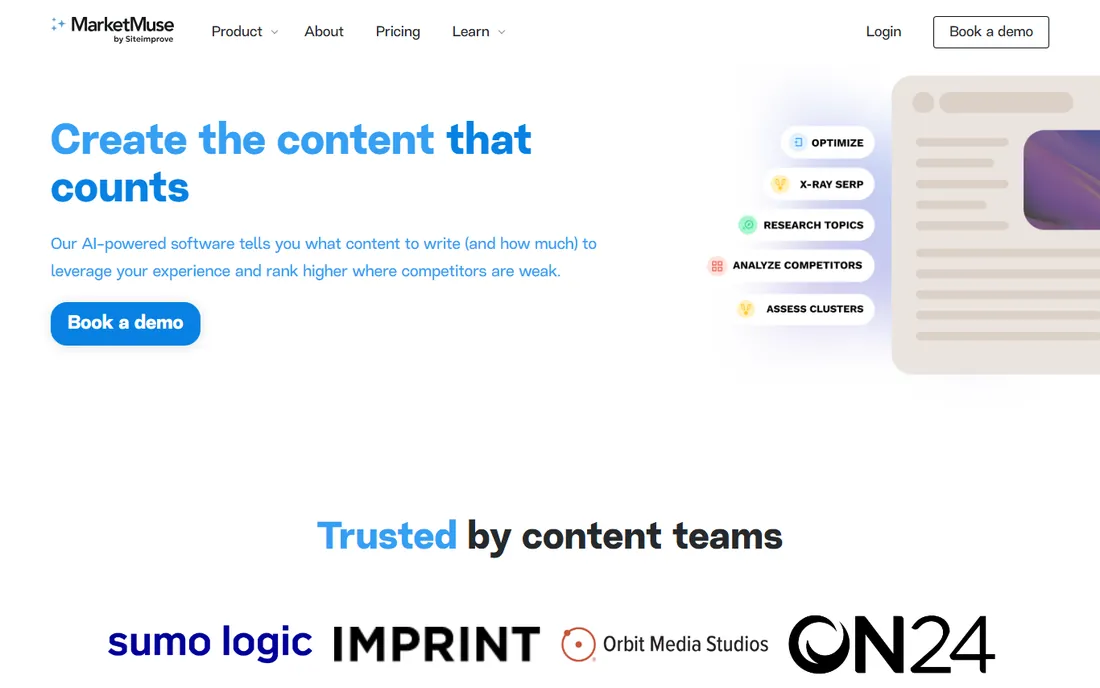
MarketMuse operates at the strategy level: analyze your entire content inventory, model topic authority, find competitive gaps, then generate briefs for what to write. Where others optimize pages, MarketMuse plans programs. Teams publishing at scale get the strategic layer that page-level tools miss entirely.
It costs more and needs setup to deliver full value. But for content operations where strategy determines ROI, MarketMuse's authority modeling is unique. The competitive content gap analysis shows exactly where rivals are winning topics you have ignored.
What we like- Topic authority modeling
- Content inventory analysis
- Strategic depth
Watch out for- Higher price
- Setup investment
Starting priceSee website
Free planSee website

Scalenut combines SERP research, NLP optimization, and AI writing with Cruise Mode: a guided workflow from keyword to finished article. Agencies and in-house teams producing volume get an affordable all-in-one. The platform covers planning through optimization in a single interface.
Brand recognition trails Surfer and Clearscope. AI output quality varies by topic. But for guided, affordable AI content production, Scalenut punches above its price. Its keyword planner and traffic analyzer add research value beyond the writing workflow.
What we like- Cruise Mode guides writing
- Affordable
- Good for agencies
Watch out for- Smaller brand than leaders
- AI quality varies
Starting priceSee website
Free planSee website

Writesonic is a versatile AI writing platform with SEO-specific tools: article writers with SERP awareness, keyword integration, and optimization checks. Teams needing AI writing across marketing (not just SEO) get one platform. Pricing undercuts specialists significantly.
Pure SEO depth trails Surfer, Clearscope, and MarketMuse. Output needs human editing. But for teams wanting AI writing versatility with SEO competence, Writesonic covers more ground. Its templates for ads, emails, and product descriptions extend value beyond blog content.
What we like- Versatile AI writer
- SEO article features
- Competitive pricing
Watch out for- SEO depth less than specialists
- Quality needs editing
Starting priceSee website
Free planSee website
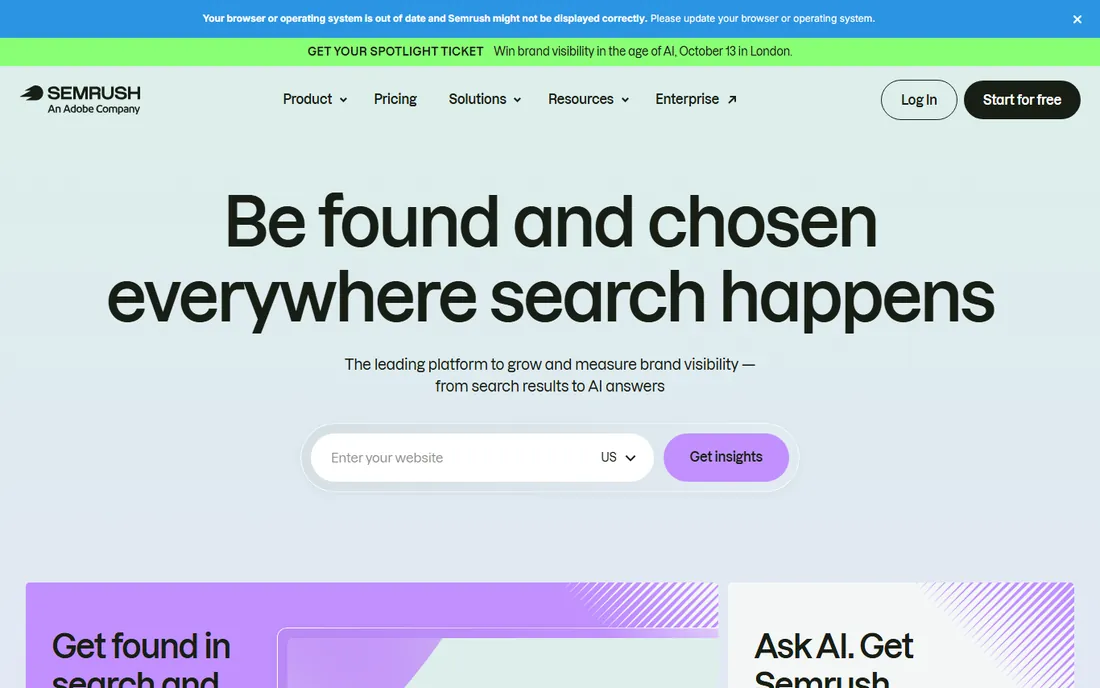
Semrush Content Toolkit (formerly ContentShake AI) generates SEO-friendly articles using Semrush's keyword and competitive data: ideas, outlines, and drafts informed by real search data. Semrush users get content creation inside their existing workflow. The data foundation is the key differentiator.
Value concentrates for Semrush subscribers. As a newer product, it is still maturing. But for teams already in the Semrush ecosystem, the Toolkit's data-driven generation is the natural content extension. The Chrome extension brings its assistance into Google Docs and WordPress.
What we like- Powered by Semrush keyword data
- Idea generation
- Integrated ecosystem
Watch out for- Best with Semrush subscription
- Newer product
Starting priceSee website
Free planSee website
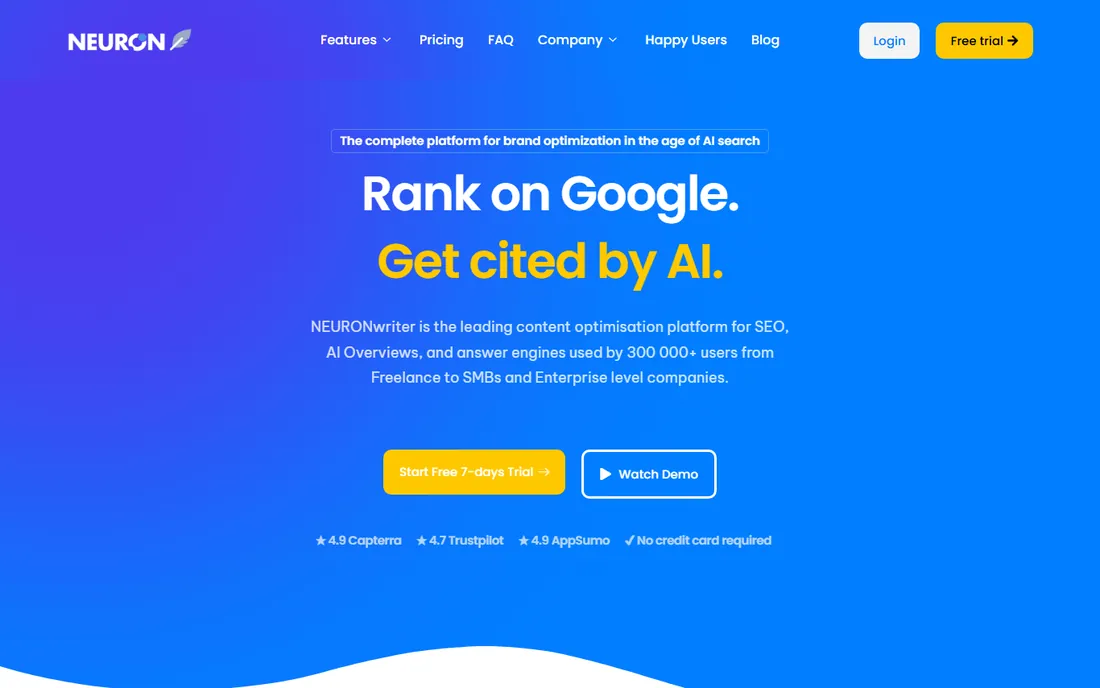
NeuronWriter delivers NLP-driven content optimization at a fraction of competitors' prices: entity recommendations, competitor analysis, and content scoring. European SEOs and non-English content producers find strong multilingual support. The value proposition is simple: most of the premium optimization experience at a much lower price.
The interface is less polished. Integrations are fewer. But for budget-conscious SEOs and non-English markets, NeuronWriter's price-to-capability ratio is excellent. Its content planning features help small teams organize topic clusters without enterprise software.
What we like- Very affordable
- NLP recommendations
- Good for non-English SEO
Watch out for- Interface less polished
- Smaller ecosystem
What to check before you buy
Start with your workflow stage. Research and briefing: Frase, MarketMuse. Writing and optimizing: Surfer, Clearscope, NeuronWriter, Scalenut. Strategy: MarketMuse. General AI writing: Writesonic. Semrush users: Content Toolkit. Most teams need one optimizer plus one strategist, not five overlapping tools. Audit your current subscriptions before buying; many teams already pay for overlapping capabilities.
Then consider team skills. Tools amplify good SEO judgment; they do not replace it. A team that understands search intent gets more from any tool than a team chasing scores blindly. Invest in SEO fundamentals alongside tooling. The highest ROI move for most teams is training writers on intent and structure, then giving them one good optimizer.
Finally, trial with real content. Run the same article through two tools and compare the guidance quality. The best tool is the one whose recommendations your writers actually follow and whose output ranks. Vendor demos show happy paths; your content shows truth. Most vendors offer trials; use them on your hardest keywords, not your easiest ones. A tool that helps with competitive terms is worth paying for; one that only confirms what you already knew is not.
AI content and Google: the reality
Google rewards helpful content regardless of how it is produced; it penalizes unhelpful content regardless of origin. AI tools that help you cover topics thoroughly, answer questions completely, and structure content well align with what ranks. Tools used to mass-produce thin content at scale invite trouble. Use these platforms to raise content quality, not content quantity alone, and always add human expertise, examples, and judgment.
The practical rule is simple: if you would be embarrassed to put your name on it, do not publish it. AI drafts are starting points that need fact-checking, original insight, and voice. Teams that treat AI as a junior assistant producing first drafts outperform teams that treat it as a publishing machine. Quality signals compound over time; shortcuts get caught eventually.
Frequently asked questions
What is generative AI SEO software?
Software that uses AI to help create and optimize content for search engines: generating drafts, analyzing top-ranking pages, recommending terms and structure, and scoring content quality. It combines AI writing with SEO data to produce content designed to rank. The best tools cover the full workflow from research to publication.
Will Google penalize AI-generated content?
Google penalizes unhelpful content, not AI content specifically. Its guidance focuses on E-E-A-T: experience, expertise, authoritativeness, trustworthiness. AI-assisted content that is accurate, helpful, and reviewed by humans performs fine. Mass-produced thin AI content does not. The key is human oversight: every AI draft should pass through expert review before publishing.
Surfer vs Clearscope: which is better?
Both optimize content well. Surfer offers broader features (AI writing, audits, integrations) at lower entry pricing. Clearscope offers premium grading trusted by enterprises at higher pricing. Content teams often prefer Surfer's breadth; enterprise teams often prefer Clearscope's methodology. Trial both with real content before deciding.
Do I still need SEO writers if I have AI tools?
Yes. AI tools need skilled operators: someone who understands intent, verifies facts, adds original insight, and edits for quality. The tools make good writers faster; they do not make non-writers good. The winning combination is expert humans plus AI assistance. Budget for writers first, tools second; the order matters.
How much do AI SEO tools cost?
Entry plans run roughly $20-90 monthly, with premium tiers $150-500+. Enterprise plans are custom. Most offer trials. Budget for one primary tool per team; overlapping subscriptions waste money. Annual billing usually saves 15-20% if you are committed.
Can these tools help with AI search (GEO)?
Increasingly yes. As AI answer engines grow, tools are adding features for answer-engine visibility: FAQ structuring, entity coverage, and citation-worthy content. The fundamentals overlap with classic SEO: comprehensive, well-structured, authoritative content. Watch this space; it is evolving fast. Early movers who structure content for both traditional and AI search gain an edge. FAQ sections, clear definitions, and concise answer blocks serve both audiences. The tools that help you produce this dual-purpose content will matter more as AI search grows.
How we chose
We selected generative AI SEO tools that appear consistently in AI SEO comparisons, practitioner discussions, and SEO tool roundups. Each vendor's site was checked to confirm the product is current in 2026. Pricing details come from vendor pages where published. No hands-on content optimization testing was conducted for this guide; assessments reflect documented features and market standing.
Sources we checked (11)
- https://www.surferseo.com
- https://www.frase.io
- https://www.clearscope.io
- https://www.marketmuse.com
- https://www.scalenut.com
- https://www.writesonic.com
- https://www.semrush.com
- https://www.neuronwriter.com
- https://github.com/ciihom/awesome-ai-seo-geo-tools
- https://github.com/astune-websites/awesome-seo-tools
- https://digitallab247.com/blog/best-ai-seo-tools/
Is your product missing or out of date?
We review this list regularly. Vendors can request a listing, send updated pricing or ask about featured placement.

Shihab Mia · Founder, Rankite
Shihab has 5+ years in B2B and SaaS SEO. He writes Rankite's software buying guides from pricing pages, documentation and public user reviews. More about Shihab.