How we make this list: we compare pricing pages, product documentation and public user reviews. Rankite is independent; if a vendor ever pays for a featured spot, that listing is clearly labeled Partner.
Key takeaways
- Best overall: Writesonic, ideal for content teams that want tracking next to writing tools: pairs visibility tracking with AI content generation.
- On price transparency, Cituna stands out at $39 per month, which makes budgeting straightforward.
- AthenaHQ suits teams evaluating newer dedicated AI trackers, while Cituna fits price-sensitive teams that need core AI metrics.
- Shortlist two or three tools and trial each with real work before signing anything longer than monthly.
- Rankscale is worth a look as a specialist alternative if the mainstream picks do not fit your workflow.
Quick comparison
| Tool | Best for | Starting price | Free plan |
|---|
 Writesonic Writesonic | Content teams that want tracking next to writing tools | See website | No |
 AthenaHQ AthenaHQ | Teams evaluating newer dedicated AI trackers | See website | No |
 Cituna Cituna | Price-sensitive teams that need core AI metrics | $39 per month | No |
 Semrush Semrush | Agencies that want AI data next to PPC and SEO reports | See website | No |
 SE Ranking SE Ranking | Agencies that want AI tracking with transparent pricing | From $103.20 per month; AI Search add-on from $71.20 per month | No |
 Nightwatch Nightwatch | Agencies that live in rank tracking reports | 99 euros per month (79 euros billed yearly) | No |
 LLMrefs LLMrefs | Small brands that only need LLM mention tracking | $79 per month | No |
 Rankscale Rankscale | Teams that want simple AI visibility metrics | See website | No |
Is your product missing or out of date?
We review this list regularly. Vendors can request a listing, send updated pricing or ask about featured placement.
The Best AI Mode SEO Software
Starting priceSee website
Free planNo
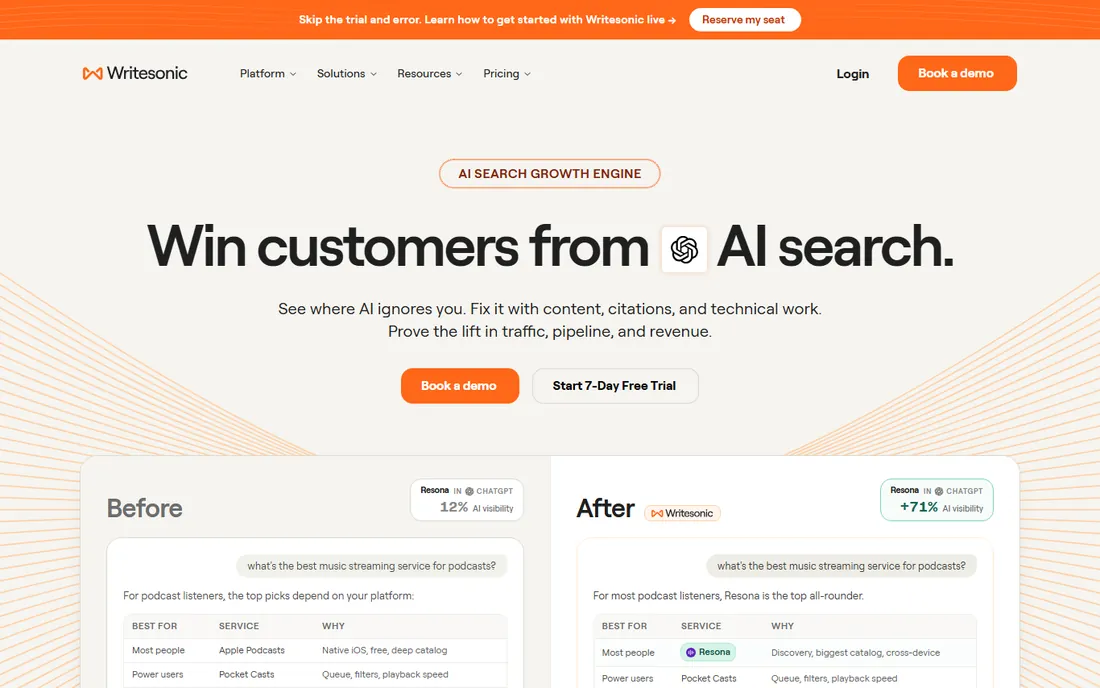
Writesonic approaches AI visibility from the content side, pairing tracking with the generation tools marketers already use. If your team writes with Writesonic, adding visibility data keeps measurement next to production. That proximity is convenient for content-led SEO.
The platform's AI marketing feature set is broad, covering writing, optimization and now visibility. Teams that centralize content work in one tool get a coherent workflow from draft to measurement.
Pure analytics platforms go deeper on tracking detail, and Writesonic's tiered pricing takes some study. But for content teams that want AI search data where the writing happens, it is a practical combination.
What we like- Pairs visibility tracking with AI content generation
- Familiar to content marketers
- Wide set of AI marketing features
Watch out for- Less analytical depth than pure tracking platforms
- Pricing tiers can be confusing
Starting priceSee website
Free planNo
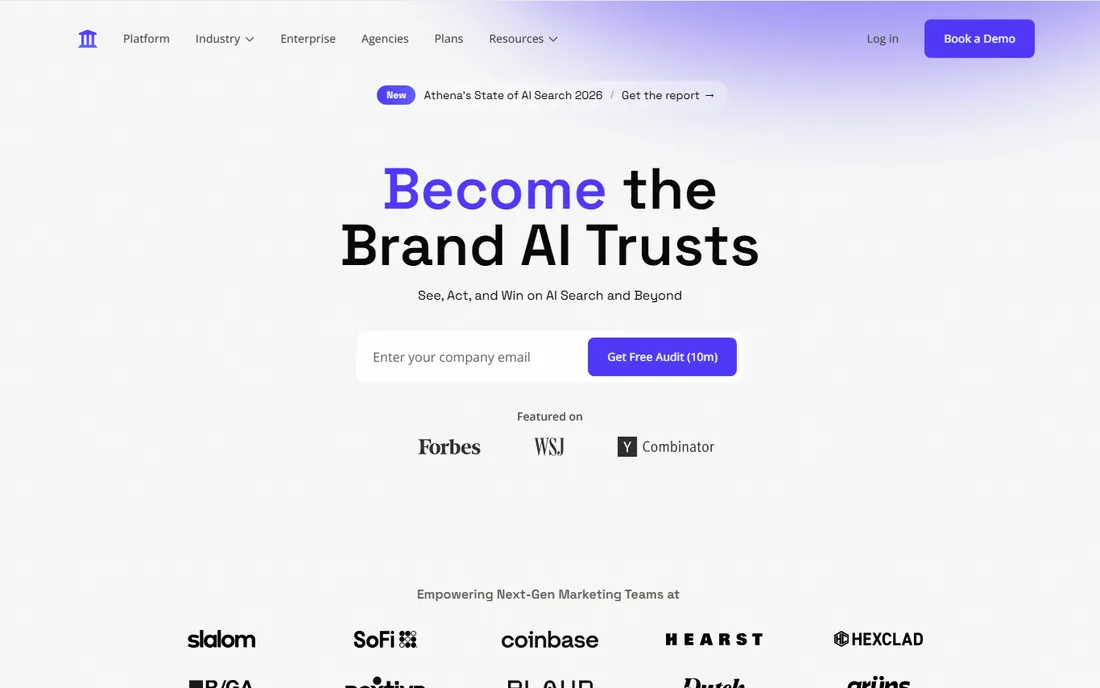
AthenaHQ keeps onboarding fast, which helps when you need AI visibility data before next month's report. The platform is built solely for tracking brand presence in AI answers, and that focus shows in a streamlined interface with little to configure.
For small marketing teams, the simplicity is the selling point. You get mention trends across engines without learning an analytics platform or hiring an SEO to interpret it.
The caution flags are youth and transparency. Limited reviews and unpublished pricing mean you evaluate on the trial alone. Within those bounds, AthenaHQ is one of the easier dedicated trackers to start with.
What we like- Dedicated AI search visibility tracking
- Clean, marketer-friendly dashboard
- Fast setup
Watch out for- Newer product with limited track record
- Few third-party reviews to validate claims
#3
Cituna
Best for: Price-sensitive teams that need core AI metrics
Visit cituna.com
Starting price$39 per month
Free planNo
Price-sensitive teams should look at Cituna before signing an enterprise contract elsewhere. The $39 monthly starting price and 3-day trial make it easy to test whether AI visibility data is worth paying for at all. Core mention tracking across engines is covered.
The product knows its audience. Dashboards are plain, setup is quick, and there is no feature bloat inflating the price. Small teams get in, get their numbers, and get on with their work.
Advanced users will notice the gaps: less coverage, lighter competitive analysis, minimal integrations. But Cituna never claims to be an enterprise platform. As affordable essentials go, it is well judged.
What we like- Low starting price for the category
- 3-day trial to evaluate
- Simple, readable dashboards
Watch out for- Smaller platform coverage than leaders
- Fewer advanced analytical features
#4
Semrush
Best for: Agencies that want AI data next to PPC and SEO reports
Visit semrush.com
Starting priceSee website
Free planNo
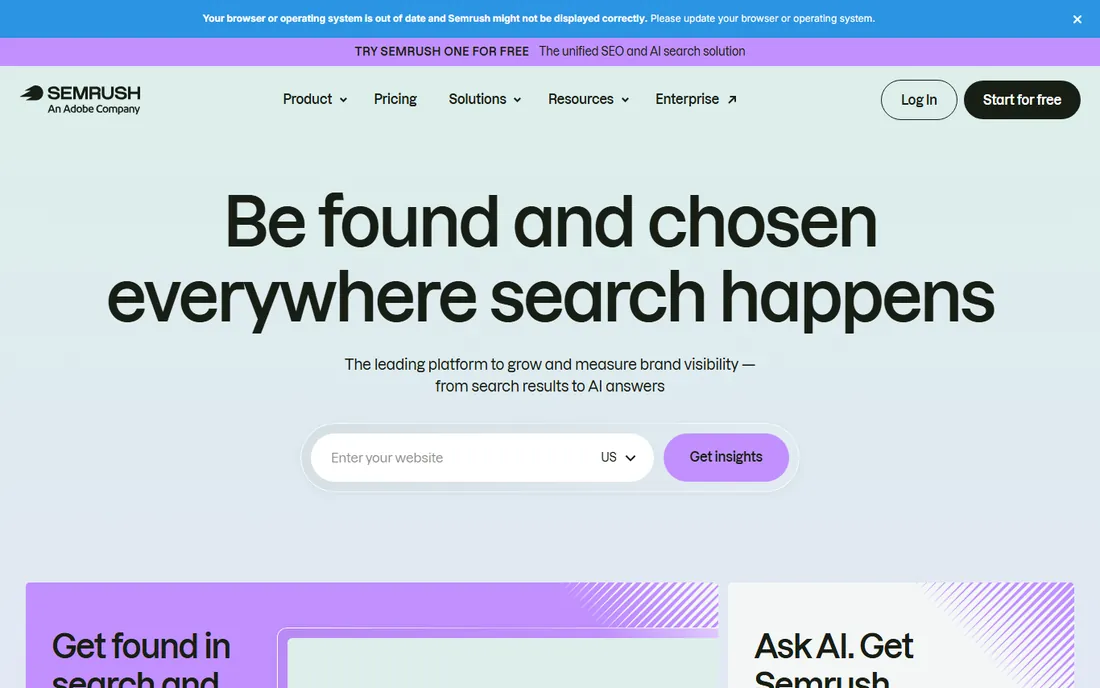
Semrush folds AI visibility tracking into the same suite where most teams already manage keywords, content and ads. The AI toolkit covers AI Overviews and chatbot mentions, reported alongside the search data that explains them. For agencies, one login for everything is a real workflow win.
The breadth is the point. A client report can show classic rankings, AI Overview presence and competitor moves without stitching tools together. That coherence is hard to replicate with point solutions.
Cost is the counterweight. Semrush pricing rises with tiers and add-ons, and the full AI picture sits behind the higher plans. Small teams may find dedicated trackers cheaper. But if Semrush already anchors your SEO work, its AI features are a natural extension. Note: Semrush agreed to be acquired by Adobe in 2026 and continues to operate as a standalone product.
What we like- All-in-one suite covering SEO, PPC and content
- AI Overviews tracking included in the toolkit
- Large keyword and ad databases for context
Watch out for- Pricing climbs with add-ons and higher tiers
- Dashboard can overwhelm newcomers
#5
SE Ranking
Best for: Agencies that want AI tracking with transparent pricing
Visit seranking.com
Starting priceFrom $103.20 per month; AI Search add-on from $71.20 per month
Free planNo
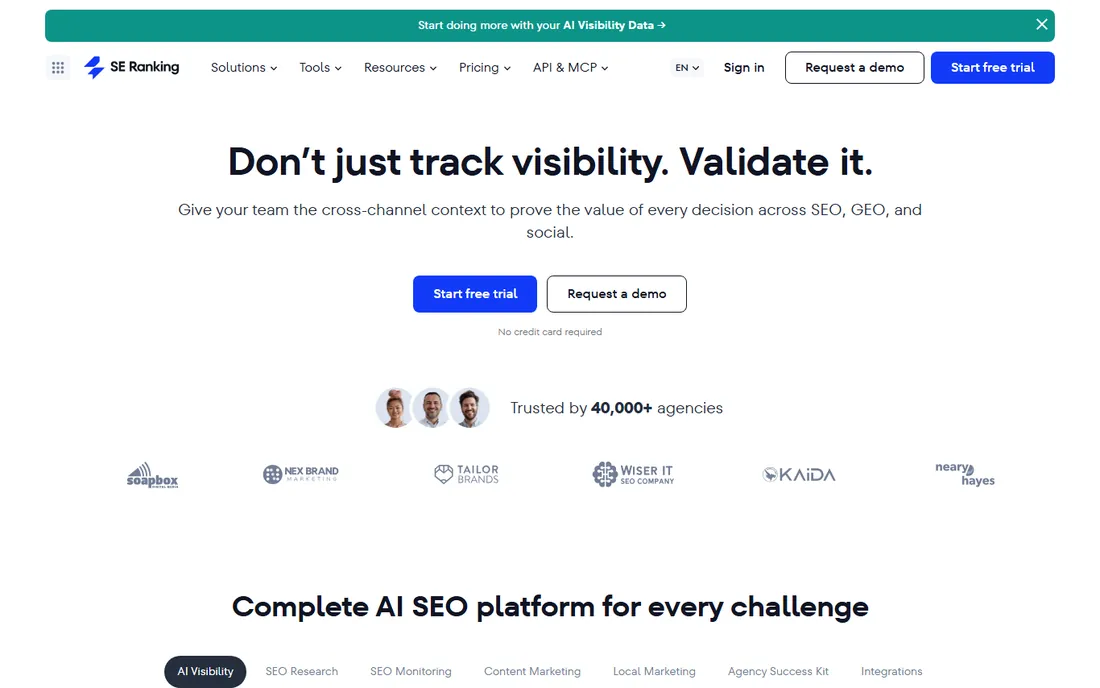
Budget-conscious agencies often pick SE Ranking because the AI visibility add-on has a published price. From $71.20 a month on top of base plans starting at $103.20, you know exactly what AI tracking costs before you talk to anyone. A 14-day trial lets you verify the data quality first.
The platform covers the SEO fundamentals well: rankings, audits, backlinks and competitor research. AI search tracking slots into that workflow rather than living in a separate product.
Beginners may find the dashboard busy, and the combined price deserves a straight comparison with standalone AI tools. Still, for agencies that want one subscription covering classic SEO and AI search, SE Ranking is a pragmatic choice.
What we like- Full SEO suite plus AI tracking under one subscription
- Published pricing with a 14-day free trial
- Strong white-label reporting for agencies
Watch out for- AI features cost extra on top of the base plan
- Interface is dense for beginners
Starting price99 euros per month (79 euros billed yearly)
Free planNo
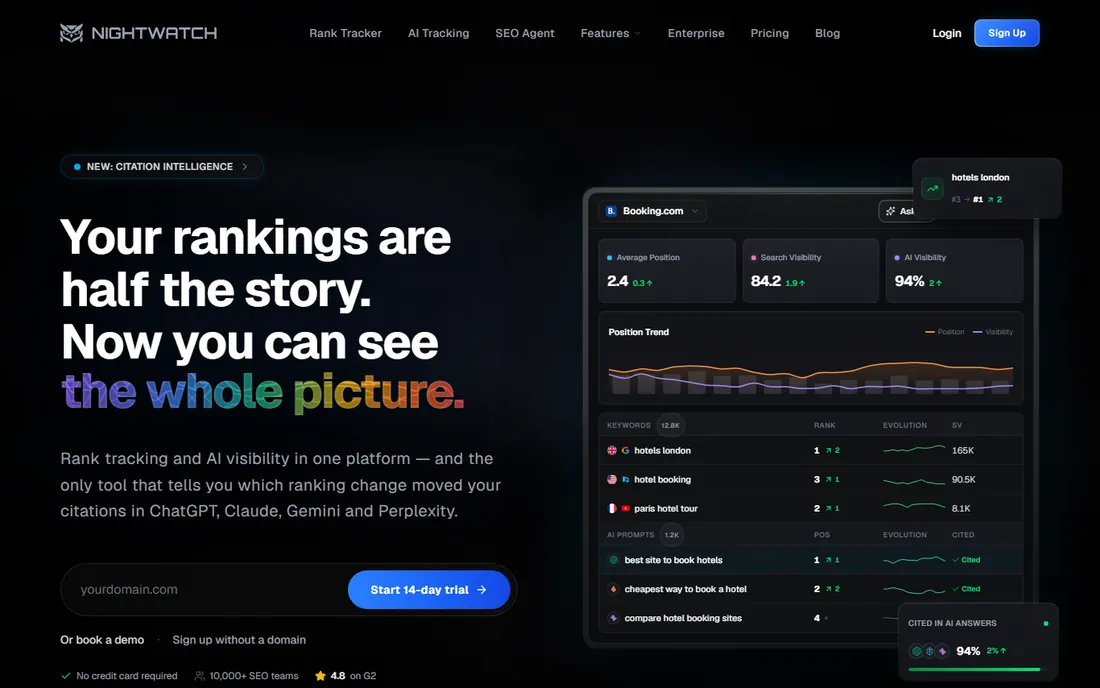
Nightwatch keeps the scope tight: track visibility, watch competitors, send the report. Its AI search monitoring extends a rank tracker known for clean data presentation, priced at 99 euros a month or 79 euros on annual billing. There is no mystery about cost.
For agencies, the value is workflow continuity. AI mentions appear in the same dashboards and scheduled reports as keyword rankings, so clients get one coherent picture.
Dedicated AI platforms go deeper on analysis, and euro-denominated pricing is a minor annoyance for US buyers. But if rank tracking is your core and AI visibility is the new chapter, Nightwatch writes it plainly.
What we like- Strong rank-tracking heritage with clean reporting
- Agency-friendly client dashboards
- Straightforward, published pricing
Watch out for- AI coverage narrower than dedicated platforms
- Euro pricing adds conversion friction for US buyers
#7
LLMrefs
Best for: Small brands that only need LLM mention tracking
Visit llmrefs.com
Starting price$79 per month
Free planNo
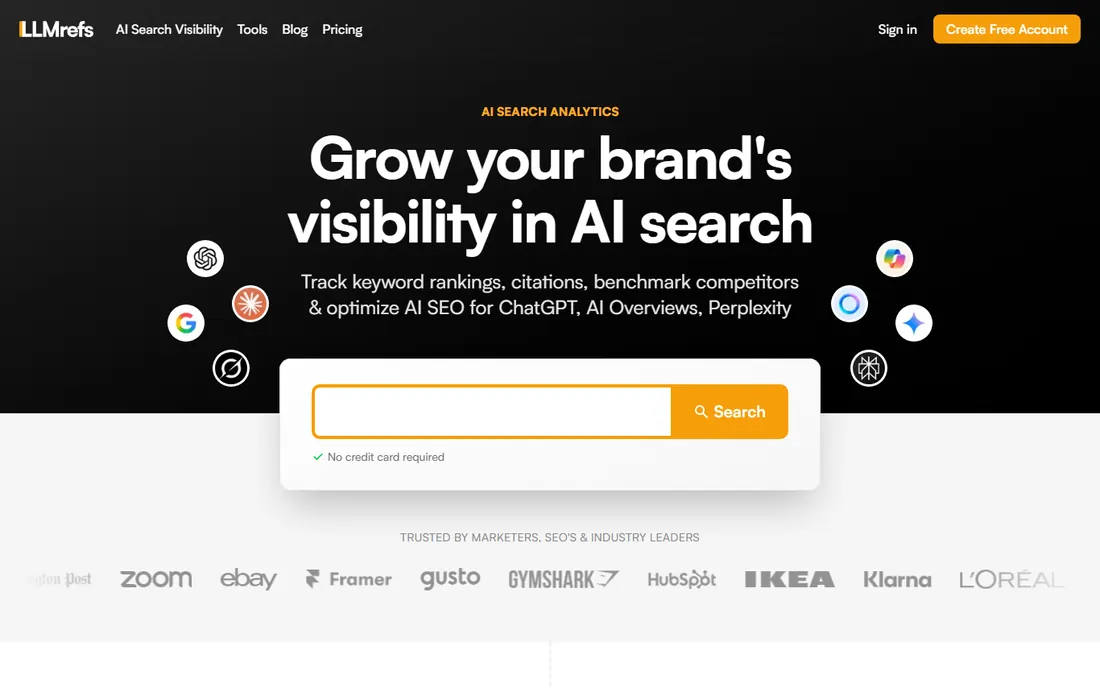
LLMrefs is a focused tracker for brand mentions inside large language models, without the bloat of a full SEO suite. At $79 a month with flat pricing, it targets teams that want exactly one thing: to know when and how LLMs mention their brand. Setup is quick and the scope stays narrow.
That focus is the appeal. There are no keyword databases or site audits competing for your attention, just LLM visibility data presented plainly. Small teams can check it weekly without a training session.
The vendor is newer and the feature set reflects that, with fewer integrations and less analytical depth than established platforms. But if your question is simply how LLMs treat your brand, LLMrefs answers it at a fair price.
What we like- Focused on LLM referral and mention tracking
- Simple setup with clear flat pricing
- No bloat from unrelated SEO features
Watch out for- Newer vendor with a smaller feature set
- Limited third-party integrations
Starting priceSee website
Free planNo
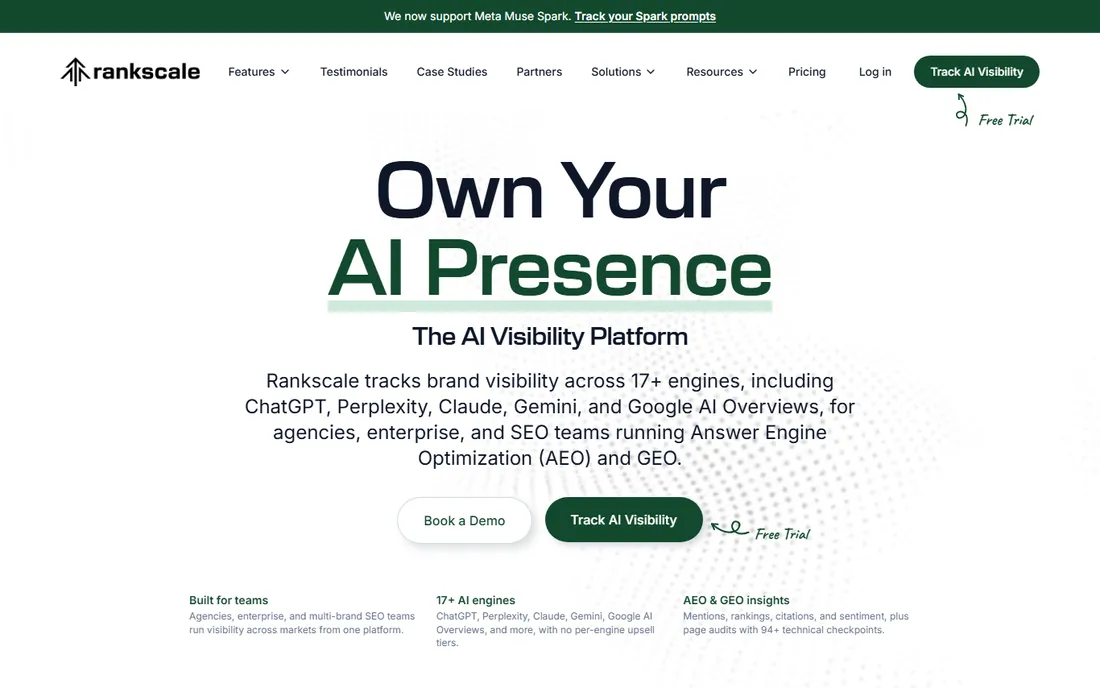
Teams that want AI visibility numbers without learning a new analytics platform tend to like Rankscale. The product focuses on the core metrics: where your brand appears in AI answers and how that changes over time. Everything else stays out of the way.
That restraint suits monthly reporting rhythms. A quick check shows direction and magnitude, and the data is easy to drop into a slide. Small marketing teams can run it without SEO expertise.
The unknowns are pricing transparency and track record. With limited public pricing and fewer reviews than established tools, buyers should trial carefully. But the product itself is clean and focused on the right job.
What we like- Purpose-built for AI visibility measurement
- Metrics simple enough for monthly reporting
- Quick onboarding
Watch out for- Pricing information is limited
- Smaller review footprint than established tools
Pairing AI visibility with classic SEO metrics
AI visibility does not replace rankings; it extends them. Track both side by side: keyword positions show where you stand in classic results, AI mentions show where you stand in generated answers. Together they describe total search presence.
Look for correlations. Pages that rank well often get cited in AI answers, so content that wins classic SEO frequently wins AI visibility too. When the two diverge, investigate: the gap usually reveals a content or authority issue.
Report them as one story. Stakeholders understand search presence better when rankings and AI mentions appear in the same dashboard. The tools in this guide that bundle both make that reporting far easier.
How to pick the right AI search tracker
First decide whether you want a dedicated tracker or an AI module inside an SEO suite. Dedicated tools like Profound or OtterlyAI go deeper on AI-specific analysis, while suites like Semrush or Ahrefs keep AI data next to your existing keyword reports. Teams with an established SEO stack usually prefer the suite route.
Match the tool to the reader of the reports. Brand and PR teams need share of voice and sentiment in plain language; SEO teams want prompt-level detail and citation data. Buy for the person who will actually open the dashboard weekly.
Run a pilot before committing. Pick ten prompts that mirror real buyer questions, run them for a month, and see which tool's data you trust. A short paid pilot beats a year-long contract signed on demo sparkle.
How we chose
We evaluated these tools using their public pricing pages, official documentation, and feature descriptions, supplemented by user reviews on G2, Capterra, and Reddit. We weighted coverage of the category's core job, clarity of reporting, honest pricing, and suitability for small versus large teams. This is desk research done carefully, not lab testing.
Frequently asked questions
How long before I see useful trend data?
Plan for at least a month of tracking before drawing conclusions. AI answers fluctuate, so early readings are noisy. After four to eight weeks of consistent prompts, trends become meaningful and you can start correlating changes with your content and PR activity.
Do these tools work for local businesses?
They can, but prompt design matters more. Local visibility depends on location-specific prompts, such as best dentist in Austin, rather than generic category questions. Check that the tool supports location-based prompting before buying for local use.
Will AI visibility replace keyword rankings?
No. Classic search still drives enormous traffic, and rankings remain worth tracking. AI visibility is an additional metric for an additional surface. The smartest teams monitor both and report them together as total search presence.
What is AI visibility software?
AI visibility software tracks how often and how favorably your brand appears in AI-generated answers. It runs prompts across engines like ChatGPT, Perplexity, Gemini, and Google AI Overviews, then reports mentions, sentiment, and trends over time. Think of it as rank tracking for the AI answer era.
How is AI visibility different from SEO rankings?
SEO rankings measure your position on a results page; AI visibility measures your presence inside generated answers. There are no positions to track, only mentions, citations, and sentiment. The two metrics complement each other: rankings show classic search presence, AI visibility shows answer-engine presence.
Sources we checked (8)
- https://writesonic.com/
- https://athenahq.ai/
- https://cituna.com/
- https://www.semrush.com/
- https://www.seranking.com/
- https://nightwatch.io/
- https://llmrefs.com/
- https://rankscale.ai/
Is your product missing or out of date?
We review this list regularly. Vendors can request a listing, send updated pricing or ask about featured placement.

Shihab Mia · Founder, Rankite
Shihab has spent more than a decade helping SaaS and e-commerce brands grow through search. He writes Rankite's software buying guides from pricing pages, documentation and public user reviews. More about Shihab.