How we make this list: we compare pricing pages, product documentation and public user reviews. Ratings come from G2, Capterra or Trustpilot, with the date we checked them.
Key takeaways
- The fact first, as the FCA requires every firm below to state it: most retail forex and CFD accounts lose money. Across 14 major FCA authorised brokers, the average published figure in 2026 is about 70 percent of accounts losing, with individual firms ranging from roughly 51 to 82 percent.
- Every platform in this guide is authorised and regulated by the Financial Conduct Authority, which brings FSCS protection up to 85,000 pounds if the firm fails, negative balance protection, and gearing capped at 30:1 on major currency pairs for retail clients.
- Costs hide in two places: the spread on entry and exit, and the overnight financing charge for holding positions, which quietly taxes anyone who keeps trades open for weeks.
- Spread betting, offered by most firms here, is a UK specific wrapper: profits are currently free of capital gains tax for UK individuals, while CFD losses can sometimes be offset. Neither changes the loss statistics above.
Quick comparison
| Tool | Best for | Starting price | Free plan |
|---|
 IG | The UK benchmark, widest markets | Free to open | Yes |
 CMC Markets | Platform depth and raw spread accounts | Free to open | Yes |
 Pepperstone | MetaTrader and cTrader traders | Free to open | Yes |
 XTB | Simple single platform, no minimum deposit | Free to open | Yes |
 City Index | Long established UK name, tight pricing | Free to open | Yes |
 eToro | Beginners and copy trading | Free to open | Yes |
 Plus500 | Simplicity above all | Free to open | Yes |
 Interactive Brokers | Professionals and low cost at scale | Free to open | Yes |
Is your product missing or out of date?
We review this list regularly. Vendors can request a listing, send updated pricing or ask about featured placement.
#1
IG
Best for: The UK benchmark, widest markets
Visit ig.com
Starting priceFree to open
Free planYes
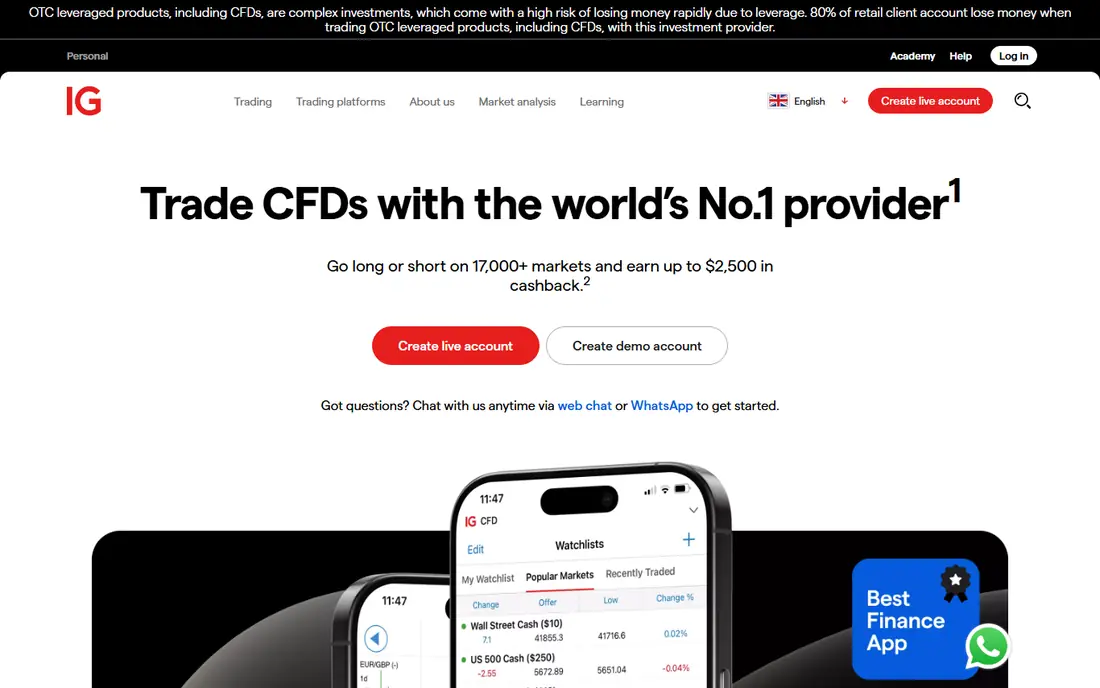
IG is the default recommendation for a UK forex trader who wants the full professional toolkit under the strongest regulatory umbrella in the market.
Decide your instrument before your strategy. For many UK individuals, the spread bet's current tax treatment beats the CFD's loss offsetting, but your circumstances decide, and that is tax information, not advice.
What we like- IG is the UK's largest spread betting and CFD provider and the category benchmark: over 17,000 markets including a full forex book, its own polished platform and apps, MetaTrader 4, guaranteed stops for a premium, and weekend markets. EUR/USD spreads start from 0.6 points, putting a round trip on a standard lot from roughly six dollars equivalent before financing. Its published loss figure, around 68 to 69 percent of retail accounts, sits near the better end of the big firms. Education through IG Academy is genuinely strong.
Watch out for- The platform's depth means a learning curve, and its pricing has premium touches: guaranteed stop premiums and a 10 pound monthly dormancy style fee after long inactivity have featured in its terms. Overnight financing on geared positions is a real drag on slow trades. Its huge market range invites overtrading, which the loss statistics describe precisely.
Starting priceFree to open
Free planYes
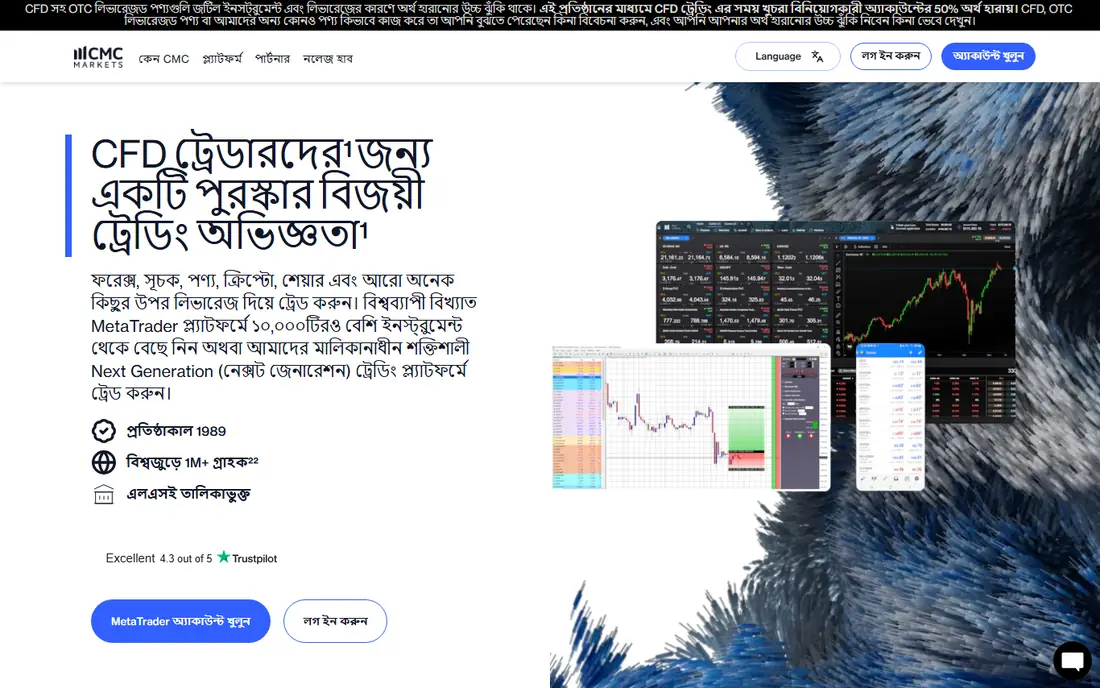
CMC suits the active, chart led trader who will actually use a professional platform's depth and qualifies for its sharpest pricing.
If you trade twice a month from your phone, its advantages evaporate and XTB or Plus500's simplicity will serve you better for the same regulatory safety.
What we like- CMC's own platform is the deepest in UK retail, with advanced charting, pattern tools and client sentiment data across more than 10,000 markets, and its FX Active account offers 0.0 pip starting spreads on major pairs for a commission of about 5 dollars per standard lot round trip, among the cheapest worked examples in October 2026 comparisons. Its loss disclosure sits around 68 to 69 percent. MetaTrader 4 and TradingView are offered alongside. Pricing tiers reward active traders.
Watch out for- The standard account's spreads are mid field, so the value story depends on choosing FX Active and trading enough volume to justify commission maths. The platform can overwhelm a beginner. Range of third party platforms is narrower than Pepperstone's: no cTrader and no MT5 in the UK offering. Financing charges apply overnight like everywhere.
Starting priceFree to open
Free planYes
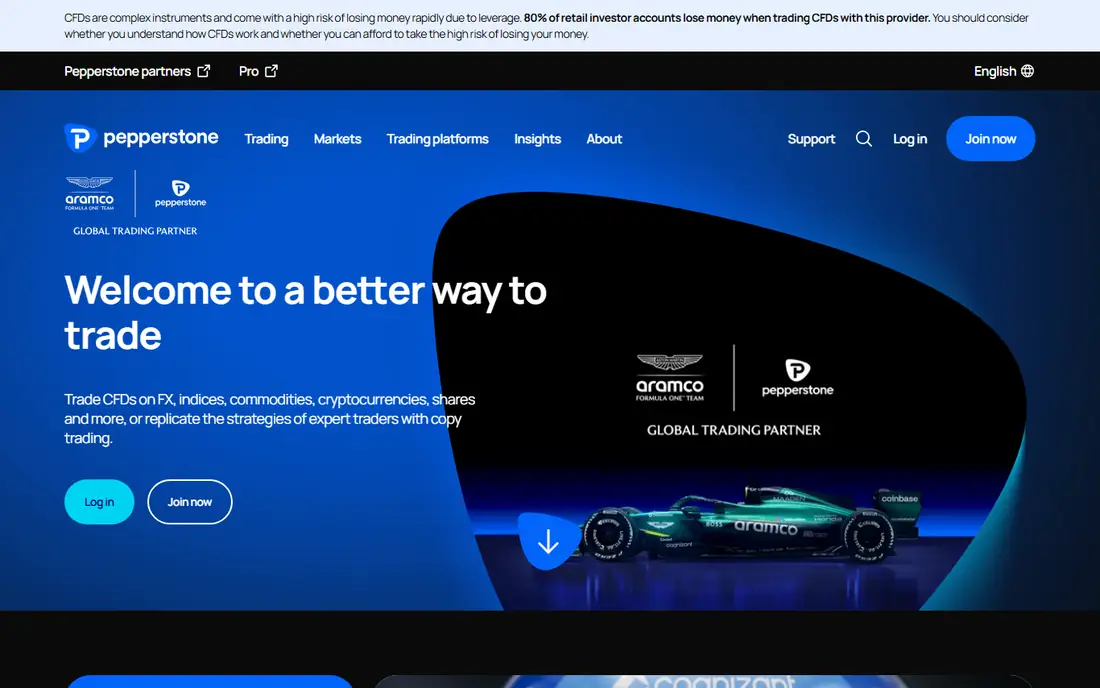
Pepperstone is for traders who already live inside MetaTrader or cTrader and want raw spread pricing under FCA rules rather than an offshore licence.
The entity check is not pedantry. The same brand under a lightly regulated offshore licence offers none of the protections this guide is built on.
What we like- Pepperstone's UK arm serves the platform loyalists: MetaTrader 4 and 5, cTrader and TradingView, with its Razor account offering spreads from 0.0 pips on major pairs for a commission around 7 dollars per standard lot round trip, making an example EUR/USD trade cost roughly seven dollars all in. Execution speed is its reputation. Its UK loss disclosure, around 73 to 75 percent across 2026 readings, is published like all the others.
Watch out for- That loss percentage sits at the higher end of this list, a fact the firm must print and a reader should weigh. It offers no guaranteed stops, so gap risk on news events is yours. Platform choice means account fragmentation. Its education and research are thinner than IG's. As an Australia founded group, UK clients should confirm they are onboarded with the FCA authorised UK entity, which its UK site handles.
#4
XTB
Best for: Simple single platform, no minimum deposit
Visit xtb.com
Starting priceFree to open
Free planYes
XTB is the tidy middle: a regulated, well taught, single platform home for a UK trader who trades forex and indices and values calm over configurability.
Its no minimum deposit and demo make it a sensible classroom. Learning on xStation with a demo through one full news cycle teaches more than any course about what spreads do at announcement time.
What we like- XTB puts every client on its own xStation 5 platform, one clean tool across desktop, web and mobile, with no minimum deposit, commission free CFD pricing on its standard model and EUR/USD spreads from 0.8 pips, roughly eight dollars per standard lot round trip in worked examples. Its education library is extensive, and its UK loss figure runs around 71 to 74 percent depending on the quarter. For a beginner to intermediate trader, the single platform discipline removes a whole category of confusion.
Watch out for- One platform means one platform: no MetaTrader, cTrader or TradingView, so algorithmic and third party tool users are excluded. A currency conversion margin, around 0.5 percent, applies when trading instruments in other currencies. Its loss rate is mid pack. Serious share dealing sits in a separate part of its offering with its own terms.
Starting priceFree to open
Free planYes
City Index suits the experienced UK trader who wants a long established, plainly run alternative to the two giants, priced sharply on the majors.
It rarely tops feature lists, and it has outlasted most of the firms that did. In this market, survival is a feature.
What we like- City Index, founded in 1983 and now part of the StoneX group, is one of the original UK spread betting firms, offering forex, indices and shares through its own Web Trader and apps plus MetaTrader 4. Its published loss figure is around 68 percent, among the better readings here. Pricing on major pairs is competitive, and its research and market analysis serve active traders well. Four decades of UK regulation is its own kind of credential.
Watch out for- The platform ecosystem is narrower than IG's or Pepperstone's, with fewer third party options. Its brand invests less in beginner education than IG or XTB. Product specifics, like share CFD pricing tables, can be harder to extract from its site than rivals'. Ownership changes over the years mean checking the current UK entity and terms is worthwhile.
#6eToro
Best for: Beginners and copy trading3.6/5 on
G2 (27 reviews, checked Oct 2026)
Visit etoro.com
Starting priceFree to open
Free planYes
eToro fits the UK beginner who wants community and copying while learning, accepting wider spreads as tuition.
Copy small, watch everything, and treat the first year as paid education with strict position sizes. The investors worth copying have boring statistics and long records, which the platform's filters can surface.
What we like- EToro's UK platform wraps forex and CFD trading in the most beginner friendly interface here, with its signature copy trading: follow and mirror experienced investors automatically. Its published UK CFD loss figure, 51 percent, is the lowest in the 14 firm comparison, which reflects its broader investing client base as much as trading outcomes. Real share and crypto investing sit beside CFDs in one account. The social feed and demo make the first months less lonely.
Watch out for- Forex specialists find its spreads wider than the raw account rivals and its charting shallower than CMC or IG. Copy trading copies losses as faithfully as wins, and copied traders take risks sized for their accounts, not yours. No spread betting. Platform fees include withdrawal and conversion charges to read carefully. Its loss figure's low reading must not be mistaken for a promise
- Half of accounts still lost money.
Starting priceFree to open
Free planYes
Plus500 is adequate software carrying the worst client outcome statistics in the list, which is a combination a careful reader will price correctly.
If its interface tempts you, use the demo until your own statistics argue otherwise. The firm's homepage is legally obliged to warn you; believe it.
What we like- Plus500's platform is the simplest serious offering in the UK: a clean web and app interface, a focused CFD range led by forex and indices, guaranteed stop orders available, and no commission, with costs inside spreads. It is a FTSE listed company with a long FCA history. Its demo is unlimited. For a trader who wants three buttons and the price, it delivers exactly that.
Watch out for- Its published loss figure, 76 percent, is the highest in this guide, and that number is the review. Simplicity removes tools as well as clutter: charting and analysis are basic, there is no MetaTrader, no spread betting and no copy trading. Overnight and inactivity fees apply. Customer support is chat and email only, no phones.
Starting priceFree to open
Free planYes
Interactive Brokers is the graduate school of this list: the cheapest serious pricing and the broadest markets, priced in complexity instead of pounds.
Move here when your volume makes spread costs your largest expense and your skills make its platform an asset. Arriving early only adds difficulty to a hard enough subject.
What we like- Interactive Brokers is the professional's door into forex: direct market style pricing with tight spreads and explicit commissions, spot forex as well as CFDs, and a platform, Trader Workstation, that serves every asset class on earth from one account. Its UK CFD loss disclosure, around 58 percent, is among the lowest published, reflecting its experienced client base. Segregation and scale are institutional grade, and FSCS and FCA rules apply to its UK entity.
Watch out for- The platform is famously demanding: Trader Workstation assumes knowledge beginners do not have, and account setup is thorough to the point of friction. Retail gearing rules still cap UK clients. Its education is professional documentation, not hand holding. Customer support suits the self sufficient.
How we chose
We selected forex trading platforms authorised by the FCA for UK retail clients in 2026, and excluded offshore brokers regardless of their marketing reach, because the regulatory protections are the foundation of the comparison. Loss percentages are the firms' own FCA mandated disclosures as reported in October 2026 comparisons, quoted as ranges because they are recalculated quarterly. Worked spread costs use published figures from October 2026 broker comparisons for one standard lot of EUR/USD. No account was opened and no trading was done for this guide, and nothing in it is financial advice.
How to start without becoming a statistic
Trade the demo until it bores you. Your demo results will flatter you, no slippage, no fear, but they teach the platform and the cost mechanics: spreads widening at news, financing appearing overnight, margins moving. A month of demo is the cheapest tuition in finance.
Size like a pessimist. UK gearing up to 30:1 means a 1 percent market move can take 30 percent of a fully geared position. Professionals risk a small fraction of their account per trade. The loss percentages in this guide belong mostly to people who sized like optimists.
Count the overnight charge. A position held for a month can pay its spread twenty times over in financing. Swing traders should compute holding cost before entry, the way a landlord computes mortgage interest, because that is the correct mental model for geared positions held over time.
Frequently asked questions
Is forex trading legal in the UK?
Yes, through FCA authorised firms, as CFDs or spread bets for retail clients. The FCA caps retail gearing at 30:1 for major currency pairs and lower for other assets, mandates negative balance protection so you cannot lose more than your account, bans deposit bonuses, and requires the loss warnings quoted throughout this guide. Firms not on the FCA register are not legal for UK retail clients, whatever their websites claim.
Why do about 70 percent of retail accounts lose money?
Gearing magnifies small moves, spreads and financing tax every position, and most beginners trade too often and too large. The firms' own published figures averaged about 70 percent losing across 14 major UK brokers in 2026, ranging from eToro's 51 percent to Plus500's 76 and one firm at 82. The statistic includes every account that traded and ended the year down after all costs. Assume you start in the majority and behave accordingly.
What is the difference between spread betting and CFDs in the UK?
Both track the same prices with borrowed exposure. Spread betting profits are currently exempt from UK capital gains tax and stamp duty for individuals, and losses cannot be offset against other gains. CFD profits are taxable as capital gains, and losses can usually be offset. Spread betting is a UK and Ireland product. This is general information about how the wrappers are treated, not tax advice; your own situation needs an accountant if the sums matter.
How much money do I need to start?
Accounts open free and several firms set no minimum deposit, but trading meaningfully undercapitalised guarantees the statistics: with a tiny account, normal position sizes become huge relative risks. A common professional guideline is to risk no more than 1 percent of the account on one trade, which implies an account sized so that 1 percent is a workable stake. Many traders learn on demos and small accounts of a few hundred pounds while treating losses as tuition with a hard total limit.
What are overnight financing charges?
When you hold a geared position past the daily cut off, the broker effectively lends you the position's full value, and charges interest on it, sometimes offset partly by interest on the currency you hold. The charge appears nightly and varies with central bank rates plus the firm's margin. On long held positions it can exceed the spread many times over. Every platform here publishes its financing rates; check them before any trade you plan to hold for weeks.
Sources we checked (0)
Is your product missing or out of date?
We review this list regularly. Vendors can request a listing, send updated pricing or ask about featured placement.

Shihab Mia · Founder, Rankite
Shihab has 5+ years in B2B and SaaS SEO. He writes Rankite's software buying guides from pricing pages, documentation and public user reviews. More about Shihab.