How we make this list: we compare pricing pages, product documentation and public user reviews. Ratings come from G2, Capterra or Trustpilot, with the date we checked them.
Key takeaways
- DoorDash has the widest US coverage and the largest restaurant selection, which makes it the safest default for most households.
- Uber Eats is strongest in dense cities and for people who already use Uber One, with bundled benefits across rides and delivery.
- Grubhub is the value pick for Amazon Prime members, who can get its subscription benefits without a separate monthly fee.
- Slice, Favor, and EatStreet win in their niches: independent pizzerias, Texas, and college towns, where national apps are thinner.
- Delivery fees, service fees, small-order fees, and menu markups matter more than the subscription price, so compare a real checkout total before choosing.
Quick comparison
| Tool | Best for | Starting price | Free plan |
|---|
 DoorDash | Widest coverage | $9.99 per month | No |
 Uber Eats | City speed and Uber One value | $9.99 per month | No |
 Grubhub | Prime member value | See website | No |
 Postmates | Non-food and convenience items | See website | No |
 Caviar | Upscale local restaurants | See website | No |
 Slice | Independent pizzerias | See website | No |
 Favor | Texas deliveries | See website | No |
 EatStreet | College towns and the Midwest | See website | No |
 Delivery.com | Food plus alcohol and laundry | See website | No |
Is your product missing or out of date?
We review this list regularly. Vendors can request a listing, send updated pricing or ask about featured placement.
The best food delivery apps in the US
Starting price$9.99 per month
Free planNo
DoorDash is the default choice for a simple reason: it works almost everywhere. Suburbs, smaller cities, and rural areas that other apps skip often have DoorDash coverage, and the restaurant list includes national chains, local favourites, and convenience stores. For a household that orders from different places each week, that breadth removes the need to juggle several apps.
The cost is the honest catch. Without DashPass, delivery fees, service fees, and a small-order fee can add a large amount to a modest order. DashPass at $9.99 per month removes delivery fees on eligible orders and lowers service fees, so it pays for itself quickly for frequent orders. For occasional orders, compare the full checkout total against pickup before blaming the app.
What we like- Largest restaurant network in the US
- Strong suburban and rural coverage
- DashPass covers groceries and convenience too
Watch out for- Fees can be high without DashPass
- Small-order fee applies on some orders
- Menu prices may exceed in-store prices
Starting price$9.99 per month
Free planNo
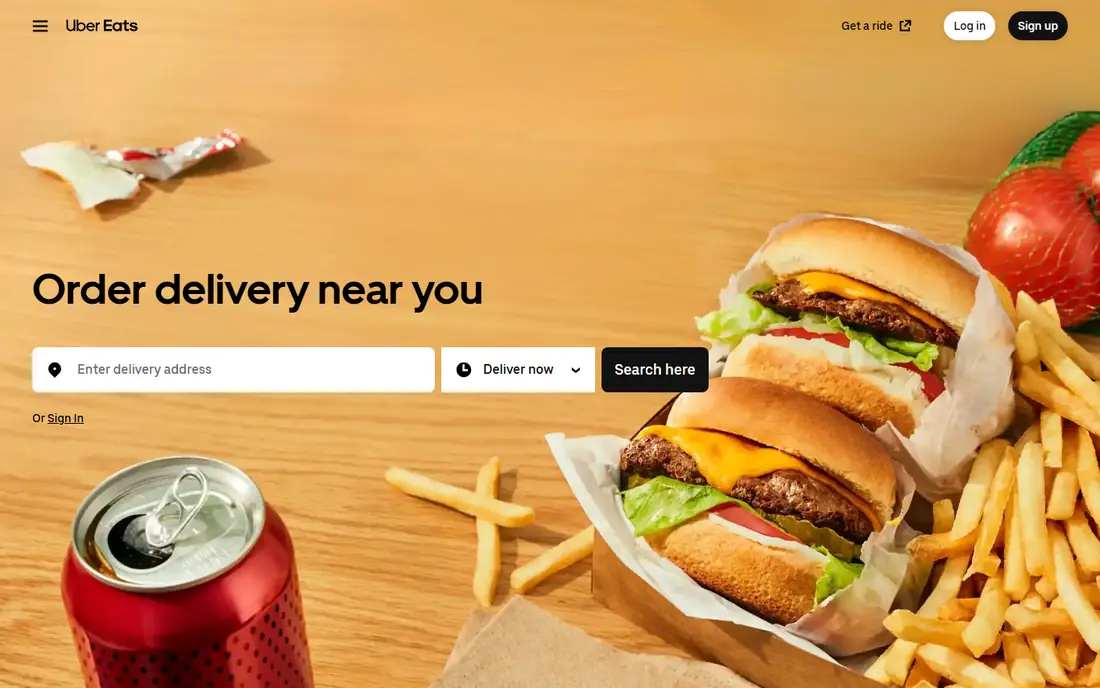
Uber Eats shines where Uber is already strong: dense cities with many restaurants and couriers close by. Orders often arrive quickly, tracking is clear, and the app feels polished for people who already use Uber for rides. Uber One at $9.99 per month adds delivery fee savings on Uber Eats plus ride benefits, which makes it good value for a household that uses both.
Outside major cities, the gap shows. Restaurant choice narrows, and some areas have slower coverage than DoorDash. Fees also vary by market, so the cheapest app in one city may not be the cheapest in another. If you live in a city centre and already pay for Uber One, Uber Eats is usually the best value. If you live in the suburbs, check DoorDash first.
What we like- Fast delivery in dense cities
- Uber One bundles rides and delivery benefits
- Clear tracking
Watch out for- Smaller restaurant selection than DoorDash in suburbs
- Fees vary by city
- Some orders have minimums
Starting priceSee website
Free planNo
Grubhub is the value pick for a specific group: Amazon Prime members. Grubhub+ benefits, including free delivery on eligible orders, come with Prime, which removes the need for a separate delivery subscription. That makes Grubhub the cheapest regular option for Prime households in cities where it has good restaurant coverage.
The limit is geography. Grubhub is strongest in the Northeast and in cities where it has long-standing restaurant partnerships, and thinner elsewhere. If your favourite local spots are on Grubhub, it is an excellent second app. If your town has only a handful of Grubhub restaurants, DoorDash will serve you better day to day.
What we like- Strong in Northeast and legacy markets
- No small-order fee on many orders
- Grubhub+ free with Amazon Prime
Watch out for- Coverage is narrower than DoorDash
- Fewer chain options in some areas
- App experience varies by city
Starting priceSee website
Free planNo
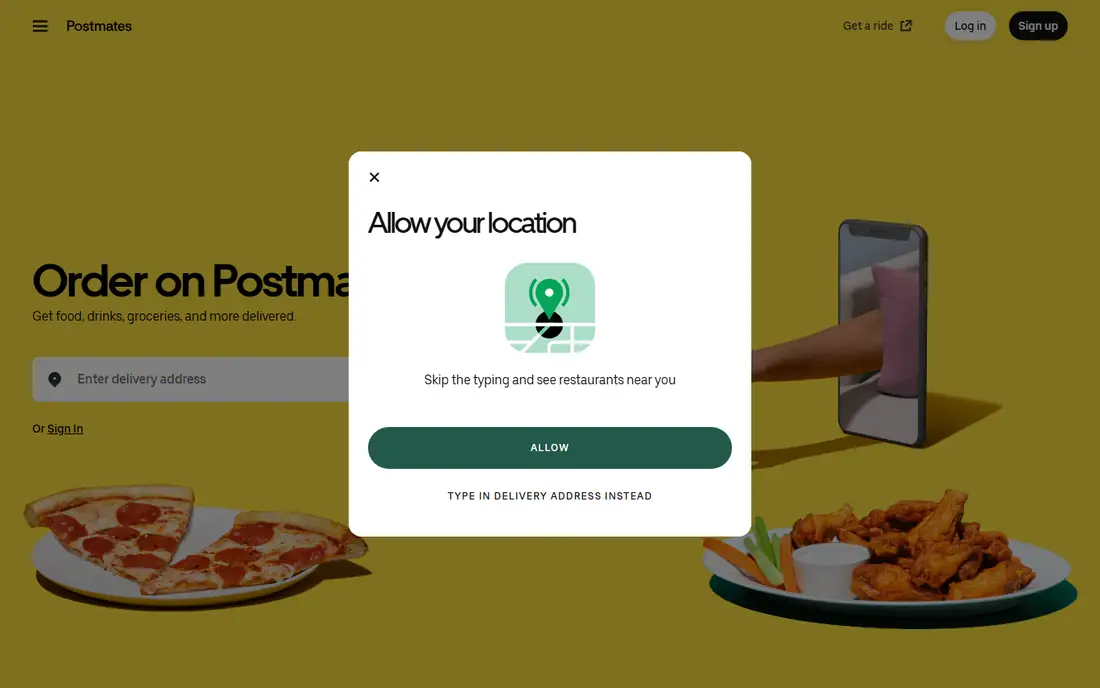
Postmates, now part of Uber, is the app for orders that are not just dinner. Groceries, convenience items, alcohol where allowed, and retail pickups sit alongside restaurant delivery, which suits a household that wants one app for several errands. In many cities, its courier network matches Uber Eats, so delivery times are similar.
The overlap is also the weakness. For a straight restaurant order, Postmates rarely beats Uber Eats on price or selection, since both sit under Uber One. Use Postmates when the order includes non-food items or when a specific store is only listed there. For everyday restaurant delivery, Uber Eats is the simpler pick.
What we like- Delivers food plus convenience, alcohol, and retail items
- Same coverage as Uber Eats in many cities
- Uber One benefits apply
Watch out for- Operates as part of Uber, so the app choice overlaps heavily with Uber Eats
- Fees can be high for small orders
Starting priceSee website
Free planNo
Caviar, owned by DoorDash, focuses on a smaller, curated set of restaurants, often the local spots people choose for a special meal rather than a weeknight takeaway. That curation is the appeal: less scrolling through fast food, more independent restaurants and higher-end menus. DashPass benefits apply, which helps if you already subscribe for DoorDash.
Coverage is the constraint. Caviar operates in selected metros, and the restaurant list is deliberately narrow. It is not a replacement for DoorDash, and it does not try to be. Keep Caviar for occasions when the restaurant matters more than the delivery fee, and use DoorDash or Uber Eats for everyday orders.
What we like- Curated list of higher-end local restaurants
- DashPass benefits apply
- Good for special occasions
Watch out for- Limited to selected metros
- Fewer everyday and budget options
- Fees reflect the premium positioning
Starting priceSee website
Free planNo
Slice exists for one job, and it does that job well. It connects customers with independent pizzerias across the US, giving small shops an ordering platform without the fees and ranking pressure of a general marketplace. For pizza lovers, that means better access to local shops that might not appear, or might rank low, on a general app.
The limit is obvious: Slice only does pizza. It cannot replace a general delivery app for sushi, burgers, or groceries. But for a weekly pizza order, Slice often gives a better deal for the shop and a clearer menu for the customer. If your local pizzeria is on Slice, ordering direct through it is usually the kinder and cheaper route.
What we like- Focus on independent pizzerias
- Lower fees for many local shops
- Nationwide shop coverage
Watch out for- Pizza only
- No general restaurant delivery
- Features vary by shop
Starting priceSee website
Free planNo
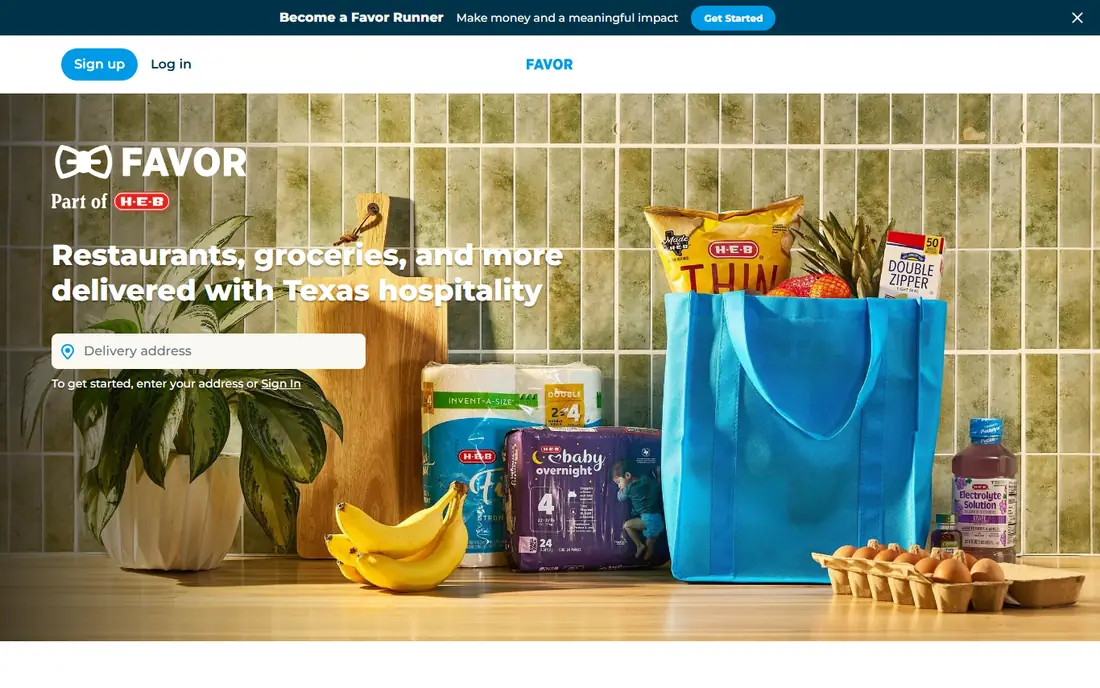
Favor is a Texas-only delivery app, owned by H-E-B, and that focus is its strength. Coverage spans hundreds of Texas cities, including places where national apps are thin, and the service covers restaurants, groceries, and convenience items. Texans who order regularly will find a deeper local restaurant list than a national app offers in smaller Texas towns.
Outside Texas, Favor is useless, which is the whole trade-off. A traveller or a household that moves out of state loses the app entirely. Within Texas, though, Favor is worth installing alongside DoorDash, especially in cities where its local partnerships are strong.
What we like- Strong Texas coverage with hundreds of cities
- Food plus groceries and convenience
- Local runner model
Watch out for- Texas only
- No use outside the state
- Subscription benefits are separate from national plans
Starting priceSee website
Free planNo
EatStreet serves a niche that national apps often under-serve: college towns and Midwest cities with strong local restaurant scenes. Ordering is simple, the focus stays on local restaurants, and delivery coverage in its markets is reliable. Students and locals in those towns often find restaurants on EatStreet that are missing or hard to find elsewhere.
The narrow coverage is the limit. EatStreet operates in a few hundred US cities, far fewer than DoorDash, and it has no national subscription bundle to match DashPass or Uber One. Use it as a local complement, not a sole delivery app, and check whether your town is covered before relying on it.
What we like- Strong in college towns and Midwest cities
- Local restaurant focus
- Simple ordering
Watch out for- Coverage is far narrower than national apps
- Fewer chain restaurants
- No national subscription bundle
Starting priceSee website
Free planNo
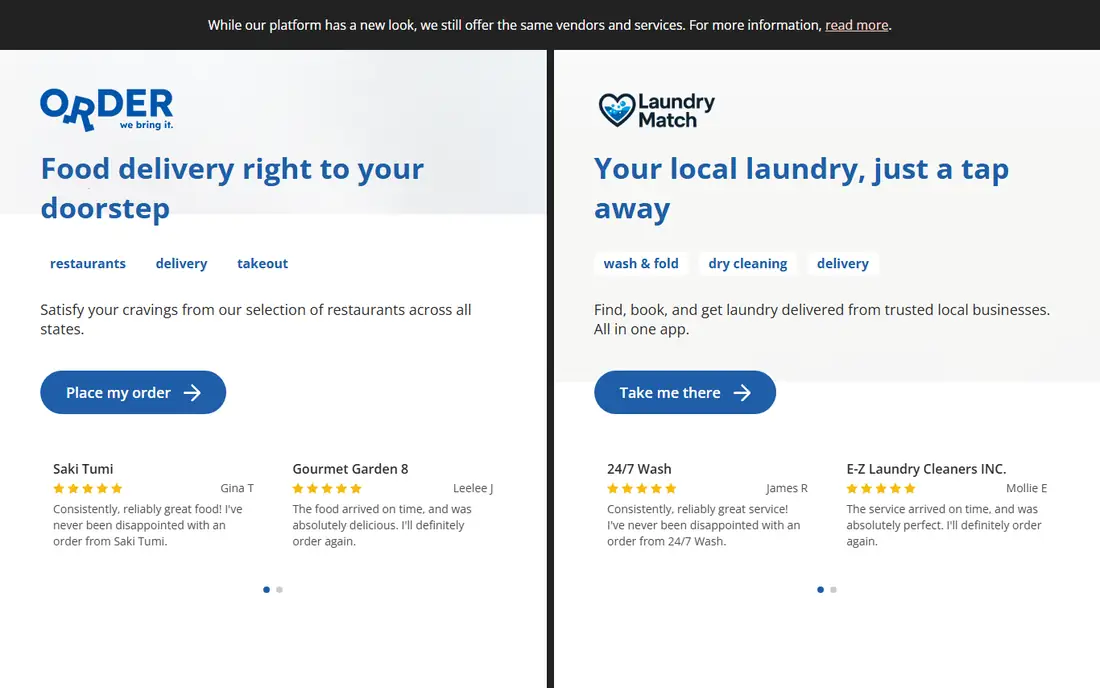
Delivery.com tries to be the errand app: restaurant food, alcohol where allowed, groceries, and even laundry pickup in covered cities. For a household in a covered city, that breadth can replace two or three separate apps. The pass option offers savings for frequent orders, similar in idea to DashPass and Uber One.
Coverage decides everything here. Delivery.com operates in thousands of US cities on paper, but depth varies sharply by neighbourhood, and some areas have only a thin restaurant list. Check your address in the app before committing to a pass. Where coverage is deep, it is a handy all-in-one option. Where it is thin, the national apps win.
What we like- Food, alcohol, groceries, and laundry in one app
- Useful in covered cities
- Pass option for frequent orders
Watch out for- Coverage is city-specific
- Restaurant choice varies widely by area
- Less polished than larger rivals
How we chose
We compared each app's own site, subscription pages, and coverage claims, plus public reviews and price comparisons from consumers and delivery researchers. An app made the list only if it operates in the US today and accepts consumer food orders. We did not claim hands-on testing, and we treated subscription prices as starting points, because delivery fees, service fees, and menu markups vary by city and restaurant.
How to keep delivery costs down
The subscription is only one part of the bill. A few habits save more than switching apps.
Compare the checkout total, not the menu price
Open the same order in two apps and compare the final total, including delivery fee, service fee, small-order fee, and tax. Menu markups differ by restaurant and app, so the app with the lower delivery fee is not always the cheapest overall. That two-minute check often beats any loyalty to one app.
Use pickup when the restaurant is close
Pickup removes delivery and service fees in most cases, and many restaurants offer a lower price for direct orders. If the restaurant is a short drive away, pickup is usually the cheapest option by a clear margin, and the food arrives hotter.
Match the subscription to your order count
DashPass and Uber One each cost $9.99 per month, so count your orders. If you order twice a week, a subscription usually pays for itself in delivery fee savings. If you order twice a month, pay per order instead, and use a free Prime-linked Grubhub+ benefit if you already have Prime.
Frequently asked questions
What is the best food delivery app in the US?
DoorDash is the best default for most US households, because it has the widest coverage and the largest restaurant selection. Uber Eats is better in dense cities and for Uber One members, while Grubhub is the best value for Amazon Prime members in cities where it has good coverage.
Is DashPass or Uber One better?
Both cost $9.99 per month and remove delivery fees on eligible orders. DashPass wins on restaurant breadth and suburban coverage, while Uber One wins if you also use Uber rides, because the same membership covers both. Pick the one tied to the app you already order from most.
Which food delivery app is cheapest without a subscription?
Grubhub is often cheapest for Prime members, since Grubhub+ comes with Prime. Without any subscription, the cheapest app varies by city and order, because fees and menu markups differ. Compare the final checkout total in two apps before ordering.
Does Grubhub work outside major cities?
Grubhub covers all 50 states, but depth varies. It is strongest in the Northeast and in cities with long-standing restaurant partnerships, and thinner in suburbs and smaller towns. Check your address in the app to see how many local restaurants are actually available.
Can I order groceries on food delivery apps?
Yes. DoorDash, Uber Eats, and Postmates all offer grocery and convenience delivery in many cities, alongside restaurant orders. DashPass and Uber One benefits often apply to eligible grocery orders too, but minimums and fees vary by store.
Is Slice only for pizza?
Yes. Slice focuses on independent pizzerias and does not offer general restaurant delivery. It is a complement to a general app, not a replacement, and it is most useful if your local pizzeria is listed on it.
Sources we checked (9)
- https://www.doordash.com/pricing
- https://www.ubereats.com/pricing
- https://www.grubhub.com/pricing
- https://postmates.com/pricing
- https://www.trycaviar.com/pricing
- https://slicelife.com/pricing
- https://favordelivery.com/pricing
- https://eatstreet.com/pricing
- https://www.delivery.com/pricing
Is your product missing or out of date?
We review this list regularly. Vendors can request a listing, send updated pricing or ask about featured placement.

Shihab Mia · Founder, Rankite
Shihab has 5+ years in B2B and SaaS SEO. He writes Rankite's software buying guides from pricing pages, documentation and public user reviews. More about Shihab.