How we make this list: we compare pricing pages, product documentation and public user reviews. Ratings come from G2, Capterra or Trustpilot, with the date we checked them.
Key takeaways
- JPMorgan Chase is the largest US bank, with about $4.4 trillion in total assets in 2026, and it leads on overall scale, diversification and execution.
- Bank of America leads on digital banking experience, with strong mobile tools plus in-person options in major markets.
- Goldman Sachs leads on investment banking deal value, advising on $687.6 billion of M&A in the first three quarters of 2026, while Morgan Stanley leads on wealth management balance.
- Citigroup leads on global reach, with unmatched cross-border capabilities, while Wells Fargo offers a large branch network and turnaround potential.
- This article is general information only, not financial advice. Company figures change, and banking or investment choices should be based on your own needs and professional advice where relevant.
Quick comparison
| Tool | Best for | Starting price | Free plan |
|---|
 JPMorgan Chase | Overall scale and breadth | See website | Not applicable |
 Bank of America | Digital banking experience | See website | Not applicable |
 Wells Fargo | Branch network and turnaround | See website | Not applicable |
 Citigroup | Global cross-border reach | See website | Not applicable |
 Goldman Sachs | Investment banking deals | See website | Not applicable |
 Morgan Stanley | Wealth management balance | See website | Not applicable |
 Berkshire Hathaway | Insurance-led conglomerate | See website | Not applicable |
 BlackRock | Asset management scale | See website | Not applicable |
Is your product missing or out of date?
We review this list regularly. Vendors can request a listing, send updated pricing or ask about featured placement.
The best financial services companies
Starting priceSee website
Free planNot applicable
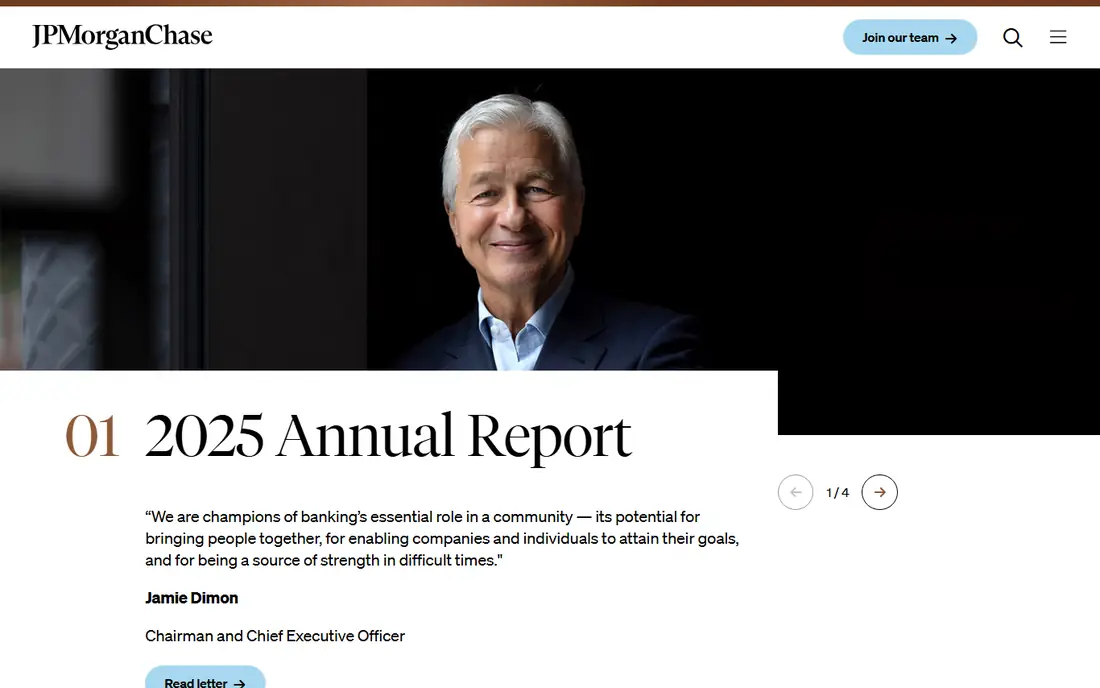
JPMorgan Chase is the largest bank in the United States, with about $4.4 trillion in total assets in 2026, and it ranks first among US banks by domestic assets at $2.88 trillion in one Bankrate ranking. It dominates on overall leadership due to scale, diversification and execution, and it ranks third by M&A deal value in the first three quarters of 2026, advising on 165 deals valued at $492.5 billion.
Its retail banking combines a large branch and ATM network with a strong mobile app, while its investment bank, asset management and commercial banking arms cover nearly every financial need. For customers and businesses who want one institution for most financial services, JPMorgan Chase comes closest to dominating every category.
What we like- Largest US bank at about $4.4 trillion in assets
- Broadest product range
- Strong mobile app and branch network
Watch out for- Scale can feel impersonal
- Fees vary by account
- Investment banking volatility affects earnings
Starting priceSee website
Free planNot applicable
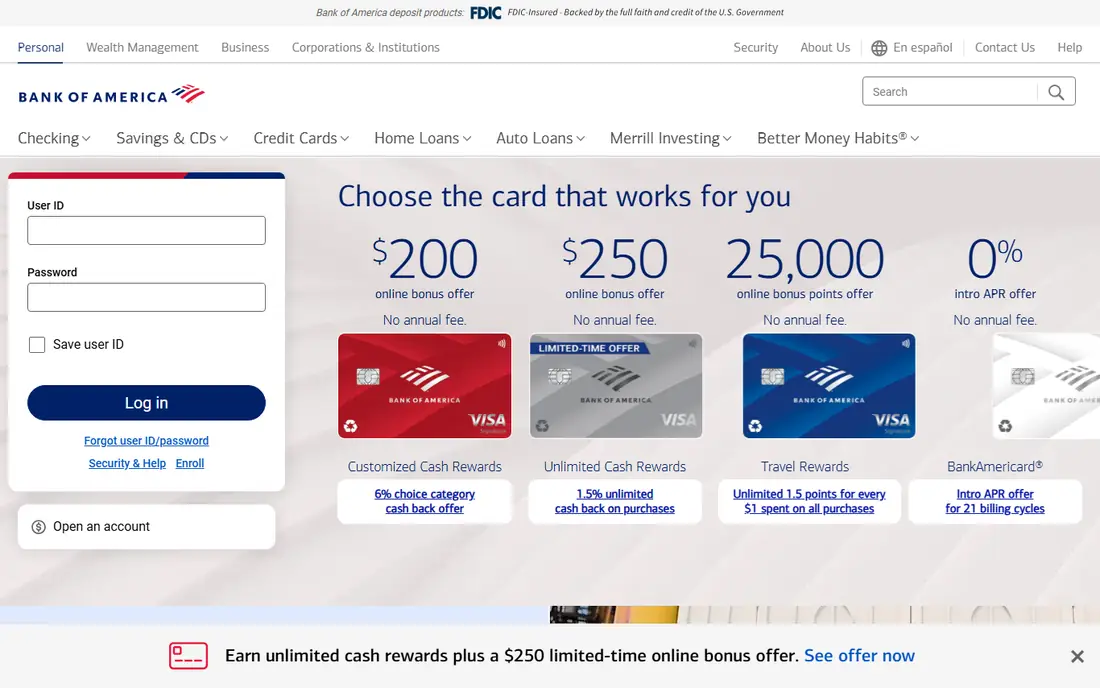
Bank of America is the second-largest US bank, with $3.41 trillion in assets in 2025 and $2.49 trillion in domestic assets in one Bankrate ranking. It leads on digital banking experience, with strong mobile and online tools plus in-person options in major markets, and it ranks fourth by M&A deal value in the first three quarters of 2026, advising on deals worth $315.1 billion.
Its wealth management arm suits larger balances, while its retail banking serves a broad customer base. For customers who prioritise digital tools with branch backup, Bank of America is the leading choice.
What we like- Leads on digital banking experience
- $3.41 trillion in assets
- In-person options in major markets
Watch out for- Branch coverage varies by region
- Fees vary by account
- Wealth management suits larger balances best
Starting priceSee website
Free planNot applicable
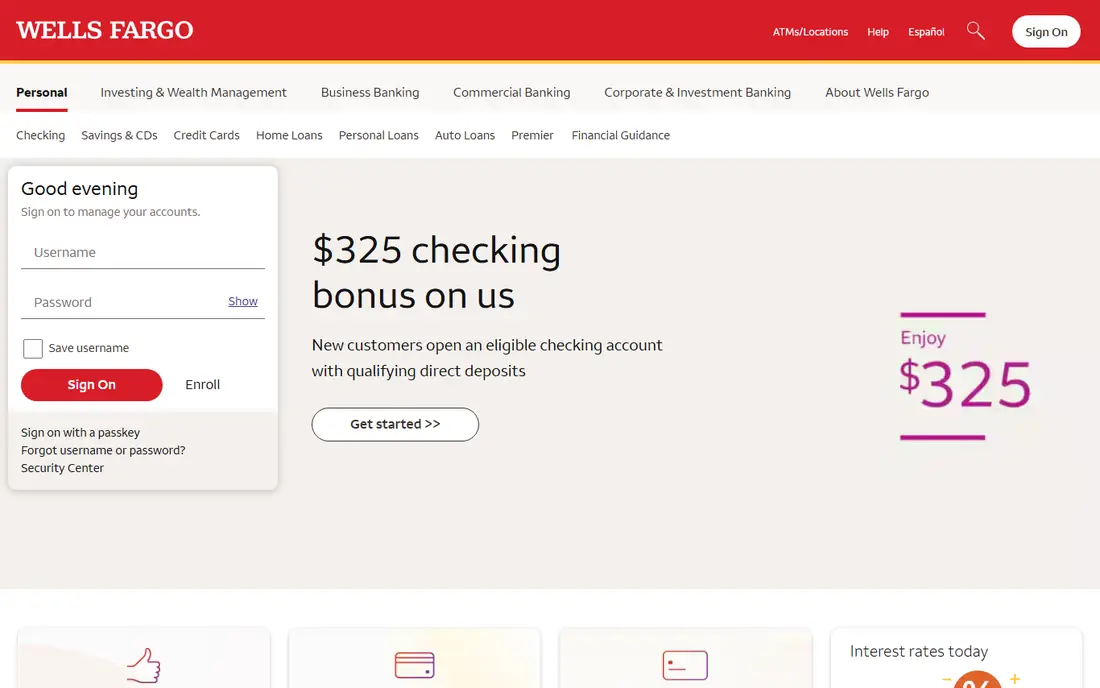
Wells Fargo is the third-largest US bank, with $2.15 trillion in assets in 2025 and $1.89 trillion in domestic assets in one Bankrate ranking. It offers a large branch network across much of the country and a full range of products, from retail banking to commercial lending and wealth management.
Analysts describe it as stable but strategically limited, a lagging player among top-tier banks, with turnaround potential but remaining constraints. For customers who value branch access across the country, Wells Fargo remains a solid choice, with upside if its turnaround continues.
What we like- Large branch network across much of the country
- Full product range
- Turnaround potential
Watch out for- Strategically limited versus top-tier peers
- Past regulatory issues still affect reputation
- Growth constraints remain
Starting priceSee website
Free planNot applicable
Citigroup, through Citibank, holds $2.35 trillion in assets in 2024 and $1.21 trillion in domestic assets in one Bankrate ranking, and it remains unmatched on global reach and cross-border capabilities. Its international network suits multinational businesses and customers with cross-border needs, and its wealth management services suit large balances, with waived fees for qualifying customers.
US retail presence is smaller than JPMorgan or Bank of America, and restructuring continues. For customers and businesses with international needs, Citigroup is the leading choice.
What we like- Unmatched global reach
- Waived fees and wealth management for large balances
- Cross-border capabilities
Watch out for- US retail presence is smaller than peers
- Complexity across markets
- Restructuring continues
Starting priceSee website
Free planNot applicable
Goldman Sachs ranked first by M&A deal value in the first three quarters of 2026, advising on transactions worth $687.6 billion, up 52.3 percent year over year, including 81 billion-dollar deals and 22 mega deals over $10 billion. It remains the gold standard in investment banking and trading, with an ability to generate high returns from advisory and capital markets activity that is unmatched.
Revenue volatility tied to market conditions creates earnings inconsistency, and its retail banking is online-only through Marcus, with $628.21 billion in domestic bank assets. Its push into asset and wealth management reflects a recognition that stability must complement performance. For investment banking and capital markets, Goldman Sachs is the elite choice.
What we like- Ranked first by M&A deal value in Q1 to Q3 2026 at $687.6 billion
- Elite capital markets franchise
- Strong advisory brand
Watch out for- Revenue volatility tied to markets
- Retail banking is online-only through Marcus
- Earnings inconsistency in downturns
Starting priceSee website
Free planNot applicable
Morgan Stanley has executed one of the most successful transformations in modern banking, pivoting toward wealth management to build a stable, recurring revenue base that reduces reliance on volatile trading income while maintaining strong investment banking capabilities. It ranked second on both M&A measures in the first three quarters of 2026, with 212 deals worth $659.9 billion, and it leads on wealth management, followed by Bank of America and JPMorgan.
Its Morgan Stanley Bank holds $344.46 billion in domestic assets, serving brokerage and wealth management clients. For clients who want wealth management balance with investment banking strength, Morgan Stanley is arguably the most strategically balanced bank today.
What we like- Most strategically balanced investment bank
- Wealth management leadership
- Strong M&A ranking
Watch out for- Investment banking trails Goldman on deal value
- Wealth focus suits larger clients best
- Complexity across businesses
Starting priceSee website
Free planNot applicable
Berkshire Hathaway is an Omaha-based conglomerate whose core is insurance, with a diversified portfolio spanning railroads, energy, manufacturing and consumer brands. Greg Abel succeeded Warren Buffett as CEO on 1 January 2026, marking a leadership transition for one of the most followed companies in finance.
It is not a retail bank and offers no branch banking or consumer deposit products, so it suits investors and businesses studying conglomerate strategy rather than customers seeking banking services. For long-term capital allocation and insurance-led diversification, Berkshire Hathaway remains a benchmark.
What we like- Diversified conglomerate with insurance core
- Long-term investment record
- Strong capital base
Watch out for- Not a retail bank
- No branch banking or consumer products
- Leadership transition in 2026
Starting priceSee website
Free planNot applicable
BlackRock is the world largest asset manager, offering a broad range of funds and ETFs for institutional and retail investors, with a scale that shapes markets and retirement savings worldwide. Its iShares ETF platform is one of the most used investment tools globally, and its institutional business serves pension funds, insurers and governments.
It is not a bank, so it offers no deposit accounts, branch banking or consumer lending. For investors who want broad, low-cost market exposure through funds and ETFs, BlackRock is the leading asset manager, with fees varying by fund and share class.
What we like- World largest asset manager
- Broad fund and ETF range
- Institutional and retail reach
Watch out for- Not a bank
- No deposit or lending products
- Fees vary by fund and share class
How we chose
We compared companies on scale, product breadth, digital experience, investment banking performance, wealth management and global reach, using asset rankings, M&A league tables and market reports. JPMorgan leads on overall scale, Bank of America on digital experience, Goldman Sachs on M&A deal value, Morgan Stanley on wealth management balance, and Citigroup on global reach. Asset figures vary by ranking methodology, since total assets and domestic assets differ, so we reported both where available. This article is general information only, not financial advice, and we did not claim hands-on experience with these firms.
Choosing a financial services company
Match the company to the need, since no single institution dominates every category. Retail banking customers should weigh branch access, mobile tools, fees and account features, while wealth management clients should weigh advisory quality, fees and product range. Businesses should weigh lending, treasury, cross-border and capital markets capabilities, since a bank that excels at retail may not lead on M&A advisory.
Check fees, account terms and deposit insurance coverage before opening accounts, and compare investment fees, since small percentage differences compound over decades. For investments, diversification matters more than picking a single firm, and past performance does not guarantee future results. Where decisions involve large sums, tax or retirement planning, consider professional advice tailored to your situation. Review account statements regularly, since fees and terms change over time.
Frequently asked questions
What is the largest financial services company in the US?
JPMorgan Chase is the largest US bank, with about $4.4 trillion in total assets in 2026. Bank of America follows at $3.41 trillion, then Citigroup at $2.35 trillion and Wells Fargo at $2.15 trillion, though figures vary by ranking and date.
Which bank is best for digital banking?
Bank of America leads on digital banking experience, with strong mobile and online tools plus in-person options in major markets. JPMorgan Chase follows closely, with a large branch network and a strong mobile app.
Which investment bank leads on M&A?
Goldman Sachs ranked first by M&A deal value in the first three quarters of 2026, advising on $687.6 billion of deals. Morgan Stanley ranked second at $659.9 billion, followed by JPMorgan at $492.5 billion and Bank of America at $315.1 billion.
Is Berkshire Hathaway a bank?
No, Berkshire Hathaway is an Omaha-based conglomerate whose core is insurance, with diversified holdings in railroads, energy, manufacturing and consumer brands. It offers no retail banking products.
What is the difference between a bank and an asset manager?
A bank takes deposits, lends money and offers payment services, while an asset manager such as BlackRock invests client money through funds and ETFs without taking deposits. Many large firms do both through separate businesses, but BlackRock itself is not a bank.
Should I choose one financial company for everything?
Not necessarily. One institution can simplify banking, but investment, wealth management and lending needs may suit different firms. Compare fees, features and service quality for each need, and diversify investments rather than relying on a single firm.
Sources we checked (10)
- https://www.jpmorganchase.com
- https://www.bankofamerica.com
- https://www.wellsfargo.com
- https://www.citigroup.com
- https://www.goldmansachs.com
- https://www.morganstanley.com
- https://www.berkshirehathaway.com
- https://www.blackrock.com
- https://www.bankrate.com/banking/biggest-banks-in-america/
- https://www.privatebankerinternational.com/news/ma-adviser-rankings-q1-q3-2026/
Is your product missing or out of date?
We review this list regularly. Vendors can request a listing, send updated pricing or ask about featured placement.

Shihab Mia · Founder, Rankite
Shihab has 5+ years in B2B and SaaS SEO. He writes Rankite's software buying guides from pricing pages, documentation and public user reviews. More about Shihab.