How we make this list: we compare pricing pages, product documentation and public user reviews. Ratings come from G2, Capterra or Trustpilot, with the date we checked them.
Key takeaways
- Flo and Clue suit readers who want polished cycle and symptom tracking, while Ovia suits readers who want fertility, pregnancy and parenting tools together.
- Natural Cycles suits readers who want a temperature-based method with formal clearance, while Premom suits readers who track ovulation tests closely.
- Glow, Kindara and Fertility Friend suit readers who want detailed charting and community support, with different strengths in predictions and data control.
- This article is general information only, not medical advice. Cycle predictions are estimates, not guarantees, and a clinician can help interpret results or concerns.
Quick comparison
| Tool | Best for | Starting price | Free plan |
|---|
 Flo | Polished cycle tracking | Free | Yes |
 Clue | Science-based tracking | Free | Yes |
 Ovia | Fertility plus pregnancy | Free | Yes |
 Natural Cycles | Temperature-based method | See website | No |
 Premom | Ovulation test tracking | Free | Yes |
 Glow | Fertility community | Free | Yes |
 Kindara | Detailed charting | Free | Yes |
 Fertility Friend | Charting and analysis | Free | Yes |
Is your product missing or out of date?
We review this list regularly. Vendors can request a listing, send updated pricing or ask about featured placement.
The best fertility apps
Starting priceFree
Free planYes
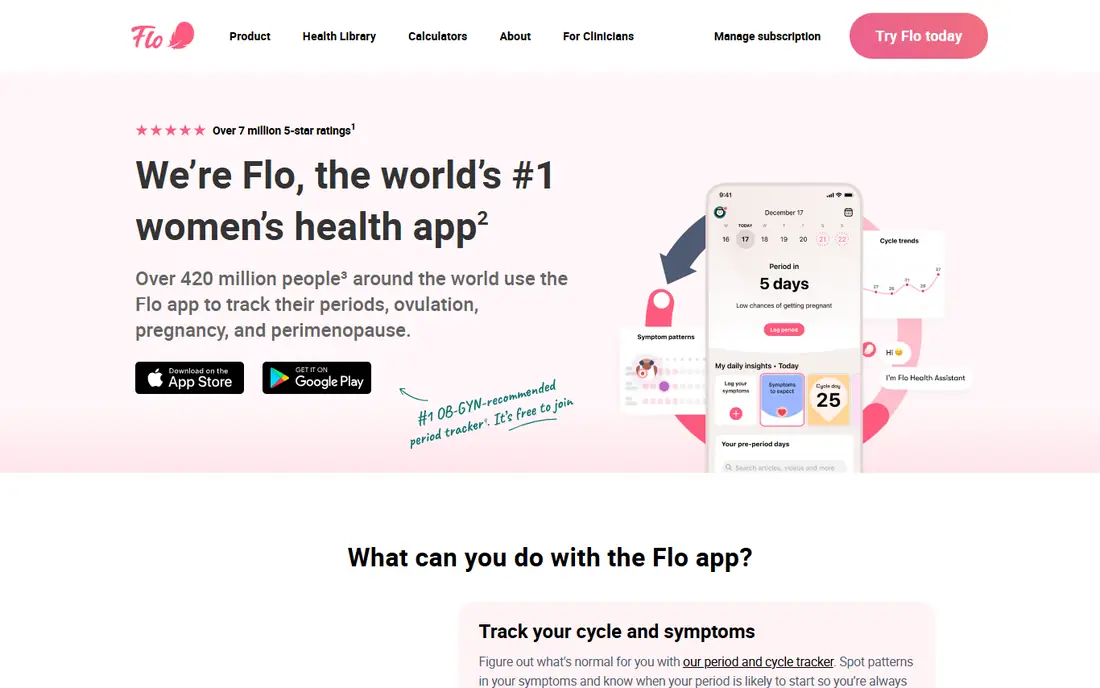
Flo suits a reader who wants polished, easy cycle and symptom tracking. Period, ovulation, symptoms, mood and weight logging sit in a clean interface, with predictions that improve as more cycles are logged. Health insights and articles cover common topics, which helps a reader learn cycle basics without leaving the app. For a reader starting cycle tracking, Flo offers the smoothest first experience in this list.
Premium features, including advanced insights and some health reports, need a paid subscription, and predictions remain estimates that vary with cycle regularity. A reader who wants a temperature-based method should consider Natural Cycles instead. For polished, easy cycle tracking, Flo is a strong first pick.
What we like- Large user base
- Polished interface
- Symptom, mood and cycle logging in one app
Watch out for- Premium features need a subscription
- Predictions are estimates, not guarantees
Starting priceFree
Free planYes
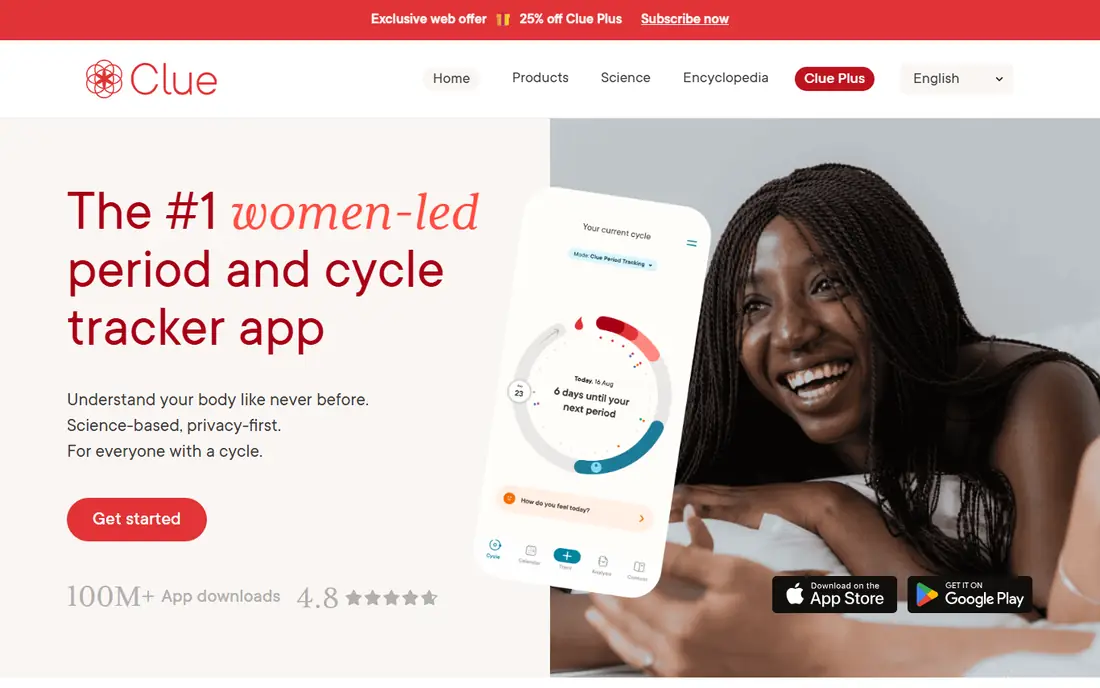
Clue suits a reader who wants cycle tracking built with a science-first approach. Predictions cover periods, fertile windows and PMS patterns, with symptom logging that stays organized and easy to review. Privacy controls are a genuine strength, with clear settings for data handling and sharing. For a reader who values evidence-based design and privacy clarity, Clue stands out.
Premium features need a subscription, and community features are thinner than Glow, so a reader who wants peer support may prefer another app. Clue also focuses on tracking rather than temperature-based methods. For science-based, privacy-conscious cycle tracking, Clue is an excellent choice.
What we like- Science-based design
- Clear cycle predictions
- Strong privacy controls
Watch out for- Premium features need a subscription
- Community features are thinner than Glow
Starting priceFree
Free planYes
Ovia suits a reader who wants one family of apps across fertility, pregnancy and parenting. Ovia Fertility tracks cycles and ovulation, while companion apps cover pregnancy and early parenting, so data and content follow a reader through life stages. Personalized health content adapts to logged data, and core features are free. For a reader planning a family over time, that continuity is appealing.
The interface packs many features, which can feel busy for a reader who only wants simple cycle tracking, and some health content feels generic. A reader who wants a single-purpose tracker may prefer Clue or Flo. For fertility tracking that grows into pregnancy and parenting, Ovia is a strong choice.
What we like- Fertility, pregnancy and parenting apps together
- Personalized health content
- Free core features
Watch out for- Interface packs many features
- Some users find health content generic
Starting priceSee website
Free planNo
Natural Cycles suits a reader who wants a temperature-based fertility method with formal regulatory clearance. Daily basal body temperature readings feed an algorithm that gives a daily fertility status, with optional wearable integration for automatic temperature capture. That method differs from calendar-only predictions, since it uses measured body data each day. For a reader who wants a structured, data-driven method, Natural Cycles is the most formal option in this list.
A paid subscription is required, and consistent daily temperature measurement is essential, since missed readings weaken accuracy. Natural Cycles is cleared as a contraceptive in some regions and marketed for fertility planning in others, so a reader should check local status and talk to a clinician. For a temperature-based method with formal clearance, Natural Cycles is unique.
What we like- Temperature-based algorithm with formal clearance
- Daily fertility status
- Wearable integration
Watch out for- Paid subscription
- Requires consistent daily temperature measurement
Starting priceFree
Free planYes
Premom suits a reader who tracks ovulation tests closely while trying to conceive. Photo scanning reads ovulation test strips and logs results automatically, which reduces manual entry errors and builds a clear test history. Cycle, symptom and basal temperature tracking sit alongside test data, with community features for peer support. For a reader using ovulation tests regularly, Premom turns test photos into organized data.
Premium features need a subscription, and the test-based focus suits active conception tracking more than general cycle tracking. A reader who does not use ovulation tests may prefer Flo or Clue. For ovulation test tracking, Premom is purpose-built and effective.
What we like- Ovulation test photo scanning
- Cycle and symptom tracking
- Community features
Watch out for- Premium features need a subscription
- Test-based focus suits active conception tracking
Starting priceFree
Free planYes
Glow suits a reader who wants fertility tracking plus a large, active community. Cycle, ovulation and symptom tracking cover the basics, while community forums let readers share experiences and questions with others trying to conceive. A partner app lets a partner follow the cycle and fertile window, which helps couples plan together. For a reader who values peer support alongside tracking, Glow offers the liveliest community in this list.
Premium features need a subscription, and the interface feels busy with many features and promotions. A reader who wants a quiet, private tracker may prefer Clue. For fertility tracking with strong community support, Glow is a strong pick.
What we like- Large fertility community
- Cycle, ovulation and symptom tracking
- Partner app available
Watch out for- Premium features need a subscription
- Interface feels busy with many features
Starting priceFree
Free planYes
Kindara suits a reader who wants detailed fertility charting in the fertility awareness tradition. Temperature, cervical fluid, symptoms and custom data points build rich charts, with community support for chart interpretation questions. That depth appeals to a reader who charts carefully and wants to see patterns across cycles, rather than relying on a simple calendar prediction. For detailed, hands-on charting, Kindara offers control that simpler apps lack.
The interface feels dated next to Flo or Clue, and premium features need a subscription. A reader who wants a polished, simple tracker may prefer Flo. For detailed fertility charting with community help, Kindara is a respected choice.
What we like- Detailed fertility charting
- Temperature and cervical fluid tracking
- Community support
Watch out for- Interface feels dated
- Premium features need a subscription
Starting priceFree
Free planYes
Fertility Friend suits a reader who wants deep charting and cycle analysis. Temperature, cervical fluid, ovulation tests and symptoms build detailed charts, with statistics covering cycle length, luteal phase and ovulation patterns over time. A long track record and a large user base mean many charting questions already have answers in forums and guides. For a reader who wants to analyze cycles in depth, Fertility Friend offers the most detailed statistics in this list.
The interface feels dated, and premium analysis features need a subscription. A reader who wants a modern, simple app may prefer Flo or Clue. For deep charting and cycle analysis, Fertility Friend remains a trusted choice.
What we like- Deep charting and analysis
- Long track record
- Detailed cycle statistics
Watch out for- Interface feels dated
- Premium analysis needs a subscription
How we chose
We compared vendor pages, feature lists and public reviews for fertility apps serving US readers. We looked for cycle tracking quality, prediction methods, temperature and test support, privacy controls and honest pricing. We did not claim hands-on testing, and we did not make medical claims. Cycle predictions are estimates that vary with regularity, and a clinician should interpret results or concerns.
How to pick the right fertility app
Start with your goal and your method. A reader who wants simple cycle tracking should start with Flo or Clue, while a reader trying to conceive with ovulation tests should try Premom or Glow. A reader who wants a temperature-based method should evaluate Natural Cycles or Kindara, while a reader who wants deep chart analysis should try Fertility Friend.
Next, check privacy settings before logging sensitive health data. Review what data is collected, how it is shared, and whether you can export or delete it. Health data is sensitive, and laws and company policies vary, so read the privacy policy for the exact app you choose and adjust sharing settings before your first cycle is logged. A reader who is unsure about a policy can pick an app with clearer controls or keep sensitive notes outside the app.
Finally, treat predictions as estimates, not certainties, and talk to a clinician about irregular cycles, long conception timelines or any health concern. An app organizes data, but a clinician interprets it in the context of your health. Bring your charts or app export to an appointment, since organized cycle data helps a clinician spot patterns faster than memory alone.
Partner sharing can help couples plan together, and several apps in this list offer a partner view or a companion app. Agree on what data to share and what stays private before linking accounts, since cycle and symptom data is personal. A shared calendar view for fertile windows can be useful without sharing every symptom note. Keep expectations realistic during the first months, since learning a method takes time, and a missed reading or a late test does not ruin the whole cycle. Log consistently, even on busy days, because gaps make predictions less reliable, and note travel or illness that may explain an unusual reading.
Frequently asked questions
Are fertility app predictions accurate?
Predictions are estimates, not guarantees. Accuracy improves with regular cycles and consistent logging, but irregular cycles, illness, stress and travel can shift ovulation. A clinician can help interpret patterns or concerns.
Can a fertility app replace birth control or medical advice?
No. Fertility apps support tracking and planning, but they do not replace medical advice, testing or contraception decisions. Talk to a clinician about birth control, conception timelines or irregular cycles.
Is my fertility data private?
It depends on the app and your settings. Review privacy policies and settings for data collection, sharing and deletion before logging sensitive data, and prefer apps with clear controls and export options.
Do I need a thermometer or ovulation tests?
No, not for basic cycle tracking, which uses calendar and symptom data. Temperature-based methods need a basal thermometer, while test-based tracking needs ovulation tests. Choose a method that fits your time and budget.
How long should I track before predictions improve?
Most apps improve predictions after two to three full cycles of consistent logging, since more data reveals your pattern. Irregular cycles may need longer, and a clinician can help if patterns stay unclear.
Sources we checked (8)
- https://flo.health
- https://helloclue.com
- https://www.oviahealth.com
- https://www.naturalcycles.com
- https://premom.com
- https://glowing.com
- https://www.kindara.com
- https://www.fertilityfriend.com
Is your product missing or out of date?
We review this list regularly. Vendors can request a listing, send updated pricing or ask about featured placement.

Shihab Mia · Founder, Rankite
Shihab has 5+ years in B2B and SaaS SEO. He writes Rankite's software buying guides from pricing pages, documentation and public user reviews. More about Shihab.