How we make this list: we compare pricing pages, product documentation and public user reviews. Ratings come from G2, Capterra or Trustpilot, with the date we checked them.
Key takeaways
- Salesforce, Adobe and Oracle Eloqua dominate enterprise marketing automation suites with deep CRM integration.
- HubSpot brings inbound marketing and CRM together for enterprises standardizing on its ecosystem.
- Braze, Iterable and Insider lead cross-channel customer engagement with real-time personalization.
- Bloomreach combines commerce, search and marketing automation for retail and ecommerce enterprises.
Quick comparison
Is your product missing or out of date?
We review this list regularly. Vendors can request a listing, send updated pricing or ask about featured placement.
Enterprise marketing platforms run campaigns across email, SMS, push, web and ads with segmentation, journeys and attribution at scale. The divide is suite (CRM-native) versus engagement specialist. Eight tools.
Starting priceSee website
Free planNo
Marketing Cloud personalizes every moment across the lifecycle: email, mobile, ads and web journeys built on Salesforce customer data, with AI agents now assisting planning and optimization.
It rewards existing Salesforce investment. It fits enterprises already running Sales Cloud wanting one customer view.
What we like- Native Salesforce CRM integration
- Journey Builder orchestration
- Data Cloud unifies customer data
- Strong B2B and B2C coverage
Watch out for- Complex implementation
- Consultant-heavy
- Pricing is opaque and custom
Starting priceSee website
Free planYes
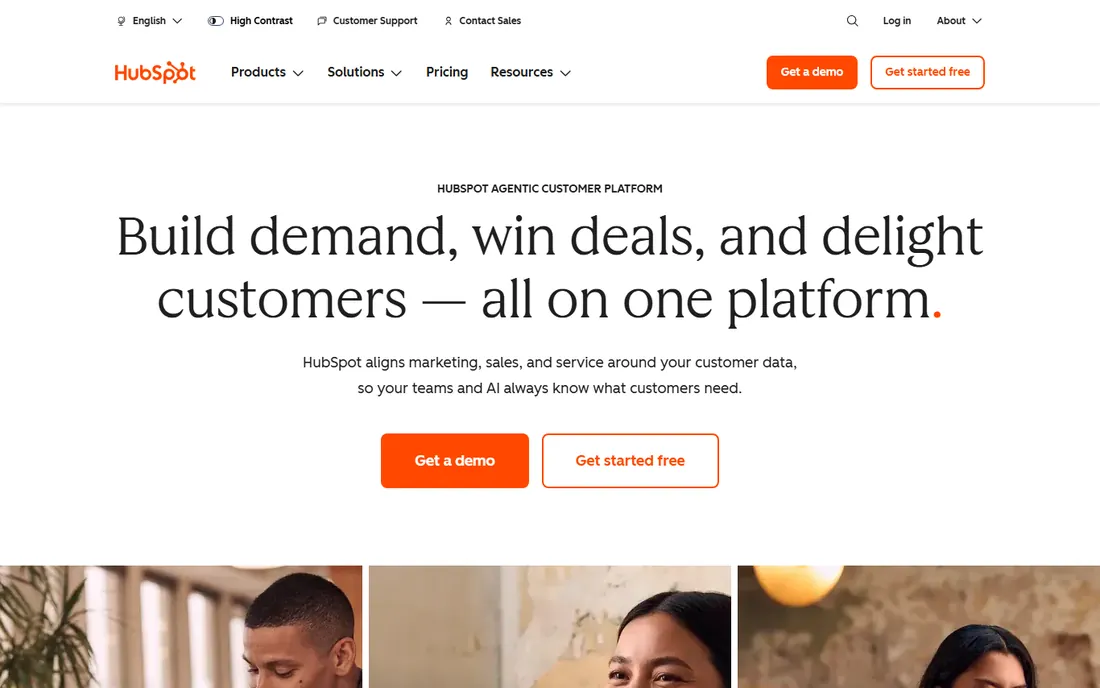
HubSpot's Marketing Hub pairs workflows, email and attribution with its free CRM core. Enterprises standardizing on HubSpot get sales, service and marketing in one database.
Contact-based pricing scales fast. HubSpot fits mid-market and enterprise teams wanting inbound marketing on a unified CRM.
What we like- Unified CRM with marketing automation
- Strong inbound tools
- Free tier for CRM basics
- Easier adoption than legacy suites
Watch out for- Enterprise costs grow with contacts and seats
- Advanced B2B features trail Eloqua
Starting priceSee website
Free planNo
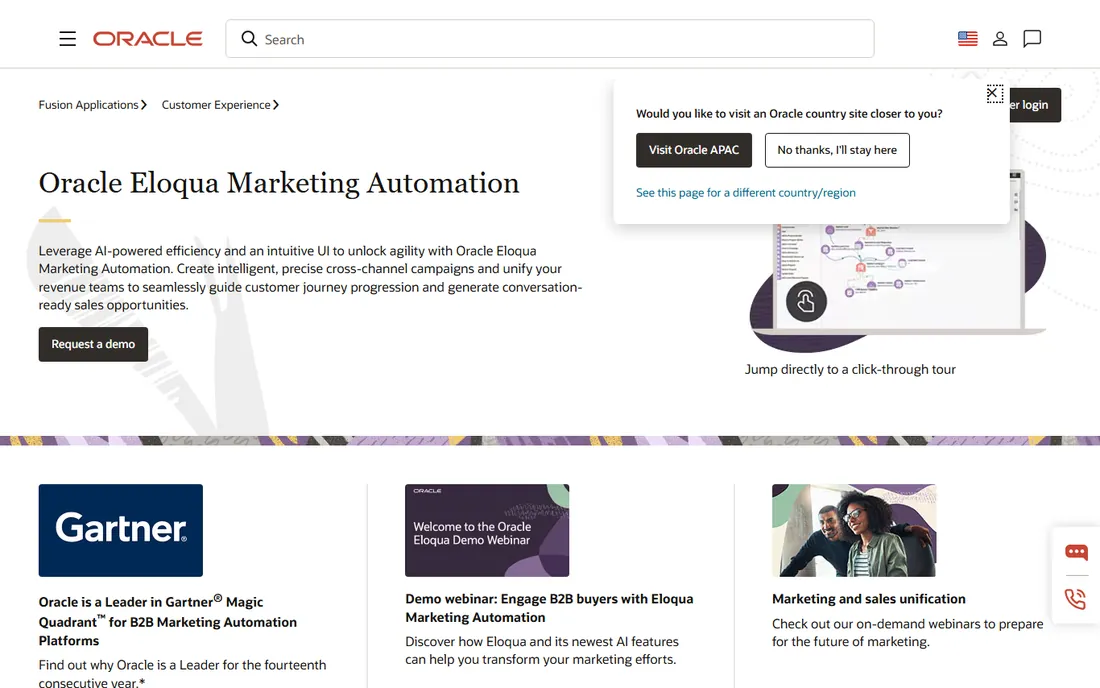
Eloqua handles massive B2B databases with sophisticated nurture, scoring and account-based programs. Native Oracle CX integration connects marketing to sales and service.
It is built for complexity. Eloqua fits large B2B enterprises with long sales cycles and demanding data requirements.
What we like- Deep B2B lead management and scoring
- 500-plus integrations
- Enterprise security on Oracle Cloud
- 13-time Gartner Leader
Watch out for- Dated-feeling UI in places
- Implementation effort is significant
Starting priceSee website
Free planNo
Adobe Campaign orchestrates personalized cross-channel campaigns inside the Experience Cloud: email, push, SMS and direct mail driven by unified customer profiles.
It fits Adobe-stack enterprises. Standalone buyers may find lighter tools faster to value.
What we like- Deep Adobe Experience Cloud integration
- Strong cross-channel campaign management
- Proven at global enterprise scale
Watch out for- Enterprise-only pricing and complexity
- The learning curve is steep
Starting priceSee website
Free planNo
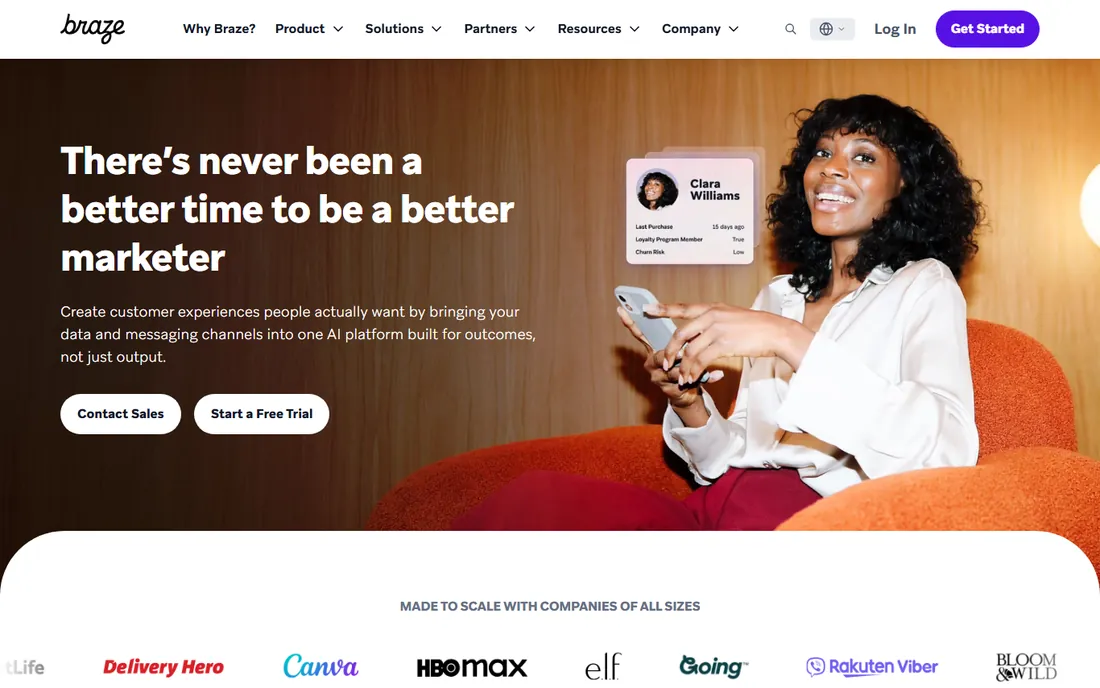
Braze powers real-time customer engagement: streaming ingestion, dynamic segmentation and cross-channel journeys for apps and brands with millions of users.
It is built for consumer scale. Braze fits B2C enterprises where real-time personalization drives revenue.
What we like- Real-time messaging across email, push, SMS and in-app
- Strong streaming data architecture
- Proven at consumer scale
Watch out for- Enterprise pricing
- Implementation needs data engineering support
Starting priceSee website
Free planNo
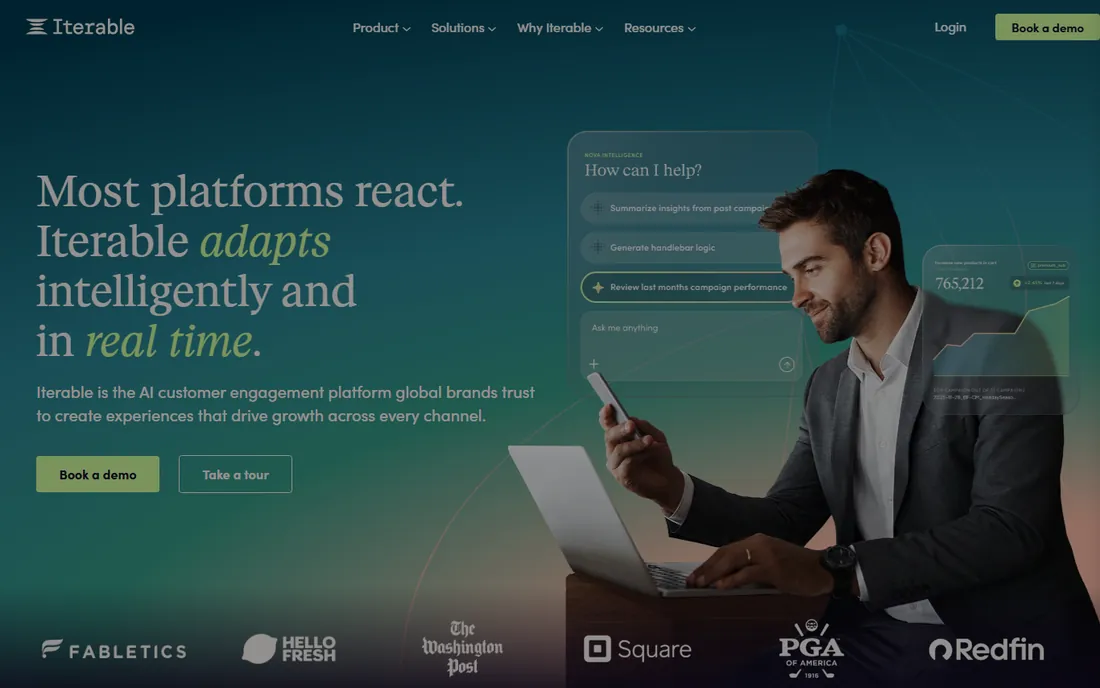
Iterable gives growth marketers a powerful canvas: build cross-channel journeys with experimentation and AI optimization without heavy engineering.
Data-heavy enterprises may want more. Iterable fits growth teams at B2C and B2B2C companies scaling lifecycle marketing.
What we like- Intuitive journey builder
- Strong growth-team adoption
- Email, SMS, push and in-app in one canvas
- Good experimentation
Watch out for- Enterprise pricing
- Advanced data features trail CDP-led rivals
Starting priceSee website
Free planNo
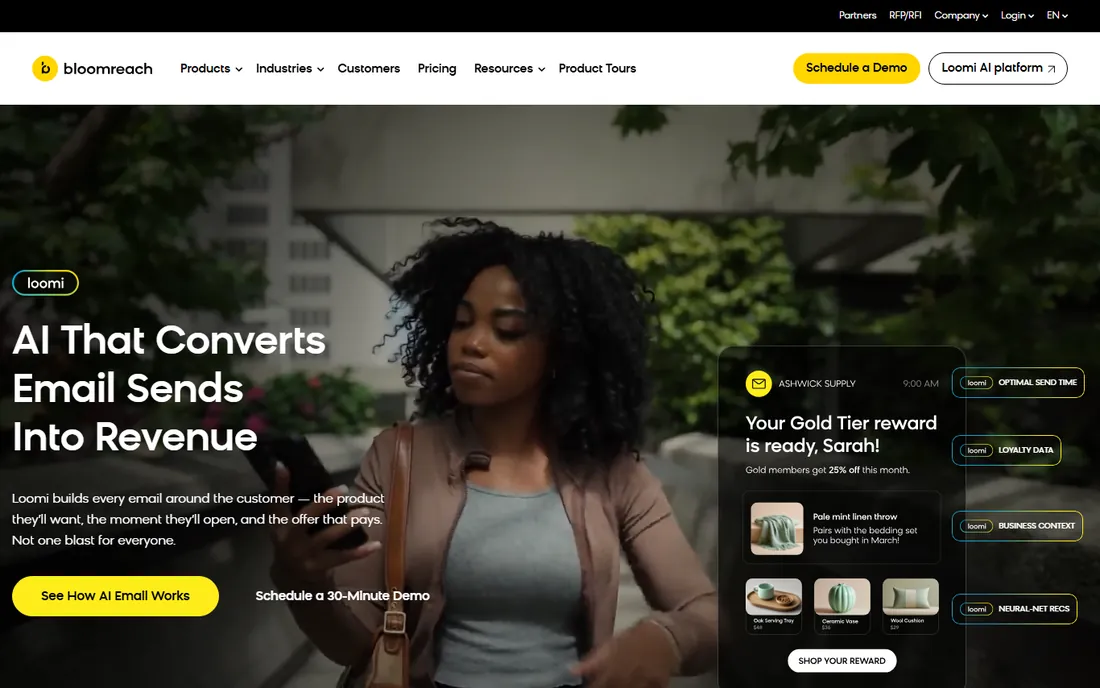
Bloomreach combines discovery (search and merchandising), content and engagement (CDP plus marketing automation) so retailers personalize every touchpoint. Over 850 brands run on it.
B2B teams should look elsewhere. Bloomreach fits ecommerce and retail enterprises personalizing the full shopping journey.
What we like- Commerce Experience Cloud unifies search, CMS and marketing
- Loomi AI personalization
- Strong retail and ecommerce base
Watch out for- Commerce-centric
- Less suited to pure B2B
- Enterprise pricing
Starting priceSee website
Free planNo
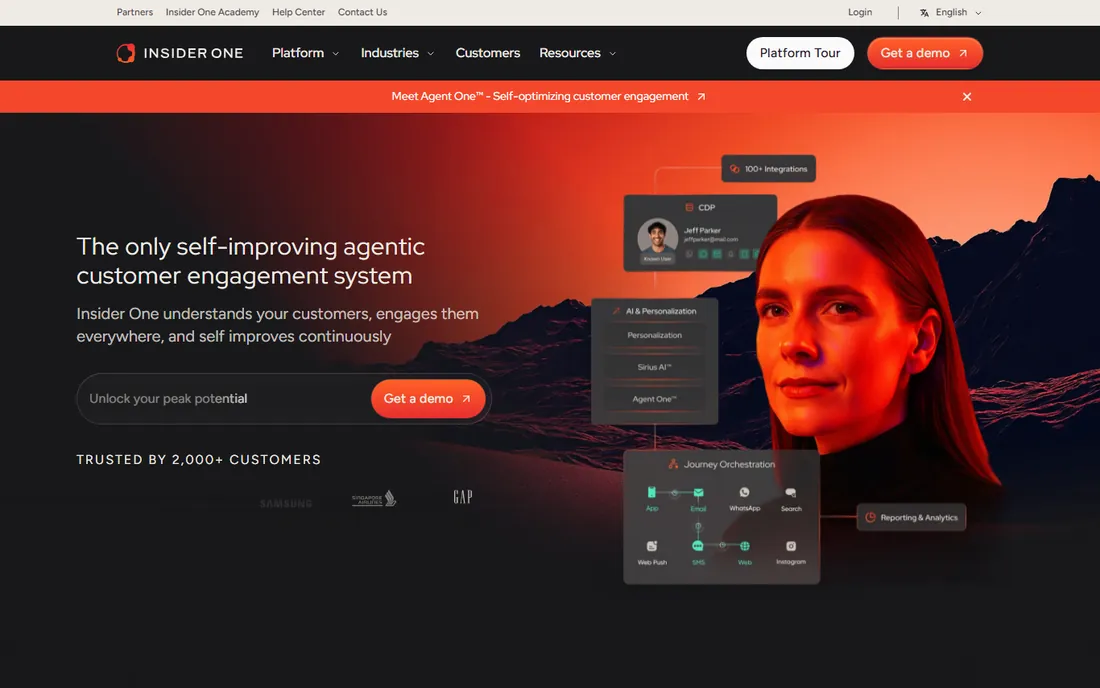
Insider delivers individualized experiences: predictive segments, personalized content and cross-channel journeys powered by AI, with particular strength in retail, travel and finance across EMEA and APAC.
Regional coverage varies. Insider fits enterprises wanting AI-led personalization without a multi-year implementation.
What we like- AI-driven personalization across web, app, email and messaging
- Strong in EMEA and APAC
- Fast time to value
Watch out for- Less brand recognition in North America
- Enterprise pricing is custom
What to check before you buy
Start with your CRM: native integration often decides between Salesforce, Oracle, Adobe and HubSpot. Map your channels: email-only needs differ from real-time app messaging.
Check data architecture: streaming platforms suit real-time personalization, batch suites suit nurture. Verify deliverability, compliance (GDPR, CCPA) and regional data residency. Finally, assess services: enterprise platforms need implementation partners, and their cost can exceed the license.
Making an enterprise rollout actually work
Buying the platform is the easy part. Most enterprise marketing implementations stumble on data, ownership and timelines, not on features. A few patterns separate the rollouts that deliver from the ones that stall.
Start with data before contracts. The platform is only as good as the customer data feeding it. Audit your sources early: CRM hygiene, event tracking coverage, consent records and identity matching across systems. Teams that discover mid-implementation that half their contacts lack consent status, or that purchase history lives in three disconnected systems, lose months. A data readiness assessment done before signing is the highest-return step in the whole project.
Assign one owner with real authority. Marketing platforms touch marketing, IT, data engineering, legal and sometimes customer service. Without a single accountable owner who can make calls across those groups, decisions stall. That owner needs budget authority and direct access to an executive sponsor, because the hard calls (retiring a legacy tool, enforcing a data standard) are political, not technical.
Phase the rollout. Trying to migrate every journey, segment and integration at once is how eighteen-month projects happen. Pick one high-value use case for phase one, often welcome and onboarding journeys or a single channel migration, prove value in ninety days, then expand. Each phase should have a clear definition of done and a named owner.
Budget for services honestly. License cost is typically about half the first-year spend. Implementation partners, data consultants, training and the internal hours of your own team add up fast. Get fixed-scope proposals for phase one, and ask customer references what they actually spent versus the initial quote.
Plan the team that runs it after go-live. A platform administered by whoever has spare time decays within a year. You need at minimum a platform admin, a data or integration owner, and content and journey builders. Decide whether those roles live in marketing, IT or a shared center of excellence, and hire or train before launch, not after.
Migrate, then decommission. The old ESP or automation tool stays alive "just in case" and quietly becomes permanent, doubling cost and splitting reporting. Put a sunset date for legacy systems in the project plan and hold to it.
Finally, define success in business terms before launch. "Launched the platform" is not a result. Tie the rollout to metrics finance respects: revenue per email, campaign cycle time, cost per acquisition, or churn among engaged segments. Report against that baseline quarterly. Platforms that can point to numbers get renewed; platforms that point to login counts get questioned.
How we chose
We selected enterprise marketing platforms with real enterprise customer bases and live products, spanning CRM suites and engagement specialists, using vendor sites, analyst reports and public reviews. Pricing is quote-based across the category, so all prices are See website. We did not run campaigns.
What to ask on the vendor demo
Demos show the happy path. The questions below surface the realities that decide whether a platform works for your team.
Ask to see your data, not theirs. Vendors demo on clean sample data. Ask them to ingest a sample of your actual contact file, with its duplicates, missing fields and messy consent flags, and build a segment live. How the platform handles dirty data tells you more than any feature checklist.
Ask who does the integration work. "We have an API and a partner network" is not an answer. Get names: which partner would implement your account, what similar clients they have done, and what the statement of work covers. Ask for two reference customers with a similar tech stack and call them.
Ask about identity resolution. How does the platform decide that an email subscriber, an app user and a loyalty member are the same person? What happens when the match is uncertain? Weak identity logic produces duplicate profiles, conflicting messages and broken attribution.
Ask about deliverability and sending infrastructure. Dedicated IPs, warm-up support, bounce handling and inbox placement tools matter at enterprise volume. Ask what happens during a reputation incident and who helps you recover.
Ask what costs extra. AI features, SMS and push volume, additional business units, sandbox environments, premium support and data storage overages all hide in the fine print. Build a three-year total cost model with realistic volumes before you compare quotes.
Ask about the exit. Data export formats, contract termination assistance and how long your historical data remains accessible after cancellation. You may never leave, but the answer reveals how the vendor treats customers.
Frequently asked questions
What is the difference between a marketing cloud and a marketing automation tool?
Marketing clouds bundle email, mobile, ads, analytics and often a CDP in one suite. Automation tools typically focus on email workflows and lead nurture. Enterprises often need both.
Salesforce vs Adobe vs Oracle: which enterprise suite?
Salesforce suits CRM-native teams; Adobe suits experience-led brands on its stack; Oracle Eloqua suits complex B2B. Match the suite to your existing systems.
What is cross-channel customer engagement?
Coordinated messaging across email, SMS, push, in-app and web based on one customer profile. Braze, Iterable and Insider specialize in it.
Do enterprise platforms include a CDP?
Many do: Salesforce Data Cloud, Adobe Real-Time CDP, Bloomreach Engagement and Insider all unify customer data. Check whether it is included or an add-on.
How long does implementation take?
Suite platforms often take months with partners; engagement specialists can launch in weeks. Budget services alongside licenses.
What should enterprises check for compliance?
GDPR and CCPA support, consent management, data residency options, SOC 2 and ISO certifications. Verify against your legal requirements.
How much does an enterprise marketing platform cost?
List prices are rarely published, but enterprise contracts typically run from fifty thousand to several hundred thousand dollars annually depending on contact volume, channels and modules. First-year costs often double once implementation services are included. Build a three-year total cost model with realistic volumes before comparing quotes, and ask references what they actually spent.
How long does implementation take?
Expect three to nine months for a full migration, depending on data complexity and the number of integrations. Engagement-focused tools can deliver a first use case in weeks; suite platforms replacing a legacy system take longer because of data migration and retraining. Phased rollouts with a working first phase inside ninety days keep momentum and executive support alive.
Sources we checked (8)
- https://www.salesforce.com/marketing/
- https://www.hubspot.com
- https://www.oracle.com/cx/marketing/automation/
- https://business.adobe.com/fi/products/campaign/adobe-campaign.html
- https://www.braze.com
- https://www.iterable.com
- https://www.bloomreach.com
- https://useinsider.com
Is your product missing or out of date?
We review this list regularly. Vendors can request a listing, send updated pricing or ask about featured placement.

Shihab Mia · Founder, Rankite
Shihab has 5+ years in B2B and SaaS SEO. He writes Rankite's software buying guides from pricing pages, documentation and public user reviews. More about Shihab.
 Salesforce Marketing Cloud
 HubSpot
 Oracle Eloqua
 Adobe Campaign
 Braze
Braze Iterable
 Bloomreach
 Insider