How we make this list: we compare pricing pages, product documentation and public user reviews. Rankite is independent; if a vendor ever pays for a featured spot, that listing is clearly labeled Partner.
Key takeaways
- EDC splits into enterprise platforms for pharma sponsors (Medidata Rave, Veeva, Oracle) and accessible tools for academic and mid-size teams (REDCap, Castor, OpenClinica, Medrio).
- REDCap is free to non-profit institutions in the REDCap Consortium, making it the default for academic and investigator-initiated research.
- ClinCapture has rebranded to Captivate, and Datatrak now operates powered by Fountayn. Evaluate under the current names.
- Pricing is quote-based across every commercial vendor. Budget for validation, study build services, and training on top of the license.
- Regulatory compliance (21 CFR Part 11, GDPR, HIPAA, GCP) is table stakes; differentiate on study build speed, site usability, and data management tooling.
Quick comparison
| Tool | Best for | Starting price | Free plan |
|---|
 REDCap REDCap | academic and non-profit research teams | Free (consortium membership) | Yes |
 Medidata Rave Medidata Rave | large pharma sponsors and global CROs | See website | No |
 Castor Castor | research teams wanting modern, AI-assisted EDC | See website | No |
 OpenClinica OpenClinica | academic centers and mid-size sponsors on grant budgets | See website | No |
 Veeva Vault EDC Veeva Vault EDC | life sciences companies standardized on Veeva Vault | See website | No |
 Oracle Clinical One Oracle Clinical One | sponsors wanting one unified eClinical platform | See website | No |
 Medrio Medrio | small and scaling trial teams | See website | No |
 Datatrak Datatrak | sponsors wanting EDC with full-service data management | See website | No |
 Captivate Captivate | unified EDC with eConsent, RTSM, and coding in one suite | See website | No |
Is your product missing or out of date?
We review this list regularly. Vendors can request a listing, send updated pricing or ask about featured placement.
The best electronic data capture software
Starting priceFree (consortium membership)
Free planYes
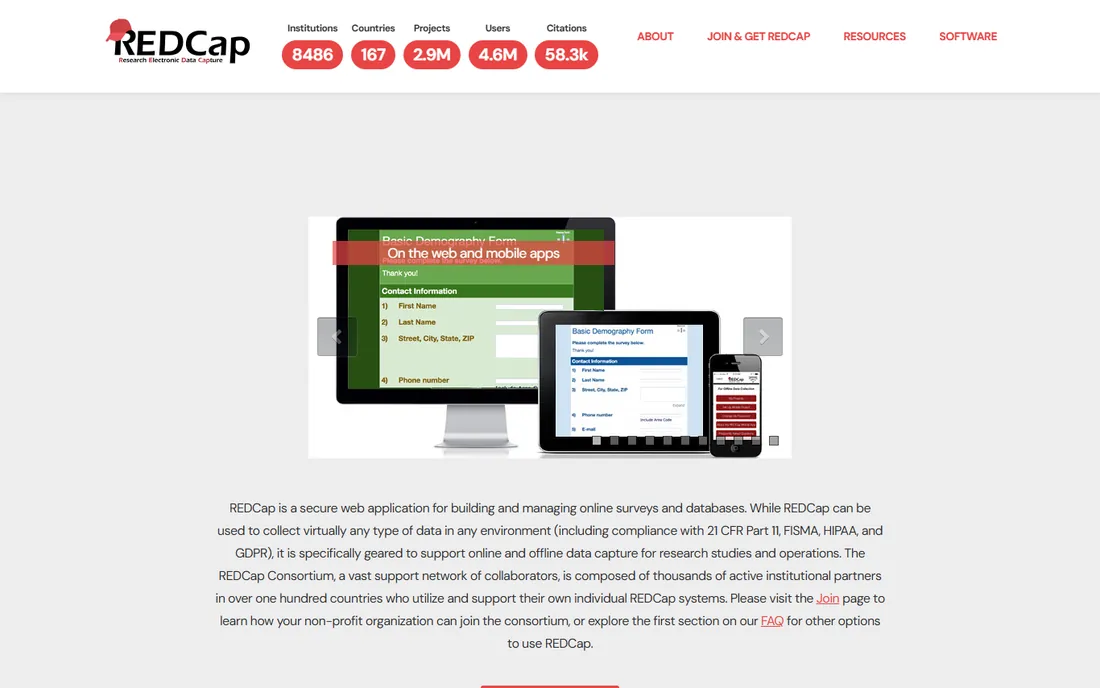
REDCap is the reason most academic medical centers never buy commercial EDC. Developed at Vanderbilt and free to non-profit organizations that join the REDCap Consortium, it handles surveys, multi-site studies, secure data collection, and exports to every common statistics package. More than 57,000 journal articles cite it, which tells you how deeply embedded it is in published research.
The model has boundaries worth understanding. Access runs through your institution's license agreement, not individual signups, and the feature set targets investigator-initiated research rather than adaptive Phase III trials with complex randomization. But for registries, observational studies, surveys, and academic trials, nothing touches the value. If your institution already has REDCap, the first question in any EDC evaluation should be why you need anything else.
What we like- Free to non-profit organizations in the consortium
- Enormous global user community
- Proven reliable since 2004
Watch out for- Institutional license required, no individual access
- Interface shows its age
- Not designed for complex commercial trials
Starting priceSee website
Free planNo
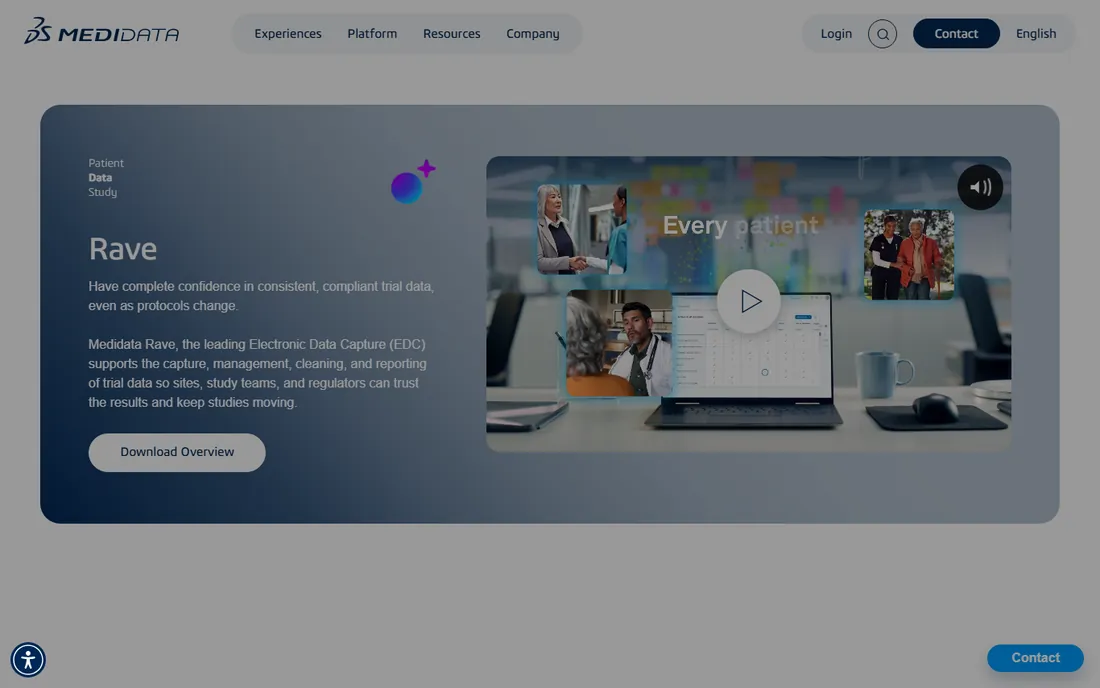
Medidata Rave is the EDC the industry measures itself against. The company's own materials cite 1.8 million users and more than 35,000 studies, and the 2025 ISR benchmarking report named it the most preferred EDC based on independent sponsor evaluations. Sites know it, CROs staff for it, and regulators have seen it ten thousand times. That familiarity is a genuine operational asset: site training burden drops when coordinators already know the system.
Rave has also adapted downward. Rave Lite offers a focused, cost-effective version for Phase I, Phase IV, and medical device post-market studies, and Rave Companion connects EHR data directly into EDC forms to cut re-entry. The honest catch is cost and complexity: this is enterprise software with enterprise services attached. For a pivotal multi-country trial, Rave is the safe choice. For a 50-patient investigator study, it is overkill.
What we like- Industry-standard EDC with the deepest site familiarity
- #1 preferred EDC in the 2025 ISR benchmark
- Rave Lite serves smaller studies
Watch out for- Enterprise pricing and implementation
- Complexity reflects its power
- Smaller teams may find it heavyweight
Starting priceSee website
Free planNo
Castor is the modern challenger built for teams that find the incumbents slow. The platform covers EDC, eConsent, and eCOA/ePRO on one system, and the headline feature is Castor Catalyst: AI that reads source documents and EHR data and proposes structured eCRF values, with a human reviewer confirming every result before it enters the record. The company reports more than 19,000 studies and 900-plus customers, with strong review scores.
The positioning lands between REDCap and Rave: more capable and compliant than free academic tools, faster to deploy and easier to use than enterprise EDC. Academic researchers get an affordable modern option, while biotech and medtech companies get self-service study builds without a data management army. Pricing is quote-based, so the value story depends on your study count and complexity. If AI-assisted data extraction matters to your workflow, Castor is the vendor pushing hardest on it.
What we like- Self-service study builds in weeks
- AI-powered source data extraction with human review
- Strong ratings on Capterra and G2
Watch out for- Younger than the enterprise incumbents
- Quote-based pricing
- AI features add a validation conversation
Starting priceSee website
Free planNo
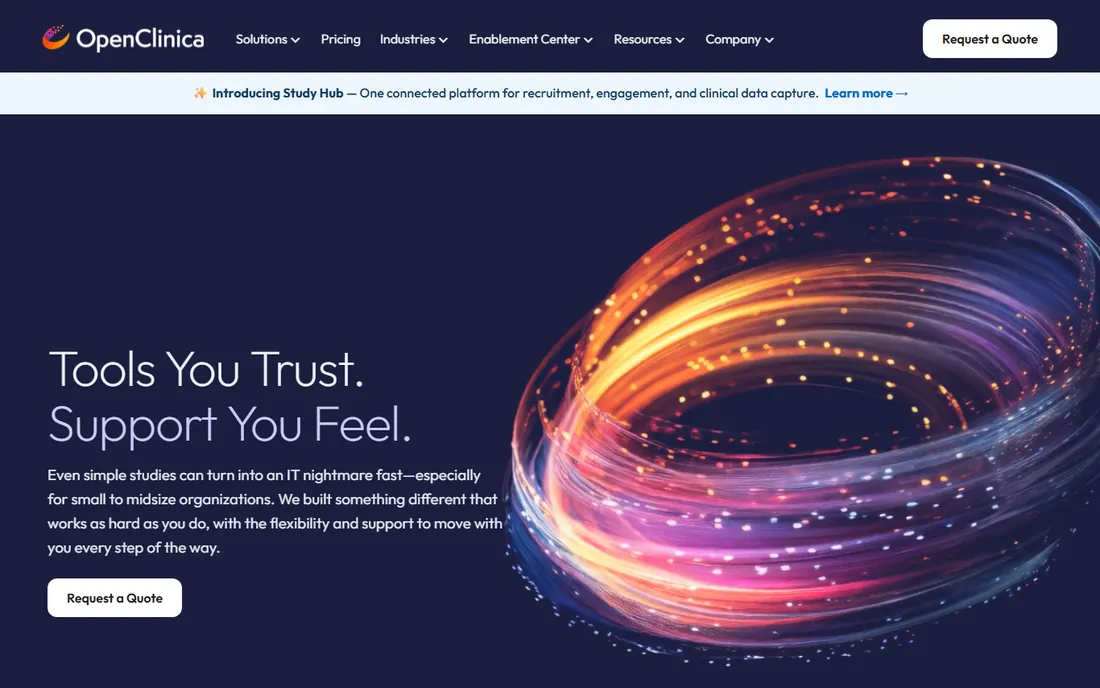
OpenClinica has served the academic and mid-market research world since the mid-2000s, growing out of the open-source clinical trial software movement. The current commercial offering targets university researchers, academic medical centers, sponsors, and CROs with a modular approach: build the study yourself with templates and tools, or send the protocol and let their experts build a complete validated study for free.
The company explicitly prices for grant budgets, which matters enormously in academic research where the EDC line item competes with actual science. With use in more than 15,000 studies and an open-source Community Edition still available for self-hosting, OpenClinica offers an escape from vendor lock-in that the enterprise platforms do not. It will not match Rave's global site network or Veeva's suite integration, but for investigator-initiated and mid-size commercial studies, the value is hard to beat.
What we like- Flexible pricing built for grant budgets
- Build-it-yourself or free expert study builds
- Long open-source heritage
Watch out for- Smaller vendor than the enterprise names
- Enterprise features trail Rave and Veeva
- Community edition requires self-hosting
#5
Veeva Vault EDC
Best for: life sciences companies standardized on Veeva Vault
Visit veeva.com
Starting priceSee website
Free planNo
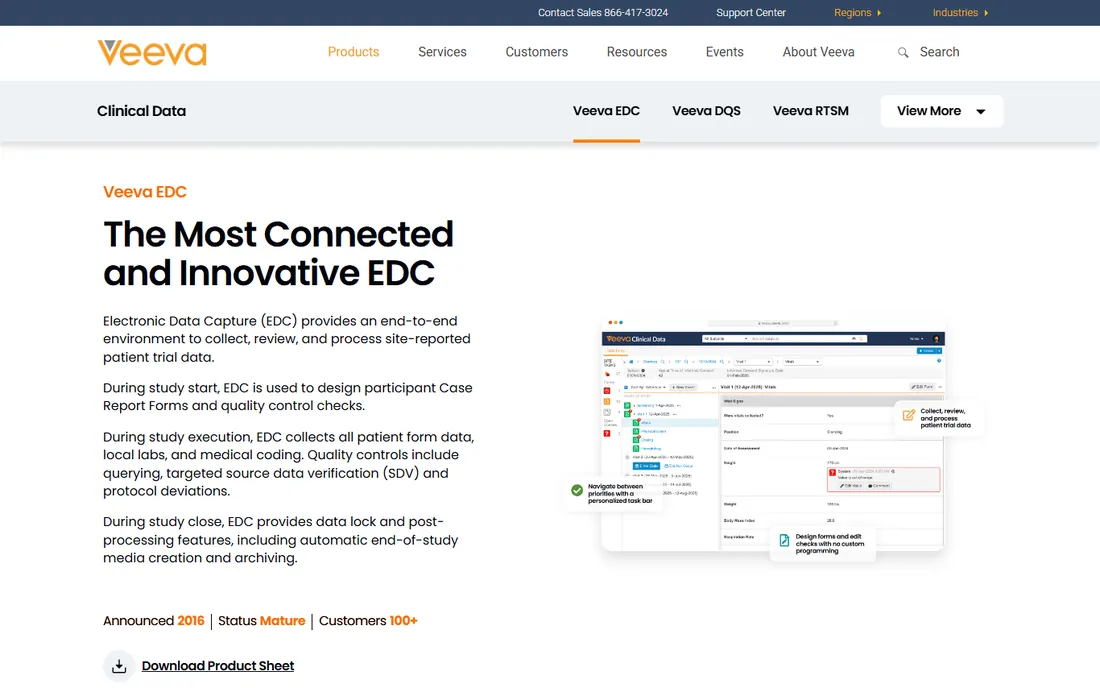
Veeva Vault EDC is the fastest-growing challenger to Rave's dominance. The company reports more than 100 customers and says eight of the top 20 biopharmas have switched to Veeva EDC, with customer-reported results like 50% faster study builds. The strategic argument is the suite: EDC shares the Vault platform with CTMS, eTMF, study startup, and eSource, so data and documents flow without the integrations that multi-vendor stacks require.
The product was designed around a real pain point: protocol amendments. Veeva claims study changes implement up to nine times faster than legacy approaches, and anyone who has lived through a mid-study amendment on an older EDC knows why that matters. The catch is ecosystem gravity. Veeva EDC shines brightest inside a Vault-standardized organization; as a standalone purchase against an entrenched Rave shop, the switching case needs to be built on the amendment and build-speed story.
What we like- Native integration across the Vault clinical suite
- Strong momentum with top biopharma
- Modern architecture built for amendments
Watch out for- Best value requires the broader Vault ecosystem
- Quote-only enterprise pricing
- Smaller site familiarity than Rave
#6
Oracle Clinical One
Best for: sponsors wanting one unified eClinical platform
Visit oracle.com
Starting priceSee website
Free planNo
Oracle Clinical One takes the unification argument further than anyone: one cloud platform where you build the study once and enter data once, spanning data collection, randomization and trial supply management, and the surrounding trial operations. Oracle Health Sciences has been in EDC for two decades, and Clinical One is its answer to the complaint that study teams are stitching together siloed point solutions.
For a sponsor tired of managing EDC, IRT, and CTMS vendors separately, the single-platform story has real appeal, and Oracle's global infrastructure supports the largest trials. The trade-off is the one that follows every Oracle enterprise product: significant implementation effort, quote-based pricing, and a sales process built for large organizations. If your strategy is best-of-breed point solutions, look elsewhere. If it is platform consolidation, Clinical One belongs on the shortlist.
What we like- Build once, enter data once across the trial lifecycle
- Combines data collection with randomization and supplies
- Oracle's enterprise scale
Watch out for- Broad platform can mean complex implementations
- Pricing is enterprise quote-only
- Oracle's site navigation buries product detail
Starting priceSee website
Free planNo
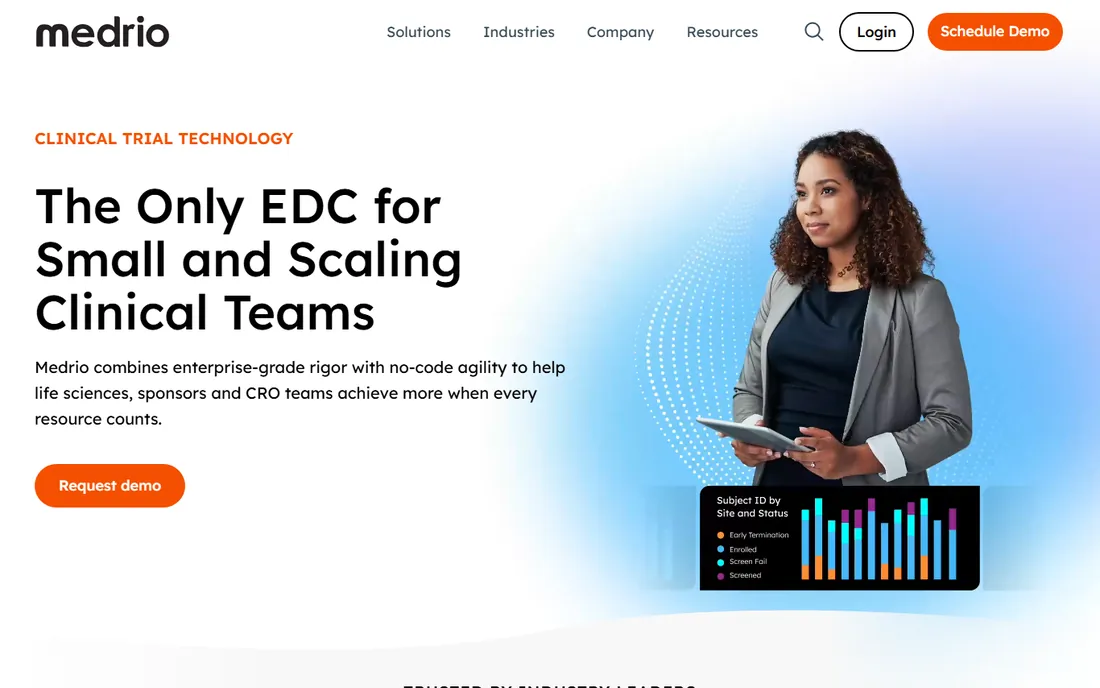
Medrio has spent two decades serving the teams the enterprise vendors overlook: small sponsors, emerging biotechs, and CROs running lean operations. The pitch is no-code study builds that go live in days instead of months, with EDC, ePRO/eCOA, eConsent, and randomization in one platform that data managers can configure without programmers. The company cites more than 375 regulatory approvals supported by its software.
This is the practical middle ground for teams that have outgrown REDCap but cannot justify Rave. The expert services team handles data management support from build through database lock, which matters when you do not have a deep in-house data management bench. Medrio will not win a 200-site global Phase III against Rave on site familiarity, but for early-phase, device, and mid-size studies, the speed-to-startup story is compelling.
What we like- No-code study builds in days
- Purpose-built for lean teams
- 20+ years of clinical use with 375+ regulatory approvals
Watch out for- Less suited to massive global programs
- Quote-based pricing
- Brand recognition lags the big two
#8
Datatrak
Best for: sponsors wanting EDC with full-service data management
Visit datatrak.com
Starting priceSee website
Free planNo
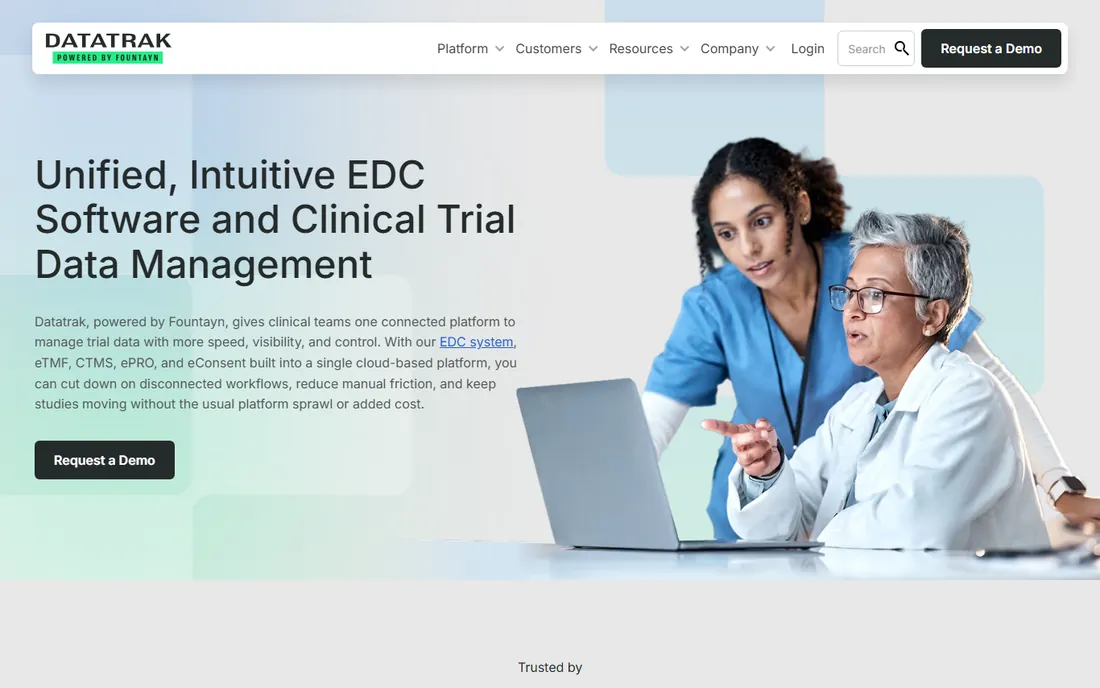
Datatrak is one of the original EDC pioneers, founded in 1991, and today operates powered by Fountayn with a unified eClinical platform covering EDC, eTMF, CTMS, eConsent, ePRO, and randomization. The company cites more than 10,000 studies across 83 countries, with compliance spanning 21 CFR Part 11, GDPR, GCP, HIPAA, and CDISC standards.
The differentiator is the services layer. Fountayn provides the clinical operations and data management team alongside the software, from trial design through study closeout, which suits sponsors that want a partner rather than just a platform. The corporate history (Datatrak plus Fountayn) means buyers should confirm exactly which entity contracts and supports them, but the combined offering covers the full trial data lifecycle. For sponsors that value a full-service relationship over pure software, Datatrak's model is distinctive.
What we like- 35+ years of combined EDC experience
- Unified platform with eTMF, CTMS, and RTSM
- Full-service team behind the software
Watch out for- Brand has been through corporate changes
- Smaller marketing presence than competitors
- Enterprise sales process
#9
Captivate
Best for: unified EDC with eConsent, RTSM, and coding in one suite
Visit captivate.org
Starting priceSee website
Free planNo
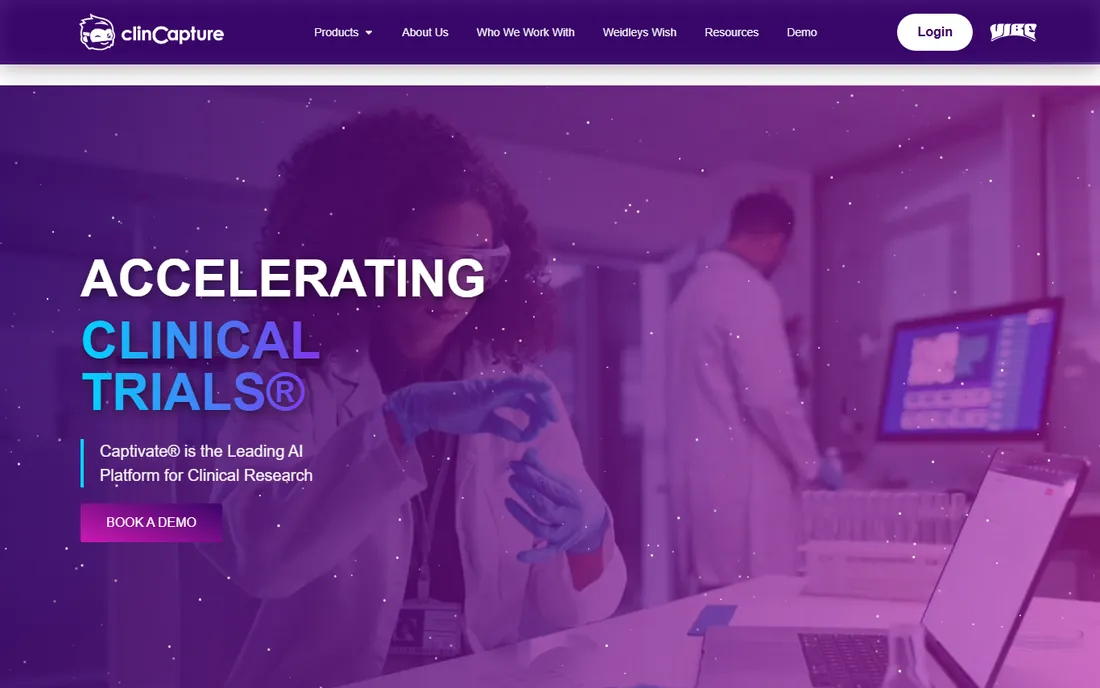
Captivate is the current name for the company formerly known as ClinCapture (built by Clinovo), now positioned as an AI-powered clinical trial platform. The suite covers Captivate EDC with no-code study design, ePRO and eConsent for decentralized trials, randomization and trial supply management, medical coding with full traceability, and eTMF, all presented as one unified system instead of stitched-together tools.
The heritage matters: ClinCapture built its reputation as an accessible, validated EDC that smaller sponsors and CROs could deploy without enterprise budgets, and the rebrand extends that into a full platform story. For teams evaluating mid-market EDC that also need eConsent and RTSM without adding vendors, Captivate offers a coherent single-vendor path. As with any rebrand, confirm the product roadmap and support structure directly, but the platform itself is established.
What we like- Single unified system across EDC, ePRO, eConsent, RTSM, and medical coding
- No-code study design
- Free demo available
Watch out for- Rebrand from ClinCapture may confuse the market
- Smaller install base than incumbents
- Enterprise pricing by quote
How we chose
We researched vendor homepages and product documentation, opening each site to confirm the current brand and URL. We cross-checked scale and positioning claims against industry sources including the 2025 ISR benchmarking report, company press releases, trade press (Applied Clinical Trials, BioSpace), and public review data. Where renames occurred (ClinCapture to Captivate, Datatrak powered by Fountayn), we list the current name and note the change once. Pricing is quote-based across every commercial vendor, so we say so rather than inventing numbers. We did not test any of these tools hands-on.
What to nail down before you commit
Match the EDC to the study, not the other way around
The biggest mistake in EDC selection is buying the enterprise standard for a study that does not need it, or stretching an academic tool into a regulated pivotal trial. REDCap and OpenClinica serve investigator-initiated research beautifully. Medrio and Castor fit emerging sponsors and mid-size studies. Rave, Veeva, and Oracle serve global pivotal programs. Map your next three years of studies, not just the current one.
Study build speed is the metric that matters
License cost gets the attention, but study build time determines your timeline. Ask every vendor how long a typical study takes from protocol to first patient in, who does the build, and how mid-study amendments are handled. The vendors winning new business (Castor, Veeva, Medrio) all sell against slow, expensive study builds, and they should prove it with customer references.
Validate the validation
Every vendor claims 21 CFR Part 11 compliance, but the depth of validation documentation varies enormously. Ask for the validation package, the audit history, and how the vendor handles re-validation after upgrades. For FDA-regulated trials, this documentation is not optional, and a vendor that hesitates here is telling you something.
Sites decide adoption
The best EDC is the one sites will actually use well. Ask for site satisfaction data, training burden estimates, and EHR integration options. Rave's advantage is that sites already know it; challengers have to earn adoption with genuinely better usability. Include site coordinators in the evaluation, not just data managers.
The AI question is now unavoidable
Every EDC vendor spent 2026 adding AI to the story, and buyers need to separate substance from slides. Castor's Catalyst uses AI to propose eCRF values from source documents with mandatory human review. Medidata is pushing AI-assisted study configuration and EHR-to-EDC data flow. Veeva introduced a study builder agent. These are real workflow changes, not chatbots bolted onto dashboards.
The evaluation question is governance. In regulated research, every AI-suggested data point needs an audit trail, a human decision, and a validation story the inspector accepts. Ask vendors to show the audit trail for an AI-generated entry, explain the validation approach for the AI component, and describe what happens when the model is wrong. The vendors with concrete answers are building the future of data management. The ones with vague promises are building marketing.
Frequently asked questions
What is electronic data capture software?
EDC software is used in clinical trials to collect patient data electronically through case report forms, replacing paper CRFs. Sites enter data, data managers run validation checks and queries, and sponsors monitor study progress in real time. Regulated EDC systems comply with FDA 21 CFR Part 11 and similar standards.
How much does EDC software cost?
Commercial EDC is quote-based, typically priced per study with implementation and validation services on top. Enterprise platforms run into six figures per study; mid-market tools cost substantially less. REDCap is free to non-profit institutions in the REDCap Consortium. Always budget for study build services, training, and validation, not just the license.
What is the difference between EDC and CTMS?
EDC captures the clinical data itself (patient forms, lab values, adverse events). CTMS (clinical trial management system) manages the operational side: site management, enrollment tracking, budgets, and timelines. Many vendors now bundle both, but they solve different problems.
Is REDCap really free?
REDCap is free to non-profit organizations that join the REDCap Consortium through an institutional license agreement with Vanderbilt. Individual licenses are not available, and for-profit companies cannot use it under the standard terms. Your institution's REDCap administrator handles access.
What is 21 CFR Part 11 and why does it matter?
It is the FDA regulation governing electronic records and electronic signatures in clinical trials. Compliant EDC systems provide audit trails, access controls, and validated electronic signatures so that electronic data is acceptable to regulators. Any EDC used in an FDA-regulated trial must address it.
How long does it take to build a study in an EDC system?
It ranges from days to months. No-code platforms like Medrio and Castor advertise study builds in days to weeks. Enterprise platforms like Rave typically take longer for complex global studies but offer pre-validated libraries that speed repeat builds. Ask vendors for build timelines specific to your study complexity.
Sources we checked (10)
- https://projectredcap.org
- https://www.medidata.com/en/data-experience/edc-systems/
- https://castoredc.com/
- https://www.openclinica.com
- https://www.veeva.com/EDC
- https://www.oracle.com/clinical-one
- https://medrio.com/
- https://www.datatrak.com
- https://captivate.org/
- https://www.prnewswire.co.uk/news-releases/six-of-the-top-20-pharma-select-veeva-vault-edc-as-company-standard-for-new-trials-301754063.html
Is your product missing or out of date?
We review this list regularly. Vendors can request a listing, send updated pricing or ask about featured placement.

Shihab Mia · Founder, Rankite
Shihab has spent more than a decade helping SaaS and e-commerce brands grow through search. He writes Rankite's software buying guides from pricing pages, documentation and public user reviews. More about Shihab.