How we make this list: we compare pricing pages, product documentation and public user reviews. Rankite is independent; if a vendor ever pays for a featured spot, that listing is clearly labeled Partner.
Key takeaways
- Process simulation software lets you test changes to a factory, warehouse, clinic, or supply chain in a virtual model before spending real money.
- AnyLogic stands out for combining discrete event, agent-based, and system dynamics modeling in one platform.
- Simio and FlexSim are strong picks for manufacturing and logistics teams that want rich 3D visualization.
- JaamSim is a genuinely capable free, open-source option for teams with technical skills and no budget.
- Most commercial tools in this category use quote-based pricing, so plan for a sales conversation and a trial.
Quick comparison
| Tool | Best for | Starting price | Free plan |
|---|
 AnyLogic AnyLogic | Complex systems needing multiple modeling methods | See website | Yes |
 Simio Simio | Manufacturing and logistics digital twins | See website | Free trial |
 Arena Simulation Arena Simulation | Classic discrete event projects in established industries | See website | Free trial |
 FlexSim FlexSim | 3D factory, warehouse, and healthcare models | See website | Free trial |
 Simul8 Simul8 | Teams adopting simulation for process improvement | See website | Free trial |
 anyLogistix anyLogistix | Supply chain network design and inventory policy | See website | Yes |
 JaamSim JaamSim | Budget-conscious teams and researchers | Free | Yes |
 ExtendSim ExtendSim | Process industries and engineering teams | See website | Free trial |
Is your product missing or out of date?
We review this list regularly. Vendors can request a listing, send updated pricing or ask about featured placement.
The best process simulation software
Starting priceSee website
Free planYes
AnyLogic earns its place at the top of most shortlists because it handles three modeling methods in one package. If your team models both factory flows and market behavior, you do not need two tools. The industry-specific libraries for rail, road traffic, pedestrians, and material handling mean many models start from ready-made blocks instead of blank pages.
Where it fits best is complex, mixed systems: supply chains drawn on real GIS maps, plants where people and machines interact, or operations with both physical and economic layers. The cloud option lets stakeholders run models without installing anything, which helps when the people who need answers are not the people who build models. Budget time for training. This is not a tool you open on Monday and master by Friday.
What we like- Combines discrete event, agent-based, and system dynamics in one tool
- Strong industry libraries for logistics, rail, and manufacturing
- Cloud option lets stakeholders run models in a browser
Watch out for- Quote-based pricing with no public price list
- Steep learning curve for teams without a dedicated modeler
#2
Simio
Best for: Manufacturing and logistics digital twins
Visit simio.com
Starting priceSee website
Free planFree trial
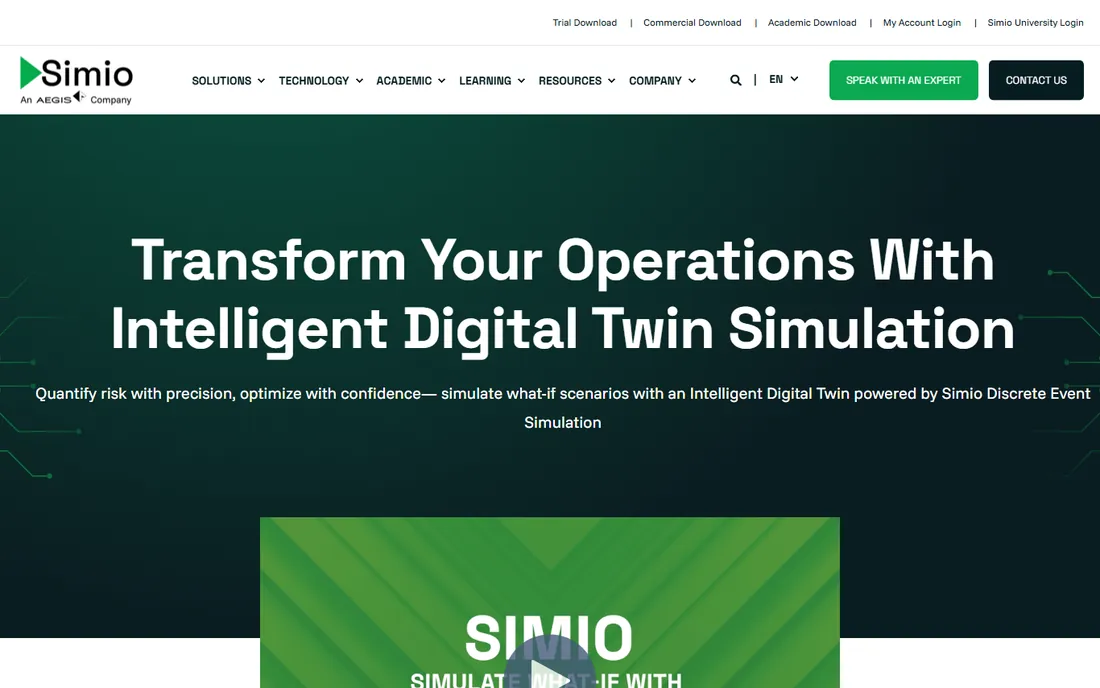
For operations teams that live in manufacturing and logistics, Simio is the name that comes up most often. Its object-based approach and 3D animation make it easy to show a plant manager exactly what a new layout will do before anything is built. The digital twin positioning is more than marketing: models can connect to live data and keep reflecting the real operation as conditions change.
Simio fits companies that want one platform for both simulation and scheduling, since the same model logic can drive planning decisions. The trade-offs are familiar in this category. Pricing requires a quote, and the platform leans Windows. If your world is factories, warehouses, or healthcare operations, Simio deserves a place on the demo list.
What we like- Object-based modeling with strong 3D animation
- Digital twin features connect models to live data
- Application templates speed up common projects
Watch out for- Quote-based pricing
- Windows-focused, which limits Mac-based teams
Starting priceSee website
Free planFree trial
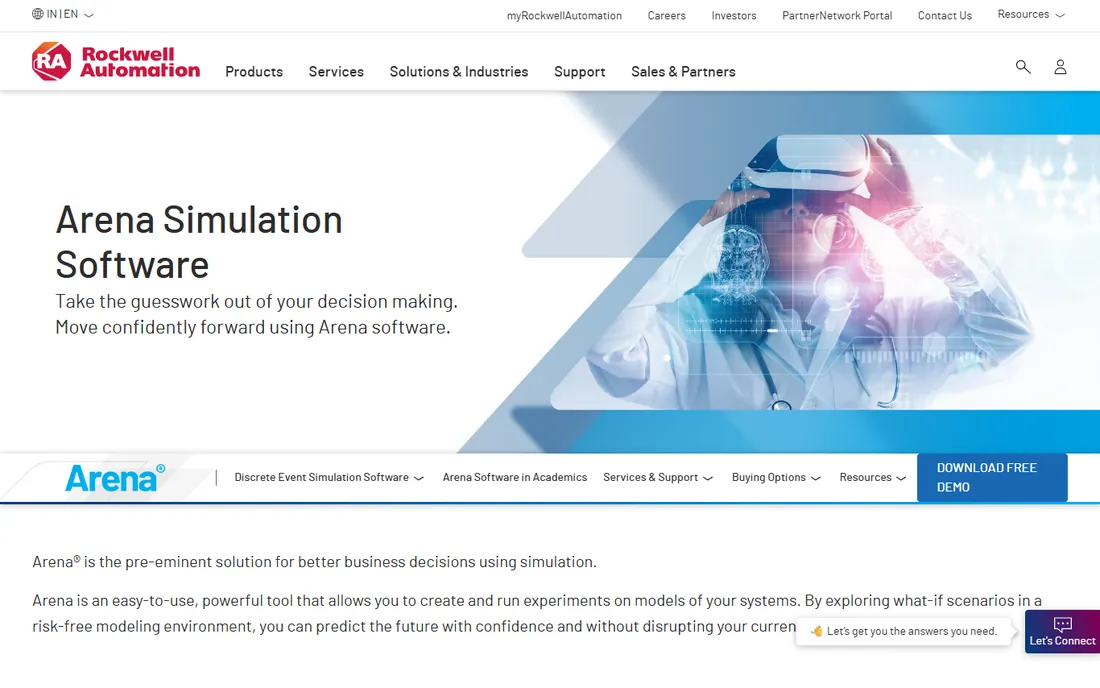
Arena has been around longer than most competitors, and it shows in the best way. There is deep industry adoption, extensive training material, and a flowchart approach that new modelers pick up quickly. Because it comes from Rockwell Automation, it pairs naturally with plants already running Rockwell products.
The honest catch is that the product feels its age. The interface is not as modern as FlexSim or Simio, and if your project centers on agent-based modeling, AnyLogic is a better fit. Still, for classic discrete event work such as call centers, clinics, and production lines, Arena is a proven and well-supported pick.
What we like- Long track record with deep training resources
- Flowchart modeling is easy for new users
- Strong fit with Rockwell manufacturing environments
Watch out for- Interface feels dated next to newer rivals
- Not the strongest choice for agent-based modeling
Starting priceSee website
Free planFree trial
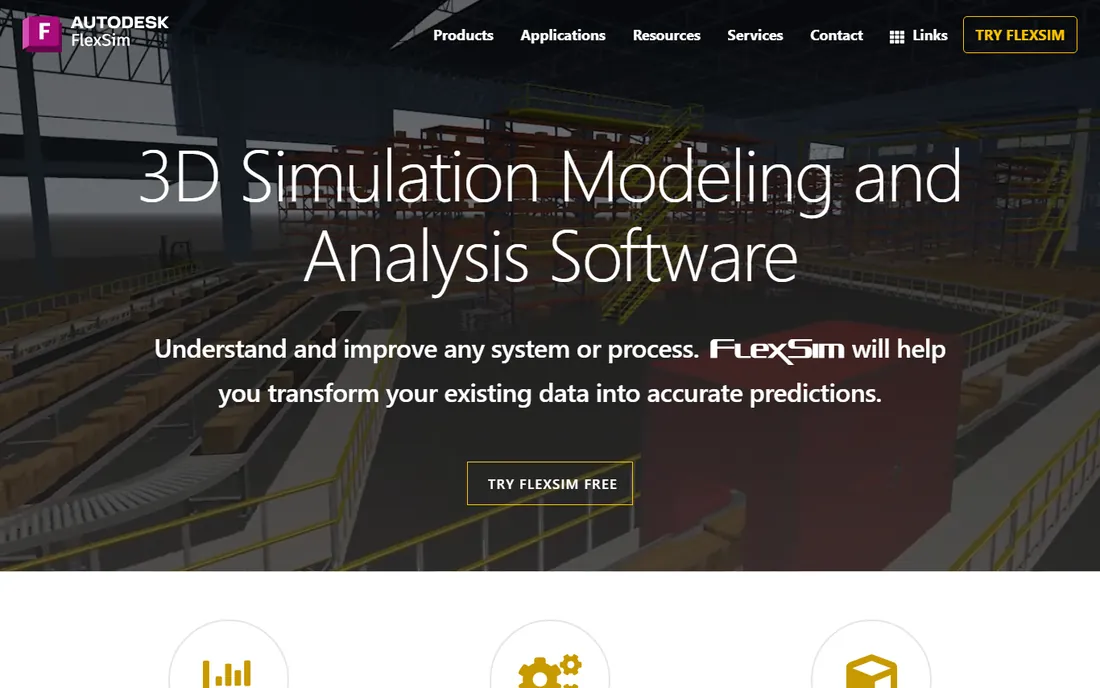
Walk into many US manufacturing engineering departments and FlexSim is already on the machines. Its 3D drag-and-drop environment makes model building feel closer to designing a layout than writing code. The object libraries cover manufacturing, healthcare, warehousing, and logistics, and the community forum is genuinely active when you get stuck.
FlexSim works best for teams that want visual realism without a big coding requirement. A free trial is available, which is worth using before engaging sales. The limitations are the usual ones: Windows-only deployment and no public pricing. If 3D presentation to executives matters, FlexSim is one of the strongest options here.
What we like- Drag-and-drop 3D environment with little coding needed
- Solid object libraries for manufacturing, healthcare, and logistics
- Active user community
Watch out for- Windows-only
- Quote-based pricing means a sales conversation
#5
Simul8
Best for: Teams adopting simulation for process improvement
Visit simul8.com
Starting priceSee website
Free planFree trial
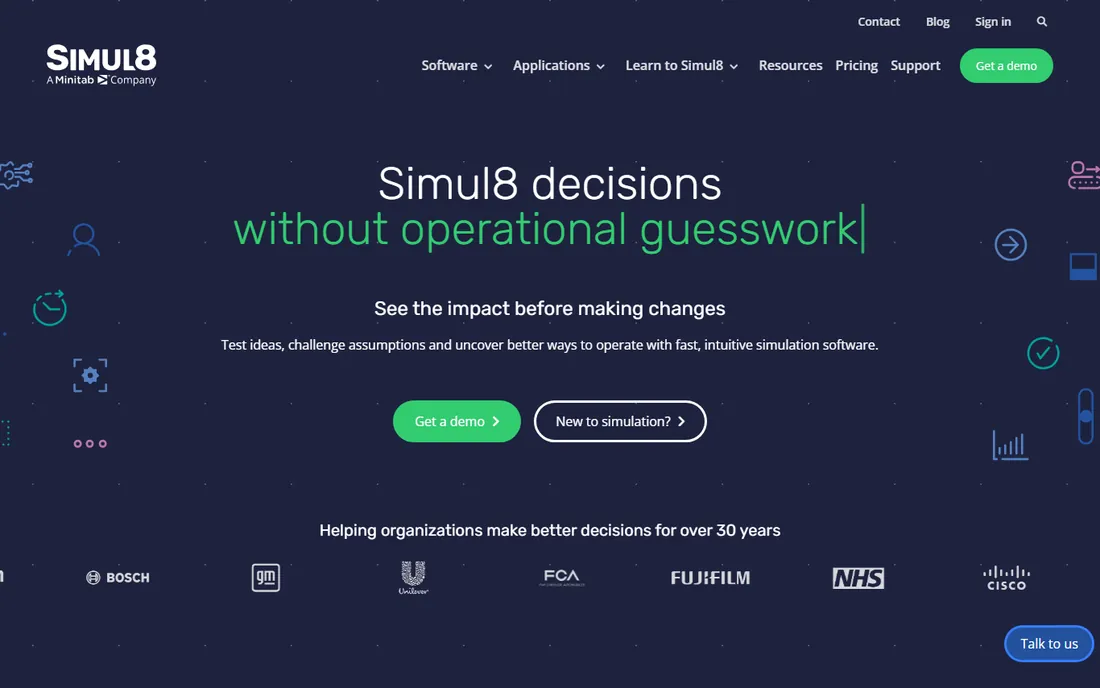
Simul8 positions itself as simulation for everyday decisions, not just for specialists. The interface is more approachable than most in this category, and the company leans into process improvement use cases like healthcare operations and contact centers. Models run fast, and sharing links let stakeholders open results in a browser without installing anything.
The trade-off is depth. If your work centers on agent-based modeling or continuous processes, AnyLogic or ExtendSim give you more room. But if the goal is getting more people in the company to actually use simulation, Simul8 lowers the barrier better than almost anyone else on this list.
What we like- Friendlier interface than most rivals
- Fast model building with easy stakeholder sharing
- Now backed by Minitab analytics
Watch out for- Less suited to heavy agent-based or continuous modeling
- Advanced users may outgrow it
Starting priceSee website
Free planYes
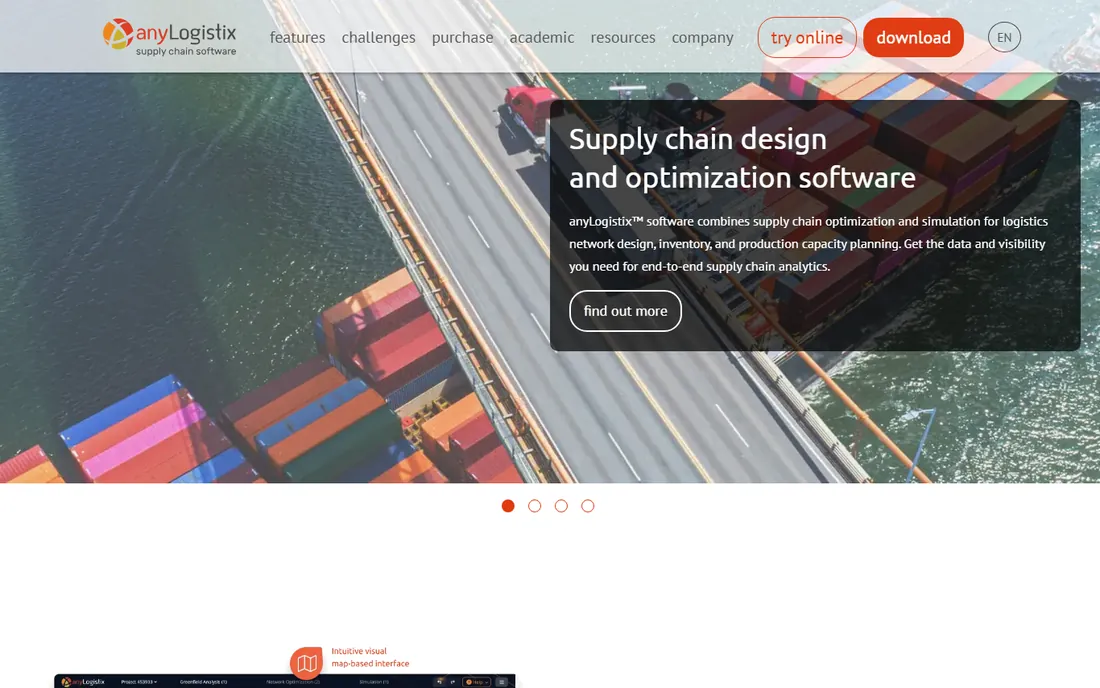
If your problem is specifically a supply chain, anyLogistix is the most focused tool on this list. It combines network optimization (where should the distribution centers go) with dynamic simulation (how will the network behave month to month). Most general simulators do not offer both in one package. The map-based interface is built for logistics people, not programmers.
The catch is scope. It will not model a factory floor the way FlexSim does, and the free Personal Learning Edition is meant for education and evaluation rather than commercial projects. For logistics network design, inventory policy testing, and supply chain risk analysis, it is purpose-built and worth the look.
What we like- Combines network optimization with dynamic simulation in one tool
- Free Personal Learning Edition for evaluation
- Map-based interface built for logistics
Watch out for- Narrow scope compared with general simulators
- The free edition is for learning and evaluation only
Starting priceFree
Free planYes
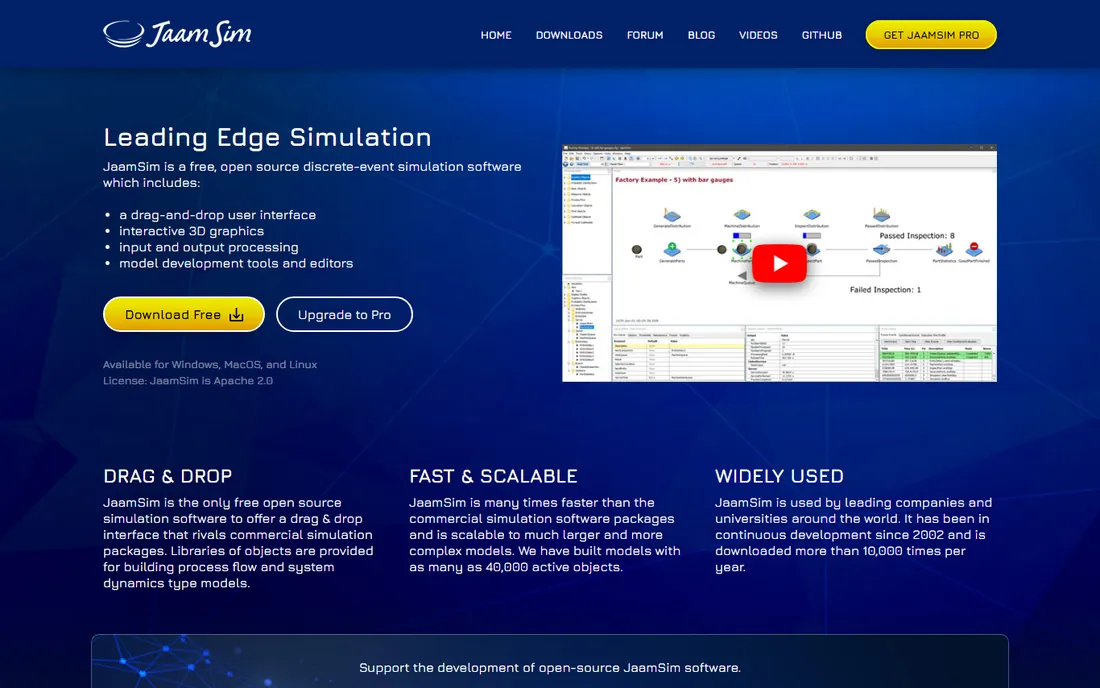
JaamSim is the open-source outlier on this list. It is free under the Apache 2.0 license, Java-based, and more capable than its price tag suggests. The 3D interface is genuinely good, it handles large models well, and because it is open source you can extend and integrate it without license negotiations.
The honest catch is support. You are relying on community forums and documentation, not a vendor success team, and some of the polish of commercial tools is missing. It also helps to have Java skills on the team for advanced work. For universities, researchers, and companies that want full control without a budget line, it is hard to argue with free.
What we like- Completely free and open source under Apache 2.0
- Strong 3D graphics for a free tool
- Scales to large models with fast execution
Watch out for- No vendor support team, only community and docs
- Less polish than commercial rivals
Starting priceSee website
Free planFree trial
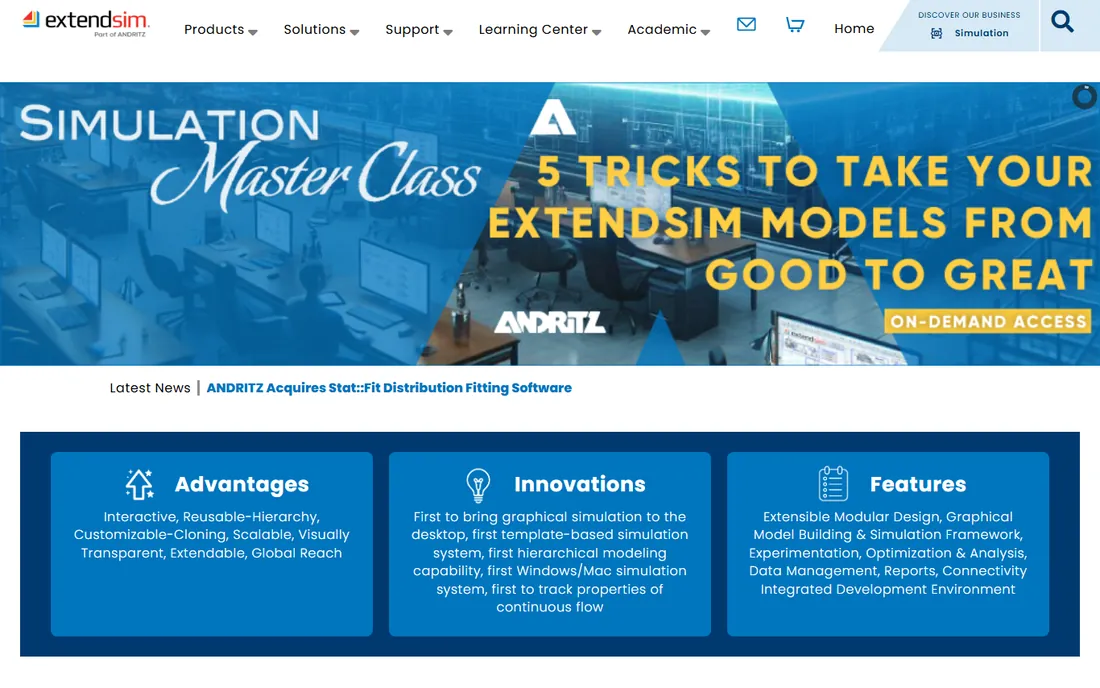
ExtendSim is the veteran that engineers either know well or should. It covers discrete event, continuous, discrete rate, and agent-based modeling, sold in tiered packages so a team doing continuous process work does not pay for capabilities it will never use. Its Excel integration and database connectivity are strong, which matters when your input data lives in spreadsheets.
The downsides will sound familiar by now. The interface feels old-school, deployment is Windows-only, and pricing requires a conversation with sales. For process industries, chemical plants, and teams with legacy simulation models, ExtendSim remains a dependable choice with a long history behind it.
What we like- Covers discrete event, continuous, discrete rate, and agent-based modeling
- Tiered packages so you buy only what you need
- Strong Excel and database integration
Watch out for- Dated interface and Windows-only
- Quote-based pricing
How we chose
We started with the vendor's own pricing pages, product documentation, and feature lists to confirm what each tool actually does and what it costs. We then checked public reviews on G2, Capterra, and Reddit threads from operations and industrial engineering professionals to see how each product behaves in real projects. We weighed the modeling methods supported, the quality of industry libraries, integration options, and how well each tool fits small and mid-size company teams rather than only large enterprises. We did not claim hands-on testing of any product.
How to pick the right simulator for your team
Start by matching the modeling method to your problem. Discrete event simulation fits queues and flows: call centers, clinics, production lines. Agent-based modeling fits systems where individual actors make decisions: markets, crowds, supply chain partners. System dynamics fits high-level policy questions. If you need more than one method, that narrows the field fast.
Count the real cost
License fees are only part of it. Factor in training time, the salary of whoever builds the models, and any consulting you will need for the first project. A cheaper tool that your team cannot use is more expensive than a pricier one they master. Ask vendors what a typical first project costs in services, not just software.
Check who will build the models
The best software is the one your team will actually open. If you have industrial engineers with modeling experience, a deep tool like AnyLogic or ExtendSim pays off. If the models will be built by operations managers squeezing it between other duties, favor the friendlier options like Simul8 or FlexSim. Request a trial built around one of your real problems, not the vendor's polished demo.
Mistakes to avoid when buying your first simulator
The most common mistake is buying for the demo. Vendor demos use clean data and simple models. Your data will be messier, so ask how the tool handles missing data and how long imports really take.
Another mistake is ignoring the audience. A model that only the builder can run has limited value. Check how each tool shares results with executives and frontline managers, because the browser-based sharing of some tools can matter more than an extra modeling feature. Finally, do not skip the reference check. Ask the vendor for two customers in your industry and actually call them.
Frequently asked questions
How much does process simulation software cost?
Most commercial tools in this category use quote-based pricing, and annual costs for a single professional license commonly run into five figures. Open-source options like JaamSim are free. Always budget for training and possibly consulting on your first project, which can rival the license cost.
Do we need a dedicated simulation engineer?
For complex models, yes, at least part time. Friendlier tools let operations managers build basic models, but credible results still require someone who understands statistics, data validation, and experimental design. Many companies start with a consultant and train an internal person alongside them.
Can simulation software connect to our ERP or live data?
Most commercial tools on this list can import from Excel, CSV files, and databases, and several support live data connections for digital twin use cases. Check the specific connectors for your ERP system during the trial, because integration quality varies more than marketing suggests.
What is the difference between discrete event and agent-based modeling?
Discrete event modeling tracks entities moving through a process over time, like patients through a clinic. Agent-based modeling gives individual agents their own rules and behavior, like shoppers in a market. Some tools do both, which matters if your problems span both styles.
Is open-source simulation software good enough for business use?
It can be. JaamSim handles serious modeling work and costs nothing. The trade-off is support: you depend on community help and documentation instead of a vendor team. Companies with strong technical staff often do fine, while others prefer the safety net of commercial support.
How long does it take to build a first useful model?
A simple model of one process can take days to weeks, depending on data quality. Complex multi-site models can take months. Data collection is usually the bottleneck, not the software. Start with a narrow pilot project to prove value before modeling the whole operation.
Sources we checked (8)
- https://anylogic.com/
- https://simio.com/
- https://www.rockwellautomation.com/en-us/products/software/arena-simulation.html
- https://www.flexsim.com/
- https://simul8.com/
- https://anylogistix.com/
- https://jaamsim.com/
- https://www.extendsim.com/
Is your product missing or out of date?
We review this list regularly. Vendors can request a listing, send updated pricing or ask about featured placement.

Shihab Mia · Founder, Rankite
Shihab has spent more than a decade helping SaaS and e-commerce brands grow through search. He writes Rankite's software buying guides from pricing pages, documentation and public user reviews. More about Shihab.