How we make this list: we compare pricing pages, product documentation and public user reviews. Ratings come from G2, Capterra or Trustpilot, with the date we checked them.
Key takeaways
- CrowdStrike Falcon and SentinelOne Singularity are the most widely deployed enterprise EDR choices, with strong detection and automated response.
- Microsoft Defender for Endpoint is the best value for a company already on Microsoft 365, starting at $5.20 per user per month for Plan 2.
- Palo Alto Cortex XDR and Trend Micro Vision One suit teams that want endpoint data combined with network and cloud telemetry.
- Sophos Intercept X, Bitdefender GravityZone, and Cynet are stronger fits for small and mid-sized teams that need simpler management or built-in managed detection.
- Compare telemetry retention, supported operating systems, and managed detection costs, because those three items drive total cost more than the headline per-endpoint price.
Quick comparison
Is your product missing or out of date?
We review this list regularly. Vendors can request a listing, send updated pricing or ask about featured placement.

#1CrowdStrike Falcon
Best for: Enterprise detection and threat hunting4.7/5 on
G2 (585 reviews, checked Oct 2026)
Visit crowdstrike.com
Starting price$59.99/device/year (Falcon Go, billed annually)
Free planFree trial
CrowdStrike Falcon is a cloud-native platform built around a single agent that collects endpoint telemetry and sends it to a cloud console for detection and investigation. Analysts can hunt across endpoints, trace an attack chain, isolate a host, and roll back changes from the same console, without managing on-premises servers. Threat intelligence from CrowdStrike feeds into detections, which helps teams understand the adversary behind an alert, not just the file that triggered it.
Falcon Go, at $59.99 per device per year, covers entry-level protection, while Pro and Enterprise tiers add full EDR, hunting, and extended telemetry at higher prices. That modular pricing is flexible, but it also means the headline price is not the full EDR price. Falcon Complete adds a managed team that monitors and responds around the clock, at a custom quote. Choose Falcon if you have analysts who will use its hunting tools, or if you want managed detection from the same vendor.
What we like- Single lightweight agent
- Cloud-native console
- Strong threat intelligence and hunting tools
Watch out for- Full EDR tiers cost more than Go
- Managed detection (Falcon Complete) requires a custom quote

#2SentinelOne Singularity
Best for: Autonomous response and rollback4.7/5 on
G2 (213 reviews, checked Oct 2026)
Visit sentinelone.com
Starting price$69.99/endpoint/year (Core, billed annually)
Free planNo
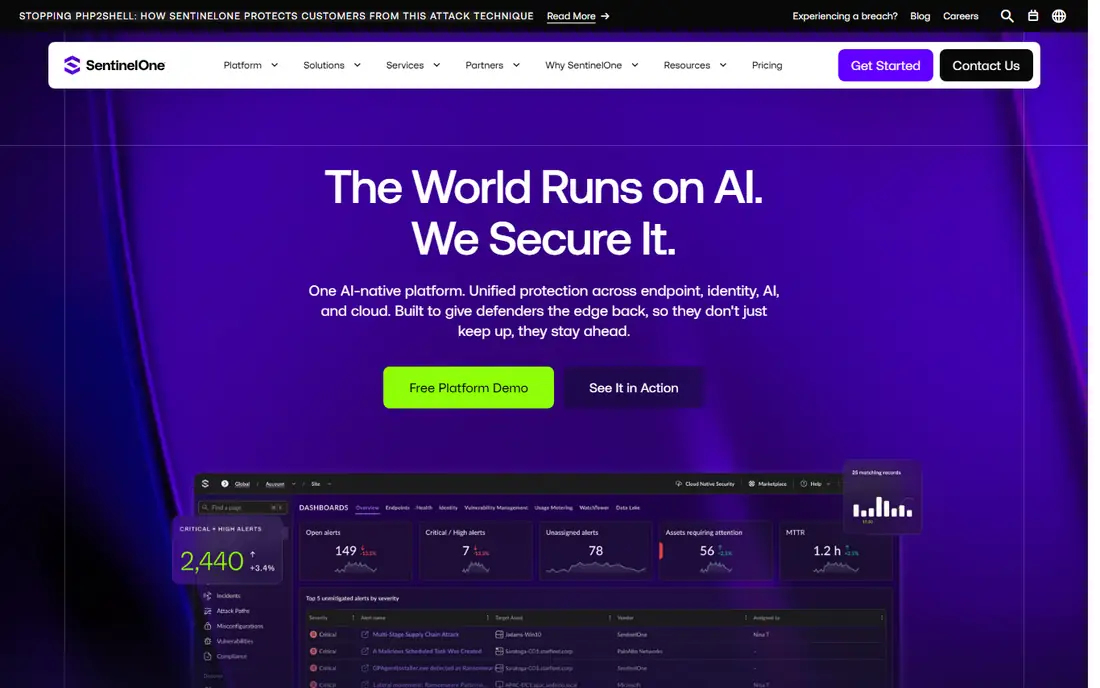
SentinelOne Singularity is built for speed of response. When it detects malicious behaviour, it can kill processes, quarantine files, isolate the endpoint from the network, and roll back changes made by ransomware, without waiting for an analyst to approve each step. Its Storyline feature links related events into a visual attack chain, so an investigator can see how an attack started, what it touched, and what it changed, in one view rather than across dozens of separate alerts.
Singularity Core, at $69.99 per endpoint per year for smaller purchases, covers core EDR, while Control and Complete tiers add deeper investigation, extended telemetry, and managed options. Vigilance adds human-led managed detection for teams without a full security operations centre. SentinelOne suits a team that wants automation first, especially where analyst time is scarce. It suits a team that prefers manual control over every response less well, though policies can be tuned to require approval for sensitive actions.
What we like- Automated response and one-click rollback
- Storyline visualises attack chains
- Strong ransomware response
Watch out for- No free plan, only trials and quotes for larger deals
- Advanced tiers add cost quickly

#3Microsoft Defender for Endpoint
Best for: Microsoft 365 environments4.4/5 on
G2 (312 reviews, checked Oct 2026)
Visit microsoft.com
Starting price$5.20/user/month (Plan 2)
Free planFree trial
Microsoft Defender for Endpoint is the natural choice for a company already running Microsoft 365, Entra ID, and Intune. It is built into Windows, integrates with Defender for Office 365 and Microsoft Sentinel, and gives a single view of device risk, vulnerabilities, and incidents across the Microsoft stack. Plan 1, at $3.00 per user per month, covers entry-level EDR, while Plan 2, at $5.20 per user per month, adds automated investigation, advanced hunting, and threat analytics. Defender for Endpoint is also included in Microsoft 365 E5, which can make its incremental cost close to zero for E5 customers.
The weakness is fit outside Microsoft. Coverage for macOS and Linux exists and has improved, but Windows remains the deepest platform, and a company running mainly Google Workspace or a mixed stack may get more from a vendor-neutral tool. Defender Experts adds managed hunting and response for teams that need human help. For a Microsoft shop, start here and compare rivals only if Defender leaves a clear gap in your environment.
What we like- Deep fit with Microsoft 365, Intune, and Sentinel
- Plan 1 and Plan 2 pricing is published
- Strong vulnerability management
Watch out for- Best value only inside a Microsoft estate
- Non-Windows coverage is good but less deep than Windows
Starting priceSee website
Free planFree trial

Palo Alto Cortex XDR extends EDR into extended detection and response by pulling together endpoint, network, and cloud telemetry in one platform. That matters when an attack crosses boundaries: a phishing email leads to a laptop infection, which leads to a cloud credential theft, and only a combined view shows the full chain. Cortex groups related alerts into incidents, scores them, and gives analysts a visual timeline, which reduces the time spent chasing isolated alerts.
Pricing is quote-based, and costs depend on endpoint count, data ingestion, and which Cortex modules you add. That makes budgeting harder than with Defender or Falcon Go, and the platform delivers most when paired with Palo Alto firewalls or Prisma Cloud. A company already invested in Palo Alto should shortlist Cortex XDR first. A company with no Palo Alto products should weigh whether the correlation benefits justify a new vendor relationship and a sales-led purchase.
What we like- Correlates endpoint, network, and cloud data
- Strong incident grouping and attack-chain views
- Unit 42 managed options
Watch out for- Quote-based pricing
- Full value needs Palo Alto network or cloud products alongside it

#5Sophos Intercept X
Best for: SMBs on the Sophos stack4.7/5 on
G2 (837 reviews, checked Oct 2026)
Visit sophos.com
Starting priceSee website
Free planFree trial
Sophos Intercept X pairs endpoint protection with EDR in a package designed for IT teams without a dedicated security operations centre. Deep learning models, exploit prevention, and behavioural detection sit alongside EDR investigation tools in Sophos Central, one console for endpoints, servers, firewalls, and mobile devices. That single console matters for a small team, because it reduces the number of dashboards an administrator must check each day.
Sophos MDR adds a managed team that monitors alerts around the clock and responds on your behalf, which is the right option for a company that cannot staff nights and weekends. Pricing is quote-based for most deals, though small business bundles are published through partners, so get a written quote for your endpoint count and term. Choose Sophos if you already use Sophos firewalls or want managed detection without building a security team. Choose a larger enterprise platform if you need the deepest hunting tools for a large analyst team.
What we like- Deep learning malware prevention plus EDR
- Single Sophos Central console
- Sophos MDR adds 24/7 human response
Watch out for- Pricing requires a quote for most deals
- Advanced EDR features sit in higher tiers

#6Trend Micro Vision One
Best for: Broad multi-layer protection4.7/5 on
G2 (251 reviews, checked Oct 2026)
Visit trendmicro.com
Starting priceSee website
Free planFree trial
Trend Micro Vision One takes a platform view similar to Cortex XDR, but with a stronger emphasis on email, network, and server workloads alongside endpoints. It correlates alerts across those layers, scores risk by asset and user, and gives analysts a single investigation workspace. For a company with on-premises servers, cloud workloads, and a large email footprint, that breadth can replace several point tools.
Breadth also adds complexity. Initial setup, policy tuning, and data source onboarding take more effort than a single-purpose EDR agent, and pricing is quote-based, with some bundles using a credit model that needs careful reading. Trend Micro Service One adds managed detection and response for teams that want human coverage. Vision One fits a mid-sized to large company that wants one vendor across layers. A small team with only laptops may find Sophos or Cynet simpler.
What we like- Covers endpoints, email, network, and cloud in one platform
- Risk scoring across layers
- Managed Service One option
Watch out for- Platform breadth can complicate setup
- Pricing is quote-based and tiered by credits in some bundles
Starting priceSee website
Free planFree trial
Bitdefender GravityZone is a business endpoint platform that combines prevention, EDR, and risk analytics in one agent and console. It covers Windows, macOS, and Linux endpoints plus servers, and it adds features such as device control, content control, and vulnerability assessment in higher tiers. For a mid-market company that wants strong protection without enterprise pricing, GravityZone is often quoted competitively, and its MDR service adds human monitoring for teams without analysts.
The main friction is pricing transparency. Business tiers are largely quote-based, so two companies can receive different quotes for similar endpoint counts, and the tier names change over time. Take time to confirm which tier includes full EDR, how long telemetry is retained, and what MDR covers, because those details differ between bundles. GravityZone suits a cost-conscious team that will run a trial, compare a written quote, and value a single agent over a best-of-breed stack.
What we like- Single agent and console for endpoints and servers
- Layered prevention plus EDR
- Bitdefender MDR available
Watch out for- Pricing is quote-based for most business tiers
- Interface and reporting take time to learn

#8Cynet
Best for: Lean teams wanting XDR plus MDR4.7/5 on
G2 (261 reviews, checked Oct 2026)
Visit cynet.com
Starting priceSee website
Free planFree trial
Cynet is designed for the team that cannot hire analysts but still needs detection and response around the clock. Its platform combines endpoint protection, EDR, network analytics, and user behaviour monitoring, and its MDR service includes a human team that investigates alerts and takes response actions on your behalf. Deployment is simpler than a large enterprise platform, with a single agent and a single console, and automated remediation handles common incidents without manual steps.
The trade-off is ecosystem size. Cynet has fewer third-party integrations and a smaller community than CrowdStrike, SentinelOne, or Microsoft, which can matter if you rely on a specific SIEM, ticketing, or automation tool. Pricing is quote-based, so request a quote that states endpoint count, MDR coverage hours, and retention clearly. For a lean IT team that wants one vendor to both detect and respond, Cynet is a strong fit. For a large enterprise with a mature security operations centre, a larger platform may offer deeper hunting and integration.
What we like- All-in-one XDR platform with 24/7 MDR included
- Automated remediation
- Simple deployment for small teams
Watch out for- Smaller ecosystem than CrowdStrike or Microsoft
- Quote-based pricing for most deals
How we chose
We compared pricing pages, product documentation, and public reviews on sites such as G2, Capterra, and PeerSpot, and we checked supported operating systems, telemetry retention, and managed detection options. A tool made the list only if it offers true EDR, meaning behavioural detection, investigation, and response, not just antivirus with a new label. We also weighed team fit, because a platform built for a large security operations centre can overwhelm a five-person IT team, while a small-business tool can under-serve a large enterprise. Prices here reflect published starting rates where available, and quote-based pricing elsewhere.
Start with your team, not with a feature list. Count how many endpoints you have, which operating systems they run, and who will respond to an alert at 2 a.m. If no one will, budget for managed detection from the start, whether from the vendor or a partner. If you have analysts, prioritise hunting tools, telemetry retention, and API access for your SIEM and ticketing system.
Next, run a trial in your real environment, not in a lab. Deploy the agent to a sample of endpoints, including older laptops and servers, and measure agent performance, alert volume, and false positives over at least two weeks. Test the response actions you will actually use: isolate a host, quarantine a file, and roll back a change. Finally, read the contract for retention, data location, renewal pricing, and what happens to your telemetry if you leave. Those terms matter more after year one than any demo.
Questions to ask every vendor
Ask how long telemetry is retained on the base tier, and what extended retention costs. Ask which operating systems and versions are fully supported, and whether Linux servers get the same detection as Windows desktops. Ask whether managed detection is included or an add-on, and what response actions the managed team can take without your approval. Ask for a written quote by endpoint count and term, and for renewal terms in writing, because EDR renewals are a common source of surprise costs.
Frequently asked questions
What is the difference between EDR and antivirus?
Antivirus mainly blocks known malware using signatures and basic behaviour checks. EDR records detailed endpoint activity, detects suspicious behaviour that may be new or fileless, and gives analysts tools to investigate and contain an attack. Most modern endpoint products combine both, but EDR adds the investigation, hunting, and response layer that antivirus alone lacks.
Do small businesses need EDR?
Yes, if they hold customer data, financial records, or regulated information, or if they rely on remote work. Small businesses are frequent targets precisely because attackers expect weaker defences. A small team should choose an EDR tool with managed detection, so alerts are investigated around the clock without hiring analysts, and should start with a trial on a small group of endpoints.
How much does EDR cost per endpoint?
Published starting prices range from about $3.00 per user per month for Microsoft Defender for Endpoint Plan 1 to $69.99 per endpoint per year for SentinelOne Core and $59.99 per device per year for CrowdStrike Falcon Go. Most enterprise tiers are quote-based and depend on endpoint count, term, telemetry retention, and managed services. Always get a written quote for your exact endpoint count before budgeting.
Can EDR replace a firewall or email security?
No. EDR protects endpoints, while firewalls control network traffic and email security filters phishing and malware before it reaches an inbox. A strong security programme uses all three, plus identity protection and backups. Some platforms, such as Cortex XDR and Vision One, combine endpoint data with network and email telemetry, but they do not remove the need for those controls.
Does EDR slow down computers?
A well-tuned EDR agent should have a small performance impact on modern hardware, but impact varies by endpoint age, workload, and policy settings. Test the agent on your oldest laptops and busiest servers during a trial, and measure boot time, application launch time, and CPU use. If performance drops sharply, work with the vendor to tune policies before a full rollout.
What is MDR, and do I need it?
MDR, or managed detection and response, is a service where a vendor team monitors your EDR alerts around the clock, investigates them, and responds on your behalf. You need it if your team cannot cover nights, weekends, and holidays, or if you lack dedicated security analysts. MDR adds cost, but for a lean team it is often cheaper than hiring analysts, and it closes the gap between an alert firing and someone acting on it.
Sources we checked (8)
- https://www.crowdstrike.com
- https://www.sentinelone.com
- https://www.microsoft.com/en-us/security/business/threat-protection/endpoint-defender
- https://www.paloaltonetworks.com/cortex
- https://www.sophos.com
- https://www.trendmicro.com
- https://www.bitdefender.com
- https://www.cynet.com
Is your product missing or out of date?
We review this list regularly. Vendors can request a listing, send updated pricing or ask about featured placement.

Shihab Mia · Founder, Rankite
Shihab has 5+ years in B2B and SaaS SEO. He writes Rankite's software buying guides from pricing pages, documentation and public user reviews. More about Shihab.
 Palo Alto Cortex XDR
 Bitdefender GravityZone