How we make this list: we compare pricing pages, product documentation and public user reviews. Ratings come from G2, Capterra or Trustpilot, with the date we checked them.
Key takeaways
- Functional Ear Trainer is best for learning to play melodies by ear, because it teaches notes by their role in a key.
- EarMaster is best for a structured course, with lessons, sight-singing, and rhythm beside ear drills.
- Tenuto and Teoria are best for theory students who want custom drills, especially on iOS or in a browser.
- Perfect Ear, Complete Ear Trainer, and Earpeggio cover the most ground for free or at low cost.
- ToneGym and Auralia suit different needs: daily games on one side, and exam-style training on the other.
Quick comparison
Is your product missing or out of date?
We review this list regularly. Vendors can request a listing, send updated pricing or ask about featured placement.
The best ear training apps
#1
Functional Ear Trainer
Best for: Playing melodies by ear
Visit miles.be
Starting priceFree
Free planYes
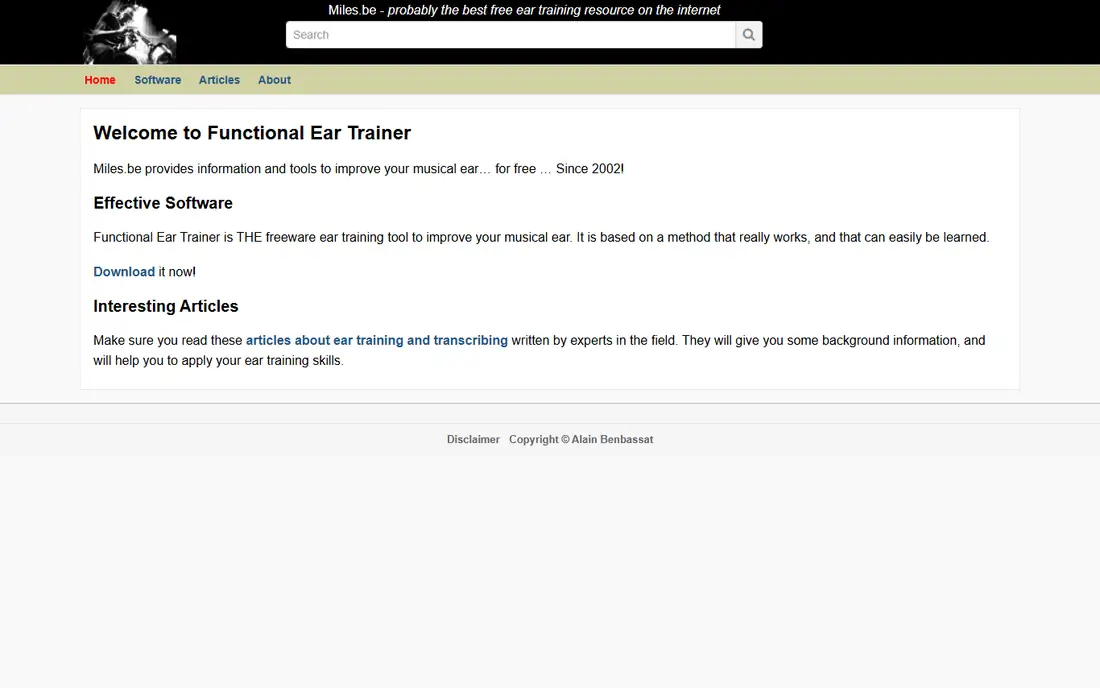
Functional Ear Trainer takes a different path from most interval apps. Instead of asking whether two notes are a major third or a perfect fifth in isolation, it plays a cadence to establish a key, then asks the user to identify a note by its function in that key. Over time, the user learns how each scale degree sounds and resolves, which transfers more directly to playing a tune by ear.
That focus is also its limit. The app does not train chord progressions, rhythm, sight-singing, or dictation in the way a full course does. It is best used as a daily core habit, ten minutes at a time, beside an instrument. For a musician whose main goal is to hear a melody and play it back, it remains one of the most effective free starting points.
What we like- Teaches scale degrees in context
- Simple, focused practice
- Free core method
Watch out for- No chord progression or rhythm training
- Interface is plain beside newer apps
Starting priceSee website
Free planYes
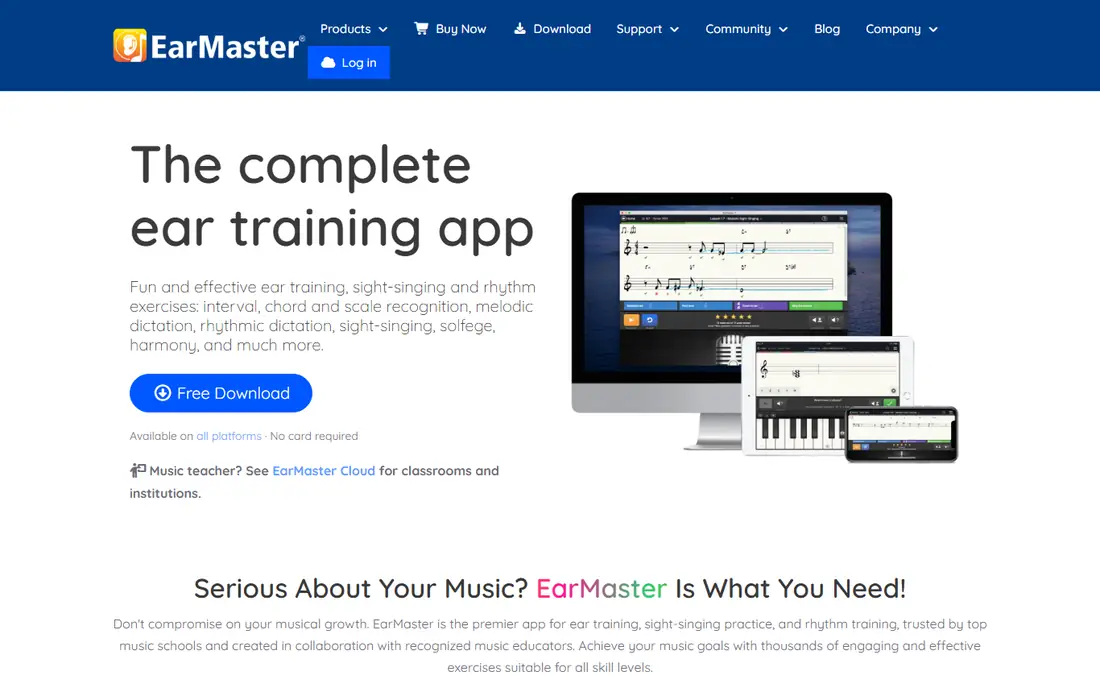
EarMaster is the closest thing on this list to a course in an app. It covers interval recognition, chord identification, scale identification, rhythm reading and dictation, melodic dictation, and sight-singing, with lessons that build in difficulty. Singing answers into a microphone gives feedback on pitch accuracy, which simple tap-to-answer apps cannot offer.
That structure suits students preparing for exams, teachers assigning work, and self-taught musicians who want a syllabus rather than a set of random drills. The downside is weight: EarMaster feels like a study programme, not a quick game, and full access costs more than most rivals. Users who only want five minutes of interval practice may prefer a lighter app.
What we like- Full course structure with lessons
- Sight-singing with microphone feedback
- Used by music schools
Watch out for- Heavier and more expensive than a simple drill app
- Some features need a subscription
Starting priceSee website
Free planNo
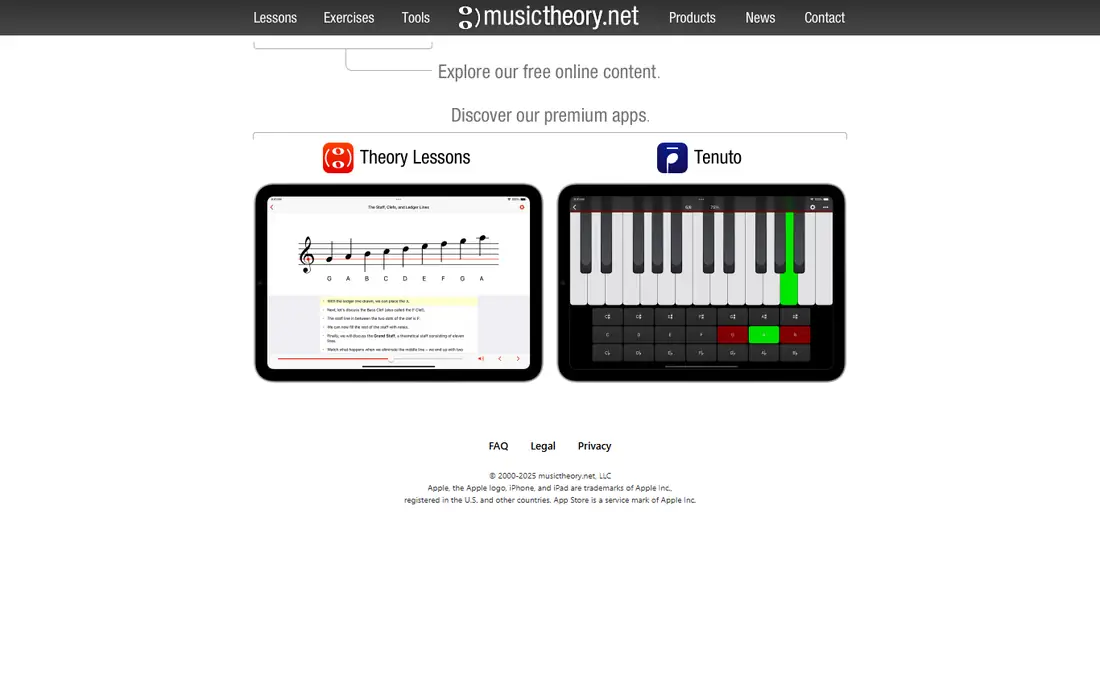
Tenuto, from the makers of musictheory.net, contains 24 customisable exercises covering note, key, interval, scale, and chord identification and construction, plus ear training exercises for intervals, scales, and chords. A teacher or student can narrow an exercise to only the notes, clefs, or ranges already learned, which makes it useful for targeted practice rather than random drilling.
The same focus that makes Tenuto strong also limits it. It is a theory drill app with ear training inside, not a dedicated ear training course with lessons on playing by ear. It is also iOS only as an app, although the same exercises are free in a browser on musictheory.net. For theory students on iPhone or iPad, it is excellent value as a one-time purchase.
What we like- Highly customisable exercises
- Keyboard, fretboard, and staff views
- Offline practice on iOS
Watch out for- IOS only for the app
- Ear training is part of a theory app, not a full ear course
Starting priceFree
Free planYes
Perfect Ear packs a lot into a free app. It offers interval and chord training, scale practice, melodic dictation, rhythm exercises, sight reading, and singing practice, with options to build custom drills. That breadth makes it a good single app for a beginner who does not yet know which area needs the most work.
Breadth also brings clutter. The menus and options can feel dense at first, and a new user may need time to find the right exercise. The free version covers a great deal, however, and the app runs on both iOS and Android. For a musician who wants one free app that does almost everything, Perfect Ear is a strong default.
What we like- Intervals, chords, scales, rhythm, and sight reading in one app
- Custom exercises
- Free core version
Watch out for- Interface can feel dense
- Some advanced features need a purchase
Starting priceFree
Free planYes
Complete Ear Trainer takes a course-like path through ear training, with more than 150 graded exercises covering intervals, chord qualities and inversions, scales, melodic dictation, and chord progressions. The game-like structure, with levels and scores, helps users stick with practice over weeks and months rather than stopping after a few sessions.
The app is less polished than Earpeggio or ToneGym, and advanced players may find the early levels too easy. Its strength is depth at low cost: the first chapters are free, and a one-time purchase opens the rest. For a patient learner who wants a long, ordered path without a subscription, it is a practical choice.
What we like- Large bank of graded exercises
- Game-like progression
- Covers intervals, chords, and progressions
Watch out for- Interface looks dated
- Progression can feel slow for advanced players
Starting priceSee website
Free planYes
ToneGym turns ear training into a daily workout of short games. Each game targets a specific skill, such as interval identification, chord quality, melodic memory, or rhythm, and results feed into a profile that tracks progress over time. Challenges and streaks encourage regular practice, which matters more for ear training than occasional long sessions.
The subscription is the main drawback for users who prefer a one-time purchase. A free tier lets users try the games, but full access and deeper statistics sit behind a paid plan. ToneGym also works best as a habit app rather than as a full theory course. Pair it with an instrument and with transcription practice to turn game scores into real musical skill.
What we like- Short daily games for intervals, chords, and rhythm
- Progress tracking and challenges
- Web and mobile access
Watch out for- Full access needs a subscription
- Games suit daily habits more than deep study
Starting priceFree
Free planYes
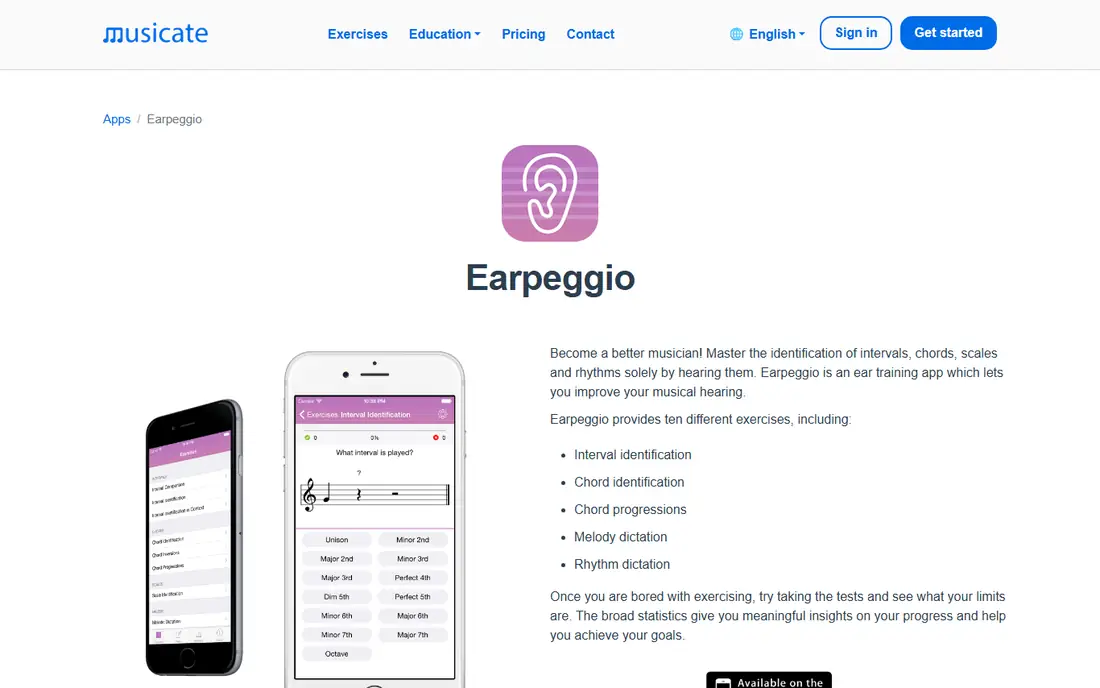
Earpeggio is a polished iOS app that covers intervals, chords, scales, chord progressions, and melody and rhythm dictation, with a difficulty ramp that feels well judged for beginners. Statistics show which intervals or chords need work, so practice can focus on weak spots instead of repeating strengths. The design is cleaner than most free rivals, which helps with daily use.
The main limits are platform and depth. Earpeggio is iOS only, so Android and desktop users need another app. Some deeper material also requires a paid tier, although the free core covers a great deal. For an iPhone or iPad user looking for a free, pleasant first ear trainer, Earpeggio is a safe first pick.
What we like- Clean design and clear difficulty ramp
- Intervals, chords, progressions, and dictation
- Free core app
Watch out for- IOS only
- Deeper material sits behind a paid tier
Starting priceFree
Free planYes
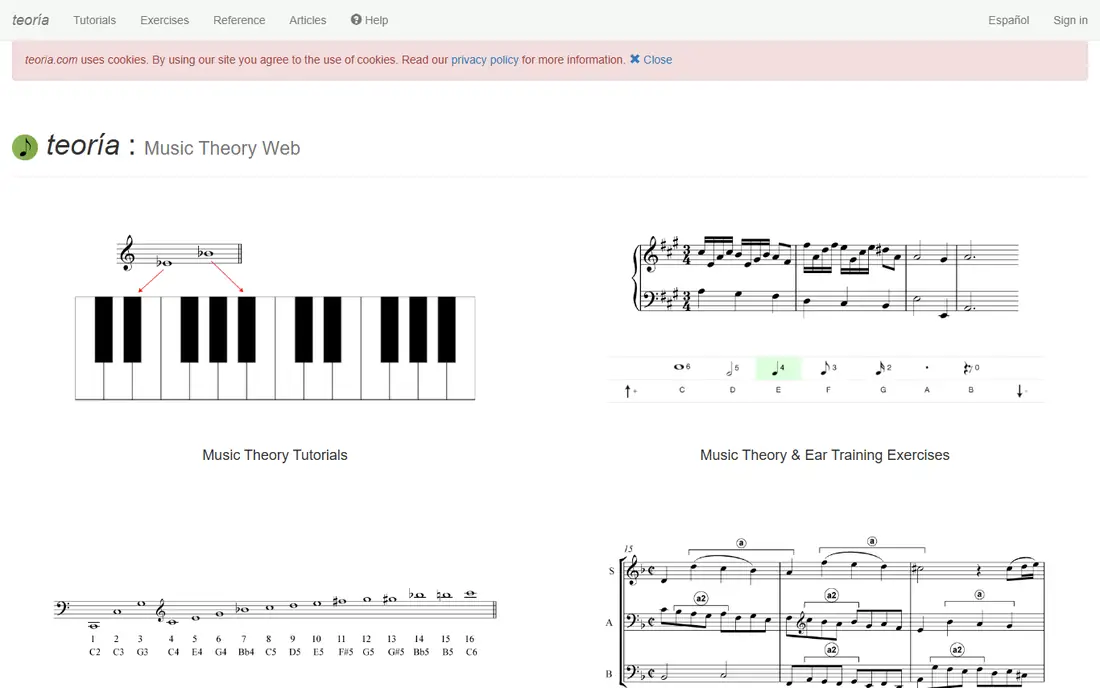
Teoria is a free website for music theory and ear training, with exercises for intervals, chords, scales, and melodic dictation, plus tutorials and reference material. Because it runs in a browser, it works on almost any device without an install, which suits school computers, shared devices, and quick practice sessions.
Teoria does not track progress like a modern app, nor does it offer streaks, levels, or singing feedback. Its value is simplicity and access: open a browser, pick an exercise, and practise. For a student who already uses Teoria for theory study, adding its ear exercises to a routine is an easy step, and it pairs well with a more structured app.
What we like- Free exercises in a browser, no install needed
- Interval, chord, and scale training
- Useful theory reference beside drills
Watch out for- No app-style progress tracking or gamification
- Sound and design feel basic
Starting priceSee website
Free planFree trial
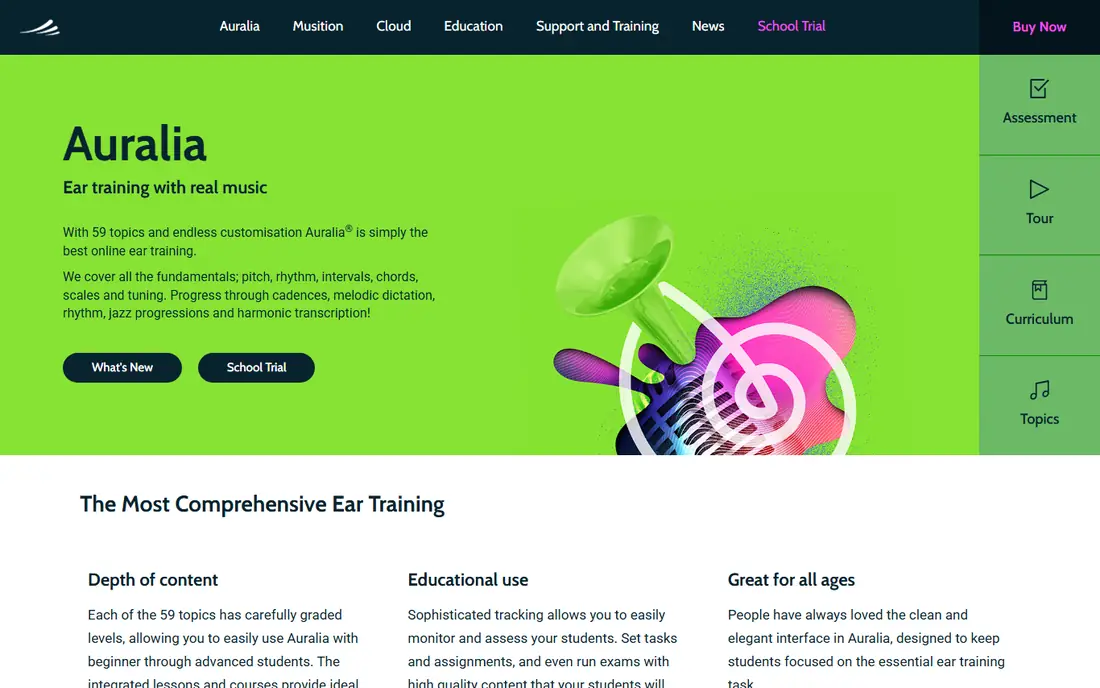
Auralia, from Rising Software, is built for formal aural training, with exercises in intervals, chords, scales, rhythm, melodic dictation, and harmonic progressions, plus detailed reporting for teachers and students. It is used in schools and exam preparation, where progress needs to be measured and assigned, not just practised casually.
That formal focus makes Auralia less appealing for a casual learner who wants a quick phone game. It is also more desktop-oriented than mobile-first rivals. For a student preparing for a graded exam, or a teacher who needs reports and structured topics, Auralia offers a level of organisation that free apps do not match.
What we like- Detailed aural and theory training for exams
- Progress reports for teachers
- Broad topic coverage
Watch out for- Desktop-focused and more formal than casual apps
- Pricing is aimed at schools and serious students
How we chose
We compared vendor documentation, pricing pages, and public reviews on app stores, G2, and Reddit, and checked platforms, exercise types, and whether each app offers a free tier. A tool made this list only if it is available today and trains listening skills directly, through intervals, chords, scales, dictation, or playing by ear, rather than only teaching theory on paper.
Where a vendor did not publish a clear starting price, we wrote See website instead of guessing. Ear training apps change pricing and platform support often, so readers should check the current store listing or vendor site before buying, especially for subscriptions.
Building a practice routine that actually improves your ear
An app alone does not build a musical ear. It builds recognition in drills, and that recognition only becomes useful when it is used on an instrument and on real music. A short, regular routine beats a long, irregular one.
Pick one main app and one backup
Start with the app that matches the main goal: Functional Ear Trainer for playing by ear, EarMaster for a course, Earpeggio or Perfect Ear for free general practice. Add a second app only if the first misses a skill, such as rhythm or singing. Using five apps at once splits progress and makes it hard to see improvement.
Practise little and often
Ten to fifteen minutes a day, most days, works better than two hours once a week. Ear training depends on memory and recognition, and both fade without regular exposure. Set a fixed time, such as after instrument practice, and keep the session short enough to stay focused.
Transfer drills to real music
After a drill session, try the same skill on a real song. Pick a short melody, sing it back, find it on an instrument, or write down the chord progression. If a drill skill never leaves the app, it will not help in rehearsal, performance, or composition. Transcription, even of a simple tune, is the bridge between app scores and musical ability.
Use singing, even if you do not sing well
Singing an interval or a scale degree before playing it forces the ear to produce the sound, not just recognise it. Many apps support singing answers, and even humming along with drills helps. Singing does not need to be good to be useful: accuracy of pitch, not tone quality, is what matters for ear training.
Frequently asked questions
What is the best ear training app for beginners?
Functional Ear Trainer is a strong free start for playing by ear, while Earpeggio and Perfect Ear are strong free starts for general interval and chord training. Beginners should pick the app they will open daily, since consistency matters more than feature count at the start.
Is there a completely free ear training app?
Yes. Functional Ear Trainer, Teoria, and the core versions of Perfect Ear, Complete Ear Trainer, and Earpeggio are free, with optional purchases for deeper material. A free app can cover months of beginner and intermediate practice before a paid app becomes necessary.
Can ear training apps help me play songs by ear?
Yes, if practice transfers to an instrument. Apps that teach scale degrees in context, such as Functional Ear Trainer, help most directly with melodies, while interval and chord apps help with harmony. Regular transcription practice beside app drills makes the transfer faster.
How long does ear training take to show results?
Most users notice clearer interval and chord recognition within a few weeks of daily practice, while reliable playing by ear takes months. Progress depends on prior musical experience, practice time, and whether drills are paired with singing and instrument work.
Do I need perfect pitch to benefit from ear training?
No. Ear training builds relative pitch, which is the ability to hear notes in relation to a key or a reference note. Relative pitch is enough for transcription, improvisation, harmony, and playing by ear, and it is a trainable skill for almost all musicians.
Which ear training app is best for exam preparation?
EarMaster and Auralia are best for exam preparation, because they offer structured topics, dictation, sight-singing, and progress reports. A student should check which topics their exam board requires, then pick the app that covers those topics most closely.
Sources we checked (9)
- https://www.miles.be/
- https://www.earmaster.com/
- https://www.musictheory.net/
- https://www.perfectear.app/
- https://www.completeeartrainer.com/
- https://www.tonegym.co/
- https://earpeggio.com/
- https://www.teoria.com/
- https://www.risingsoftware.com/auralia
Is your product missing or out of date?
We review this list regularly. Vendors can request a listing, send updated pricing or ask about featured placement.

Shihab Mia · Founder, Rankite
Shihab has 5+ years in B2B and SaaS SEO. He writes Rankite's software buying guides from pricing pages, documentation and public user reviews. More about Shihab.
 EarMaster
 Tenuto
 Perfect Ear
 Complete Ear Trainer
 ToneGym
 Earpeggio
 Teoria
 Auralia