How we make this list: we compare pricing pages, product documentation and public user reviews. Ratings come from G2, Capterra or Trustpilot, with the date we checked them.
Key takeaways
- The Trade Desk is the best independent DSP for large advertisers that want maximum reach across the open internet with transparent pricing.
- StackAdapt is the easiest self-serve programmatic platform for mid-market teams getting started with display, native, and CTV.
- AdRoll is the best fit for ecommerce brands that want retargeting plus email and social in one dashboard.
- Criteo suits retailers that want AI-driven retargeting built specifically for commerce data.
- Google Ads remains the default starting point for display because of the sheer size of the Google Display Network.
Quick comparison
| Tool | Best for | Starting price | Free plan |
|---|
 The Trade Desk The Trade Desk | large advertisers wanting an independent DSP | See website | See website |
 StackAdapt StackAdapt | self-serve programmatic for mid-market teams | See website | See website |
 AdRoll AdRoll | ecommerce retargeting across channels | See website | See website |
 Criteo Criteo | AI retargeting for retailers | See website | See website |
 Google Ads (Display Network) Google Ads (Display Network) | reach on the Google Display Network | See website | See website |
 Adform Adform | European advertisers wanting transparency | See website | See website |
 Quantcast Quantcast | audience insights plus programmatic buying | See website | See website |
 Choozle Choozle | agencies running multi-client display | See website | See website |
Is your product missing or out of date?
We review this list regularly. Vendors can request a listing, send updated pricing or ask about featured placement.
The best display advertising software
Starting priceSee website
Free planSee website
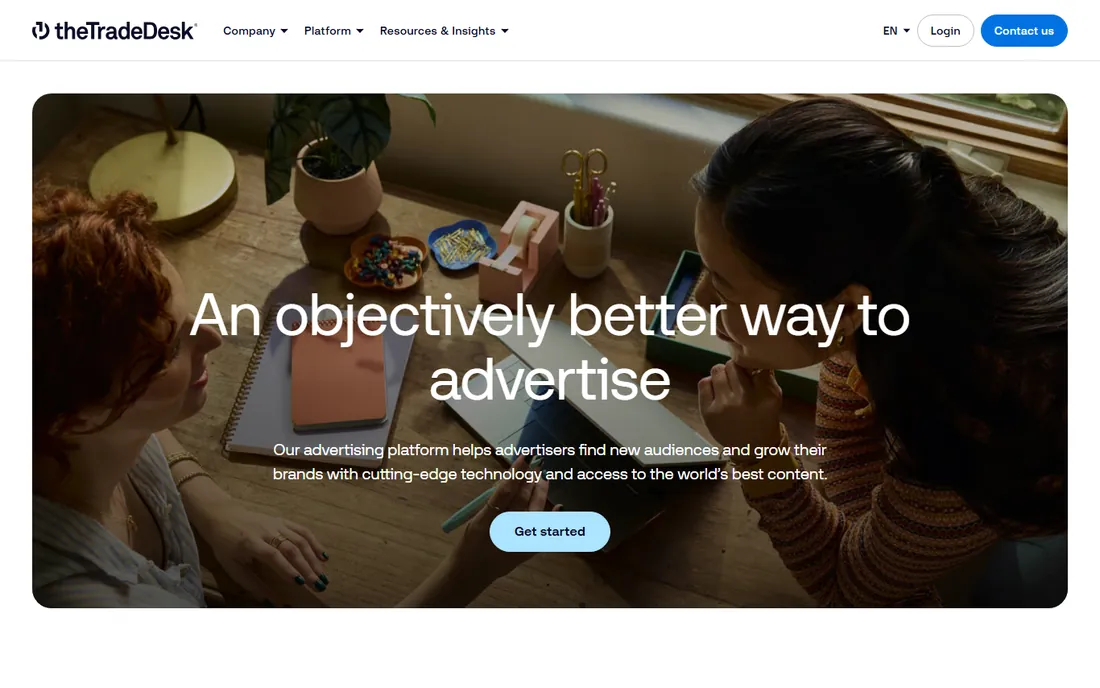
The Trade Desk is the largest independent demand-side platform, and its pitch is simple: buy media across the open internet without the conflicts of interest that come with owning the inventory. Big brands use it to run display, video, CTV, and audio from one seat, with data-driven decisioning and detailed log-level reporting. If your monthly media spend is serious, this is the default shortlist pick.
The catch is access. The Trade Desk works through contracts and minimum spends that rule out small advertisers, and the platform assumes you know programmatic concepts already. Smaller teams usually enter through an agency trading desk rather than a direct seat. Buy it when your spend justifies dedicated programmatic expertise, not as a first experiment.
What we like- Massive reach across premium open-internet inventory
- Transparent bidding and reporting
- Strong CTV and audio buying alongside display
Watch out for- Enterprise minimums and contracts put it out of reach for small budgets
- Learning curve is steep for first-time programmatic buyers
Starting priceSee website
Free planSee website
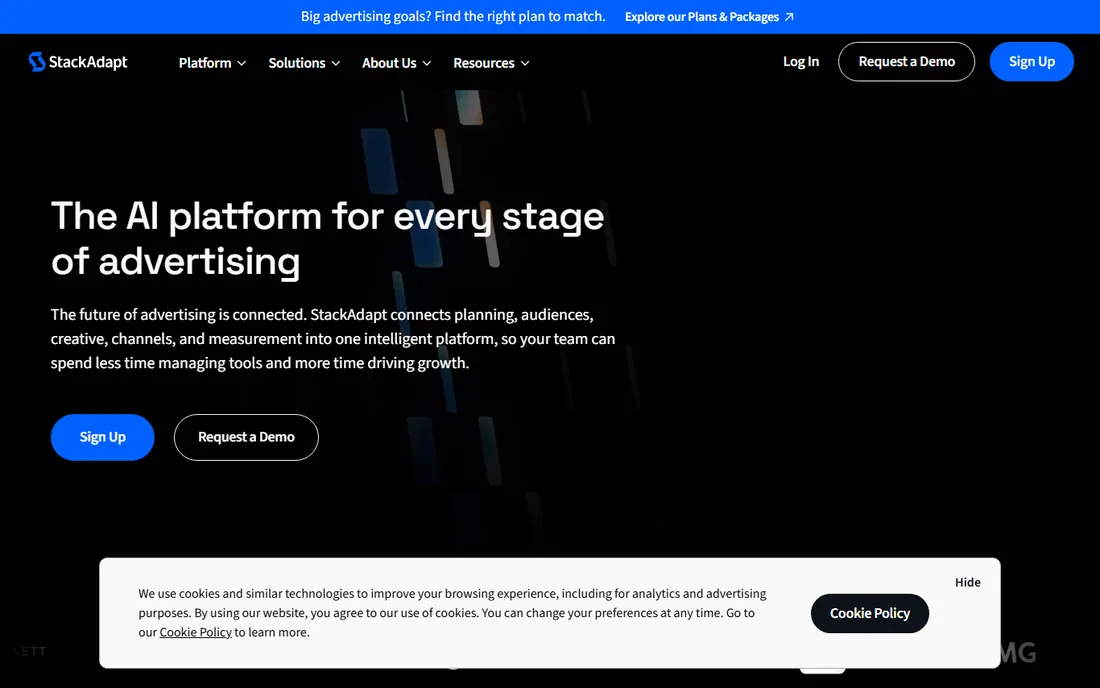
StackAdapt made programmatic accessible to teams that could never justify an enterprise DSP seat. You can launch display, native, video, and connected TV campaigns yourself, with campaign minimums far below the industry norm. The interface is built for marketers rather than traders, which shortens the learning curve considerably.
That accessibility has limits. Power users who need exotic inventory deals, custom algorithms, or deep log-level data work may find the ceiling lower than on The Trade Desk or Adform. But for mid-market brands and agencies running straightforward prospecting and retargeting across channels, StackAdapt hits the sweet spot of capability and usability.
What we like- Genuinely self-serve with low campaign minimums
- Native, display, video, and CTV in one interface
- Helpful onboarding for programmatic newcomers
Watch out for- Inventory breadth trails the biggest enterprise DSPs
- Advanced custom bidding options are thinner
Starting priceSee website
Free planSee website

AdRoll started as a retargeting specialist and grew into a broader marketing platform for ecommerce. A Shopify store can connect its catalog, launch dynamic retargeting ads, and layer in email campaigns without hiring a media buyer. For small ecommerce teams, that combination of simplicity and commerce-specific features is hard to beat.
It is not a full DSP replacement. If you need open-internet prospecting at scale, custom data integrations, or CTV buying, you will eventually need a dedicated programmatic seat. Treat AdRoll as the growth-stage retargeting and cross-channel layer, and graduate to a DSP when your media mix demands it.
What we like- Retargeting plus email and social ads in one platform
- Deep Shopify and ecommerce integrations
- Approachable for non-specialists
Watch out for- Display reach is narrower than pure-play DSPs
- Pricing scales with ad spend, so costs grow as you grow
Starting priceSee website
Free planSee website
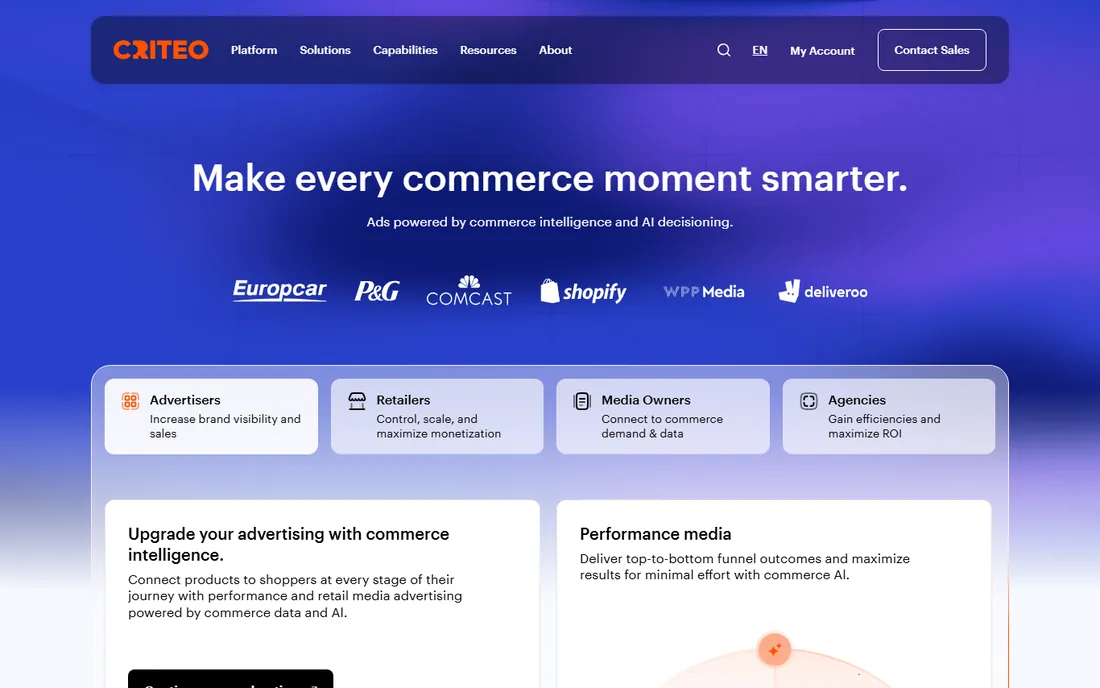
Criteo built one of the largest commerce data sets in advertising, and its retargeting engine puts that data to work. Retailers with big catalogs get dynamic ads that show shoppers the exact products they viewed, optimized by AI toward purchases rather than clicks. The managed service option means lean teams can run it without in-house programmatic skill.
Volume matters here. Criteo's models learn from your traffic, so small sites with thin visitor numbers see weaker results. It is also firmly a retail play; B2B or lead-gen advertisers will find the targeting and creative options less suited to their funnels. Retailers with real traffic, though, often see it pay for itself quickly.
What we like- Commerce data network improves retargeting relevance
- Dynamic creative handles large catalogs well
- Managed service option for hands-off teams
Watch out for- Performance depends heavily on site traffic volume
- Less flexible for non-retail advertisers
Starting priceSee website
Free planSee website
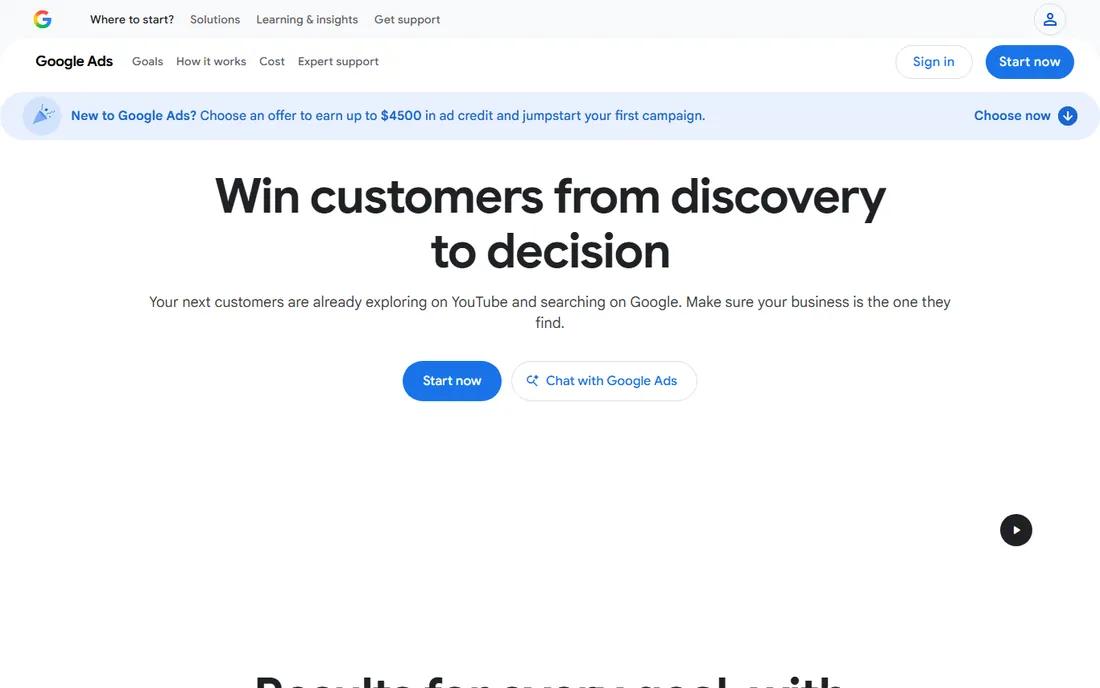
Nobody matches Google's display reach. The Google Display Network spans millions of websites, apps, and Google properties, and you can start spending with no minimums and no sales call. For testing creative, running remarketing to site visitors, or reaching broad audiences cheaply, it remains the default first stop, and the Analytics integration makes measurement straightforward.
The trade-offs are control and transparency. Placement reports require digging, fee breakdowns are less open than on independent DSPs, and brand-safety settings need constant attention to avoid junk inventory. Use Google for scale and remarketing, but audit placements regularly and consider an independent DSP when transparency becomes a procurement requirement.
What we like- Unmatched reach across millions of sites and apps
- Tight integration with Google Analytics and YouTube
- No minimum spend to start
Watch out for- Transparency into placements and fees is limited
- Brand-safety controls need active management
Starting priceSee website
Free planSee website
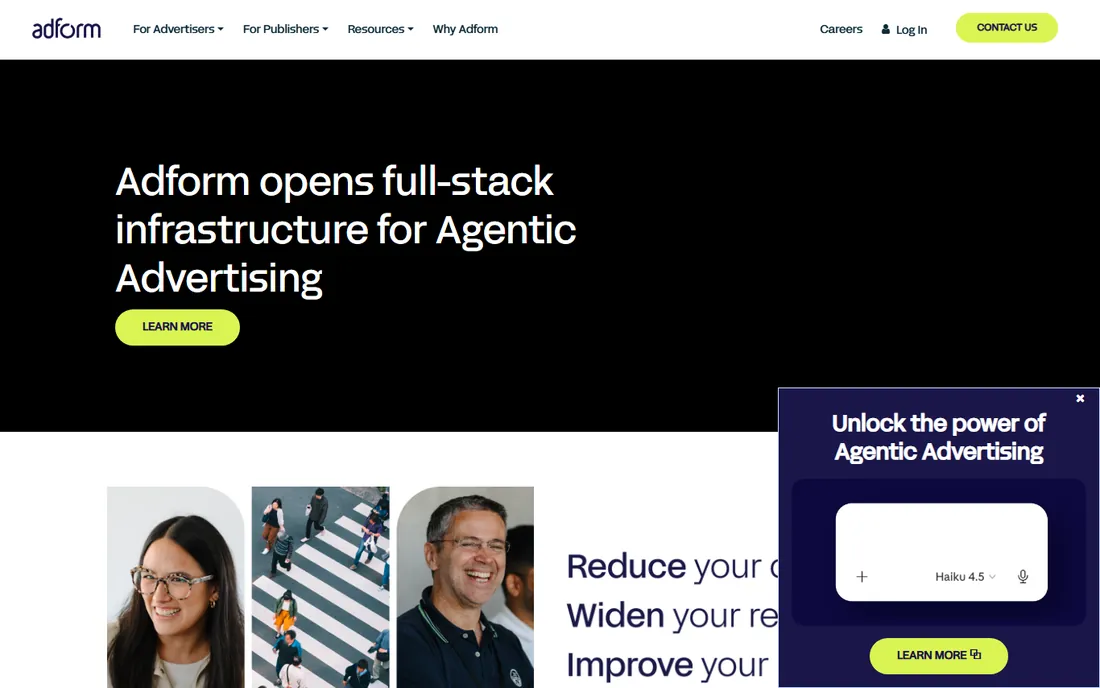
Adform is Europe's independent answer to the big DSPs, offering media buying, data management, and ad serving in a single integrated platform. Its transparency pitch resonates with advertisers tired of black-box fees: you see what you pay for media, data, and tech separately. For brands with strict data governance needs, the European base and GDPR posture are genuine advantages.
The platform is enterprise through and through, with contracts and minimums rather than self-serve signup. US-focused advertisers may find inventory depth and support coverage thinner than on American platforms. If you buy media primarily in Europe and value fee transparency, Adform deserves a serious look.
What we like- Independent European ad tech with transparent fees
- Integrated DSP, DMP, and ad serving in one stack
- Strong GDPR positioning
Watch out for- Smaller US footprint and inventory relationships
- Enterprise sales process with no self-serve tier
Starting priceSee website
Free planSee website
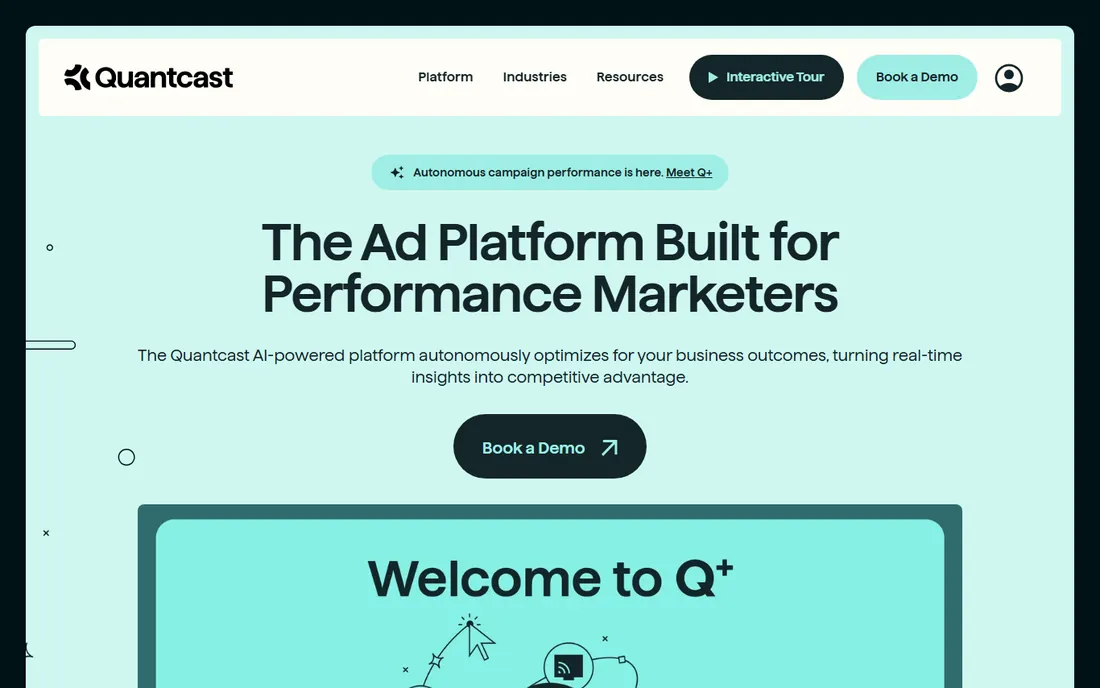
Quantcast pairs an AI-powered advertising platform with audience measurement tools that many marketers use for free. Its models build lookalikes and predictive audiences from large-scale web data, and it has invested early in cookieless targeting as third-party cookies fade. Agencies like it for mid-funnel prospecting where audience quality matters more than raw reach.
It is not trying to be everything. If you need CTV buying, retail media, or deep custom integrations, a larger DSP covers more ground. But for advertisers that want smarter prospecting audiences with straightforward execution, Quantcast's combination of free measurement and AI-driven buying is a practical package.
What we like- AI-driven audience modeling from large data assets
- Free audience measurement tools
- Cookieless targeting capabilities
Watch out for- Platform breadth is narrower than full-stack DSPs
- Best results come with meaningful spend
Starting priceSee website
Free planSee website
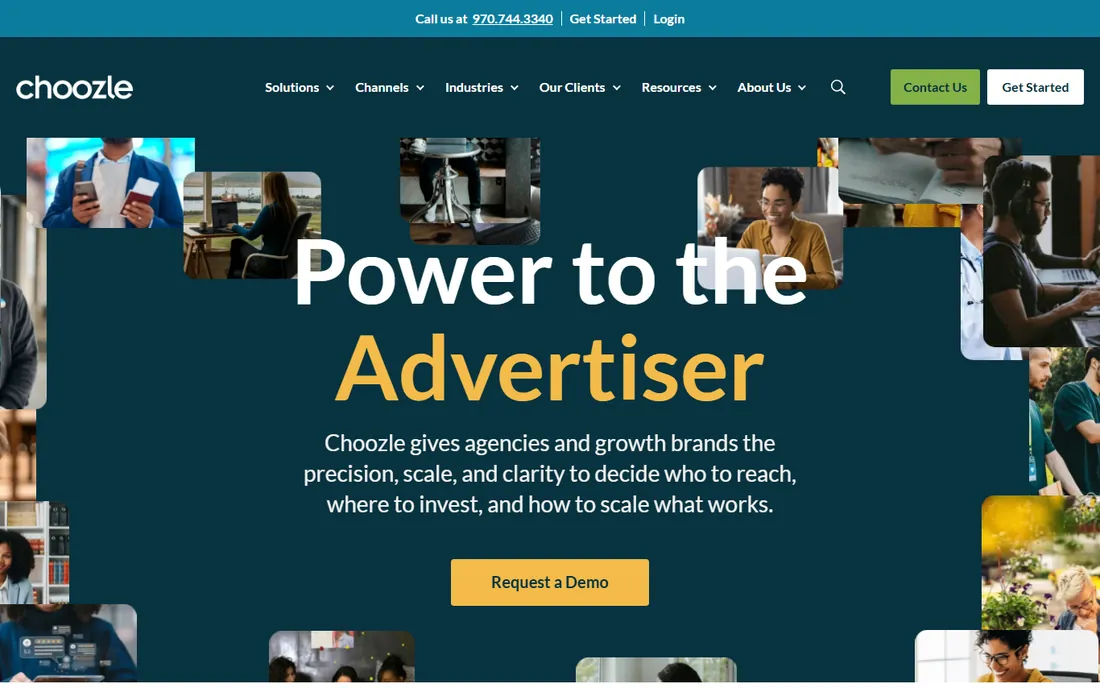
Choozle targets a specific buyer: the agency that runs programmatic for many small and mid-size clients. Multi-account management, white-label reporting, and bundled training make it practical to offer display as a service without a trading desk. CRM data onboarding lets agencies activate client first-party data quickly.
Enterprise media teams will find the feature set lighter than The Trade Desk or Adform. And because Choozle is less known, agencies sometimes need to educate clients on what sits behind the curtain. For its intended audience, though, the agency-first design saves real operational overhead.
What we like- Built for agency multi-account management
- Self-serve with training and support included
- CRM and data onboarding integrations
Watch out for- Smaller brand recognition can raise client questions
- Feature depth trails enterprise DSPs
What to check before you buy
Match the platform to your spend level first, because the market is tiered. Enterprise DSPs expect meaningful monthly minimums and annual contracts, mid-market self-serve platforms work with campaign minimums in the hundreds, and Google Ads has no minimum at all. Buying more platform than your budget can feed wastes money twice: once on fees, once on underpowered campaigns.
Then interrogate transparency. Ask what percentage of your spend goes to media versus tech and data fees, whether you get log-level reporting, and how placement lists work. Independent DSPs tend to be more open here; walled gardens less so. If brand safety matters to your company, ask for a live look at placement controls before you sign, not a slide deck.
Finally, plan your data connections. Retargeting needs your site tags or app SDK in place, CRM-based targeting needs data onboarding, and measurement needs conversion tracking wired correctly. The best platform choice means little if the data plumbing is not ready, so audit your tags and feeds during the trial period.
Managed service versus self-serve
Display platforms split into two buying models, and picking the wrong one is the most common regret. Self-serve seats give you control and lower fees, but they assume someone on your team knows programmatic: audience building, bid strategies, placement audits, and creative testing. Without that skill in-house, a self-serve DSP becomes an expensive dashboard nobody opens.
Managed services flip the trade. The vendor or agency runs the campaigns, which gets you expertise immediately, but you pay higher fees and see less of the machinery. For teams spending under mid five figures a month, managed or hybrid models usually outperform a neglected self-serve seat. As spend grows and you hire programmatic talent, migrating to self-serve cuts fees and increases control. Choose the model that matches the team you have today, with a path to the team you plan to build.
How we chose
We shortlisted platforms that buyers actually evaluate for display advertising, drawing on agency recommendations, G2 and Capterra categories, and programmatic industry coverage. We kept a mix of enterprise DSPs, self-serve platforms, and commerce specialists so different budgets and business models are represented. Each vendor's site was checked to confirm the product is current and fits display advertising in 2026. Where vendors publish pricing, we used it; where they sell through contracts and minimums, we say so. No hands-on media buying was conducted for this guide.
Frequently asked questions
What is display advertising software?
It is software for buying and managing banner, native, video, and rich-media ad placements across websites and apps. This includes demand-side platforms (DSPs) for programmatic buying, retargeting specialists, and networks like Google's Display Network, plus the reporting and optimization tools around them.
How much does display advertising software cost?
Pricing usually combines platform fees with your media spend. Self-serve platforms may charge no platform fee beyond media minimums per campaign, while enterprise DSPs charge tech fees as a percentage of spend plus monthly minimums. Always ask for the full fee breakdown, including data and creative costs.
What is a DSP?
A demand-side platform is software that lets advertisers buy digital ad inventory programmatically, bidding in real time across many publishers and exchanges. DSPs like The Trade Desk, StackAdapt, and Adform give you targeting, bidding, and reporting controls in one interface.
Do I need a DSP or is Google Ads enough?
Google Ads is enough for remarketing, testing, and broad reach on Google's network. A DSP becomes worthwhile when you need open-internet reach beyond Google, transparent fee breakdowns, advanced audience strategies, or CTV and audio buying in the same seat.
What is retargeting?
Retargeting shows ads to people who already visited your website or interacted with your brand. It typically delivers higher conversion rates than cold prospecting because the audience already knows you. Specialists like AdRoll and Criteo focus heavily on it, while DSPs offer it as one tactic among many.
How do I measure display campaign success?
Start with view-through and click-through conversions tied to real business outcomes, not just clicks. Use conversion tracking, incrementality tests where possible, and clean attribution windows. Vanity metrics like impressions tell you about delivery, not about whether the ads worked.
Sources we checked (12)
- https://www.thetradedesk.com
- https://www.stackadapt.com
- https://www.adroll.com
- https://www.criteo.com
- https://ads.google.com
- https://www.adform.com
- https://www.quantcast.com
- https://www.choozle.com
- https://slashdot.org/software/comparison/AdRoll-vs-Criteo-vs-ad-personam/
- https://slashdot.org/software/comparison/AdRoll-vs-Choozle/
- https://sourceforge.net/software/compare/StackAdapt-vs-The-Trade-Desk-vs-Xandr/
- https://github.com/ishandutta2007/awesome-programmatic-advertising-platform
Is your product missing or out of date?
We review this list regularly. Vendors can request a listing, send updated pricing or ask about featured placement.

Shihab Mia · Founder, Rankite
Shihab has 5+ years in B2B and SaaS SEO. He writes Rankite's software buying guides from pricing pages, documentation and public user reviews. More about Shihab.