How we make this list: we compare pricing pages, product documentation and public user reviews. Ratings come from G2, Capterra or Trustpilot, with the date we checked them.
Key takeaways
- This guide covers companies you hire for data analytics work, stated plainly, since a data analytics company here means a services firm, not an app.
- Fractal and Tiger Analytics lead for Fortune 500 decision science, while Mu Sigma suits continuous decision support at scale.
- LatentView leads for marketing and customer analytics, and Quantiphi leads for Google Cloud based machine learning work.
- Pricing is mostly quote based, with hourly bands from about 50 dollars to 300 dollars depending on the firm and engagement type.
- Always ask how a firm deploys and monitors models after the proof of concept, since that is where most analytics programs fail.
Quick comparison
| Tool | Best for | Starting price | Free plan |
|---|
 Fractal Analytics | Fortune 500 decision science | See website | No |
 Tiger Analytics | Large enterprise data science teams | See website | No |
 Mu Sigma | Continuous decision science | See website | No |
 LatentView Analytics | Marketing and customer analytics | See website | No |
 Tredence | Retail and consumer goods analytics | See website | No |
 Quantiphi | Google Cloud machine learning | See website | No |
 Accenture | Large transformation programs | See website | No |
 Deloitte | Governed enterprise programs | See website | No |
Is your product missing or out of date?
We review this list regularly. Vendors can request a listing, send updated pricing or ask about featured placement.
The best data analytics companies
Starting priceSee website
Free planNo
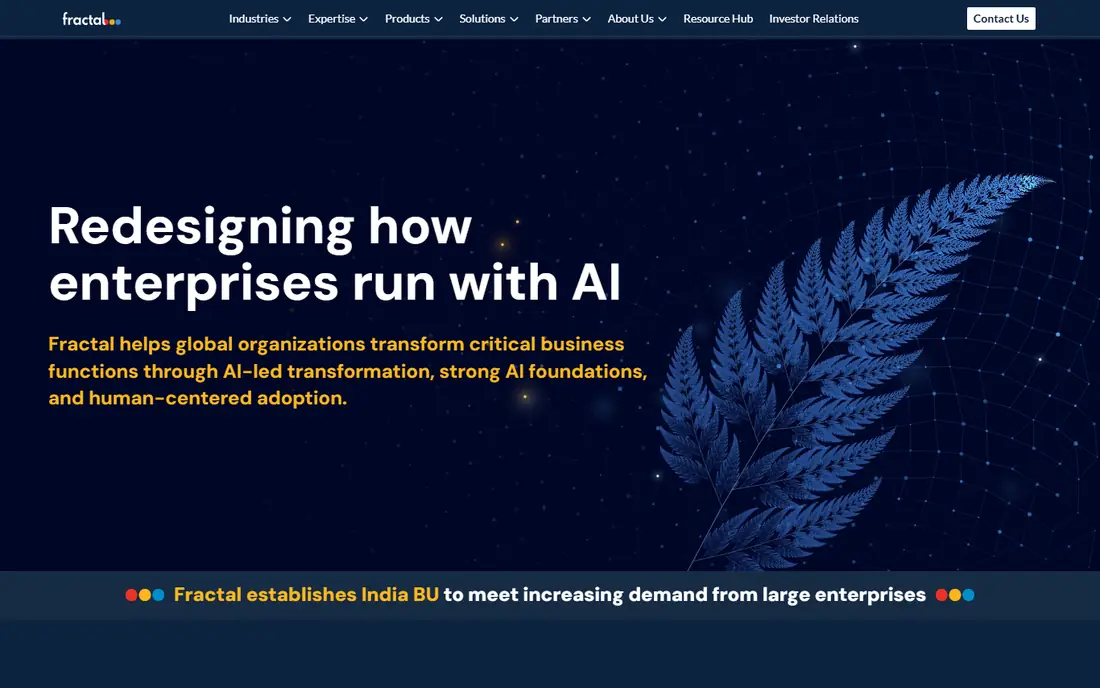
Fractal Analytics, founded in 2000, is one of the best known pure play analytics firms, serving large companies in consumer goods, retail, and financial services. The firm blends consulting with AI products, helping clients move from one off analyses to decisions embedded in daily operations. Its work spans forecasting, pricing, marketing analytics, and supply chain optimization.
The limits are price and fit. Fractal prices at the premium end, and its model suits large enterprises better than small companies. For a large company that wants a dedicated analytics partner with deep decision science expertise, Fractal is a leading choice.
What we like- Deep decision science expertise
- Fortune 500 client base
- Strong AI products
Watch out for- Premium pricing
- Enterprise focus
- Smaller firms may find it too large
Starting priceSee website
Free planNo
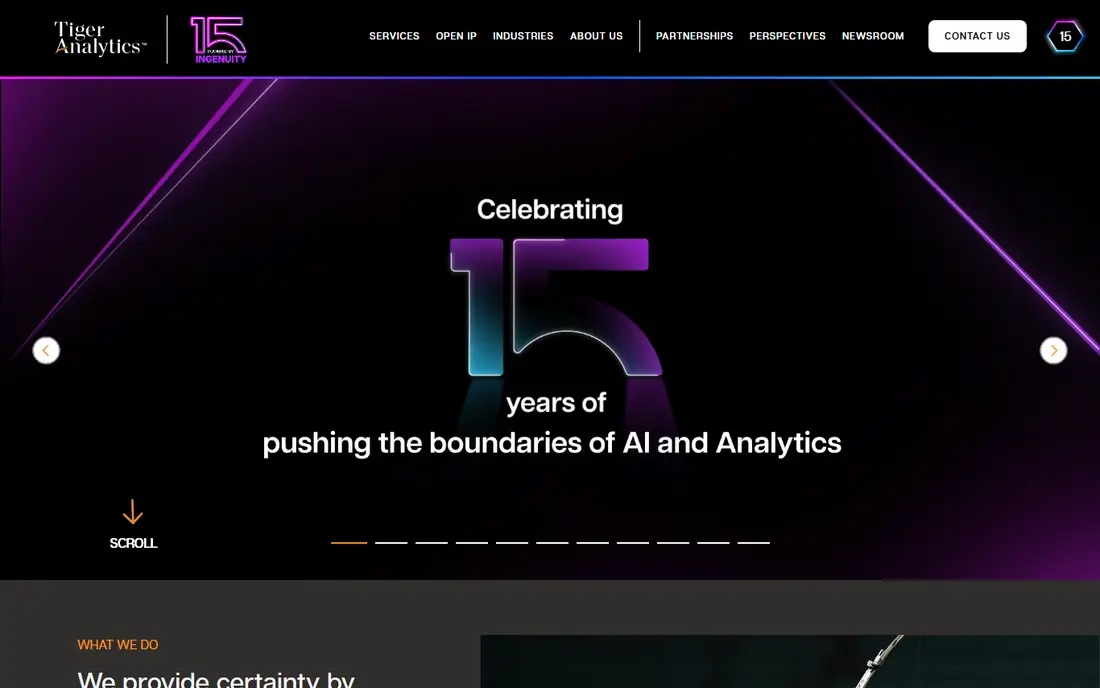
Tiger Analytics, founded in 2011 and based in Santa Clara, California, provides data analytics and AI solutions across consumer goods, retail, banking, insurance, manufacturing, logistics, life sciences, healthcare, and technology. The firm is known for building and scaling data science teams for large enterprises, covering data modernization, strategy, and operational insights through AI and machine learning.
The trade offs are price and scale. Tiger Analytics prices in the upper mid range, and its model works best for large enterprises that need teams at scale. For a large company that wants to build a serious analytics capability fast, Tiger Analytics is a strong partner.
What we like- Strong data science talent
- Scales teams quickly
- Broad industry coverage
Watch out for- Upper mid pricing
- US delivery costs
- Smaller engagements get less attention
Starting priceSee website
Free planNo
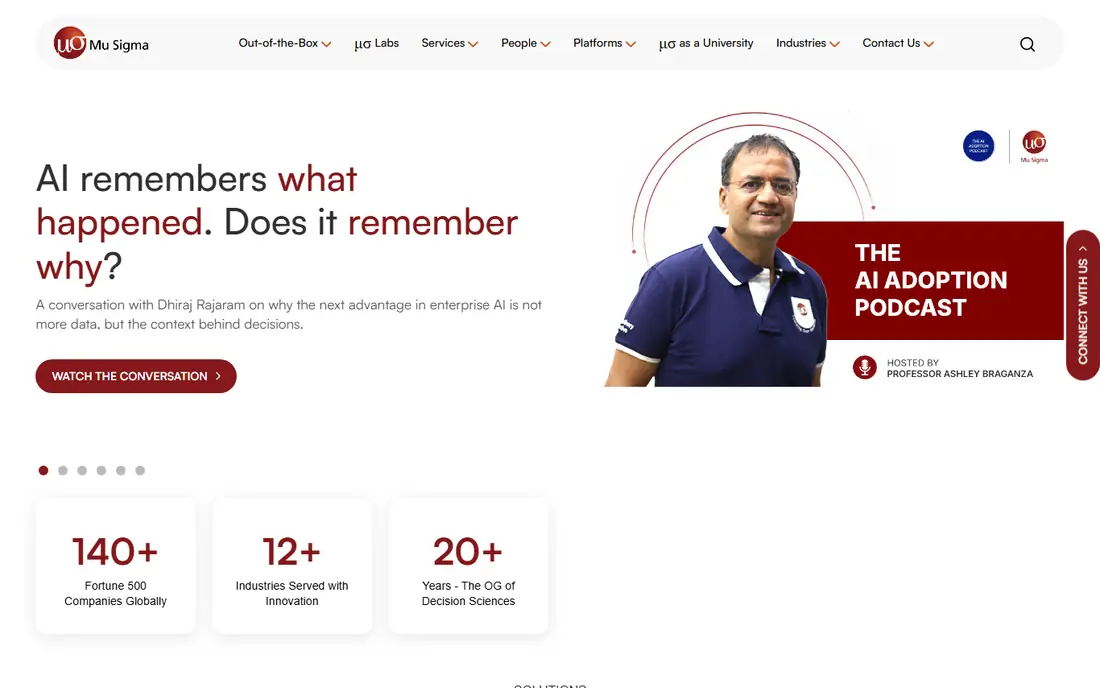
Mu Sigma, founded in 2004 and based in Northbrook, Illinois, operates as a decision sciences company, combining business intuition, statistical techniques, and machine learning to solve complex business problems. It serves banking, healthcare, retail, and manufacturing, and its model centers on continuous decision support rather than one off projects.
The limits are fit and pace. Mu Sigma's model suits large enterprises that want ongoing analytics support, and it is less suited to small, short projects. For a large company that wants a long term analytics partner embedded in its decision making, Mu Sigma remains a proven choice.
What we like- Decision science focus
- Large trained workforce
- Long enterprise relationships
Watch out for- Model suits large firms best
- Less product led than rivals
- Slower for small projects
Starting priceSee website
Free planNo
LatentView Analytics, founded in 2006, focuses on customer and digital analytics, studying user behavior, performance marketing, and online activity to help companies improve marketing strategies and business growth. Its strengths include behavioral and predictive modeling and marketing technology integration, which suit brands that live or die by digital performance.
The limits are scope. LatentView is narrower than global consultancies, with less depth in heavy industry and manufacturing. For a consumer brand that wants to understand customers and improve digital marketing with data, LatentView is one of the best specialist firms available.
What we like- Strong marketing analytics
- Customer behavior expertise
- Digital focus
Watch out for- Narrower industry range
- Smaller than global consultancies
- Less depth in heavy industry
Starting priceSee website
Free planNo
Tredence, founded in 2013 and based in San Jose, California, provides data science solutions focused on AI and analytics for retail, consumer goods, financial services, and healthcare. The firm offers AI consulting, data engineering, and analytics solutions, with a cloud first approach that suits companies modernizing their data platforms.
The trade offs are age and scale. Tredence is younger and smaller than Fractal or Accenture, so it has fewer large reference clients. For retail and consumer goods companies that want cloud native analytics delivery, Tredence is a strong, fast growing option.
What we like- Cloud first delivery
- Retail and supply chain strength
- Fast growth
Watch out for- Younger firm
- Smaller scale than Fractal
- Less brand recognition in Europe
Starting priceSee website
Free planNo
Quantiphi, founded in 2013 and based in Marlborough, Massachusetts, is a digital engineering company focused on cloud and data engineering and AI research. The company is known for designing complete data systems that handle predictive analysis, automation, and real time insights, with solutions used in healthcare, finance, and media.
The limits are platform focus and scale. Quantiphi's strength sits on Google Cloud, so companies committed to other clouds may prefer a multi cloud firm. For organizations building AI and analytics programs on Google Cloud, Quantiphi is one of the best partners available.
What we like- Google Cloud expertise
- AI and ML engineering depth
- Strong healthcare and media work
Watch out for- Google Cloud focus limits multi cloud fit
- Mid size scale
- Premium for AI engineering
Starting priceSee website
Free planNo
Accenture is one of the largest consulting firms in the world, and its analytics practice helps organizations modernize how they use data, connecting analytics, AI, cloud, and digital systems to daily business activities. Its teams design and implement technology programs that link data with operations, and its scale lets it staff very large programs across many countries.
The limits are price and weight. Accenture prices at the premium end, and its large teams can feel heavy for focused projects. For a large enterprise pursuing a comprehensive analytics and digital transformation, Accenture's scale and breadth are hard to match.
What we like- Global scale
- End to end transformation
- Deep cloud and AI partnerships
Watch out for- Premium pricing
- Large teams can feel heavy
- Quality varies by practice
Starting priceSee website
Free planNo
Deloitte is a Big Four firm whose analytics work ties closely to finance, risk, and governance, which suits regulated industries and large enterprise programs. Its analytics teams work alongside audit, tax, and risk practices, giving clients a governed approach to data programs that must satisfy regulators and boards.
The limits are price and pace. Deloitte prices at the premium end, and its pace can feel slow compared with specialist firms. For a regulated company that needs analytics delivered with strong governance and risk controls, Deloitte is a strong choice.
What we like- Big Four governance
- Finance and risk expertise
- Strong regulated industry work
Watch out for- Premium pricing
- Slower pace
- Analytics is one practice among many
How we chose
We ranked firms by enterprise track record, depth of analytics talent, industry focus, and delivery model, favoring firms with proven large scale programs over generalist consultancies. We also checked whether firms publish case studies with named clients and measurable outcomes, since vague claims about transformation are easy to make and hard to verify. We gave extra weight to specialist depth, because analytics quality depends on people and methods more than on brand size. We also weighed fit: a firm that excels in marketing analytics scores differently from one that excels in supply chain, and the right choice depends on your problem.
Buying guide
Start by defining the decision you want analytics to improve. A vague goal like better data produces vague proposals, while a specific goal, such as reducing stockouts or improving campaign return, lets firms propose concrete work and measurable results.
Next, compare delivery models. Some firms sell project teams, others sell ongoing decision support, and some sell managed services. Ongoing models suit companies that need analytics every week, while project models suit a single defined problem.
Finally, check how the firm handles deployment and monitoring. Most analytics programs fail after the proof of concept, when models meet real data, real users, and changing conditions. Ask for examples of models the firm still supports a year after launch, and ask who owns monitoring, retraining, and data quality.
Also weigh data ownership and knowledge transfer from the start. A good firm documents its models, pipelines, and assumptions so your own team can run them later, rather than keeping that knowledge locked inside the vendor team. Ask whether the engagement includes training for your staff, clear documentation, and a handover plan. Firms that resist those questions are selling dependence, not capability, and that dependence becomes expensive when the engagement ends or the team changes.
Frequently asked questions
What does a data analytics company do?
A data analytics company builds teams, models, dashboards, and data pipelines that help a business make decisions with data. Services range from one off analyses to ongoing decision support and managed analytics programs.
How much does hiring a data analytics company cost?
Pricing is mostly quote based. Hourly bands run from about 50 dollars to 300 dollars depending on the firm, the seniority of staff, and the engagement type. Large programs are usually priced as fixed scope projects or monthly teams.
Should I hire a specialist firm or a large consultancy?
Specialist firms offer deeper analytics talent and faster delivery for a defined problem. Large consultancies suit broad transformations that span analytics, cloud, and business process change. Match the firm to the scope of your program.
How long does an analytics engagement take?
A focused project can take four to twelve weeks, while a full program with data platform work and model deployment often takes three to six months. Ongoing decision support runs for a year or more.
What should I check before signing?
Check reference clients in your industry, ask how models are monitored after launch, confirm who owns the data and the code, and agree on success measures before work starts.
Sources we checked (0)
Is your product missing or out of date?
We review this list regularly. Vendors can request a listing, send updated pricing or ask about featured placement.

Shihab Mia · Founder, Rankite
Shihab has 5+ years in B2B and SaaS SEO. He writes Rankite's software buying guides from pricing pages, documentation and public user reviews. More about Shihab.