How we make this list: we compare pricing pages, product documentation and public user reviews. Ratings come from G2, Capterra or Trustpilot, with the date we checked them.
Key takeaways
- Zendesk Suite Team at $55 per agent per month (billed annually) is the mainstream help-desk pick; the cheaper $19 Support Team covers ticketing only.
- Intercom and Freshdesk are the two-pricing-layer tools: seats (from $29 and $19 per agent respectively) plus AI charges (Fin at $0.99 per outcome, Freddy AI sessions at $49 per 100).
- HubSpot Service Hub at $20 per seat per month (Starter) is the obvious pick for companies already on HubSpot CRM; Salesforce Service Cloud starts at $25 per user for shops already on Salesforce.
- Enterprise feedback and journey tools (Qualtrics XM, Medallia) are quote-only; budget five figures annually at minimum before engaging.
Quick comparison
| Tool | Best for | Starting price | Free plan |
|---|
 Zendesk Zendesk | Omnichannel help desk for growing support teams | $19/agent/month (Support Team, billed annually; $25 monthly) | No (14-day free trial) |
 Intercom Intercom | Conversation-first support with AI that resolves before humans get involved | $29/seat/month (Essential, billed annually; $39 monthly) | No (14-day free trial) |
 Freshdesk Freshdesk | Budget ticketing that sets up fast | $19/agent/month (Growth, billed annually; $23 monthly) | No (14-day free trial; limited free program for 2 agents, 6 months) |
 HubSpot Service Hub HubSpot Service Hub | Support teams already running on HubSpot CRM | $20/seat/month (Starter) | Yes (up to 2 users) |
 Salesforce Service Cloud Salesforce Service Cloud | Enterprises already standardized on Salesforce | $25/user/month (Starter Suite) | No (free trial available) |
 Gladly Gladly | Conversation-centric support that treats customers as people, not ticket numbers | See website (custom quote) | No |
 Qualtrics XM Qualtrics XM | Enterprise experience measurement across customers, employees and brand | See website (custom quote) | No |
 Medallia Medallia | Enterprise feedback collection across every touchpoint | See website (custom quote) | No |
 Nextiva Nextiva | Phone-first support with a built-in contact center | $15/user/month (Core, billed annually; $23 monthly) | No (free trial available) |
 LiveChat LiveChat | Pure live chat with AI assist bundled in every tier | $19/agent/month (Starter, billed annually; $25 monthly) | No (14-day free trial) |
Is your product missing or out of date?
We review this list regularly. Vendors can request a listing, send updated pricing or ask about featured placement.
The best CX software
Let us be blunt: most companies do not have a customer experience problem, they have a fragmentation problem. Tickets live in one tool, chat in another, the phone system in a third, and nobody sees the whole conversation. The best CX software fixes exactly that, and the wrong purchase just adds a fourth tab. The ten tools below cover the real spectrum: help desks, conversation platforms, feedback suites and contact centers, with honest prices.
#1
Zendesk
Best for: Omnichannel help desk for growing support teams
Visit zendesk.com
Starting price$19/agent/month (Support Team, billed annually; $25 monthly)
Free planNo (14-day free trial)
Zendesk is the default enterprise help desk. Support Team at $19 per agent a month annually covers email and ticketing. Suite Team at $55 annually ($69 monthly) is where the product becomes Zendesk: messaging, live chat, voice, one help center, AI agents and omnichannel routing. Suite Professional at $115 annually adds skills-based routing, HIPAA, SLAs and custom reporting. Suite Enterprise is quote-based. A 14-day trial is offered; there is no free plan, though a startup program covers up to 50 agents for six months.
The honest catch is the add-on bill. Copilot for agents costs $50 per agent a month, Contact Center voice costs $83, and AI resolutions run $1.50 committed or $2.00 pay-as-you-go. A team that starts at $55 per seat can land at $150 all-in. Budget the add-ons, not the seat price. Zendesk earns the money when support is a core operation with complex routing; for simple ticketing, it is overkill.
What we like- The deepest integration marketplace and most mature automation in the category
- Suite plans put ticketing, chat, voice and help center in one workspace
- AI agents billed per verified resolution, so you pay for outcomes
Watch out for- The real entry point is Suite Team at $55 per agent, not the $19 ticketing-only plan
- AI and voice add-ons stack up fast (Copilot $50, Contact Center $83 per agent)
- Onboarding a complex instance needs real admin effort
#2
Intercom
Best for: Conversation-first support with AI that resolves before humans get involved
Visit intercom.com
Starting price$29/seat/month (Essential, billed annually; $39 monthly)
Free planNo (14-day free trial)
Intercom redesigned support around conversation. Essential at $29 per seat a month annually covers the Messenger, shared inbox, ticketing, a public help center and Fin access. Advanced at $85 annually adds multiple team inboxes, the Workflows builder, round-robin assignment and 20 free Lite seats. Expert at $132 annually adds SSO, HIPAA, SLAs and multibrand support. Fin costs $0.99 per resolved conversation on top of every plan, with a 50-outcome monthly minimum when Fin runs on a non-Intercom help desk.
The honest catch is the two-meter bill. A team that celebrates a 50 percent AI resolution rate can watch Fin charges pass the seat charges. Model your volume before buying: seats times headcount plus outcomes times $0.99. Intercom is the pick when support happens in real time and deflection matters; for async email ticketing, Zendesk or Freshdesk cost less.
What we like- The best conversational support interface in the category, built around the Messenger
- Fin AI agent resolves conversations at $0.99 per outcome with strong accuracy on well-documented topics
- Works as an AI layer on other help desks too
Watch out for- Two pricing layers (seats plus Fin outcomes) make the bill hard to forecast
- The Fin line often exceeds the seat line at volume
- Advanced at $85 per seat is the realistic plan for growing teams
Starting price$19/agent/month (Growth, billed annually; $23 monthly)
Free planNo (14-day free trial; limited free program for 2 agents, 6 months)
Freshdesk is Zendesk's value rival. Growth at $19 per agent a month annually covers ticketing, a shared inbox, a customer portal and knowledge base. Pro at $55 annually adds intelligent routing, multiple SLA policies and custom dashboards. Enterprise at $89 annually adds skill-based routing, sandbox and audit logs. Need chat and phone? Freshdesk Omni bundles them: Growth at $29, Pro at $79, Enterprise at $119 per agent annually. Freddy AI Copilot costs $29 per agent on Pro and Enterprise; AI Agent sessions run $49 per 100 after a one-time 500-session allowance.
The honest catch is the tier ladder. The $19 plan looks great until you need SLAs, advanced routing or Copilot, and each step doubles the seat price. Budget Pro at $55 as the realistic cost for a team that takes support seriously. Freshdesk wins when you want the cheapest credible help desk and can live with the upsell path.
What we like- The cheapest credible help desk from a major vendor
- Setup genuinely takes hours, not weeks
- Freddy AI Copilot at $29 per agent undercuts Zendesk's $50 equivalent
Watch out for- Chat, messaging and phone cost extra through Freshdesk Omni (Growth at $29)
- Reporting is shallow on lower tiers
- Tier-gated features push growing teams to Pro at $55
#4
HubSpot Service Hub
Best for: Support teams already running on HubSpot CRM
Visit hubspot.com
Starting price$20/seat/month (Starter)
Free planYes (up to 2 users)
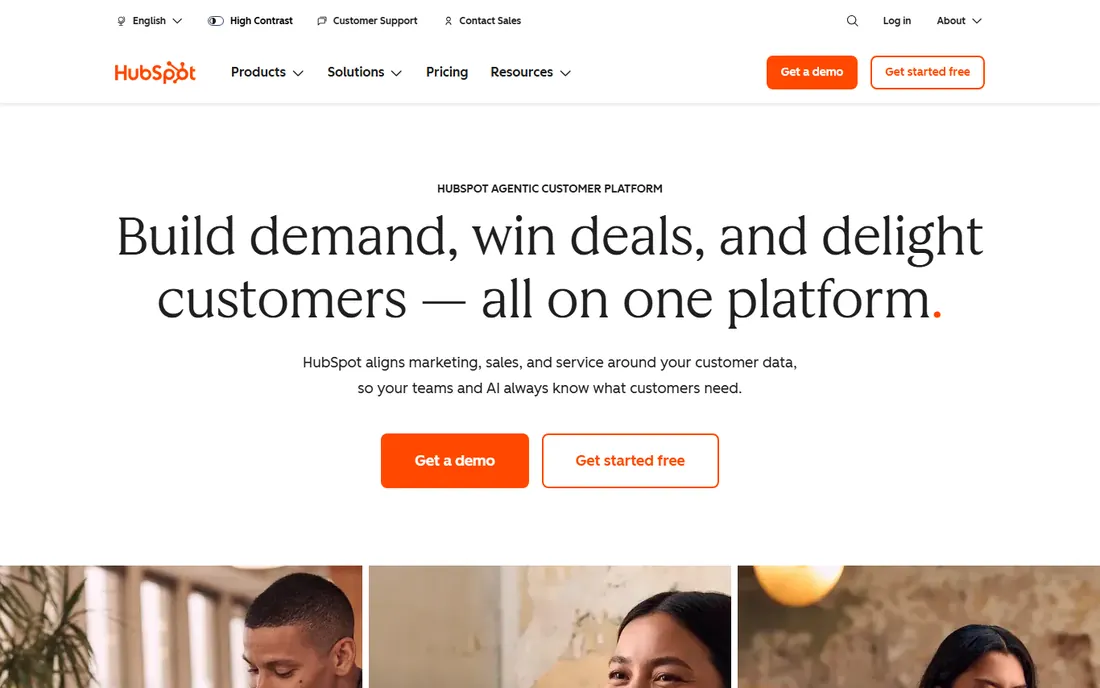
HubSpot Service Hub is the service half of the HubSpot CRM platform. Starter at $20 per seat a month covers ticketing, live chat, shared team email and basic reporting. Professional at $100 per seat annually adds health scores, skill-based routing, SLAs and the Breeze Customer Agent, with 3,000 included credits covering roughly 60 AI resolutions a month before $0.50 per-resolution overages. Enterprise at $150 annually adds 5,000 credits and advanced controls. The free plan covers 2 users.
The honest catch is the Pro jump. Starter is a genuinely useful small-team tool, but real automation, AI and reporting cost $100 per seat plus a $1,500 onboarding fee. If your company already runs HubSpot CRM, the unified contact record is worth the premium. If it does not, you are paying HubSpot prices for a standalone help desk.
What we like- Support tickets live on the same contact record as sales and marketing, which no standalone help desk can match
- A real free plan for up to 2 users
- Pricing stays seat-based and published, no quote games at the low end
Watch out for- The Customer Agent AI needs Professional at $100 per seat and meters resolutions at $0.50 each
- Onboarding fees hit Professional ($1,500) and Enterprise ($3,500)
- Serious automation waits for the $100 tier
#5
Salesforce Service Cloud
Best for: Enterprises already standardized on Salesforce
Visit salesforce.com
Starting price$25/user/month (Starter Suite)
Free planNo (free trial available)
Salesforce Service Cloud, now branded Agentforce Service, is the enterprise service platform. Starter Suite at $25 per user a month covers the basics for small teams. Pro Suite at $100 annually adds the fuller service toolkit. Enterprise at $165 annually adds built-in AI, entitlements and SLA management. Unlimited at $330 annually adds chat and 24/7 support. Einstein 1 Service at $500 adds the full AI suite. A free trial is available; everything bills annually.
The honest catch is that Service Cloud is a Salesforce commitment, not a help-desk purchase. Implementation needs an admin or a partner, and the per-user pricing means a 50-agent team on Enterprise pays about $99,000 a year in licenses alone. Buy it when the company already runs Salesforce and support data must live in the CRM. Everyone else should buy a help desk, not a platform.
What we like- The deepest service CRM on the market, with case management, knowledge and omnichannel routing in one console
- AI and automation scale to the most complex support operations
- Agentforce Service branding keeps it current with Salesforce's AI stack
Watch out for- Meaningful features start at Pro Suite $100 or Enterprise $165 per user
- Implementation is a project, not a signup
- Every add-on and edition compounds the per-user cost
#6
Gladly
Best for: Conversation-centric support that treats customers as people, not ticket numbers
Visit gladly.com
Starting priceSee website (custom quote)
Free planNo
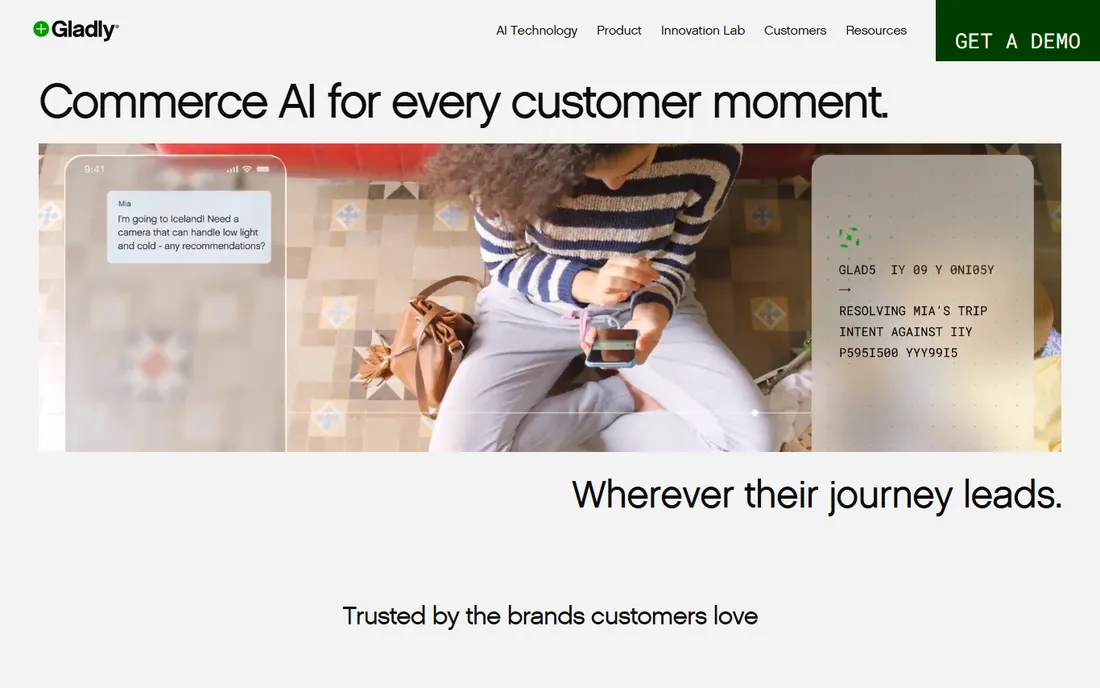
Gladly takes a different stance: customers are not ticket numbers. Every interaction with a customer lives in one continuous conversation, with purchase history and preferences visible before an agent replies. AI resolves routine requests (returns, exchanges, order status) at published rates on its self-serve tier ($1.50 per AI resolution, $120 per seat a month), while the main Hero and Superhero packages at roughly $180 and $210 per user a month annually are quote-based with minimum seat counts.
The honest catch is price and fit. Gladly costs more per seat than Zendesk Suite Team and targets consumer brands with repeat buyers. For B2B support with SLAs and complex routing, the ticket model still works better. For ecommerce and subscription brands where relationships matter, Gladly's conversation model is the differentiator.
What we like- The customer-lifetime conversation view replaces ticket numbers with a real history
- Strong AI for routine ecommerce tasks like returns and order status
- Runs standalone or alongside Zendesk
Watch out for- No published self-serve pricing
- The Hero package runs about $180 per user a month annually with a 10-user minimum
- Built for B2C, a weaker fit for B2B ticketing workflows
#7
Qualtrics XM
Best for: Enterprise experience measurement across customers, employees and brand
Visit qualtrics.com
Starting priceSee website (custom quote)
Free planNo
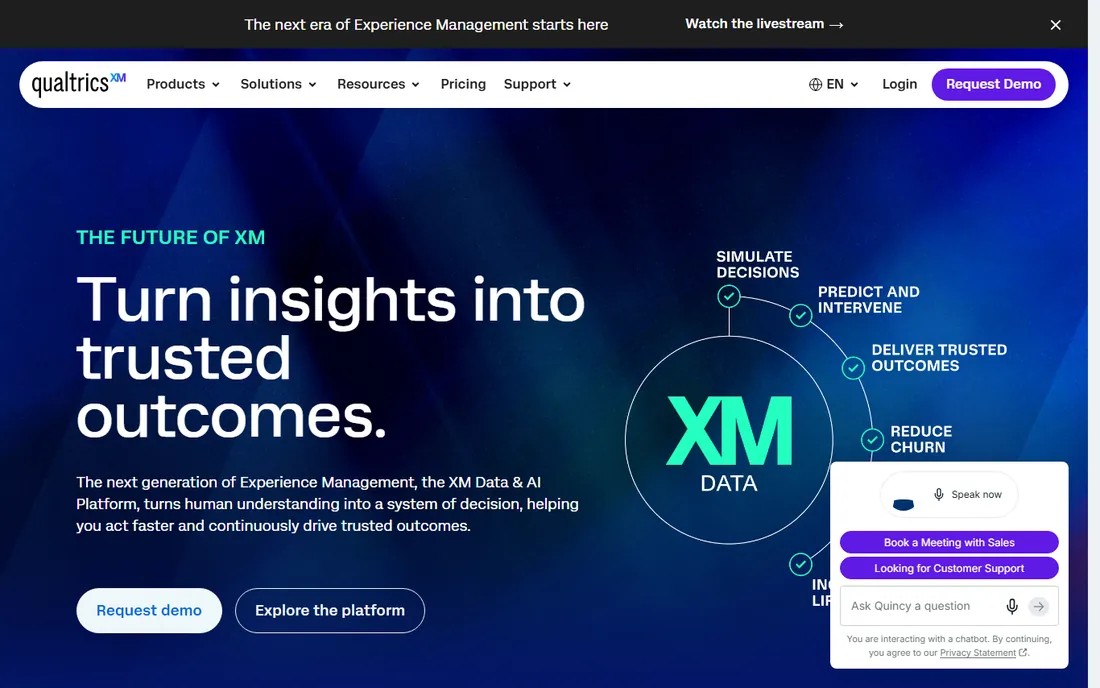
Qualtrics XM is the enterprise standard for measuring experience. Customer XM covers NPS, CSAT, journey analytics and closed-loop follow-up. Employee XM covers engagement and lifecycle surveys. Brand XM covers tracking and reputation. The platform's text analytics and Stats iQ turn open-ended feedback into quantified insight at a scale no survey tool matches.
The honest catch is that Qualtrics is an enterprise purchase. Pricing is custom and annual contracts run into five figures at minimum; implementation takes weeks and works best with a dedicated admin or partner. A 200-person company can justify it when customer experience is a board metric. A 20-person company should buy a survey tool and a help desk instead.
What we like- The most complete experience-management platform: surveys, journey analytics, text and sentiment analysis, and research panels in one system
- Statistical rigor that stands up to board-level reporting
- 30,000-plus customer base means deep industry benchmarks
Watch out for- Quote-only pricing that starts in the five figures annually
- Implementation and survey design need specialists
- Overkill for a team that just wants CSAT scores
#8
Medallia
Best for: Enterprise feedback collection across every touchpoint
Visit medallia.com
Starting priceSee website (custom quote)
Free planNo
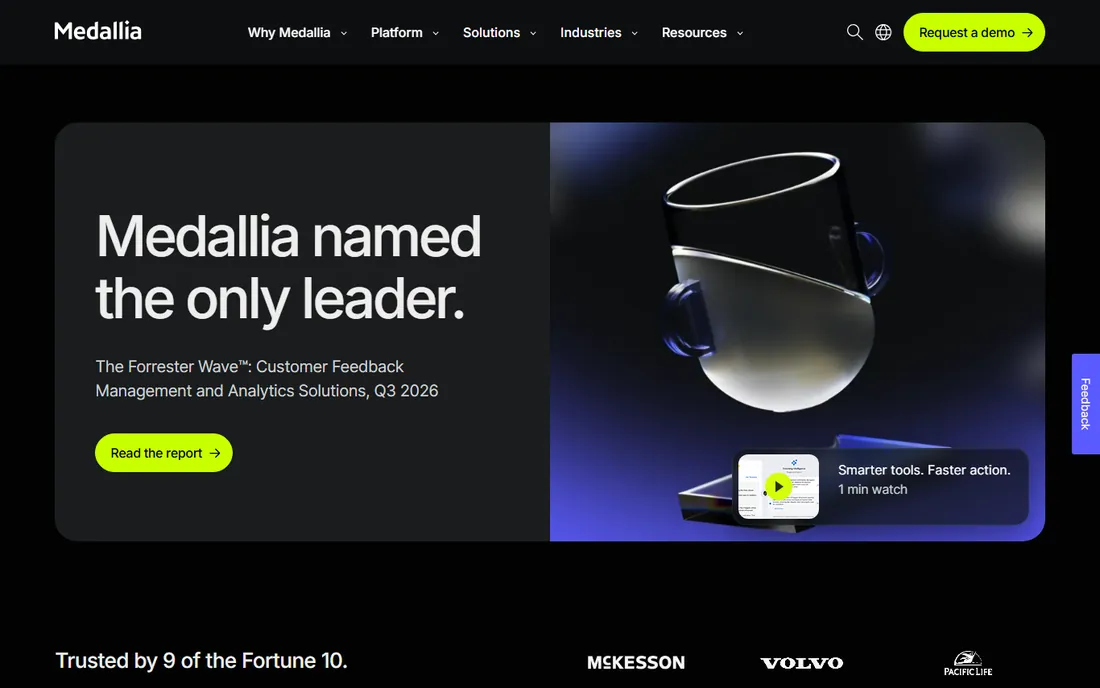
Medallia is Qualtrics' enterprise rival in experience management. Where Qualtrics leads on research rigor, Medallia leads on signal breadth: it ingests feedback from digital, voice, social and operational sources, then applies AI analytics to find the themes driving satisfaction and churn. Industry solutions for hospitality, retail, banking and healthcare come prebuilt with relevant metrics.
The honest catch mirrors Qualtrics: custom pricing, enterprise contracts, and an implementation project measured in months. Medallia fits organizations with hundreds of locations or millions of customers where experience data must flow from every channel. Smaller teams get more value from a help desk's built-in CSAT plus a survey tool.
What we like- Captures signals from surveys, reviews, social, support calls and in-store interactions in one platform
- AI text and speech analytics surface themes without manual tagging
- Strong in hospitality, retail and financial services
Watch out for- Quote-only enterprise pricing
- Deployment is a multi-month project with professional services
- Reporting depth requires trained analysts
#9
Nextiva
Best for: Phone-first support with a built-in contact center
Visit nextiva.com
Starting price$15/user/month (Core, billed annually; $23 monthly)
Free planNo (free trial available)
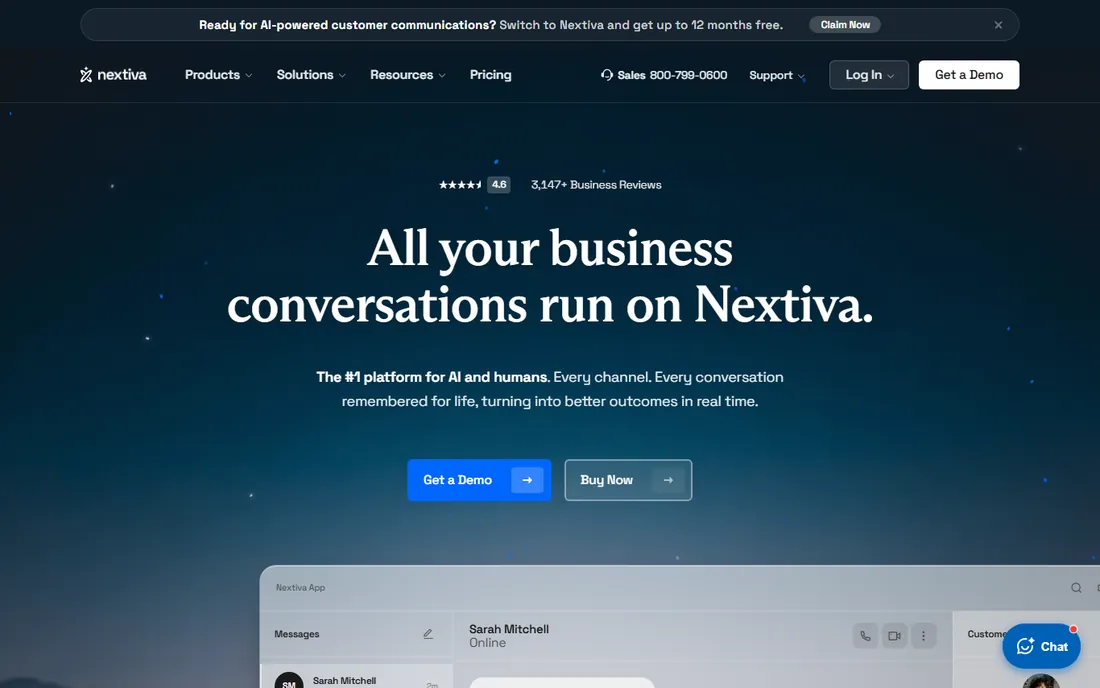
Nextiva is the phone company that became a CX platform. Core at $15 a user a month annually covers unlimited voice and video, 100 SMS per user a month, call routing and auto-attendant. Engage at $25 annually adds live web chat, chatbot automation, call recording and CRM integrations. Power Suite CX at $75 annually adds the real contact center: skills-based routing, AI transcription and summaries, omnichannel support. A free trial is available.
The honest catch is that Core is a phone system, not a contact center. Support teams that need queues, routing rules and quality management land on Engage or Power Suite CX at two to five times the entry price. Nextiva wins for small businesses where the phone is still the main support channel and every user needs calling anyway.
What we like- Voice, video, SMS and team messaging in one app with a 99.999 percent uptime SLA
- Core at $15 a user is the cheapest credible entry on this list
- US-based 24/7 support on every plan
Watch out for- Real contact-center features (skills-based routing, AI summaries) wait for Power Suite CX at $75 a user
- CRM sync depth trails dedicated help desks
- Per-user pricing punishes large agent teams
#10
LiveChat
Best for: Pure live chat with AI assist bundled in every tier
Visit livechat.com
Starting price$19/agent/month (Starter, billed annually; $25 monthly)
Free planNo (14-day free trial)
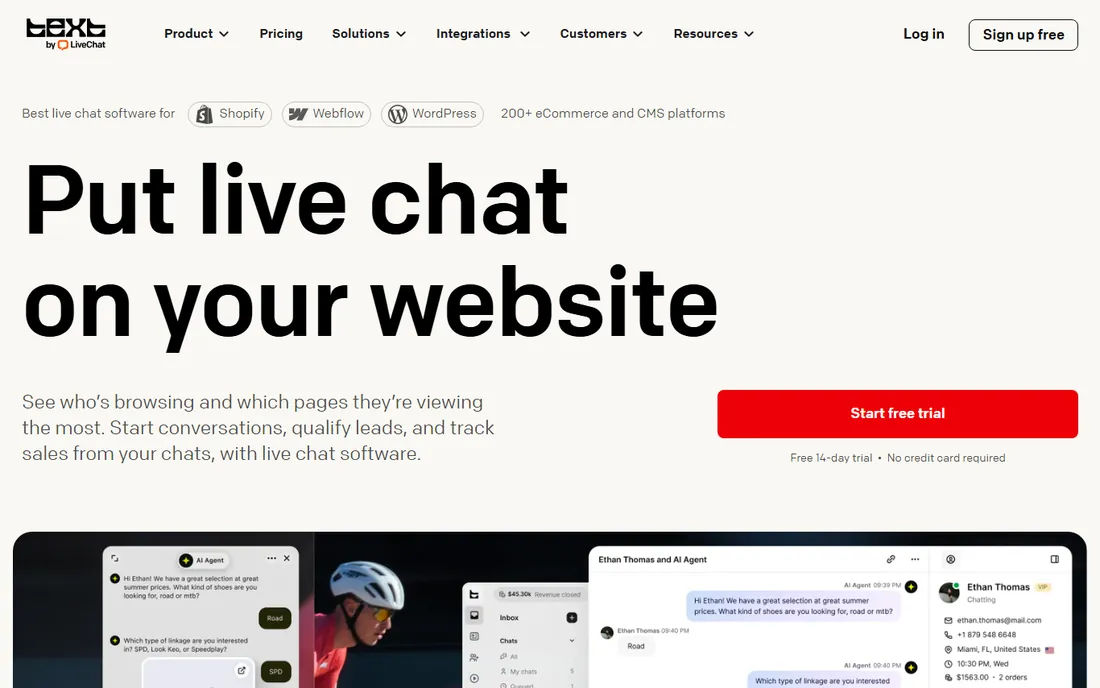
LiveChat does one thing well: live chat. Starter at $19 per agent a month annually covers the widget, basic ticketing within chat, and AI assist. Team at $49 annually adds reporting and work scheduling. Business at $79 annually adds advanced reporting and staffing prediction. Enterprise is custom. Every tier now bundles AI assist for agents, a genuine 2026 improvement that undercuts Zendesk's $50 Copilot add-on.
The honest catch is scope. LiveChat is a channel, not a support platform: knowledge base, autonomous bots and full ticketing live in sibling products. For a business whose support happens on the website in real time, it is the best chat tool here. For omnichannel support, pair it with a help desk or buy a suite instead.
What we like- The most polished chat widget and agent interface in the category
- AI assist (reply suggestions, summaries, tagging) bundled in all tiers, where Zendesk charges $50 per agent for Copilot
- Straightforward per-agent pricing
Watch out for- It is chat, not a help desk: ticketing needs a separate product
- No free plan
- Per-agent seats cannot be shared, which raises costs for part-time teams
How we chose
We started with the searches buyers run: best CX software, customer experience platform, help desk software and contact center software. For each candidate we opened the vendor's own pricing page or the closest official source, checked the numbers against public reviews on G2 and Capterra and practitioner discussion on Reddit, and compared channel coverage, automation depth, AI pricing models, limits and fit for different team sizes. Prices that could not be verified are marked "See website".
The AI tax: how support software really bills in 2026
Every major vendor now sells AI on a second meter. Zendesk bills AI agents per verified resolution ($1.50 committed, $2.00 pay-as-you-go) plus a $50-per-agent Copilot add-on. Intercom bills Fin at $0.99 per outcome on top of seats. Freshdesk bills Freddy AI sessions at $49 per 100 after a one-time allowance, plus a $29 Copilot add-on. HubSpot bills Customer Agent resolutions at $0.50 each past the included credits.
That changes how you budget. The seat price is the floor, not the total. A 10-agent team on Intercom Advanced pays $850 a month in seats, and 2,000 Fin resolutions a month adds $1,980. Ask every vendor for the all-in number at your actual volume, including the AI line, and get the resolution or session definition in writing. The vendors that look cheapest on seats are often the most expensive all-in.
Per-seat vs flat: what the pricing models mean for your bill
Most tools here bill per agent or per seat: Zendesk, Intercom, Freshdesk, HubSpot, Salesforce, LiveChat, Nextiva. Every new hire raises the bill, and part-time agents cost the same as full-time ones. The exceptions matter. HubSpot's free plan covers 2 users at no cost. Freshdesk offers a limited free program for 2 agents over 6 months. Zendesk and Intercom offer only trials.
Watch the minimums too. Gladly's Hero package needs 10 users minimum. Salesforce's real plans assume annual contracts. Nextiva's annual billing cuts Core from $23 to $15 a user. When you compare, normalize everything to the same unit: annual cost per agent, including the add-ons you will actually turn on. A $19 seat with a $50 add-on is a $69 seat.
Frequently asked questions
What is the best CX software for a small business?
Freshdesk Growth at $19 per agent a month or HubSpot Service Hub Starter at $20 per seat, and HubSpot's free plan covers 2 users at no cost. Both set up fast and cover the channels a small team actually uses. Upgrade to Zendesk Suite Team at $55 when routing and reporting needs grow.
How much does customer experience software cost?
Help-desk seats run $15 to $55 per agent a month at the low end (Nextiva Core $15, Freshdesk and Zendesk entry $19, Intercom $29, Zendesk Suite Team $55). Realistic mid-tier costs run $55 to $115 per agent. Enterprise platforms (Salesforce Service Cloud, Qualtrics, Medallia) are quote-based and run into five or six figures annually.
What is the difference between CX software and a help desk?
A help desk handles support tickets and conversations. CX software is the broader category: help desks plus feedback and survey platforms (Qualtrics, Medallia), contact centers (Nextiva) and conversation platforms (Intercom, Gladly). Buy a help desk when support is the job; buy CX software when you need to measure and manage experience across every touchpoint.
Do I need AI add-ons for customer support?
Not at first. Every vendor now sells AI on a second meter, and the AI line often exceeds the seat line at volume. Start with the base plan, measure your repeat-question volume, then add AI where the math works: Intercom's Fin at $0.99 per outcome and HubSpot's Customer Agent at $0.50 per resolution are the cheapest credible options.
Which CX tool integrates best with Salesforce?
Salesforce Service Cloud, natively. Among third parties, Zendesk and Intercom both offer deep Salesforce integrations, and Intercom's Fin can run as an AI layer on top of Salesforce. If the company already runs Salesforce, Service Cloud's $25 Starter Suite is the cheapest path in, but expect to land on Pro Suite at $100 for real features.
Sources we checked (12)
- https://www.zendesk.com/pricing/
- https://www.intercom.com/pricing
- https://freshdesk.com/pricing/
- https://hubspot.com/pricing/service
- https://www.salesforce.com/service/pricing/
- https://gladly.com/pricing/
- https://www.qualtrics.com/pricing/
- https://medallia.com/pricing/
- https://nextiva.com/nextiva-pricing
- https://livechat.com/pricing/
- https://www.g2.com/categories/customer-experience
- https://www.capterra.com/customer-experience-software/
Is your product missing or out of date?
We review this list regularly. Vendors can request a listing, send updated pricing or ask about featured placement.

Shihab Mia · Founder, Rankite
Shihab has 5+ years in B2B and SaaS SEO. He writes Rankite's software buying guides from pricing pages, documentation and public user reviews. More about Shihab.