How we make this list: we compare pricing pages, product documentation and public user reviews. Rankite is independent; if a vendor ever pays for a featured spot, that listing is clearly labeled Partner.
Key takeaways
- Five9, Genesys, Talkdesk, and NICE CXone lead for enterprise contact centers.
- RingCentral and 8x8 suit teams that want voice plus contact center in one vendor.
- Aircall and Dialpad are the friendliest options for smaller, fast-moving teams.
- AI features like agent assist and conversation summaries are now standard expectations.
- Every platform below offers a demo or trial; use it with real call volume.
Contact center software routes customer conversations, voice, chat, email, and social, to the right agent with the right context. Modern platforms add interactive voice response, workforce management, quality monitoring, and analytics that show what is happening across every channel.
The category has shifted decisively to cloud. On-premise systems still exist, but new deployments are overwhelmingly cloud-based, which means faster setup, automatic updates, and pricing per agent per month. AI now handles the routine: summarizing calls, suggesting replies, and deflecting simple questions to bots.
Pricing is typically per agent per month plus usage, with enterprise plans quoted. The comparisons below note where trials are available.
Quick comparison
| Tool | Best for | Starting price | Free plan |
|---|
 Five9 Five9 | Enterprises that prioritize voice quality and reliability | See website | No, demo available |
 Genesys Cloud CX Genesys Cloud CX | Large omnichannel operations | See website | No, demo available |
 Talkdesk Talkdesk | Enterprises wanting fast deployment | See website | No, demo available |
 NICE CXone NICE CXone | AI-driven contact center operations | See website | No, demo available |
 RingCentral Contact Center RingCentral Contact Center | Teams wanting UCaaS and contact center from one vendor | See website | Trial available |
 8x8 8x8 | Integrated voice, video, and contact center | See website | Trial available |
 Aircall Aircall | SMBs that live on the phone | See website | Trial available |
 Dialpad Dialpad | Teams wanting AI-native communications | See website | Trial available |
Is your product missing or out of date?
We review this list regularly. Vendors can request a listing, send updated pricing or ask about featured placement.
How we chose
We selected platforms with a shipped cloud contact center product, multi-channel support, and a customer base large enough to validate reliability. We looked for intelligent routing, real-time and historical analytics, and workforce management or quality tools.
We weighed AI capabilities, since agent assist and automation now separate leaders from laggards. We checked for CRM integrations, compliance certifications, and trial or demo availability. Vendor claims were checked against product documentation and pricing pages.
#1
Five9
Best for: Enterprises that prioritize voice quality and reliability
Visit five9.com
Starting priceSee website
Free planNo, demo available
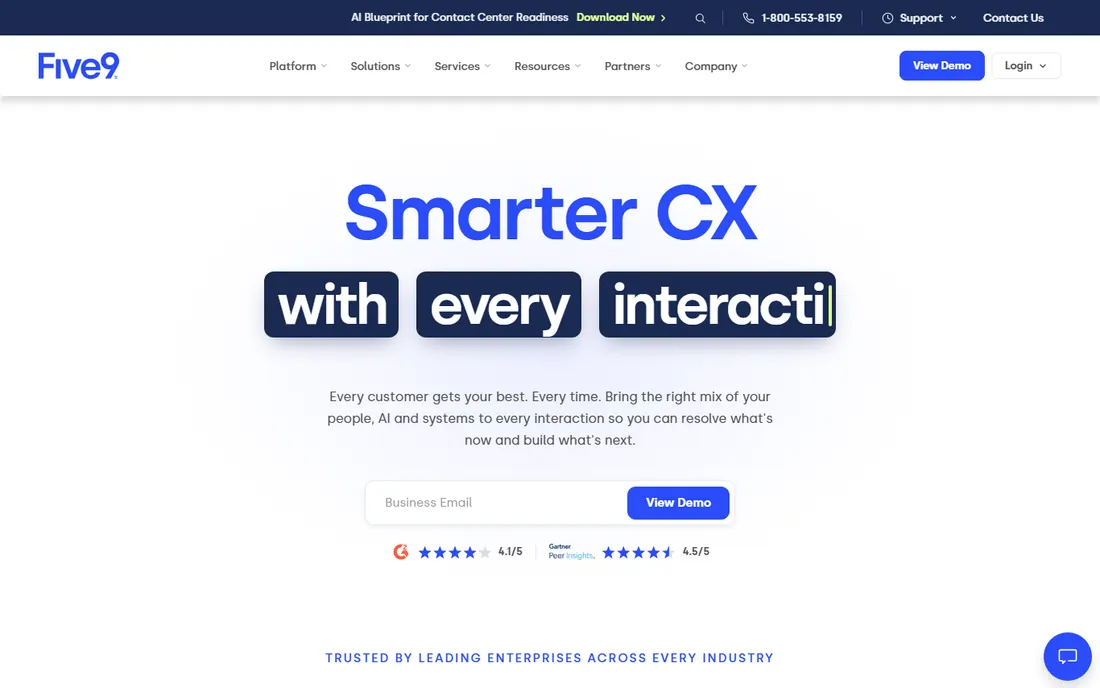
Five9 built its reputation on voice. The platform delivers reliable call quality at scale, with intelligent routing, predictive dialing for outbound teams, and solid blending of inbound and outbound work.
Workflow automation helps teams build custom call flows without heavy development, and the analytics cover the operational metrics contact center leaders live by. Integrations with major CRMs keep agent screens populated with customer context.
It is not the cheapest option, and some newer rivals feel more modern. But when voice is the business, Five9's reliability record is the reason it stays on shortlists.
What we like- Excellent voice reliability and uptime
- Strong outbound and blended capabilities
- Good workflow automation
- Trusted by large service operations
Watch out for- Pricing is quote-based
- The interface shows its age in places
- Advanced AI features cost extra
Starting priceSee website
Free planNo, demo available
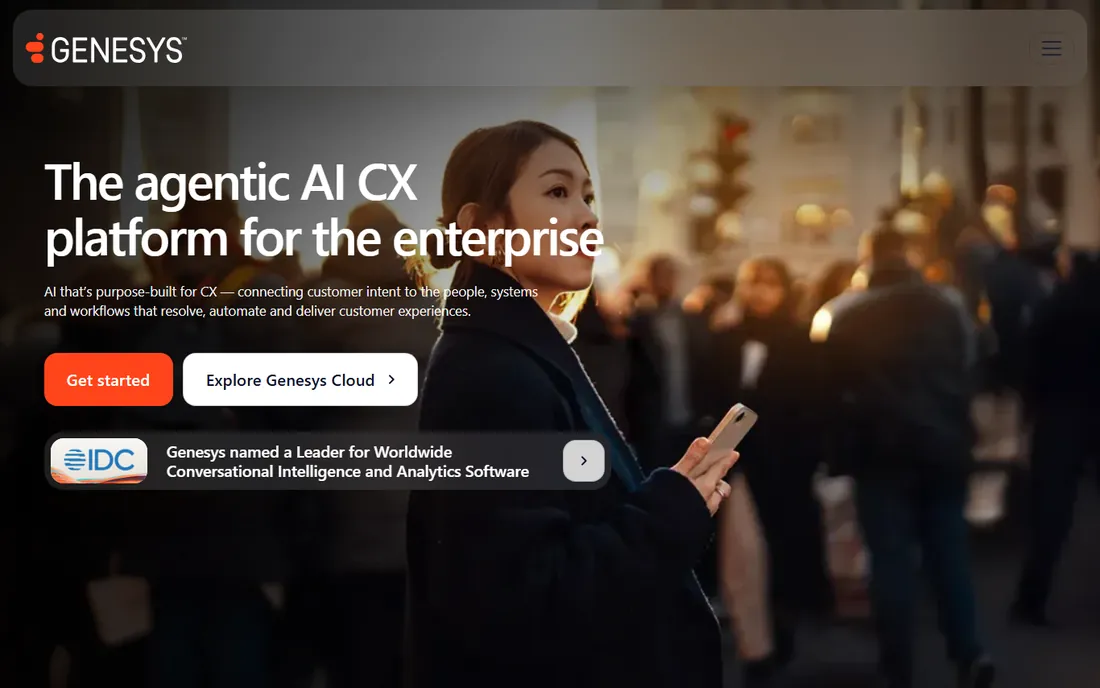
Genesys Cloud CX is the broadest platform here, covering voice, chat, email, messaging, and social with unified routing and reporting. Its AI capabilities span virtual agents, agent assist, and predictive engagement.
Workforce management is a particular strength, with forecasting, scheduling, and quality management built in rather than bolted on. Large enterprises run tens of thousands of agents on the platform.
That breadth brings complexity. Implementation is a real project, and costs grow as you add modules. For large, multi-channel operations, though, few platforms match the completeness.
What we like- Comprehensive omnichannel platform
- Strong AI and automation
- Excellent workforce management
- Huge partner and integration ecosystem
Watch out for- Complex to configure fully
- Pricing adds up with add-ons
- Overkill for small teams
Starting priceSee website
Free planNo, demo available
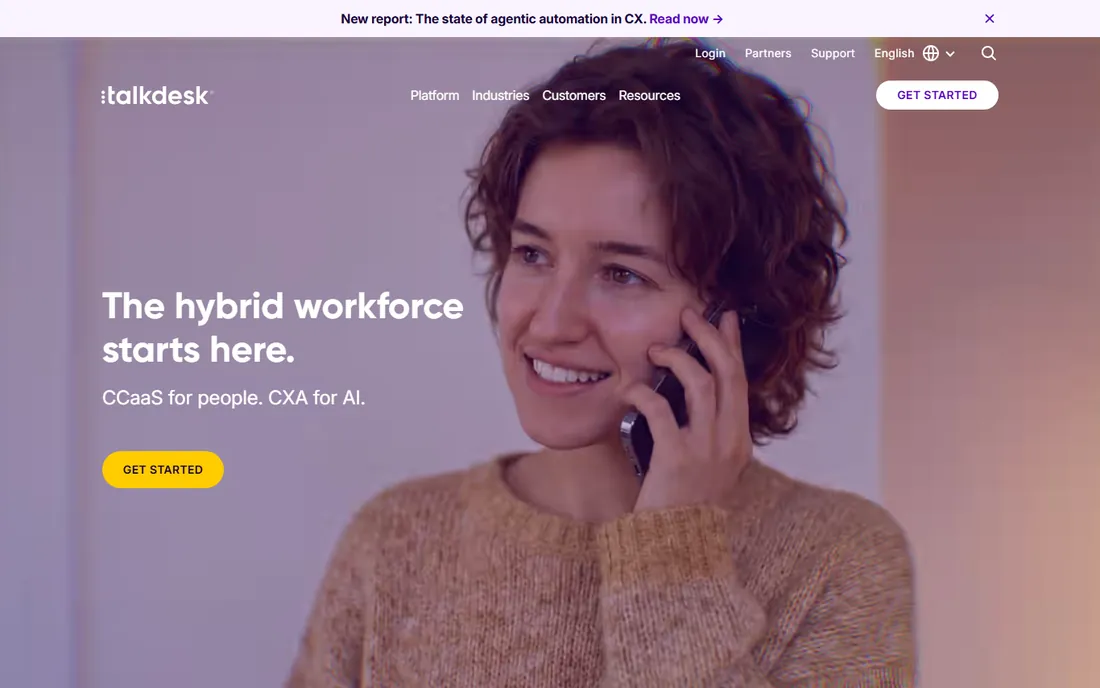
Talkdesk pitches speed: a cloud contact center that deploys in weeks rather than months, with AI features like agent assist and conversation analytics included rather than sold separately. Industry editions tailor the platform for healthcare, financial services, and retail.
The interface is modern and agents tend to adopt it quickly, which matters during migrations. Routing, IVR, and reporting cover the standard enterprise requirements well.
Deep customization sometimes needs professional services, and the ecosystem is smaller than Genesys's. For teams that want enterprise capability without enterprise timelines, Talkdesk is compelling.
What we like- Fast time to value
- Strong AI features included
- Good industry-specific editions
- Modern interface
Watch out for- Quote-based pricing
- Some advanced customization needs services
- Smaller ecosystem than Genesys
#4
NICE CXone
Best for: AI-driven contact center operations
Visit nice.com
Starting priceSee website
Free planNo, demo available
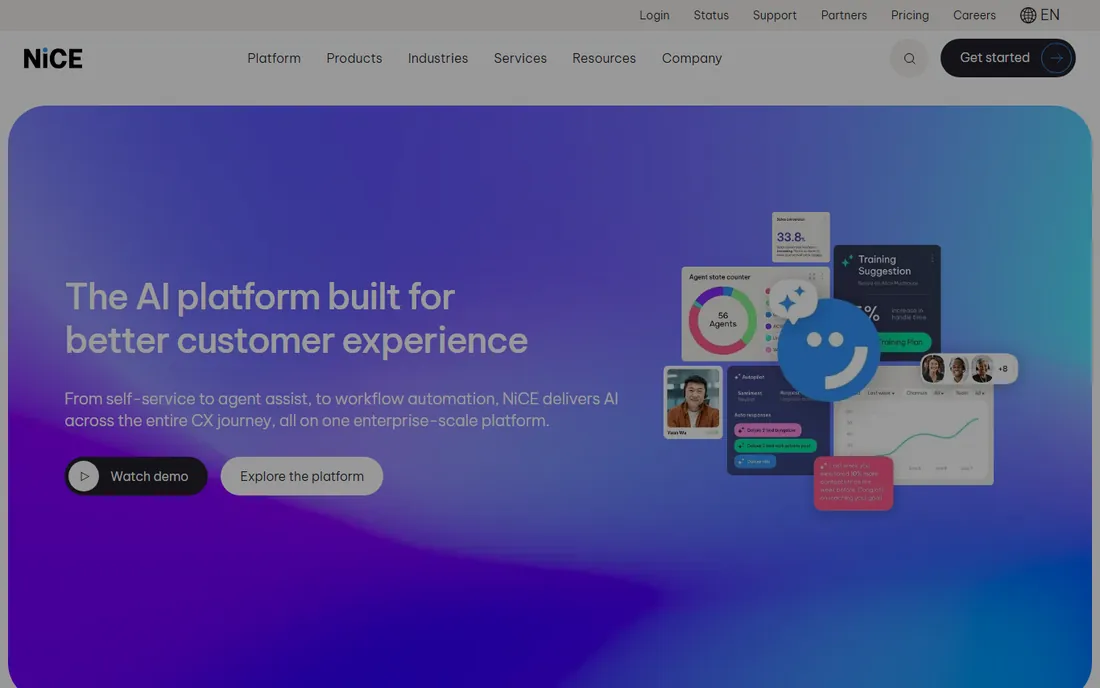
NICE CXone combines contact center routing with NICE's long-standing strengths in workforce optimization and analytics. Enlighten AI powers agent assist, sentiment analysis, and automation across channels.
The platform suits operations that run on data: quality management, performance analytics, and forecasting are deeply integrated rather than afterthoughts. Very large deployments are well proven.
Smaller teams will find it more than they need, and pricing reflects the enterprise positioning. When analytics-driven management is the goal, CXone is a top contender.
What we like- Deep AI and analytics heritage
- Strong workforce optimization
- Enlighten AI for agent assist
- Proven at massive scale
Watch out for- Enterprise pricing and complexity
- The suite can feel overwhelming
- Implementation needs planning
#5
RingCentral Contact Center
Best for: Teams wanting UCaaS and contact center from one vendor
Visit ringcentral.com
Starting priceSee website
Free planTrial available
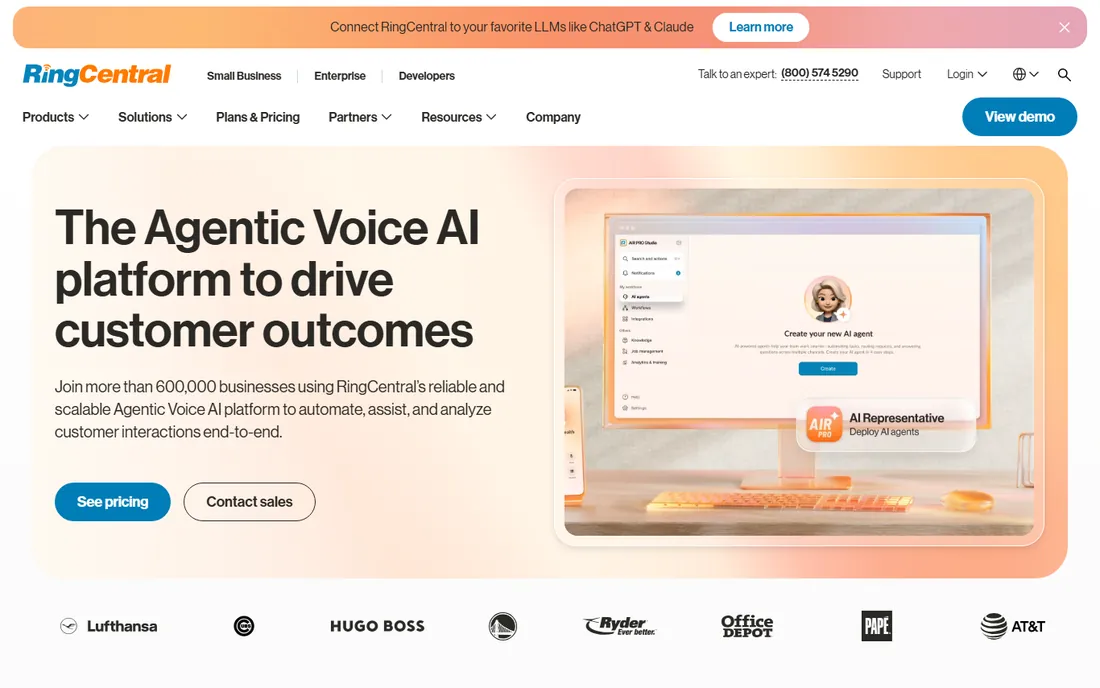
RingCentral lets companies run their business phone system and contact center on one platform with one bill. For IT teams tired of managing separate vendors, that consolidation is genuinely valuable.
The contact center covers omnichannel routing, IVR, and analytics at a level that satisfies most mid-market needs. Integration with the RingCentral phone system means agents and back-office staff share one directory and one calling experience.
Pure-play contact center vendors go deeper on workforce management and AI. But when unified communications plus a capable contact center is the brief, RingCentral is the natural pick.
What we like- One vendor for phone system and contact center
- Good reliability
- Solid integrations
- Easier procurement
Watch out for- Contact center depth trails pure-plays
- Advanced features cost more
- AI capabilities catching up
#6
8x8
Best for: Integrated voice, video, and contact center
Visit 8x8.com
Starting priceSee website
Free planTrial available
8x8 combines business phone, video meetings, and contact center in one cloud platform. The global voice network is a real asset for companies with international operations and customers.
Pricing is competitive, and administration is simpler than the enterprise suites. Mid-market teams get omnichannel routing, analytics, and CRM integrations without a six-figure commitment.
It will not match Genesys or NICE on advanced capabilities, but many teams do not need those. For integrated communications with a solid contact center attached, 8x8 delivers good value.
What we like- Unified platform with video meetings
- Competitive pricing
- Good global voice footprint
- Straightforward admin
Watch out for- Contact center features less deep than leaders
- Brand momentum trails rivals
- Advanced AI is limited
Starting priceSee website
Free planTrial available
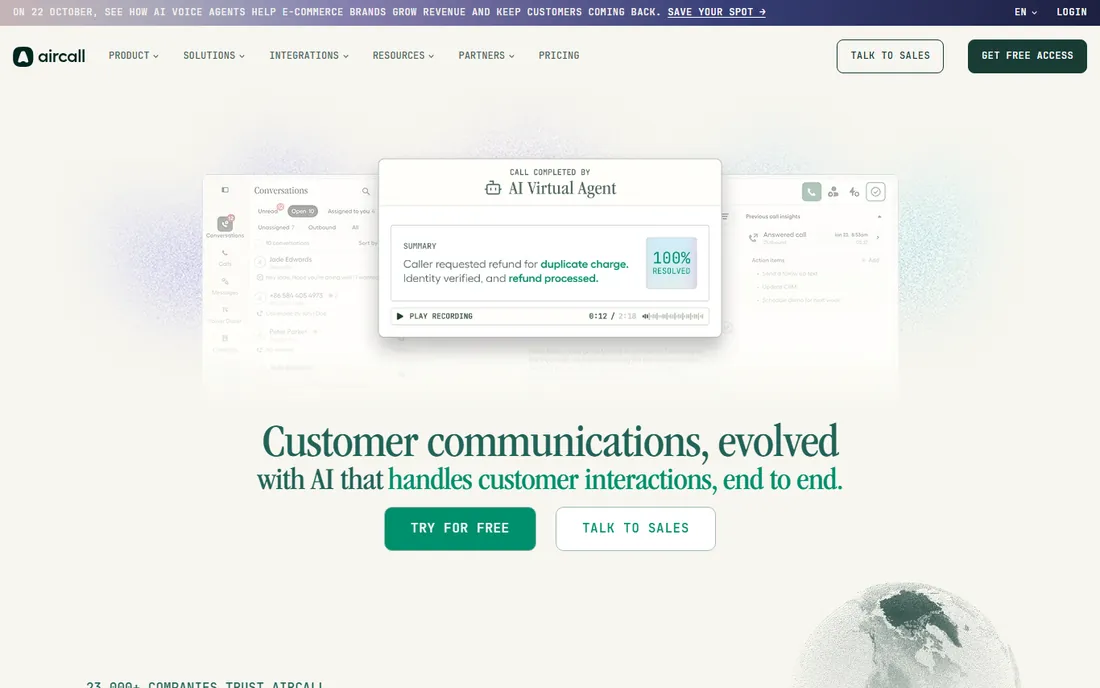
Aircall is the phone system that sales and support teams actually enjoy using. Setup takes minutes, numbers provision instantly, and integrations with HubSpot, Salesforce, and other CRMs log calls automatically.
Call analytics show who is calling, when, and how conversations go, with AI summaries on higher plans. For phone-first teams, the simplicity is the feature: no telecom expertise required.
It is not a full omnichannel contact center, and per-user pricing climbs as teams grow. But for SMBs where the phone is the business, Aircall is the easiest yes in the category.
What we like- Very easy to set up and use
- Excellent CRM integrations
- Good call analytics
- Agents love the interface
Watch out for- Voice-centric, lighter on other channels
- Pricing per user adds up
- Advanced routing is basic
Starting priceSee website
Free planTrial available
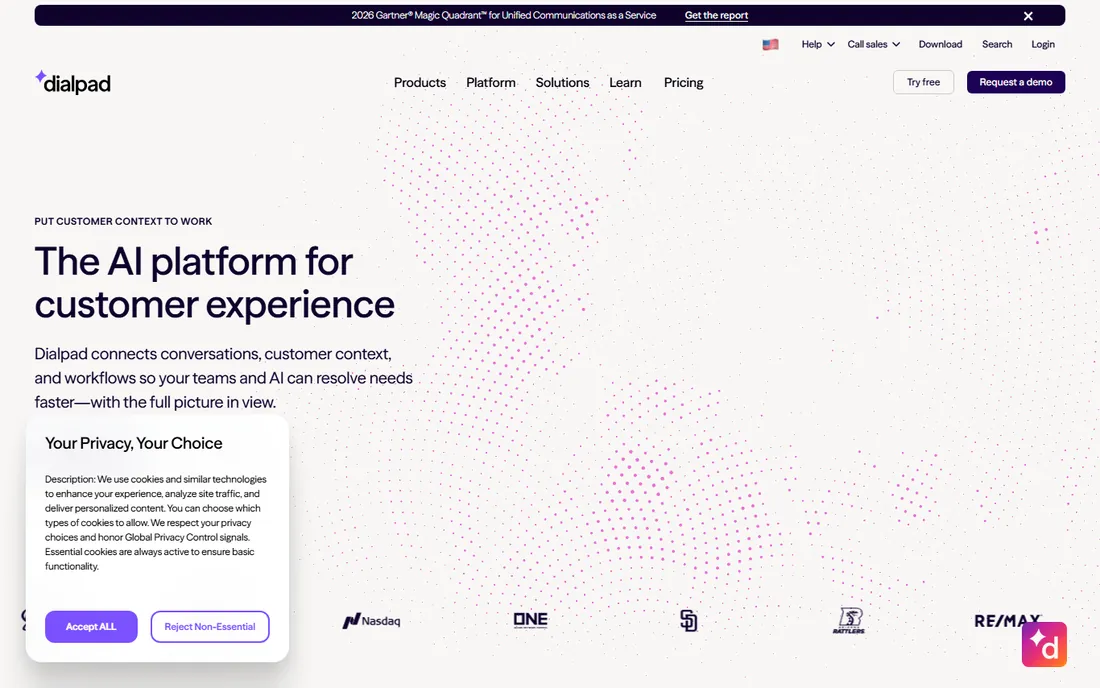
Dialpad bakes AI into everything: real-time call transcription, automated summaries, sentiment tracking, and live coaching prompts for agents. These are not add-ons but core to the product at every tier.
The platform covers business phone, meetings, and contact center in one interface that feels years newer than legacy rivals. Pricing is transparent and competitive, which has won it a loyal mid-market following.
Full-scale enterprise contact centers may find the depth lacking compared to Genesys or Five9. For AI-forward teams that want modern tools now, Dialpad is hard to beat on value.
What we like- AI features built in at every tier
- Real-time transcription and coaching
- Modern interface
- Good value pricing
Watch out for- Contact center depth trails specialists
- Occasional AI accuracy issues
- Smaller integration catalog
Start with your channels and volume. Voice-heavy operations should weight reliability and call quality above all, which favors Five9 and Genesys. Digital-first teams can prioritize the platforms with the strongest chat and messaging.
Run a real pilot, not a slideware demo. Route actual calls through the platform for two weeks with a subset of agents, and measure handle time, satisfaction, and agent feedback. Pricing should be modeled on your agent count plus expected usage, since per-minute and AI feature charges add up.
The classic mistake is buying for the demo instead of the operation. Every platform routes calls beautifully with ten agents and friendly test callers. Pilot with real volume, real peak hours, and your actual call recordings. Audio quality, queue behavior, and agent experience only reveal themselves under load.
Second, underestimating integration work. The contact center is only as good as the customer data on the agent's screen. Budget real time for CRM integration, identity management, and data cleanup. A beautiful platform showing blank customer records helps nobody.
Third, ignoring the agent experience. Buyers evaluate admin dashboards while agents live in the desktop they will use eight hours a day. Put agents in the trial, watch them work, and listen to their complaints. Low agent adoption quietly kills the ROI of the most feature-rich platform.
Fourth, forgetting workforce management. Routing calls is half the job; staffing for them is the other half. If you choose a platform without forecasting, scheduling, and quality management, budget for those separately or accept the gap. Understaffed excellence is still understaffing.
Finally, signing before modeling total cost. Per-agent licenses are just the start: add per-minute charges, AI feature fees, implementation services, and integration costs. Model year-one total cost on realistic volumes for every finalist, because the cheapest quote rarely stays cheapest.
Frequently asked questions
What is the difference between a call center and a contact center?
A call center handles phone calls. A contact center handles calls plus digital channels like chat, email, SMS, and social, usually with unified routing and reporting across all of them.
How much does contact center software cost?
Typical pricing runs from around $50 to over $150 per agent per month depending on features, plus usage charges for minutes and AI services. Enterprise platforms are usually quote-based.
Can small teams use enterprise contact center platforms?
Technically yes, but the cost and complexity rarely make sense under 20 or so agents. Smaller teams should look at Aircall, Dialpad, or the mid-market tiers of RingCentral and 8x8.
What AI features actually help in contact centers?
Call summarization, agent assist with suggested replies, sentiment detection, and QA automation deliver the most consistent value. Fully autonomous voice agents are improving but still need careful supervision.
How long does implementation take?
Cloud platforms like Aircall or Dialpad can go live in days. Enterprise deployments with custom integrations and workforce management typically take two to six months.
Sources we checked (0)
Is your product missing or out of date?
We review this list regularly. Vendors can request a listing, send updated pricing or ask about featured placement.

Shihab Mia · Founder, Rankite
Shihab has spent more than a decade helping SaaS and e-commerce brands grow through search. He writes Rankite's software buying guides from pricing pages, documentation and public user reviews. More about Shihab.